
District · Rajasthan
Barmer
Barmer occupies Rajasthan’s far-western Thar region, where desert settlements, scrubland and cultivated patches meet a long tradition of adapting to dry conditions.
Barmer lies in western Rajasthan's Thar Desert, where sandy stretches, scrubland and rocky outcrops shape a largely arid landscape. Villages and cultivated fields interrupt the desert scenery, reflecting communities accustomed to scarce rainfall and demanding summers. The district's historical depth is visible at the Kiradu temples, a group of ruined Hindu temples whose surviving stonework offers a striking contrast to their dry surroundings. Barmer town serves as a base for exploring the district's heritage and rural life. Beyond its monuments, the area's character rests in its textile traditions, regional food and everyday adaptations to desert conditions. Cooler months generally make outdoor exploration more comfortable.
Barmer occupies Rajasthan’s far-western Thar region, where desert settlements, scrubland and cultivated patches meet a long tradition of adapting to dry conditions. Travellers come chiefly for the ruined Kiradu temples, whose carved stonework stands out against the arid setting, and for a sense of rural life beyond the state’s better-known palace cities. Barmer town is a practical base for heritage visits and an introduction to local food and textile crafts, including embroidery and other regional handiwork. The district suits visitors interested in history, desert landscapes and everyday culture more than a tightly packed schedule of major monuments. Cooler months make outdoor excursions more comfortable.
Barmer’s history is closely tied to the wider Marwar region, whose political centre was Jodhpur. Rathore rulers established the kingdom of Marwar in the fifteenth century, while local chiefs and communities shaped life across its western districts. Barmer town is traditionally associated with a settlement founded by a regional ruler known as Bar Rao, though accounts of its early beginnings vary. The Kiradu temples, built mainly between the eleventh and twelfth centuries, preserve evidence of medieval religious and artistic life in the area; their surviving architecture reflects the region’s connections with wider western Indian temple traditions. Marwar became a princely state under British paramountcy, following its treaty relationship with the British in the early nineteenth century. After independence, the former Jodhpur state was integrated into Rajasthan, and Barmer developed as a district administration within the new state. Its location near the international border has also given the district strategic importance in modern times.
2 destination guides
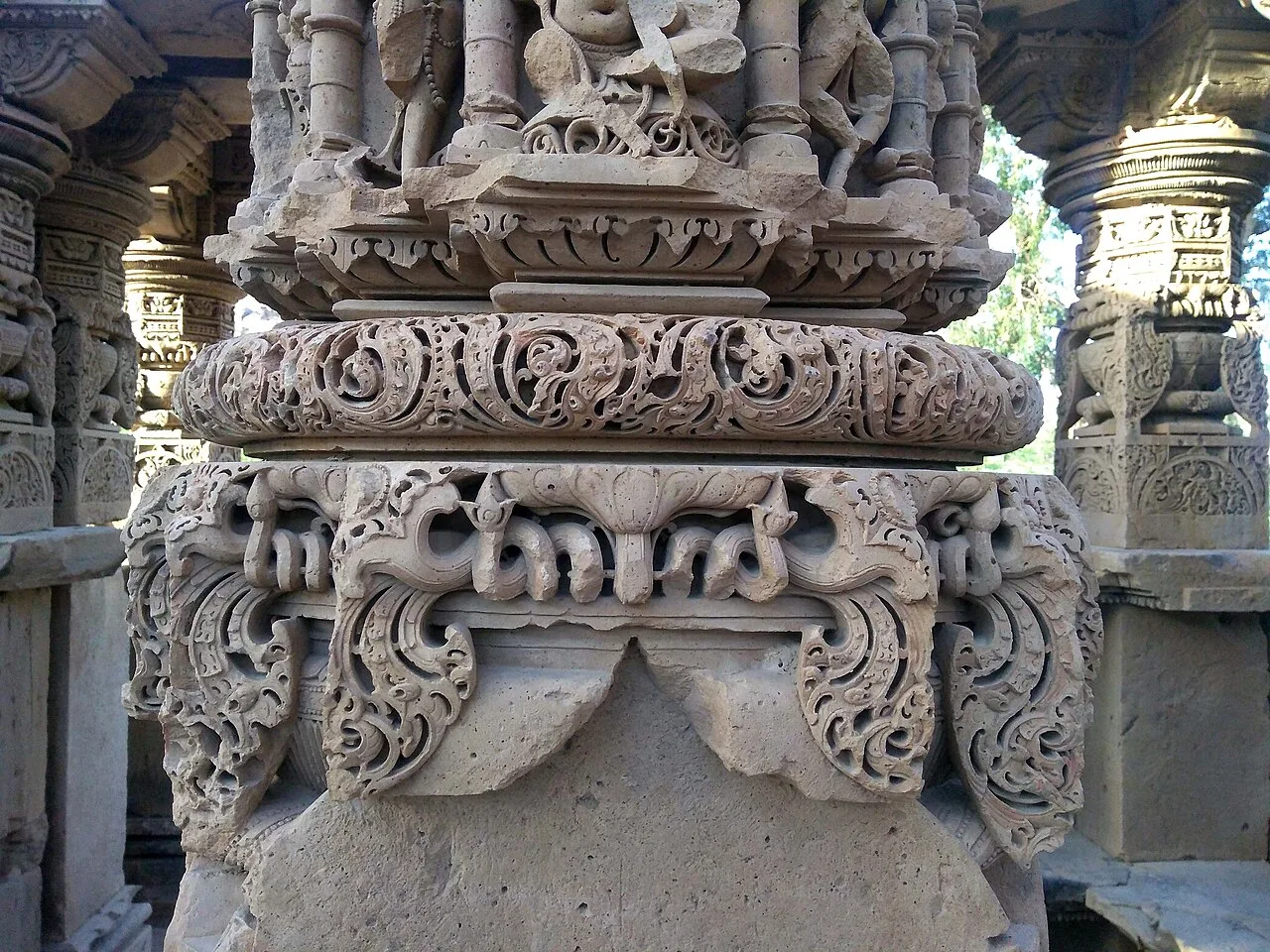
Kiradu temples
Kiradu is a group of ruined Hindu shrines in Rajasthan’s Thar Desert, visited for its surviving temple remains, particularly Someshvara, a shrine dedicated to Shiva.
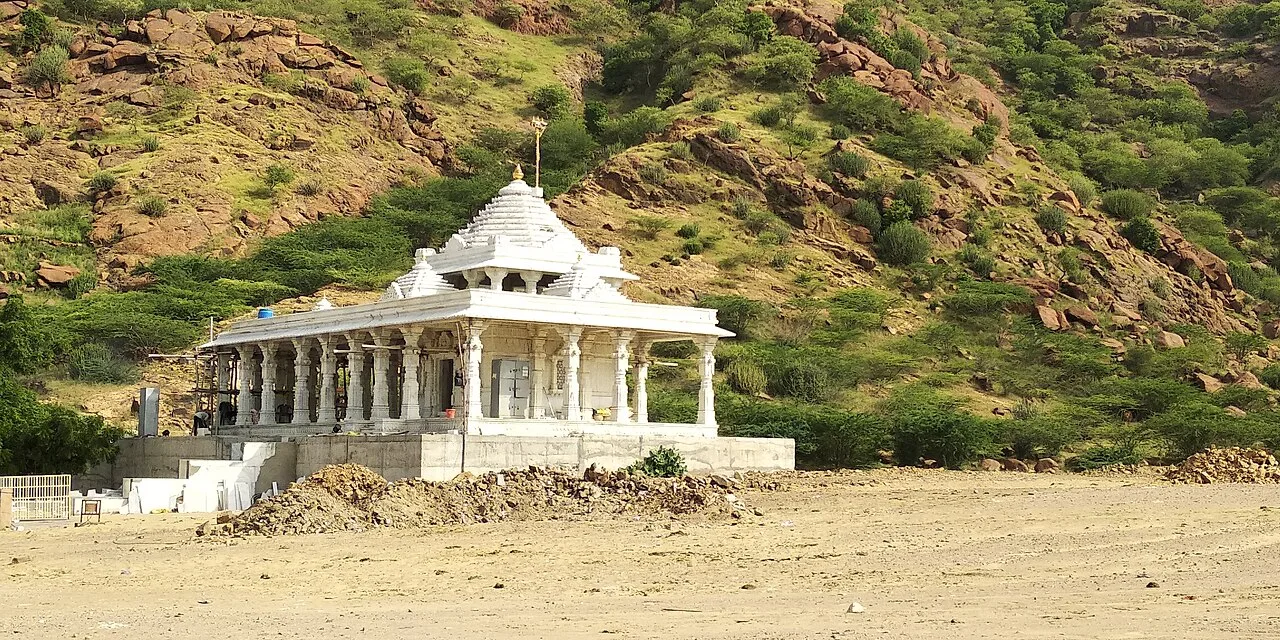
Pachpadra
Pachpadra is a town in Rajasthan’s Balotra district, near Balotra city. Visitors may see its salt-gathering lake, while the locality is also known for a large refinery and petrochemical complex.
Food in Barmer draws on the wider culinary traditions of western Rajasthan, with hardy grains, pulses and ingredients suited to an arid climate. Bajra roti, often accompanied by ghee or a vegetable preparation, is a familiar regional staple. Ker sangri, gatte ki sabzi and dal baati churma are worth seeking out, while chaach provides a savoury accompaniment to meals. Laal maas belongs to the broader Rajasthani repertoire rather than being specific to Barmer. Small eateries may offer only a limited daily menu, so ask what is freshly prepared. For excursions to remote sites, carry drinking water and snacks.
Barmer is associated with a rich textile vocabulary, including hand block printing, embroidery and appliqué. Ajrakh-style printing, known for patterned blocks and traditionally deep red and blue tones, is part of the region's craft heritage and is also practised elsewhere in western India. Embroidered and appliquéd household textiles offer another way to encounter local needlework traditions. The district is also known for carved wooden furniture. When shopping, ask where an item was made, whether it is handmade and which materials or dyes were used.
Barmer’s best-known regional celebration is the Barmer Thar Festival, generally held in the cooler season and featuring folk music, dance and local crafts. Dates and programming can vary, so check current announcements before planning around it. Gangaur, Teej and other Hindu festivals are also observed, as are fairs and community events whose scale differs from place to place. Festival periods can bring larger crowds to Barmer town and popular venues, and accommodation may be busier than usual. For a quieter visit or a particular event, confirm local arrangements in advance.
Elsewhere in Rajasthan
The district’s terrain is predominantly arid, with sandy stretches, open plains, rocky outcrops and low hills interspersed with villages and cultivated fields. Thorn scrub and hardy trees such as khejri are characteristic of the dry environment. The Luni, the region’s principal river, is seasonal and its flow is not a dependable feature for visitors. Sparse settlement and long distances between rural sites shape travel: road journeys can feel exposed, and shade and services may be limited outside towns. Kiradu’s stone temples rise from this dry landscape, making the contrast between architecture and surroundings part of the visit.
Barmer has a hot desert climate. Summer, broadly from spring into early monsoon, can bring intense heat and strong sun, making midday excursions tiring. The monsoon season usually offers some relief, but rainfall is irregular and can affect rural roads. Winter is generally the most comfortable season for sightseeing, with cooler days and chilly evenings possible. The period from roughly October to March is usually the best choice for outdoor travel. Pack sun protection, a hat, light breathable clothing and sturdy footwear; in winter, bring a warm layer for evenings. Carry water and plan outdoor visits around the day’s conditions.
Barmer railway station is the main rail arrival point for Barmer town. For visits centred on Kiradu, Jaisalmer Airport is a nearby air option, though flights can be seasonal; Jodhpur Airport is another gateway worth considering. Road links connect Barmer with Jodhpur, Jaisalmer and other towns in western Rajasthan, with buses and hired cars providing onward travel. Within Barmer town, auto-rickshaws and taxis are useful, while a hired vehicle is generally more convenient for Kiradu and dispersed rural sites. Arrange return transport before heading to isolated places, and check current services locally.
Barmer town is the main transport base, with road links toward Jodhpur, Jaisalmer and other western Rajasthan towns. Buses serve key routes, while local buses and shared vehicles may be available for some shorter journeys; services to smaller settlements can be limited. Auto-rickshaws and taxis are useful within Barmer town. For Kiradu and other dispersed rural visits, a hired car or taxi offers greater flexibility, particularly for arranging the return journey. Confirm onward transport locally before leaving town, and avoid assuming that a vehicle will be easy to find at an isolated site.
2 days: Barmer town → Kiradu temples → Barmer town; sleep both nights in Barmer town. 3 days: Barmer town → Kiradu temples → Barmer town; sleep all nights in Barmer town, allowing an unhurried visit and time for local exploration.
Barmer town is the most practical base for both a short Kiradu visit and a slower district stay, with hotels and guesthouses in a range of styles. The choice of accommodation becomes more limited in smaller settlements, where homestays may be available but should be arranged ahead. Government-run accommodation and dharamshalas may also be options in the wider area, though availability and facilities vary. For a visit focused on Kiradu, staying in Barmer town makes it easier to arrange transport and return before dark.
Heat and sun exposure are the main practical concerns, so carry drinking water, use sun protection and avoid strenuous outdoor activity in the hottest part of the day. Use sealed or reliably treated water, especially when travelling beyond town. Rural roads may be rough, and distances between services can be long; arrange return transport and check road conditions locally. Mobile coverage may be inconsistent in remote areas. Watch your footing around uneven temple ruins, and do not handle snakes, scorpions or other wildlife. Ordinary sightseeing at Kiradu does not generally require a special permit, but confirm any current access rules with local authorities before travel.
Straight-line distance between the centres of each district's destinations; road distance is longer.
Q: How many days should I spend in Barmer? A: Two days can cover Barmer town and a visit to Kiradu temples. Add another day for a slower pace or local exploration. Q: When is the best time to visit? A: The cooler months, broadly October to March, are generally most comfortable for outdoor sightseeing. Q: Where is the best base for visiting Kiradu? A: Barmer town is the most practical base, with accommodation and transport options for a visit to the temples. Q: How do I get to Barmer? A: Barmer railway station serves the town, and road links connect it with Jodhpur, Jaisalmer and other regional centres. Jodhpur and Jaisalmer airports are possible air gateways; check current services. Q: Is Barmer suitable for families or elderly travellers? A: Yes, with planning. Choose cooler-season travel, allow rest breaks, and arrange a vehicle for Kiradu; uneven ground and heat may be challenging for some visitors.
This page draws on our 2 destination guides for Barmer and is updated as our team checks it.
Be the first to share photos, stories, advice or a helpful contact for Barmer.
Loading…