
District · Rajasthan
Jaisalmer
Jaisalmer district occupies Rajasthan’s western edge in the Thar Desert, close to the India–Pakistan border.
Jaisalmer district lies in western Rajasthan’s Thar Desert, where sandy expanses, dunes and sparse vegetation frame settlements built in warm yellow sandstone. Its character reflects desert trade, Rajput rule and the practical demands of living with scarce water. Jaisalmer Fort anchors the historic city, while Patwon Ki Haveli represents its merchant architectural heritage. Gadisar Lake, an artificial waterbody, offers another perspective on the city’s relationship with water. Beyond the urban centre, Bada Bagh’s royal cenotaphs and the abandoned village of Kuldhara reveal different layers of the past. Sam Sand Dunes and Desert National Park introduce the wider desert landscape, while Tanot Mata Temple remains an important religious destination in the district’s remote northern reaches.
Jaisalmer district occupies Rajasthan’s western edge in the Thar Desert, close to the India–Pakistan border. It is best known for Jaisalmer Fort, whose yellow sandstone buildings rise above the historic city, and for merchant havelis such as Patwon Ki Haveli. The district also offers a view of desert life beyond the city: dunes at Sam, the protected landscape of Desert National Park, and remote destinations including Tanot Mata Temple. Water is a recurring theme, visible at Gadisar Lake and in the region’s historic water-management practices. Travellers can combine architecture, desert scenery and a sense of the area’s trading and princely past.
Jaisalmer’s history is closely associated with the Bhati Rajputs. Local tradition credits Rawal Jaisal with founding the city in 1156, establishing a fort on Trikuta Hill. Its position on desert trade routes helped the settlement prosper, and merchants built elaborate havelis in the city. The Bhati rulers governed the princely state of Jaisalmer through changing relationships with neighbouring kingdoms and the Mughal Empire. As maritime trade grew and overland routes shifted, the region’s commercial importance changed, though its fort city retained its political role. In the early nineteenth century, Jaisalmer entered into a treaty relationship with the British, becoming a princely state under British paramountcy rather than a directly administered province. After Indian independence, the princely state acceded to India and was integrated into Rajasthan. The modern district is part of the state’s western desert region; its settlements and heritage reflect both the older kingdom and the practical demands of life in a dry environment.
8 destination guides · 6 on the map
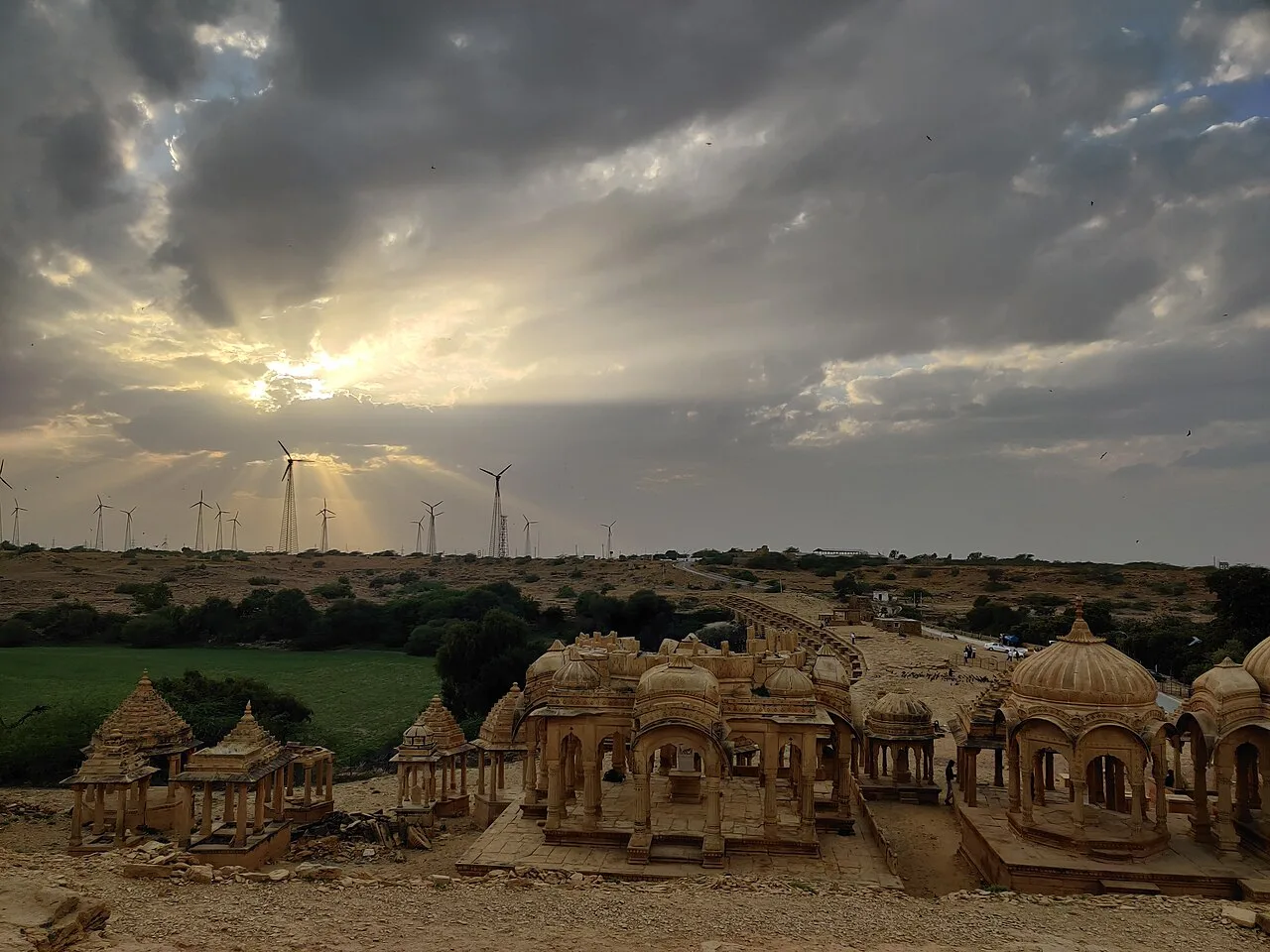
Bada Bagh
North of Jaisalmer, Bada Bagh is a garden complex in Rajasthan, known for its royal chhatri cenotaphs, which visitors come to see beside a mango plantation.
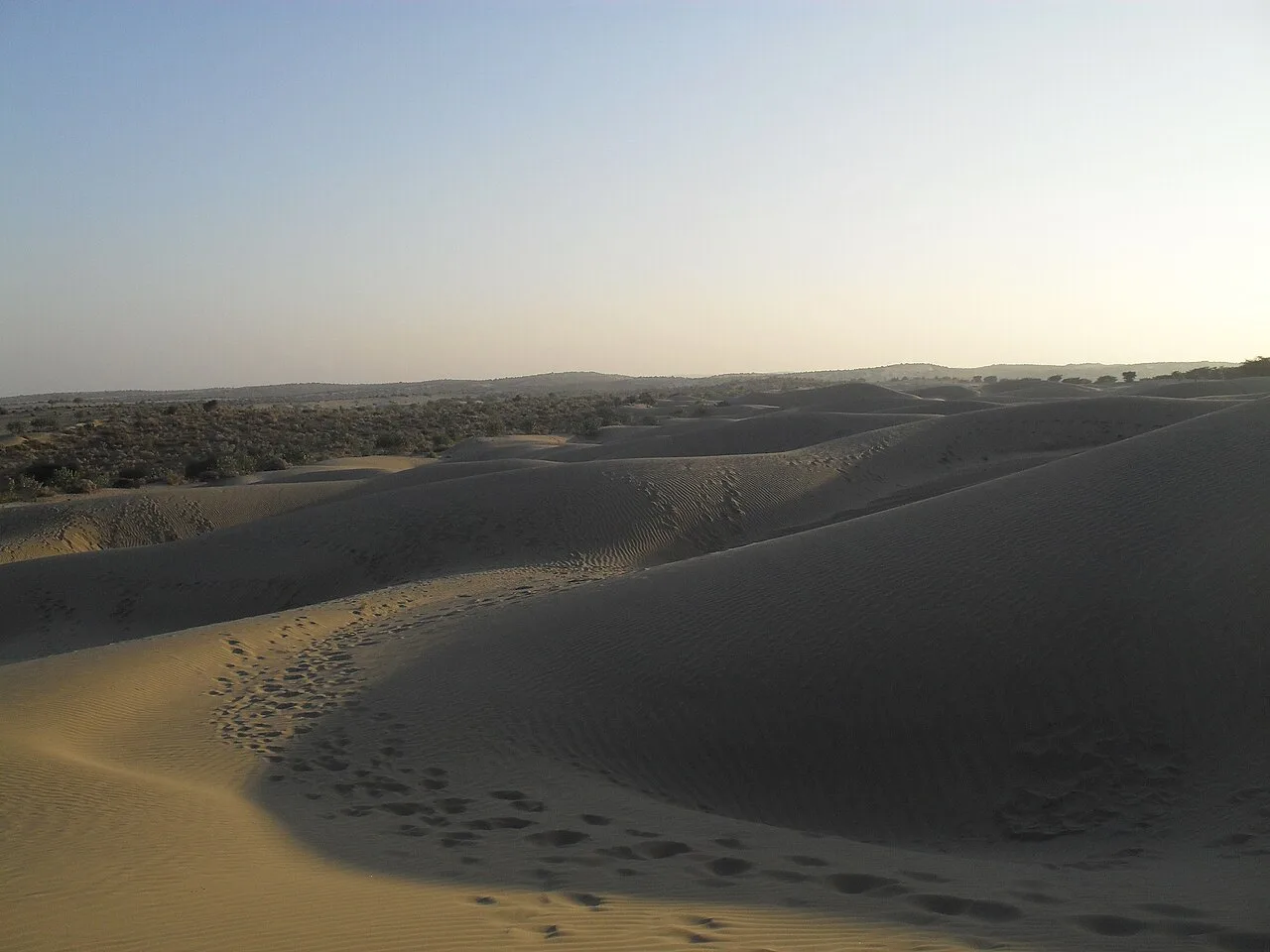
Desert National Park
Desert National Park is a large protected area in Rajasthan’s Thar Desert, near Jaisalmer and Barmer. Visitors are drawn by its resident and migratory birdlife, including the great Indian bustard, and its ancient fossils.
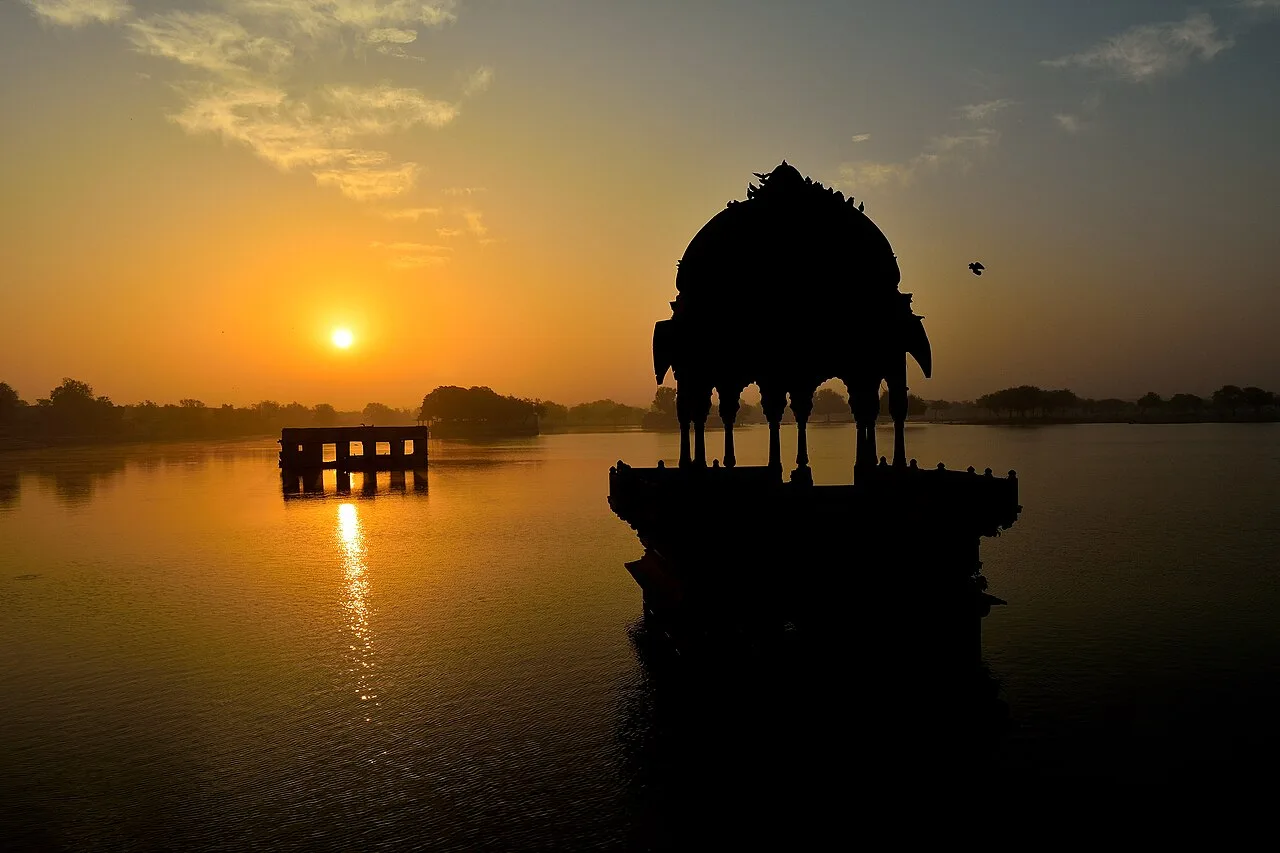
Gadisar Lake
Gadisar Lake, also called Gadsisar Lake, is a man-made reservoir in Jaisalmer, Rajasthan. Visitors come to see the historic waterbody and discover its former importance to the city.
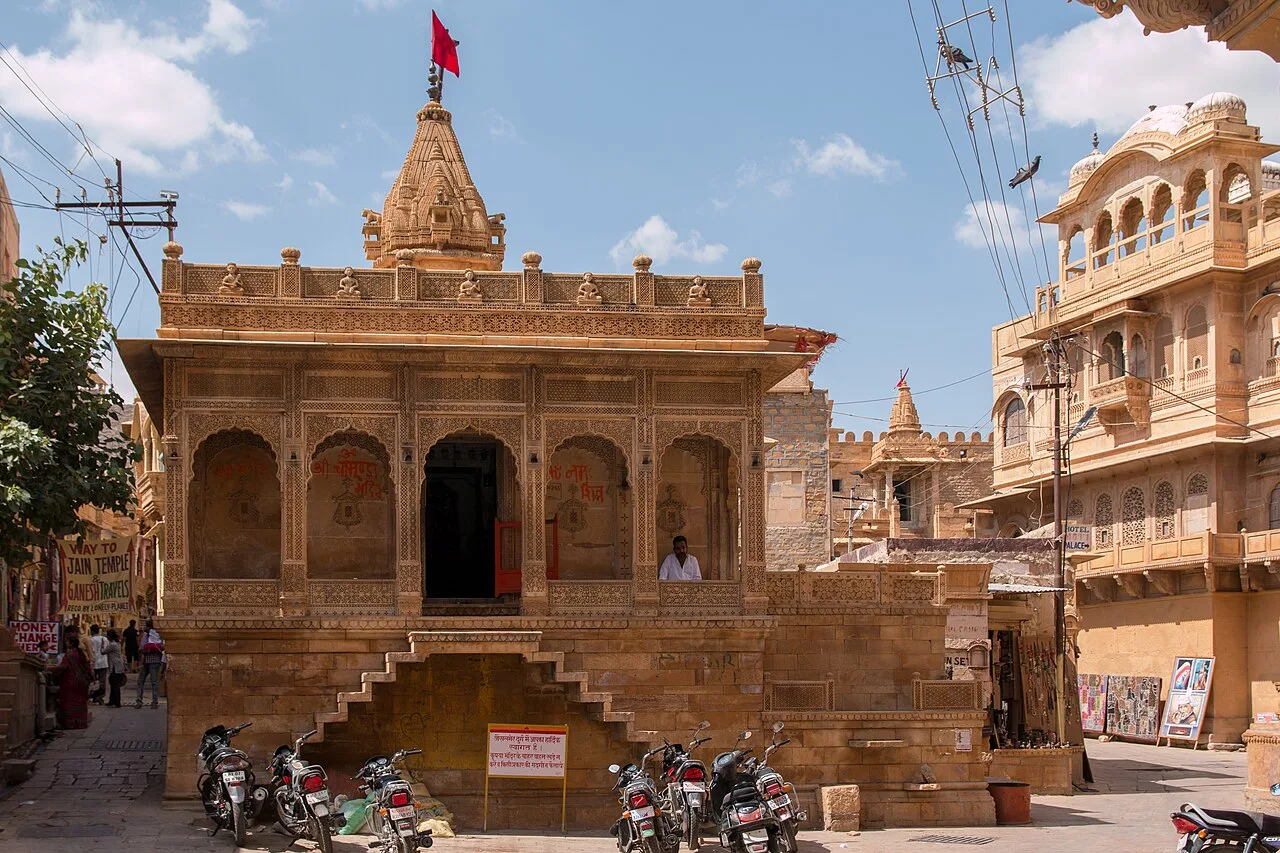
Jaisalmer Fort
Jaisalmer Fort is a historic sandstone stronghold in Rajasthan, known for its resident community, desert-coloured walls and location on old trade routes. Visitors come to explore its distinctive setting and history.
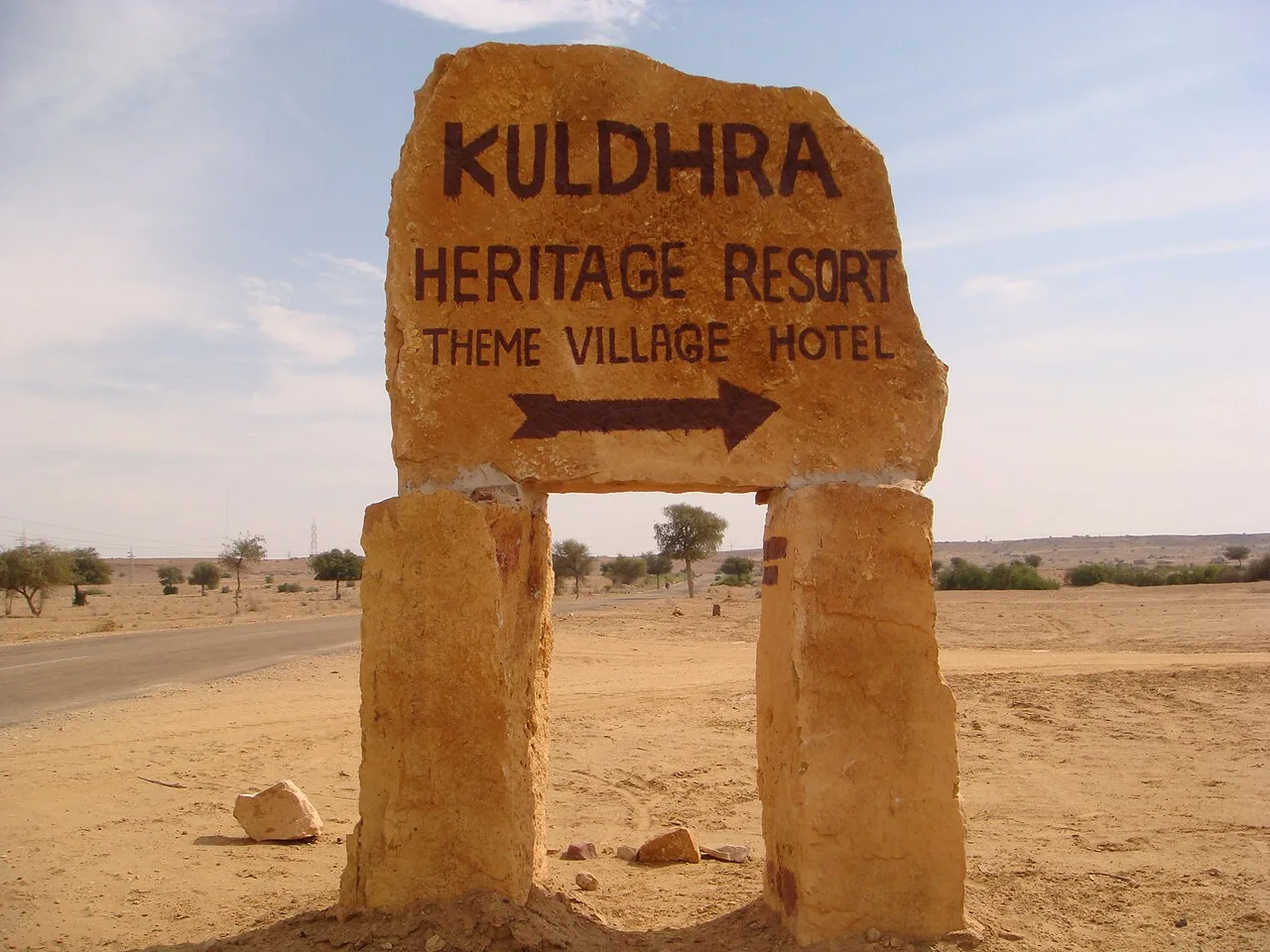
Kuldhara
Kuldhara is a deserted settlement in Rajasthan’s Jaisalmer district, once home to Paliwal Brahmins. Visitors are drawn by its abandoned character and its reputation for hauntings.

Patwon Ki Haveli
Patwon Ki Haveli is a palace or haveli in Jaisalmer district, Rajasthan. Visitors come to see this named place and its classification as a haveli or palace.
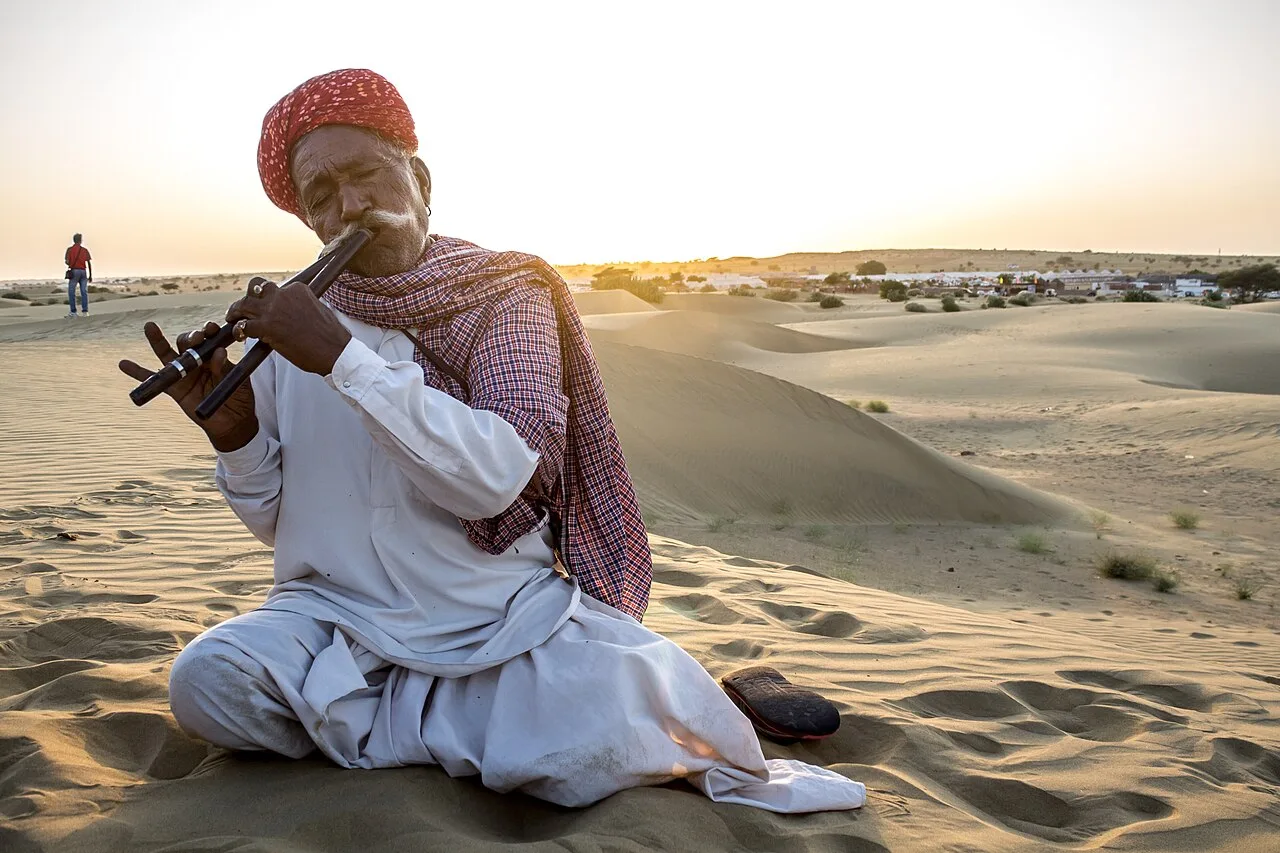
Sam Sand Dunes
In Rajasthan’s Jaisalmer district, Sam Sand Dunes is a desert landscape. Visitors come to experience the dunes and the surrounding desert setting.
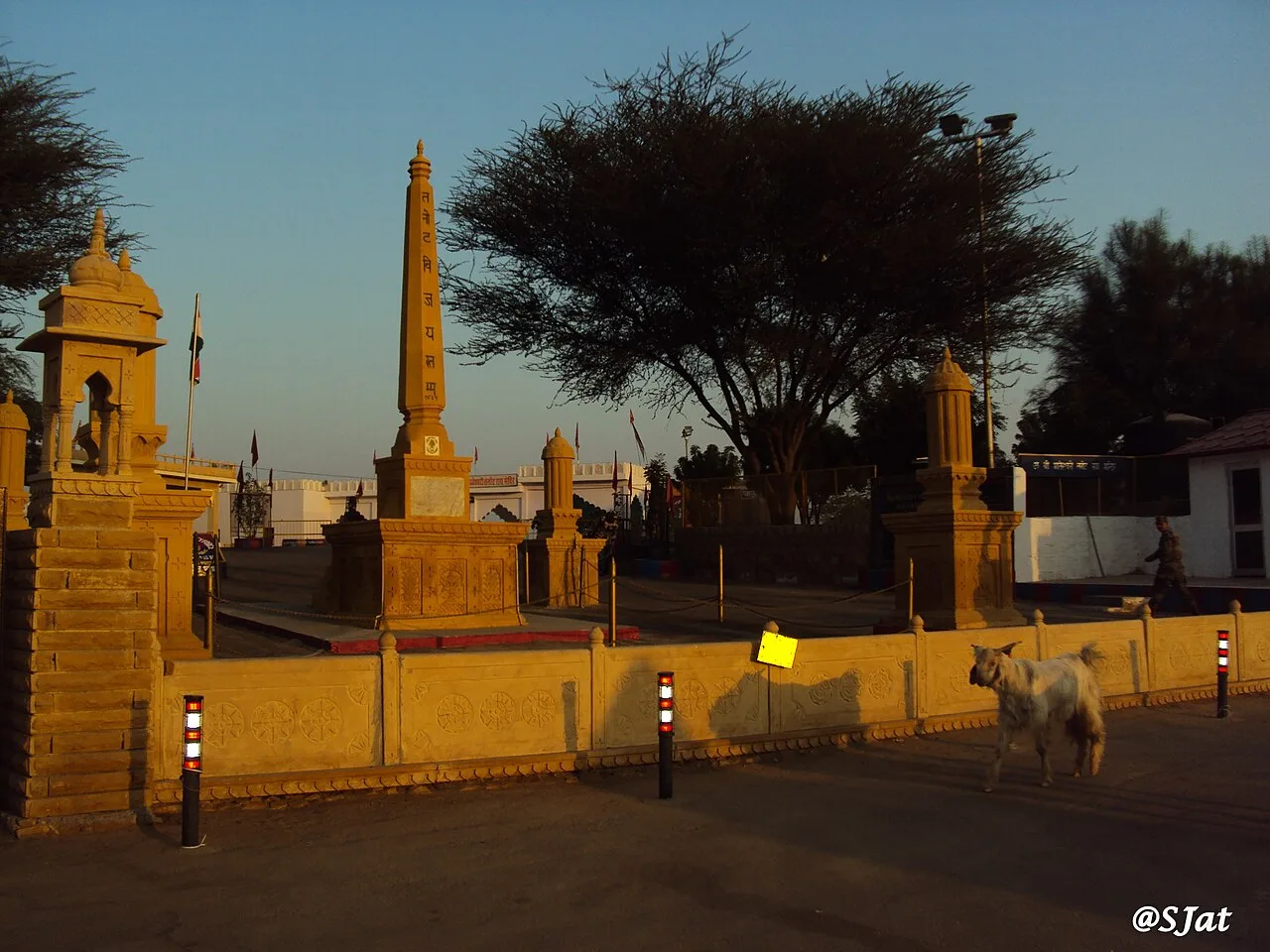
Tanot Mata Temple
Tanot Mata Temple is a Hindu shrine in Rajasthan’s Jaisalmer district. Visitors come to worship Tanot Mata and to connect the temple with local beliefs about the Battle of Longewala.
Food in Jaisalmer draws on wider Rajasthani traditions shaped partly by an arid climate. Dal baati churma pairs lentils and baked wheat baati with a sweet accompaniment, while gatte ki sabzi uses gram-flour dumplings in gravy. Ker sangri, made with desert produce, is especially associated with western Rajasthan. Pyaaz kachori and mirchi vada are familiar snacks; ghewar and mawa kachori belong to the region’s broader sweet repertoire. Vegetarian choices are plentiful, while some restaurants serve laal maas and other meat dishes. Ask small eateries what is freshly prepared, and carry drinking water and food for remote excursions.
Jaisalmer’s most visible artistic tradition is sandstone carving, seen in the detailed facades, balconies and screens of its historic buildings. Embroidered textiles, patchwork and mirror-work also feature in the craft traditions of western Rajasthan, rather than belonging exclusively to this district. Leatherwork and woven woollen textiles form part of the wider desert region’s material culture. City shops sell a mixture of locally made goods and products sourced elsewhere. Ask about the maker, place of production and materials when buying, especially if you want to support artisans working in the district.
The Jaisalmer Desert Festival, usually held in winter, features regional music, dance and cultural displays, with events in and around the city. Its programme and dates can vary, so check locally before planning. The festival period can bring a noticeable increase in visitors and make rooms harder to find. Gangaur, Teej and Diwali are also observed in the region, though customs and scale vary between communities. These occasions may affect local transport and accommodation, particularly when they coincide with holiday travel.
Elsewhere in Rajasthan
The district is largely arid, with sandy plains, shifting dunes, rocky stretches and sparse desert vegetation. There are no major perennial rivers; seasonal drainage and carefully managed sources of water are important in this dry environment. The landscape around Sam is defined by dunes, while Desert National Park protects a broad section of desert habitat. Jaisalmer city is the main service centre, but sights are spread across a wide area. Road journeys can be long, and routes to remote places such as Tanot require advance planning and enough water.
Jaisalmer has a hot desert climate. Summer, broadly from spring into the monsoon season, brings intense heat and strong sun, making outdoor visits less comfortable in the middle of the day. The monsoon usually brings limited, variable rain; roads and desert conditions can change after showers. Winter is cooler and generally the most comfortable season for sightseeing and desert excursions. October to March is often the preferred period, though winter nights can be cold. Pack sun protection, light clothing for daytime, warmer layers for evenings, sturdy footwear and a refillable water bottle. Check conditions before remote drives.
Jaisalmer railway station is the main rail arrival point for the city and a useful starting point for district travel. Jaisalmer Airport has seasonal flight services; confirm availability before planning around it. Jodhpur provides another air gateway, followed by an onward road or rail journey. Roads connect Jaisalmer with Jodhpur, Bikaner and Barmer, with buses and hired vehicles providing onward options. Within the city, walking and auto-rickshaws are practical; taxis are useful for Bada Bagh, Kuldhara, Sam and longer trips to Tanot. Arrange transport to the appropriate entry point for Desert National Park. Check current services locally.
Jaisalmer city is the main base for reaching the district’s sights. Walking and auto-rickshaws are useful around the historic centre, while taxis or hired vehicles are more practical for Bada Bagh, Kuldhara, Sam Sand Dunes and Tanot Mata Temple. Local and intercity buses connect Jaisalmer with other settlements, but services may not suit every sightseeing route; confirm options locally. Roads link the district with Jodhpur, Barmer and Bikaner. Arrange transport to the appropriate entry point for Desert National Park, and plan remote journeys with a driver familiar with local roads.
2 days: Jaisalmer Fort, Patwon Ki Haveli, Gadisar Lake, Bada Bagh; sleep in Jaisalmer city. 3 days: Jaisalmer Fort, Patwon Ki Haveli, Gadisar Lake, Bada Bagh; sleep in Jaisalmer city. Kuldhara, Sam Sand Dunes; sleep in the Sam area. 4 days: Jaisalmer Fort, Patwon Ki Haveli, Gadisar Lake, Bada Bagh; sleep in Jaisalmer city. Kuldhara, Sam Sand Dunes; sleep in the Sam area. Desert National Park; sleep in Jaisalmer city. Tanot Mata Temple; sleep in Jaisalmer city.
Jaisalmer city is the most practical base for the fort, havelis, Gadisar Lake and trips to nearby sites. It has a range of hotels, guesthouses and homestays, as well as some simpler accommodation options. For an overnight desert experience, stay in the Sam area, where desert camps and other visitor accommodation are available; check what is operating in the season you plan to travel. Tanot is remote, so Jaisalmer city is generally a more workable base for that journey. Confirm availability in advance during festival periods and winter holidays.
Desert sun and dry air can cause dehydration, so carry water, use sun protection and avoid strenuous walks in the hottest part of the day. Wear sturdy footwear on sand and uneven ground, and do not approach or disturb wildlife. Use a reliable vehicle and driver for remote routes; road conditions, signage and mobile coverage can be limited away from the city. At Sam, follow local guidance around dunes and vehicle activity. Carry identification, especially when travelling near the border, and confirm current access arrangements for Tanot with local authorities. Check official guidance for any site-specific entry or permit requirements before visiting.
Straight-line distance between the centres of each district's destinations; road distance is longer.
Q: How many days should I spend in Jaisalmer district? A: Two days can cover the city and a nearby outing; three or four days allow more time for the desert and remote sites. Q: When is the best time to visit? A: October to March is generally most comfortable for sightseeing, though winter evenings can be cold. Q: What is the best base for exploring? A: Jaisalmer city is the most useful all-round base; stay near Sam for an overnight desert visit. Q: How do I get to Jaisalmer? A: The city has a railway station and seasonal flights may serve Jaisalmer Airport. Jodhpur is another air gateway, with onward road or rail travel. Q: Is Jaisalmer suitable for families or elderly travellers? A: Yes, with planning. The fort and older lanes can involve uneven surfaces and steps, while desert drives can be long; choose outings and transport to suit mobility needs.
This page draws on our 8 destination guides for Jaisalmer and is updated as our team checks it.
Be the first to share photos, stories, advice or a helpful contact for Jaisalmer.
Loading…