
District · Rajasthan
Sawai Madhopur
Sawai Madhopur is a district in eastern Rajasthan, on a transition between the state’s dry inland plains and the rugged, wooded country around Ranthambore.
Sawai Madhopur district in eastern Rajasthan is best known for Ranthambore, where dry deciduous woodland, rocky hills and lakes create a striking wildlife landscape. Tigers are its most celebrated residents, but the setting also rewards attention to birds, deer and the changing colours of the forest. Overlooking this terrain, Ranthambore Fort recalls centuries of strategic rivalry and royal rule; it forms part of the UNESCO-listed Hill Forts of Rajasthan. Sawai Madhopur town serves as the main base for exploring the area. Beyond the familiar safari circuit, the district’s character combines rural Rajasthan, religious traditions and a close relationship between historic settlements and the surrounding forest.
Sawai Madhopur is a district in eastern Rajasthan, on a transition between the state’s dry inland plains and the rugged, wooded country around Ranthambore. It is best known for Ranthambore National Park, a protected landscape where visitors may see tigers alongside birds and other wildlife, and for Ranthambore Fort, part of the UNESCO-listed Hill Forts of Rajasthan. The district offers more than a safari: its rural settlements, religious traditions and historic sites show how communities have lived alongside a distinctive forest environment. Sawai Madhopur town is the main base for exploring the area and a rail gateway for visitors.
Ranthambore Fort has long commanded routes through the hills and forests of this part of eastern Rajasthan. It was associated with the Chauhan Rajputs, and the ruler Hammiradeva is remembered for defending it before its capture by the forces of Delhi Sultan Alauddin Khalji in 1301. The fort later passed through changing phases of regional and imperial control, including Mughal rule, before the area became part of the Jaipur princely state. Sawai Madhopur town was founded in 1763 by Maharaja Sawai Madho Singh I and named after him. Under British paramountcy, Jaipur remained a princely state rather than a directly administered British province. After Indian independence, Jaipur joined the newly formed state of Rajasthan. Sawai Madhopur became a district within Rajasthan, with later changes to district boundaries; Karauli was separated from it in 1997. Ranthambore’s forests subsequently gained formal protection as a wildlife area, adding a conservation chapter to a region already shaped by fortifications, kingdoms and rural life.
2 destination guides
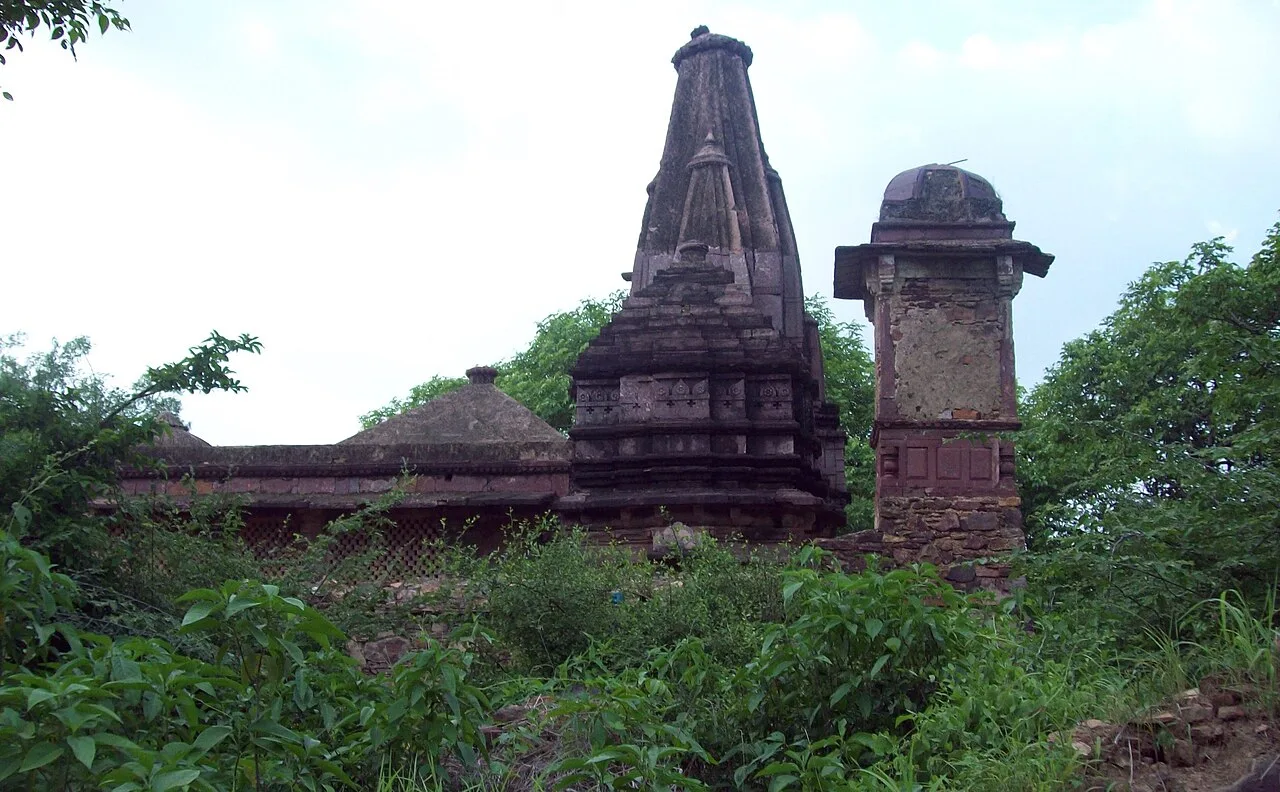
Ranthambore Fort
Set within Ranthambore National Park near Sawai Madhopur, this historic Rajasthan fort draws visitors for its past, elevated views over the park and UNESCO World Heritage status.
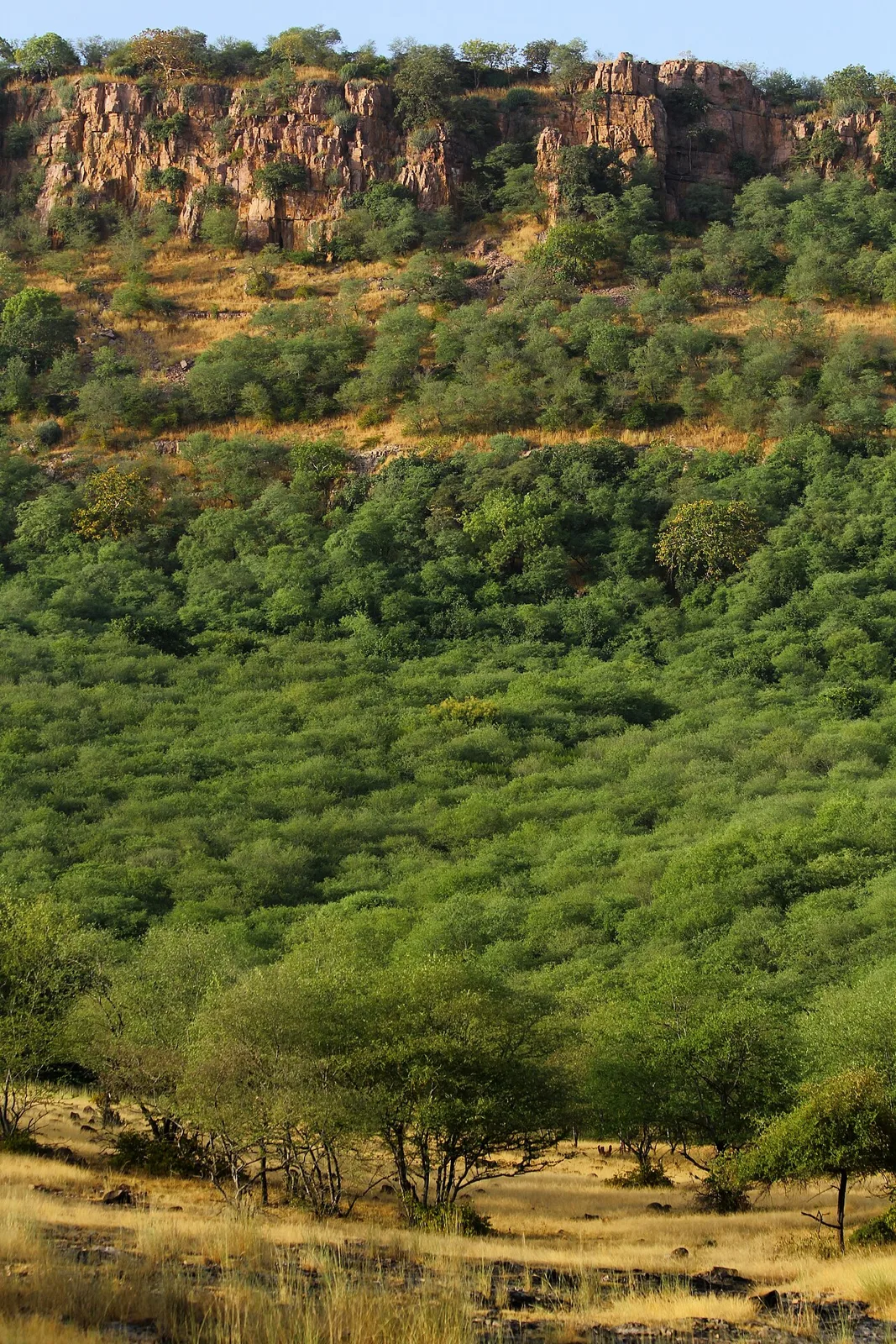
Ranthambore National Park
Ranthambore is a national park in Rajasthan’s Sawai Madhopur district, attracting visitors to its historic fort and its location between the Banas and Chambal rivers.
Food in Sawai Madhopur draws on the wider traditions of Rajasthan rather than a sharply separate district cuisine. Look for dal baati churma, gatte ki sabzi and ker sangri, alongside snacks such as pyaaz kachori and mirchi vada. Chaach, or spiced buttermilk, is a familiar accompaniment, while ghewar and mawa kachori represent the region’s sweet-making traditions. Vegetarian choices are generally plentiful; some restaurants also serve Rajasthani meat dishes such as laal maas. Small eateries may offer only a limited daily menu, so ask what is freshly prepared. Carry water and snacks for outings away from town.
Craft shopping around Sawai Madhopur can introduce visitors to Rajasthan’s broader textile and decorative traditions. Block-printed cottons, bandhani tie-dye, embroidery and patchwork belong to this wider regional heritage and should not automatically be treated as locally made. Wildlife-themed paintings and souvenirs also reflect Ranthambore’s influence on the visitor economy. When buying, ask where an object was produced, who made it and whether the work is handmade or mechanically reproduced. Artisan groups and workshops, where accessible, offer a better opportunity to understand materials and techniques than an unlabelled souvenir display.
Ganesh Chaturthi is especially significant at the temple within Ranthambore Fort, and the associated seasonal gathering draws pilgrims from the district and beyond. Navratri, Diwali, Holi and Gangaur are also observed in the region, with customs varying between communities. Festival periods can make roads and approaches busier, particularly around the fort, and accommodation in Sawai Madhopur may be in greater demand. The timing of religious observances follows the local calendar, so visitors planning around a festival should check current arrangements and reserve a room ahead where possible.
Elsewhere in Rajasthan
The district’s terrain shifts between settled plains, dry scrub and the rocky ridges, valleys and lakes of the Ranthambore landscape. Dry deciduous forest and thorn woodland support wildlife, while seasonal streams and water bodies shape animal movement and the appearance of the park. The Banas River and its tributaries are part of the wider regional drainage. Hills and forest tracks make some journeys slower than map distances might suggest; access to protected areas follows designated routes and authorised arrangements. Monsoon rain can affect rural roads, while dry-season travel may bring dust and strong sun.
Sawai Madhopur has hot summers, a monsoon season and comparatively mild, cooler winters. Summer heat can make outdoor sightseeing tiring, especially around exposed fort paths. The monsoon, generally from June into September, brings greener scenery but rain may affect roads and wildlife-safari arrangements. November to February is usually the most comfortable period for combining park visits with time in town or at the fort, though mornings and evenings can feel cool. Pack light, breathable clothing, sun protection and a hat for warmer months; in winter bring layers, particularly for early starts. Carry suitable walking shoes and rain protection during the wet season.
Jaipur International Airport is the main nearby air gateway, with onward travel to Sawai Madhopur by road or rail. Sawai Madhopur railway station is the principal rail arrival point for the district and Ranthambore. Road connections make the town accessible from Jaipur and Kota, with buses and hired cars among the options. Within town, auto-rickshaws and taxis are useful; accommodation providers can help arrange transfers towards Ranthambore. Wildlife safaris require authorised arrangements rather than ordinary local transport, and fort access should be confirmed separately. Allow time for transfers and check current services locally.
Sawai Madhopur town is the district’s main transport hub, and road links connect it with nearby settlements and larger centres such as Jaipur and Kota. Local buses serve some routes, but services and onward connections can be limited, so check locally before relying on them for a tight itinerary. Auto-rickshaws and taxis are useful for getting around town; a hired car can help with trips beyond it. Ask accommodation providers about transfers to the Ranthambore area. Safaris use authorised vehicles and routes, not ordinary local transport, and access arrangements should be confirmed through official channels.
2 days: Day 1, Ranthambore National Park; sleep in Sawai Madhopur. Day 2, Ranthambore Fort; depart from Sawai Madhopur. 3 days: Day 1, Ranthambore National Park; sleep in Sawai Madhopur. Day 2, Ranthambore Fort; sleep in Sawai Madhopur. Day 3, Ranthambore National Park; depart from Sawai Madhopur.
Sawai Madhopur town is the most practical base for both listed destinations, with a range of hotels and guesthouses and access to local transport. Stays nearer the Ranthambore area can suit travellers prioritising safari arrangements, but check how transfers and park access are organised before booking. Simple lodges and homestays may be available in the wider area, while government accommodation or dharamshalas can have specific booking rules and limited availability. Reserve ahead during winter, holiday periods and major religious gatherings, and confirm the location and transport arrangements of your stay.
Follow park rules and your authorised guide’s instructions; never approach, feed or try to attract wildlife, and remain in the vehicle where required. Fort paths and rocky ground can be uneven, so wear secure footwear and take care in heat or rain. Drink safe water, use sun protection and carry any personal medication. Road conditions and connectivity can vary outside town, so allow flexibility and avoid relying on a phone signal in forest areas. Safari access requires authorised protected-area arrangements; confirm current permits and rules officially. Expect crowds around festival gatherings and allow extra time for local travel.
- Bundiabout 106 km
- Dausaabout 108 km
- Jaipurabout 121 km
- Kotaabout 126 km
- Alwarabout 144 km
- Shivpuri · Madhya Pradeshabout 146 km
- Bhilwaraabout 167 km
- Bharatpurabout 168 km
Straight-line distance between the centres of each district's destinations; road distance is longer.
Q: How many days should I spend in Sawai Madhopur? A: Two days can cover the main destinations, while three days allow a more flexible visit and another opportunity to arrange a park outing. Q: When is the best time to visit? A: November to February is generally the most comfortable season for sightseeing and wildlife visits. Summer is hot, and monsoon conditions can affect travel. Q: What is the best base for visiting the district? A: Sawai Madhopur town is the most convenient base for the listed destinations and onward transport. Q: How do I get to Sawai Madhopur? A: The town has the district’s principal railway station and can also be reached by road from Jaipur and Kota. Jaipur International Airport is a nearby air gateway, with onward travel by road or rail. Q: Is Sawai Madhopur suitable for families or elderly travellers? A: Yes, with planning. Choose suitable transport, check walking conditions at the fort, and consider heat, early starts and the needs of anyone with limited mobility.
This page draws on our 2 destination guides for Sawai Madhopur and is updated as our team checks it.
Be the first to share photos, stories, advice or a helpful contact for Sawai Madhopur.
Loading…