
District · Rajasthan
Bikaner
In northwestern Rajasthan, Bikaner offers a view of desert life alongside the history of a former princely state.
Bikaner district lies in northwestern Rajasthan, where the Thar Desert shapes a landscape of sandy plains, dunes and sparse scrub. Founded by Rao Bika in the late fifteenth century, Bikaner city became the capital of a princely state whose legacy remains visible in its forts and palaces. Junagarh Fort anchors the city's historic character, while Lalgarh Palace, built for Maharaja Ganga Singh between 1902 and 1926, represents a later phase of royal patronage. Beyond the city, Gajner Palace recalls the rulers' hunting retreats, and Karni Mata Temple at Deshnoke remains an important Hindu pilgrimage destination. Together, these places reveal a district shaped by desert conditions, royal history and living religious traditions.
In northwestern Rajasthan, Bikaner offers a view of desert life alongside the history of a former princely state. Its best-known sights include Junagarh Fort and Lalgarh Palace in Bikaner city, Gajner Palace beyond the city, and Karni Mata Temple in Deshnoke, an important pilgrimage centre. The district’s sandy terrain, sparse scrub and historic settlements reflect the challenges of living in the Thar Desert. Travellers can combine architecture and religious heritage with road journeys through an arid landscape. Bikaner is also known for its camel-related traditions and distinctive local food culture.
Bikaner’s recorded history as a Rajput kingdom begins in the late fifteenth century, when Rao Bika, a Rathore prince, established a settlement that became Bikaner city and the capital of the princely state. The ruling house developed forts, palaces and trade connections across the desert region. Junagarh Fort took shape under later rulers, while Gajner served as a royal retreat. Bikaner came under British paramountcy during the colonial period but retained its princely rulers and internal administration. Maharaja Ganga Singh, who ruled from the late nineteenth into the early twentieth century, oversaw major public works and commissioned Lalgarh Palace, built between 1902 and 1926. After independence, the princely state joined Rajasthan in 1949. Bikaner subsequently became a district within the state’s administrative system; its boundaries and governance have been shaped by later administrative changes. The city’s historic buildings and Deshnoke’s continuing pilgrimage tradition reflect different strands of the region’s past.
4 destination guides
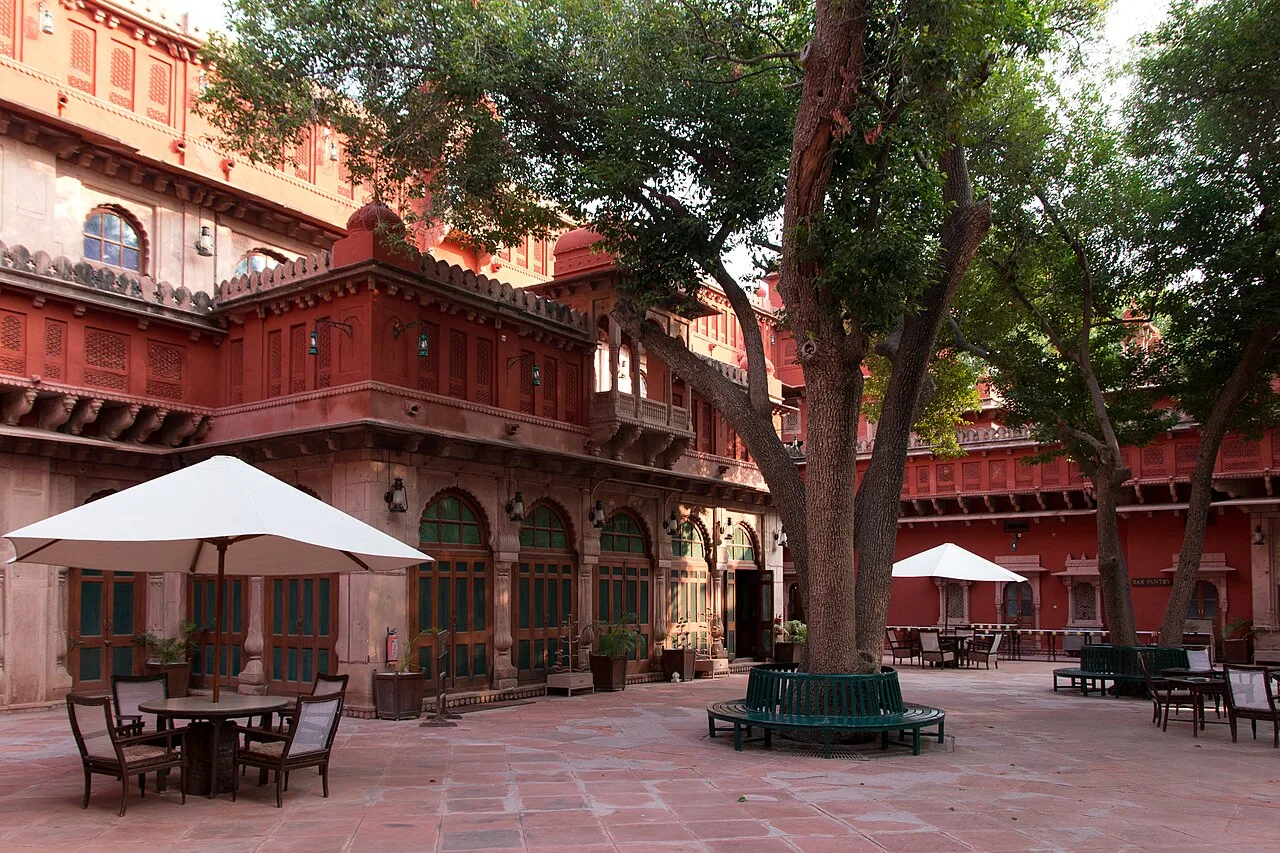
Gajner Palace
Gajner Palace, in Rajasthan’s Bikaner district, was used by the maharajas of Bikaner as a hunting lodge and now operates as a heritage hotel. Visitors come to stay at the palace.
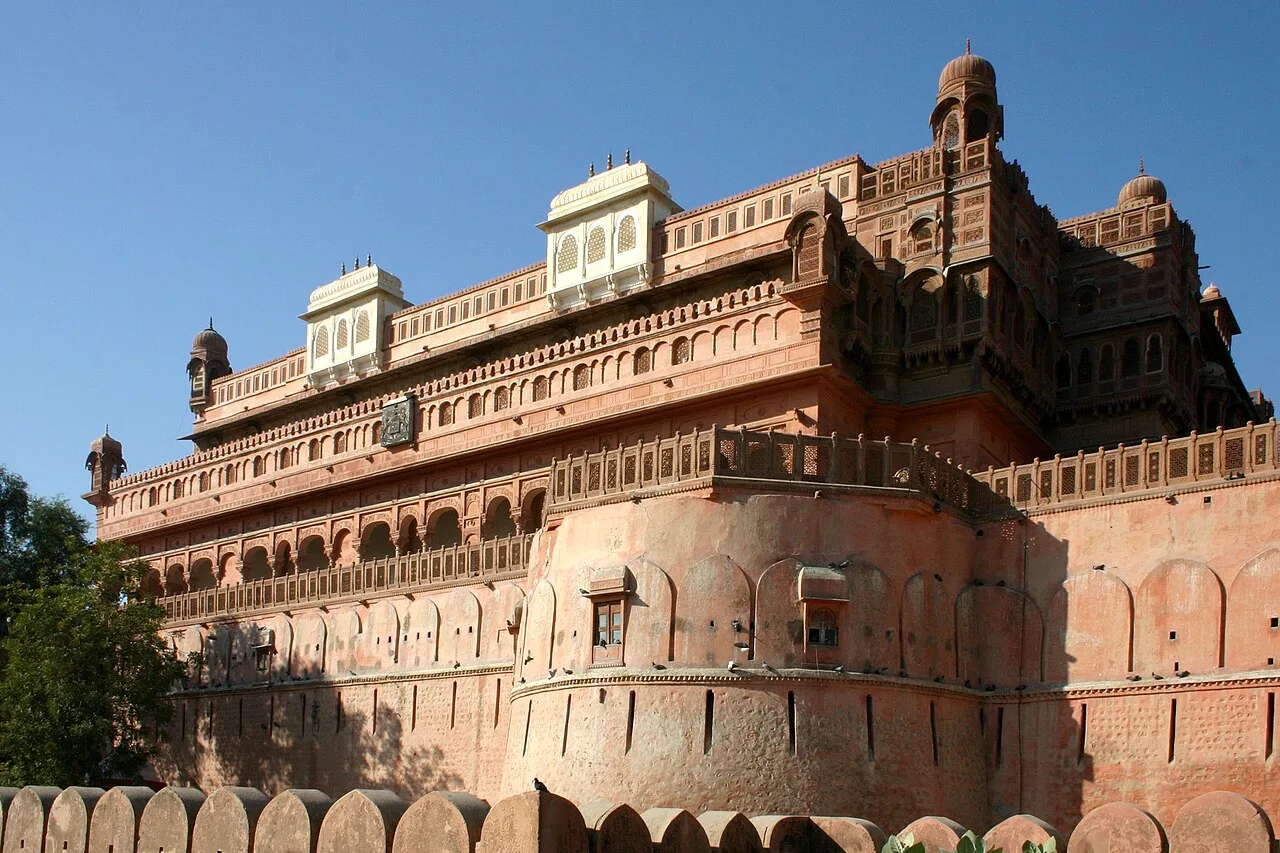
Junagarh Fort
Junagarh Fort is a historic complex in Bikaner, Rajasthan, known for its palaces, temples and pavilions. Visitors can explore its layered history and blend of architectural traditions.
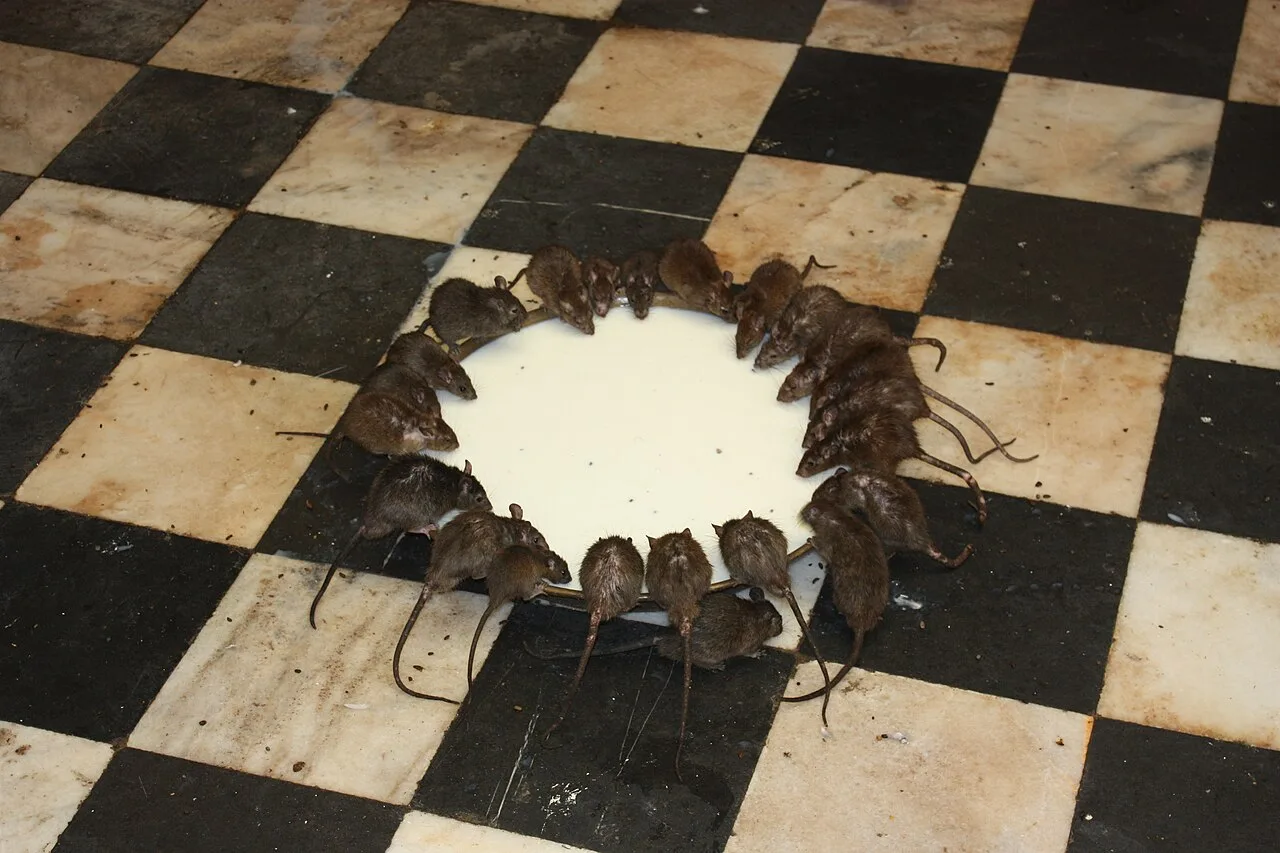
Karni Mata Temple
Karni Mata Temple is a Hindu shrine in Deshnoke, Rajasthan, associated with Karni Mata and sacred kābā rodents. Pilgrims seek blessings there, while visitors come to see its distinctive rat population.
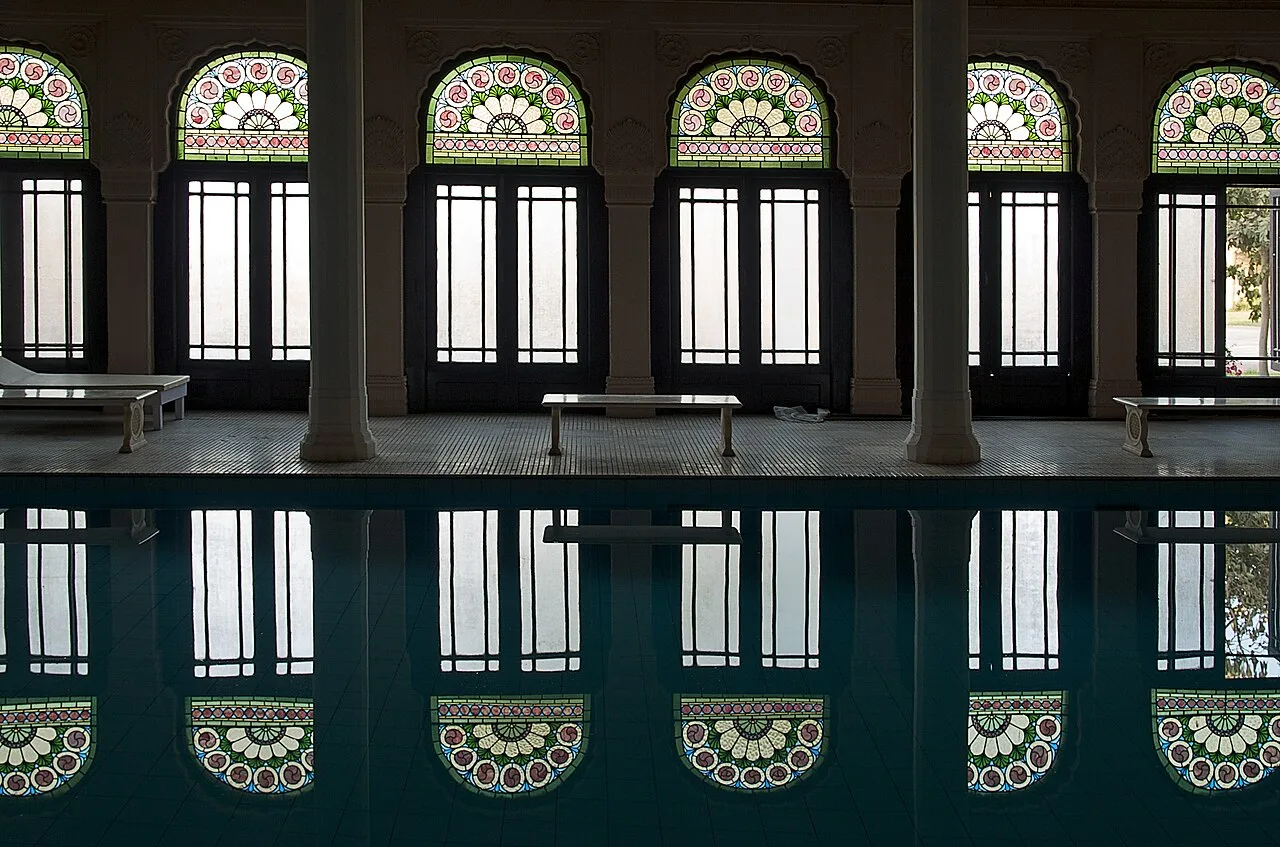
Lalgarh Palace
Lalgarh Palace is a palace and heritage-hotel property in Bikaner, Rajasthan, created for Maharaja Sir Ganga Singh. Visitors come to see the residence and its links to Bikaner’s royal history.
Bikaner is especially associated with bhujia, the savoury snack made with gram and moth-bean flours, and is also known for sweets such as rasgulla. For fuller meals, look for dal baati churma, gatte ki sabzi and ker sangri, dishes belonging to the wider Rajasthani repertoire rather than Bikaner alone. Pyaaz kachori and mirchi vada are popular regional snacks, while chaach offers a savoury accompaniment to meals. Vegetarian choices are plentiful; laal maas appears on some non-vegetarian menus. Ask smaller eateries what has been freshly prepared, and carry drinking water and snacks when travelling beyond town.
Bikaner is associated with Usta art, a tradition of finely detailed decoration and gold embossing, particularly on camel leather and other surfaces. Its floral and ornamental designs reflect the region's history of courtly patronage. Bikaner also developed a recognised school of miniature painting under its former rulers. Wool weaving and carpet-making belong to the wider craft landscape of western Rajasthan, rather than being exclusive to this district. When shopping, ask who made a piece, which materials were used and whether its decoration is painted, printed or worked by hand.
The Bikaner Camel Festival, generally held in winter, celebrates the region’s long association with camels and can bring visitors into the city. Karni Mata Temple at Deshnoke draws especially large pilgrim gatherings during the Navratri periods in spring and autumn. Gangaur and other Hindu festivals are also observed locally, though customs and scale vary by community. During major festival periods, roads and temple areas may be busier, and accommodation in Bikaner can be in greater demand. Check local event information when planning a visit.
Elsewhere in Rajasthan
Bikaner district lies in the Thar Desert, with broad sandy plains, shifting or semi-stabilised dunes and sparse drought-adapted scrub. It has no major perennial river or high mountain terrain; seasonal drainage and limited water resources shape settlement and travel. Canal-irrigated areas have changed parts of the wider region, supporting cultivation amid otherwise arid surroundings. Most sightseeing is by road between Bikaner city, Deshnoke and Gajner. Rural stretches can be exposed and sparsely serviced, so carry water and plan onward transport rather than relying on facilities along the way.
Bikaner has a dry desert climate, with very hot summers, a short and generally limited monsoon season, and cooler winters. October through March is usually the most comfortable period for sightseeing, although winter mornings and evenings can feel cold. Summer travel requires particular care with heat, sun exposure and hydration. Pack light, breathable clothing, a hat, sunglasses and sunscreen for daytime, plus a warmer layer for winter evenings. Carry water on road trips and check the forecast during the monsoon, when occasional rain can affect local roads.
Bikaner Junction is the principal rail gateway for visitors, while Bikaner (Nal) Airport is the local air option; confirm available flights before planning around it. Jaipur and Jodhpur offer alternative airport gateways, followed by an onward road or rail journey. Roads connect Bikaner with Jaipur, Jodhpur and other towns across Rajasthan, with buses and hired cars providing practical options. Within Bikaner city, auto-rickshaws and taxis are useful for sightseeing. Deshnoke and Gajner require separate onward journeys, so arrange return transport rather than assuming it will be readily available at the site. Check current services locally.
Bikaner city is the main transport hub. Auto-rickshaws and taxis are useful for getting between central sights, while buses and hired cars connect the city with towns and settlements across the district. Deshnoke and Gajner are separate road excursions; arrange a return ride in advance, as transport may be less readily available at the sites. Local and regional bus services can be useful, but routes and frequency vary. Roads are generally the practical way to reach the district’s sights, and rural sections may have fewer services than the city. Confirm current options locally.
2 days: Junagarh Fort, Lalgarh Palace; sleep in Bikaner. 3 days: Junagarh Fort, Lalgarh Palace, Karni Mata Temple; sleep in Bikaner both nights. 4 days: Junagarh Fort, Lalgarh Palace, Gajner Palace, Karni Mata Temple; sleep in Bikaner for the first two nights and Bikaner for the third.
Bikaner city is the most practical base for all the listed sights, with a broad choice of hotels and some heritage-style accommodation. It also offers the easiest access to local transport, food and services. Visitors making an early or extended pilgrimage visit to Deshnoke may prefer to check locally for simple lodging or dharamshalas, but facilities can be more limited than in the city. Government accommodation may be available in the wider area, subject to current access and booking arrangements. Confirm availability before travelling, especially during festival periods.
Desert heat and sun can cause dehydration, so carry drinking water, cover up and avoid strenuous outdoor activity in the hottest part of the day. Use treated or sealed drinking water if unsure of local supplies. Take care on rural roads, where services and lighting may be limited, and avoid unnecessary night driving. Mobile connectivity can vary outside Bikaner city. At Karni Mata Temple, follow local rules around animals and crowds; do not handle or disturb the temple’s rats. No special permit is generally associated with these listed sights, but confirm requirements with official sources if your itinerary includes other restricted areas.
Straight-line distance between the centres of each district's destinations; road distance is longer.
Q: How many days should I spend in Bikaner district? A: Two days can cover the main city sights; allow three or four days to include Deshnoke and Gajner at a more relaxed pace. Q: When is the best time to visit? A: October through March is generally the most comfortable season for sightseeing. Q: Where is the best base for visiting the district? A: Bikaner city is the most practical base, with the widest choice of accommodation and transport. Q: How do I get to Bikaner? A: Bikaner Junction is the main rail gateway, and Nal Airport is a local air option; Jaipur and Jodhpur are alternatives for onward travel. Confirm current services before setting out. Q: Is Bikaner suitable for families and elderly travellers? A: Yes, with planning. Choose cooler months, allow rest between outings, and account for heat, walking surfaces, temple crowds and the need to arrange transport to sites outside the city.
This page draws on our 4 destination guides for Bikaner and is updated as our team checks it.
Be the first to share photos, stories, advice or a helpful contact for Bikaner.
Loading…