
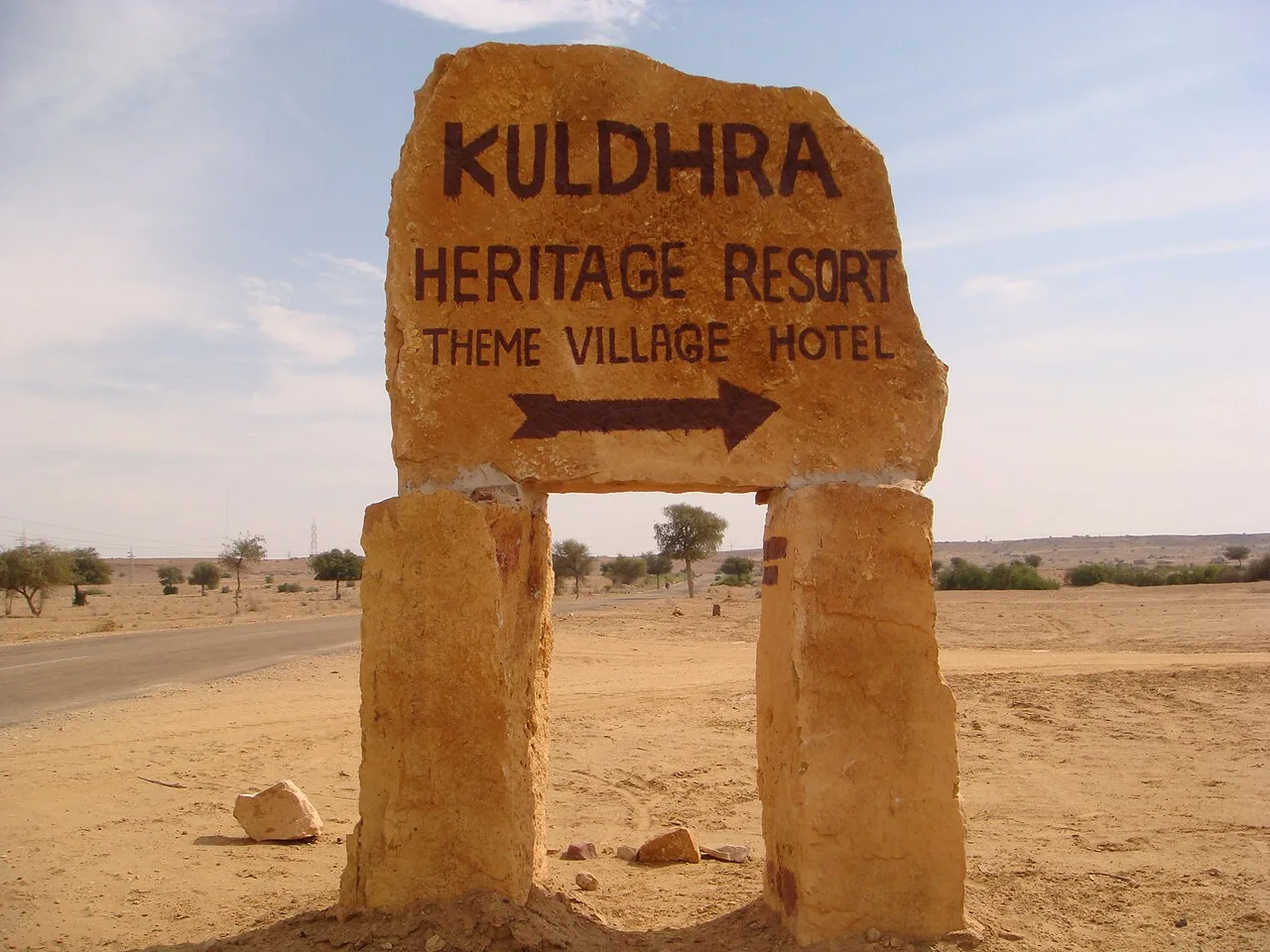
Kuldhara
Kuldhara is a deserted settlement in Rajasthan’s Jaisalmer district, once home to Paliwal Brahmins. Visitors are drawn by its abandoned character and its reputation for hauntings.
Key facts · verified by Ghumoopedia editors
- Type of place
- Community & living culture
- Best time to visit
- October to March
- Nearest railway station
- Jaisalmer · about 15 km (straight line)
- Nearest airport
- Jaisalmer Airport (seasonal flights) · about 10 km (straight line)
- Verified
- 21 Nov 2026
Plan a trip from Kuldhara — a day-by-day route through places nearby.
Kuldhara, in Rajasthan’s Jaisalmer district, dates to about the 13th century. It grew into a prosperous settlement whose residents were Paliwal Brahmins. By the start of the 19th century, however, the village had been left empty; the reason remains uncertain. Possible explanations include a declining water supply and an earthquake. A local account instead blames abuses by Salim Singh, a minister in the Jaisalmer State. The deserted settlement later became associated with tales of haunting. In the 2010s, Rajasthan’s government chose Kuldhara for tourism development, and its abandoned character and haunted reputation attract visitors. Rajasthan is the land of Rajput forts and palaces, painted havelis, desert folk music, puppetry and colourful fairs such as the Pushkar camel fair. Rajasthan is very hot from April to June — often above 45 °C in the desert — with a short monsoon in July–September. Winter days are pleasant and nights are cold, especially in the Thar Desert. Mount Abu is the state's only hill station and stays cooler. The usual best time to visit is October to March. Timings, fees and access arrangements must be confirmed locally. For official information, see Rajasthan Tourism at https://www.tourism.rajasthan.gov.in.
Why it matters
Kuldhara is an abandoned settlement in Jaisalmer district, associated with the Paliwal Brahmins, a community whose villages and agricultural skills formed part of the region’s history. Its surviving streets, house remains, temple and water structures offer a way to consider settlement, architecture and life in the arid Thar Desert. The village is also known for stories about its sudden abandonment, although the reasons are not established with certainty. The Government of Rajasthan decided to develop Kuldhara as a tourist site in the 2010s. Treat the ruins as a historic place, not as a living village.
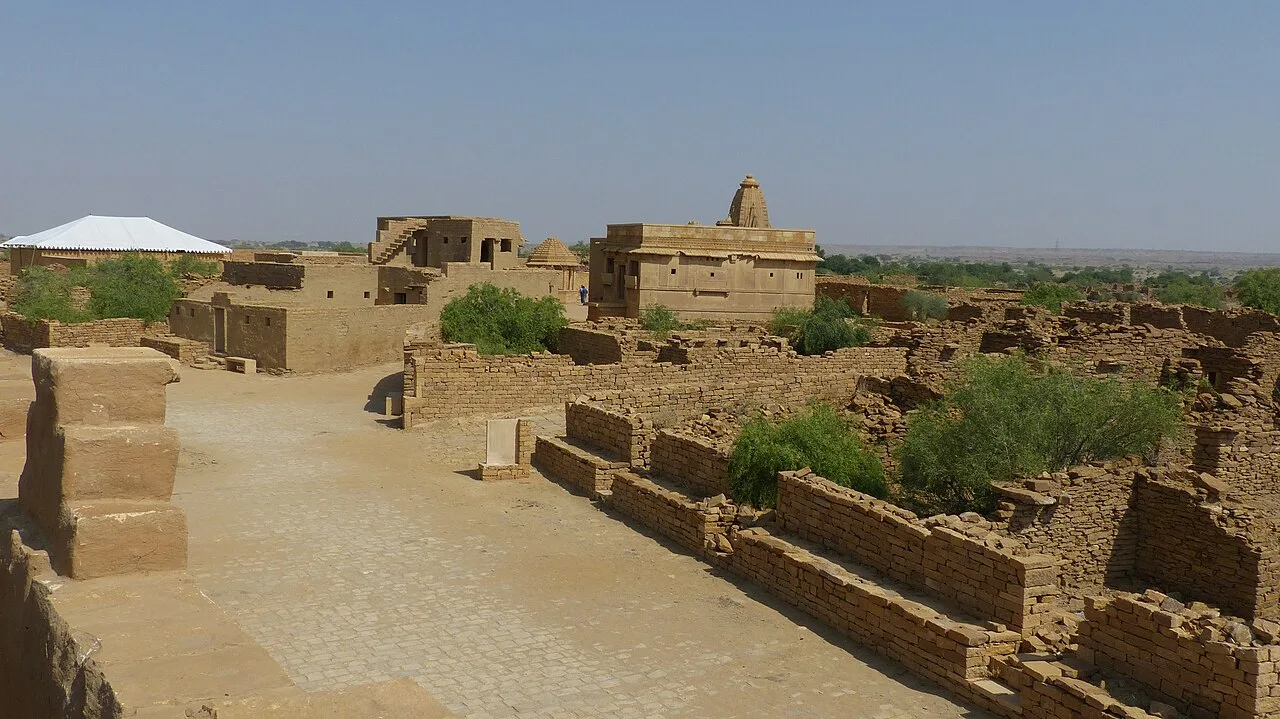
Kuldhara is traditionally dated to around the 13th century. It was inhabited by Paliwal Brahmins, whose settlements were spread across the Jaisalmer region. The Paliwals are associated with farming and with adapting settlement and water use to a dry environment. The remains at Kuldhara include traces of streets and homes, as well as a temple and water-related structures; visitors should understand these as ruins rather than intact buildings or a reconstructed village. The settlement was abandoned by the early 19th century, but no single cause has been established. Explanations proposed over time include declining water availability, an earthquake and conflict or pressure from the ruling authorities. The best-known account links the departure to the minister Salim Singh, but this is part of local tradition rather than a confirmed historical explanation. After abandonment, buildings deteriorated and the village acquired a reputation as a haunted place. In the 2010s the Government of Rajasthan decided to develop Kuldhara as a tourist destination. Visitors can see remnants of the settlement, but should not assume that all structures have been restored or that the site presents a complete picture of its past.
Origin stories & folklore
According to local tradition, Kuldhara’s Paliwal residents left the village overnight, along with people from other nearby settlements. The most widely repeated story says that Jaisalmer State minister Salim Singh sought to marry a village girl and threatened the community when it resisted. The villagers are said to have departed together, leaving a curse that no one would ever again be able to settle in Kuldhara. Other accounts suggest that the mass departure was prompted by oppressive demands or hardship. These stories are important to the site’s popular identity, but they are not verified explanations for the abandonment. The village’s haunted reputation is folklore, not evidence of supernatural events.
Use Kuldhara as a base to understand local life: walk through the market, look for local crafts and ask your host about nearby viewpoints and short excursions. Always ask before photographing people, homes or ceremonies. A comfortable itinerary is one main visit in the morning, a local meal at midday and a short nearby stop before an afternoon return. Use the district list on this site to find other places in Jaisalmer, but check the route and its condition before combining stops. If a festival or fair is on, roads and stays can be busy — and the experience can be unforgettable. Leave no litter: many sites are protected by the communities around them.
Suggested itineraries
Half day: Travel from Jaisalmer, spend about 1–2 hours walking through the village remains and viewing the historic structures, then return to town. Full day: Visit Kuldhara in the morning, take a meal break in Jaisalmer, then explore Jaisalmer Fort and one nearby heritage attraction such as Patwon Ki Haveli. Gentler option: Arrange drop-off near the visitor entrance, explore a short section at a comfortable pace with frequent rests, and skip uneven or stepped areas.
Kuldhara itself is abandoned, so visitors should not expect an active village market, resident community or regular cultural performances within the ruins. In Jaisalmer and the surrounding region, cultural life includes Rajasthani folk music and dance, including performances associated with desert tourism, as well as local craft traditions. Marwari and other Rajasthani languages are widely used, alongside Hindi. Clothing varies by person and occasion; colourful traditional dress is part of the region’s public image but should not be treated as a costume or invitation to photograph someone. Ask before taking portraits, and do not enter homes or private spaces elsewhere in the district without permission.
Local communities
Kuldhara is historically connected with the Paliwal Brahmins, who lived in the village before its abandonment. There is no resident community at the ruined settlement today. People living in Jaisalmer and nearby villages include communities with varied backgrounds and livelihoods, including tourism, transport, crafts, trade, animal husbandry and other work suited to the desert region. Guides and site workers may help visitors understand the remains, but should not be expected to represent every local perspective or verify every legend. Be respectful when asking about family, caste or religious identity, and do not treat local people as exhibits.
Festivals & events
Kuldhara is not known as a venue for a regular public festival. In Jaisalmer, the annual Desert Festival is generally held in winter, often around February, though its programme and dates vary. It features cultural events and can make accommodation, roads and popular attractions busier. Diwali and Holi are observed in the wider region, with local customs varying between communities. Check current event information before planning around a festival, and be considerate if visiting a religious or community gathering. Festival activity is usually centred in Jaisalmer or other settlements, not necessarily at the ruins.
Local food in Rajasthan includes dal baati churma, gatte ki sabzi, ker sangri, laal maas, pyaaz kachori, mirchi vada, ghewar, mawa kachori and chaach (spiced buttermilk). Ask what is fresh that day; many small eateries cook a limited daily menu. Vegetarian travellers eat very well across this region, and most towns also have non-vegetarian options. Remote sites may have no restaurant at all. Carry water and snacks, eat a proper breakfast before long drives, and ask your accommodation for a packed lunch if you are heading out early. Try a home-cooked or dhaba meal when you can — it is often the best food on the route. Choose busy, clean places and carry your packaging back with you.
Shopping & local experiences
Kuldhara is an archaeological ruin, not a village market, so do not expect resident craft sellers among the remains. Jaisalmer has shops and markets where visitors can look for textiles, embroidered goods, leather items, jewellery, stonework and other regional crafts. Ask about materials and workmanship, and buy respectfully rather than bargaining aggressively. Food experiences are easier to find in Jaisalmer, where visitors can try Rajasthani dishes at established eateries. Carry any litter back with you, and avoid buying objects claimed to have been removed from historic sites.
Kuldhara lies in the dry landscape of the Thar Desert, where sandy ground, open terrain and sparse desert vegetation shape the setting. The surrounding country is generally arid, with shrubs and hardy plants adapted to limited rainfall; vegetation changes with seasonal rain and local conditions. Old wells and other water-related remains help illustrate how important water management was to settlement, but visitors should not assume that these are functioning or safe water sources. There is no large lake or forest at the site. Birds and desert wildlife may be present in the wider landscape, but sightings are never guaranteed. Keep to established paths, avoid disturbing animals or plants, and take all rubbish away.
October to March
The nearest principal railway station by straight-line distance is Jaisalmer, roughly 15 km away. The nearest operating airport by straight-line distance is Jaisalmer Airport (seasonal flights), roughly 10 km away. These figures are calculated from map coordinates — actual road distance is longer. Jaipur, Ajmer, Jodhpur, Udaipur and Kota are the main rail hubs, and Jaipur, Udaipur and Jodhpur have the most flights; Delhi is the usual gateway for the north-east of the state. For the final leg, Rajasthan State Road Transport Corporation (RSRTC) buses and private coaches link district towns; shared taxis usually leave early in the morning. A private taxi gives more flexibility for remote sites. When comparing train, bus and flight, count the complete door-to-door time: a flight saves the most time only if the onward road transfer is short, while an overnight train can save a hotel night. Book your return before you leave, because seats fill quickly on weekends, festivals and holidays. Current train numbers, timings, return services and fares are not listed here; check IRCTC and NTES for trains and the airline's own schedule for flights. No permit is needed to visit Rajasthan. Land close to the international border west of Jaisalmer and Barmer is restricted beyond certain points: places such as Tanot can be visited, but border outposts need Border Security Force permission. Forts and palaces charge entry and camera fees, and tiger-reserve safaris must be booked through the official forest department portal.
Confirm onward and return timings on IRCTC / NTES, the state bus operator or your airline before travel. A dash means current timings or fares have not been verified.
Getting around
Most visitors reach Kuldhara from Jaisalmer by taxi or private vehicle; local drivers may also offer a visit as part of a wider sightseeing trip. Check the road condition and agree the return arrangements before setting out. Parking is generally associated with the visitor area, but availability and facilities should be checked locally. Once inside, explore on foot and allow time for uneven ground. Do not expect frequent local buses or auto-rickshaws directly at the ruins. If using a hired vehicle, arrange a clear pick-up point and do not leave valuables visible.
Hours, tickets & permissions
Entry arrangements may include a designated visitor entrance, a ticket or other site rules; requirements can change. Camera restrictions or separate permissions may also apply, so check before using professional equipment. Carry identification if requested by the managing authority, and follow any posted instructions about access to ruins or restricted areas. There is no reliable entry schedule stated here. Confirm current opening hours, fees and access conditions with the managing authority or Rajasthan Tourism before travelling, especially around public holidays or maintenance work.
Facilities
Facilities at the ruins may be limited and can change. Toilets, drinking water, refreshments, guides and a parking area may be available around the visitor entrance, but check locally rather than relying on them. Carry water, sun protection and any essential medication, and do not drink from old wells or water structures. Jaisalmer has a wider choice of food, accommodation, shops and cash services, including ATMs. Bring cash as a backup for small purchases or services, since card or mobile connections may not be dependable at every stop.
Accessibility
The site includes open ground, sand, rubble and the remains of historic buildings; paths may be uneven, and some structures involve steps or level changes. Walking distance depends on how much of the settlement you explore. Shade can be limited, so heat and sun exposure may make the visit tiring. Wheelchair and stroller access across the ruins may be difficult, and accessible toilets or step-free routes should not be assumed. Older visitors or anyone with limited mobility may prefer a shorter visit, sturdy support and a companion. Check current access conditions before travelling.
No permit is needed to visit Rajasthan. Land close to the international border west of Jaisalmer and Barmer is restricted beyond certain points: places such as Tanot can be visited, but border outposts need Border Security Force permission. Forts and palaces charge entry and camera fees, and tiger-reserve safaris must be booked through the official forest department portal. Carry a photo ID at all times and save the emergency number 112 and your accommodation's contact offline. Desert heat is dangerous from April to September: travel early or late, wear a hat, carry plenty of water and watch for heat exhaustion. Desert nights in winter are cold, so pack a warm layer. Respect community rules, private property and posted instructions. Follow local guidance if access changes.
Visitor rules
Stay on established visitor routes and do not climb on, remove material from or mark the ruins. Follow barriers and signs, and keep out of closed or unsafe structures. Wear comfortable footwear and clothing suited to sun, dust and respectful travel; modest dress is considerate, particularly near religious remains. Avoid littering and minimise single-use plastic. Keep noise low and do not stage disruptive activities. Ask before photographing people, and follow any local restrictions on cameras, equipment or access. Do not treat the site as a place for paranormal pranks or intrusive behaviour.
Photography
Morning or late-afternoon light can bring out the texture of the stone and the lines of the ruined streets; bright midday sun can be harsh. Photograph from paths and stable ground rather than climbing on walls for a viewpoint. Personal photography may be allowed, but check posted rules and whether separate permission is needed for commercial equipment. Drone use may require permissions and may be restricted; do not fly without checking current regulations and site rules. Ask before photographing people, and respect any ceremony, religious space or visitor who does not wish to be photographed.
Choose a stay by the full journey to Kuldhara, not just the district name. Heritage havelis, fort hotels, state tourism (RTDC) hotels and desert camps offer distinctive stays; check that a desert camp is licensed and has proper toilets. In summer, check air-conditioning or coolers; in December and January, check heating and hot water. Book in advance for weekends, festivals and the peak season (October to March). Confirm the exact location, meals included, check-in time and cancellation terms in writing. Avoid sending money to unverified contacts or touts at stations. Carry some cash, as card and digital payments can be unreliable in remote areas.
Jaisalmer Fort and Patwon Ki Haveli are established heritage attractions in Jaisalmer and can be combined with a visit to Kuldhara. Gadisar Lake is another well-known stop in the city. Khaba Fort, in the wider Jaisalmer area, is associated with the region’s abandoned Paliwal settlements and may be of interest to visitors exploring this history. Sam Sand Dunes are a popular desert landscape attraction farther from the city; check the route and conditions before combining it with Kuldhara. Allow for travel time and avoid planning too many distant stops in one day.
For couples, Kuldhara rewards a slow pace: arrive early for soft light and fewer crowds, share a local meal and keep the evening free. A sunset on the dunes and a night under desert stars are memorable. Public displays of affection can be frowned upon in conservative communities and at religious sites, so be discreet. Keep a buffer in your itinerary, because weather and traffic can delay plans.
Q: How much time should I allow for Kuldhara? A: A few hours including travel from Jaisalmer is a reasonable plan; the time spent at the ruins depends on how much walking you choose to do. Q: When is the best season to visit? A: October to March is generally the more comfortable season in Rajasthan. Desert days can still be sunny, so bring water and sun protection. Q: Is there an entry fee or a permit? A: Entry arrangements can change and may include a ticket or other conditions. Confirm current requirements and fees with the managing authority before travelling. Q: Is Kuldhara suitable for children and older visitors? A: Families can visit, but the ruins have uneven ground and limited shade. Keep children close and consider a shorter route for anyone with limited mobility. Q: Can I stay near Kuldhara? A: Jaisalmer is the usual base, with accommodation and food options. Check availability locally, especially during festivals and the busy winter season.
Be the first to share photos, stories, advice or a helpful contact for Kuldhara.
Loading…