
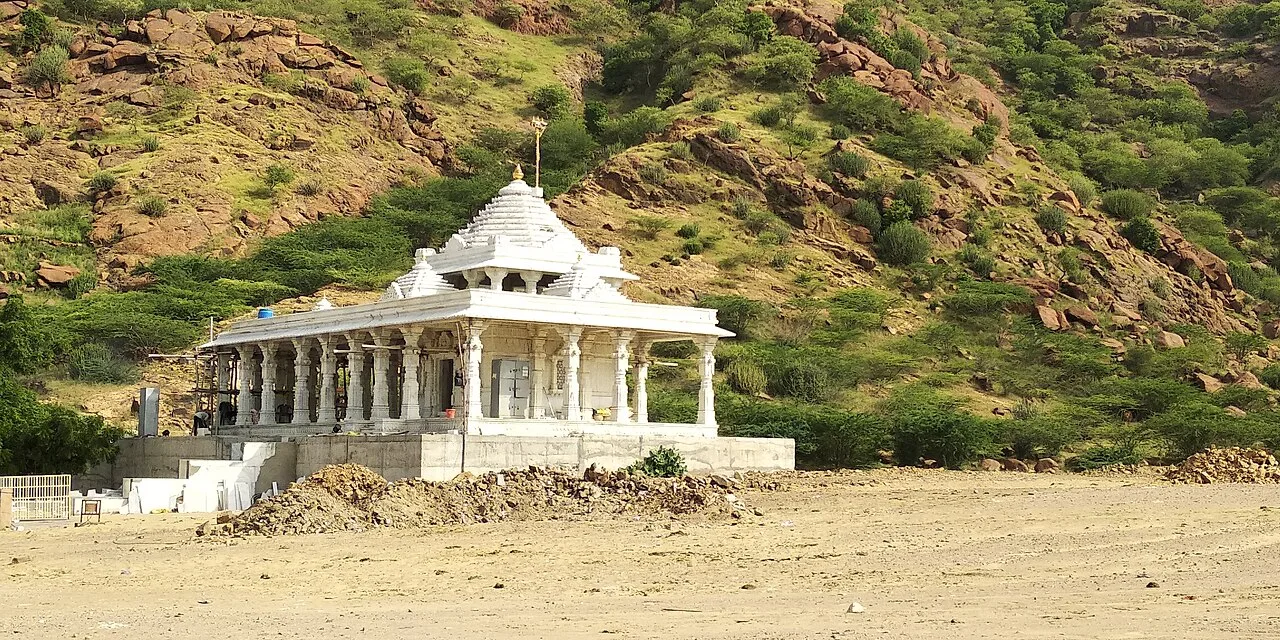
Pachpadra
Pachpadra is a town in Rajasthan’s Balotra district, near Balotra city. Visitors may see its salt-gathering lake, while the locality is also known for a large refinery and petrochemical complex.
Key facts · verified by Ghumoopedia editors
- Type of place
- Community & living culture
- Best time to visit
- October to March
- Nearest railway station
- Jodhpur Junction · about 85 km (straight line)
- Nearest airport
- Jodhpur Airport · about 85 km (straight line)
- Verified
- 21 Nov 2026
Plan a trip from Pachpadra — a day-by-day route through places nearby.
Pachpadra lies 11 km from Balotra city, in Rajasthan’s Balotra district, and is the administrative centre of its tehsil. Balotra railway station is the closest rail connection. A local point of interest is Pachpadra Lake, where salt is collected. The town also has a Jawahar Navodaya Vidyalaya, the only one of its kind in the district. Near Pachpadra is the HPCL Rajasthan Refinery, an integrated refinery and petrochemical complex with an annual capacity of 9 million tonnes. Hindustan Petroleum owns 74% of the joint venture and the Government of Rajasthan holds 26%. Its petrochemical capacity is 2.4 MMTPA, and the facility was commissioned in July 2026. Rajasthan is the land of Rajput forts and palaces, painted havelis, desert folk music, puppetry and colourful fairs such as the Pushkar camel fair. Rajasthan is very hot from April to June — often above 45 °C in the desert — with a short monsoon in July–September. Winter days are pleasant and nights are cold, especially in the Thar Desert. Mount Abu is the state's only hill station and stays cooler. The usual best time to visit is October to March. For official information, see Rajasthan Tourism at https://www.tourism.rajasthan.gov.in.
Why it matters
Pachpadra is a small town and tehsil headquarters in Rajasthan’s Balotra district, about 11 km from Balotra city. Its local identity is closely associated with Pachpadra Lake, where salt has been collected, and with the surrounding dryland settlements and livelihoods. The area is also changing through the development of the HPCL Rajasthan Refinery, an integrated refinery and petrochemical complex near Pachpadra. The project is described as a joint venture between Hindustan Petroleum and the Government of Rajasthan; its operational status should be checked before planning a visit. Pachpadra is not widely documented as a major monument destination, and no UNESCO or ASI-protected designation is established by the available guide information. Its interest lies in local life, the salt landscape and regional change.
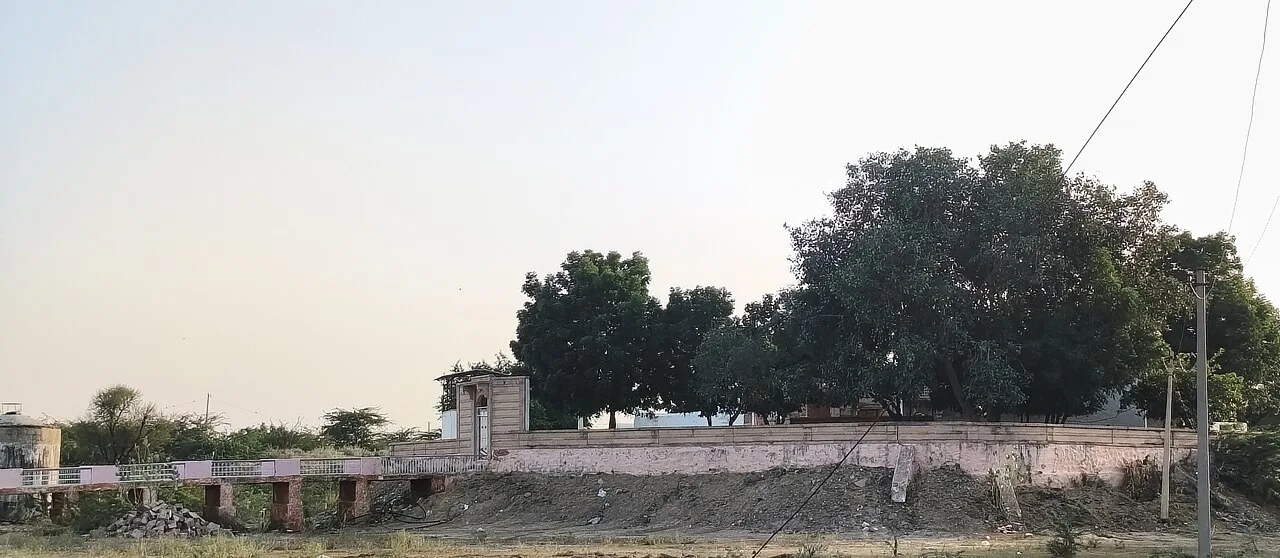
Pachpadra is described in the available local guide as a small settlement and tehsil headquarters near Balotra. A detailed, independently verified chronology of the town’s founding, early rulers or historic builders is not readily available, so specific origin dates and dynastic attributions should be treated cautiously. The area’s connection with Pachpadra Lake and salt collection is an important part of its local story. Salt gathering links settlement life to the region’s dry climate and saline landscape, though the scale and methods of production have changed over time and should be confirmed locally. For generations, everyday life in the wider region has been shaped by farming where conditions allow, animal husbandry, trade and movement between villages and market towns. Balotra has served as an important nearby urban centre for services and commerce. In recent years, the planned development of the HPCL Rajasthan Refinery near Pachpadra has brought a major industrial dimension to the area. The project is described as a 9-million-tonne-per-annum integrated refinery-cum-petrochemical complex, with Hindustan Petroleum and the Rajasthan government as partners. The guide gives no reliable account of a historic restoration programme or of protected old-town buildings; visitors should not assume that private houses are heritage attractions open to the public.
Origin stories & folklore
No widely documented origin legend specific to Pachpadra is established in the available guide information. As in many settlements of western Rajasthan, stories about the beginnings of a village, a local shrine or a lake may be kept alive through family accounts and oral tradition. According to local tradition, if residents share such stories, their versions may differ between households and communities; treat them as living memories rather than verified history. Visitors can ask a local host whether there are stories associated with Pachpadra Lake or nearby places of worship, but should avoid pressing people to share religious or family knowledge they consider private. There is no need to attribute a particular miracle or supernatural event to the lake without reliable local testimony.
Walk through Pachpadra slowly to take in its old houses, streets and places of worship, ideally with a local guide or host who can explain the village's history and families. Many heritage houses are private homes — admire them from outside unless you are invited in or the house is open to visitors — and ask before photographing people. Look out for local food, crafts and festivals that are part of the village's living heritage, and combine your visit with nearby temples, forts or towns in Barmer district.
Suggested itineraries
Half day: From Balotra, travel to Pachpadra; take a short, respectful walk through public streets; view the accessible surroundings of Pachpadra Lake; pause for refreshments before returning. Allow roughly half a day, including road travel. Full day: Start from Balotra; explore Pachpadra’s public streets with a local host; visit an accessible lake viewpoint; take a meal break; continue to a nearby town or shrine after confirming access; return to Balotra. Allow most of the day, depending on road conditions. Gentler option: Use a taxi for the road journey, keep walking to a short level stretch, rest in shade where available and view the lake only from a locally approved accessible point.
Pachpadra’s culture is part of the wider Marwar region, where family, village and religious life remain important alongside changing town and industrial livelihoods. Marwari and Hindi are commonly used across the region, though the languages a visitor hears will vary by household and setting. Folk music, devotional singing and regional dance traditions are part of the broader cultural landscape; performances should not be assumed to be scheduled for visitors. Traditional clothing is often practical for the dry climate, with colourful garments also worn for celebrations. Everyday customs include greeting people respectfully, dressing modestly at places of worship and asking before entering homes or photographing residents.
Local communities
Pachpadra and its surrounding settlements are home to families with varied social, religious and occupational backgrounds. Livelihoods in the wider area may include farming, animal husbandry, small trade, transport, services and work connected with nearby industry. Salt collection around Pachpadra Lake is also part of the place’s local association, although current practices and access should be checked with residents. Balotra functions as a nearby centre for markets and services. Avoid assuming that any one community represents the whole town, and do not treat private homes, work sites or religious spaces as visitor attractions without an invitation or permission.
Festivals & events
Holi, Diwali, Teej and Gangaur are observed across Rajasthan, with local customs and participation varying between families and communities. Religious gatherings may also take place at temples in and around the wider Balotra area, but dates and public access can change from year to year. Seasonal celebrations and fairs can bring more visitors and traffic to nearby towns and shrines, especially on important religious occasions. Pachpadra-specific public festival dates are not established here; ask locally before making plans, and be considerate around processions, worship and family events.
Village food in Rajasthan is home cooking: dal baati churma, gatte ki sabzi, ker sangri, laal maas, pyaaz kachori, mirchi vada, ghewar, mawa kachori and chaach (spiced buttermilk). Pachpadra itself may have only tea stalls and small eateries, so ask your host or guide where to eat, or arrange a home-cooked meal in advance — it is often the highlight of a village visit. Carry water and a snack if you plan to spend the whole day, and eat your main meal in the nearest town if no local option is open.
Shopping & local experiences
For everyday purchases, look around Balotra’s markets and local shops rather than expecting a dedicated tourist bazaar in Pachpadra. Visitors can look for textiles, household goods and regional handicrafts offered by local sellers, but availability and provenance vary. Ask sellers about how an item was made and whether it was produced locally. Salt is associated with Pachpadra Lake, but do not collect it from working areas or assume it is sold as a visitor product. Local snacks and meals can offer a taste of the region; ask about ingredients and food preferences before ordering.
Pachpadra lies in the dry landscape of western Rajasthan. The best-known natural feature in the local guide is Pachpadra Lake, associated with salt collection. Its visible water, exposed salt or muddy margins can vary with season, rainfall and local use; visitors should follow local advice about safe access and avoid assuming that every part of the shore is open. The surrounding countryside is generally arid, with settlements, cultivated patches and dryland vegetation rather than extensive forest. Khejri and other hardy shrubs or trees are characteristic of the wider region, but local vegetation varies. Birds may use water and wet patches when conditions permit, though sightings are never guaranteed. Carry water, avoid disturbing wildlife and do not enter industrial or working areas.
October to March
The nearest principal railway station by straight-line distance is Jodhpur Junction, roughly 85 km away. The nearest operating airport by straight-line distance is Jodhpur Airport, roughly 85 km away. These figures are calculated from map coordinates — actual road distance is longer. Jaipur, Ajmer, Jodhpur, Udaipur and Kota are the main rail hubs, and Jaipur, Udaipur and Jodhpur have the most flights; Delhi is the usual gateway for the north-east of the state. Pachpadra is a village, so the last stretch is by road: Rajasthan State Road Transport Corporation (RSRTC) buses and private coaches reach the nearest town, and from there a shared auto, local bus or reserved taxi covers the final few kilometres. Village roads can be narrow and unpaved; a taxi hired for the day from the nearest town is the simplest way to combine Pachpadra with nearby sights and get back before dark. When comparing train, bus and flight, count the complete door-to-door time: a flight saves the most time only if the onward road transfer is short, while an overnight train can save a hotel night. Book your return before you leave, because seats fill quickly on weekends, festivals and holidays. Current train numbers, timings, return services and fares are not listed here; check IRCTC and NTES for trains and the airline's own schedule for flights. No permit is needed to visit Rajasthan. Land close to the international border west of Jaisalmer and Barmer is restricted beyond certain points: places such as Tanot can be visited, but border outposts need Border Security Force permission. Forts and palaces charge entry and camera fees, and tiger-reserve safaris must be booked through the official forest department portal.
Confirm onward and return timings on IRCTC / NTES, the state bus operator or your airline before travel. A dash means current timings or fares have not been verified.
Getting around
Balotra is the nearest principal town identified in the guide, and Pachpadra is about 11 km from it. On arrival in Balotra, visitors can ask locally about shared autos, local buses or a reserved taxi for the road journey to Pachpadra. Availability may vary, so arranging a return ride in advance can be useful. Within Pachpadra, walking may suit short visits to public streets, but distances, heat and road conditions matter. A taxi hired from Balotra can be practical for visiting more than one place. Do not expect boat services at the lake; check locally where vehicles may be parked and which lake approaches are accessible.
Hours, tickets & permissions
Pachpadra is a town rather than a single ticketed attraction, and public access arrangements may differ between streets, places of worship and the lake’s working areas. There is no general visitor ticket or published entry schedule established here. Some religious sites may have their own rules for dress, footwear, photography or entry, while industrial premises are restricted and are not ordinary tourist sites. Confirm current access, hours and any fees with the relevant site or local authority before travelling. Ask permission before entering private property.
Facilities
Pachpadra is a small town, so facilities for visitors may be limited. Basic shops and food options may be available locally, while Balotra is the more dependable nearby centre for a wider range of services. ATMs and other services are more likely to be found in Balotra than at individual visitor spots. Ask a local host about safe stopping places, food options and whether a particular lake approach is accessible on the day.
Accessibility
The town and lake surroundings should be approached as everyday working spaces, not as a fully developed visitor site. Streets may be uneven, narrow or unpaved, and lake edges can be soft, muddy or exposed to heat. No wheelchair ramps, accessible toilets or step-free visitor route are confirmed. A wheelchair or stroller may be difficult to use beyond smooth road surfaces; confirm conditions locally before setting out. Older visitors may prefer a vehicle close to any viewing point, short walks and frequent rests. Shade can be limited around open areas, so plan conservatively and carry water. Avoid uneven salt or shore surfaces.
No permit is needed to visit Rajasthan. Land close to the international border west of Jaisalmer and Barmer is restricted beyond certain points: places such as Tanot can be visited, but border outposts need Border Security Force permission. Forts and palaces charge entry and camera fees, and tiger-reserve safaris must be booked through the official forest department portal. Carry a photo ID, some cash (card and UPI acceptance varies in villages) and a charged phone with offline maps; save the emergency number 112 and your host's contact. Heat in summer and heavy rain in the monsoon are the main weather risks; carry water, avoid midday sun and allow extra time when village roads flood. Respect local customs: dress modestly, remove footwear where asked, and always ask before photographing people, homes or rituals.
Visitor rules
Dress modestly, particularly at places of worship, and follow any local instructions about removing footwear or covering your head. Keep to public routes and do not enter private homes, salt-working areas or refinery premises without explicit permission. Ask before photographing people, homes, worship or work. Avoid littering and take plastic waste away with you where disposal is not clear. Do not touch equipment, disturb salt collection or approach lake edges that residents identify as unsafe. Speak quietly around religious activity and accept that some spaces or practices may be private.
Photography
Soft morning or late-afternoon light can show the town and lake surroundings more gently than the strong midday sun. Photograph only from places where public access is clear, and ask permission before including residents, private houses, workers or worshippers. Salt patterns and open landscapes can be useful subjects when conditions allow, but do not cross working or restricted ground for a viewpoint. Rules may differ at temples and other religious places. Drone use can be restricted by aviation rules, local authorities and nearby industrial operations; do not fly without confirming permissions. Never photograph refinery security areas.
Most visitors see Pachpadra on a day trip from the nearest town, which has the widest choice of hotels. A few villages have homestays or heritage stays; otherwise base yourself in the district town and hire a taxi for the day. Confirm the booking and the exact location before you travel, because village addresses can be hard to find.
Balotra is the nearest town identified in the guide and is useful for services, markets and onward transport. Jasol, known for the Rani Bhatiyani temple, and the Nakoda Jain temple near Mevanagar are established religious destinations in the wider area; confirm access and local conditions before visiting. Barmer town offers a broader look at the district’s markets and regional culture. Kiradu temples, near Barmer, are another known heritage site in the district and can require a separate road excursion. These places are not all within Pachpadra itself, so check routes and allow for travel time before combining them in one day.
For couples, Pachpadra is a chance to slow down: walk the lanes in the soft morning light, share a home-cooked meal and keep the afternoon free. Stay in a nearby homestay or heritage property to make it a quiet overnight escape.
Q: How much time should I allow for Pachpadra? A: A half-day visit from Balotra can cover a short town walk and an accessible view of the lake; allow longer if combining nearby destinations. Q: When is a good season to visit? A: October to March is generally the more comfortable travel season in Rajasthan. Summer heat can be severe, so check conditions and plan carefully. Q: Is there an entry ticket for Pachpadra or the lake? A: No general visitor ticket is established here. Access may depend on the specific place or working area, so confirm locally before visiting. Q: Is the visit suitable for children and older visitors? A: It can be, with supervision, shade and short walks. Uneven ground, heat and uncertain lake-edge conditions may make some areas unsuitable. Q: Where can I stay nearby? A: Balotra is the nearest town identified in the guide and is the practical place to check for accommodation; confirm availability before travel.
Be the first to share photos, stories, advice or a helpful contact for Pachpadra.
Loading…