
Lake Palace
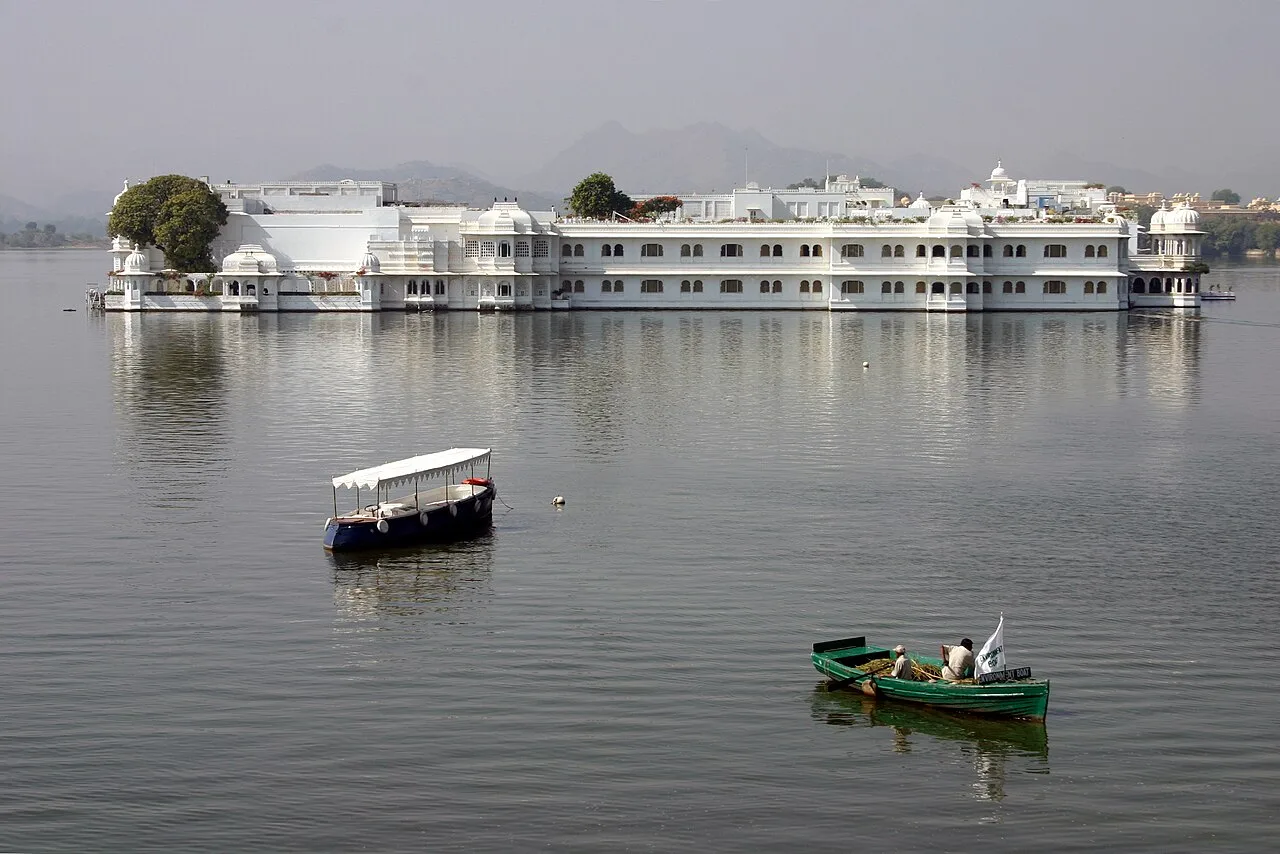
Lake Palace is a former Mewar royal summer residence on an island in Udaipur’s Lake Pichola, now a hotel. Visitors recognise it for its lake setting and appearances in several hit films.
Key facts · verified by Ghumoopedia editors
- Type of place
- Heritage monument
- Best time to visit
- October to March
- Nearest railway station
- Udaipur City · about 5 km (straight line)
- Verified
- 21 Nov 2026
Plan a trip from Lake Palace — a day-by-day route through places nearby.
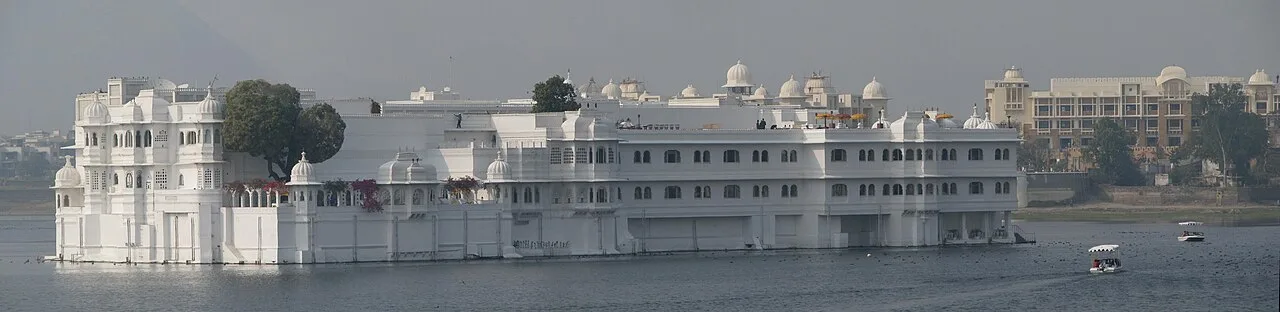
In Udaipur district, Rajasthan, Lake Palace stands on Jag Niwas, an island in Lake Pichola at Udaipur, India. Formerly called Jag Niwas Palace, it was created as a seasonal residence for Mewar’s royal family and is now run as a hotel. Maharana Jagat Singh II commissioned its construction in white marble around 1743–1746. He held the 62nd custodianship of the House of Mewar. The palace occupies a natural base measuring four acres (16,000 square metres). Designed to seem to rest on the lake, the building served extensively as a summer refuge for Mewar’s royals. IHCL has managed the hotel for the past 50 years. Its distinctive appearance and use as a setting for several hit films have earned it global recognition. Rajasthan is the land of Rajput forts and palaces, painted havelis, desert folk music, puppetry and colourful fairs such as the Pushkar camel fair. Rajasthan is very hot from April to June — often above 45 °C in the desert — with a short monsoon in July–September. Winter days are pleasant and nights are cold, especially in the Thar Desert. Mount Abu is the state's only hill station and stays cooler. The usual best time to visit is October to March. Timings, fees and access arrangements must be confirmed locally. For official information, see Rajasthan Tourism at https://www.tourism.rajasthan.gov.in.
Why it matters
Lake Palace, formerly Jag Niwas, is an important royal-era landmark in Udaipur and a prominent part of the historic setting of Lake Pichola. Built as a summer retreat for the Mewar royal family, it reflects the region’s tradition of lakeside palaces and courtly architecture. Its white-marble buildings, set on an island, have made it a widely recognised image of Udaipur; the palace has also appeared in films, including the James Bond film Octopussy. It is now operated as a hotel by the Indian Hotels Company Limited (IHCL), rather than functioning as an ordinary public monument. No UNESCO or ASI-protected status is asserted here; visitors should check the relevant official heritage listings for current designation information.

Jag Niwas was constructed in white marble around 1743–1746 by Maharana Jagat Singh II, the 62nd custodian of the House of Mewar. It served as a summer palace and retreat for the royal family, set apart from the city on the island of Jag Niwas in Lake Pichola. Its position allowed the court to enjoy the lake and the cooler atmosphere of an island residence while remaining close to Udaipur’s royal centre. The palace was built during a period when Mewar rulers developed residences and pleasure retreats around the lake. Its name later became internationally familiar as Lake Palace. In the twentieth century, the property was adapted from a royal residence into a hotel, bringing a new use while retaining its historic setting and architectural character. IHCL now manages the hotel, as published accounts note it has done for roughly five decades. The palace has consequently been experienced by hotel guests and authorised visitors rather than as a conventional open monument. Its fame grew further through film appearances and tourism imagery. For detailed conservation records or a fuller account of alterations, consult the hotel or relevant heritage authorities.
Origin stories & folklore
Local stories and popular descriptions often present Lake Palace as a palace that appears to float on Lake Pichola. This is an evocative way of describing its island setting and the reflections of its pale marble walls on the water, rather than a supernatural origin account. The palace is traditionally associated with Maharana Jagat Singh II’s wish for a secluded royal retreat away from the formal routines of the main palace. Retellings vary, and visitors should treat such accounts as local lore unless supported by historical records. The changing light, still water and mist around the lake have helped sustain romantic stories about the palace, but its documented origin is as a Mewar royal summer residence.
Architecture & design
The palace occupies the natural island of Jag Niwas in Lake Pichola, with a foundation spanning about four acres. Its white-marble construction gives the complex a luminous appearance against the lake and surrounding hills. The arrangement consists of interconnected palace buildings, courtyards and terraces rather than one isolated block. Balconies, arched openings, domed roof forms and screened details contribute to its Rajput courtly character, while the lakeside setting shapes views from many parts of the complex. The buildings were designed to read as a retreat within the water: reflections and the low island profile make the palace seem to float. Courtyards provide internal open space, while terraces and waterside elevations connect the residence visually to Lake Pichola. The property has been adapted for hotel use, so historic spaces coexist with facilities required for hospitality. Visitors should remember that interiors are not generally open as a public museum and access depends on the hotel’s current arrangements.
Important objects & sculptures
Lake Palace is better understood through its setting and architectural details than as a public museum with a routinely accessible collection. From permitted visitor areas, look for the pale marble surfaces, carved or screened openings, columns, arches, domed roof forms and the changing details around courtyards and balconies. These features express the palace’s royal-residential character and frame views across Lake Pichola. Do not assume that historic furnishings, paintings or private rooms can be viewed: many interior areas belong to the operating hotel and access may be restricted. Ask the managing authority whether any displays or guided interpretation are available during your visit, and follow rules about touching or photographing objects.
Explore Lake Palace slowly and read the interpretation boards, use the official audio guide where available or hire an authorised guide to understand its history. Check opening days, ticket counters and camera rules in advance; many monuments and museums close on one weekday and on some public holidays. Early morning gives softer light, cooler air and smaller crowds. A comfortable itinerary is one main visit in the morning, a local meal at midday and a short nearby stop before an afternoon return. Use the district list on this site to find other places in Udaipur, but check the route and its condition before combining stops. If a festival or fair is on, roads and stays can be busy — and the experience can be unforgettable. Leave no litter: many sites are protected by the communities around them.
Suggested itineraries
Half day: Confirm authorised access and boat arrangements; spend about 1–2 hours at the palace or approved hotel venue; then walk the nearby lakefront or visit Jagdish Temple if time and access allow. Full day: Begin with an authorised Lake Palace visit; allow about 1–2 hours; explore City Palace and its museum; pause for a local meal; then visit Bagore Ki Haveli or take a lakeside walk, checking entry and boat arrangements beforehand. Gentler option: Arrange the least demanding authorised access available, minimise walking between the jetty and venue, and enjoy a seated lake view; confirm step-free access directly with the hotel.
The palace is part of Udaipur’s living Mewar heritage, but today it primarily operates as a hotel rather than as a venue for everyday public ceremonies. In the surrounding city, Mewari and Rajasthani traditions remain visible in local speech, clothing, food, crafts and music. Hindi is widely used, and visitors may also hear other regional languages. Folk performance traditions in the region include forms of dance and music associated with Rajasthan, though performances are not guaranteed at the palace itself. The lake, ghats and historic neighbourhoods continue to shape local life and tourism. Visitors can show respect by dressing considerately in religious spaces nearby, asking before photographing people, and following hotel and community guidance.
Festivals & events
Udaipur’s spring celebrations of Gangaur and the Mewar Festival are among the best-known occasions for experiencing local processions, dress and cultural performances; activities take place around the city and lake, not necessarily inside Lake Palace. The Shilpgram Utsav, generally held in winter, brings crafts and performances to the wider Udaipur area. Festival periods can bring heavier traffic, fuller accommodation and busy lakeside viewpoints, so allow extra time for transfers and check event arrangements locally. Do not assume that the palace hosts public festival events or that its grounds are open to non-guests during celebrations.
Local food in Rajasthan includes dal baati churma, gatte ki sabzi, ker sangri, laal maas, pyaaz kachori, mirchi vada, ghewar, mawa kachori and chaach (spiced buttermilk). Ask what is fresh that day; many small eateries cook a limited daily menu. Vegetarian travellers eat very well across this region, and most towns also have non-vegetarian options. Remote sites may have no restaurant at all. Carry water and snacks, eat a proper breakfast before long drives, and ask your accommodation for a packed lunch if you are heading out early. Try a home-cooked or dhaba meal when you can — it is often the best food on the route. Choose busy, clean places and carry your packaging back with you.
Shopping & local experiences
Udaipur’s old-city markets are places to look for miniature paintings, embroidered textiles, leather goods, jewellery, pottery and other Rajasthani crafts. Availability and quality vary, so compare items and ask about materials and workmanship before buying. Shopping is generally done in the city rather than inside the palace, where retail access may be limited to hotel guests or authorised visitors. Local food experiences include Rajasthani thalis and regional snacks at city eateries; menus and preparation vary. Choose responsibly made crafts where possible, and avoid buying wildlife products or items whose provenance is unclear.
October to March
The nearest principal railway station by straight-line distance is Udaipur City, roughly 5 km away. The nearest operating airport by straight-line distance is Maharana Pratap Airport, Udaipur, roughly 20 km away. These figures are calculated from map coordinates — actual road distance is longer. Jaipur, Ajmer, Jodhpur, Udaipur and Kota are the main rail hubs, and Jaipur, Udaipur and Jodhpur have the most flights; Delhi is the usual gateway for the north-east of the state. For the final leg, Rajasthan State Road Transport Corporation (RSRTC) buses and private coaches link district towns; shared taxis usually leave early in the morning. A private taxi gives more flexibility for remote sites. When comparing train, bus and flight, count the complete door-to-door time: a flight saves the most time only if the onward road transfer is short, while an overnight train can save a hotel night. Book your return before you leave, because seats fill quickly on weekends, festivals and holidays. Current train numbers, timings, return services and fares are not listed here; check IRCTC and NTES for trains and the airline's own schedule for flights. No permit is needed to visit Rajasthan. Land close to the international border west of Jaisalmer and Barmer is restricted beyond certain points: places such as Tanot can be visited, but border outposts need Border Security Force permission. Forts and palaces charge entry and camera fees, and tiger-reserve safaris must be booked through the official forest department portal.
Confirm onward and return timings on IRCTC / NTES, the state bus operator or your airline before travel. A dash means current timings or fares have not been verified.
Getting around
In Udaipur, autos and taxis can take visitors to central lakeside areas and authorised boat departure points. The island palace is reached by water, but access and transfers are controlled by the hotel; visitors should arrange these through the managing authority rather than assuming that public boats stop there. Local buses serve parts of the city, though they may not be convenient for a tightly planned lakeside visit. Walking is practical in some old-city lanes, but streets can be narrow, uneven and busy. Parking availability depends on the departure point, so check in advance and allow time to reach the jetty.
Hours, tickets & permissions
Lake Palace operates as a hotel, so it does not necessarily have ordinary monument entry or public visiting hours. Access may be limited to hotel guests or people with an authorised dining, tour or other reservation, subject to current policy. Security and boat-transfer arrangements may apply. Tickets, permits, camera rules, identification requirements and dress expectations can vary by access option. Confirm current hours, fees and entry conditions directly with the managing authority, IHCL, before travelling; do not rely on general monument schedules.
Facilities
Facilities within Lake Palace are hotel facilities and may be available only to guests or visitors with an authorised reservation. Dining, restrooms and staff assistance are generally associated with hotel operations, but confirm access before planning around them. Drinking water and other services are more readily found in Udaipur’s central areas. Guides or interpretation may be available by arrangement rather than as a walk-in service. Parking is typically associated with the mainland departure point, not the island itself. ATMs, shops and broader visitor services can be found in the city; check locally for the nearest suitable options.
Accessibility
Reaching the palace involves a boat transfer to an island, and the route, boarding process and landing conditions can affect visitors with limited mobility. Within the historic complex, surfaces, thresholds, steps and changes of level may make movement difficult; do not assume that lifts or step-free routes are available. Walking distances and access to particular rooms depend on the authorised visit. Shade and places to sit may be limited along some routes. Wheelchair users, visitors with strollers and elderly travellers should contact the hotel in advance to discuss boat boarding, accessible facilities and the exact areas that can be reached. Allow extra time and avoid relying on an unconfirmed access arrangement.
No permit is needed to visit Rajasthan. Land close to the international border west of Jaisalmer and Barmer is restricted beyond certain points: places such as Tanot can be visited, but border outposts need Border Security Force permission. Forts and palaces charge entry and camera fees, and tiger-reserve safaris must be booked through the official forest department portal. Carry a photo ID at all times and save the emergency number 112 and your accommodation's contact offline. Heat in summer and fog in winter are the main weather risks; carry water and allow extra travel time on foggy December–January mornings. Respect community rules, private property and posted instructions. Follow local guidance if access changes.
Photography
The palace is especially photogenic in soft morning light, when marble, water and surrounding hills can appear less harsh than under midday sun. Lakefront viewpoints around Udaipur offer external views; access to island viewpoints depends on authorised boat arrangements. Photography inside the hotel may be restricted or subject to permission, so check before taking pictures. Drone use is subject to aviation rules, local restrictions and the property’s security policy; do not fly without explicit clearance. Avoid photographing hotel guests, staff or local residents without consent, and be particularly respectful around religious activity and private spaces.
Choose a stay by the full journey to Lake Palace, not just the district name. Heritage havelis, fort hotels, state tourism (RTDC) hotels and desert camps offer distinctive stays; check that a desert camp is licensed and has proper toilets. In summer, check air-conditioning or coolers; in December and January, check heating and hot water. Book in advance for weekends, festivals and the peak season (October to March). Confirm the exact location, meals included, check-in time and cancellation terms in writing. Avoid sending money to unverified contacts or touts at stations. Carry some cash, as card and digital payments can be unreliable in remote areas.
Within Udaipur, visitors can consider City Palace and its museum, Jagdish Temple, Bagore Ki Haveli, Jag Mandir on Lake Pichola, and Saheliyon Ki Bari. Fateh Sagar Lake offers another lakeside setting, while the old-city lanes provide opportunities to explore markets and historic streets. These attractions have separate access rules and may require additional boat or road arrangements. Combining several sites in one day can be affected by traffic, queues and lake transport, so check routes and current opening arrangements before setting out. For a wider excursion, ask locally about travel conditions to nearby places in Udaipur district.
For couples, Lake Palace rewards a slow pace: arrive early for soft light and fewer crowds, share a local meal and keep the evening free. A heritage hotel or a lakeside sunset makes the trip memorable. Public displays of affection can be frowned upon in conservative communities and at religious sites, so be discreet. Keep a buffer in your itinerary, because weather and traffic can delay plans.
Q: How much time should I allow for a visit? A: Allow roughly one to two hours for an authorised palace visit, plus extra time for the boat transfer and any nearby attractions. Q: What is the best season to visit Udaipur? A: October to March is generally the most comfortable period. Summer can be very hot, while monsoon weather may affect travel plans. Q: Can anyone enter Lake Palace? A: It operates as a hotel, so public access is not guaranteed. Check directly with IHCL about authorised visits, dining or other access options. Q: Is the palace suitable for children and elderly visitors? A: It can be, but boat boarding, steps and uneven surfaces may be challenging. Confirm access arrangements and facilities in advance. Q: Can I stay near the palace? A: Udaipur has accommodation across the city, including around the lake and old town. The palace itself is a hotel; check availability and access conditions with its operator.
Be the first to share photos, stories, advice or a helpful contact for Lake Palace.
Loading…