
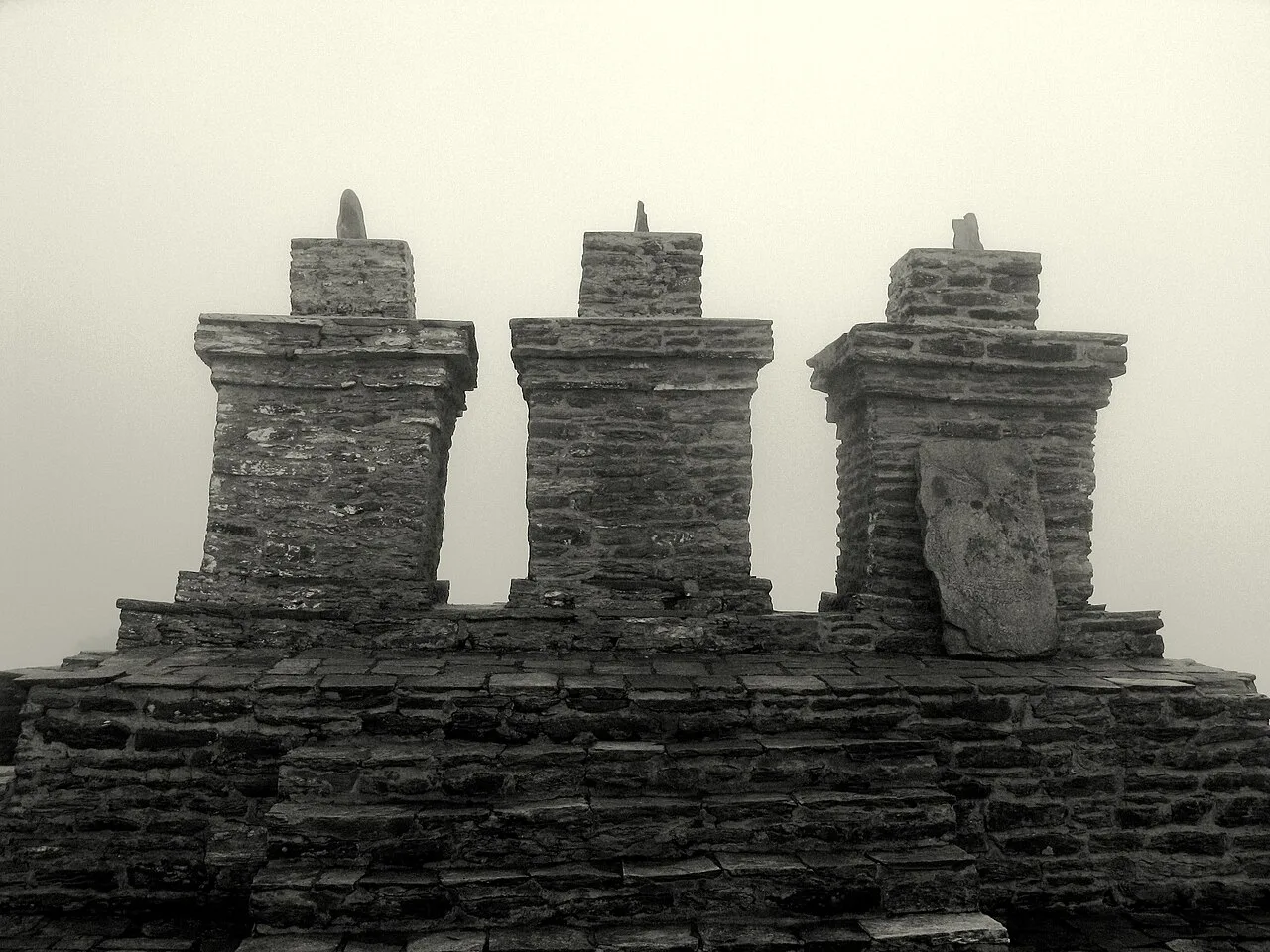
Rabdentse Ruins
Rabdentse is the former second capital of the Kingdom of Sikkim, now an archaeological site near Pelling. Visitors come to see its palace and chorten remains, mountain views and place in a Buddhist pilgrimage circuit.
Key facts · verified by Ghumoopedia editors
- Type of place
- Heritage monument
- Best time to visit
- March to May and October to December; avoid the June–September monsoon
- Nearest railway station
- Siliguri Junction · about 68 km (straight line)
- Nearest airport
- Pakyong Airport (limited, weather-dependent flights) · about 34 km (straight line)
- Verified
- 21 Nov 2026
Plan a trip from Rabdentse Ruins — a day-by-day route through places nearby.
Rabdentse lies in Gyalshing district, near Pelling in West Sikkim. It served as the kingdom’s second seat of government from 1670 to 1814. Tensung Namgyal, Sikkim’s second Chogyal and son of its first Chogyal, Phuntsog Namgyal, established the capital here in 1670. The royal seat moved from Yuksom, where the kingdom’s first capital was consecrated in 1642. Gurkha forces later destroyed the city. The remains include the palace and chortens; the Archaeological Survey of India has designated the monument as being of national importance. The site affords views of the Khanchendzonga ranges. Nearby Pemayangtse Monastery is counted among Sikkim’s oldest monasteries. Rabdentse is also part of a Buddhist pilgrimage circuit that begins at Dubdi Monastery in Yuksom and continues through Norbugang Chorten, Tashiding Monastery, Pemayangtse Monastery and Sanga Choeling Monastery, ending at Khecheopalri Lake. Sikkim is a small Himalayan state wrapped around Kangchenjunga, the world's third-highest peak, with Buddhist monasteries such as Rumtek, Pemayangtse and Tashiding, Lepcha, Bhutia and Nepali communities, high-altitude lakes like Tsomgo and Gurudongmar, rhododendron valleys at Yumthang and Varsey, and a strong commitment to organic farming and clean, plastic-light tourism. Weather depends on altitude: Gangtok and Pelling are mild in spring and autumn and cold in winter, while North Sikkim and Nathu La lie under snow from December to March. The monsoon (June to September) brings heavy rain and frequent landslides. Spring is rhododendron season; October and November give the clearest views of Kangchenjunga. The usual best time to visit is March to May and October to December; avoid the June–September monsoon. Timings, fees and access arrangements must be confirmed locally. For official information, see Sikkim Tourism at https://www.sikkimtourism.gov.in.
Why it matters
Rabdentse is a major heritage site in Sikkim and the former capital of the Kingdom of Sikkim from 1670 to 1814. It marks a chapter in the kingdom’s political history after the capital moved from Yuksom, and its surviving palace remains and chortens help visitors understand the former royal centre. The Archaeological Survey of India recognises the ruins as a monument of national importance. The site also has regional religious significance as part of a Buddhist pilgrimage circuit linking monasteries and sacred places in western Sikkim. Its hilltop setting offers views towards the Kangchenjunga range when weather permits.
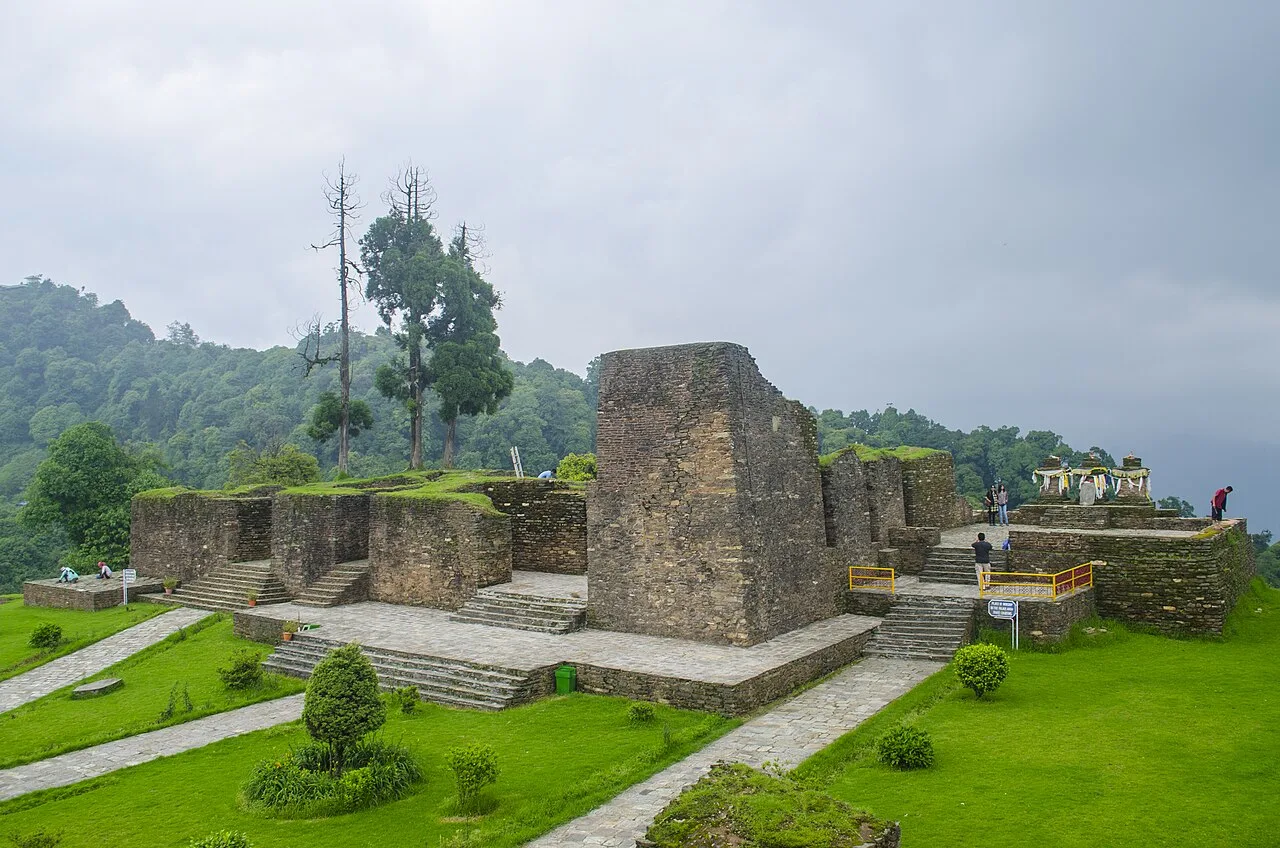
Rabdentse was established in 1670 by the second Chogyal, Tensung Namgyal, who moved the capital from Yuksom. Yuksom had been the kingdom’s first capital, established under the first Chogyal, Phuntsog Namgyal, in the seventeenth century. Rabdentse served as the royal seat until 1814, a period in which the kingdom’s court and administration were based here. The capital was destroyed during incursions by the Gurkha army, after which the royal capital shifted elsewhere. The settlement was abandoned, and the palace and religious structures gradually became ruins. The surviving remains include sections of the palace complex and chortens, or Buddhist reliquary structures. The site is close to Pemayangtse Monastery and forms part of a wider network of historic Buddhist places in western Sikkim. The Archaeological Survey of India has declared Rabdentse a monument of national importance and is responsible for its protection. Visitors encounter conserved ruins rather than a reconstructed palace; the visible remains should be understood as archaeological evidence, not as a complete picture of the former capital.
Origin stories & folklore
There is no single widely documented origin legend for Rabdentse that can be confidently presented as established history. Local and religious traditions place the ruins within a sacred Buddhist landscape connected to monasteries and pilgrimage sites across western Sikkim. Visitors may hear stories that associate the surrounding hills with the old kingdom, its rulers or protective spiritual forces; these belong to oral tradition and should be treated as belief rather than verified accounts. The chortens also carry Buddhist religious meaning as sacred structures, not merely architectural remains. For specific local stories, ask a knowledgeable local guide and distinguish oral accounts from information supported by archaeological or historical records.
Architecture & design
Rabdentse is a hilltop archaeological site whose surviving architecture is largely stonework and foundations rather than intact buildings. The remains include parts of the former palace complex and several chortens, the Buddhist reliquary monuments that formed a religious focus within the settlement. Low walls, stone platforms and traces of building layouts help indicate how the royal compound was arranged, though the original structures are no longer complete. The location uses the natural ridge and slopes as part of its setting, with the approach passing through woodland. This elevated position also gives the site commanding views in clear weather. The remains should not be mistaken for a fully restored palace: weathering, vegetation and the loss of upper structures make the layout difficult to interpret without signs or a guide. Visitors should avoid climbing on walls or disturbing stones.
Important objects & sculptures
Rabdentse is an open archaeological ruin rather than a museum, so visitors should not expect a gallery of movable objects. Look for the surviving stone foundations and wall sections that outline parts of the palace complex, along with the chortens, whose form reflects the site’s Buddhist character. These remains offer clues to the former capital’s royal and religious functions, but many details are no longer visible above ground. Read any interpretation boards on site and ask a guide to explain features that may otherwise look like scattered stones. Do not remove fragments, touch fragile masonry unnecessarily or treat the chortens as props for photographs; they remain culturally significant structures.
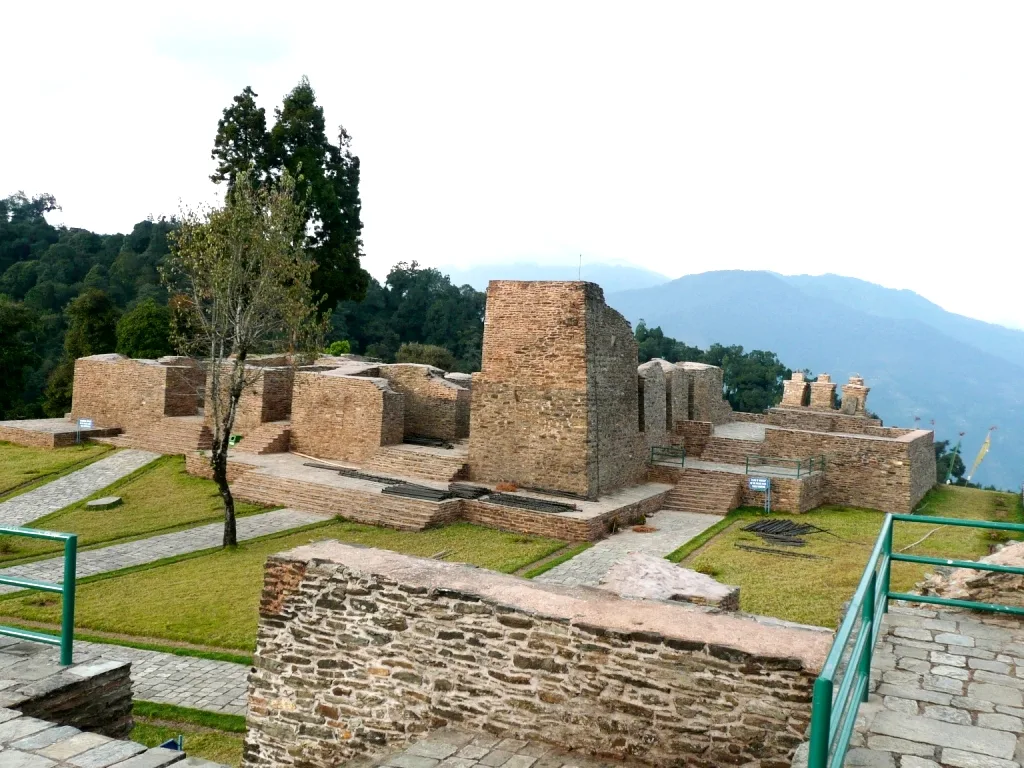
Explore Rabdentse Ruins slowly and read the interpretation boards, or hire an authorised guide to understand its history. Check opening days, ticket counters and camera rules in advance; many monuments and museums close on one weekday and on some public holidays. Early morning gives softer light, cooler air and smaller crowds. A comfortable itinerary is one main visit in the morning, a local meal at midday and a short nearby stop before an afternoon return. In the mountains, mornings are clearest; clouds often roll in by noon, so start early for views of Kangchenjunga. Use the district list on this site to find other places in Gyalshing, but check the route and its condition before combining stops. If a festival is on — such as Losar (Tibetan New Year), Saga Dawa, Pang Lhabsol, Losoong, Bumchu at Tashiding, Dasain and Tihar or the Gangtok winter carnival — roads and stays can be busy, and the experience can be unforgettable. Leave no litter: Sikkim restricts plastic and packaged water in many tourist areas, so carry a refillable bottle.
Suggested itineraries
Half day: Allow about 2–3 hours for the approach, a slow circuit of the ruins and interpretation boards; add Pemayangtse Monastery if time and access allow. Full day: Spend the morning at Rabdentse, visit Pemayangtse Monastery, pause for a local meal, then explore Pelling or a nearby viewpoint before returning. Gentler option: Arrange a vehicle drop as close as permitted, take the ruins slowly with rest stops, and skip additional walking-based stops.
Rabdentse is part of a living cultural landscape shaped by Sikkim’s Buddhist heritage and by Lepcha, Bhutia and Nepali communities. Nearby monasteries remain places of worship, while the ruins themselves are visited for both history and pilgrimage. Tibetan Buddhist practices, including prayer and offerings at sacred sites, are part of the region’s religious life. Nepali and Sikkimese languages are commonly heard locally, alongside English and other languages. Visitors may encounter traditional music, dance and dress during community or religious events, but these are not performances guaranteed at the ruins. Dress respectfully, keep voices low near religious structures and follow local guidance around prayer or offerings.
Festivals & events
Rabdentse is not known as the venue for a large annual festival, but nearby monasteries and communities observe important religious and cultural occasions. Losar, the Tibetan New Year, usually falls in late winter or early spring; Losoong is generally celebrated around the winter harvest season. Pang Lhabsol, associated with Sikkim’s sacred mountain traditions, is observed in the monsoon-to-autumn period. Bumchu at Tashiding draws pilgrims for a monastery ceremony, with timing following the Tibetan calendar. Dates vary from year to year. Festival periods can bring more visitors and busier roads or accommodation around Pelling and Gyalshing, so check local schedules before travelling.
Local food in Sikkim includes momos, thukpa and thenthuk noodle soups, phagshapa (pork with radish), gundruk and sinki fermented greens, sel roti, churpi (yak cheese), chhurpi soup, local tea from Temi and warm tongba millet brew in the hills. Ask what is fresh that day; many small eateries cook a limited daily menu. Most food is mild compared with the plains, with plenty of vegetarian options; local chilli pastes made from dalle khursani are extremely hot, so try a little first. Hot soups and butter tea help at altitude. Remote sites may have no restaurant at all. Carry water and snacks, eat a proper breakfast before long drives, and ask your accommodation for a packed lunch if you are heading out early. Try a home-cooked or local thali meal when you can — it is often the best food on the route. Choose busy, clean places, drink sealed or filtered water, and carry your packaging back with you.
Shopping & local experiences
There is no reason to expect a large market at the ruins. Browse shops in Pelling or Gyalshing for locally made handicrafts, textiles, prayer flags or small souvenirs, checking that religious objects are offered respectfully and legally. Sikkim tea and cardamom are regional products sometimes found in local shops. Ask about the origin and materials of crafts rather than assuming an item was made nearby. For a food experience, look for local eateries serving dishes such as momos or thukpa. Choose reusable packaging where possible, carry a refillable bottle and avoid leaving plastic waste in the heritage area.
March to May and October to December; avoid the June–September monsoon
The nearest principal railway station by straight-line distance is Siliguri Junction, roughly 68 km away. The nearest operating airport by straight-line distance is Pakyong Airport (limited, weather-dependent flights), roughly 34 km away. These figures are calculated from map coordinates — actual road distance is longer, and mountain roads mean even short distances can take hours. Most travellers arrive at Bagdogra Airport or New Jalpaiguri (NJP) railway station near Siliguri in West Bengal, about 4–5 hours' drive from Gangtok; Pakyong Airport near Gangtok has limited, weather-dependent flights. Shared jeeps and reserved taxis run from Siliguri to Gangtok, Namchi, Ravangla and Pelling. From Siliguri or Bagdogra, take a shared jeep, SNT bus or reserved taxi; within Sikkim, shared jeeps leave from the town taxi stands in the morning and fill up early, while reserved taxis give flexibility for monasteries and viewpoints. When comparing train, bus and flight, count the complete door-to-door time: a flight saves the most time only if the onward road transfer is short, while an overnight train can save a hotel night. For Sikkim, flying into Bagdogra saves the most time from distant cities, while a train to NJP is cheaper; either way the road journey up the Teesta valley takes most of a day, so do not plan sightseeing on arrival. Book your return before you leave, because seats fill quickly on weekends, festivals and holidays. Current train numbers, timings, return services and fares are not listed here; check IRCTC and NTES for trains and the airline's own schedule for flights. Indian travellers need no permit for Gangtok, Pelling, Namchi and Ravangla, but a Protected Area Permit — arranged through a registered Sikkim tour operator or taxi association with photo ID and passport photos — is mandatory for Tsomgo Lake, Nathu La, North Sikkim (Lachung, Lachen, Yumthang, Zero Point and Gurudongmar), Zuluk and the Dzongri–Goecha La trek. Foreign nationals need a free Restricted Area Permit, issued online or at the Rangpo and Melli checkposts, and cannot visit Nathu La; some areas allow foreigners only in groups. Nathu La is open on limited days each week and closes after snowfall, and landslides can shut any road at short notice.
Confirm onward and return timings on IRCTC / NTES, the state bus operator or your airline before travel. A dash means current timings or fares have not been verified.
Getting around
Rabdentse is visited from the Pelling and Gyalshing area, usually by taxi or other locally arranged road transport to the approach near Pemayangtse, followed by a walk to the ruins. Ask your driver where vehicles may wait and confirm the return arrangement before beginning the walk. Shared jeeps connect towns and villages in the region, but they may not take visitors directly to the entrance. Walking is necessary for the final approach, and the path can be uneven. Local buses are limited for sightseeing convenience; check locally rather than relying on a fixed service. There is no boat access.
Hours, tickets & permissions
Entry arrangements can change and may involve a ticket, visitor register or restrictions on certain activities. Camera rules, access to particular parts of the ruins and closures on public holidays may also apply. Carry identification if requested and follow notices issued by the site staff or managing authority. There is no reliable current schedule or fee information provided here, so confirm opening days, hours and charges with the Archaeological Survey of India or local tourism authorities before setting out.
Facilities
Facilities at the ruins are limited and may change. There may be basic visitor information and a managed entrance, but do not assume that toilets, drinking water, seating or a staffed guide service are available within the archaeological area. Carry water and any snacks you need, and take litter back with you. Food, shops, accommodation and cash services are more likely to be found in Pelling or Gyalshing than at the ruins. Parking or vehicle stopping arrangements near the approach should be checked locally. An authorised local guide can help explain the remains; confirm availability in advance.
Accessibility
The approach involves walking on an uneven, sloping path through woodland, with possible steps and irregular stone surfaces within the ruins. Conditions may be slippery after rain, and shade is variable. The visit can be tiring for anyone with limited stamina or balance. The site is not reliably wheelchair- or stroller-accessible, and visitors should not assume there are ramps, handrails or accessible toilets. Older visitors may find it more comfortable to go slowly, use a walking aid if helpful and visit with a companion. Check current path conditions locally, especially during or after the monsoon, and turn back if the route feels unsafe.
Indian travellers need no permit for Gangtok, Pelling, Namchi and Ravangla, but a Protected Area Permit — arranged through a registered Sikkim tour operator or taxi association with photo ID and passport photos — is mandatory for Tsomgo Lake, Nathu La, North Sikkim (Lachung, Lachen, Yumthang, Zero Point and Gurudongmar), Zuluk and the Dzongri–Goecha La trek. Foreign nationals need a free Restricted Area Permit, issued online or at the Rangpo and Melli checkposts, and cannot visit Nathu La; some areas allow foreigners only in groups. Nathu La is open on limited days each week and closes after snowfall, and landslides can shut any road at short notice. Carry a photo ID at all times and save the emergency number 112 and your accommodation's contact offline. Mountain roads are narrow and prone to landslides, especially from June to September; travel in daylight, use experienced local drivers, and keep a spare day in your plan for road closures. Watch your belongings in crowds and on public transport, and follow posted instructions.
Photography
Early morning often offers cooler conditions and softer light; views towards Kangchenjunga are clearest when the sky is open, though mountain weather changes quickly. Photograph the ruins from established paths and viewpoints, taking care not to step on fragile walls or chortens. Photography is commonly possible at outdoor heritage sites, but follow posted rules and confirm whether any camera restrictions or fees apply. Do not use a drone without checking current permissions and aviation rules. Ask before photographing people, worshippers or ceremonies, and avoid interrupting prayer or ritual activity.
Choose a stay by the full journey to Rabdentse Ruins, not just the district name. Gangtok has the widest choice, from homestays to boutique hotels along MG Marg; Pelling hotels face Kangchenjunga, and village homestays in Yuksom, Aritar, Okhrey and Dzongu offer a quieter, local experience. In summer, check air-conditioning; in the monsoon, check that the property is accessible if roads flood. Book in advance for weekends, festivals and the peak season (March to May and October to December; avoid the June–September monsoon). Confirm the exact location, meals included, check-in time and cancellation terms in writing. Avoid sending money to unverified contacts or touts at stations. Carry some cash, as card and digital payments can be unreliable in remote areas.
Pemayangtse Monastery, one of Sikkim’s oldest monasteries, is close to the ruins and is a natural addition to a visit. Pelling offers places to stay, local food and viewpoints, with mountain views dependent on weather. Sanga Choeling Monastery is another Buddhist site in the Pelling area. For a longer outing, Khecheopalri Lake and Yuksom are established destinations in western Sikkim; Yuksom is associated with the kingdom’s earlier capital and the Dubdi Monastery and Norbugang Chorten. Tashiding Monastery is another important pilgrimage site in the region. Check road conditions and travel times before combining these places.
For couples, Rabdentse Ruins rewards a slow pace: arrive early for soft light and fewer crowds, share a local meal and keep the evening free. Sunrise over Kangchenjunga from Pelling or Tashi View Point, a stroll on MG Marg in the evening or a quiet homestay night in a village makes the trip memorable. Public displays of affection can be frowned upon in conservative communities and at religious sites, so be discreet. Keep a buffer in your itinerary, because weather and road conditions can delay plans.
Q: How much time should I allow for Rabdentse? A: Allow a few hours for the walk, a relaxed look around the ruins and time to read the interpretation. Add more time if visiting Pemayangtse Monastery. Q: When is the best season to visit? A: Spring and autumn generally offer comfortable conditions and clearer mountain views. Monsoon rain can make paths slippery and roads prone to disruption. Q: Is there an entry fee or are permits required? A: Entry arrangements can change. Check current ticket, permit and camera rules with the managing authority before travelling. Q: Can children or elderly visitors visit? A: Yes, if they can manage an uneven uphill walk. The path may be difficult for people with limited mobility; go slowly and assess conditions locally. Q: Where should I stay nearby? A: Pelling and Gyalshing are practical bases, with accommodation options that vary by season. Confirm availability and road access before your trip.
Be the first to share photos, stories, advice or a helpful contact for Rabdentse Ruins.
Loading…