
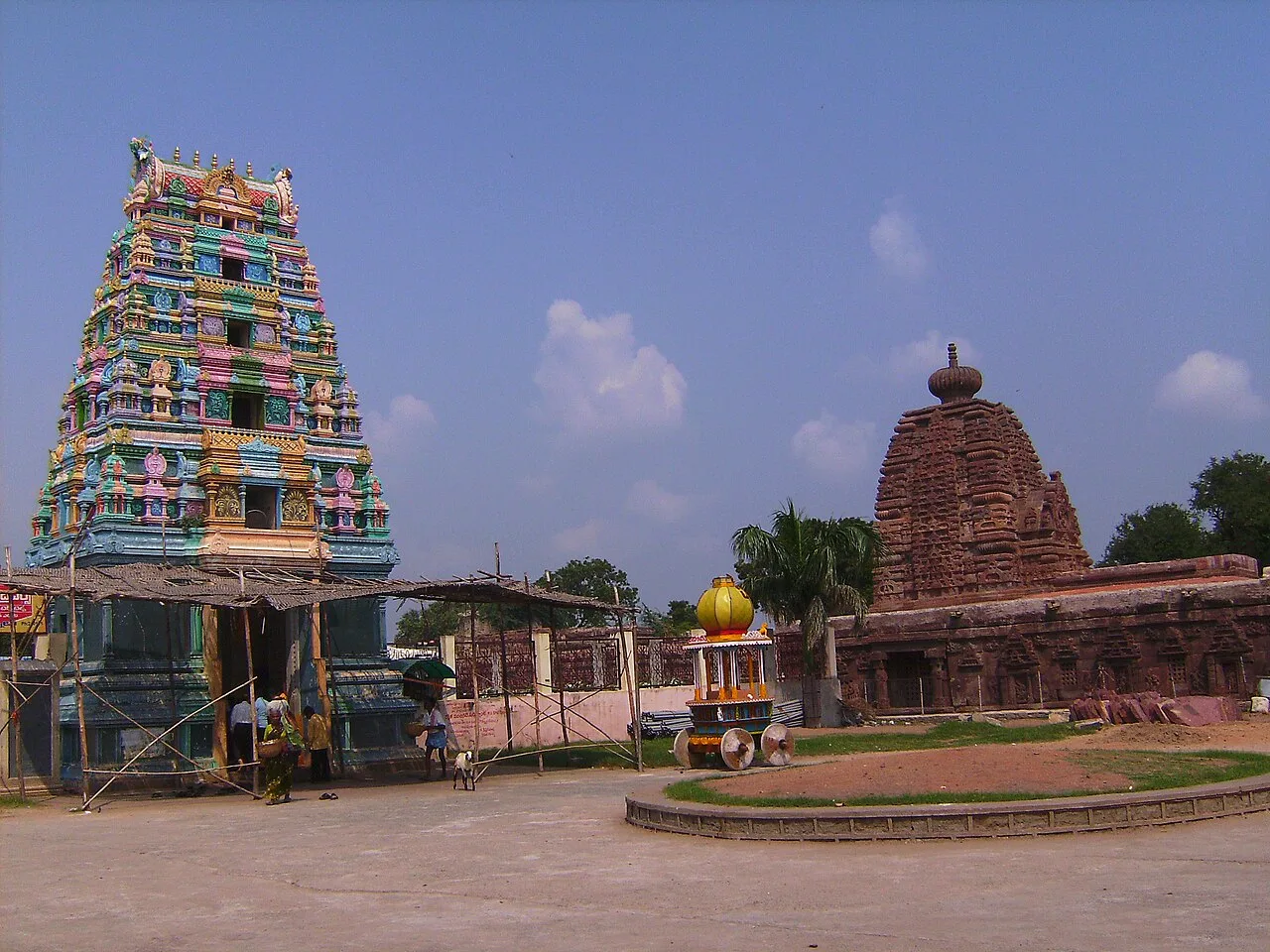
Jogulamba Temple, Alampur
Jogulamba Temple in Alampuram, Telangana, is a Shakti shrine counted among the eighteen Shakta pithas. Visitors worship Jogulamba and Balabrahmeswara at a complex shared with the Navabrahma temples.
Key facts · verified by Ghumoopedia editors
- Type of place
- Temple / pilgrimage site
- Best time to visit
- October to February; July to September for waterfalls in Adilabad and Mulugu
- Nearest railway station
- Kurnool City · about 11 km (straight line)
- Nearest airport
- Kurnool (Uyyalawada Narasimha Reddy) Airport · about 18 km (straight line)
- Verified
- 21 Nov 2026
Plan a trip from Jogulamba Temple, Alampur — a day-by-day route through places nearby.
In Alampuram, in Telangana’s Jogulamba Gadwal district, this temple honours Jogulamba, a manifestation of Shakti. It belongs to the eighteen major Shakta pithas, regarded in Shaktism as important shrines and pilgrimage destinations. Collectively, these are known as the Ashtadasa Shakti pithas; Jogulamba’s shrine holds fifth place in the group. Alampur lies beside the Tungabhadra, close to its meeting with the Krishna. In the same precinct is the Navabrahma complex, comprising nine Shiva temples built during the seventh and eighth centuries CE. The principal deities at Jogulamba Temple are Jogulamba and Balabrahmeswara, a form of Shiva. The image of Jogulamba shows her seated on a corpse, with a scorpion, frog and lizard on her head. Her name is understood to derive from the Telugu words Yogula Amma, meaning Mother of Yogis. She is also regarded as Gruha Chandi, a protective goddess of the household and the surrounding region. Telangana joins the Deccan's Islamic heritage — the Qutb Shahi and Asaf Jahi monuments of Hyderabad, Golconda and the Charminar — with the Kakatiya temples and forts of Warangal and the UNESCO-listed Ramappa Temple, the Godavari pilgrim towns of Bhadrachalam, Basar and Kaleshwaram, the Buddhist heritage of Nagarjunakonda, the ikat weaves of Pochampally and the tribal forests of Mulugu, Adilabad and the Nallamala hills. Summers from March to early June are very hot and dry, often above 40 °C; the southwest monsoon brings rain from June to September and fills the waterfalls of Adilabad and Mulugu. October to February is pleasant and dry, with cool mornings in December and January. The usual best time to visit is October to February; July to September for waterfalls in Adilabad and Mulugu. Timings, fees and access arrangements must be confirmed locally. For official information, see Telangana Tourism at https://tourism.telangana.gov.in.
Why it matters
Jogulamba Temple at Alampur is an important Shakti shrine in southern Telangana and a place of worship for devotees of the Goddess. It is commonly counted among the Ashtadasa Maha Shakti Peethas, or eighteen major Shakti pilgrimage sites; some traditional lists identify it as the fifth, though lists and numbering can vary. The temple is also associated with Balabrahmeswara, a form of Shiva, and stands within the historic Alampur temple complex. Nearby are the Navabrahma group of early medieval Shiva temples, giving the town significance for both pilgrimage and the study of temple architecture. The Archaeological Survey of India protects the Navabrahma temples; this should not be taken to mean every part of the active shrine is under the same management.
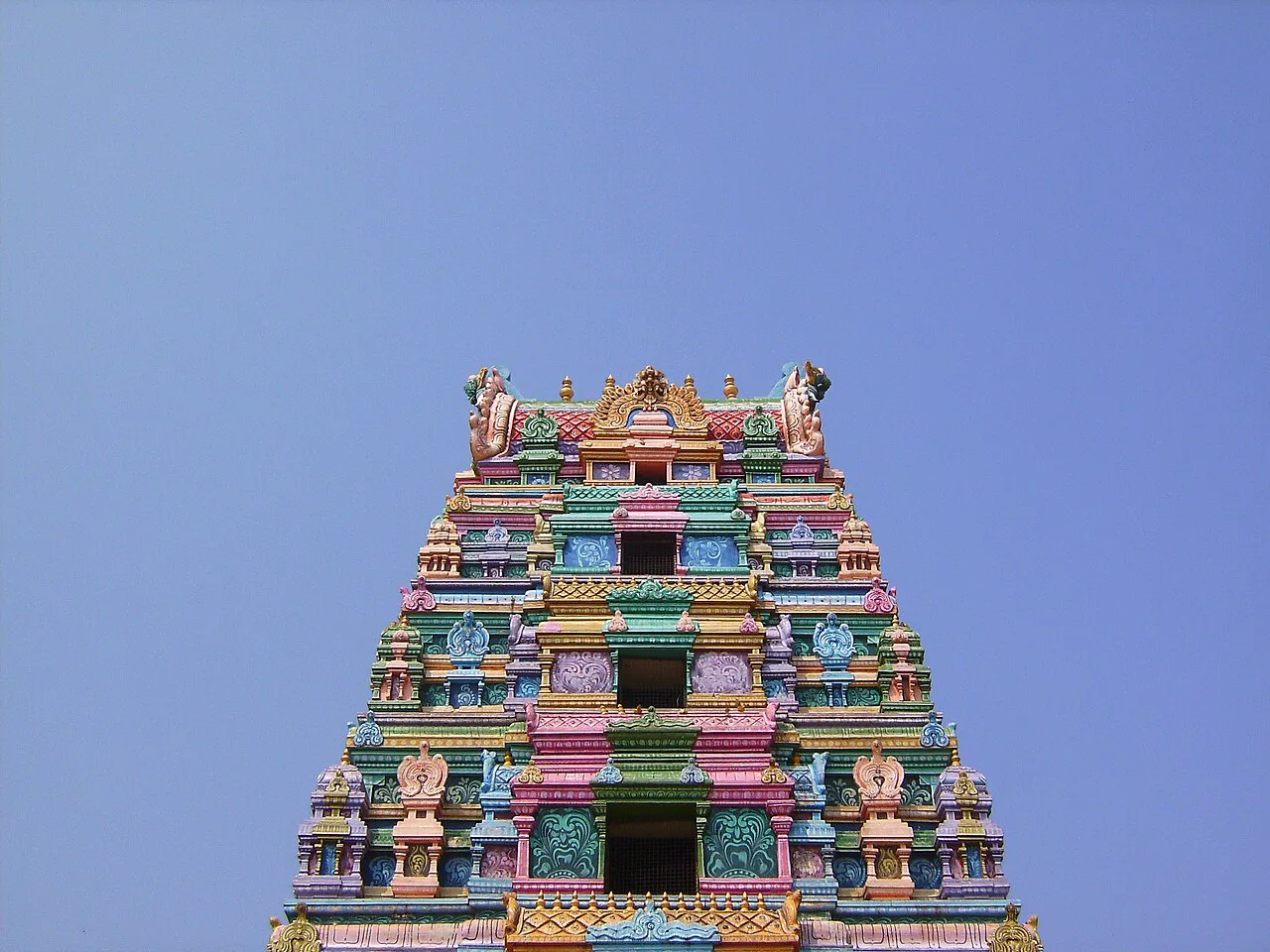
Alampur has been a religious centre for centuries. Its Navabrahma temples are generally dated to the seventh and eighth centuries CE and are associated with the early Chalukya period; their architecture reflects the region’s position between Deccan and southern Indian traditions. Jogulamba worship is older in local religious memory, but accounts of the shrine’s early history are not uniform. Historical summaries commonly report that the original Jogulamba temple was destroyed during a medieval invasion, often dated to the fourteenth century. According to these accounts, the Goddess’s image was moved to the Bala Brahmeswara temple for protection. The present Jogulamba shrine was later rebuilt, and the deity was installed again in a new temple in the early twenty-first century. The exact details of the destruction, relocation and rebuilding are presented differently in local and published accounts, so visitors should treat specific dates and narratives with care. The active shrine and the ancient Navabrahma temples now form a closely connected pilgrimage and heritage visit. The older monuments are protected and interpreted separately from the temple’s continuing religious use.
Origin stories & folklore
According to Shakta tradition, the great Goddess is worshipped at Alampur as Jogulamba, a form of Shakti. The town is counted among the Shakti Peethas, sacred places associated in belief with parts of the Goddess’s body falling to earth after the death of Sati. Accounts differ among traditions about the precise association and the lists’ order. The name Jogulamba is commonly explained as a form of the Telugu phrase Yogula Amma, meaning “Mother of Yogis.” Local religious descriptions portray the Goddess as a powerful, protective presence. Her image is traditionally described seated on a corpse, with a scorpion, frog and lizard depicted around her head. These details belong to devotional iconography and belief, rather than to a historical account of the shrine’s construction.
Architecture & design
The active Jogulamba shrine stands in the Alampur temple complex, near the older Navabrahma temples. Its present building is a comparatively recent reconstruction, while the adjacent early medieval shrines preserve the area’s historic stone architecture. The Navabrahma temples are compact Hindu shrines, built principally in stone, with sanctums and sculpted exterior surfaces; their forms show early Chalukya-era influence and regional variation. The Jogulamba temple is organised around the Goddess’s sanctum, with devotees approaching through the worship and darshan areas. Balabrahmeswara, a form of Shiva, is also central to the complex’s religious identity. The precinct brings an active temple environment together with older monuments, so visitors may notice differences in age, finish and architectural style between structures. Follow barriers and staff directions around protected fabric, and do not climb on or touch carved surfaces. The buildings are religious spaces as well as heritage structures, and access to some areas can be restricted during worship.
Important objects & sculptures
The principal object of devotion is the image of Goddess Jogulamba in the sanctum. Her distinctive iconography is traditionally described as showing her seated on a corpse, with a scorpion, frog and lizard associated with her head. The image is worshipped, so viewing conditions may vary with ritual activity and crowding; visitors should not expect unrestricted access or photography. Balabrahmeswara, the Shiva form honoured at the complex, is another focus for devotees. In the nearby Navabrahma temples, look for stone carvings and architectural details on the shrines, while respecting protective boundaries. Alampur’s historic monuments and archaeological material are best understood through any locally available interpretation panels or museum displays. Do not assume that objects in active worship areas are museum exhibits, and avoid touching images, offerings or carved stone.
Religious significance
Jogulamba is worshipped as a form of Shakti, the divine feminine, and devotees visit to pray for protection, wellbeing and fulfilment of personal vows. The shrine is commonly included in traditions identifying eighteen major Shakti Peethas, though the lists and numbering vary. Balabrahmeswara, a form of Shiva, is also revered in the complex, bringing Goddess and Shiva worship together in the pilgrimage. Visitors may encounter offerings, lamps, devotional recitation and priest-led rites; the precise sequence depends on the temple’s current schedule and religious calendar. Darshan arrangements can change during festivals or busy periods. Non-Hindu visitors are generally best guided by posted instructions and temple staff, and should keep a respectful distance from worshippers and ritual activity. The temple is a living place of worship, not solely a historic monument.
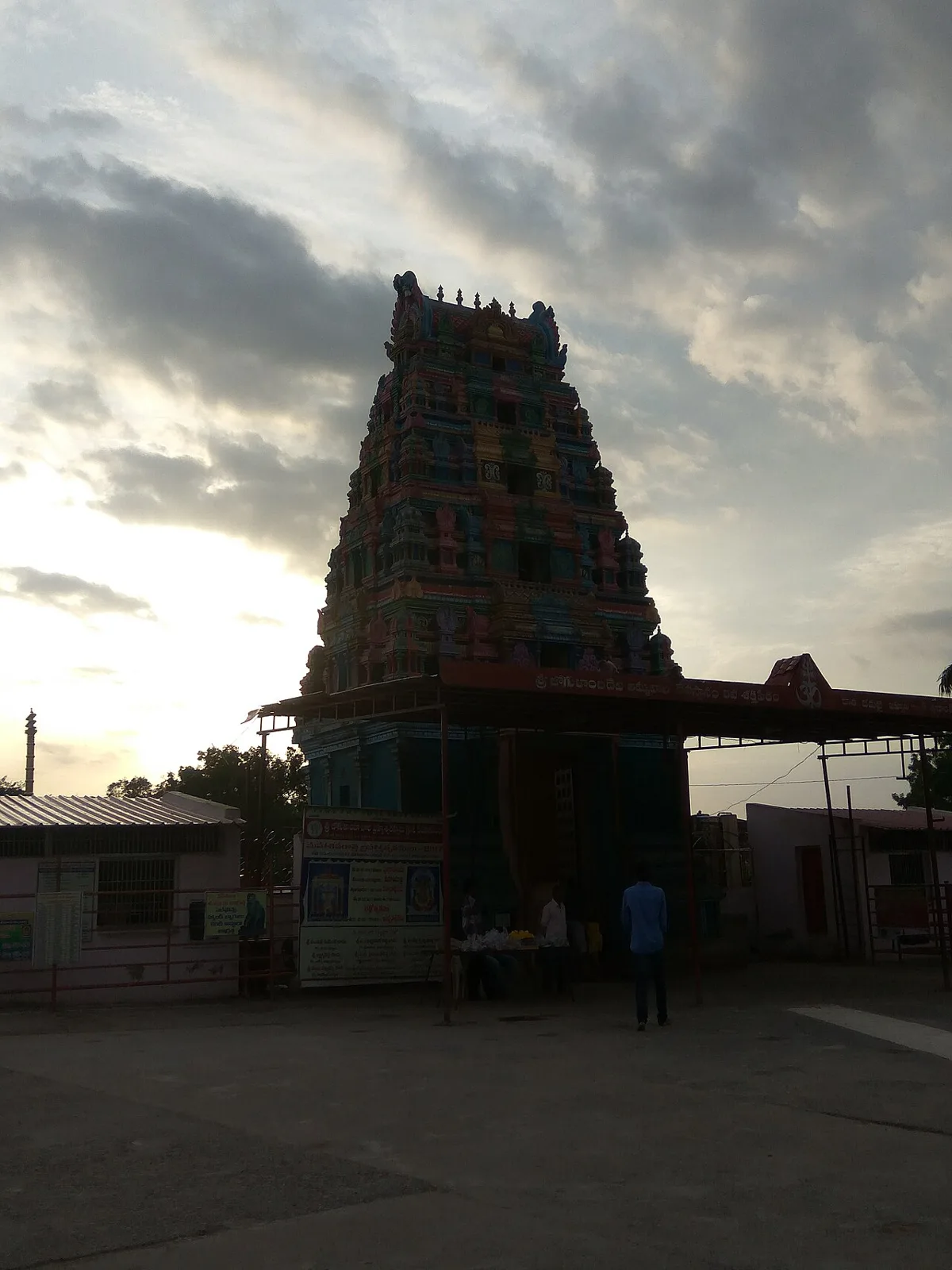
Visit Jogulamba Temple with time to observe daily prayers and rituals respectfully. Follow the posted rules on footwear, photography, phones and dress — large temples have separate darshan queues and paid special-entry tickets, and some prohibit phones and leather items inside. Beware of unofficial 'guides' or agents offering quick darshan for a fee. A comfortable itinerary is one main visit in the morning, a local meal at midday and a short nearby stop before an afternoon return. In the hot months, plan outdoor sightseeing for early morning and late afternoon, and spend midday in a museum or a long lunch. Use the district list on this site to find other places in Jogulamba Gadwal, but check the route and its condition before combining stops. If a festival is on — such as Bathukamma and Dasara in autumn, Bonalu in July–August, the biennial Medaram Sammakka Saralamma Jatara, Sankranti or Ramzan in Hyderabad's Old City — roads and stays can be busy, and the experience can be unforgettable. Leave no litter: many sites are protected by the communities around them.
Suggested itineraries
Half day: Visit Jogulamba Temple and allow time for darshan and quiet observation; walk through the Navabrahma temple complex; finish with the local archaeological displays if open (about 3–4 hours). Full day: Begin at Jogulamba Temple; explore the Navabrahma temples and Alampur archaeological displays; take a relaxed meal break; visit the nearby Sangameshwara Temple or Tungabhadra–Krishna confluence area if access and conditions allow (about 6–8 hours). Gentler option: Focus on the main shrine, take seated rest breaks and view only the closest accessible monuments; ask temple staff about steps, walking surfaces and the least demanding route.
Telugu is the principal language of the area, and visitors may also hear other languages spoken by pilgrims arriving from Telangana, Andhra Pradesh and neighbouring states. The temple’s living culture centres on darshan, prayer, offerings and family or group pilgrimage. Devotees commonly dress modestly, remove footwear where instructed and follow local guidance inside the shrine. During major religious occasions, devotional singing and collective worship may be more visible, though programmes vary and should not be assumed on an ordinary visit. The wider Alampur complex also reflects the region’s long history of temple building and pilgrimage. Visitors can support respectful cultural exchange by asking before photographing people, avoiding interruptions to worship and allowing local customs to guide their conduct.
Festivals & events
Navaratri, usually in September or October, is an important season for worship of the Goddess and may bring larger congregations. Maha Shivaratri, generally in February or March, is relevant to the complex’s Balabrahmeswara shrine and can also attract additional devotees. Ritual observances and crowd levels vary by year and temple calendar; confirm locally whether special arrangements are planned. Other Hindu observances may be marked at the shrine without creating a large public gathering. On festival days, expect busier darshan areas, slower movement and possible changes to access or parking. Arrive with flexibility, follow queue directions and avoid blocking entrances or ritual spaces.
Local food in Telangana includes Hyderabadi dum biryani, haleem during Ramzan, mirchi ka salan, double ka meetha and qubani ka meetha, Irani chai with Osmania biscuits, and Telangana village dishes such as sarva pindi, jonna rotte with spicy pachadi, natu kodi (country chicken) curry and sakinalu during Sankranti. Ask what is fresh that day; many small eateries cook a limited daily menu. Hyderabad's Old City around Charminar is the place for biryani, haleem and late-night Irani cafés; in the districts, Telangana food is spicy and rustic, with millet rotis and tangy pachadis. Temple towns such as Yadadri, Basar and Bhadrachalam serve strictly vegetarian food. Remote sites may have no restaurant at all. Carry water and snacks, eat a proper breakfast before long drives, and ask your accommodation for a packed lunch if you are heading out early. If prasad is offered, accept it according to local custom. Choose busy, clean places, drink sealed or filtered water, and carry your packaging back with you.
Shopping & local experiences
Shopping around Alampur is modest and may focus on devotional items such as flowers, incense, coconuts and small religious keepsakes sold near pilgrimage areas. Availability changes with the day and festival season. Visitors looking for Telangana handloom or ikat textiles may find a wider choice in larger towns and markets rather than at the temple itself. Try local Telugu meals or snacks from nearby eateries where available, and ask about ingredients if you have dietary needs. Buy from local sellers respectfully, avoid litter from packaging, and do not purchase fragments or objects claimed to come from historic monuments.
October to February; July to September for waterfalls in Adilabad and Mulugu
The nearest principal railway station by straight-line distance is Kurnool City, roughly 11 km away. The nearest operating airport by straight-line distance is Kurnool (Uyyalawada Narasimha Reddy) Airport, roughly 18 km away. These figures are calculated from map coordinates — actual road distance is longer. Hyderabad (Rajiv Gandhi International Airport and the Secunderabad, Nampally and Kacheguda stations) is the main gateway; Kazipet and Warangal serve the Kakatiya region, Bhadrachalam Road (Kothagudem) serves the Godavari temples, and Nizamabad, Mancherial and Adilabad serve the north. For the final leg, TGSRTC buses (including air-conditioned Rajadhani and Garuda coaches), Hyderabad Metro and MMTS suburban trains in the city, and app cabs and autos across Hyderabad, Warangal and the district towns link district towns. A private taxi gives more flexibility for remote temples, forests and waterfalls. When comparing train, bus and flight, count the complete door-to-door time: a flight saves the most time only if the onward road transfer is short, while an overnight train can save a hotel night. For Telangana, Hyderabad is well linked by air and by overnight trains from most metros; for district sites, an early express train followed by a road transfer is often quicker than driving out of the city. Book your return before you leave, because seats fill quickly on weekends, festivals and holidays. Current train numbers, timings, return services and fares are not listed here; check IRCTC and NTES for trains and the airline's own schedule for flights. No permit is needed to visit Telangana. Monuments such as Golconda Fort, the Qutb Shahi Tombs and Ramappa Temple have entry tickets (buy them online where possible), and several Hyderabad museums and palaces — including the Salar Jung Museum and Chowmahalla Palace — close on Fridays. Jungle safaris in Amrabad and Kawal tiger reserves must be booked in advance through the Telangana Forest Department and do not run in the monsoon closure season.
Confirm onward and return timings on IRCTC / NTES, the state bus operator or your airline before travel. A dash means current timings or fares have not been verified.
Getting around
Alampur is reached by road, and local buses connect the town with nearby centres; services and onward connections should be checked before setting out. Autos and hired vehicles may be available for the final approach, while taxis can be arranged from larger nearby towns. Within the temple precinct, visitors generally move on foot between the active shrine and neighbouring monuments. Ask locally where vehicles may be left, as parking arrangements can vary with visitor numbers and religious events. The riverbank and surrounding roads are not a substitute for marked visitor access; avoid entering restricted or unsafe areas, especially during high water.
Hours, tickets & permissions
Entry is through an active temple, so access to the sanctum and other areas may depend on worship, crowd management and current temple rules. Darshan arrangements, any ticketing or special-entry system, and access to the adjoining heritage monuments can differ. Dress expectations, footwear arrangements, restrictions on phones or leather items, and photography permissions should be checked at the entrance rather than assumed. Confirm current opening arrangements, fees if applicable, and any festival-day changes with the temple management or relevant site authority before travelling.
Facilities
Facilities in an active temple precinct may include footwear storage, drinking water, toilets and basic visitor assistance, but availability and upkeep can vary; check locally on arrival. Small food outlets or meal options may be found in Alampur, though choices can be limited compared with larger towns. Parking may be available near the complex, with arrangements subject to crowd control. Do not assume that an official guide, ATM, medical service or accessible toilet is on site. Carry essential medication and some water, and confirm food, cash and transport needs before leaving a larger town.
Accessibility
The complex involves walking between the active shrine and nearby historic temples, and surfaces may be uneven or include steps. Shade and seating can be limited in exposed parts of the precinct, so heat and fatigue matter, particularly in warmer months. Wheelchair and stroller access should not be assumed throughout the site; ask temple staff about the approach, thresholds and areas that can be reached before entering. Older visitors or anyone with limited mobility may prefer to concentrate on the main shrine, allow extra time and visit with a companion. During busy worship periods, queues and restricted movement can make access more difficult. Check current conditions locally.
No permit is needed to visit Telangana. Monuments such as Golconda Fort, the Qutb Shahi Tombs and Ramappa Temple have entry tickets (buy them online where possible), and several Hyderabad museums and palaces — including the Salar Jung Museum and Chowmahalla Palace — close on Fridays. Jungle safaris in Amrabad and Kawal tiger reserves must be booked in advance through the Telangana Forest Department and do not run in the monsoon closure season. Carry a photo ID at all times and save the emergency number 112 and your accommodation's contact offline. Summer heat is the main weather risk — carry water, wear a hat and avoid the midday sun; in the monsoon, allow extra time when roads flood. Watch your belongings in crowds and on public transport, and follow posted instructions.
Visitor rules
Follow signs and directions from temple staff, remove footwear where instructed and dress modestly for a place of worship. Keep voices low, do not interrupt prayers or enter restricted areas, and avoid touching images, offerings or historic carvings. Ask before carrying phones, cameras or leather items into worship spaces, as rules can differ by area and occasion. Use marked bins where provided and take litter away if bins are unavailable. Do not climb on monuments, leave offerings outside designated places or pay unofficial agents claiming to arrange privileged access. During crowds, keep entrances and queues clear.
Photography
Photography rules may differ between the active shrine, its outer areas and the historic monuments. Check posted notices and ask staff before taking pictures; photography inside the sanctum or during rituals may be restricted. If permitted, the softer light of early morning or late afternoon can suit the stone structures and precinct, but do not block walkways or disturb worshippers. Ask permission before photographing people, especially during prayer. Avoid flash where it could disrupt worship or harm sensitive displays. Do not fly a drone without all required permissions and explicit local approval; restrictions may apply around religious and protected heritage sites.
Choose a stay by the full journey to Jogulamba Temple, not just the district name. Warangal, Karimnagar, Khammam and Nizamabad have mid-range hotels; temple towns such as Bhadrachalam, Yadadri and Basar have devasthanam guesthouses, and Telangana Tourism runs haritha hotels at several lakes and heritage sites. In summer, check air-conditioning; in the monsoon, check that the property is accessible if roads flood. Book in advance for weekends, festivals and the peak season (October to February; July to September for waterfalls in Adilabad and Mulugu). Confirm the exact location, meals included, check-in time and cancellation terms in writing. Avoid sending money to unverified contacts or touts at stations. Carry some cash, as card and digital payments can be unreliable in remote areas.
The Navabrahma Temples are the principal heritage visit beside Jogulamba Temple and can be explored as part of the same Alampur outing. Sangameshwara Temple is another historic shrine in the area; confirm its current location and access arrangements locally, as the temple was relocated from a site affected by reservoir waters. The Tungabhadra–Krishna confluence is an important local geographical and religious landmark, but river access and conditions can vary. Alampur’s archaeological displays may add context to the monuments if open. For a separate excursion, Gadwal Fort is in Jogulamba Gadwal district; check the road route and available time before combining it with Alampur.
For couples, Jogulamba Temple rewards a slow pace: arrive early for soft light and fewer crowds, share a local meal and keep the evening free. A sunset at Golconda Fort, dinner at a heritage palace in Hyderabad, a boat ride on Laknavaram lake or an evening at Hussain Sagar makes the trip memorable. Public displays of affection can be frowned upon in conservative communities and at religious sites, so be discreet. Keep a buffer in your itinerary, because weather and road conditions can delay plans.
Q: How much time should I allow for a visit? A: Allow a few hours for darshan and the nearby Navabrahma temples; a fuller visit can take much of a day, depending on crowds and access. Q: When is the best season to visit? A: October to February is generally more comfortable for travel in Telangana. Summer can be very hot, so plan outdoor walking carefully. Q: Is there an entry fee or special darshan ticket? A: Arrangements can change. Check current entry, darshan and fee information with temple management before your visit. Q: Is the site suitable for children and elderly visitors? A: Families can visit, but expect walking and possibly uneven surfaces or steps. Older visitors may prefer a slower visit and assistance from a companion. Q: Where can I stay nearby? A: Check current accommodation in Alampur and nearby towns before travelling; availability and facilities may be more limited than in larger regional centres.
Be the first to share photos, stories, advice or a helpful contact for Jogulamba Temple, Alampur.
Loading…