
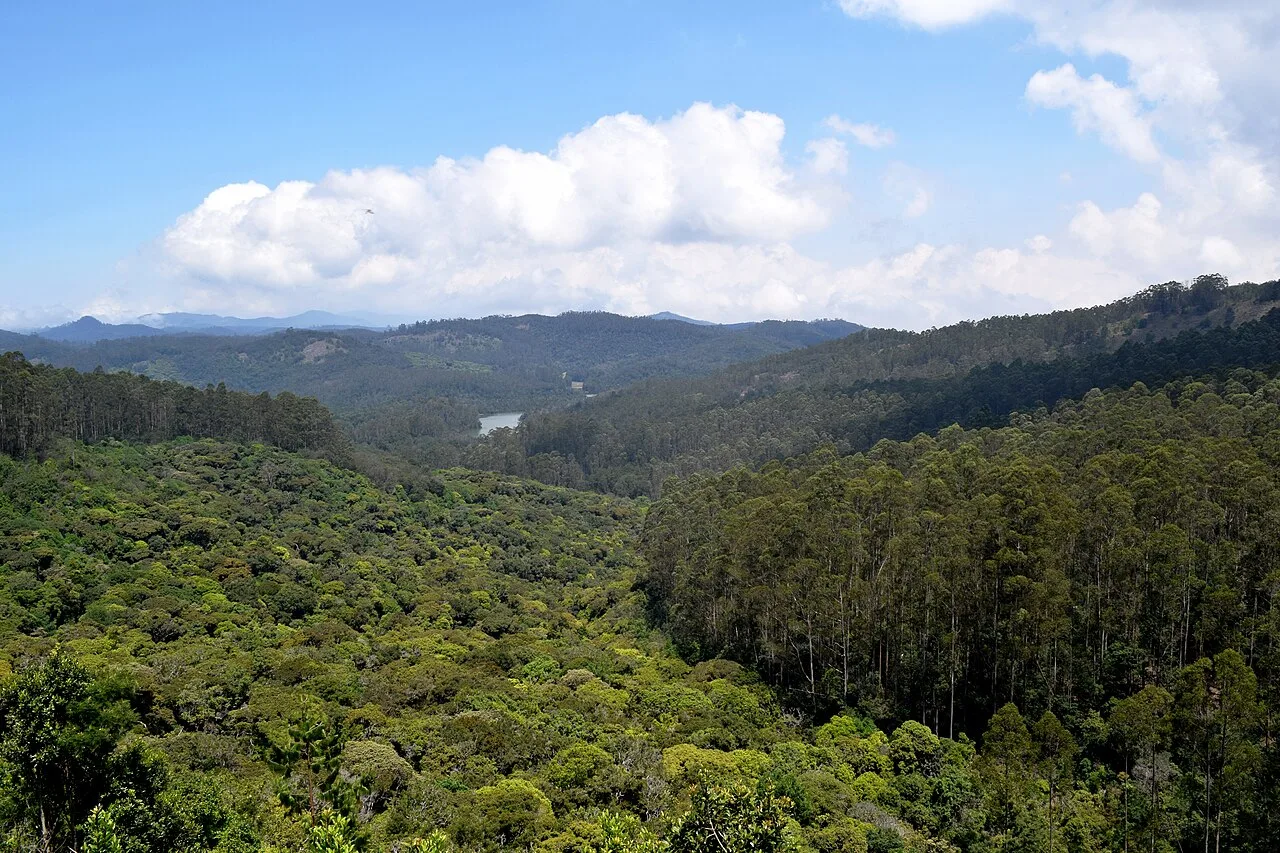
Berijam Lake
Berijam Lake is a reservoir in the upper Palani hills near Kodaikanal, Tamil Nadu. Visitors come to see the lake and its setting at the former Fort Hamilton site.
Key facts · verified by Ghumoopedia editors
- Type of place
- Natural attraction
- Best time to visit
- November to February; April to June for the hill stations
- Nearest railway station
- Palani · about 32 km (straight line)
- Nearest airport
- Madurai Airport · about 86 km (straight line)
- Verified
- 21 Nov 2026
Plan a trip from Berijam Lake — a day-by-day route through places nearby.
Berijam is a reservoir in Dindigul district, Tamil Nadu, close to Kodaikanal in southern India. It lies in the upper Palani hills, at the site formerly occupied by Fort Hamilton. A dam with sluice outlets created the lake. It forms part of a micro-watershed development project, linking it to water management in the area. The reservoir supplies Periyakulam’s public drinking-water system. The town is 18.7 kilometres to the south-east. The lake water is of excellent quality. Tamil Nadu is the land of great living temples — Madurai's Meenakshi, Thanjavur's Brihadeeswara, Srirangam, Chidambaram and Rameswaram — along with the Pallava shore monuments of Mamallapuram, the Chettinad mansions, the hill stations of Ooty and Kodaikanal and the meeting of three seas at Kanyakumari. The state is hot from March to June, gets light southwest-monsoon rain from June to September, and receives its main rainfall from the northeast monsoon between October and December. January to March is the most comfortable season; the Nilgiri and Kodaikanal hills are cool year-round. The usual best time to visit is November to February; April to June for the hill stations. Timings, fees and access arrangements must be confirmed locally. For official information, see Tamil Nadu Tourism at https://www.tamilnadutourism.tn.gov.in.
Why it matters
Berijam Lake is a reservoir in the upper Palani Hills of Dindigul district, near Kodaikanal. Its importance is both local and regional: it forms part of a micro-watershed development project, and published accounts identify it as a source of public drinking water for Periyakulam. The lake also draws visitors interested in the forested hill landscape, though access may be controlled because the route passes through a forest area. The site is associated with the former location known as Fort Hamilton. No UNESCO, Archaeological Survey of India or other formal heritage designation is established in the available information; visitors should not assume unrestricted public access.
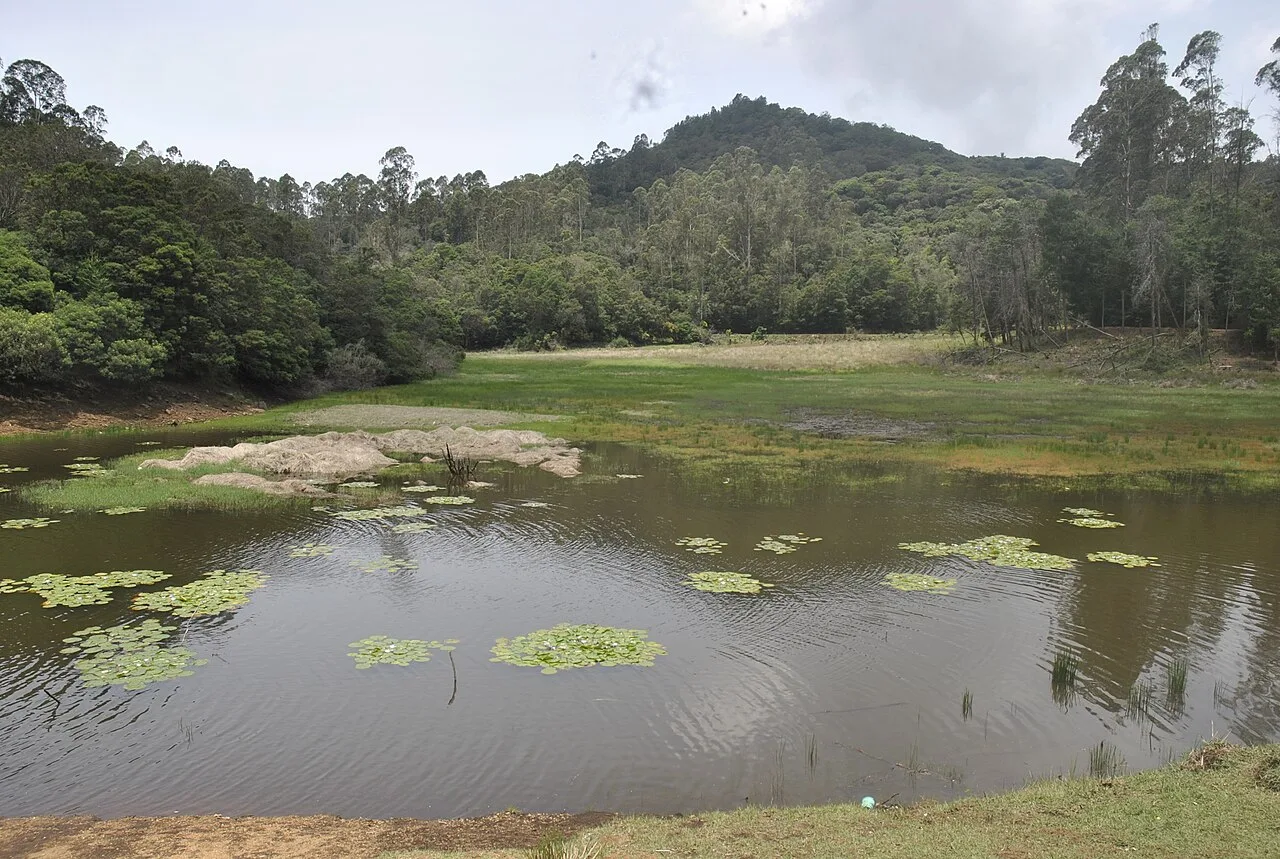
Berijam Lake is a man-made reservoir in the upper Palani Hills, near Kodaikanal. The available reference account describes it as having been formed by a dam with sluice outlets and as part of a micro-watershed development project. It also notes that the lake supplies public drinking water to Periyakulam, linking the hill catchment with the needs of a town farther downhill. Published summaries do not consistently identify the dam’s construction date, its engineers or the precise phases of the water project, so these details should not be stated as settled history without confirmation from local records. The lake lies at the old site called Fort Hamilton. The name points to a historical association with the colonial-era hill landscape, but the available account does not establish the fort’s date, function or surviving structures. The present-day significance of Berijam is primarily as a managed water body within a sensitive forest setting, rather than as a developed monument. For the latest account of management and access, consult the relevant forest or district authorities.
Origin stories & folklore
No widely documented origin legend for Berijam Lake is established in the available references, and its formation is described in practical terms as a dam and watershed project. The name Fort Hamilton is sometimes likely to prompt stories about an old outpost, but visitors should distinguish such speculation from verified local history. As in many hill regions, people may share place-based memories, beliefs or stories connected with forests and water; these can vary between families and communities. Ask respectfully if local people choose to share them, and do not present an unverified tale as the lake’s accepted origin story.
Spend unhurried time at Berijam Lake: walk the marked paths, use official viewpoints and ask locally whether a guide, entry ticket or forest permission is needed. Enjoy the water from safe, marked points; rocks near falls and dams are slippery and currents are dangerous, especially in the monsoon when waterfalls in the Ghats swell suddenly. A comfortable itinerary is one main visit in the morning, a local meal at midday and a short nearby stop before an afternoon return. Use the district list on this site to find other places in Dindigul, but check the route and its condition before combining stops. If a festival is on — such as Pongal in January, the Madurai Chithirai festival, the Mahamaham at Kumbakonam or the Chennai music season in December — roads and stays can be busy, and the experience can be unforgettable. Leave no litter: many sites are protected by the communities around them.
Suggested itineraries
Half day: Check access and permission in Kodaikanal; travel to the authorised forest access point; enjoy the permitted walk and viewpoint; return to town for a meal (about four to five hours, depending on access and road conditions). Full day: Start with an early access check; visit Berijam at an unhurried pace; return to Kodaikanal for lunch; choose one nearby viewpoint or garden before heading back (about six to eight hours, subject to permission and travel conditions). Gentler option: Arrange a vehicle to an authorised viewpoint, keep walking short and slow, and spend the remainder of the day in Kodaikanal town.
Berijam is primarily a natural and water-management site, not a venue for staged cultural performances. The wider Kodaikanal region is linguistically and culturally varied, with Tamil widely used alongside other languages among residents and visitors. Everyday hill-town life includes local markets, agriculture, tourism work and seasonal travel. Visitors may encounter Tamil food and customs in Kodaikanal and nearby settlements, but should not expect a particular dance, dress tradition or ritual at the lake itself. Keep noise low, follow forest instructions and treat the reservoir as a protected water source rather than a recreation area where unrestricted activity is appropriate.
Local communities
Residents of Kodaikanal and nearby hill settlements are connected to the area through tourism, transport, food services, farming and other local work. Forest and water-management staff also have an important role in protecting the catchment and regulating visitor access. Indigenous communities, including Paliyan people, are associated with the broader Palani Hills region; avoid assuming that any specific community has a particular role at the lake or seeking restricted cultural knowledge. Visitors can support local livelihoods by using locally operated services where available, following access rules and avoiding litter or disturbance to forest resources.
Festivals & events
Berijam Lake itself is not known as a regular festival or fair venue. In Kodaikanal and surrounding Tamil Nadu, Pongal is celebrated in January, while other religious and community observances follow local calendars. The hill station may also be busier during school holidays and seasonal tourism periods, even when no festival is taking place. Nearby town events can affect road traffic and accommodation availability, while forest access rules remain separate from festival arrangements. Check local announcements before travel and avoid treating a religious observance as a tourist performance.
Local food in Tamil Nadu includes idli, dosa and filter coffee, Chettinad chicken and pepper curries, Madurai's kari dosa and jigarthanda, Thanjavur's banana-leaf vegetarian meals, Kanyakumari's seafood, and sweets such as Mysore pak, adhirasam and Tirunelveli halwa. Ask what is fresh that day; many small eateries cook a limited daily menu. Tamil Nadu is a paradise for vegetarian meals served on banana leaf; Chettinad and Madurai are the centres for meat and spice lovers. Filter coffee is a ritual — have it at a local 'hotel' (eatery). Remote sites may have no restaurant at all. Carry water and snacks, eat a proper breakfast before long drives, and ask your accommodation for a packed lunch if you are heading out early. Try a home-cooked or local thali meal when you can — it is often the best food on the route. Choose busy, clean places, drink sealed or filtered water, and carry your packaging back with you.
Shopping & local experiences
Berijam Lake is not a shopping destination, and visitors should not expect stalls in the forest area. Kodaikanal town is the practical place to browse local shops and markets for snacks, daily necessities and hill-station souvenirs. Seasonal produce and locally made goods may be available, but check their origin rather than assuming every item is locally produced. Try Tamil meals or snacks in town and carry reusable containers where practical. Do not buy wildlife products, plants or objects removed from the forest, and take all packaging back with you.
Berijam is a reservoir set among the forested upper Palani Hills, within a landscape of montane woodland, shola patches and grassland typical of the higher Western Ghats. The dam and its catchment form part of a micro-watershed system, so the lake is important as managed freshwater as well as scenery. Forest habitats in the wider region support varied plant and animal life, and birdlife may be present around the water and woodland edges; sightings are never guaranteed. Conditions change with rain and season, and wet ground, steep slopes or forest restrictions can affect where visitors may go. Stay on permitted paths, do not enter the water, and leave plants and wildlife undisturbed.
November to February; April to June for the hill stations
The nearest principal railway station by straight-line distance is Palani, roughly 32 km away. The nearest operating airport by straight-line distance is Madurai Airport, roughly 86 km away. These figures are calculated from map coordinates — actual road distance is longer. Chennai is the main gateway; Coimbatore serves the west and Mettupalayam is the railhead for the Ooty toy train; Madurai and Tiruchirappalli serve the south and centre; Rameswaram and Kanniyakumari have their own rail termini. For the final leg, TNSTC and SETC buses reach nearly every town, with private sleeper coaches between cities and app cabs in Chennai, Coimbatore and Madurai link district towns. A private taxi gives more flexibility for remote sites such as hill stations, forest gates and coastal temples. When comparing train, bus and flight, count the complete door-to-door time: a flight saves the most time only if the onward road transfer is short, while an overnight train can save a hotel night. Book your return before you leave, because seats fill quickly on weekends, festivals and holidays. Current train numbers, timings, return services and fares are not listed here; check IRCTC and NTES for trains and the airline's own schedule for flights. No permit is needed to visit Tamil Nadu. The Nilgiri Mountain Railway toy train to Ooty must be booked well in advance on IRCTC — seats are few and sell out weeks ahead. Major temples such as Madurai Meenakshi and Srirangam have darshan queues and some enforce a dress code (dhoti or formal trousers for men, saree or salwar for women); phones and cameras are not allowed inside several temple sanctums. Boating to the Vivekananda Rock at Kanyakumari depends on sea conditions.
Confirm onward and return timings on IRCTC / NTES, the state bus operator or your airline before travel. A dash means current timings or fares have not been verified.
Getting around
Kodaikanal is the practical base for arranging the final leg to Berijam. Local buses serve Kodaikanal, but visitors should check whether any service reaches the relevant forest access point; do not assume there is a direct bus to the lake. A locally arranged taxi or private vehicle can provide more flexibility, subject to current forest permissions and vehicle rules. Walking is appropriate only on routes confirmed as open to visitors. Parking, roadside stopping and access beyond checkpoints may be restricted. Boating should not be assumed to be available; follow signs and staff directions around the reservoir.
Hours, tickets & permissions
Berijam access may be subject to forest-department or other local controls, including permission requirements, visitor limits, vehicle rules or restrictions related to conditions in the forest. Ticketing, camera rules and identification requirements can change, and permission should not be assumed simply because the lake appears on a map. Confirm current entry arrangements, permitted routes, hours and any fees with the managing forest or district authority before setting out. Follow instructions at any checkpoint and do not attempt to bypass a closed gate.
Facilities
Facilities at the lake should be treated as limited and variable because it is a managed reservoir in a forest setting. Do not count on public toilets, drinking-water taps, food stalls, guides or an ATM at the site. Kodaikanal is the more practical place to arrange meals, cash, supplies and transport. Parking may be limited or controlled near forest access points. Carry water and any personal essentials from town, take all rubbish back with you, and check locally whether a guide or other assistance is required.
Accessibility
Walking distances, shade and ground conditions vary, and rain can make routes slippery. The site should not be assumed to be wheelchair- or stroller-accessible; confirm the exact permitted route and vehicle access before travel. Older visitors or anyone with limited mobility may prefer a vehicle-based visit to an authorised stopping point and should avoid steep or unmarked paths. There may be few facilities close by, so plan for comfort and assistance in Kodaikanal.
No permit is needed to visit Tamil Nadu. The Nilgiri Mountain Railway toy train to Ooty must be booked well in advance on IRCTC — seats are few and sell out weeks ahead. Major temples such as Madurai Meenakshi and Srirangam have darshan queues and some enforce a dress code (dhoti or formal trousers for men, saree or salwar for women); phones and cameras are not allowed inside several temple sanctums. Boating to the Vivekananda Rock at Kanyakumari depends on sea conditions. Carry a photo ID at all times and save the emergency number 112 and your accommodation's contact offline. Heat in summer and heavy rain in the monsoon are the main weather risks; carry water, avoid midday sun and allow extra time when roads flood. Waterfalls and dams are dangerous in the monsoon: keep behind barriers and leave the area if the water level rises suddenly.
Photography
The lake and surrounding forest can be attractive in soft morning light or when clouds lift, but weather and access determine what can be seen. Photograph only from permitted viewpoints and do not approach the water’s edge or leave marked areas for a better angle. Check current rules for camera use and any restrictions at forest checkpoints; drone use should not be assumed to be permitted in a protected or controlled area. Ask before photographing local people, staff or private property, and avoid disturbing wildlife for a picture.
Choose a stay by the full journey to Berijam Lake, not just the district name. Chennai, Coimbatore, Madurai and Tiruchirappalli offer the widest choice; Ooty and Kodaikanal have everything from heritage hotels to cottages — book far ahead for the April–June school holidays and the Pongal weekend. In summer, check air-conditioning; in the monsoon, check that the property is accessible if roads flood. Book in advance for weekends, festivals and the peak season (November to February; April to June for the hill stations). Confirm the exact location, meals included, check-in time and cancellation terms in writing. Avoid sending money to unverified contacts or touts at stations. Carry some cash, as card and digital payments can be unreliable in remote areas.
Kodaikanal offers several established stops that can be combined with a Berijam visit if access and road conditions allow. In town, Kodaikanal Lake, Bryant Park and Coaker’s Walk are familiar visitor attractions. Pillar Rocks is another well-known viewpoint in the surrounding hills, while Guna Caves, also known as Devil’s Kitchen, is a distinct nearby attraction with its own safety controls. Poombarai village is a possible longer outing from Kodaikanal. Avoid packing too many stops into one day: forest permissions, winding roads and weather can make travel slower than expected.
For couples, Berijam Lake rewards a slow pace: arrive early for soft light and fewer crowds, share a local meal and keep the evening free. Sunrise at Kanyakumari, a boat ride on Kodaikanal lake or an evening stroll through Mamallapuram's shore monuments makes the trip memorable. Public displays of affection can be frowned upon in conservative communities and at religious sites, so be discreet. Keep a buffer in your itinerary, because weather and road conditions can delay plans.
Q: How much time should I allow for Berijam Lake? A: Allow at least a half day from Kodaikanal, including the road journey and any access checks. A longer day allows a nearby town stop. Q: When is a good season to visit? A: November to February is generally comfortable in Tamil Nadu; Kodaikanal is cool year-round. Rain can affect roads and forest access, so check conditions before travelling. Q: Is entry freely available? A: Not necessarily. Forest permission, visitor limits or other rules may apply. Confirm current access requirements with the managing authority before departure. Q: Is it suitable for children or elderly visitors? A: It can suit visitors who can manage a hill-road journey and limited, uneven walking, but facilities may be sparse. Keep children away from the water and follow staff instructions. Q: Where should I stay nearby? A: Kodaikanal is the practical base, with accommodation and food options. Check availability and travel conditions locally, especially during busy holiday periods.
Be the first to share photos, stories, advice or a helpful contact for Berijam Lake.
Loading…