
Sri Ramanasramam
Sri Ramanasramam is a spiritual community and international non-profit organisation in Tiruvannamalai, associated with Ramana Maharshi. People visit to meditate, study his teachings and seek spiritual understanding.
Key facts · verified by Ghumoopedia editors
- Type of place
- Temple / pilgrimage site
- Best time to visit
- November to February; April to June for the hill stations
- Nearest railway station
- Tiruvannamalai · about 2 km (straight line)
- Nearest airport
- Vellore Airport · about 76 km (straight line)
- Verified
- 21 Nov 2026
Plan a trip from Sri Ramanasramam — a day-by-day route through places nearby.
In Tiruvannamalai district, Tamil Nadu, Sri Ramanasramam lies below Arunachala, a hill held sacred. The community took shape in 1922 around the memorial shrine of Ramana Maharshi’s mother. A modern sage and teacher of Advaita, Maharshi made the ashram his home from 1922 until he died in 1950. His remains are commemorated in a samadhi hall. Visitors come to meditate, learn about his guidance and pursue spiritual understanding. Maharshi’s teaching emphasised self-enquiry: turning attention inward to investigate the sense of self. He relied chiefly on a quiet, attentive presence, with little spoken instruction. The settlement developed gradually from a small hut into a pilgrimage destination for thousands seeking self-realisation, including followers of Advaita Vedanta who wished to be near him. Today, its facilities include meditation spaces, shrines, a library and archives, a Vedic studies school, a cow shelter and accommodation with 200 rooms. The ashram also works as an international non-profit trust. Its associated groups include Ramana Kendras in New Delhi, established in 1963, Hyderabad and Chennai; Arunachala Ashram in New York City; and Mumbai’s Ramana Satchidananda Mandali, founded in 1923. Around 100 further spiritual groups, called Satsangh Centres or Kendras, operate across 65 countries, among them the US, Switzerland, Mauritius, Japan, France, Spain and countries in Eastern Europe. The Granthalaya library and archives safeguard Maharshi’s writings. The ashram publishes more than 200 books in English, Tamil, Telugu, Gujarati and Marathi. Tamil Nadu is the land of great living temples — Madurai's Meenakshi, Thanjavur's Brihadeeswara, Srirangam, Chidambaram and Rameswaram — along with the Pallava shore monuments of Mamallapuram, the Chettinad mansions, the hill stations of Ooty and Kodaikanal and the meeting of three seas at Kanyakumari. The state is hot from March to June, gets light southwest-monsoon rain from June to September, and receives its main rainfall from the northeast monsoon between October and December. January to March is the most comfortable season; the Nilgiri and Kodaikanal hills are cool year-round. The usual best time to visit is November to February; April to June for the hill stations. Timings, fees and access arrangements must be confirmed locally. For official information, see Tamil Nadu Tourism at https://www.tamilnadutourism.tn.gov.in.
Why it matters
Sri Ramanasramam is an important modern pilgrimage and study centre at the foot of Arunachala Hill in Tiruvannamalai. It is associated with Ramana Maharshi, whose teaching of self-enquiry, often expressed as “Who am I?”, draws visitors from India and abroad. The ashram grew around the samadhi shrine of his mother and later became his home and the place where his own remains were enshrined. For devotees, it is a setting for meditation, remembrance and study; for other visitors, it offers insight into a living spiritual community. The ashram is maintained by a non-profit trust. It should not be confused with the nearby Arunachaleswarar Temple, and no UNESCO or ASI recognition is asserted here.
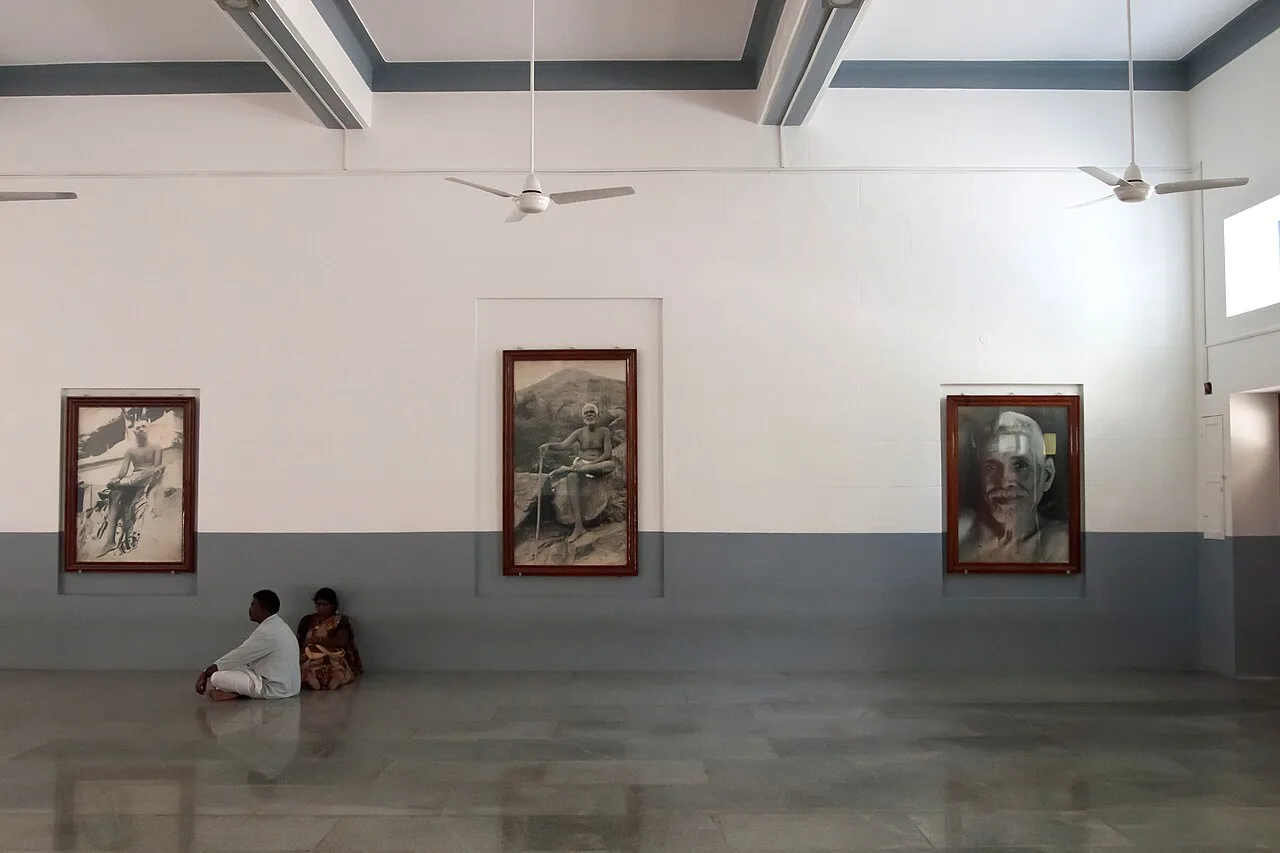
Ramana Maharshi, born Venkataraman in 1879, came to Tiruvannamalai in 1896 and made Arunachala the centre of his life and teaching. After periods spent at sites on the hill, including Virupaksha Cave and Skandashram, he moved in 1922 to the site where his mother, Alagammal, was buried. A shrine was established over her samadhi, and a modest community gradually formed around him. The settlement developed organically into Sri Ramanasramam, rather than being built all at once to a single architectural plan. Ramana lived at the ashram until his death in 1950. His devotees later enshrined his remains in a samadhi hall beside his mother’s shrine, making the complex a place of pilgrimage as well as residence and study. Over time, additional halls, a library, publishing facilities, a Veda school and other community buildings were added. The ashram’s Granthalaya preserves and publishes works associated with Ramana in several Indian languages and English. Today it continues under a non-profit trust, serving visitors, residents and a wider network of Ramana centres. The ashram’s own publications and archives are useful sources for its institutional history.
Origin stories & folklore
According to Shaiva tradition, Arunachala is a sacred form of Shiva. A well-known story tells of Shiva appearing as an immeasurable column of fire, challenging Brahma and Vishnu to find its beginning or end. The hill is revered as the enduring manifestation of that fiery form, and the annual Karthigai Deepam flame on its summit recalls this belief. Devotees also speak of Arunachala as a spiritual presence that draws seekers to the mountain. These are religious traditions, not historical accounts of the ashram’s founding. Ramana Maharshi’s life and teaching are closely associated with the hill, but Sri Ramanasramam itself developed around his mother’s samadhi in the twentieth century.
Architecture & design
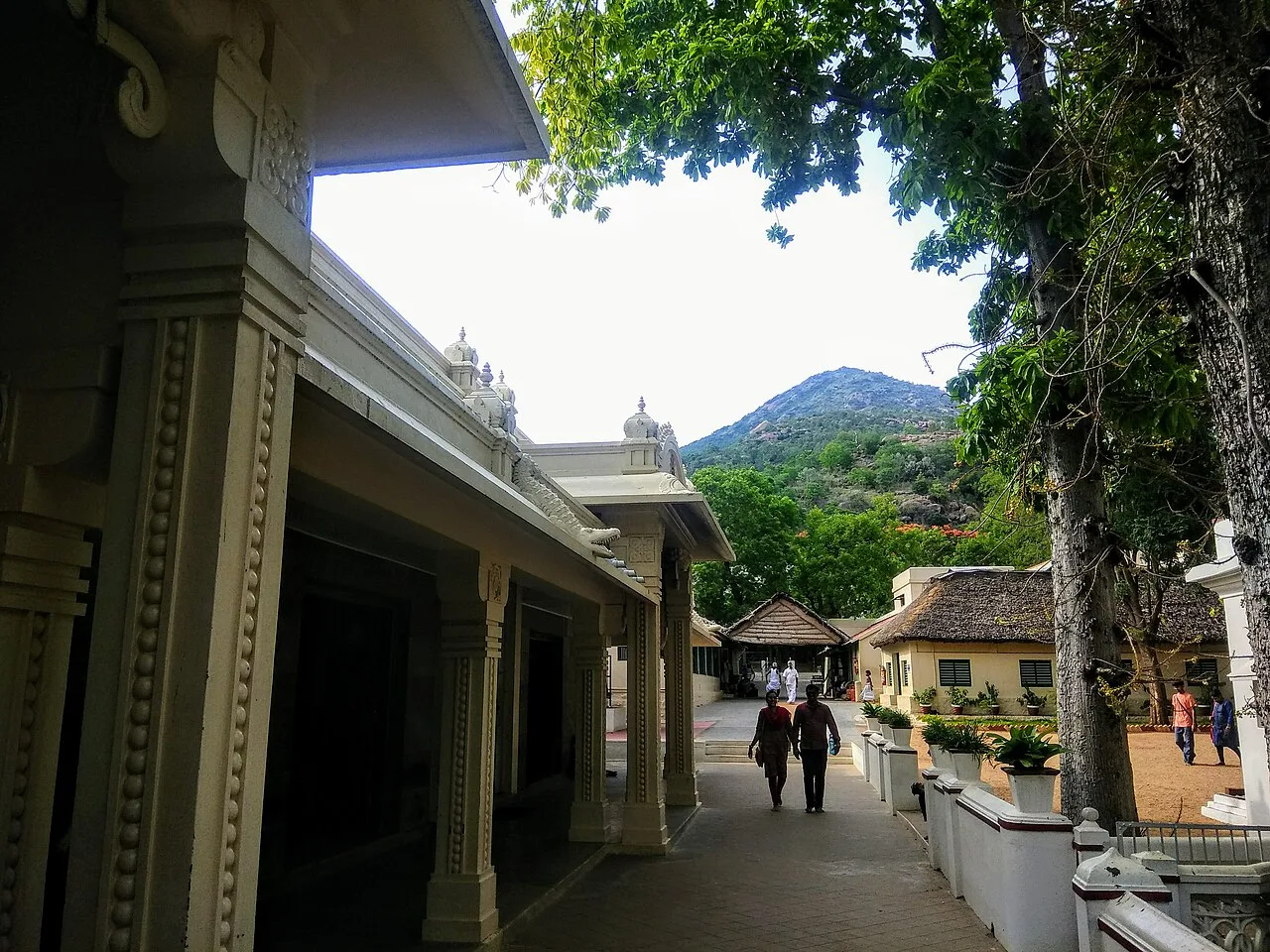
Sri Ramanasramam is a working spiritual compound, not a single monumental temple built to one plan. Its buildings grew around the samadhi of Alagammal, with Ramana Maharshi’s samadhi hall becoming a central focus after his death. The complex includes shrines, meditation and assembly spaces, the Old Hall associated with his teaching, a dining hall, library and archive, and facilities connected with the ashram community. The mother’s shrine has the character of a South Indian temple shrine, while other structures are functional halls and institutional buildings. Their construction and appearance reflect gradual additions rather than a uniform architectural style. Visitors may notice modest courtyards and shaded transitions between buildings, designed for movement, worship and quiet sitting. Arunachala forms a striking natural backdrop, though access to the hill is separate from the ashram’s built compound.
Important objects & sculptures
The main devotional focus is the samadhi shrine of Ramana Maharshi, alongside the shrine marking his mother Alagammal’s samadhi. Visitors may see the lingam in the mother’s shrine and images associated with Ramana in spaces where display is permitted. The Old Hall is valued for its connection with his years of teaching and quiet presence. The ashram library and Granthalaya preserve books, manuscripts, photographs and other documentary material relating to Ramana’s life and teachings; access to archival collections may be subject to local arrangements. Look for interpretation boards and published works to understand the objects and spaces. Displays and access can change, so ask the ashram before entering areas used for worship, study or preservation.
Religious significance
Sri Ramanasramam is associated with Ramana Maharshi’s Advaita Vedanta teaching and the practice of self-enquiry: turning attention inward and asking “Who am I?” Devotees regard the samadhi shrines of Ramana and his mother as sacred places for prayer, meditation and remembrance. The ashram also sustains Vedic learning and worship, reflecting Hindu devotional and contemplative traditions. Visitors may encounter quiet sitting, chanting or ritual observances, depending on the day and the ashram’s programme. Practices are not identical for every visitor: some come as committed devotees, while others visit to learn or sit in silence. Respectful conduct and a willingness to follow local guidance help preserve the contemplative character of the place.
Explore Sri Ramanasramam slowly and read the interpretation boards, use the official audio guide where available or hire an authorised guide to understand its history. Check opening days, ticket counters and camera rules in advance; many monuments and museums close on one weekday and on some public holidays. Early morning gives softer light, cooler air and smaller crowds. A comfortable itinerary is one main visit in the morning, a local meal at midday and a short nearby stop before an afternoon return. Use the district list on this site to find other places in Tiruvannamalai, but check the route and its condition before combining stops. If a festival is on — such as Pongal in January, the Madurai Chithirai festival, the Mahamaham at Kumbakonam or the Chennai music season in December — roads and stays can be busy, and the experience can be unforgettable. Leave no litter: many sites are protected by the communities around them.
Suggested itineraries
Half day: Allow about 2–3 hours for a quiet visit to the samadhi shrines, meditation spaces open to visitors, interpretation material and a short period of sitting; take a local meal afterward. Full day: Spend the morning at the ashram for about 2–3 hours, pause for lunch and rest, then visit Arunachaleswarar Temple and explore a suitable section of the Arunachala girivalam route, allowing about 2–4 hours depending on mobility and conditions. Gentler option: Visit the ashram at an unhurried pace, use nearby seating and shaded areas, and skip the hill walk; arrange an auto or taxi between stops if needed.
The ashram’s daily character centres on quiet, study, worship and shared community life. Tamil is prominent in the region, while the ashram’s publications and international visitors bring English and other Indian and foreign languages into use. Vedic recitation and devotional singing may be heard during observances, though programmes vary. Visitors generally dress modestly and keep voices low in halls and shrine areas. The community includes residents, staff, devotees and short-term visitors, so customs are best understood by observing posted guidance and asking respectfully. The broader town has a strong Shaiva identity, especially during the Karthigai Deepam season, when religious activity and visitor numbers increase around Arunachala.
Festivals & events
Ramana Maharshi’s birth anniversary, commonly called Jayanti, is observed around December or January according to the traditional calendar. His Aradhana, commemorating his passing, is observed around April. The ashram may hold special prayers, chanting or gatherings on these occasions; confirm current arrangements locally. The major regional celebration is Karthigai Deepam, usually in November or December, centred on Arunachaleswarar Temple and the sacred hill. It draws very large crowds to Tiruvannamalai and can make roads, accommodation and walking routes busy. Festival dates follow traditional calendars and vary from year to year.
Local food in Tamil Nadu includes idli, dosa and filter coffee, Chettinad chicken and pepper curries, Madurai's kari dosa and jigarthanda, Thanjavur's banana-leaf vegetarian meals, Kanyakumari's seafood, and sweets such as Mysore pak, adhirasam and Tirunelveli halwa. Ask what is fresh that day; many small eateries cook a limited daily menu. Tamil Nadu is a paradise for vegetarian meals served on banana leaf; Chettinad and Madurai are the centres for meat and spice lovers. Filter coffee is a ritual — have it at a local 'hotel' (eatery). Remote sites may have no restaurant at all. Carry water and snacks, eat a proper breakfast before long drives, and ask your accommodation for a packed lunch if you are heading out early. Try a home-cooked or local thali meal when you can — it is often the best food on the route. Choose busy, clean places, drink sealed or filtered water, and carry your packaging back with you.
Shopping & local experiences
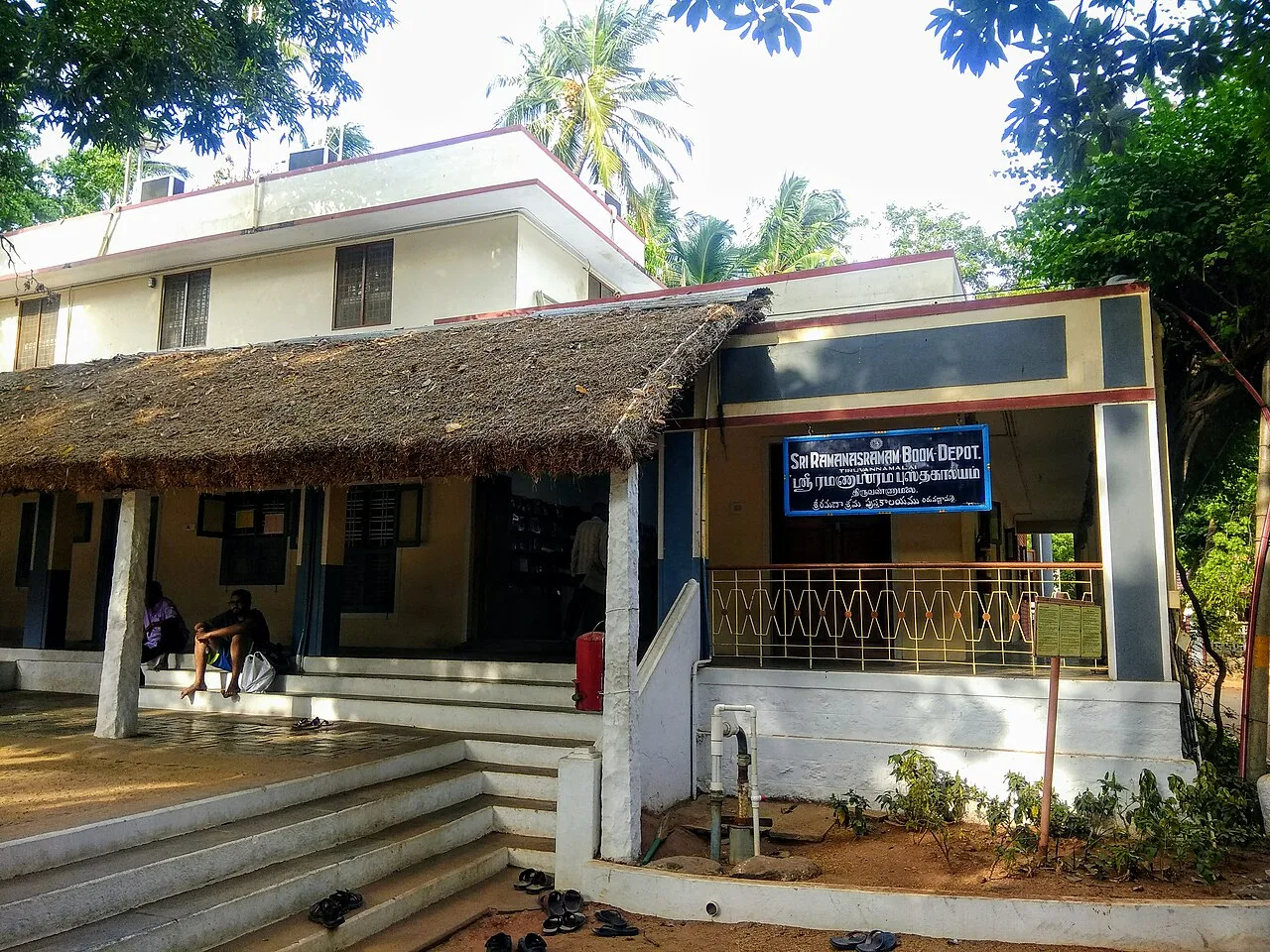
The ashram’s bookshop or publishing outlets may offer works by and about Ramana Maharshi, including books in several Indian languages and English; availability varies. In Tiruvannamalai town, look for devotional books, prayer items, flowers and everyday pilgrimage supplies. Local shops and markets offer snacks and regional foods, while eateries provide a chance to try Tamil meals. Buy respectfully and avoid items made from protected wildlife or materials of uncertain origin. During major festival periods, temporary stalls and crowds may increase, so allow extra time and keep purchases modest if travelling on foot.
November to February; April to June for the hill stations
The nearest principal railway station by straight-line distance is Tiruvannamalai, roughly 2 km away. The nearest operating airport by straight-line distance is Vellore Airport, roughly 76 km away. These figures are calculated from map coordinates — actual road distance is longer. Chennai is the main gateway; Coimbatore serves the west and Mettupalayam is the railhead for the Ooty toy train; Madurai and Tiruchirappalli serve the south and centre; Rameswaram and Kanniyakumari have their own rail termini. For the final leg, TNSTC and SETC buses reach nearly every town, with private sleeper coaches between cities and app cabs in Chennai, Coimbatore and Madurai link district towns. A private taxi gives more flexibility for remote sites such as hill stations, forest gates and coastal temples. When comparing train, bus and flight, count the complete door-to-door time: a flight saves the most time only if the onward road transfer is short, while an overnight train can save a hotel night. Book your return before you leave, because seats fill quickly on weekends, festivals and holidays. Current train numbers, timings, return services and fares are not listed here; check IRCTC and NTES for trains and the airline's own schedule for flights. No permit is needed to visit Tamil Nadu. The Nilgiri Mountain Railway toy train to Ooty must be booked well in advance on IRCTC — seats are few and sell out weeks ahead. Major temples such as Madurai Meenakshi and Srirangam have darshan queues and some enforce a dress code (dhoti or formal trousers for men, saree or salwar for women); phones and cameras are not allowed inside several temple sanctums. Boating to the Vivekananda Rock at Kanyakumari depends on sea conditions.
Confirm onward and return timings on IRCTC / NTES, the state bus operator or your airline before travel. A dash means current timings or fares have not been verified.
Getting around
Tiruvannamalai railway station is in town, and the ashram is accessible by local auto-rickshaw or taxi; check the route with the driver before setting out. Town buses and shared local transport may serve major areas, but routes and frequency should be checked locally. The approach from central Tiruvannamalai can also be made on foot if distance, heat and road conditions suit you. Parking availability near the ashram may be limited, especially during festivals, so follow local signs and avoid blocking residential or temple access. For visits to hill caves or the girivalam route, arrange transport separately and check walking conditions.
Hours, tickets & permissions
Sri Ramanasramam is an active religious and residential institution, so access to particular halls, shrines, the library and other areas may depend on worship, programmes or operational arrangements. Visitors should follow notices and staff directions; some spaces may be reserved for prayer, residents or study. Do not assume that every building is open to general visitors. Entry, photography permissions and any applicable fees or registration requirements can change. Confirm current hours, access arrangements and fees directly with the managing ashram before travelling.
Facilities
The ashram has facilities for its residents and visitors, including halls, a library and dining spaces; access to particular services may depend on the day and local arrangements. Toilets and drinking water are usually available, but check on arrival and carry water in hot weather. Food may be available through ashram arrangements or nearby eateries; do not assume a meal is served to every visitor. Accommodation is limited and should be requested directly well in advance rather than treated as a walk-in option. Shops, ATMs, pharmacies and a wider choice of food are available in Tiruvannamalai town. Guide services and parking should be checked locally.
Accessibility
The ashram’s main compound is generally more manageable than the rocky hill paths nearby, but visitors should expect some walking between buildings and shrine spaces. Surfaces, thresholds and access arrangements can vary, and steps may be present; wheelchair access to every hall should not be assumed. Shade and places to sit are available in parts of the compound, but heat can make even short walks tiring. Strollers may be awkward in crowded or uneven areas. Older visitors and people with limited mobility may find a slow visit focused on the accessible spaces more comfortable. Ask staff about the clearest route and seating before moving around; hill caves and the full girivalam route require much greater stamina.
No permit is needed to visit Tamil Nadu. The Nilgiri Mountain Railway toy train to Ooty must be booked well in advance on IRCTC — seats are few and sell out weeks ahead. Major temples such as Madurai Meenakshi and Srirangam have darshan queues and some enforce a dress code (dhoti or formal trousers for men, saree or salwar for women); phones and cameras are not allowed inside several temple sanctums. Boating to the Vivekananda Rock at Kanyakumari depends on sea conditions. Carry a photo ID at all times and save the emergency number 112 and your accommodation's contact offline. Heat in summer and heavy rain in the monsoon are the main weather risks; carry water, avoid midday sun and allow extra time when roads flood. Watch your belongings in crowds and on public transport, and follow posted instructions.
Visitor rules
Dress modestly and behave quietly, especially near shrines and meditation halls. Follow signs and staff instructions, remove footwear where requested, and do not enter rooms or residential areas marked as restricted. Avoid disturbing people who are praying, meditating or studying. Keep the grounds clean and take litter with you; reduce single-use plastic where possible. Photography may be limited in shrine, hall or archival areas, so ask before taking pictures. Do not touch ritual objects or offerings unless invited. The ashram is a living religious community, not only a sightseeing attraction.
Photography
The hill and ashram grounds can be most visually appealing in softer morning or late-afternoon light, though quiet and worship should take priority over photography. Ask staff before photographing indoors, near samadhi shrines, or anywhere people are praying or meditating; restrictions may apply. Avoid photographing residents and visitors without consent. Do not use flash where it could disturb worship or damage sensitive displays. Drone use should not be assumed to be permitted: check applicable local rules and obtain any required permission. Respect signs and put the camera away if asked.
Choose a stay by the full journey to Sri Ramanasramam, not just the district name. Chennai, Coimbatore, Madurai and Tiruchirappalli offer the widest choice; Ooty and Kodaikanal have everything from heritage hotels to cottages — book far ahead for the April–June school holidays and the Pongal weekend. In summer, check air-conditioning; in the monsoon, check that the property is accessible if roads flood. Book in advance for weekends, festivals and the peak season (November to February; April to June for the hill stations). Confirm the exact location, meals included, check-in time and cancellation terms in writing. Avoid sending money to unverified contacts or touts at stations. Carry some cash, as card and digital payments can be unreliable in remote areas.
Within Tiruvannamalai, the major nearby pilgrimage landmark is Arunachaleswarar Temple, dedicated to Shiva and closely connected with the sacred hill. The Arunachala girivalam route encircles the hill and is especially busy during full-moon periods and Karthigai Deepam. Virupaksha Cave and Skandashram are associated with Ramana Maharshi’s earlier years, but reaching them involves an uphill walk and may not suit everyone. Sathanur Dam is another regional outing; check road conditions and local access before combining it with the ashram. Allow time for heat, traffic and festival crowds when planning more than one stop.
For couples, Sri Ramanasramam rewards a slow pace: arrive early for soft light and fewer crowds, share a local meal and keep the evening free. Sunrise at Kanyakumari, a boat ride on Kodaikanal lake or an evening stroll through Mamallapuram's shore monuments makes the trip memorable. Public displays of affection can be frowned upon in conservative communities and at religious sites, so be discreet. Keep a buffer in your itinerary, because weather and road conditions can delay plans.
Q: How much time should I allow for a visit? A: A quiet visit can take a few hours. Allow longer if you plan to attend an observance, visit the nearby temple or walk part of the hill route. Q: When is the best season to visit? A: November to February is generally more comfortable in Tamil Nadu. Festival periods can be memorable but much busier; check local conditions before travelling. Q: Is there an entry fee or do I need permission? A: Entry and access arrangements can vary by area and occasion. Confirm current requirements, hours and any fees with the ashram before your visit. Q: Can children and older visitors visit? A: Yes, with supervision and a pace suited to their needs. The compound is calmer than the hill trails, but walking, heat and uneven surfaces may be challenging. Q: Can I stay near the ashram? A: Tiruvannamalai has accommodation options. Ashram accommodation is limited and subject to its own arrangements, so contact the ashram in advance and consider nearby stays as an alternative.
Be the first to share photos, stories, advice or a helpful contact for Sri Ramanasramam.
Loading…