
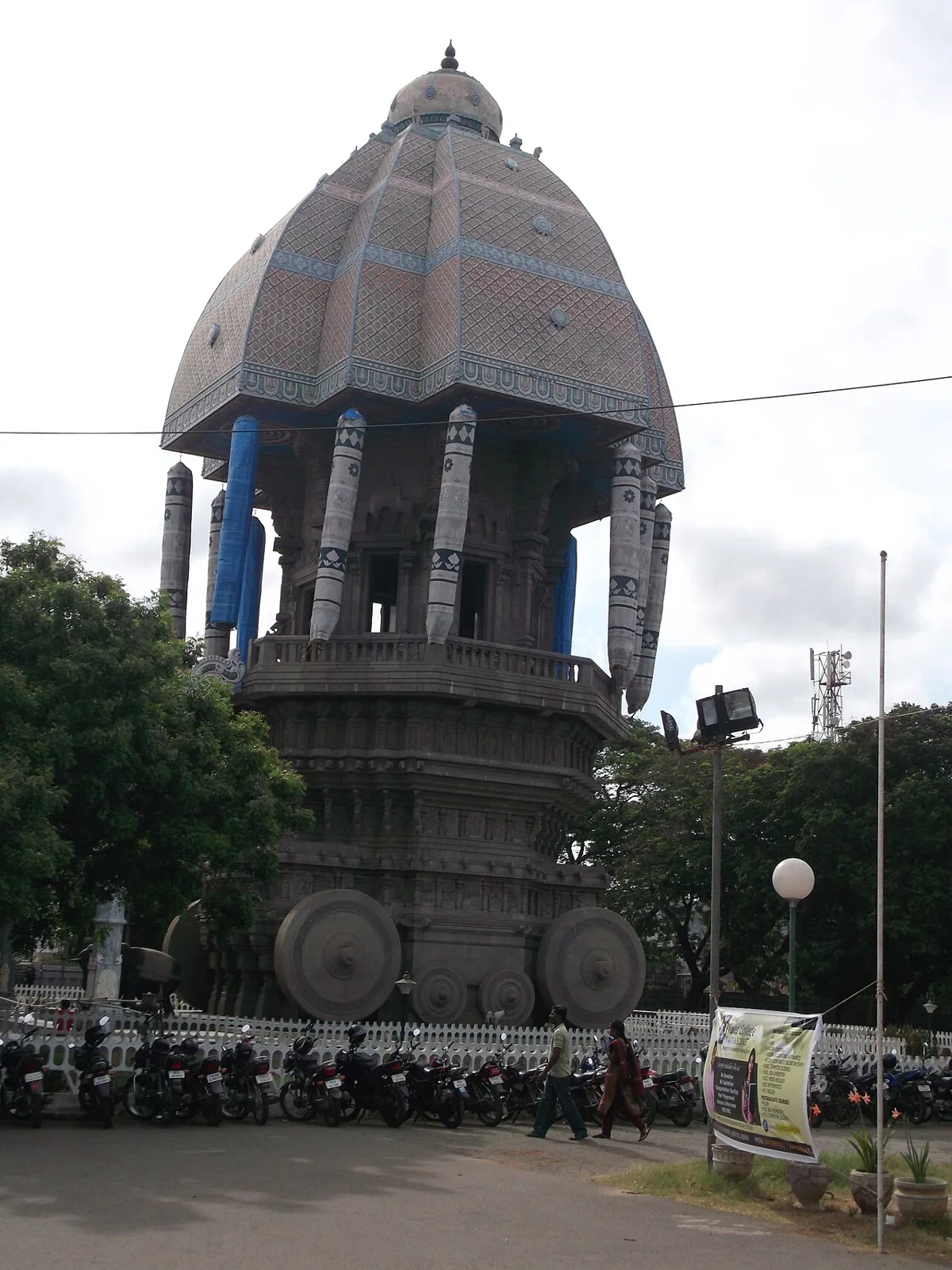
Valluvar Kottam
Valluvar Kottam is a Chennai landmark in Tamil Nadu commemorating Valluvar, the classical Tamil poet and philosopher. Visitors come to see the monument and its role as the city’s largest Tamil cultural centre.
Key facts · verified by Ghumoopedia editors
- Type of place
- Heritage monument
- Best time to visit
- November to February; April to June for the hill stations
- Nearest railway station
- Chennai Egmore · about 3 km (straight line)
- Nearest airport
- Chennai International Airport · about 10 km (straight line)
- Verified
- 21 Nov 2026
Plan a trip from Valluvar Kottam — a day-by-day route through places nearby.
Within Chennai, in Tamil Nadu, Valluvar Kottam honours Valluvar through a dedicated monument. He is remembered as a classical Tamil poet and philosopher, and the site’s purpose is centred on his legacy. The place also functions as Chennai’s largest centre for Tamil culture. Its identity combines remembrance of Valluvar with a cultural role focused on Tamil heritage. Visitors can see the monument and its connection to the poet-philosopher. Valluvar Kottam is therefore associated both with an individual figure from classical Tamil tradition and with cultural life in the city. Tamil Nadu is the land of great living temples — Madurai's Meenakshi, Thanjavur's Brihadeeswara, Srirangam, Chidambaram and Rameswaram — along with the Pallava shore monuments of Mamallapuram, the Chettinad mansions, the hill stations of Ooty and Kodaikanal and the meeting of three seas at Kanyakumari. The state is hot from March to June, gets light southwest-monsoon rain from June to September, and receives its main rainfall from the northeast monsoon between October and December. January to March is the most comfortable season; the Nilgiri and Kodaikanal hills are cool year-round. The usual best time to visit is November to February; April to June for the hill stations. Timings, fees and access arrangements must be confirmed locally. For official information, see Tamil Nadu Tourism at https://www.tamilnadutourism.tn.gov.in.
Why it matters
Valluvar Kottam is a Chennai monument honouring Thiruvalluvar, the classical Tamil poet-philosopher traditionally associated with the Tirukkural. The work’s 1,330 couplets address ethical conduct, public life and love, and are widely read across Tamil Nadu and beyond. The memorial gives this literary heritage a prominent public setting and serves as a venue for Tamil cultural and literary activities. It is an important local landmark in Chennai and a place for visitors to encounter Tamil literature in architectural form. Published accounts describe it as the city’s biggest Tamil cultural centre. It is not identified here as a UNESCO World Heritage Site or an ASI-protected monument; check with the managing authority for its current status.
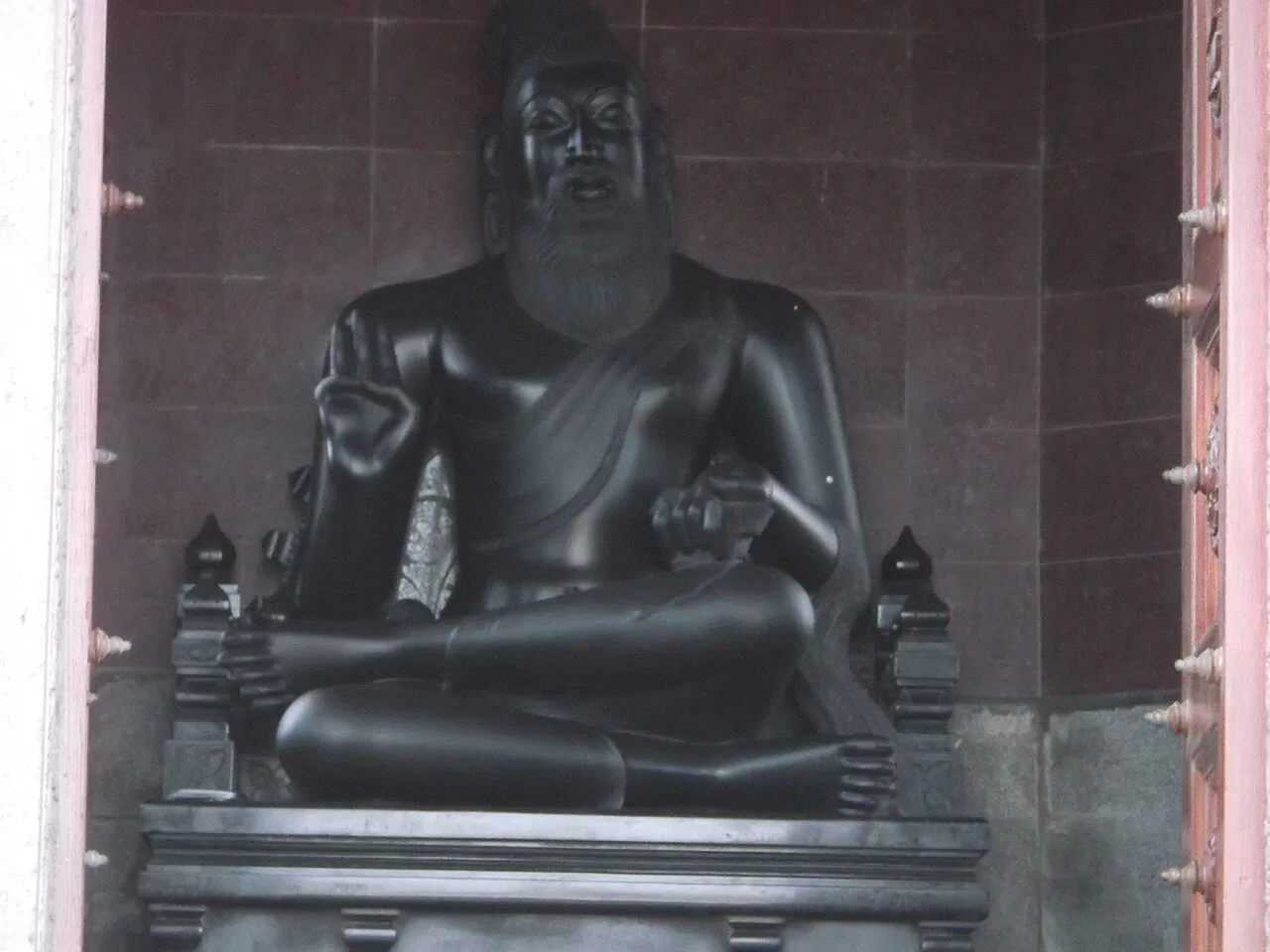
Valluvar Kottam was created in modern Chennai as a memorial to Thiruvalluvar and his enduring work, the Tirukkural. Its construction took place in the 1970s, and it was inaugurated in 1976. The project is associated with M. Karunanidhi, then Chief Minister of Tamil Nadu, and its design is credited to traditional architect and sculptor V. Ganapati Sthapati. The monument reflects a period in which Tamil Nadu’s public institutions and cultural projects placed strong emphasis on Tamil language and literary identity. The memorial’s central idea is to make the Tirukkural visible and accessible beyond books: its verses are represented through inscriptions across the complex, alongside a monumental image of the poet. Its chariot form draws on the visual language of South Indian temple architecture, while the large auditorium allows the site to host gatherings and cultural programmes. The complex has continued to function as both a memorial and a civic venue. Specific maintenance work and current event arrangements can change, so visitors should check with the managing authority for up-to-date information.
Origin stories & folklore
There is no widely established legend explaining the origin of Valluvar Kottam itself; it is a modern memorial with a documented construction history. Stories about Thiruvalluvar, by contrast, belong to a much older and varied body of tradition. Accounts of his birthplace, community and life differ, and many details cannot be confirmed historically. He is commonly remembered as the author of the Tirukkural, a concise work of moral and practical teaching. Visitors may encounter different interpretations of his background in books or from guides. Treat these as traditions or scholarly interpretations rather than as a single settled biography, and distinguish them from the documented history of the monument.
Architecture & design
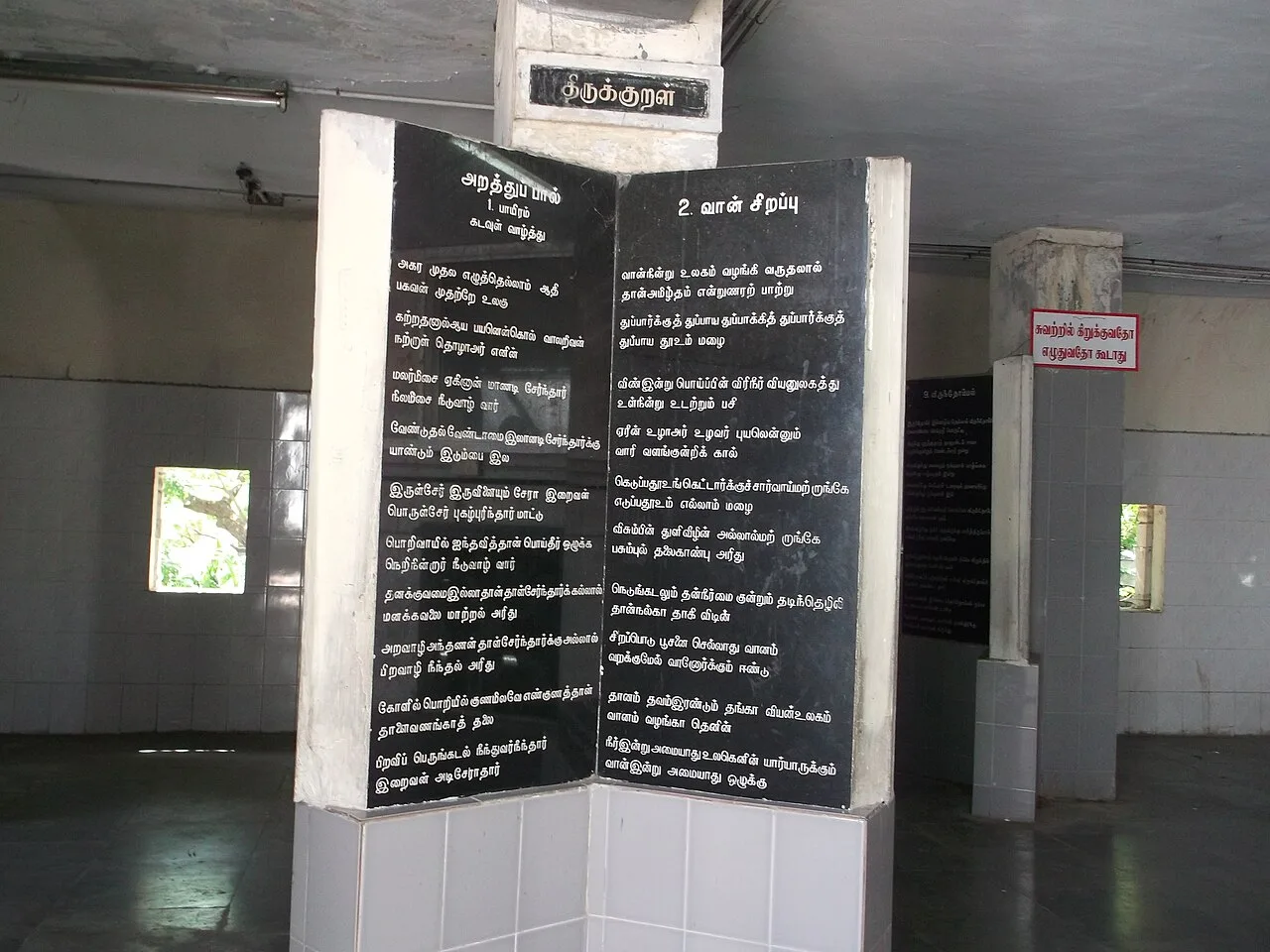
The complex centres on a large stone chariot inspired by the temple cars used in South Indian religious processions. A monumental image of Thiruvalluvar is placed within the chariot structure, making it the principal visual focus. The design combines the form and carved detailing associated with Tamil temple architecture with the scale and function of a modern public memorial. Granite is prominent in the construction and inscriptions. The Tirukkural is represented through inscribed verses across the monument, connecting the architecture directly to the poet’s work. A broad auditorium forms another major part of the complex and is used for public and cultural gatherings. The chariot, surrounding spaces and hall create a sequence visitors can explore on foot. Look closely at the stonework and lettering, but allow time to read only a selection of the verses; the text is extensive. The monument is a memorial rather than an active temple, so its imagery should be understood in a literary and cultural context.
Important objects & sculptures
The principal object to look for is the monumental stone image of Thiruvalluvar within the chariot-shaped structure. The chariot itself, with its carved stone details, is a major feature of the memorial. Visitors can also look for Tirukkural inscriptions displayed around the complex: the work contains 1,330 couplets arranged in 133 chapters. The lettering makes the literary content part of the site rather than merely an accompanying exhibit. Read a few verses at a comfortable pace, and check any interpretation boards for translations or explanations. The memorial is not primarily a museum of movable collections, so do not expect extensive galleries of artefacts.
Explore Valluvar Kottam slowly and read the interpretation boards, use the official audio guide where available or hire an authorised guide to understand its history. Check opening days, ticket counters and camera rules in advance; many monuments and museums close on one weekday and on some public holidays. Early morning gives softer light, cooler air and smaller crowds. A comfortable itinerary is one main visit in the morning, a local meal at midday and a short nearby stop before an afternoon return. Use the district list on this site to find other places in Chennai, but check the route and its condition before combining stops. If a festival is on — such as Pongal in January, the Madurai Chithirai festival, the Mahamaham at Kumbakonam or the Chennai music season in December — roads and stays can be busy, and the experience can be unforgettable. Leave no litter: many sites are protected by the communities around them.
Suggested itineraries
Half day: Spend about 1–2 hours exploring the chariot, inscriptions and auditorium area; have a meal nearby; add a short visit to Semmozhi Poonga if conditions and mobility allow. Full day: Begin at Valluvar Kottam for about 1–2 hours, pause for lunch, then visit the Government Museum in Egmore and finish with a relaxed stop at Marina Beach or Kapaleeshwarar Temple in Mylapore. Gentler option: Focus on the principal chariot view and a small selection of inscriptions, take seated breaks where available, and use a taxi between stops rather than combining several long walks.
Valluvar Kottam represents the continuing place of Tamil language and literature in Chennai’s public life. Visitors may see families, students, readers and organised groups exploring the monument or attending cultural programmes when these are scheduled. Tamil is the main language of the site’s literary context; English-language explanations may also be available, but check locally. The Tirukkural remains a familiar reference in education, public speaking and everyday discussion, and the monument encourages visitors to engage with its ethical themes. Chennai’s wider cultural life includes classical music, dance, theatre and Tamil literary events. Dress is generally everyday city attire; respectful behaviour and care for the stonework are appropriate.
Festivals & events
Pongal, celebrated in January, and Tamil New Year in April are important occasions in Chennai’s Tamil cultural calendar. Thiruvalluvar Day, observed in January as part of the Pongal period, is especially relevant to the poet commemorated here; any event at the monument should be confirmed locally. Chennai’s December music and cultural season brings performances and visitors to venues across the city, though programmes at Valluvar Kottam vary. Festival periods and major city events can increase traffic and demand for accommodation. Check whether the monument is hosting a public programme before planning a visit, as event arrangements may affect access.
Local food in Tamil Nadu includes idli, dosa and filter coffee, Chettinad chicken and pepper curries, Madurai's kari dosa and jigarthanda, Thanjavur's banana-leaf vegetarian meals, Kanyakumari's seafood, and sweets such as Mysore pak, adhirasam and Tirunelveli halwa. Ask what is fresh that day; many small eateries cook a limited daily menu. Tamil Nadu is a paradise for vegetarian meals served on banana leaf; Chettinad and Madurai are the centres for meat and spice lovers. Filter coffee is a ritual — have it at a local 'hotel' (eatery). Remote sites may have no restaurant at all. Carry water and snacks, eat a proper breakfast before long drives, and ask your accommodation for a packed lunch if you are heading out early. Try a home-cooked or local thali meal when you can — it is often the best food on the route. Choose busy, clean places, drink sealed or filtered water, and carry your packaging back with you.
Shopping & local experiences
Look for Tamil books, including editions and translations of the Tirukkural, in Chennai’s bookshops; these make a meaningful souvenir connected to the memorial. The city also has shops selling traditional textiles, handicrafts and locally made gifts, though these are generally found in surrounding commercial areas rather than necessarily inside the complex. Nearby neighbourhoods offer cafés and restaurants where visitors can try Tamil meals and snacks. Availability and shop locations change, so ask locally or use a current map. Avoid buying items presented as heritage artefacts unless their provenance and legality are clear.
November to February; April to June for the hill stations
The nearest principal railway station by straight-line distance is Chennai Egmore, roughly 3 km away. The nearest operating airport by straight-line distance is Chennai International Airport, roughly 10 km away. These figures are calculated from map coordinates — actual road distance is longer. Chennai is the main gateway; Coimbatore serves the west and Mettupalayam is the railhead for the Ooty toy train; Madurai and Tiruchirappalli serve the south and centre; Rameswaram and Kanniyakumari have their own rail termini. For the final leg, TNSTC and SETC buses reach nearly every town, with private sleeper coaches between cities and app cabs in Chennai, Coimbatore and Madurai link district towns. A private taxi gives more flexibility for remote sites such as hill stations, forest gates and coastal temples. When comparing train, bus and flight, count the complete door-to-door time: a flight saves the most time only if the onward road transfer is short, while an overnight train can save a hotel night. Book your return before you leave, because seats fill quickly on weekends, festivals and holidays. Current train numbers, timings, return services and fares are not listed here; check IRCTC and NTES for trains and the airline's own schedule for flights. No permit is needed to visit Tamil Nadu. The Nilgiri Mountain Railway toy train to Ooty must be booked well in advance on IRCTC — seats are few and sell out weeks ahead. Major temples such as Madurai Meenakshi and Srirangam have darshan queues and some enforce a dress code (dhoti or formal trousers for men, saree or salwar for women); phones and cameras are not allowed inside several temple sanctums. Boating to the Vivekananda Rock at Kanyakumari depends on sea conditions.
Confirm onward and return timings on IRCTC / NTES, the state bus operator or your airline before travel. A dash means current timings or fares have not been verified.
Getting around
Valluvar Kottam is in the Nungambakkam area of Chennai. Auto-rickshaws and app-based taxis are practical for the final leg, while city buses serve routes through the surrounding districts; check a current map or local transport information for the most convenient stop. The nearest principal railway station by straight-line distance is Chennai Egmore, about 3 km away, though road journeys are longer. Walking is possible from nearby neighbourhoods, but Chennai traffic, heat and crossings can make it less comfortable. Check parking availability locally, particularly during events, and allow extra time for busy roads.
Hours, tickets & permissions
Entry arrangements may include a ticket, and separate rules can apply to cameras, organised groups or access during public events. Permitted areas and visitor procedures can change, while the auditorium may have separate event arrangements. No particular opening hours or fees are stated here. Confirm current hours, ticket requirements, camera rules and any closures with the managing authority before travelling. Visitors should also check whether a public holiday, maintenance work or scheduled programme affects access.
Facilities
Facilities and services can vary with maintenance and scheduled events. The complex usually has visitor areas and may have toilets; check on arrival for their location and condition. Carry drinking water, particularly in hot weather, as refreshment options inside may be limited or unavailable. Nearby Chennai neighbourhoods offer restaurants, cafés, shops and ATMs. Parking availability, seating, guide services and interpretation materials should be confirmed locally rather than assumed. If you need a guide or an audio guide, ask the managing authority in advance whether an authorised service is operating.
Accessibility
The visit involves moving through a large outdoor complex, and walking distances between features may feel tiring, especially in hot or humid weather. Stone surfaces can be uneven in places, and steps may occur; do not assume that every area is step-free or that ramps or lifts are available. Shade and seating may be limited, so plan rests and carry water. Wheelchair and stroller access can depend on the route and current site arrangements; contact the managing authority before visiting if step-free access is essential. Older visitors may prefer a shorter visit focused on the main chariot and nearby inscriptions, with transport to and from the entrance.
No permit is needed to visit Tamil Nadu. The Nilgiri Mountain Railway toy train to Ooty must be booked well in advance on IRCTC — seats are few and sell out weeks ahead. Major temples such as Madurai Meenakshi and Srirangam have darshan queues and some enforce a dress code (dhoti or formal trousers for men, saree or salwar for women); phones and cameras are not allowed inside several temple sanctums. Boating to the Vivekananda Rock at Kanyakumari depends on sea conditions. Carry a photo ID at all times and save the emergency number 112 and your accommodation's contact offline. Heat in summer and heavy rain in the monsoon are the main weather risks; carry water, avoid midday sun and allow extra time when roads flood. Watch your belongings in crowds and on public transport, and follow posted instructions.
Photography
Early morning or later in the day can offer softer light and more comfortable conditions for photographing the stone chariot and its details. A view from the surrounding public areas helps show the monument’s scale; close views can capture the carved work and inscriptions. Personal photography may be permitted, but rules can differ for cameras, commercial shoots and special events, so check current notices before taking photographs. Do not use a drone without the required permissions and confirmation that flying is allowed. Be considerate of other visitors, especially during ceremonies or cultural programmes, and avoid obstructing paths.
Choose a stay by the full journey to Valluvar Kottam, not just the district name. Chennai, Coimbatore, Madurai and Tiruchirappalli offer the widest choice; Ooty and Kodaikanal have everything from heritage hotels to cottages — book far ahead for the April–June school holidays and the Pongal weekend. In summer, check air-conditioning; in the monsoon, check that the property is accessible if roads flood. Book in advance for weekends, festivals and the peak season (November to February; April to June for the hill stations). Confirm the exact location, meals included, check-in time and cancellation terms in writing. Avoid sending money to unverified contacts or touts at stations. Carry some cash, as card and digital payments can be unreliable in remote areas.
Within Chennai, visitors can combine the monument with Semmozhi Poonga, a botanical garden, or the Government Museum in Egmore, subject to travel time and opening arrangements. Kapaleeshwarar Temple in Mylapore offers a different perspective on the city’s religious and architectural heritage. Marina Beach and San Thome Basilica are other well-known Chennai stops, though road conditions can make a multi-stop day slower than expected. Choose one or two additional places rather than trying to cover the entire city in a single outing. Confirm access and current conditions at each destination before setting out.
For couples, Valluvar Kottam rewards a slow pace: arrive early for soft light and fewer crowds, share a local meal and keep the evening free. Sunrise at Kanyakumari, a boat ride on Kodaikanal lake or an evening stroll through Mamallapuram's shore monuments makes the trip memorable. Public displays of affection can be frowned upon in conservative communities and at religious sites, so be discreet. Keep a buffer in your itinerary, because weather and road conditions can delay plans.
Q: How much time should I allow for Valluvar Kottam? A: Allow roughly one to two hours to see the main features and read some inscriptions; add time for a programme or a slower visit. Q: When is a comfortable season to visit Chennai? A: November to February is generally more comfortable than the hotter months, though check forecasts and local conditions. Q: Is there an entry fee, and what are the opening hours? A: Entry rules, fees and hours can change. Confirm them with the managing authority before travelling. Q: Is the site suitable for children and older visitors? A: Children may enjoy the chariot and open spaces. The complex involves walking, and surfaces or steps may be challenging; plan rests and check access needs in advance. Q: Where should I stay nearby? A: Nungambakkam and other central Chennai neighbourhoods offer accommodation options. Choose based on your transport needs and confirm the location and facilities directly.
Be the first to share photos, stories, advice or a helpful contact for Valluvar Kottam.
Loading…