
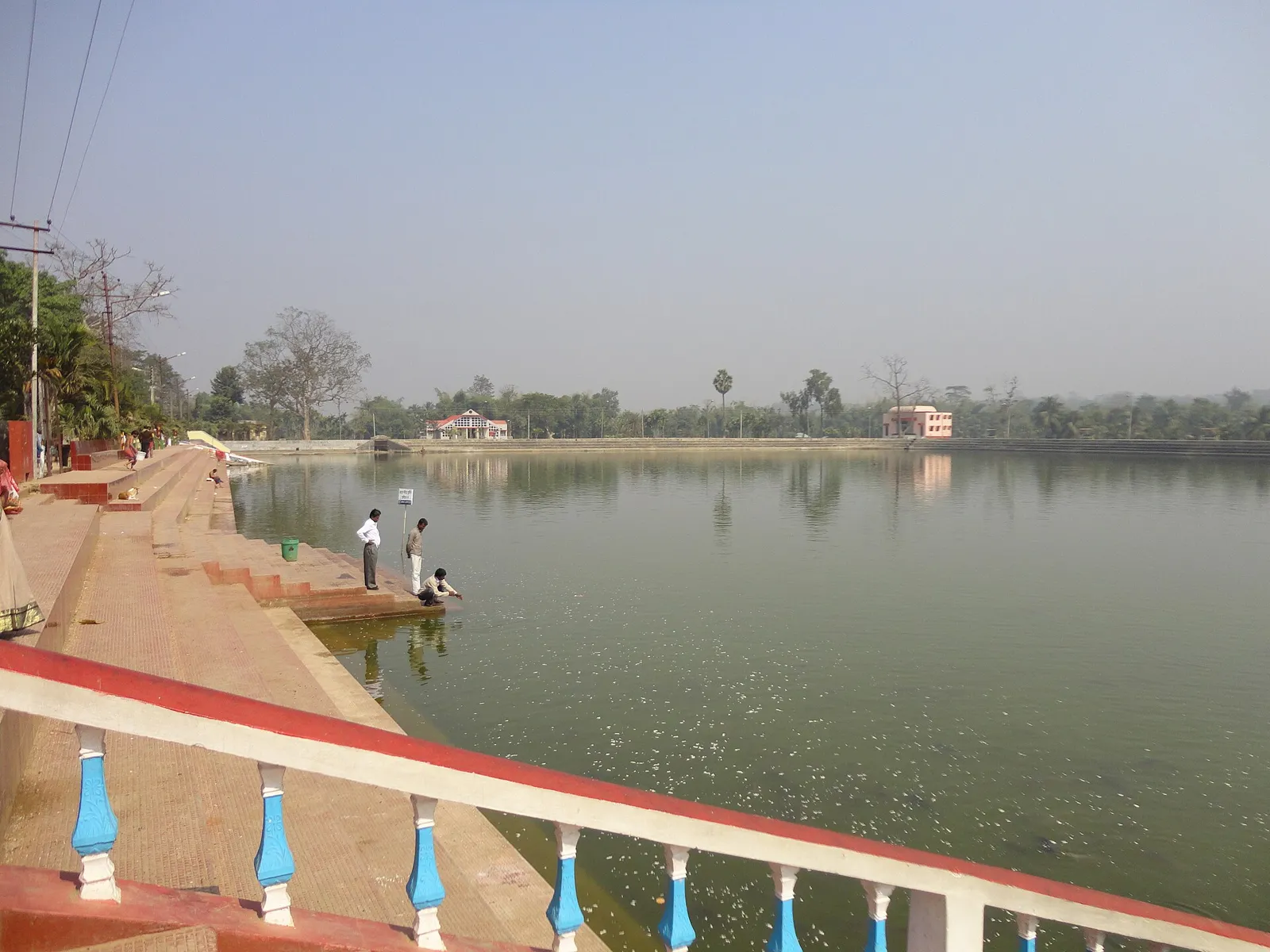
Tripura Sundari Temple
A Hindu shrine in Udaipur, Tripura Sundari Temple honours Tripura Sundari and draws worshippers for its importance as a Shakta pitha and its annual Diwali mela.
Key facts · verified by Ghumoopedia editors
- Type of place
- Temple / pilgrimage site
- Best time to visit
- October to March
- Verified
- 21 Nov 2026
Known locally as Matabari, Tripura Sundari Temple stands in Udaipur, an ancient city in Tripura’s Gomati district. It lies about 55 km from Agartala and can be reached from the capital by road or rail. Dedicated to the goddess Tripura Sundari, also called Devi Tripureshwari, it is an important Hindu place of worship. She is described as the third Mahavidya and a principal form of Parvati. Tripura takes its name from this shrine. Among temples in the North-East, it receives more visitors than any other except Kamakhya Temple in Assam. The sanctuary occupies a low rise whose outline is likened to a tortoise’s back. This landform, known as Kurmapṛṣṭhākṛti, is regarded as especially auspicious for a Shakti shrine, and the site is consequently called Kurma Pīṭha. The title links the hill’s shape with its special significance within the tradition of Shakti worship. The temple belongs to the group of 51 Shakta pithas. According to its associated account, Sati’s right foot, including the big toe, came to rest here. The goddess is revered here as Tripurasundarī; her Bhairava counterpart is Tripuresh. Traditional Brahmin priests serve the goddess. Erected in 1501 CE under Tripura’s Maharaja Dhanya Manikya, the principal structure is a cubical shrine with three roof levels and a finial, following the Bengali Ek-ratna form. Its inner sanctum holds two black-stone images of the goddess, differing in scale. The five-foot figure, which is larger and more prominent, represents Tripura Sundari. Beside it is a two-foot image affectionately known as Chhoto-Ma, identified as the goddess Chandi. Tradition holds that Tripura’s rulers took this smaller image with them on campaigns and hunting trips. Each year, a famous mela is held beside the temple during Diwali. Tripura combines royal Manikya heritage, nineteen indigenous communities and a large Bengali-speaking population. Tripura is warm and humid for much of the year, with heavy rain from June to September and pleasant winters. The usual best time to visit is October to March. Days are short in Northeast India: the sun can set before 5 pm in winter, so plan to reach and leave Tripura Sundari Temple in daylight. Timings, fees and access arrangements must be confirmed locally. For official information, see Tripura Tourism at https://tripuratourism.gov.in.
Why it matters
Tripura Sundari Temple, also known as Matabari, is an important Hindu pilgrimage site in Udaipur, Gomati district. Worshippers venerate the Goddess as Tripura Sundari or Devi Tripureshwari, a form of the Divine Mother. The temple is counted among the 51 Shakta pithas in Hindu tradition, though lists and accounts of the pithas can vary. Its association with the Manikya royal house gives it a notable place in Tripura’s religious and regional history. The state’s name is traditionally linked to the Goddess and her shrine. The temple is also a focus of local worship and pilgrimage, especially during the Diwali fair. No UNESCO or national-level ASI designation is asserted here; check with local authorities for current heritage-protection information.
The temple’s foundation is traditionally dated to 1501 CE, during the reign of Maharaja Dhanya Manikya of Tripura. It was established in the historic city of Udaipur, which served as an important centre of the Manikya kingdom. The shrine’s royal association and continued worship have made it a prominent part of Tripura’s religious heritage. Its principal deity is Tripura Sundari, while a smaller image in the sanctum is popularly called Chhoto-Ma and identified with Goddess Chandi. The temple has remained an active place of worship rather than a purely archaeological monument. Its daily care is associated with traditional priests, and devotees continue to visit throughout the year. The annual Diwali fair has helped sustain the shrine’s wider regional role as a pilgrimage destination. The building and grounds have necessarily received upkeep over time, but a detailed, verified chronology of repairs and restorations is not provided here. Visitors interested in specific conservation work or formal heritage status should consult the temple management or Tripura’s heritage authorities.
Origin stories & folklore
According to Shakta tradition, the shrine is one of the places where parts of Sati’s body fell after her death. Local accounts identify the part as the right foot, including the big toe, and name Tripura Sundari as the presiding Shakti. Tripuresh is identified as the accompanying Bhairava. These accounts are matters of religious belief and are told in varying forms. The temple hillock is said to resemble a tortoise’s back. In Hindu sacred geography, a site shaped like a tortoise, or Kurmapṛṣṭhākṛti, is considered especially auspicious for a Shakti shrine; this association gives the place the devotional name Kurma Pīṭha. Another enduring tradition says that the smaller image, Chhoto-Ma, was carried by Tripura’s kings on battlefield journeys and hunting expeditions.
Architecture & design
The main shrine is a compact, cubical structure traditionally dated to the early sixteenth century. It is attributed to Maharaja Dhanya Manikya and described as being in the Bengali Ek-ratna style. Its most distinctive features are a three-tiered roof rising to a finial and a relatively restrained exterior compared with larger temple complexes. The building stands on a small hillock associated with the tortoise-back form of Kurma Pīṭha. The sanctum houses two black-stone images of the Goddess: the larger Tripura Sundari and the smaller Chhoto-Ma, identified with Chandi. The temple’s plan centres on the sanctum, where worship takes place, with visitors approaching through the entrance and moving around the shrine as permitted. Kalyan Sagar, the large pond beside the temple, forms an important part of the setting. The temple is an active sacred space, so access to interior areas may be limited during worship or by local rules.
Important objects & sculptures
The principal objects to notice are the two black-stone images in the sanctum. The larger, about five feet high, represents Tripura Sundari; the smaller, about two feet high, is affectionately known as Chhoto-Ma and identified with Goddess Chandi. Their distinct sizes and associated traditions are central to the shrine’s identity. The sanctum is an active place of worship, so viewing distance and access may depend on ritual activity and temple directions. Visitors can also observe the temple’s roof profile, finial and architectural form from the grounds. Kalyan Sagar beside the shrine is part of the sacred landscape, rather than a museum collection. No particular inscription or curated collection is highlighted here; ask the temple staff before seeking access to any restricted area.
Religious significance
The temple follows the Shakta tradition, in which the Goddess is revered as the supreme divine power. Here she is worshipped as Tripura Sundari, also called Devi Tripureshwari and associated with Parvati. The shrine is regarded by devotees as one of the Shakta pithas, and Tripuresh is named as its accompanying Bhairava. The two images in the sanctum give the site a distinctive devotional character. Priests conduct worship and visitors may encounter offerings, prayers and other daily rituals. Practices and access can vary with the ritual calendar, so visitors should follow the instructions of priests and caretakers rather than interrupt ceremonies. For devotees, a visit may be an act of pilgrimage, prayer or thanksgiving; for other visitors, quiet observation is appropriate. The temple remains a living place of worship, not simply a historic building.
Visit Tripura Sundari Temple with time to observe daily rituals respectfully. Follow the posted rules on footwear, photography and dress, walk clockwise around Buddhist shrines and prayer wheels, and avoid interrupting worshippers. Ask caretakers which areas are open to visitors. A comfortable itinerary is one main visit in the morning, a local meal at midday and a short nearby stop before an afternoon return. Use the district list on this site to find other places in Gomati, but check the actual road route and its condition before combining stops. If a festival is on, local roads and stays can be busy — and the experience can be unforgettable. Leave no litter: many sites in Tripura are protected by the communities who own them.
Suggested itineraries
Half day: Arrive in the morning; allow 1–2 hours for the temple, worship and grounds; take a short walk beside Kalyan Sagar; have a meal in Udaipur before returning. Full day: Spend the morning at Tripura Sundari Temple and Kalyan Sagar; pause for lunch in town; visit Bhubaneswari Temple and the Gunabati group of temples; return to Udaipur with daylight remaining. Gentler option: Focus on the temple entrance and accessible parts of the grounds, take seated breaks, and skip additional stops if the approach or steps feel tiring.
Matabari is embedded in the cultural life of Udaipur and wider Tripura. The state’s communities include Bengali-speaking residents and many Indigenous peoples, including communities with distinct languages and traditions. Bengali and Kokborok are among the languages visitors may hear in the region; local speech and customs vary. The temple’s daily worship and the large Diwali gathering bring residents, pilgrims, vendors and visitors together. The atmosphere is shaped by devotional practice, offerings and family visits rather than by a single staged performance tradition. Dress at the shrine is generally modest, and customs may differ between worshippers. Ask before photographing people, priests or religious activity, and follow local guidance on offerings and movement around the sanctum.
Festivals & events
The best-known gathering is the annual Diwali Mela held near the temple, usually in the autumn festival season. It draws pilgrims and visitors from across Tripura and beyond, with worship and a busy fair atmosphere around Matabari. Expect heavier foot traffic, fuller local transport and busier food and shopping areas during the festival period; allow extra time and arrange any stay in advance. Worship associated with the Goddess also continues through the year, and other Hindu observances may be marked locally. Festival arrangements and crowd controls can change, so check current information with temple or local authorities before travelling.
Local food in Tripura includes mui borok (berma fermented fish dishes), wahan mosdeng (pork with chilli), chakhwi stew and Bengali-style fish curries. Ask what is fresh that day; many small eateries cook a limited daily menu. Pork, beef, fish and fermented ingredients are common in tribal cuisines, so vegetarian travellers should explain their needs clearly — rice, dal, vegetables and eggs are usually possible in towns. Remote sites may have no restaurant at all. Carry water and snacks, eat a proper breakfast before long drives, and ask your accommodation for a packed lunch if you are heading out early. If food or prasad is offered at the shrine, accept it according to local custom. Choose busy, clean places and carry your packaging back to town.
Shopping & local experiences
Small shops around Matabari may offer worship items, flowers, sweets, snacks and simple souvenirs. Udaipur town is a practical place to look for everyday goods and local food, while Tripura’s markets more broadly are known for handwoven textiles and bamboo or cane crafts. Availability and the origin of particular products vary, so ask sellers rather than assuming an item is locally made. During the Diwali fair, temporary stalls may make the area busier. Carry reusable bags and avoid buying wildlife products or items whose materials or provenance are unclear.
October to March
These figures are calculated from map coordinates, so actual road distance and travel time are longer. Guwahati is the main rail and air hub for the region, and most long-distance journeys connect through it. For the final leg, Tripura Road Transport Corporation (TRTC) and private buses link district towns; shared taxis usually leave early in the morning and depart only when full. A private taxi gives more flexibility for remote sites. When comparing train, bus and flight, count the complete door-to-door time: a flight saves the most time only if the onward road transfer is short, while an overnight train to Guwahati plus a road journey can save a hotel night. Book your return before you leave, because seats on shared vehicles and the few daily flights fill quickly. Current train numbers, timings, return services and fares are not listed here; check IRCTC and NTES for trains and the airline’s own schedule for flights. No Inner Line Permit is needed to visit Tripura. Some sites near the international border may have restricted hours, and sanctuaries charge entry fees.
Getting around
Udaipur is the local base for visiting the temple. Autos, local vehicles and taxis may be available for moving between the shrine, town and nearby sights; availability can vary, especially during festivals. The temple is approached on foot from the drop-off or parking area, and the grounds are best explored at an unhurried pace. Local buses connect towns in the region, while a hired taxi offers more flexibility for a day of sightseeing. Check the return journey and road conditions in advance, and allow extra time when the Diwali fair is under way.
Hours, tickets & permissions
Entry procedures may depend on whether you are entering the temple grounds, approaching the sanctum or visiting during a major festival. Rules on footwear, offerings, photography, bags and access to worship areas can be posted or explained by temple staff. Do not assume that every part of the shrine is open to all visitors. Confirm current visiting hours, any entry or camera fees, and festival arrangements with the temple’s managing authority before setting out; no times or prices are stated here.
Facilities
Facilities at an active pilgrimage site and in Udaipur may include basic toilets, drinking-water points, food stalls or eateries, and areas where vehicles can stop or park. Availability and upkeep can vary, particularly during crowded festival periods, so check locally and carry water if needed. Shops near the temple may sell offerings and refreshments. ATMs and a wider choice of services are more likely in town than immediately beside the shrine. Dedicated guides or visitor information may not always be available; ask temple staff or a trusted local source for directions and current arrangements.
Accessibility
The temple stands on a small hillock, so reaching the shrine involves an approach on foot and may include steps or uneven surfaces. The exact condition of the route can vary, and a wheelchair-accessible entrance or continuous step-free access should not be assumed. There may be limited shade in parts of the grounds; take breaks, especially in warm or humid weather. Strollers may be difficult to manage on steps or crowded paths. Older visitors and anyone with limited mobility may prefer to visit with a companion, avoid peak festival crowds and confirm the current approach conditions with temple staff before travelling.
No Inner Line Permit is needed to visit Tripura. Some sites near the international border may have restricted hours, and sanctuaries charge entry fees. Carry a photo ID at all times; checkpoints are common. Save the emergency number 112 and your accommodation’s contact offline. Heat, humidity and sudden downpours are the main weather risks; carry water and rain protection. Respect community rules, private property and posted instructions. Avoid long road journeys after dark and during heavy rain. Check official advisories for the region before travel, and follow local guidance if access changes.
Visitor rules
Follow signs and instructions from temple staff, priests and caretakers. Dress modestly and remove footwear where required; ask before entering areas beyond the public grounds. Move quietly around worshippers, do not interrupt rituals, and make offerings only as permitted. Photography may be restricted inside the shrine or during worship, so check before using a camera or phone. Avoid littering and reduce single-use plastic; do not touch idols or ritual objects unless invited. Keep children close in crowded areas, and do not enter cordoned-off or staff-only spaces.
Photography
The temple’s exterior and its setting beside Kalyan Sagar can be photographed from public areas when permitted. Morning or late-afternoon light may suit exterior views, but conditions and access vary. Photography inside the sanctum, during rituals or near worshippers may be prohibited or unwelcome; ask first and obey posted notices. Do not use flash where it could disturb worship. Drone use may require permissions and can be restricted around religious sites; do not fly one without confirming applicable rules. Be considerate of people praying and avoid blocking entrances.
Choose a stay by the full journey to Tripura Sundari Temple, not just the district name. Main towns in Gomati usually offer hotels, state tourism lodges and homestays with better transport, meals and medical access, while village homestays offer a closer connection to local life. In the plains and valleys, check fans or air-conditioning and mosquito nets in summer. Book in advance for weekends, festival dates and the peak season (October to March). Confirm the exact location, meals included, check-in time and cancellation terms in writing. Many homestays accept payment on arrival; avoid sending money to unverified contacts. Mobile network and digital payments can be unreliable in remote areas, so carry some cash.
Kalyan Sagar, the large pond beside the temple, is the most immediate place to include in a visit. In Udaipur, Bhubaneswari Temple is another notable shrine and the Gunabati group of temples offers a further heritage stop. These can make a relaxed day around the town, subject to road conditions and opening arrangements. Confirm access locally, especially if travelling during a festival or visiting more than one site. Keep enough daylight for the return journey, as local roads and transport options may be less convenient later in the day.
For couples, Tripura Sundari Temple rewards a slow pace: arrive early for soft light and fewer crowds, share a local meal and keep the evening free. Public displays of affection can be frowned upon in conservative communities and at religious sites, so be discreet. A homestay can make the trip memorable — confirm privacy, hot water and transport back. Keep a buffer day in your itinerary, because weather and road closures can delay plans in Tripura.
Q: How much time should I allow for a visit? A: Allow a few hours for the temple, worship and Kalyan Sagar; a full day gives time for other Udaipur sights. Q: When is a good season to visit? A: October to March is generally the more comfortable season in Tripura. The Diwali fair is lively but crowded. Q: Is there an entry fee, and what are the visiting hours? A: Current entry arrangements, fees and hours should be confirmed with the temple’s managing authority; they can change. Q: Can children and elderly visitors come? A: Yes, but the approach may involve walking, steps or uneven ground. Keep children close and plan breaks for older visitors. Q: Where can I stay nearby? A: Udaipur has local accommodation options, with a wider choice in larger towns. Check availability ahead of festival periods.
Be the first to share photos, stories, advice or a helpful contact for Tripura Sundari Temple.
Loading…