
District · Tripura
Gomati
Gomati offers a compact introduction to southern Tripura’s sacred sites, royal history and forested river country.
Gomati district brings together Tripura’s temple heritage, river landscapes and forested hills. Udaipur, a former capital of the Tripura kingdom, is an important centre for exploring its royal and religious past. The Tripura Sundari Temple, locally associated with Devi Tripureshwari, remains a major focus of pilgrimage, while Bhuvaneshwari Temple adds another sacred landmark. Along the Gomati River, Chabimura is known for rock-carved panels on steep cliff faces, giving the district a striking meeting point of art and landscape. Gumti Wildlife Sanctuary represents its forested character. Together, these places offer a varied introduction to southern Tripura, where Bengali and indigenous Tripuri cultural traditions shape everyday life.
Gomati offers a compact introduction to southern Tripura’s sacred sites, royal history and forested river country. Udaipur, once a capital of the Tripura kingdom, is the district’s main base for visiting Tripura Sundari Temple and Bhuvaneshwari Temple. Pilgrims know Tripura Sundari Temple as a major centre of worship, especially during the Diwali season. Beyond the town, Chabimura’s carved rock panels overlook the Gomati River, while Gumti Wildlife Sanctuary represents the region’s forests and wildlife. The district is also a place to encounter Bengali and indigenous Tripuri cultural traditions in everyday life.
Gomati’s history is closely tied to the Tripura kingdom and its Manikya rulers. Udaipur, formerly known as Rangamati, served as a royal capital before the court moved north toward the present Agartala region. Tripura Sundari Temple is traditionally dated to 1501 and associated with King Dhanya Manikya. Bhuvaneshwari Temple also reflects the region’s royal and religious heritage; its setting is associated with the history and cultural memory of Udaipur. Under British rule, Tripura remained a princely state rather than becoming part of directly administered British India. The state joined the Indian Union in 1949, became a Union Territory in 1956 and attained statehood in 1972. Gomati is a comparatively recent district: it was created in 2012 during a reorganisation of Tripura’s districts, with Udaipur as its principal town. The district’s present identity thus brings together older royal centres and sacred landscapes with a modern administrative boundary.
4 destination guides · 1 on the map
Bhuvaneshwari Temple
In Tripura’s Gomati district, Bhuvaneshwari Temple is a sacred place of worship, drawing visitors who come to engage with its religious significance.
Chabimura
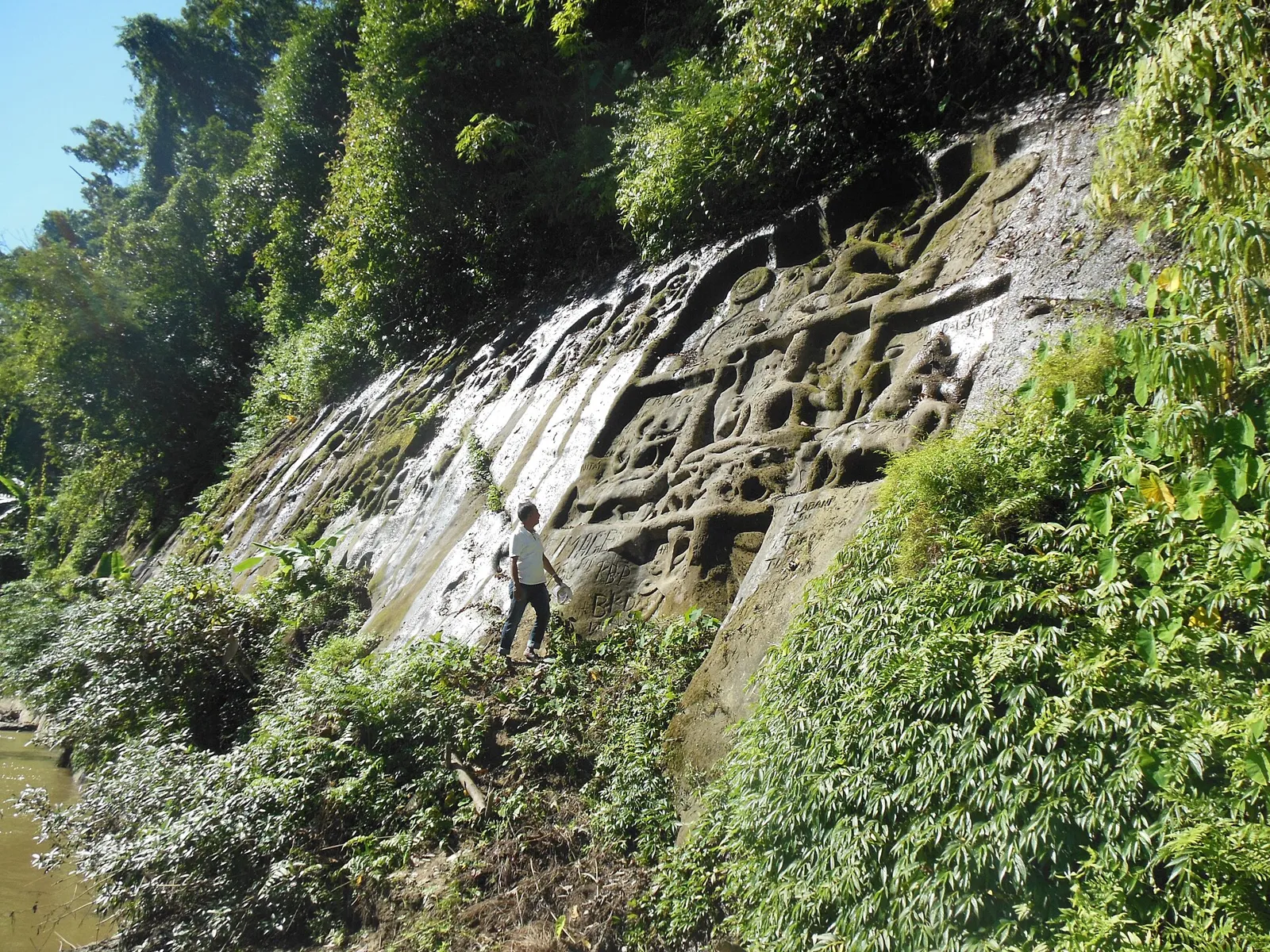
Chabimura is a rock-carving site in Tripura, known for large Hindu deity figures cut into a steep riverside rock face beside the Gomati River, which visitors come to see.
Gumti Wildlife Sanctuary
Gumti Wildlife Sanctuary is a wildlife refuge in southern Tripura’s Gomati district. Visitors come to encounter the wildlife that gives the sanctuary its character.
Tripura Sundari Temple
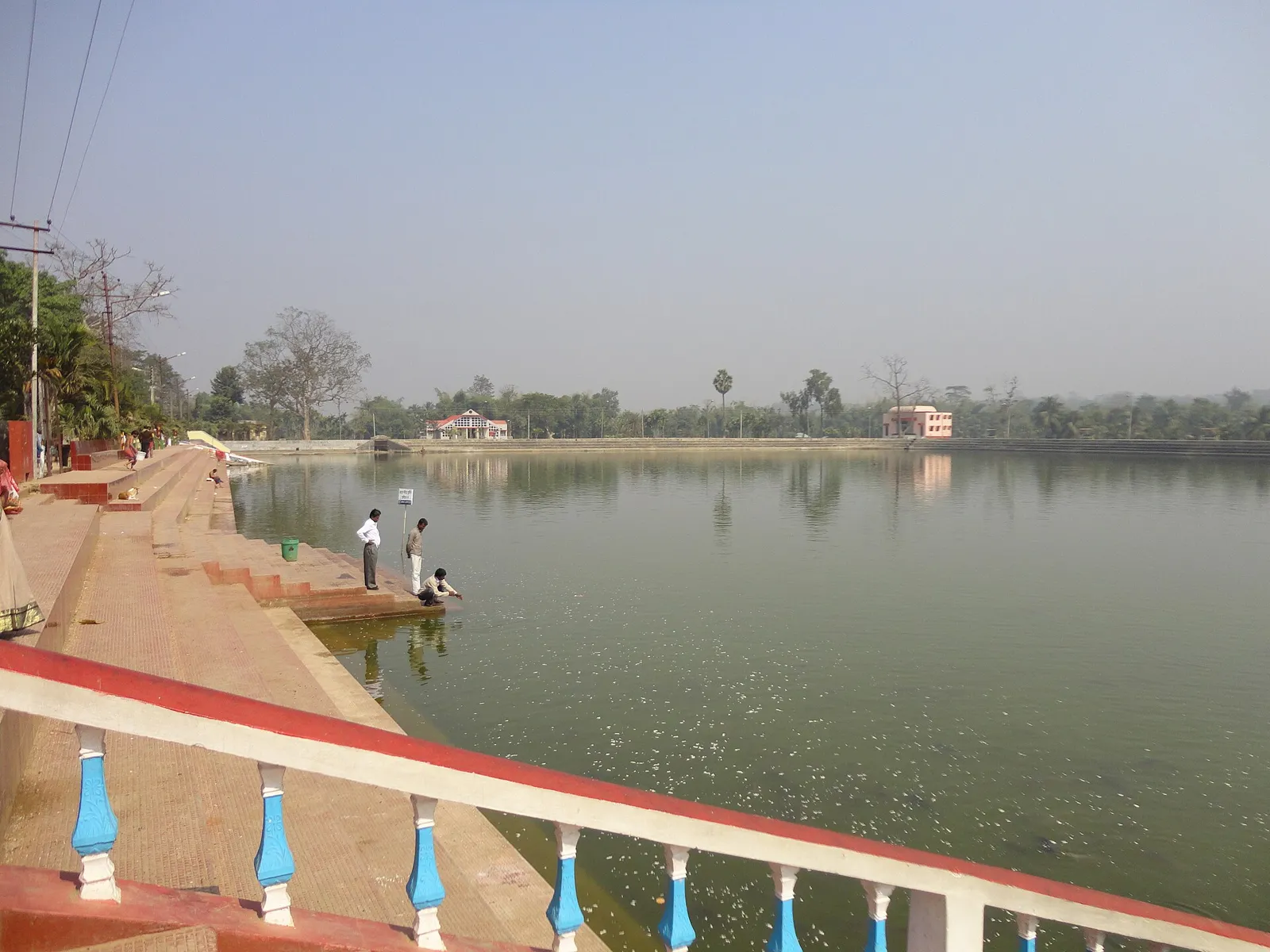
A Hindu shrine in Udaipur, Tripura Sundari Temple honours Tripura Sundari and draws worshippers for its importance as a Shakta pitha and its annual Diwali mela.
Food in Gomati reflects the wider traditions of Tripura, including indigenous Tripuri cooking and Bengali-style meals. Mui borok broadly refers to traditional Tripuri food, in which berma, fermented fish, is an important ingredient. Regional dishes include wahan mosdeng, pork prepared with chilli, and chakhwi, a stew with variations in its ingredients. Rice, fish curries, dal and vegetables are common meal components. Small eateries may offer only what has been cooked that day, so ask before ordering. Vegetarian travellers should explicitly check for fish, meat and fermented-fish ingredients. Carry drinking water and snacks when visiting places away from towns.
Gomati shares in Tripura’s wider traditions of bamboo and cane work, with baskets, mats and household objects reflecting practical skills developed around locally available materials. Handloom weaving is another important regional tradition, particularly among indigenous communities. Textiles such as the rignai, a wrapped lower garment, and risa, a narrower woven cloth, carry distinctive patterns and cultural significance. These traditions are not exclusive to Gomati. Ask local sellers about the maker and place of production rather than assuming every souvenir is locally made. Chabimura’s rock carvings offer a separate encounter with the district’s historic art.
Diwali is especially significant at Tripura Sundari Temple in Udaipur, where pilgrimage and the associated fair draw larger crowds than usual; arrange accommodation ahead during this period. Durga Puja is observed in autumn by Bengali communities across the district, with local celebrations and busier town centres. Garia Puja, generally held in spring, is important among Tripuri communities and is marked by community and household observances. Festival practices vary between communities and localities, so visitors should check locally for current events and any effect on transport or room availability.
Gomati combines settled valleys and river country with forested hills. The Gomati River runs through the region, and at Chabimura steep rocky slopes rise above the water, framing carved panels on the cliff faces. Forest and hilly terrain also define parts of Gumti Wildlife Sanctuary. Udaipur is the main urban centre, but journeys beyond town can involve winding roads and slower travel through rural areas. River excursions depend on local arrangements and conditions; visitors should not assume that every riverside or forest site is reached by regular public transport.
Gomati has warm summers, a humid monsoon season and generally milder, drier winters. The monsoon can bring heavy rain, making rural roads slower and some outdoor visits less predictable. Winter, broadly from late autumn into early spring, is usually the most comfortable period for temple visits, town walks and excursions to Chabimura or forest areas. The spring shoulder season can also suit travel, though days become warmer. Pack light breathable clothing, a rain layer during the wet season, comfortable shoes with grip and modest clothing for temples. Carry drinking water and sun protection for exposed journeys.
Maharaja Bir Bikram Airport in Agartala is the main air gateway for reaching Gomati. Udaipur railway station serves the district, while Agartala is another rail access point; choose according to available connections. Roads link Udaipur with Agartala and other Tripura towns, with TRTC and private buses providing inter-town travel. Shared vehicles and hired cars can help with onward journeys, although availability varies by route. Plan separate transfers for river and forest destinations rather than assuming buses reach each site. Allow extra time on winding roads, particularly during heavy rain, and check current services locally.
Udaipur is linked by road with Agartala and other Tripura towns. TRTC and private buses serve inter-town routes, while shared vehicles and local autos can help with shorter journeys; service and availability vary. Taxis or hired cars are useful for combining sites, particularly when travelling beyond Udaipur, but arrange return transport in advance for rural destinations. Reaching Chabimura may require a locally arranged onward transfer and, depending on conditions and access, a boat journey. Check current road access and local transport before setting out for the sanctuary or river sites.
2 days: Tripura Sundari Temple → Bhuvaneshwari Temple; sleep both nights in Udaipur. 3 days: Tripura Sundari Temple → Bhuvaneshwari Temple → Chabimura; sleep nights 1–2 in Udaipur and night 3 in Udaipur or Amarpur, as arranged. 4 days: Tripura Sundari Temple → Bhuvaneshwari Temple → Chabimura → Gumti Wildlife Sanctuary; sleep nights 1–2 in Udaipur, night 3 in Amarpur if accommodation is confirmed, and night 4 in Udaipur.
Udaipur is the most practical base for the temples and the district’s main town services. It generally has hotels and simpler guesthouse-style stays, with options best checked in advance during pilgrimage and festival periods. For a Chabimura or sanctuary excursion, an overnight stop around Amarpur may reduce backtracking, but confirm that suitable accommodation is available before planning around it. Homestays or basic local lodging may be possible in some areas, while government accommodation and dharamshalas can be limited or subject to availability. Keep Udaipur as a flexible base if onward stays are uncertain.
Allow extra time on winding rural roads, especially during heavy monsoon rain, and check conditions before travelling to river or forest sites. At Chabimura, take care on uneven, steep ground and use only locally confirmed boat arrangements; follow crew guidance and wear a life jacket if provided. In the sanctuary, keep a respectful distance from wildlife and follow staff instructions. Use safe drinking water and carry essentials, as shops and medical services may be limited away from towns. Mobile connectivity can be patchy. Confirm current access rules and any required permits with official local authorities before visiting protected areas; do not assume rules are unchanged.
- Sipahijalaabout 7 km
- West Tripuraabout 19 km
- South Tripuraabout 42 km
- Khowaiabout 54 km
- North Tripuraabout 106 km
- Unakotiabout 106 km
- Mamit · Mizoramabout 120 km
- Aizawl · Mizoramabout 143 km
Straight-line distance between the centres of each district's destinations; road distance is longer.
All districts of Tripura
Q: How many days should I spend in Gomati? A: Two days can cover Udaipur’s temples; allow three or four days if adding Chabimura and Gumti Wildlife Sanctuary. Q: When is the best time to visit? A: The cooler, generally drier months from late autumn into early spring are usually most comfortable; monsoon travel can be disrupted by rain. Q: Where is the best base? A: Udaipur is the most practical base for the temples and for arranging onward trips around the district. Q: How do I get to Gomati? A: Fly or connect by rail through Agartala or Udaipur, then continue by road; check current connections and arrange local transfers for outlying sights. Q: Is Gomati suitable for families or elderly travellers? A: Udaipur’s temples are accessible as town visits, but steep terrain, boat access and long rural transfers can make Chabimura and forest excursions more demanding.
This page draws on our 4 destination guides for Gomati and is updated as our team checks it.
Be the first to share photos, stories, advice or a helpful contact for Gomati.
Loading…