
District · Tripura
Khowai
Khowai offers a quieter view of western Tripura, where wooded uplands, river valleys and cultivated settlements meet the state’s plains near the Bangladesh border.
Khowai district lies in western Tripura, along the border with Bangladesh. Its landscape combines wooded hills, river valleys, cultivated plains and villages, with the Khowai River giving the district its name. Created in 2012 from West Tripura district, it belongs to a region shaped by Tripura’s former princely state and longstanding connections across the Bengal plains. Khowai town is the district headquarters, while Teliamura is another important centre. Indigenous Tripuri communities and Bengali-speaking residents contribute to its varied cultural character. For travellers, the district offers a quieter view of Tripura through everyday markets, agricultural landscapes and settlements between the hills and plains.
Khowai offers a quieter view of western Tripura, where wooded uplands, river valleys and cultivated settlements meet the state’s plains near the Bangladesh border. The district takes its name from the Khowai River, and its headquarters, Khowai town, is a useful base for experiencing everyday market life and the rhythms of a smaller Tripura centre. Teliamura is another important town and a road and rail access point. The area reflects Tripura’s varied cultural character, shaped by Indigenous Tripuri communities, Bengali-speaking residents and the state’s historical links with the Bengal region. Travellers come for its landscapes and local atmosphere rather than a concentration of major tourist attractions.
Khowai forms part of Tripura, whose history was shaped for centuries by the Manikya dynasty and its former princely state. The kingdom maintained political and cultural connections with neighbouring Bengal and other parts of the northeast. Under British rule, Tripura remained a princely state rather than being administered as a directly ruled British province; its relationship with British India changed over the colonial period. After India’s independence, the princely state joined the Indian Union in 1949 and became a Union Territory in 1956, before attaining statehood in 1972. Khowai’s location near the Bengal plains and the present Bangladesh border reflects a region whose connections and boundaries have changed over time. Khowai town developed as an administrative and market centre for its surrounding settlements. The district was created in 2012, when Tripura reorganised West Tripura district into smaller administrative units. Its history is therefore both part of the wider story of the Tripura kingdom and a more recent chapter in the state’s district administration.
Food in Khowai draws on the wider traditions of Tripura, including indigenous Tripuri cooking and Bengali-style meals. Mui borok refers broadly to traditional Tripuri food, in which berma, fermented fish, is an important ingredient. Regional dishes include wahan mosdeng, pork prepared with chilli, and chakhwi, a stew with ingredients that vary by household. Rice, fish curries, dal and seasonal vegetables are familiar staples. Small eateries may serve only a limited daily menu, so ask what is fresh. Vegetarian travellers should explicitly ask about fish, meat and fermented-fish ingredients, even in vegetable dishes.
Khowai shares in Tripura’s wider traditions of bamboo and cane work and indigenous handloom weaving. Across the state, artisans make baskets, mats, household containers and furniture from locally available plant materials. Tripuri textiles include the rignai, a wrapped lower garment, and the risa, a narrow woven cloth with cultural and ceremonial importance. Colours and patterns can reflect community traditions rather than a single district style. Local markets may offer everyday woven goods, though specialist craft selections are more reliably sought through established handicraft outlets in larger towns.
Garia Puja, usually held in spring, is an important observance among Tripuri communities across Tripura and may be celebrated locally. Durga Puja in autumn is widely marked, particularly in Bengali-speaking neighbourhoods and town centres. Kharchi Puja and other major Tripura festivals are celebrated in the state, though prominent events may take place outside Khowai district. Local fairs and market gatherings can accompany religious occasions. Festival periods bring livelier streets and can increase demand for rooms in town; travellers should check local conditions and arrange accommodation ahead when visiting during major celebrations.
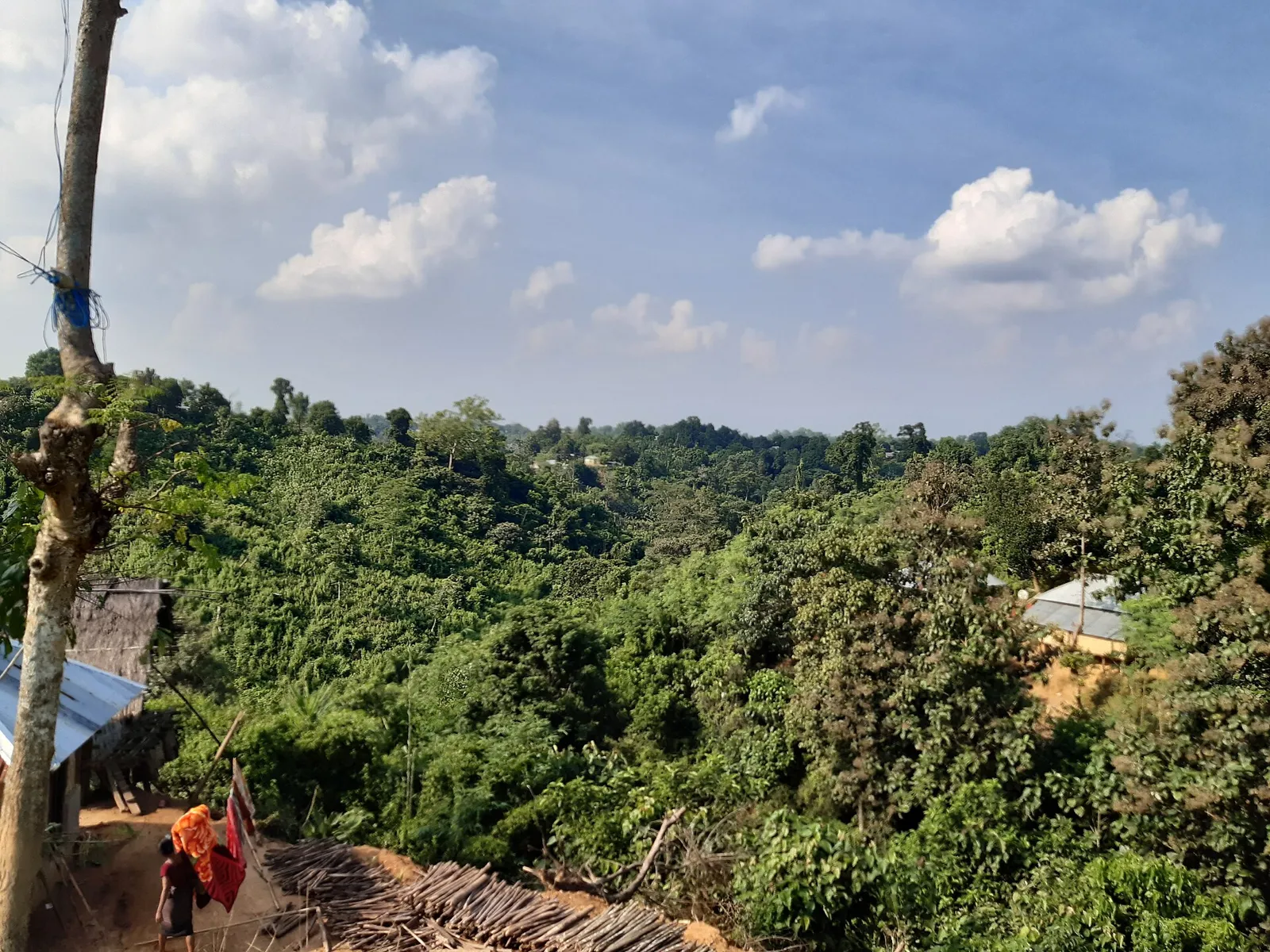
The district’s terrain shifts between wooded hills, low ridges, river valleys and cultivated plains. The Khowai River runs through the area and gives the district its name; smaller waterways and seasonal streams also shape local valleys. Villages and farms sit among patches of forest and rolling upland, while settlements and roads follow the easier routes through flatter ground. This varied landscape makes road journeys central to exploring the district. Hill sections, bends and wet-season conditions can slow travel, so allow flexibility rather than judging journey time by map distance alone.
Khowai has a warm, humid climate for much of the year. Summer, before the monsoon, can feel hot and humid, while the monsoon brings frequent rain, greener landscapes and the possibility of slower road travel. Winter is generally cooler and drier, making it a comfortable season for town visits and countryside journeys. The months after the main rains and through winter are often the most convenient time to visit, although conditions vary from year to year. Pack light, breathable clothing, a rain layer or umbrella in the wet season, and comfortable shoes. A warmer layer can be useful on cooler winter evenings.
Maharaja Bir Bikram Airport at Agartala is the main air gateway for reaching Khowai. Continue by road from Agartala towards Khowai town or other parts of the district. Rail access is available at Teliamura, within the district; choose your arrival station according to your destination and the services operating. Teliamura also lies on National Highway 8, Tripura’s principal road corridor. Buses, shared vehicles and hired cars provide onward connections, with auto-rickshaws useful for shorter local trips where available. Check current services locally.
Road is the main way to move around Khowai district. Khowai town and Teliamura are linked by regional roads, while National Highway 8 serves as a key corridor through Teliamura and connects the district with other parts of Tripura. Local buses and shared vehicles may serve towns and larger settlements, but coverage can be limited outside main routes. Auto-rickshaws are useful for shorter trips where available; taxis or hired cars offer more flexibility for visiting rural areas. Confirm onward transport locally, especially for less-served destinations and during heavy rain.
2 days: Khowai; sleep in Khowai. 3 days: Khowai; sleep in Khowai on both nights.
Khowai town is the most practical base for a short district visit, with modest hotels and guesthouses among the usual options. Teliamura may suit travellers arriving by rail or following the National Highway 8 corridor, though check current accommodation availability before choosing it as a base. Homestays or other small local stays may be available in some places but should not be assumed. Government accommodation and dharamshalas can vary in availability and access. For a multi-day visit, confirm your stay and transport arrangements locally in advance.
Allow extra time for journeys on hilly or winding roads, particularly during monsoon rain, when surfaces may be slippery and local conditions can change. Use established transport and avoid travelling unfamiliar rural roads after dark where possible. Keep drinking water sealed or treated, and take ordinary precautions against insects and sun exposure. Wildlife encounters are not a usual feature of town travel, but keep a respectful distance from animals in wooded areas. Mobile connectivity may be weaker outside towns. Khowai does not generally require an Inner Line Permit for ordinary visits; check official guidance for any restricted or border-area plans, and confirm current requirements before travel.
- West Tripuraabout 41 km
- Gomatiabout 54 km
- Unakotiabout 55 km
- Sipahijalaabout 60 km
- North Tripuraabout 63 km
- South Tripuraabout 85 km
- Mamit · Mizoramabout 102 km
- Kolasib · Mizoramabout 110 km
Straight-line distance between the centres of each district's destinations; road distance is longer.
All districts of Tripura
Q: How many days should I spend in Khowai district? A: Two days can suit a short visit based in Khowai town; allow three days for a slower pace and more time on local roads. Q: When is the best time to visit? A: The drier months after the monsoon and through winter are generally the most comfortable for travel. Q: What is the best base for visiting the district? A: Khowai town is the most practical base for a short visit. Teliamura can be convenient for some arrivals and road journeys. Q: How do I get to Khowai? A: Fly to Agartala and continue by road, or consider rail access at Teliamura; check current services and onward connections. Q: Is Khowai suitable for families or elderly travellers? A: Yes, especially for visitors comfortable with road travel. Allow extra time on hilly routes and choose accommodation and transport suited to individual mobility needs.
This page draws on our 1 destination guides for Khowai and is updated as our team checks it.
Be the first to share photos, stories, advice or a helpful contact for Khowai.
Loading…