
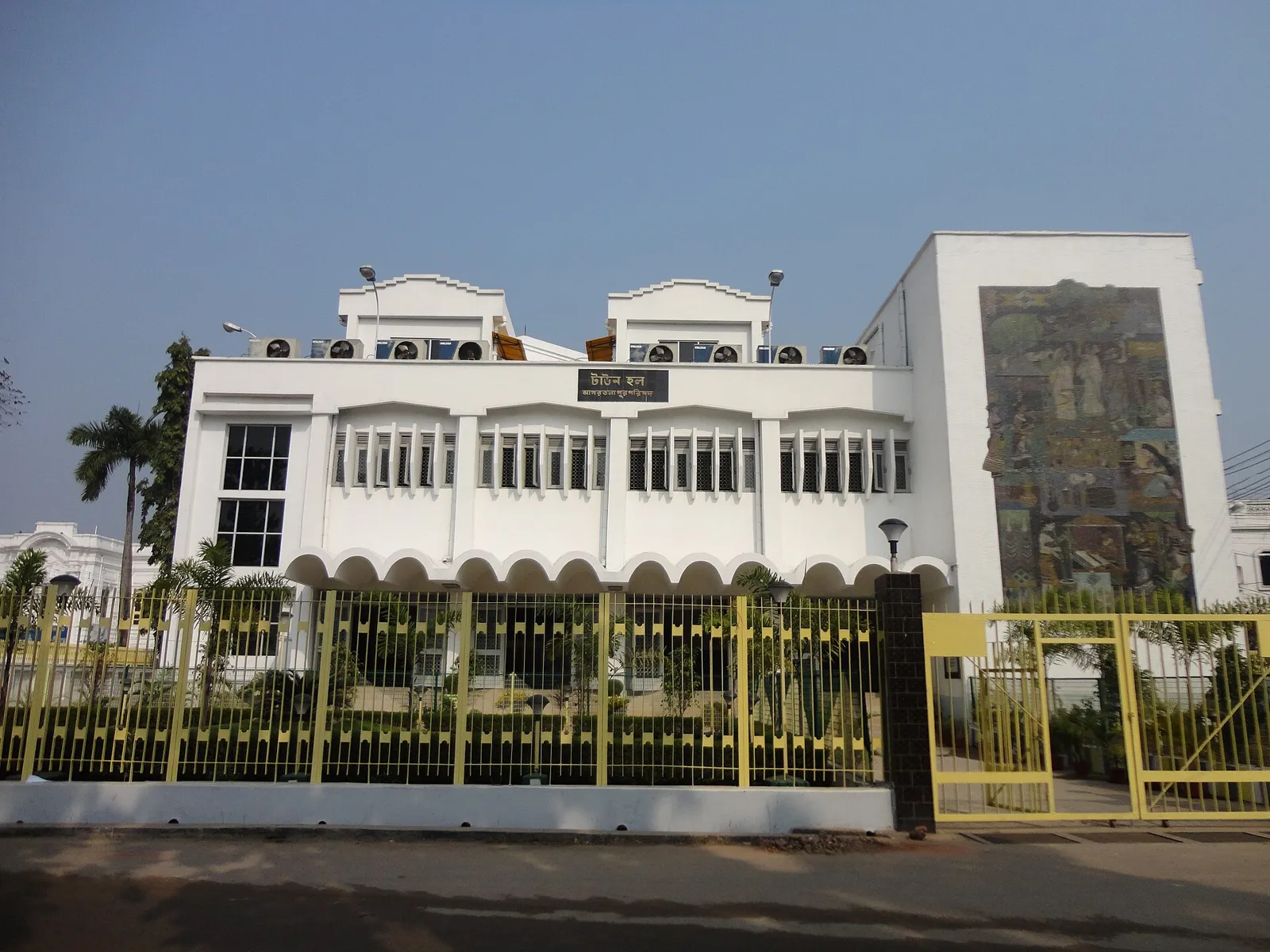
District · Tripura
West Tripura
West Tripura is a useful introduction to Tripura’s history and contemporary life, with Agartala serving as the state capital and its main urban centre.
West Tripura centres on Agartala, the state capital, where royal heritage and everyday urban life meet a landscape of river plains, greenery and low hills. The city stands beside the Haora River close to the Bangladesh border, giving the district a distinctive frontier setting. Its history is closely tied to Tripura’s Manikya rulers: Ujjayanta Palace, now the state museum, is a principal landmark, while Pushpabanta Palace, also known as Kunjaban Palace, was built by Maharaja Birendra Kishore Manikya in 1917. Heritage Park adds a green stop to the capital’s sightseeing circuit. Bengali and indigenous Tripuri cultural traditions both contribute to the district’s character, reflected in its food, textiles and public life.
West Tripura is a useful introduction to Tripura’s history and contemporary life, with Agartala serving as the state capital and its main urban centre. Travellers come for the former royal palaces, especially Ujjayanta Palace, now a state museum, and Pushpabanta Palace, also known as Kunjaban Palace. Heritage Park offers a green pause within the capital’s sightseeing circuit. The district’s location beside the Haora River and close to the Bangladesh border gives it a distinctive frontier setting. Bengali and indigenous Tripuri traditions are both part of everyday life, visible in local food, textiles, festivals and public spaces.
Tripura’s recorded royal history is closely associated with the Manikya dynasty, which ruled the kingdom for centuries. Its rulers maintained a court shaped by regional connections with Bengal and the wider northeast. The kingdom’s capital moved from Udaipur to Agartala during the nineteenth century, as the royal centre shifted north. Under British rule, Tripura remained a princely state rather than becoming a directly administered province, though it was subject to British paramountcy. The royal family’s architectural legacy includes Ujjayanta Palace, built under Maharaja Radha Kishore Manikya around the turn of the twentieth century, and Pushpabanta Palace, built by Maharaja Birendra Kishore Manikya in 1917. Tripura joined the Indian Union in 1949 and became a state in 1972. Agartala developed as the administrative and civic centre. West Tripura’s present boundaries reflect later administrative reorganisation; neighbouring Sepahijala district was created from part of the former West Tripura district in 2012. Today, Ujjayanta Palace serves as the state museum, while the palaces remain prominent markers of the region’s royal past.
4 destination guides · 3 on the map
Agartala
Agartala is Tripura’s capital and largest city, beside the Haora (Saidra) River and close to Bangladesh. Visitors come to the state’s principal city for its administrative role and borderland setting.
Heritage Park
Heritage Park is a protected nature area in West Tripura, Tripura. Its protected status and natural setting are the key reasons it may interest visitors.
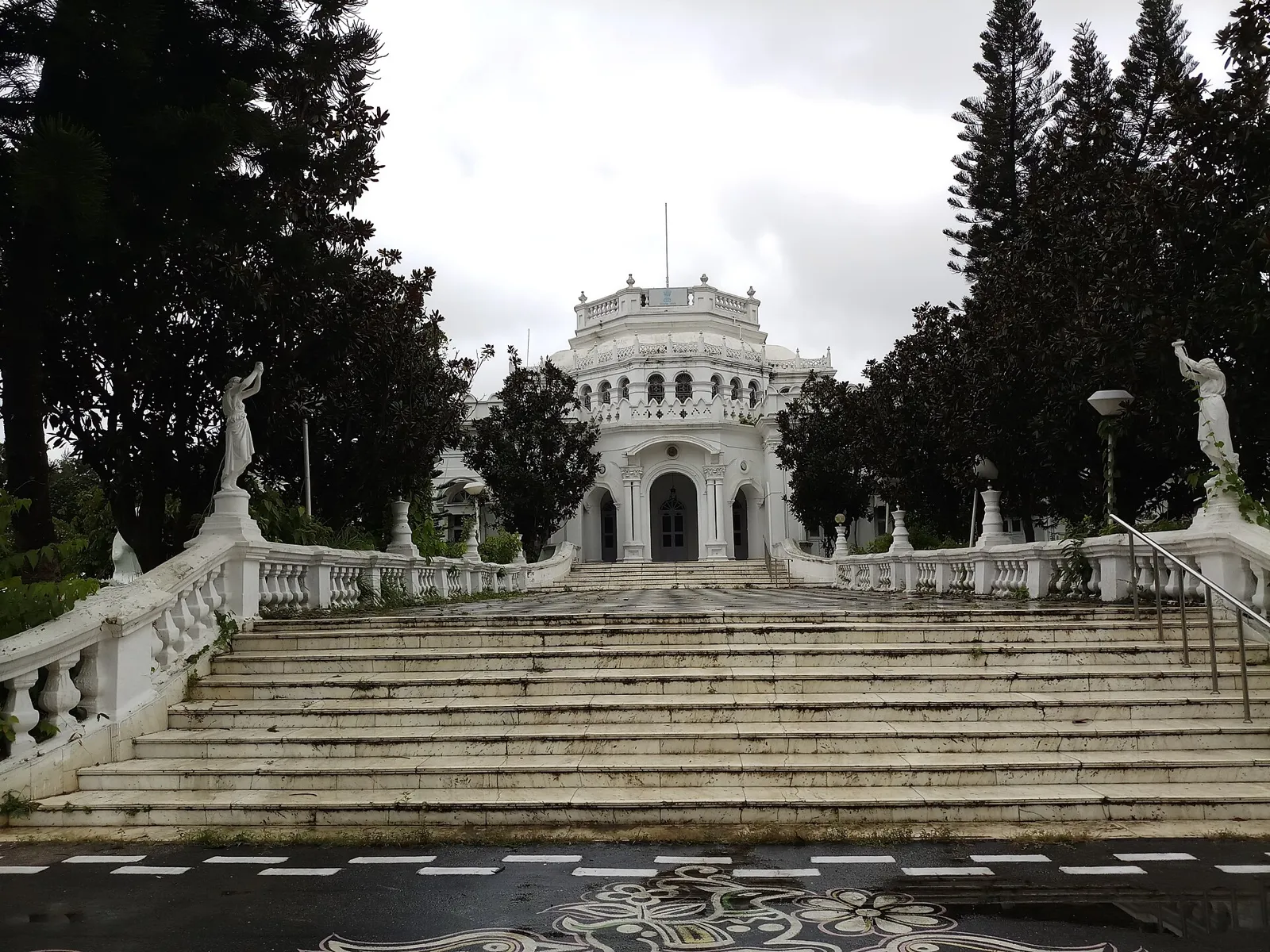
Pushbanta Palace
Pushbanta Palace, also called Kunjaban Palace, is a former royal residence in Tripura. Its royal past and development as a national-level cultural museum make it a point of interest.
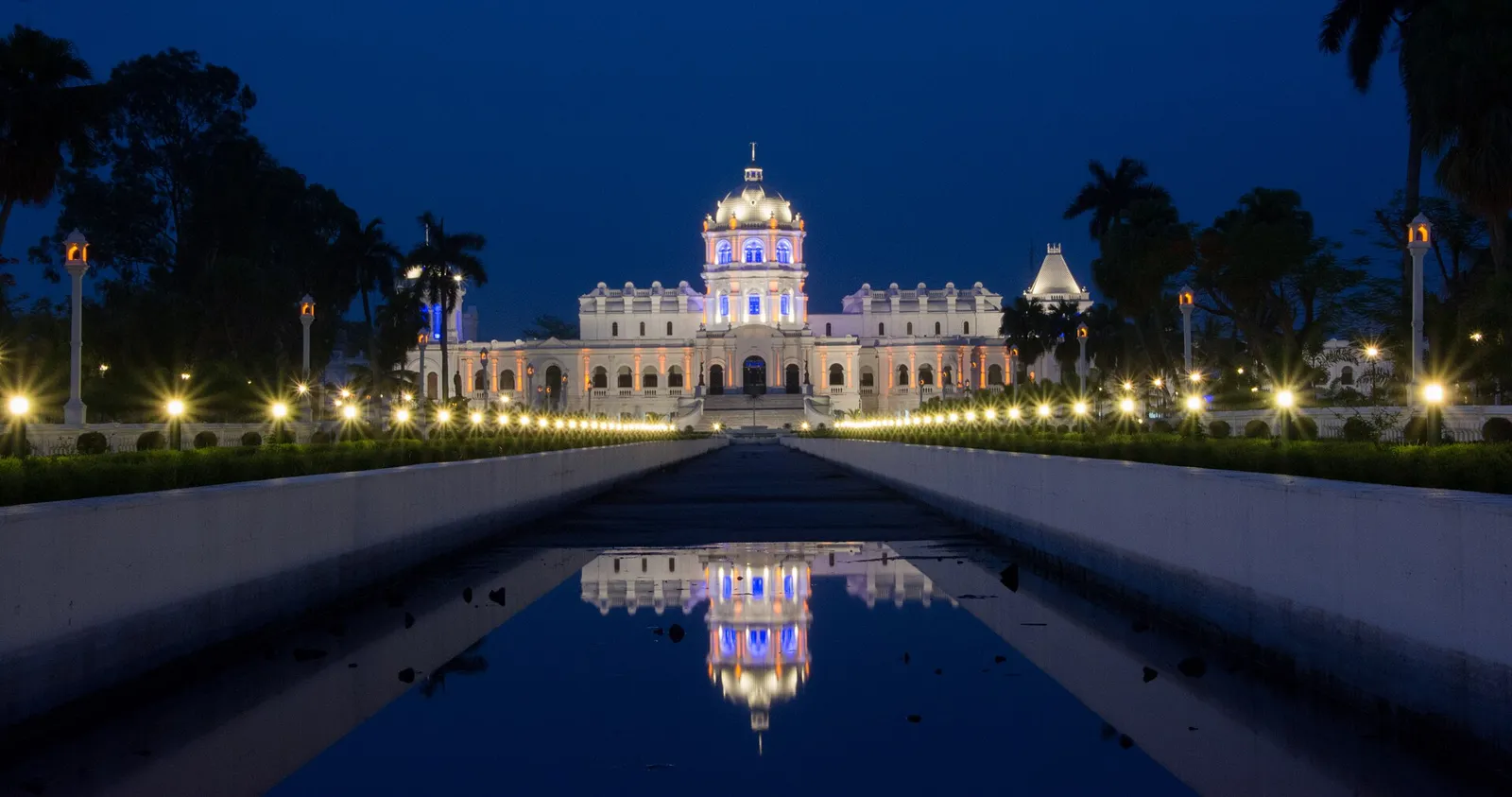
Ujjayanta Palace
Ujjayanta Palace, in West Tripura district, is Tripura’s state museum and the former royal residence of the princely state. Visitors explore displays on Northeast India’s communities and the Manikya dynasty.
Food in West Tripura reflects the wider state’s indigenous and Bengali traditions. Mui borok broadly refers to traditional Tripuri food, with berma, a fermented fish ingredient, lending depth to many preparations. Dishes to look for include wahan mosdeng, pork prepared with chilli, and chakhwi, a traditional stew. Bengali-style fish curries, rice, dal and vegetables are also familiar choices in Agartala. Small eateries may offer only a limited daily menu, so ask what is freshly cooked. Vegetarian travellers should specifically ask about fish, meat and fermented fish ingredients rather than assume that a vegetable dish contains none.
West Tripura’s capital is a useful place to explore craft traditions associated with Tripura more broadly. Bamboo and cane work includes baskets, mats, furniture and decorative objects, combining practical household skills with contemporary designs. Indigenous handloom traditions are another important strand: the rignai, a wrapped lower garment, and risa, a woven upper-body cloth, carry distinctive patterns and cultural significance. Designs vary among communities and makers. When shopping in Agartala, ask about the artisan, place of production and whether a textile is handwoven, rather than assuming every souvenir was made locally.
Durga Puja, usually in autumn, is a major public celebration in Agartala, with decorated neighbourhoods, community events and busy streets. Kharchi Puja, generally held in the monsoon season, draws worshippers to the festival grounds and can increase visitor numbers locally. Diwali and other Hindu observances are also marked, while Garia and other indigenous Tripuri festivals are celebrated in the state. Dates vary from year to year. During prominent festival periods, central areas can be crowded and accommodation may be in greater demand, so booking ahead is sensible.
West Tripura includes the urban plain around Agartala, low undulating ground and greener, lightly forested areas toward the district’s edges. The Haora River runs through the capital area, while smaller watercourses and wetlands contribute to the surrounding landscape. The district lies close to the Bangladesh border and forms part of Tripura’s wider hill-and-valley setting. Agartala is the practical hub for most sightseeing; roads beyond the city can be slower, especially in rain or on smaller routes. Green spaces such as Heritage Park offer an accessible way to experience the district’s natural setting.
West Tripura has warm, humid summers, a rainy monsoon and comparatively mild, drier winters. The monsoon, broadly from June into September, can bring heavy showers that slow road journeys and make outdoor plans less predictable. Winter, from around November to February, is generally the most comfortable season for exploring Agartala and its outdoor sights. The cooler, drier months are usually the best time to visit. Pack light breathable clothing for warm weather, a compact rain layer and footwear suited to wet paths; in winter, a light layer for cooler evenings is useful. Check forecasts before travelling beyond the city.
Agartala is the main arrival point for West Tripura. Maharaja Bir Bikram Airport serves the city, while Agartala railway station provides rail access. National Highway 8 is the principal road connection towards Assam and the wider northeastern network. TRTC and private buses link Agartala with other towns; shared vehicles serve many onward routes. Within the capital, auto-rickshaws and taxis are practical for reaching the palaces, museum and other sights. Allow extra time for journeys beyond the city, particularly during heavy rain, and arrange return transport for quieter locations. Check current services locally.
Agartala is the main transport hub, with taxis and auto-rickshaws useful for moving between the palaces, museum and other city sights. Local buses and shared vehicles serve routes within the capital and connect it with towns elsewhere in the district, though frequency and availability can vary. Taxis can be a practical choice for a day of sightseeing or for reaching quieter locations; agree the plan with the driver before setting out. Roads toward the district’s outskirts may be slower in heavy rain. There is no need to plan river travel for the listed destinations.
2 days: Agartala → Ujjayanta Palace → Pushbanta Palace → Heritage Park; sleep in Agartala both nights. 3 days: Agartala → Ujjayanta Palace → Pushbanta Palace → Heritage Park; sleep in Agartala each night, allowing a slower pace between visits.
Agartala is the most practical base for all the listed destinations, with the broadest choice of hotels and some homestays and government accommodation. Staying in the capital also makes it easier to arrange local transport and meals. For a short visit focused on the palaces and Heritage Park, there is little need to change bases. Simple guesthouses or dharamshalas may suit some travellers, but availability and facilities vary; confirm arrangements before arrival, particularly during major festivals.
Agartala’s main sightseeing areas are urban, but take ordinary care in crowds and keep valuables secure, especially during festivals. Monsoon rain can make roads and paths slippery and delay journeys; allow extra time and avoid travelling on unfamiliar smaller roads in poor conditions. Use safe drinking water and take usual precautions against insects outdoors. Mobile connectivity is generally most dependable in the city and may be less consistent farther out. The district’s border location does not by itself mean a permit is needed for ordinary city sightseeing; confirm current official rules before visiting any restricted or border-sensitive area. Follow local instructions at parks and public sites.
- Gomatiabout 19 km
- Sipahijalaabout 22 km
- Khowaiabout 41 km
- South Tripuraabout 61 km
- Unakotiabout 96 km
- North Tripuraabout 101 km
- Mamit · Mizoramabout 124 km
- Aizawl · Mizoramabout 146 km
Straight-line distance between the centres of each district's destinations; road distance is longer.
All districts of Tripura
Q: How many days should I spend in West Tripura? A: Two days can cover the main listed sights in Agartala; three days allows a more relaxed pace. Q: When is the best time to visit? A: The drier, milder winter months are generally most comfortable for sightseeing. Q: What is the best base for visiting the district? A: Agartala is the most convenient base for the listed destinations and local transport. Q: How do I get to West Tripura? A: Travel to Agartala by air, rail or road; it is the district’s main arrival and transport hub. Q: Is West Tripura suitable for families or elderly travellers? A: Yes. The main sights are in or near Agartala, though visitors should allow for uneven paths, crowds and weather-related travel delays.
This page draws on our 4 destination guides for West Tripura and is updated as our team checks it.
Be the first to share photos, stories, advice or a helpful contact for West Tripura.
Loading…