
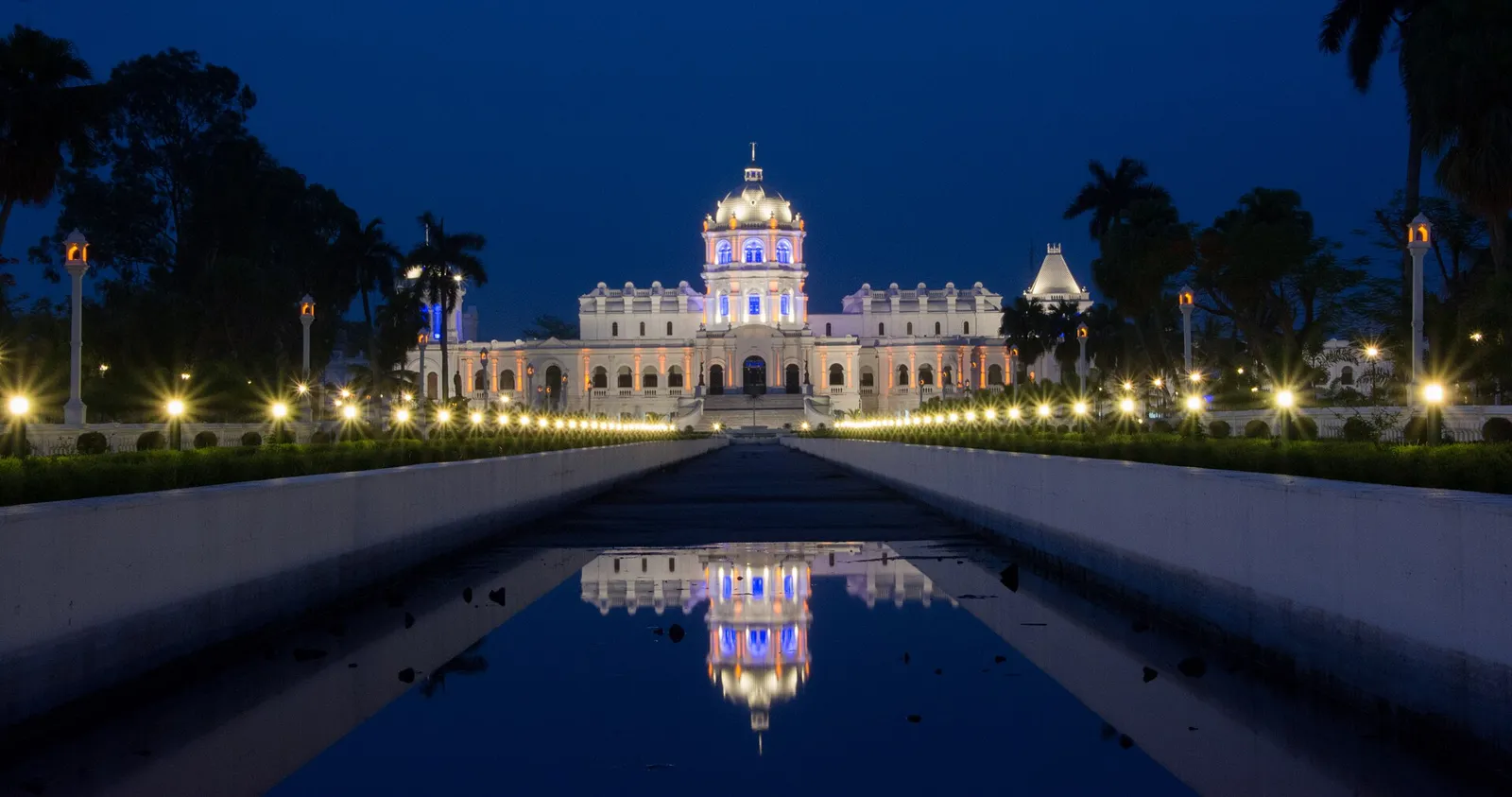
Ujjayanta Palace
Ujjayanta Palace, in West Tripura district, is Tripura’s state museum and the former royal residence of the princely state. Visitors explore displays on Northeast India’s communities and the Manikya dynasty.
Key facts · verified by Ghumoopedia editors
- Type of place
- Heritage monument
- Best time to visit
- October to March
- Nearest railway station
- Agartala · about 5 km (straight line)
- Verified
- 21 Nov 2026
Plan a trip from Ujjayanta Palace — a day-by-day route through places nearby.
Maharaja Radha Kishore Manikya had the palace built in 1901. Located in West Tripura district, it served as the royal palace of Tripura’s princely state. The building housed the State Legislative Assembly from 1973 to 2011. It now serves as Tripura’s state museum. The museum presents ways of life, creative work, customs and craft traditions of communities across Northeast India. Its collections also include many stone sculptures associated with the Manikya dynasty. Tripura combines royal Manikya heritage, nineteen indigenous communities and a large Bengali-speaking population. Tripura is warm and humid for much of the year, with heavy rain from June to September and pleasant winters. The usual best time to visit is October to March. Days are short in Northeast India: the sun can set before 5 pm in winter, so plan to reach and leave Ujjayanta Palace in daylight. Timings, fees and access arrangements must be confirmed locally. For official information, see Tripura Tourism at https://tripuratourism.gov.in.
Why it matters
Ujjayanta Palace is important both as a former royal residence and as the home of Tripura’s state museum. Built for the Manikya rulers, it offers a setting for learning about the princely state and the region’s communities, arts and material culture. The Tripura State Museum displays collections relating to Tripura and northeast India, including stone sculptures associated with the Manikya dynasty. The palace also reflects Agartala’s development as the state’s capital and its changing civic role: it housed the Tripura Legislative Assembly from 1973 to 2011. It is a major heritage and cultural attraction in West Tripura. It is not necessary to assume UNESCO or Archaeological Survey of India protection; check with the relevant state authority for its current conservation status.
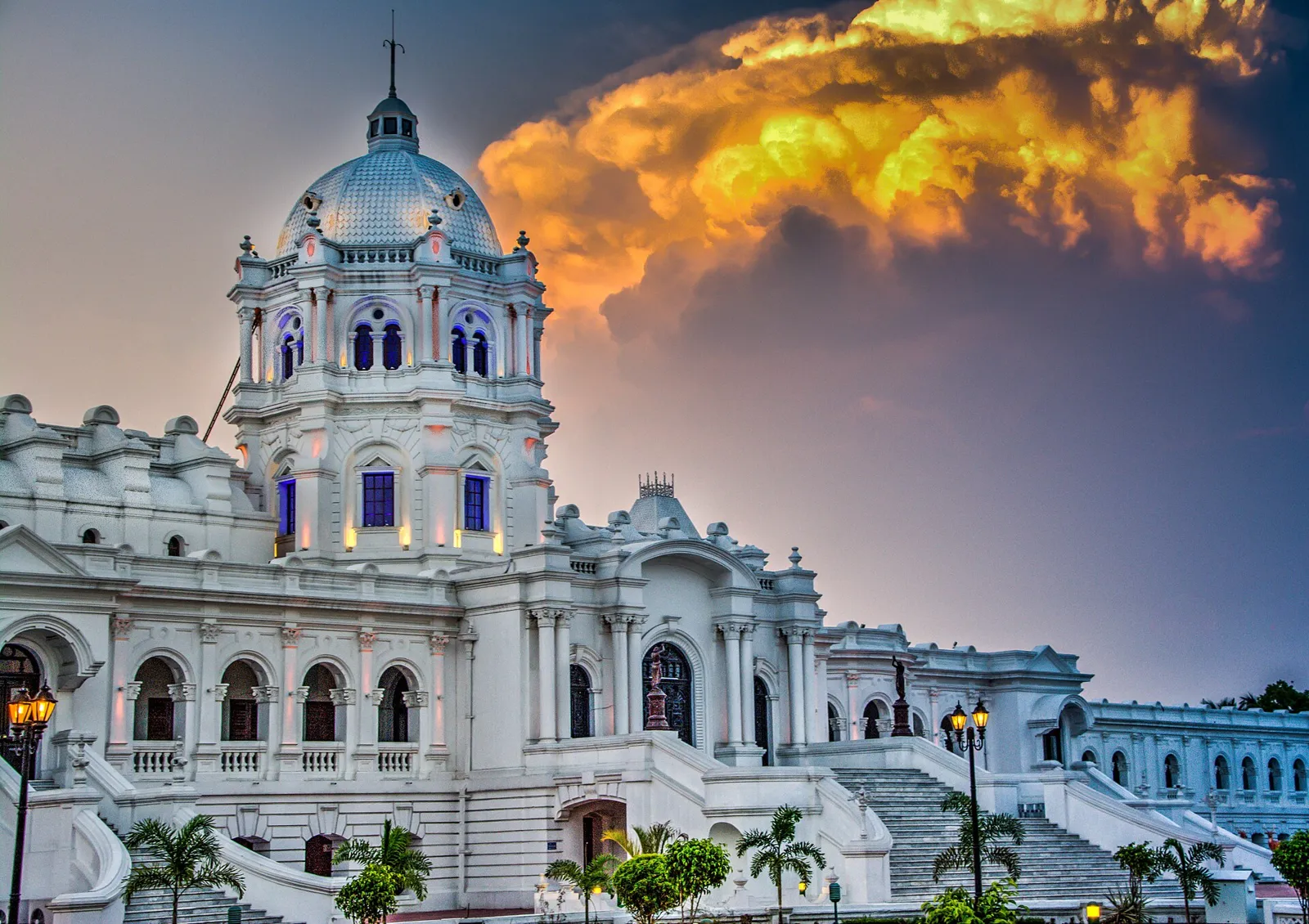
Ujjayanta Palace was built in Agartala for Maharaja Radha Kishore Manikya and completed in 1901. It served as a royal residence of the Manikya dynasty, whose rulers shaped Tripura’s political and cultural history. Accounts of the palace’s origins place its construction amid the development of Agartala as the royal capital; the royal family had earlier associations with Old Agartala. The present palace is therefore part of a broader shift in the kingdom’s seat of power, rather than an isolated royal building. After Tripura became part of independent India, the palace took on a civic role. It housed the state Legislative Assembly from 1973 until 2011. The building was subsequently adapted for museum use, and the Tripura State Museum was established there in 2013. Its displays present aspects of Tripura’s history and the art, culture and traditions of communities in the northeast. The change from royal residence to legislative building and then museum has kept the palace in public use, although its purpose has changed. For current information on conservation work, galleries and access, consult the state museum or Tripura Tourism.
Origin stories & folklore
A commonly repeated account, better understood as a naming tradition than a supernatural legend, says that Rabindranath Tagore gave the palace the name “Ujjayanta.” The name is often associated with the building in local retellings, though visitors seeking documentary detail should consult the museum’s interpretation or reliable historical sources. There is no single widely established folklore account about the palace’s origin that can safely be presented as fact. Stories about royal life may circulate locally, but they should be treated as anecdotes unless supported by museum interpretation or historical records. The palace’s documented history as a Manikya royal residence is distinct from such oral accounts.
Architecture & design
The palace is a large, two-storey royal building with a symmetrical composition and a prominent central dome flanked by smaller domed features. Its design is commonly described as combining European or neoclassical elements with influences associated with Mughal architecture; it is best understood as an eclectic palace design rather than assigned to a single style. The light-coloured exterior, projecting porches, columns, arched openings and decorative detailing give the façade its formal character. Inside, halls, galleries and rooms reflect its original use as a residence and later civic building. The complex is set among landscaped grounds, with water features traditionally associated with the palace setting. Construction used durable masonry and other materials suited to a substantial public building of its period. Museum conversion has made parts of the interior exhibition space, so visitors may see a mixture of historic architectural fabric and later museum arrangements.
Important objects & sculptures
Look for the museum’s stone sculptures, including works associated with Tripura’s religious and royal history and the Manikya dynasty. The displays also interpret the region’s communities and may include archaeological material, objects of everyday life, textiles, ornaments, coins or other historical collections; individual exhibits and gallery arrangements can change. Read the labels rather than relying on appearance alone, especially where an object’s date, provenance or ritual use is not immediately clear. The palace rooms and architectural details are also part of the experience: notice the domed spaces, columns, openings and decorative finishes while respecting any areas closed to visitors. Check locally which galleries are open during your visit.
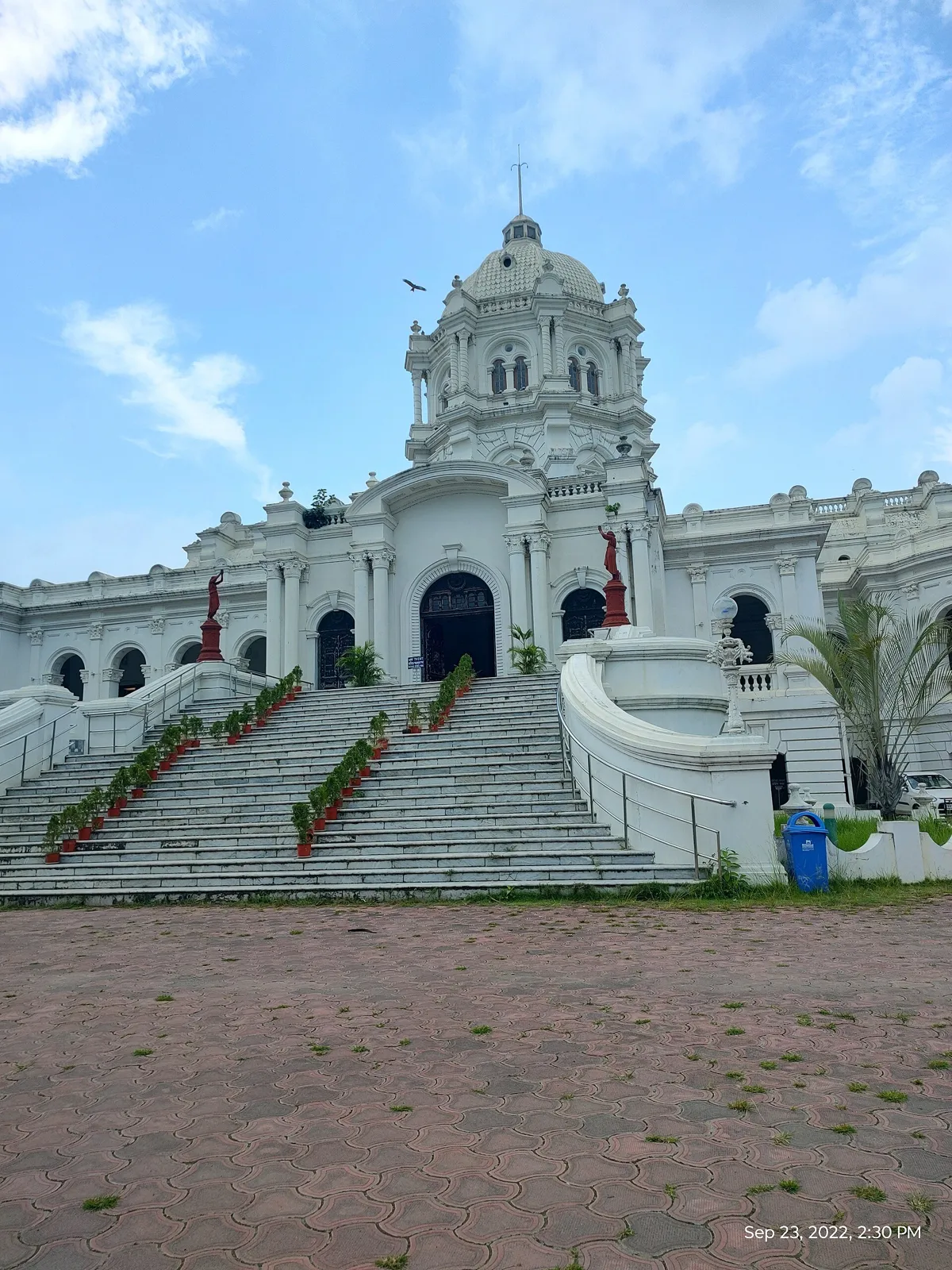
Explore Ujjayanta Palace slowly and read the interpretation boards or hire an authorised guide to understand its history. Check opening days and ticket counters in advance, as many monuments and museums close on one weekday and on public holidays. A comfortable itinerary is one main visit in the morning, a local meal at midday and a short nearby stop before an afternoon return. Use the district list on this site to find other places in West Tripura, but check the actual road route and its condition before combining stops. If a festival is on, local roads and stays can be busy — and the experience can be unforgettable. Leave no litter: many sites in Tripura are protected by the communities who own them.
Suggested itineraries
Half day: Allow about 2–3 hours for the museum galleries and palace architecture, then take a relaxed walk nearby and stop for a meal. Full day: Spend about 2–3 hours at Ujjayanta Palace, have lunch in Agartala, then visit Agartala Heritage Park and, if time and transport allow, Jagannath Temple or Old Agartala. Gentler option: Focus on the galleries that are open, take seated breaks as needed and use a taxi between nearby stops rather than planning a long walking route.
The museum presents aspects of Tripura’s diverse cultural life, including traditions associated with its indigenous communities and Bengali-speaking population. Tripura is home to nineteen recognised indigenous communities, each with distinct histories and cultural practices. Languages heard in the state include Bengali, Kokborok and other community languages. Traditional dress, handwoven textiles, music and dance are important expressions of identity, though performances are not necessarily held at the palace itself. The museum’s collections and interpretation provide a way to encounter this diversity, but they cannot represent every community or living practice. Visitors can be considerate by asking before photographing people, treating religious objects respectfully and following gallery rules.
Festivals & events
Agartala and nearby parts of Tripura observe festivals through the year. Durga Puja, usually in autumn, brings decorated public spaces, religious observances and busy roads in the city. Garia Puja, generally in spring, is an important festival for many indigenous communities, while Kharchi Puja is associated with the Chaturdash Devata temple at Old Agartala and typically draws visitors during the monsoon season. These celebrations are not necessarily held at Ujjayanta Palace. Festival traffic, crowds and demand for accommodation can increase, so allow extra time for travel and check whether museum access is affected before setting out.
Local food in Tripura includes mui borok (berma fermented fish dishes), wahan mosdeng (pork with chilli), chakhwi stew and Bengali-style fish curries. Ask what is fresh that day; many small eateries cook a limited daily menu. Pork, beef, fish and fermented ingredients are common in tribal cuisines, so vegetarian travellers should explain their needs clearly — rice, dal, vegetables and eggs are usually possible in towns. Remote sites may have no restaurant at all. Carry water and snacks, eat a proper breakfast before long drives, and ask your accommodation for a packed lunch if you are heading out early. Try a homestay-cooked meal when you can — it is often the best local food. Choose busy, clean places and carry your packaging back to town.
Shopping & local experiences
In Agartala, look for handwoven textiles, bamboo and cane craft, and other locally made items associated with Tripura’s communities. Availability and the communities or makers represented vary by shop and market, so ask about an item’s origin and choose fairly made products where possible. City markets may also offer local snacks and everyday foods; try these at an established stall or restaurant if they suit your diet. The palace museum is primarily a heritage site, so do not assume there is a particular shop or that every craft is sold on the premises. Avoid buying artefacts or objects that may have been removed from heritage sites.
October to March
The nearest principal railway station by straight-line distance is Agartala, roughly 5 km away. The nearest operating airport by straight-line distance is Maharaja Bir Bikram Airport, Agartala, roughly 5 km away. These figures are calculated from map coordinates, so actual road distance and travel time are longer. Guwahati is the main rail and air hub for the region, and most long-distance journeys connect through it. For the final leg, Tripura Road Transport Corporation (TRTC) and private buses link district towns; shared taxis usually leave early in the morning and depart only when full. A private taxi gives more flexibility for remote sites. When comparing train, bus and flight, count the complete door-to-door time: a flight saves the most time only if the onward road transfer is short, while an overnight train to Guwahati plus a road journey can save a hotel night. Book your return before you leave, because seats on shared vehicles and the few daily flights fill quickly. Current train numbers, timings, return services and fares are not listed here; check IRCTC and NTES for trains and the airline’s own schedule for flights. No Inner Line Permit is needed to visit Tripura. Some sites near the international border may have restricted hours, and sanctuaries charge entry fees.
Confirm onward and return timings on IRCTC / NTES, the state bus operator or your airline before travel. A dash means current timings or fares have not been verified.
Getting around
Ujjayanta Palace is in Agartala, where visitors can generally use local buses, auto-rickshaws or taxis to reach central-city destinations. A taxi can be useful for combining the palace with other stops, while autos may suit shorter journeys; agree the destination clearly before setting off. Walking around the immediate area may be practical, but account for heat, rain, traffic and uneven pavements. Parking availability and access close to the entrance can vary, particularly during busy events. Ask locally about current road conditions, drop-off points and any temporary traffic restrictions.
Hours, tickets & permissions
Entry is subject to the museum’s current opening days, ticketing arrangements and any temporary closures or gallery restrictions. Rules for photography, bags, student or group visits and identity documents may be set by the managing authority and can change. Do not assume that every palace room is open to visitors or that a guide is available without prior arrangement. Confirm current hours, entry requirements and fees with the Tripura State Museum or another relevant state authority before travelling. Follow notices and staff instructions on site.
Facilities
Museum facilities and visitor services can vary. Toilets may be available on or near the premises; check their location on arrival. Carry drinking water, particularly in hot or humid weather, and use nearby city cafés or restaurants for a meal rather than relying on food service inside the palace. Parking, seating, information boards and assistance from staff may be available, but should be checked locally. Guided interpretation may be offered or arranged, though availability is not guaranteed. ATMs and other services are easier to find in Agartala’s urban area than at more remote heritage sites.
Accessibility
The visit involves moving through a substantial historic building and its grounds. Expect some walking, possible changes in floor level and steps; routes may include surfaces that are uneven or difficult to navigate. Do not assume that ramps, lifts or step-free access are available throughout the palace. The distance between galleries and the amount of standing required can make a visit tiring for some older visitors or people with limited mobility. Stroller and wheelchair access may be restricted by thresholds, stairs or the layout of particular rooms. Ask museum staff about the most accessible route before entering, and plan for shade and rest breaks outdoors.
No Inner Line Permit is needed to visit Tripura. Some sites near the international border may have restricted hours, and sanctuaries charge entry fees. Carry a photo ID at all times; checkpoints are common. Save the emergency number 112 and your accommodation’s contact offline. Heat, humidity and sudden downpours are the main weather risks; carry water and rain protection. Respect community rules, private property and posted instructions. Avoid long road journeys after dark and during heavy rain. Check official advisories for the region before travel, and follow local guidance if access changes.
Photography
The palace exterior and grounds are attractive subjects in soft morning or late-afternoon light, while interior photography depends on current museum rules. Check signs or ask staff before taking photographs, as restrictions may apply in galleries or around particular objects. Avoid flash where prohibited and do not touch displays to frame a picture. Drone use requires the relevant permissions and must not be assumed to be allowed around a government or heritage site. Be considerate when photographing visitors, staff and any religious or cultural activity; ask permission before making close portraits.
Choose a stay by the full journey to Ujjayanta Palace, not just the district name. Main towns in West Tripura usually offer hotels, state tourism lodges and homestays with better transport, meals and medical access, while village homestays offer a closer connection to local life. In the plains and valleys, check fans or air-conditioning and mosquito nets in summer. Book in advance for weekends, festival dates and the peak season (October to March). Confirm the exact location, meals included, check-in time and cancellation terms in writing. Many homestays accept payment on arrival; avoid sending money to unverified contacts. Mobile network and digital payments can be unreliable in remote areas, so carry some cash.
Agartala Heritage Park is a nearby option for a short outdoor stop. Within the city, Jagannath Temple is another notable place to visit, subject to its own access and customs. Old Agartala, outside the immediate city centre, is associated with the Chaturdash Devata temple and Kharchi Puja; allow extra travel time and verify road conditions before combining it with the palace. These stops have separate management and visitor rules. Choose a practical route with local advice rather than assuming that sites are within easy walking distance of one another.
For couples, Ujjayanta Palace rewards a slow pace: arrive early for soft light and fewer crowds, share a local meal and keep the evening free. Public displays of affection can be frowned upon in conservative communities and at religious sites, so be discreet. A homestay can make the trip memorable — confirm privacy, hot water and transport back. Keep a buffer day in your itinerary, because weather and road closures can delay plans in Tripura.
Q: How much time should I allow for Ujjayanta Palace? A: Allow a few hours for the museum and palace setting; add more time if you plan nearby stops. Q: When is a good season to visit? A: October to March is generally more comfortable than the warm, humid monsoon period, though conditions vary. Q: Is there an entry ticket, and what are the hours? A: Entry rules, fees and opening days can change. Confirm current details with the managing authority before visiting. Q: Is the palace suitable for children and elderly visitors? A: It can be suitable, but the visit may involve walking and steps. Plan breaks and ask staff about access needs. Q: Where should I stay nearby? A: Agartala has accommodation options across the city. Choose one based on transport needs and confirm availability directly.
Be the first to share photos, stories, advice or a helpful contact for Ujjayanta Palace.
Loading…