
Trishna Wildlife Sanctuary
Trishna Wildlife Sanctuary is a wildlife sanctuary in South Tripura district, Tripura. Visitors come to experience a sanctuary devoted to wildlife.
Key facts · verified by Ghumoopedia editors
- Type of place
- National park / sanctuary
- Best time to visit
- October to March
- Nearest railway station
- Udaipur (Tripura) · about 20 km (straight line)
- Verified
- 21 Nov 2026
Plan a trip from Trishna Wildlife Sanctuary — a day-by-day route through places nearby.
Trishna Wildlife Sanctuary is located in South Tripura district. It is in Tripura, a state in India, and is classed as a wildlife sanctuary. Its name identifies the sanctuary as Trishna. In administrative terms, the sanctuary falls within South Tripura district, which is part of Tripura. It is therefore a wildlife sanctuary in the Indian state of Tripura. These details describe its type and location: Trishna Wildlife Sanctuary is the place, South Tripura is its district, and Tripura is the state. Tripura combines royal Manikya heritage, nineteen indigenous communities and a large Bengali-speaking population. Tripura is warm and humid for much of the year, with heavy rain from June to September and pleasant winters. The usual best time to visit is October to March. Days are short in Northeast India: the sun can set before 5 pm in winter, so plan to reach and leave Trishna Wildlife Sanctuary in daylight. Timings, fees and access arrangements must be confirmed locally. For official information, see Tripura Tourism at https://tripuratourism.gov.in.
Why it matters
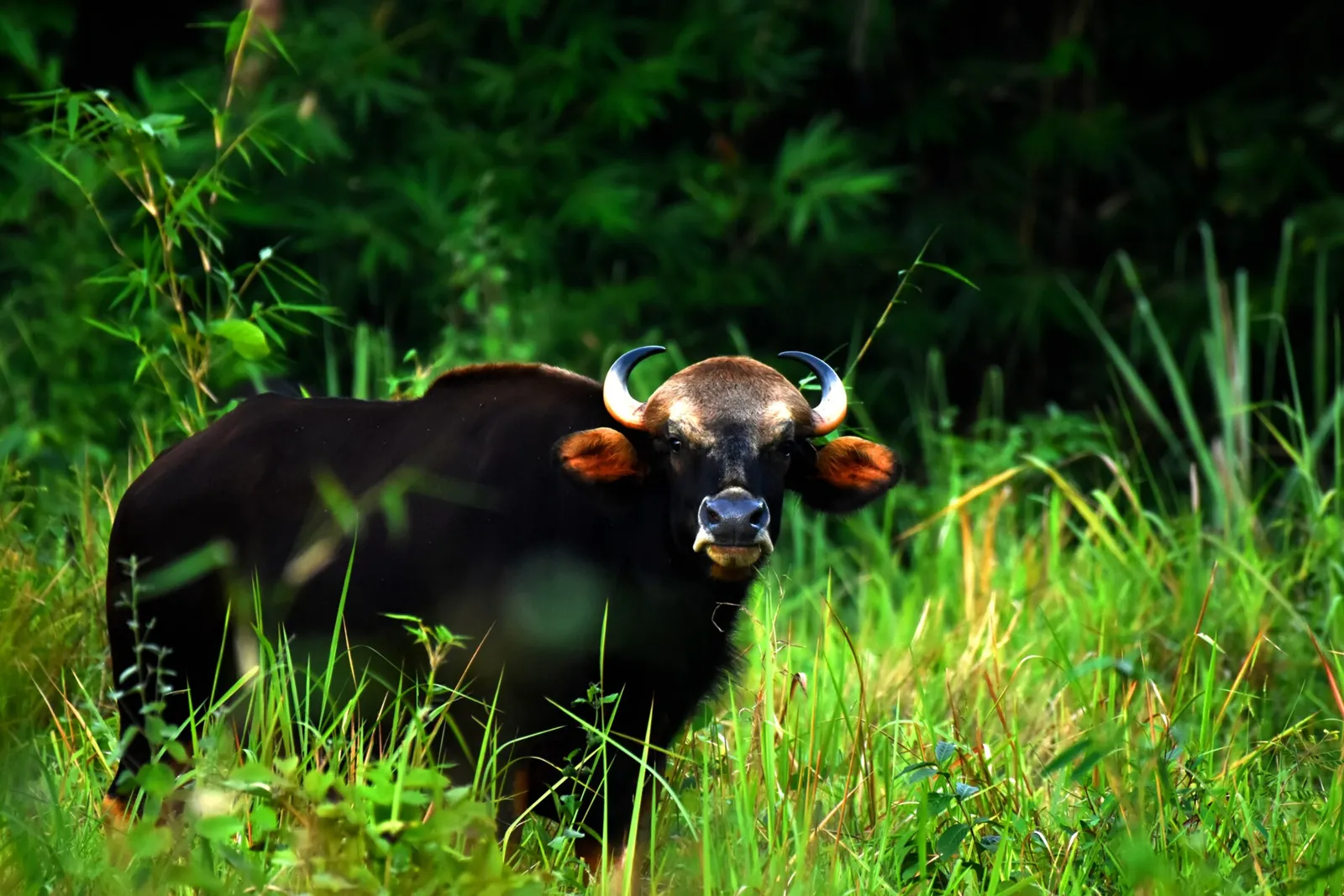
Trishna Wildlife Sanctuary is a protected area in South Tripura district, Tripura, and forms part of the state’s efforts to conserve native forests and wildlife. Its sanctuary designation gives it a role in protecting habitat as well as providing opportunities for regulated nature visits and environmental learning. Sanctuary accounts identify the Indian gaur, also called the Indian bison, among its notable wildlife; sightings are not assured. The site is important locally as a forest landscape in a region where communities, agriculture and natural habitats share space. It is recognised as a wildlife sanctuary under India’s protected-area system, rather than as a UNESCO World Heritage Site or an ASI-protected monument. The Tripura Forest Department is the authority to consult about current conservation and visitor arrangements.

Trishna’s history as a protected area is relatively recent compared with Tripura’s older archaeological and royal sites. It is commonly recorded as having been established as a wildlife sanctuary in 1988. This designation marked a shift towards managing the forest primarily for wildlife conservation and regulated protection, rather than treating it simply as an area of woodland. The sanctuary is not a palace, temple or monument attributed to a named builder; its significance comes from the habitats and species it protects. As with other protected areas, its management has involved balancing habitat conservation, wildlife protection and visitor access. The precise history of settlement, land use and local forest management around its boundaries is best understood through local accounts and official records, rather than inferred from the sanctuary name alone. No major restoration project or historic construction phase is necessary to explain the site. Visitors seeking details about the original notification, boundary changes or current management plan should check with the Tripura Forest Department, since these administrative records are more reliable than informal summaries.
Spend unhurried time at Trishna Wildlife Sanctuary: walk the marked paths, use official viewpoints and ask locally whether a guide, entry ticket or permit is needed. Weather changes fast, so carry a rain layer even on a clear morning. Wildlife sightings are never guaranteed — patience and quiet improve your chances. A comfortable itinerary is one main visit in the morning, a local meal at midday and a short nearby stop before an afternoon return. Use the district list on this site to find other places in South Tripura, but check the actual road route and its condition before combining stops. If a festival is on, local roads and stays can be busy — and the experience can be unforgettable. Leave no litter: many sites in Tripura are protected by the communities who own them.
Suggested itineraries
Half day: Check in at the authorised access point, spend two to three hours on permitted paths or viewpoints, then return to town for a meal. Full day: Travel in daylight, confirm entry arrangements, explore authorised routes at an unhurried pace, pause for a local lunch, then make one short nearby stop before returning. Gentler option: Ask about the shortest permitted route or an accessible viewpoint, take frequent rests, and keep the visit to a brief morning outing.

The sanctuary sits within Tripura’s culturally diverse setting, shaped by indigenous traditions and a large Bengali-speaking population. Kokborok and Bengali are widely used in the state, alongside other community languages. Regional cultural life includes folk music, dance, handloom weaving and seasonal observances; traditions vary between communities and villages. Visitors may encounter customary hospitality and local foodways in nearby towns, but the sanctuary itself is principally a nature destination rather than a performance venue. Ask before photographing people, homes or community events, and follow local guidance around private or culturally sensitive spaces. A respectful visit does not assume that one custom or language represents everyone in South Tripura.
Local communities
Tripura is home to many indigenous communities as well as Bengali-speaking residents. Tripuri and Reang (Bru) communities are among the peoples of the wider state; the communities living nearest the sanctuary should not be assumed without local confirmation. Livelihoods in the surrounding district include agriculture, small trade, public and private employment, and craft work. Some households may have customary relationships with nearby forests, but visitors should not enter community land or gather forest produce without permission. Buying food or locally made goods from nearby businesses can support residents, while respectful questions are preferable to assumptions about identity or tradition.
Festivals & events
Festivals in the wider Tripura region include Garia Puja, generally observed in spring, and Kharchi Puja, usually held in the monsoon season. Durga Puja is also widely celebrated in autumn, particularly in town centres. These are regional observances, not festivals held inside Trishna Wildlife Sanctuary. Dates vary from year to year, and local calendars may include other community-specific events. During major celebrations, accommodation and road transport in nearby towns can be busier than usual, while processions or gatherings may affect local traffic. Check locally before planning a sanctuary visit around a festival, and do not treat community ceremonies as tourist performances.
Local food in Tripura includes mui borok (berma fermented fish dishes), wahan mosdeng (pork with chilli), chakhwi stew and Bengali-style fish curries. Ask what is fresh that day; many small eateries cook a limited daily menu. Pork, beef, fish and fermented ingredients are common in tribal cuisines, so vegetarian travellers should explain their needs clearly — rice, dal, vegetables and eggs are usually possible in towns. Remote sites may have no restaurant at all. Carry water and snacks, eat a proper breakfast before long drives, and ask your accommodation for a packed lunch if you are heading out early. Try a homestay-cooked meal when you can — it is often the best local food. Choose busy, clean places and carry your packaging back to town.
Shopping & local experiences
Look for locally made handloom textiles, woven items and small craft products in nearby town markets, while checking that goods are genuinely locally made. Market selection and availability vary, so ask residents or shopkeepers for recommendations rather than expecting a dedicated sanctuary gift shop. A meal in Belonia or another nearby town can be a simple way to experience regional cooking; menus differ between establishments and communities. Buy responsibly, avoid products made from wildlife or protected forest materials, and take reusable bags to reduce packaging.
Trishna is a forested sanctuary in South Tripura, with woodland habitats and openings that support a variety of wildlife. Sanctuary descriptions refer to Indian gaur, or Indian bison, as a notable species; other mammals and birds may also use the area. Wildlife is elusive, and a visit should not be planned around guaranteed sightings. The wider region is warm and humid for much of the year, with substantial monsoon rain from June to September and more comfortable winter conditions. Forest paths can become wet or muddy, and weather may change quickly. The sanctuary’s value lies in its habitats as much as in the chance of seeing animals. Keep noise low, remain on authorised routes and leave plants, animals and natural materials undisturbed.
October to March
The nearest principal railway station by straight-line distance is Udaipur (Tripura), roughly 20 km away. The nearest operating airport by straight-line distance is Maharaja Bir Bikram Airport, Agartala, roughly 50 km away. These figures are calculated from map coordinates, so actual road distance and travel time are longer. Guwahati is the main rail and air hub for the region, and most long-distance journeys connect through it. For the final leg, Tripura Road Transport Corporation (TRTC) and private buses link district towns; shared taxis usually leave early in the morning and depart only when full. A private taxi gives more flexibility for remote sites. When comparing train, bus and flight, count the complete door-to-door time: a flight saves the most time only if the onward road transfer is short, while an overnight train to Guwahati plus a road journey can save a hotel night. Book your return before you leave, because seats on shared vehicles and the few daily flights fill quickly. Current train numbers, timings, return services and fares are not listed here; check IRCTC and NTES for trains and the airline’s own schedule for flights. No Inner Line Permit is needed to visit Tripura. Some sites near the international border may have restricted hours, and sanctuaries charge entry fees.
Confirm onward and return timings on IRCTC / NTES, the state bus operator or your airline before travel. A dash means current timings or fares have not been verified.
Getting around
Arrange the final approach from a nearby town such as Belonia or Udaipur, checking the actual road route and condition before setting out. Private taxis offer flexibility; shared vehicles and local buses may serve district routes but can be less convenient for a remote site. Auto-rickshaws may be useful around town, though availability for the return journey should be confirmed in advance. Ask locally where authorised visitor access begins and whether vehicles can park there. Within the sanctuary, expect to proceed on foot only where access is permitted; do not assume that boats or vehicles operate for visitors.
Hours, tickets & permissions
Entry arrangements can depend on the active forest-management rules, access point and season. Visitors may need to register, obtain an entry ticket or permit, or follow instructions about guides and photography; requirements can change. Carry identification if requested by the managing authority, and ask before bringing professional equipment or entering any restricted area. Confirm current opening hours, entry rules and fees with the Tripura Forest Department or locally before travelling. Do not rely on old online listings, and plan to complete the visit in daylight.
Facilities
Facilities inside the sanctuary may be limited and can vary by access point. Toilets, drinking water, food stalls, shaded seating, guides and parking should not be assumed to be available on site; check locally before departure. Carry water and any food or medicines you need, and take rubbish back with you. Nearby towns are more likely to have shops, meals and basic services. ATMs and reliable mobile coverage may be easier to find in town than near the forest, so plan accordingly and confirm guide availability through the managing authority.
Accessibility
Expect a nature site rather than a fully paved urban attraction. Paths may be uneven, muddy after rain or affected by roots, and walking distances and gradients can vary by route. Shade is likely beneath forest cover but may be intermittent, and rest points are not guaranteed. Wheelchair and stroller access should be confirmed directly with the managing authority; do not assume that paths, toilets or viewpoints are step-free. Older visitors and anyone with limited mobility may prefer a short visit, a companion, sturdy footwear and frequent rests. Ask staff which authorised access point or route is least strenuous before entering.
No Inner Line Permit is needed to visit Tripura. Some sites near the international border may have restricted hours, and sanctuaries charge entry fees. Carry a photo ID at all times; checkpoints are common. Save the emergency number 112 and your accommodation’s contact offline. Heat, humidity and sudden downpours are the main weather risks; carry water and rain protection. Stay on marked paths, keep away from cliff edges and fast water, and never approach wild animals. Avoid long road journeys after dark and during heavy rain. Check official advisories for the region before travel, and follow local guidance if access changes.
Visitor rules
Follow instructions from forest staff and remain on authorised paths and in permitted areas. Wear practical, modest clothing and closed footwear suitable for uneven or wet ground. Do not feed, chase, touch or call wildlife, and keep noise low. Carry out all litter, including plastic and food packaging; do not collect plants, stones or other natural materials. Ask about restrictions on cameras, flash, tripods and other equipment before use. Respect barriers and closures, and seek permission before photographing local people. Do not enter the forest after dark or independently seek out animals.
Photography
Soft morning light can suit forest photography, while changing weather may make conditions dim beneath the canopy. Use only authorised paths and viewpoints, and allow wildlife to move without approaching, baiting or using playback calls. Photography rules can differ by location and equipment, so confirm whether permits or restrictions apply before bringing a tripod or professional gear. Do not assume drones are allowed in a protected area; obtain explicit permission from the relevant authority before any proposed flight. Ask people before taking their portraits, and avoid photographing private or sensitive community activities without consent.
Choose a stay by the full journey to Trishna Wildlife Sanctuary, not just the district name. Main towns in South Tripura usually offer hotels, state tourism lodges and homestays with better transport, meals and medical access, while village homestays offer a closer connection to local life. In the plains and valleys, check fans or air-conditioning and mosquito nets in summer. Book in advance for weekends, festival dates and the peak season (October to March). Confirm the exact location, meals included, check-in time and cancellation terms in writing. Many homestays accept payment on arrival; avoid sending money to unverified contacts. Mobile network and digital payments can be unreliable in remote areas, so carry some cash.
Pilak, an archaeological area in South Tripura known for historic sculptural and religious remains, is a possible cultural addition to a district trip; check its access and route locally. Belonia is a useful nearby town for local services and a meal. Udaipur, in neighbouring Gomati district, has Tripura Sundari Temple and other regional heritage attractions, but combining it with the sanctuary depends on road conditions and available daylight. These places are not within the sanctuary. Check current access, travel time and district routes before making a multi-stop plan, and avoid scheduling more stops than daylight allows.
For couples, Trishna Wildlife Sanctuary rewards a slow pace: arrive early for soft light and fewer crowds, share a local meal and keep the evening free. Public displays of affection can be frowned upon in conservative communities and at religious sites, so be discreet. A homestay can make the trip memorable — confirm privacy, hot water and transport back. Keep a buffer day in your itinerary, because weather and road closures can delay plans in Tripura.
Q: How much time should I allow for Trishna Wildlife Sanctuary? A: A half-day visit is a practical starting point, including the approach, entry checks and time on authorised paths. Allow longer if roads or access arrangements require it. Q: When is the best season to visit? A: October to March is generally the more comfortable season in Tripura. Monsoon rain from June to September can make travel and paths more difficult. Q: Do I need a ticket, permit or guide? A: Requirements can change. Confirm entry, guide and camera rules with the Tripura Forest Department or locally before travelling. Q: Is the sanctuary suitable for children or elderly visitors? A: It can suit visitors able to manage uneven outdoor paths, but facilities and route accessibility are not assured. Choose a short authorised route and supervise children closely. Q: Where can I stay nearby? A: Check accommodation in Belonia or other district towns before travel. Availability and suitability vary, so confirm directly and plan the return journey in daylight.
Be the first to share photos, stories, advice or a helpful contact for Trishna Wildlife Sanctuary.
Loading…