
Kausani
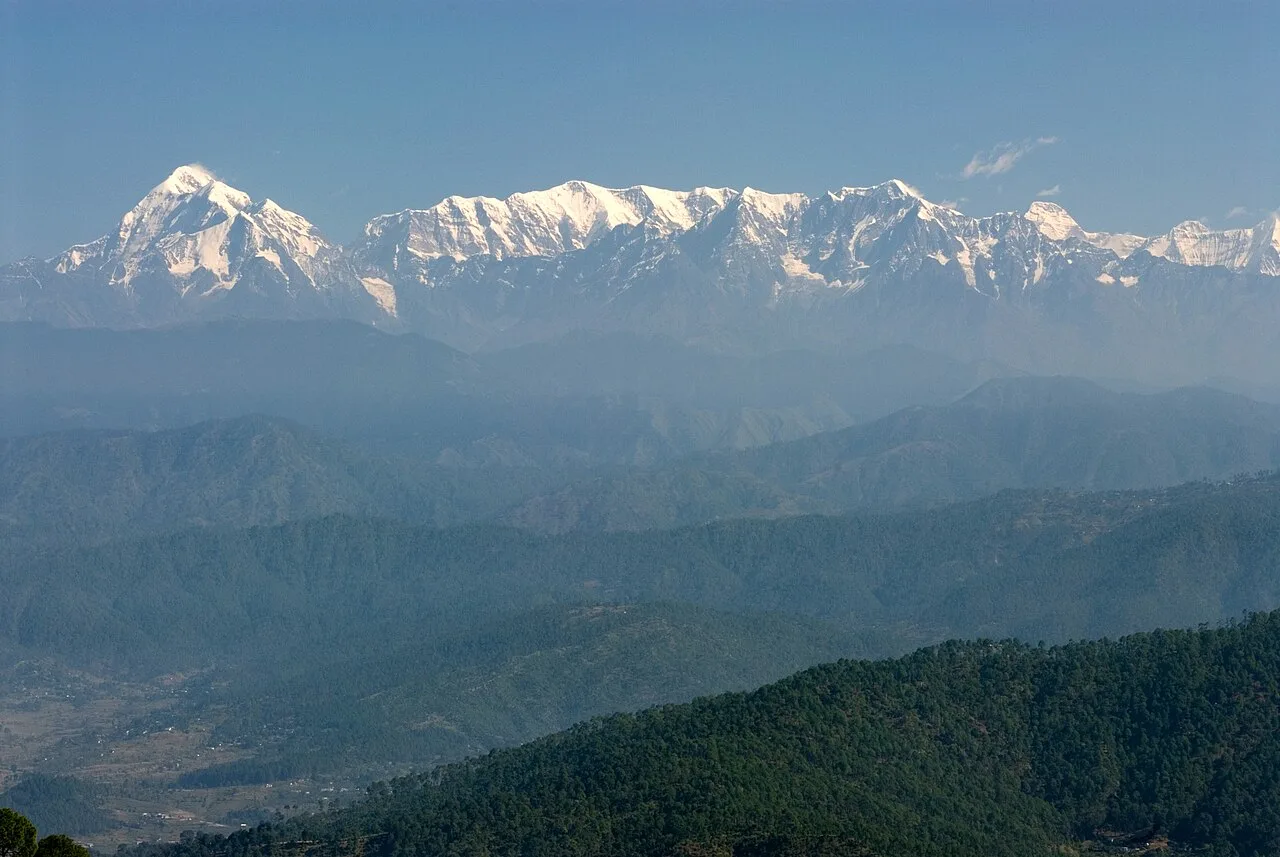
Kausani is a hill station and village in Uttarakhand’s Bageshwar district, drawing visitors for its Himalayan scenery and wide views of Trisul, Nanda Devi and Panchchuli.
Key facts · verified by Ghumoopedia editors
- Type of place
- Natural attraction
- Best time to visit
- March to June and September to November; December to February for snow in the hills; July to September only for the Valley of Flowers
- Nearest railway station
- Kathgodam · about 64 km (straight line)
- Nearest airport
- Pithoragarh (Naini Saini) Airport (limited flights) · about 68 km (straight line)
- Verified
- 21 Nov 2026
Plan a trip from Kausani — a day-by-day route through places nearby.
Known in Kumaoni as Kôsānī, Kausani is a village and hill station in Bageshwar district, Uttarakhand. Its setting is noted for mountain scenery and a far-reaching view of the Himalaya. The panorama spans 300 km and includes Trisul, Nanda Devi and Panchchuli. These peaks form part of the broad outlook associated with the settlement. Mahatma Gandhi compared Kausani’s landscape with that of Switzerland and called it the Switzerland of India. Uttarakhand, the Devbhumi or land of the gods, spans the Garhwal and Kumaon Himalaya: the Char Dham shrines and Panch Prayag confluences, Haridwar and Rishikesh on the Ganga, colonial hill stations such as Mussoorie, Nainital and Ranikhet, Corbett and Rajaji tiger reserves, the alpine Valley of Flowers, and Garhwali, Kumaoni, Jaunsari and Bhotiya communities with their folk songs, temple fairs and Aipan art. The plains around Haridwar and Udham Singh Nagar are hot from April to June; hill towns stay mild in summer and cold in winter, with snow above about 2,000 m from December to February. The monsoon (July to September) brings heavy rain, landslides and frequent road closures. High shrines such as Kedarnath and Badrinath open only from about late April or May until around Diwali. The usual best time to visit is March to June and September to November; December to February for snow in the hills; July to September only for the Valley of Flowers. Timings, fees and access arrangements must be confirmed locally. For official information, see Uttarakhand Tourism at https://uttarakhandtourism.gov.in.
Why it matters
Kausani is a hill station and village in Bageshwar district, Kumaon, Uttarakhand. Its regional importance comes from its Himalayan setting and its role as a base for exploring nearby villages, temples and landscapes. On clear days, visitors may see a broad panorama that includes Trisul, Nanda Devi and Panchchuli; the view is often described as extending across roughly 300 km, though visibility depends on weather. Mahatma Gandhi stayed here and is associated with describing the landscape as the “Switzerland of India.” Kausani is not known as a UNESCO World Heritage Site or an ASI-protected monument. Its appeal is chiefly scenic and cultural rather than tied to a single major historic complex.
Kausani has long been part of the Kumaon hill region, where village life and livelihoods have been shaped by mountain agriculture, forests and local trade. The settlement developed as a hill station and later became better known to visitors for its Himalayan outlook. Detailed, well-documented accounts of the village’s early founding or of a particular builder are not readily established, so its origins should not be assigned to a specific dynasty or year without reliable evidence. A notable episode in its modern history is Mahatma Gandhi’s stay in Kausani in 1929. The landscape and quiet setting are associated with his reflections on the Bhagavad Gita and his writing on Anashakti Yoga. The place where he stayed is now known as Anasakti Ashram and serves as a memorial and visitor destination. Gandhi’s description of Kausani as the “Switzerland of India” helped bring wider attention to the hill station. Over time, Kausani’s economy has included farming, local crafts, tea cultivation and tourism. Roads and visitor accommodation have made it more accessible, while the village retains its rural setting. The nearby Baijnath temple complex has a separate, older history and should not be confused with Kausani’s own historical record.
Origin stories & folklore
Kausani itself is not associated with a single widely documented origin legend. Kumaon has a rich tradition of local stories connected with mountains, rivers and deities, but accounts vary between villages and families. Visitors may hear stories about nearby sacred places; these are best understood as living traditions rather than as verified historical accounts. One regional tradition is associated with Baijnath, a temple town near Kausani. Local belief connects the area with Shiva and Parvati and their marriage, though versions of the story differ. This tradition belongs to the wider Baijnath area, not specifically to Kausani village. Visitors should approach shrines respectfully and ask before photographing worshippers or ceremonies.
Use Kausani as a base to understand local life: walk through the market, look for local crafts such as Kumaoni Aipan art, ringaal bamboo craft, Pashmina and woollen shawls, copperware from Almora, Bal Mithai and local pulses and honey and ask your host about nearby viewpoints and short excursions. Always ask before photographing people, homes or ceremonies. A comfortable itinerary is one main visit in the morning, a local meal at midday and a short nearby stop before an afternoon return. In the mountains, mornings are clearest; clouds often roll in by noon, so start early for Himalayan views. Use the district list on this site to find other places in Bageshwar, but check the route and its condition before combining stops. If a festival is on — such as the Kumbh and Ardh Kumbh at Haridwar, the Kanwar Yatra in July, Ganga Dussehra, the Nanda Devi Raj Jat, Phool Dei and Harela, or the Uttarayani fair at Bageshwar — roads and stays can be busy, and the experience can be unforgettable. Leave no litter: the Himalayan valleys have little waste collection, so carry a refillable bottle and bring your rubbish back down.
Suggested itineraries
Half day: Start with the Himalayan viewpoint in the morning, spend about an hour at Anasakti Ashram, then take a short walk through the village market and have a local meal. Full day: Begin with an early mountain-view stop, visit Anasakti Ashram, allow time for lunch, then choose either Kausani Tea Estate or a nearby excursion such as Rudradhari Falls and caves; return before late afternoon and check the route first. Gentler option: Choose one accessible viewpoint and Anasakti Ashram, use a taxi between stops, and leave plenty of time to rest.
Kausani’s everyday culture is part of Kumaon’s wider living traditions. Kumaoni is widely spoken in the region, alongside Hindi, and local music includes folk songs performed at social gatherings and seasonal celebrations. Chholiya, a martial-style folk dance of Kumaon, is performed at some festivals and weddings, rather than being a daily village activity. Traditional dress may be worn for ceremonies, while ordinary clothing reflects contemporary life. Aipan, a ritual floor and wall art made in Kumaon, is found in the region and may be available as craftwork. Customs vary among households; visitors should ask before entering private spaces or photographing people and ceremonies.
Local communities
Kausani is home to Kumaoni-speaking residents whose livelihoods may include farming, horticulture, small businesses, crafts and tourism-related work. The wider Bageshwar district includes diverse settlements and communities, with patterns of work shaped by altitude, access and season. Woollen weaving, bamboo work and other crafts are part of the broader regional economy, though they are not necessarily made by every Kausani household. Visitors can support local producers by buying directly when possible and asking about the origin of goods. Avoid treating residents as attractions; seek consent before taking portraits or entering homes.
Festivals & events
Harela, a Kumaoni festival associated with the monsoon and seasonal renewal, is observed in summer, while Phool Dei is celebrated in spring in parts of the region. Nanda Devi-related observances take place in Kumaon, with timing and scale varying by locality. The Uttarayani fair in Bageshwar is a major nearby event, usually held in January; it can bring larger crowds and increased demand for transport and accommodation. Festival programmes and dates vary from year to year. Check locally before travelling, and allow extra time if a fair or ceremony is underway.
Local food in Uttarakhand includes kafuli (spinach curry), phaanu and chainsoo (lentil dishes), aloo ke gutke, bhatt ki churkani, mandua (finger-millet) rotis, jhangora kheer, singori and bal mithai from Almora, with rhododendron (buransh) squash in spring. Ask what is fresh that day; many small eateries cook a limited daily menu. Hill food is simple and warming, with plenty of vegetarian options; in pilgrim towns many eateries serve only vegetarian food without onion or garlic, and alcohol and meat are banned in places such as Haridwar, Rishikesh and the Char Dham towns. Remote sites may have no restaurant at all. Carry water and snacks, eat a proper breakfast before long drives, and ask your accommodation for a packed lunch if you are heading out early. Try a home-cooked or local thali meal when you can — it is often the best food on the route. Choose busy, clean places, drink sealed or filtered water, and carry your packaging back with you.
Shopping & local experiences
The village market and local shops are places to look for Kumaoni Aipan art, ringaal bamboo craft, woollen shawls and regional foods. Pashmina and copperware associated with the wider Kumaon region may also be offered, but check the material, origin and maker rather than assuming every item is locally produced. Bal Mithai, local pulses and honey are popular food products to seek out. Kausani Tea Estate offers a chance to learn about regional tea cultivation; check locally about visitor access and purchases. Buying directly from makers can help support local livelihoods.
Kausani sits amid Kumaon’s mountain landscape, with forested slopes, cultivated terraces and wide views towards Himalayan peaks. On clear days, the panorama may include Trisul, Nanda Devi and Panchchuli; cloud, haze and season can obscure the mountains. Oak, pine and rhododendron occur in the wider hill environment, alongside orchard and farm vegetation. Kausani Tea Estate is a cultivated landscape rather than a wild habitat. Small streams and rivers lie in the surrounding valleys, but access and water conditions vary. The region supports birds and other wildlife typical of Himalayan foothills and mid-elevation forests; sightings are never guaranteed. Stay on paths, avoid disturbing wildlife and carry rubbish back with you.
March to June and September to November; December to February for snow in the hills; July to September only for the Valley of Flowers
The nearest principal railway station by straight-line distance is Kathgodam, roughly 64 km away. The nearest operating airport by straight-line distance is Pithoragarh (Naini Saini) Airport (limited flights), roughly 68 km away. These figures are calculated from map coordinates — actual road distance is longer, and mountain roads mean even short distances can take hours. Haridwar, Rishikesh (Yog Nagari Rishikesh) and Dehradun stations and Dehradun's Jolly Grant Airport are the gateways to Garhwal; Kathgodam station and Pantnagar Airport serve Kumaon; Ramnagar station serves Corbett. Beyond these, travel is by road. From Haridwar, Rishikesh, Dehradun or Kathgodam, take a Uttarakhand Roadways (UTC) or GMOU bus, a shared jeep or a reserved taxi; in the hills, shared jeeps leave early from town taxi stands and fill up fast, while a reserved taxi gives flexibility for temples and viewpoints. Mountain roads close at night in many areas, so plan to arrive before dark. When comparing train, bus and flight, count the complete door-to-door time: a flight saves the most time only if the onward road transfer is short, while an overnight train can save a hotel night. For the Garhwal hills, an overnight train to Haridwar, Rishikesh or Dehradun (or a flight to Jolly Grant Airport, Dehradun) is the usual start; for Kumaon, trains run to Kathgodam and flights to Pantnagar. The road journey into the mountains takes most of a day, so do not plan sightseeing on arrival. Book your return before you leave, because seats fill quickly on weekends, festivals and holidays. Current train numbers, timings, return services and fares are not listed here; check IRCTC and NTES for trains and the airline's own schedule for flights. No permit is needed for most of Uttarakhand, but Char Dham pilgrims (Yamunotri, Gangotri, Kedarnath and Badrinath) and Hemkund Sahib pilgrims must register online with Uttarakhand Tourism before travelling, and areas near the Tibet border such as Adi Kailash, Om Parvat, Niti and Nelong valleys need an Inner Line Permit.
Confirm onward and return timings on IRCTC / NTES, the state bus operator or your airline before travel. A dash means current timings or fares have not been verified.
Getting around
Visitors generally arrive in Kausani by road and get around on foot or by arranging a local taxi. The village centre and some viewpoints can be explored on foot, but roads may be steep and distances between stops can feel longer on hilly ground. Shared vehicles and local buses may serve the wider area, though availability can be limited and should be checked locally. There is no need to assume auto-rickshaws or frequent urban-style transit will be available. Ask accommodation hosts about drivers and road conditions. Parking is usually limited near popular stops, so avoid blocking narrow roads.
Hours, tickets & permissions
Kausani is a village rather than a single gated attraction, so there is no one entry system for the whole destination. Public roads and viewpoints may be accessible without a ticket, while places such as Anasakti Ashram or privately managed sites may have their own entry rules. Camera restrictions, visitor registration or other conditions can vary by site. There is no general dress code, but modest clothing is advisable at religious places. Confirm current opening arrangements, fees and any access rules with the relevant managing authority or locally before setting out.
Facilities
Kausani has guesthouses, hotels, small shops and places to eat, with facilities varying by season and location. Toilets may be available at accommodation and some visitor sites, but should not be assumed at every viewpoint. Carry drinking water or use a refillable bottle and check locally where safe refills are available. Parking is limited around busy stops. ATMs and medical services may be more limited than in larger towns, so plan ahead and carry essentials. Local guides or drivers may be arranged through accommodation, but availability and expertise should be confirmed directly.
Accessibility
Kausani is hilly, and many roads, paths and viewpoints have uneven surfaces, slopes or steps. Walking distances between attractions can be tiring, and shade may be limited at exposed viewpoints. Wheelchair access should not be assumed at the village’s visitor sites, and strollers can be difficult to manage on rough or steep paths. Older visitors and anyone with limited mobility may find it easier to visit fewer places, use a vehicle between stops and check access conditions with each site in advance. Take care near road edges and allow time to rest, especially at altitude.
No permit is needed for most of Uttarakhand, but Char Dham pilgrims (Yamunotri, Gangotri, Kedarnath and Badrinath) and Hemkund Sahib pilgrims must register online with Uttarakhand Tourism before travelling, and areas near the Tibet border such as Adi Kailash, Om Parvat, Niti and Nelong valleys need an Inner Line Permit. Carry a photo ID at all times and save the emergency number 112 and your accommodation's contact offline. Mountain roads are narrow and prone to landslides, especially from July to September; travel in daylight, use experienced local drivers, check the state disaster authority's road updates and keep a spare day in your plan for closures. Char Dham pilgrims must register online with Uttarakhand Tourism before travelling. Watch your belongings in crowds and on public transport, and follow posted instructions.
Photography
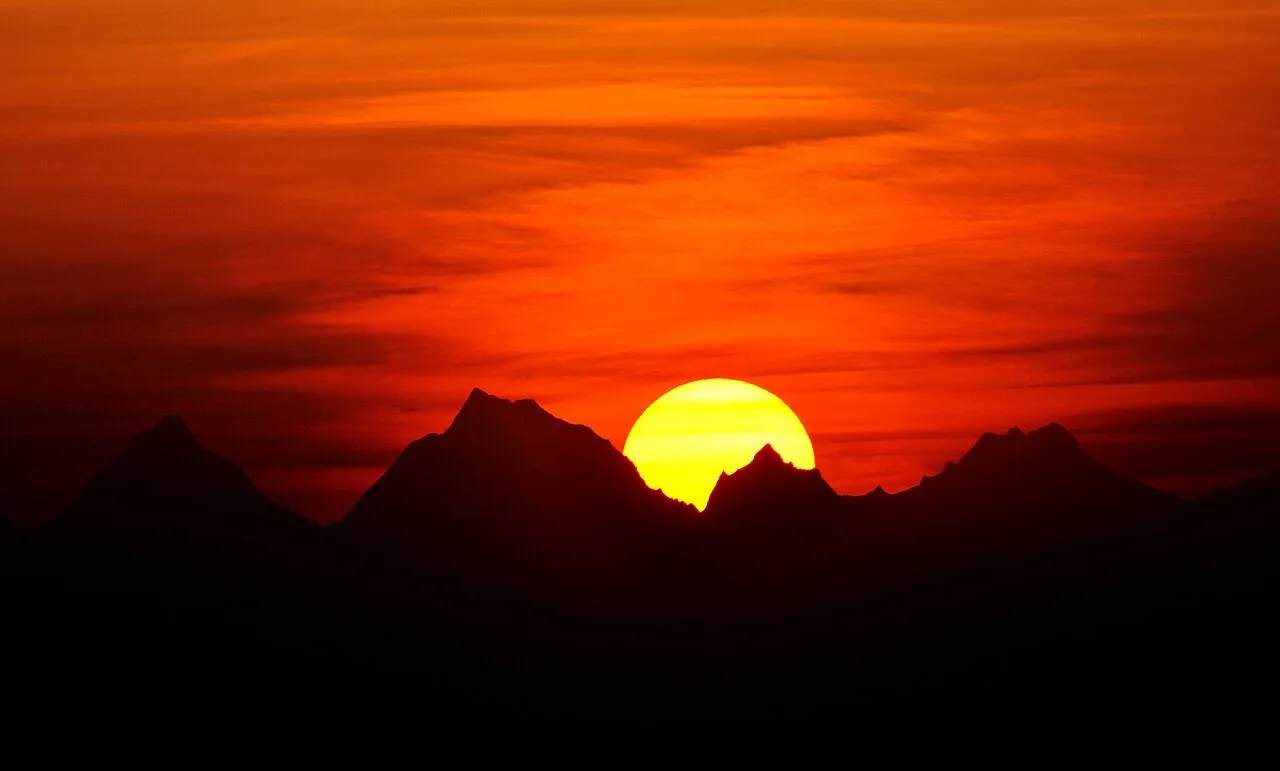
Early morning often offers the clearest chance of seeing the Himalayan range, while clouds may build later; conditions change quickly. Viewpoints around the village and the grounds of visitor sites can provide scenic compositions, subject to local rules. Ask before photographing residents, workers, homes or worship. Photography may be restricted inside some buildings or at religious sites, so follow posted instructions and ask staff. Drone use can be subject to aviation, safety and local restrictions; do not fly one without checking current rules and obtaining any required permissions.
Choose a stay by the full journey to Kausani, not just the district name. GMVN (Garhwal Mandal Vikas Nigam) and KMVN (Kumaon Mandal Vikas Nigam) run tourist rest houses across the hills, alongside homestays registered under the state's homestay scheme and small hotels; in pilgrim towns, dharamshalas and temple committee guesthouses are common. Nights are cold for much of the year — check heating, hot water and extra blankets. Book in advance for weekends, festivals and the peak season (March to June and September to November; December to February for snow in the hills; July to September only for the Valley of Flowers). Confirm the exact location, meals included, check-in time and cancellation terms in writing. Avoid sending money to unverified contacts or touts at stations. Carry some cash, as card and digital payments can be unreliable in remote areas.
In Kausani, visitors can see Anasakti Ashram and Kausani Tea Estate. Rudradhari Falls and caves are a nearby excursion; check the route and walking conditions before going. Baijnath, known for its temple complex, is another established destination in the area. Bageshwar town offers the Bagnath Temple and is associated with the Uttarayani fair. These places can require substantial road travel on mountain routes, so check local conditions and avoid packing too many stops into one day. Ask locally about current access, especially after heavy rain.
For couples, Kausani rewards a slow pace: arrive early for soft light and fewer crowds, share a local meal and keep the evening free. Sunrise over the Himalaya from a ridge-top homestay, a forest walk or an evening by a quiet lake makes the trip memorable. Public displays of affection can be frowned upon in conservative communities and at religious sites, so be discreet. Keep a buffer in your itinerary, because weather and road conditions can delay plans.
Q: How much time should I allow for Kausani? A: A half day covers a viewpoint, Anasakti Ashram and a short village walk. Allow a full day if adding a nearby excursion. Q: When is the best season to visit? A: March to June and September to November are commonly favoured. Winter can be cold, and monsoon rain may disrupt mountain roads and views. Q: Is there an entry ticket for Kausani? A: The village has no single entry gate. Individual attractions may set their own entry rules or fees; confirm locally before visiting. Q: Is Kausani suitable for children and elderly visitors? A: It can be, but slopes, uneven paths and changing weather require care. Choose fewer stops, take breaks and use a vehicle between sites where possible. Q: Can I stay near the attractions? A: Yes. Kausani has accommodation options, though availability and facilities vary. Book ahead during busy periods and check the property’s location and access.
Be the first to share photos, stories, advice or a helpful contact for Kausani.
Loading…