
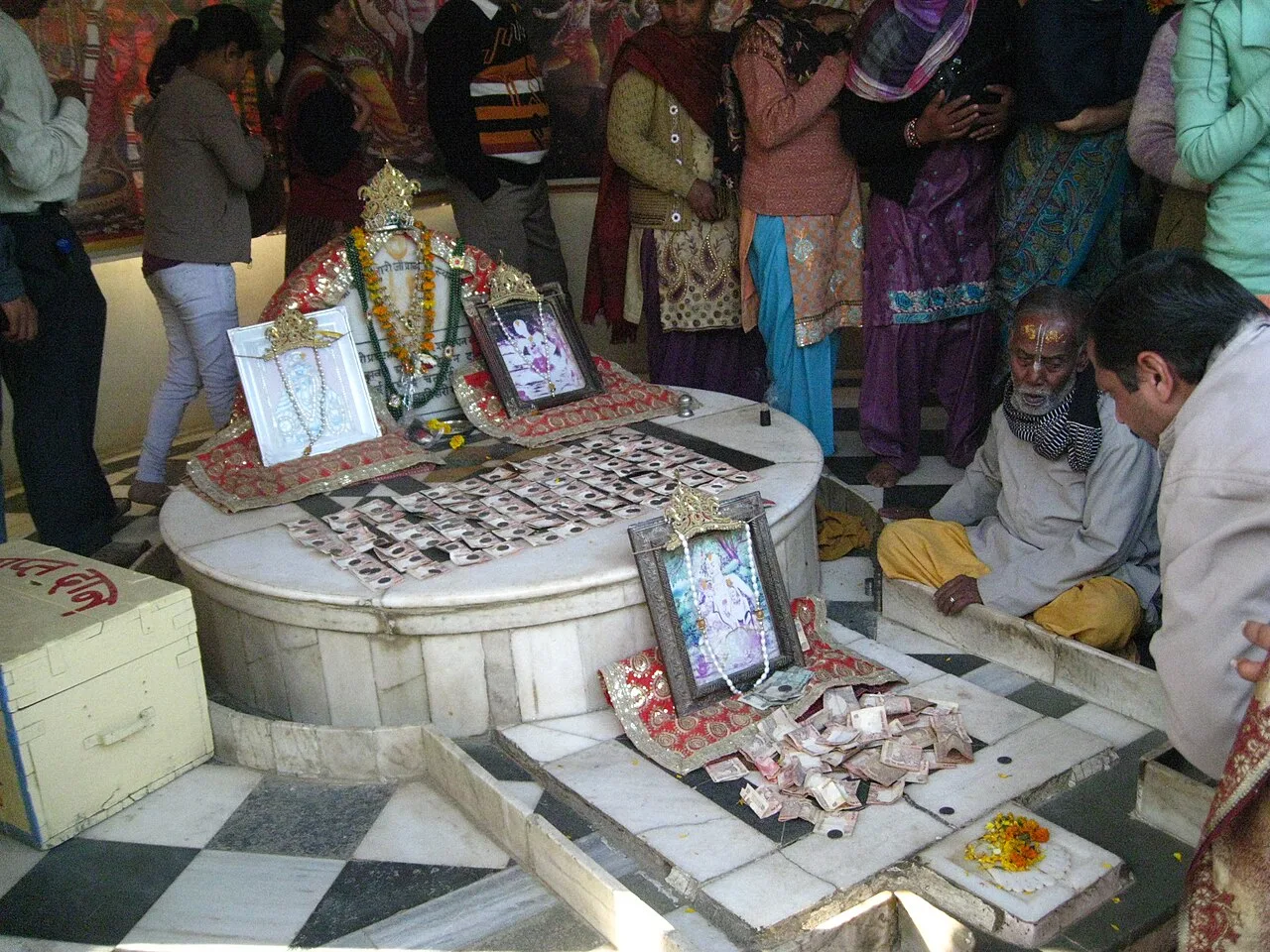
Banke Bihari Temple
Banke Bihari Temple is a Hindu place of worship in Vrindavan, Mathura district, visited by devotees to honour Banke Bihari, regarded as Radha and Krishna united.
Key facts · verified by Ghumoopedia editors
- Type of place
- Temple / pilgrimage site
- Best time to visit
- October to March
- Nearest railway station
- Mathura Junction · about 11 km (straight line)
- Nearest airport
- Agra Airport (Kheria) · about 54 km (straight line)
- Verified
- 21 Nov 2026
Plan a trip from Banke Bihari Temple — a day-by-day route through places nearby.
In Vrindavan, within Mathura district of Uttar Pradesh, the temple is devoted to Banke Bihari. The deity is regarded as a single manifestation embodying Radha and Krishna. Swami Haridas first worshipped the murti at Nidhivan, using the name Kunj Bihari. It refers to one who enjoys the groves, or kunj, of Vrindavan. When the temple was built around 1864, the image was transferred from Nidhivan to its present home. The united Radha-Krishna figure stands in tribhanga, a posture with three bends. Before its transfer, the image was worshipped at Nidhivan under the name given by Swami Haridas. Uttar Pradesh is India's great heritage heartland: the Taj Mahal, Agra Fort and Fatehpur Sikri of the Mughals; Varanasi's ghats on the Ganga; the Krishna towns of Mathura and Vrindavan; Ayodhya, Prayagraj's Triveni Sangam; the Buddhist circuit of Sarnath, Kushinagar and Shravasti; Lucknow's Nawabi monuments and food; and the terai forests of Dudhwa and Pilibhit. Summers from April to June are very hot (often 43–47°C), the monsoon from July to September is humid with heavy showers, and winter from December to January is cold, with dense morning fog that regularly delays trains and flights by hours. The usual best time to visit is October to March. Timings, fees and access arrangements must be confirmed locally. For official information, see Uttar Pradesh Tourism at https://uptourism.gov.in.
Why it matters
Banke Bihari Temple is one of Vrindavan’s principal Krishna shrines and an important pilgrimage destination in the Braj region of Uttar Pradesh. Worshippers visit to see Banke Bihari, understood in the temple tradition as the united form of Radha and Krishna. Its standing reflects Vrindavan’s central place in Krishna devotion, alongside other sacred sites in Mathura district. The temple is also associated with the devotional legacy of Swami Haridas and the music and worship traditions of Braj. It is not identified here as a UNESCO World Heritage Site or an ASI-protected monument; visitors seeking formal heritage status should check current official records.
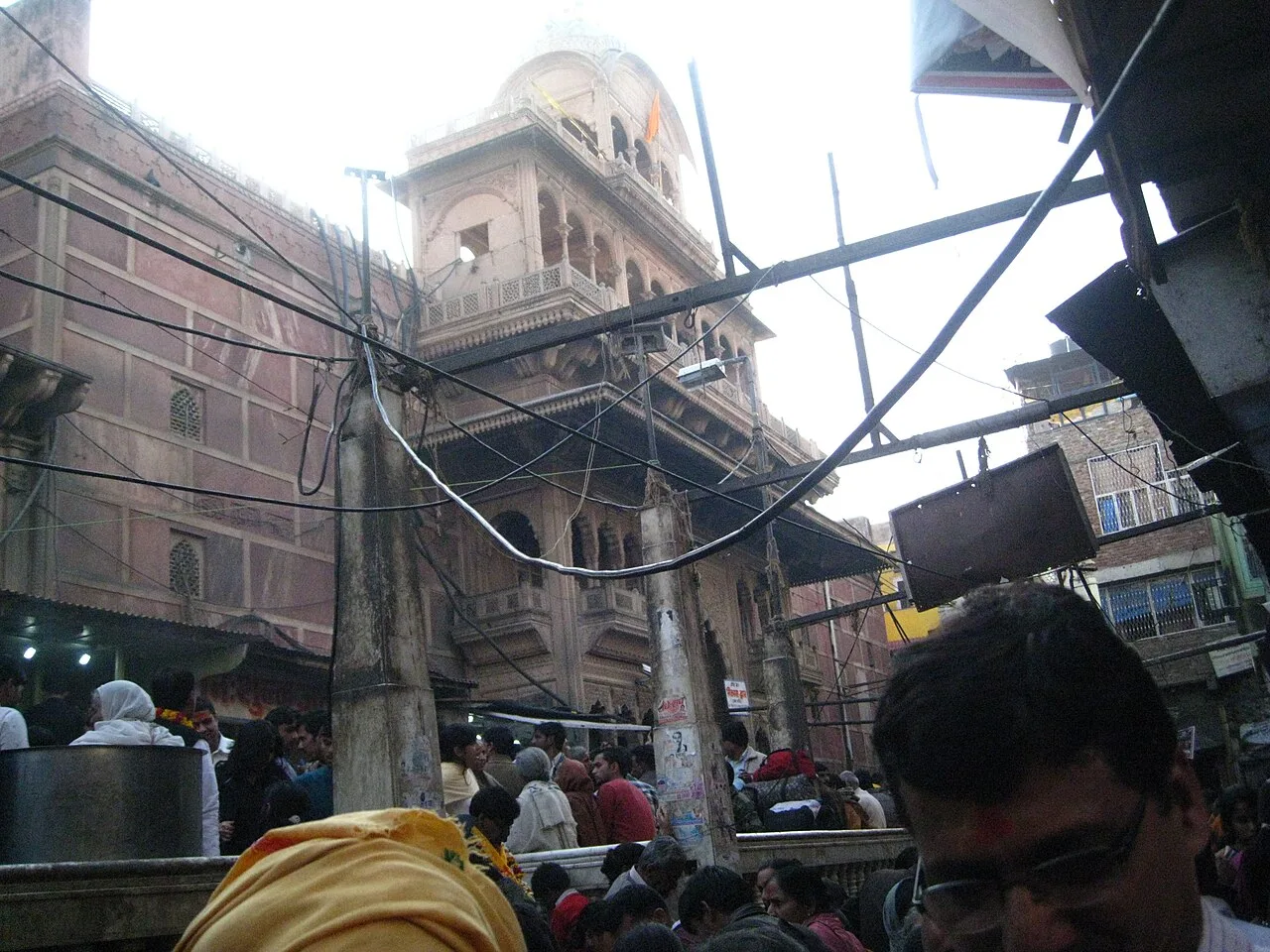
The temple’s history is closely linked to Swami Haridas, a devotional teacher and musician traditionally associated with Vrindavan and generally placed in the 16th century. The temple’s own account says that he worshipped the image at Nidhivan under the name Kunj Bihari, meaning the one who enjoys in Vrindavan’s groves. The image is believed to have been brought from Nidhivan to the present shrine when the Banke Bihari Temple was constructed around 1864. The available account does not establish a single builder or provide a detailed record of the project’s patrons, so specific claims about its construction should be treated cautiously. Since its establishment, the temple has continued as an active place of worship rather than a monument preserved solely for visitors. The shrine’s daily rituals, changing devotional decorations and management by temple authorities have shaped the experience over time. As with many heavily visited temples, upkeep and arrangements for worshippers continue to respond to local needs; detailed records of particular restorations should be confirmed with the managing authority.
Origin stories & folklore
According to local tradition, Swami Haridas worshipped the divine couple Radha and Krishna at Nidhivan. Devotional accounts say that the two appeared before him and, at the request of devotees, took a single form as Banke Bihari. The image is associated with the name Kunj Bihari, a reference to Krishna enjoying the groves of Vrindavan. These accounts belong to living religious tradition rather than independently verifiable history. A well-known custom at the shrine is to draw the curtain across the image at frequent intervals during darshan. Many devotees understand this practice as a way of managing the powerful mutual gaze between the deity and worshippers. Interpretations and details can vary among tellings.
Architecture & design
The temple is an active North Indian place of worship whose design serves the movement of devotees and the central act of darshan. Visitors pass from the busy street into interior worship spaces leading toward the sanctum, where the image of Banke Bihari is the visual focus. The building is often described as having a regional, Rajasthani-influenced temple character, though descriptions of its style and construction details vary. The interior is arranged for congregational viewing and worship rather than for visitors to circulate around the image like a museum exhibit. Crowds can make the route feel compressed, especially on festival days. The image is presented with changing clothes and adornments, so the visual impression shifts with the ritual calendar. The temple’s frequent curtain openings and closings are a distinctive part of the darshan experience. Visitors should avoid assuming that every area is accessible or that architectural features may be freely approached; follow the instructions of temple staff.
Important objects & sculptures
The principal sacred object is the image of Banke Bihari, understood in temple tradition as the combined form of Radha and Krishna. The figure stands in the Tribhanga posture, with the body bent at three points, a pose associated with Krishna imagery. Swami Haridas is said to have worshipped the image as Kunj Bihari before it was brought from Nidhivan to the present temple. Devotees may also notice the deity’s garments, ornaments and floral or seasonal decorations, which change with worship and special occasions. These are part of living ritual practice, not a permanent museum collection. The image is approached through darshan; visitors should not touch it or enter restricted areas. No particular inscription or public display collection is highlighted in the available guide.
Religious significance
The temple is dedicated to Banke Bihari, whom worshippers understand as the united form of Radha and Krishna. The shrine belongs to the devotional landscape of Braj, where Krishna’s life and pastimes are central to religious memory. Daily worship includes darshan, prayers, offerings and devotional singing, with practices organised by temple authorities and priests. The image is presented to worshippers in brief views as curtains are opened and drawn; many devotees regard this rhythm as a meaningful part of meeting the deity. Swami Haridas is remembered as an early worshipper and an important figure in the shrine’s tradition. Visitors who do not share the faith are welcome to observe respectfully, while recognising that this is an active place of worship and that ritual requirements take precedence over sightseeing.
Visit Banke Bihari Temple with time to observe daily prayers and rituals respectfully. Follow the posted rules on footwear, photography, phones, head covering and dress, and avoid interrupting worshippers; popular shrines may have separate queues and mobile-phone deposit counters. Beware of unofficial agents offering quick darshan for a fee. A comfortable itinerary is one main visit in the morning, a local meal at midday and a short nearby stop before an afternoon return. Use the district list on this site to find other places in Mathura, but check the route and its condition before combining stops. If a festival is on — such as Dev Deepawali on the Varanasi ghats, Holi in Mathura, Vrindavan and Barsana, the Magh Mela or Kumbh at Prayagraj, Deepotsav in Ayodhya or the Taj Mahotsav in Agra — roads and stays can be busy, and the experience can be unforgettable. Leave no litter: many sites are protected by the communities around them.
Suggested itineraries
Half day: Arrive in Vrindavan; walk to Banke Bihari Temple; allow time for darshan and a quiet break; have a local meal; visit Nidhivan if access and time allow. Full day: Begin with Banke Bihari Temple; explore nearby Vrindavan lanes and Nidhivan; pause for lunch; visit another temple such as Radha Raman Temple or Krishna Balaram Mandir; finish with a relaxed meal before returning. Gentler option: Arrange a nearby drop-off, minimise lane-to-lane stops, allow extra rest time, and choose one temple visit rather than a packed circuit.
The temple is part of Vrindavan’s living Braj culture, where devotional songs, stories of Krishna and pilgrimage shape everyday life. Braj Bhasha and Hindi are widely heard, alongside languages brought by visitors from across India. Kirtan and other forms of devotional singing may be heard in and around worship spaces, particularly on religious occasions. Priests and devotees may wear traditional Indian clothing, while there is no single dress style shared by all visitors. Offerings, flower decorations and darshan customs are part of the shrine’s daily rhythm. The surrounding lanes are busy with pilgrims, local residents, vendors and religious institutions. Visitors can engage with this culture by listening and observing quietly rather than treating worship as a performance.
Festivals & events
Janmashtami, celebrating Krishna’s birth, is an important occasion in Vrindavan and draws large crowds to the temple and surrounding town. Holi is celebrated widely across the Braj region, including Vrindavan, with major visitor surges and busy roads. Jhulan Yatra, during the monsoon season, is associated with swings and special devotional decoration, while Sharad Purnima in autumn is another significant Krishna festival. The temple also presents seasonal floral or other devotional adornments at different times of year. Festival practices and crowd arrangements can change. Expect queues, restricted movement and increased demand for transport and accommodation on major occasions; check current local arrangements before travelling.
Local food in Uttar Pradesh includes Lucknow's Awadhi kebabs (galouti and kakori), biryani and sheermal, Agra's petha and bedai-jalebi breakfasts, Mathura's peda and Vrindavan's rabri, Varanasi's kachori-sabzi, tamatar chaat, winter malaiyyo, thick kulhad lassi and Banarasi paan. Ask what is fresh that day; many small eateries cook a limited daily menu. Street food is excellent but rich; choose busy stalls where food is cooked fresh in front of you. In Mathura, Vrindavan and Ayodhya, meat and alcohol are not served near the temples. Remote sites may have no restaurant at all. Carry water and snacks, eat a proper breakfast before long drives, and ask your accommodation for a packed lunch if you are heading out early. If prasad is offered, accept it according to local custom. Choose clean places, drink sealed or filtered water, and carry your packaging back with you.
Shopping & local experiences
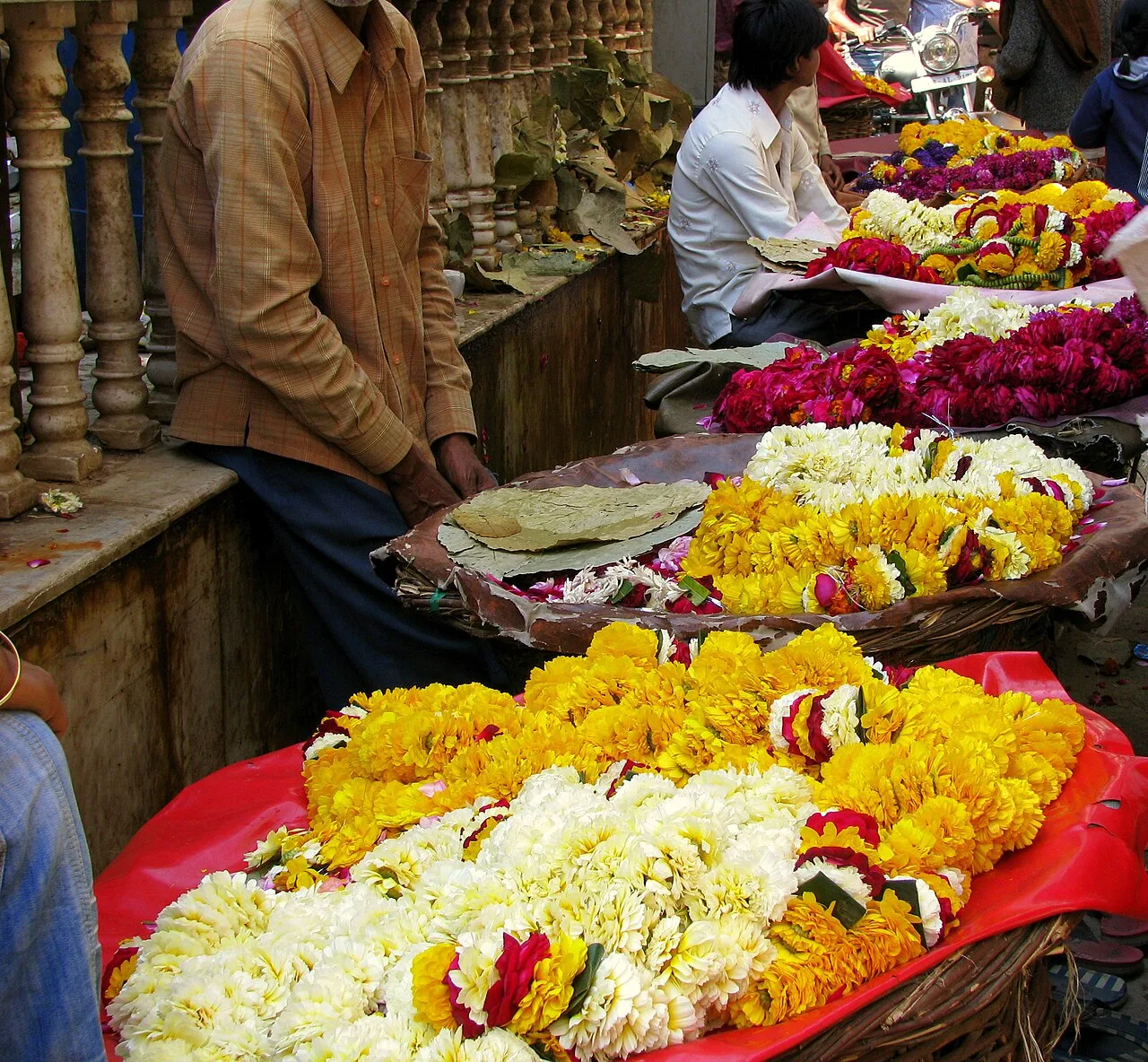
Small shops around Vrindavan sell devotional items such as prayer beads, images, religious books, incense and offerings; quality and origin vary, so buy thoughtfully. Flower garlands and worship offerings are commonly available near temple approaches, but check what may be carried inside. Local markets may also stock brass or other decorative objects and textiles. Mathura is known for peda, a milk-based sweet often bought as a food souvenir; choose a clean, reputable shop and consider how long it can be carried safely. Keep lanes clear while browsing and avoid buying wildlife products or items of uncertain provenance.
October to March
The nearest principal railway station by straight-line distance is Mathura Junction, roughly 11 km away. The nearest operating airport by straight-line distance is Agra Airport (Kheria), roughly 54 km away. These figures are calculated from map coordinates — actual road distance is longer. Agra, Mathura, Lucknow, Kanpur, Prayagraj, Varanasi, Gorakhpur and Jhansi are the main rail hubs; Lucknow and Varanasi have the busiest airports, and western UP is also served from Delhi. For the final leg, UPSRTC buses (including air-conditioned Janrath and Volvo services), private coaches on the expressways, shared autos, e-rickshaws and cycle-rickshaws in the old cities link district towns. In the old cities of Varanasi, Mathura and Lucknow, lanes are too narrow for cars — the last stretch is on foot or by cycle-rickshaw. When comparing train, bus and flight, count the complete door-to-door time: a flight saves the most time only if the onward road transfer is short, while an overnight train can save a hotel night. In December and January, fog can delay trains and flights for hours — keep a buffer before onward connections. The Yamuna, Agra–Lucknow and Purvanchal expressways make road travel fast between the big cities. Book your return before you leave, because seats fill quickly on weekends, festivals and holidays. Current train numbers, timings, return services and fares are not listed here; check IRCTC and NTES for trains and the airline's own schedule for flights. No permit is needed to visit Uttar Pradesh. The Taj Mahal is closed to visitors every Friday, and monument tickets for the Taj, Agra Fort and Fatehpur Sikri are cheaper when bought online on the ASI portal. Jungle safaris in Dudhwa, Pilibhit and Katarniaghat must be booked through the UP forest department's official ecotourism booking, and the parks close for the monsoon, roughly mid-June to mid-November.
Confirm onward and return timings on IRCTC / NTES, the state bus operator or your airline before travel. A dash means current timings or fares have not been verified.
Getting around
Within Vrindavan, e-rickshaws, cycle-rickshaws and autos are commonly used for local journeys, while taxis may be more practical for travel between towns. The old lanes around the temple are narrow and crowded, so vehicles may not reach the entrance; be prepared to walk the final stretch. Ask locally about suitable drop-off points and designated parking, which can vary with traffic controls and festivals. Mathura Junction is the main nearby rail hub, with onward travel by road. Local buses and shared vehicles may serve parts of the area, but routes and availability should be checked on arrival.
Hours, tickets & permissions
Entry arrangements can change according to the worship schedule, crowd levels, festivals and security needs. The temple may organise separate queues or direct visitors through specific entrances; any ticketing, permit, identification or deposit requirements should be checked locally rather than assumed. Rules on footwear, phones, photography and dress may also be updated by the managing authority. Confirm current opening and darshan hours, any fees, and visitor procedures with the temple authorities before setting out. Do not rely on unofficial agents promising guaranteed or faster access.
Facilities
Facilities immediately around the temple are shaped by the crowded old-town setting. Small shops and food stalls are common nearby, while public toilets, drinking water points, seating and accessible rest areas may not be consistently available at the entrance. Check locally for suitable facilities before joining a queue. Parking is generally more practical away from the narrowest lanes, but locations and access arrangements can change. ATMs and pharmacies may be found elsewhere in Vrindavan or Mathura; do not assume one is close to the shrine. Official guides or staff may be available, but verify their role with temple authorities.
Accessibility
The approach involves busy lanes and a final walk, and surfaces may be uneven or congested. Inside, queues and tightly packed worship spaces can make movement difficult, especially during festivals. Do not assume there are ramps, lifts, seating or a step-free route; check directly with temple authorities before travelling if these are essential. Wheelchair and stroller users may find the last stretch and crowd conditions challenging. Older visitors or anyone with limited mobility may benefit from visiting outside major festival periods, travelling with a companion and allowing extra time to rest. Shade and places to sit can be limited along the approach, so plan accordingly.
No permit is needed to visit Uttar Pradesh. The Taj Mahal is closed to visitors every Friday, and monument tickets for the Taj, Agra Fort and Fatehpur Sikri are cheaper when bought online on the ASI portal. Jungle safaris in Dudhwa, Pilibhit and Katarniaghat must be booked through the UP forest department's official ecotourism booking, and the parks close for the monsoon, roughly mid-June to mid-November. Carry a photo ID at all times and save the emergency number 112 and your accommodation's contact offline. Summer heat is a serious risk — carry water, cover your head and avoid midday sightseeing. Crowds at ghats, temples and festivals can be overwhelming; agree a meeting point with your group. Watch your belongings in crowds and on public transport, and follow posted instructions.
Visitor rules
Follow directions from temple staff and posted notices, as entry procedures can change with crowd conditions. Remove footwear where instructed and dress in a way that is respectful of an active Hindu shrine. Keep queues moving, avoid blocking worshippers, and do not touch the sacred image or enter restricted areas. Photography and phone use may be limited or prohibited in worship spaces; check before using a device. Avoid littering and reduce single-use plastic. Do not interrupt prayers, push through crowds or accept unauthorised offers of special access. Ask before giving offerings or taking part in a ritual.
Photography
Photography rules can vary by area and occasion, and mobile phones or cameras may be restricted inside worship spaces. Check posted notices or ask temple staff before taking pictures; do not photograph the deity, worshippers or rituals where prohibited. The surrounding lanes and temple exterior can be photographed only where local rules and crowd conditions allow. Softer morning or late-afternoon light may suit exterior views, but darshan arrangements should take priority over photography. Do not use a drone without confirming current permissions and restrictions; crowded religious precincts are not an appropriate place for unauthorised aerial filming. Never obstruct queues or ask worshippers to pose.
Choose a stay by the full journey to Banke Bihari Temple, not just the district name. Agra, Lucknow and Varanasi have the widest choice; in Varanasi, a riverside guesthouse puts you on the ghats but involves walking through narrow lanes with luggage, while pilgrim towns have dharamshalas and ashram stays. In summer, check air-conditioning and backup power; in the monsoon, check that the property is accessible if roads flood. Book in advance for weekends, festivals and the peak season (October to March). Confirm the exact location, meals included, check-in time and cancellation terms in writing. Avoid sending money to unverified contacts or touts at stations. Carry some cash, as card and digital payments can be unreliable in remote areas.
Nidhivan, traditionally associated with Swami Haridas and the image’s earlier worship, is a nearby Vrindavan stop; confirm its current access rules. Other established Vrindavan temples include Radha Raman Temple and the Krishna Balaram Mandir, also known as ISKCON Vrindavan. Prem Mandir is another well-known temple complex in the town. In Mathura, visitors may consider Shri Krishna Janmabhoomi and Dwarkadhish Temple. These sites are spread across town lanes and road routes, so check travel conditions before combining them. Festival traffic can make even a short local circuit take much longer than expected.
For couples, Banke Bihari Temple rewards a slow pace: arrive early for soft light and fewer crowds, share a local meal and keep the evening free. Sunrise at the Taj Mahal, an evening boat during the Varanasi aarti or a Nawabi dinner in old Lucknow makes the trip memorable. Public displays of affection can be frowned upon in conservative communities and at religious sites, so be discreet. Keep a buffer in your itinerary, because weather and road conditions can delay plans.
Q: How much time should I allow for a visit? A: Allow a few hours for the approach, darshan and a nearby stop; festival crowds can extend the visit. Q: When is a comfortable season to visit? A: October to March is generally the more comfortable season in Uttar Pradesh. Holi and other festivals are lively but much busier. Q: Is entry ticketed? A: Check current entry and darshan arrangements with the temple authorities; procedures may change, and avoid unofficial paid offers. Q: Can children and older visitors visit? A: Yes, but queues and crowded lanes can be demanding. Keep children close and plan rest breaks or a shorter visit for anyone with limited mobility. Q: Where should I stay nearby? A: Vrindavan has accommodation options, while Mathura offers a wider town base. Choose lodging based on your route and confirm availability, especially during festivals.
Be the first to share photos, stories, advice or a helpful contact for Banke Bihari Temple.
Loading…