
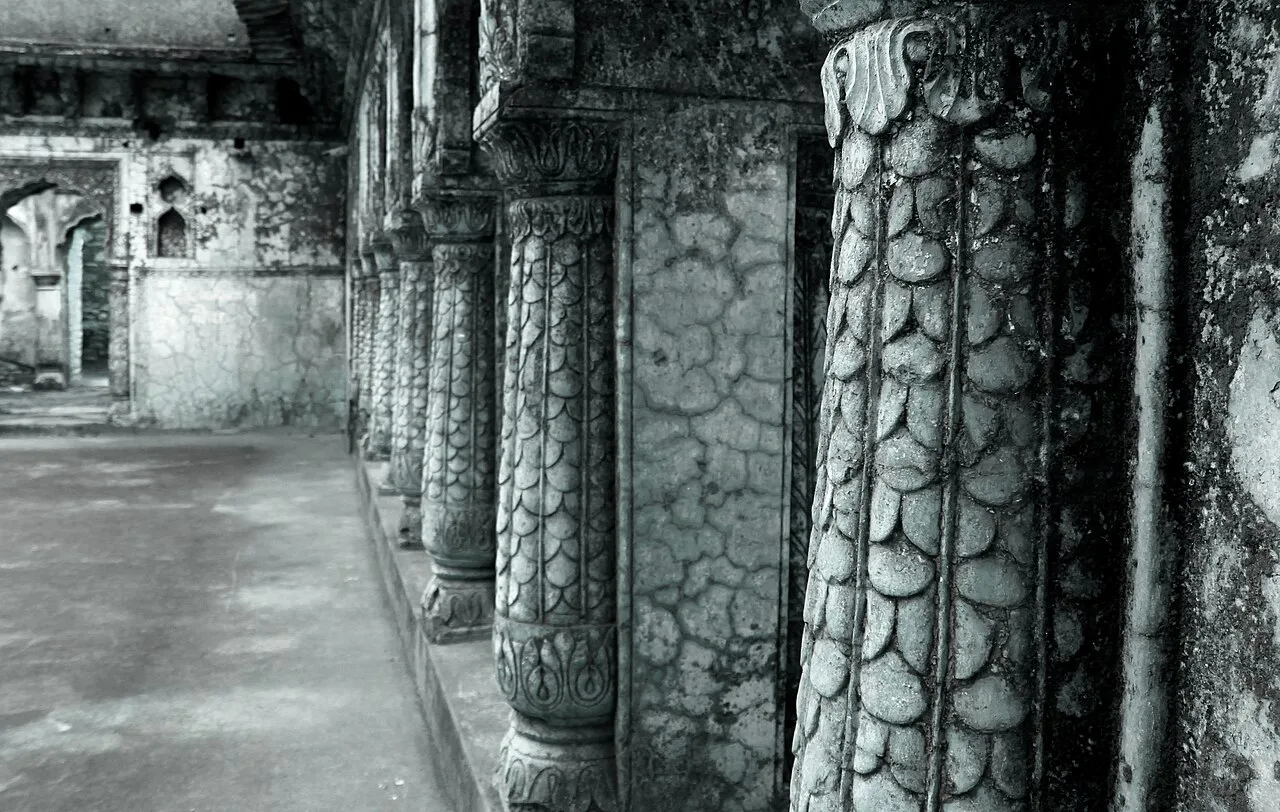
Kalinjar Fort
Travellers visit Kalinjar for its extensive fortifications, its association with Chandela rule and its long religious history, including sacred structures dating to the Gupta period.
Key facts · verified by Ghumoopedia editors
- Type of place
- Heritage monument
- Best time to visit
- October to March
- Nearest railway station
- Chitrakoot Dham Karwi · about 47 km (straight line)
- Nearest airport
- Khajuraho Airport (Madhya Pradesh) · about 61 km (straight line)
- Verified
- 21 Nov 2026
Plan a trip from Kalinjar Fort — a day-by-day route through places nearby.
Located in Banda district, Uttar Pradesh, Kalinjar ranks among India’s largest fortified urban sites. Chandela rulers counted it among eight renowned strongholds and made it the empire’s chief military centre. The fort crowns a detached rocky hill near the eastern edge of the Vindhya range. Its height is 1,203 feet (367 metres) above sea level and about 800 feet (244 metres) above the plains below. GCI recognises the site as part of a National Geo-Heritage Site. Before Chandela fortifications, Kalinjar was already an important place of worship; some early religious buildings there date to the Gupta era. The surrounding Kālañjara-maṇḍala, meaning the Kalinjar region, was governed across different periods by the Kurus of Chedi, Guptas, Pushyabhutis, Varmanas of Kannauj, Pratiharas, Rashtrakutas, Bundelas, the Sur Empire, Baghelas, Mughal Empire, Marathas and the British. Uttar Pradesh is India's great heritage heartland: the Taj Mahal, Agra Fort and Fatehpur Sikri of the Mughals; Varanasi's ghats on the Ganga; the Krishna towns of Mathura and Vrindavan; Ayodhya, Prayagraj's Triveni Sangam; the Buddhist circuit of Sarnath, Kushinagar and Shravasti; Lucknow's Nawabi monuments and food; and the terai forests of Dudhwa and Pilibhit. Summers from April to June are very hot (often 43–47°C), the monsoon from July to September is humid with heavy showers, and winter from December to January is cold, with dense morning fog that regularly delays trains and flights by hours. The usual best time to visit is October to March. Timings, fees and access arrangements must be confirmed locally. For official information, see Uttar Pradesh Tourism at https://uptourism.gov.in.
Why it matters
Kalinjar Fort stands on a prominent hill in Banda district and is an important landmark of the Bundelkhand region. Published accounts describe it as one of India’s largest fortified cities and identifies it as one of eight notable forts built by the Chandela rulers, serving as a military capital of their empire. Its hilltop setting, religious sites and long record of changing rulers make it valuable for understanding both regional political history and pilgrimage traditions. The Geological Survey of India recognizes the site as a National Geological Heritage Site. The fort is also protected as an archaeological monument; visitors should check current conservation and access rules with the responsible authorities.
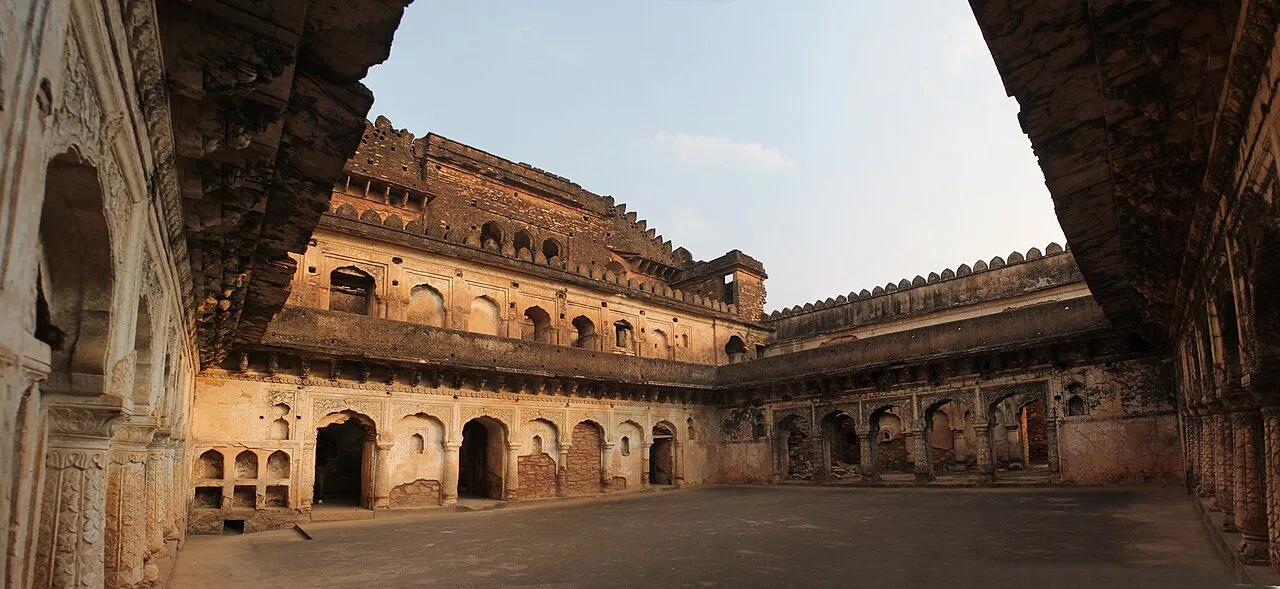
Kalinjar was a religious centre before the Chandela period, and some of its early religious remains are traditionally dated to the Gupta era. The region, known historically as Kālañjara-maṇḍala, passed under several powers, including the Guptas, Pushyabhutis, Varmanas of Kannauj and Pratiharas. The Chandelas developed Kalinjar into a major stronghold and made it a military capital. Their rule helped shape the fort’s defensive landscape and religious architecture. The hill continued to attract campaigns after the Chandela era. Accounts of its history associate it with attempts by Mahmud of Ghazni, its capture by forces under Qutb al-Din Aibak, and later struggles involving the Sur, Mughal, Bundela, Baghela and Maratha powers. During a siege in the sixteenth century, the Sur ruler Sher Shah died from burns caused by an explosion. The British subsequently took control of the fort. These successive occupations altered its military and political role, while temples, waterworks, gateways and inscriptions remained as evidence of different periods. Today the surviving structures are protected and conserved, though the condition and accessibility of individual features can vary.
Origin stories & folklore
According to local tradition, Kalinjar is associated with Shiva and the story of the cosmic poison. Shiva is believed to have consumed the poison that emerged during the churning of the ocean, and the name Kalinjar is popularly interpreted in connection with overcoming or conquering time. The Neelkanth shrine within the fort is central to this belief and remains a place of worship. Stories also describe the hill as a sacred site where Shiva’s presence protects the region. These accounts belong to religious tradition rather than verifiable historical evidence; visitors can encounter them through local explanations and worship at the shrine.
Architecture & design
The fort occupies a steep, isolated rocky hill on the eastern edge of the Vindhya Range. Its defensive walls follow the uneven contours of the summit, combining natural cliffs with built fortifications and gateways. The complex includes surviving palaces and other buildings, temples, sculptures, inscriptions and water-storage features cut or built into the rock. Local stone, including sandstone, is prominent in the surviving structures. The fort’s elevated position offered broad views over the plains and made access difficult for attacking forces. Within the enclosure, religious and military spaces sit alongside one another, reflecting the site’s dual roles. Erosion, weathering and damage across centuries mean that some structures are fragmentary; take care around exposed edges and unstable-looking masonry.
Important objects & sculptures
Look for carved panels, religious images and inscriptions on temple walls and other surviving structures. The Neelkanth shrine is a key focus for visitors interested in the fort’s living sacred traditions, while sculptures and architectural fragments elsewhere show the range of religious and artistic activity at the site. Rock-cut or stone-lined water-storage features are also worth noticing: they reveal how the hill’s occupants managed water in a demanding setting. Not every carving or inscription is easy to identify on site, and interpretation may be limited. Do not touch, climb on or remove objects, and follow any barriers intended to protect fragile remains.
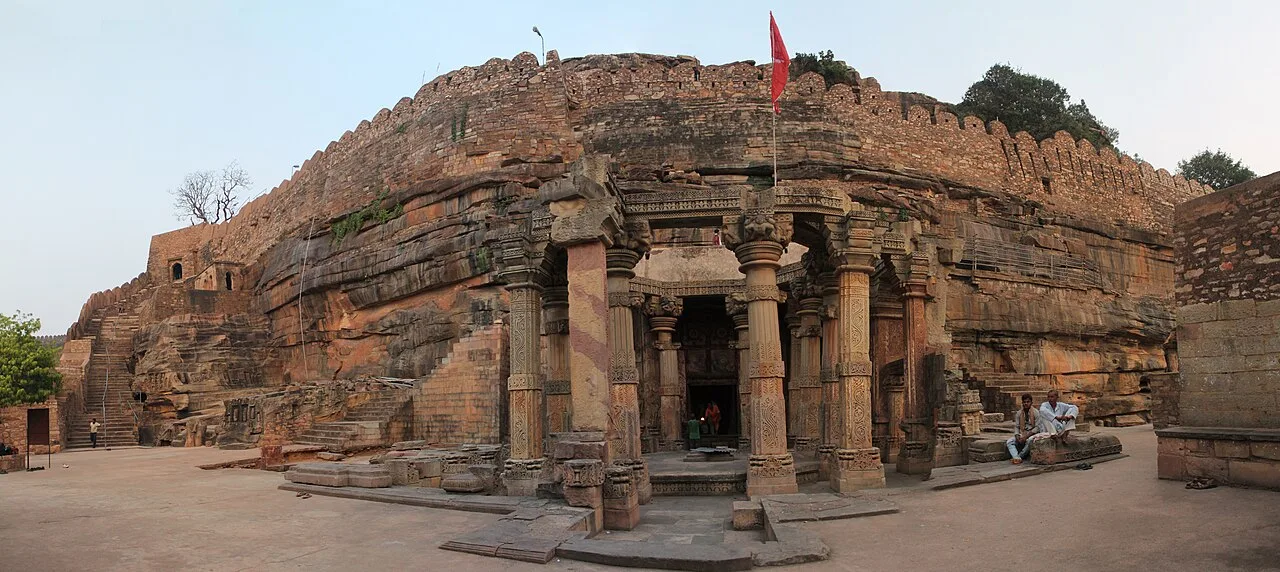
Explore Kalinjar Fort slowly and read the interpretation boards, use the official audio guide where available or hire an authorised guide to understand its history. Forts involve climbs on uneven stone steps and ramparts; start early, carry water and descend well before dark. Early morning gives softer light, cooler air and smaller crowds. A comfortable itinerary is one main visit in the morning, a local meal at midday and a short nearby stop before an afternoon return. Use the district list on this site to find other places in Banda, but check the route and its condition before combining stops. If a festival is on — such as Dev Deepawali on the Varanasi ghats, Holi in Mathura, Vrindavan and Barsana, the Magh Mela or Kumbh at Prayagraj, Deepotsav in Ayodhya or the Taj Mahotsav in Agra — roads and stays can be busy, and the experience can be unforgettable. Leave no litter: many sites are protected by the communities around them.
Suggested itineraries
Half day: Arrive early, explore the main fort approach and gateways, visit the Neelkanth shrine if open, and spend time with the surviving structures and views (about 3–4 hours). Full day: Visit the fort in the cooler part of the day, pause for a meal in the area, then take a relaxed local break or visit another confirmed nearby attraction before returning (about 6–8 hours including travel). Gentler option: Keep to the shortest accessible approach, rest often, and visit only the shrine area or viewpoints that local staff confirm are suitable; avoid attempting the full hilltop circuit.
Kalinjar remains both a heritage destination and a place of religious significance, especially around the Neelkanth shrine. Visitors may encounter worshippers, local pilgrims and caretakers alongside people exploring the fort’s history. Hindi and Bundeli are commonly used in the wider region, though individual guides and visitors may speak other languages. Bundelkhand’s living culture includes regional songs, oral storytelling and seasonal customs, but performances are not a guaranteed feature of a fort visit. Dress respectfully near active shrines, ask before photographing worshippers, and avoid interrupting prayer or other religious observances.
Festivals & events
Maha Shivaratri is an important occasion for Shiva devotees and may bring increased activity around the Neelkanth shrine. Navratri and other Hindu observances can also draw worshippers, though the scale and arrangements vary by year. Seasonal fairs or local religious gatherings may be announced locally rather than on a regular visitor calendar. During festivals, expect more people near worship spaces, possible queues and changes to vehicle access or site movement. Check with local authorities or temple representatives before travelling specifically for an event, and allow extra time for the approach and visit.
Local food in Uttar Pradesh includes Lucknow's Awadhi kebabs (galouti and kakori), biryani and sheermal, Agra's petha and bedai-jalebi breakfasts, Mathura's peda and Vrindavan's rabri, Varanasi's kachori-sabzi, tamatar chaat, winter malaiyyo, thick kulhad lassi and Banarasi paan. Ask what is fresh that day; many small eateries cook a limited daily menu. Street food is excellent but rich; choose busy stalls where food is cooked fresh in front of you. In Mathura, Vrindavan and Ayodhya, meat and alcohol are not served near the temples. Remote sites may have no restaurant at all. Carry water and snacks, eat a proper breakfast before long drives, and ask your accommodation for a packed lunch if you are heading out early. Try a home-cooked or local thali meal when you can — it is often the best food on the route. Choose clean places, drink sealed or filtered water, and carry your packaging back with you.
Shopping & local experiences
For practical supplies and local snacks, look in nearby settlements or Banda town rather than expecting extensive shopping at the fort. Markets may offer everyday goods, seasonal produce and regional food; availability varies. Bundelkhand-style meals and local sweets are worth asking about at established eateries. If buying a souvenir, choose locally made items from a reputable seller and avoid antiquities, religious objects or anything that may have been removed from a heritage site. Carry small essentials such as water and sun protection from town, as on-site options may be limited.
October to March
The nearest principal railway station by straight-line distance is Chitrakoot Dham Karwi, roughly 47 km away. The nearest operating airport by straight-line distance is Khajuraho Airport (Madhya Pradesh), roughly 61 km away. These figures are calculated from map coordinates — actual road distance is longer. Agra, Mathura, Lucknow, Kanpur, Prayagraj, Varanasi, Gorakhpur and Jhansi are the main rail hubs; Lucknow and Varanasi have the busiest airports, and western UP is also served from Delhi. For the final leg, UPSRTC buses (including air-conditioned Janrath and Volvo services), private coaches on the expressways, shared autos, e-rickshaws and cycle-rickshaws in the old cities link district towns. In the old cities of Varanasi, Mathura and Lucknow, lanes are too narrow for cars — the last stretch is on foot or by cycle-rickshaw. When comparing train, bus and flight, count the complete door-to-door time: a flight saves the most time only if the onward road transfer is short, while an overnight train can save a hotel night. In December and January, fog can delay trains and flights for hours — keep a buffer before onward connections. The Yamuna, Agra–Lucknow and Purvanchal expressways make road travel fast between the big cities. Book your return before you leave, because seats fill quickly on weekends, festivals and holidays. Current train numbers, timings, return services and fares are not listed here; check IRCTC and NTES for trains and the airline's own schedule for flights. No permit is needed to visit Uttar Pradesh. The Taj Mahal is closed to visitors every Friday, and monument tickets for the Taj, Agra Fort and Fatehpur Sikri are cheaper when bought online on the ASI portal. Jungle safaris in Dudhwa, Pilibhit and Katarniaghat must be booked through the UP forest department's official ecotourism booking, and the parks close for the monsoon, roughly mid-June to mid-November.
Confirm onward and return timings on IRCTC / NTES, the state bus operator or your airline before travel. A dash means current timings or fares have not been verified.
Getting around
On arrival in the Kalinjar area, ask locally about available autos, taxis or other hired vehicles for the approach to the fort; services may be limited compared with larger towns. Local buses can help with regional travel, but do not rely on a particular service without checking. Walking is necessary to explore many parts of the complex, with uphill sections and uneven stone surfaces. Confirm where vehicles may stop and whether parking is available before proceeding. For onward travel, arrange a return vehicle in advance if visiting outside a busy period.
Hours, tickets & permissions
Entry rules may vary according to the part of the fort, conservation work, religious observances or local security arrangements. Tickets, permits, photography conditions and any identity requirements should be confirmed with the managing authority before setting out. Some religious spaces may have separate customary expectations from the archaeological areas. Do not assume every gate, building or trail is open to visitors. Confirm current opening arrangements and fees locally or through the relevant archaeological or tourism authority.
Facilities
Facilities within the fort may be basic and can vary by entrance and season. Toilets, drinking water, food stalls, seating and guide services are not guaranteed throughout the complex, so check locally and carry water and snacks. A local guide may be available, but confirm their credentials and coverage before starting. Parking or vehicle drop-off arrangements should also be checked on arrival. Banda and other larger nearby towns offer a broader range of shops, food and cash facilities; do not assume an ATM or medical service is available at the fort.
Accessibility
The fort is on a steep hill and exploration involves uneven paths, stone steps and potentially long uphill or downhill walks. Surfaces may be slippery after rain, and shade can be limited, so take breaks and avoid the hottest part of the day. The site is generally challenging for wheelchair users and strollers; do not assume ramps, lifts or step-free routes are available. Older visitors and anyone with mobility, balance or heart concerns should assess conditions locally and consider limiting the visit to areas that can be reached comfortably. Children need close supervision around slopes, walls and exposed edges.
No permit is needed to visit Uttar Pradesh. The Taj Mahal is closed to visitors every Friday, and monument tickets for the Taj, Agra Fort and Fatehpur Sikri are cheaper when bought online on the ASI portal. Jungle safaris in Dudhwa, Pilibhit and Katarniaghat must be booked through the UP forest department's official ecotourism booking, and the parks close for the monsoon, roughly mid-June to mid-November. Carry a photo ID at all times and save the emergency number 112 and your accommodation's contact offline. Summer heat is a serious risk — carry water, cover your head and avoid midday sightseeing. Crowds at ghats, temples and festivals can be overwhelming; agree a meeting point with your group. On forts, keep away from unfenced edges and do not climb after dark.
Photography
Early morning usually offers softer light, cooler conditions and clearer views; late afternoon can also suit landscape photographs if access remains open. Views from the hill provide the main broad compositions, while gateways and carved details reward careful framing. Photography rules can differ near shrines or protected structures, so check signs and ask staff before using equipment. Drone flights should not be attempted without confirming applicable permissions and restrictions. Be considerate of worshippers and local residents, and ask before taking close-up portraits.
Choose a stay by the full journey to Kalinjar Fort, not just the district name. Agra, Lucknow and Varanasi have the widest choice; in Varanasi, a riverside guesthouse puts you on the ghats but involves walking through narrow lanes with luggage, while pilgrim towns have dharamshalas and ashram stays. In summer, check air-conditioning and backup power; in the monsoon, check that the property is accessible if roads flood. Book in advance for weekends, festivals and the peak season (October to March). Confirm the exact location, meals included, check-in time and cancellation terms in writing. Avoid sending money to unverified contacts or touts at stations. Carry some cash, as card and digital payments can be unreliable in remote areas.
Banda town has heritage and local-interest sites including Bhuragarh Fort and Nawab Tank; check their current access before adding them to a trip. Chitrakoot Dham, in the neighbouring region, is known for pilgrimage places such as Ramghat, Kamadgiri and Gupt Godavari, and can be considered as a separate excursion if travel time and road conditions suit. These places are not all close to the fort, so avoid combining them without checking routes. The district list on Ghumoopedia can help identify other Banda stops, but confirm that each is open and reachable.
For couples, Kalinjar Fort rewards a slow pace: arrive early for soft light and fewer crowds, share a local meal and keep the evening free. Sunrise at the Taj Mahal, an evening boat during the Varanasi aarti or a Nawabi dinner in old Lucknow makes the trip memorable. Public displays of affection can be frowned upon in conservative communities and at religious sites, so be discreet. Keep a buffer in your itinerary, because weather and road conditions can delay plans.
Q: How much time should I allow for Kalinjar Fort? A: Allow several hours for a focused visit; a full day is useful if you are travelling from farther away or adding another confirmed stop. Q: When is a comfortable season to visit? A: October to March is generally preferable. Summer can be intensely hot, while monsoon weather may make walking surfaces slippery. Q: Is there an entry fee, and when is the fort open? A: Entry arrangements, fees and access can change. Confirm current details with the managing authority before travelling. Q: Is the fort suitable for children and older visitors? A: The hill, steps and uneven surfaces make the full visit strenuous. Supervise children closely, and consider a limited visit for anyone with mobility concerns. Q: Where should I stay nearby? A: Check current accommodation options in Banda and other regional towns before travelling; availability around the fort itself may be limited.
Be the first to share photos, stories, advice or a helpful contact for Kalinjar Fort.
Loading…