
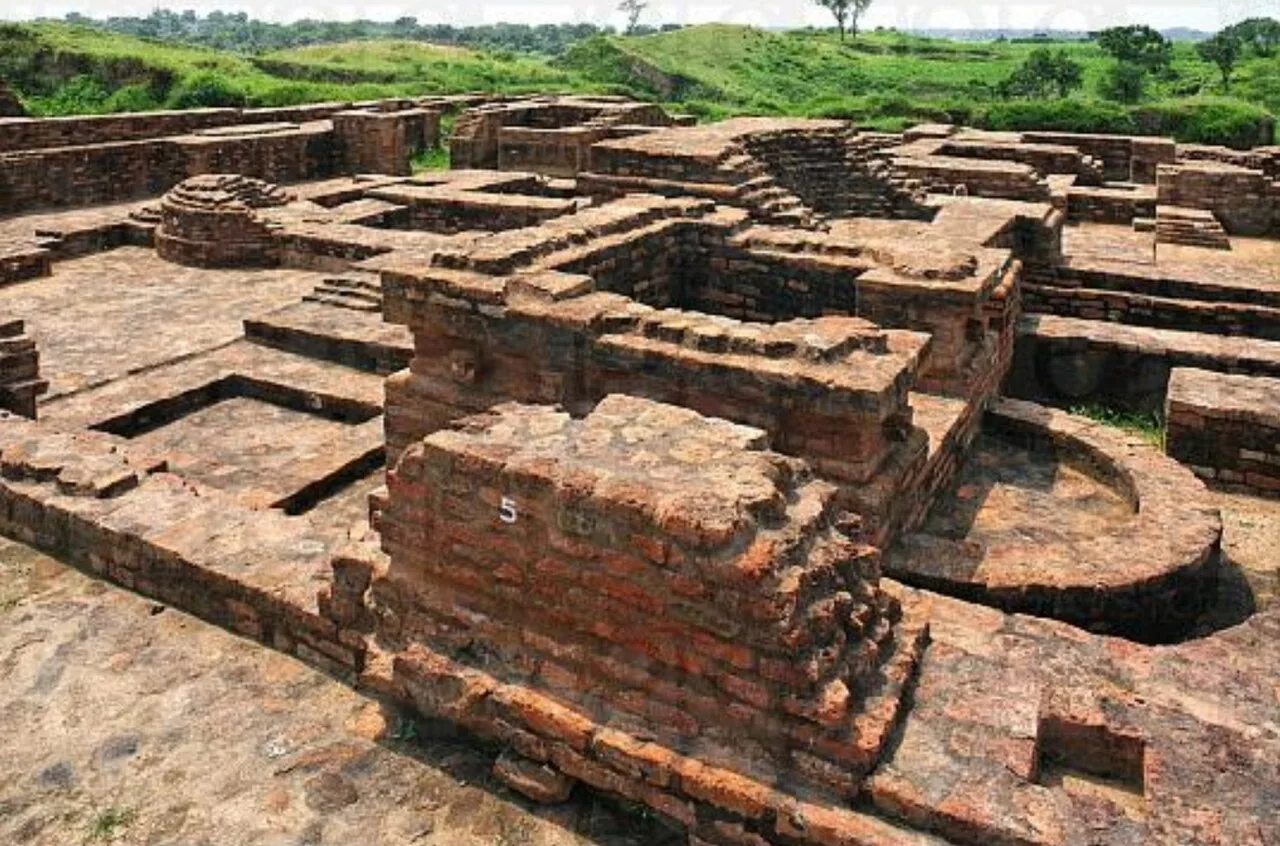
Kaushambi Archaeological Site
Kaushambi Archaeological Site is associated with an ancient city that served as the Vatsa kingdom’s capital and a trading centre on the Ganges Plain, attracting interest for its historical significance.
Key facts · verified by Ghumoopedia editors
- Type of place
- Heritage monument
- Best time to visit
- October to March
- Nearest railway station
- Prayagraj Junction · about 45 km (straight line)
- Nearest airport
- Prayagraj (Bamrauli) Airport · about 36 km (straight line)
- Verified
- 21 Nov 2026
Plan a trip from Kaushambi Archaeological Site — a day-by-day route through places nearby.
In Uttar Pradesh’s Kaushambi district, the archaeological site is linked to Kosambi, known in Pali as Kaushambi. The ancient city became the capital of the Vatsa kingdom, counted among the sixteen mahajanapadas, and an important trading centre on the Ganges Plain. The city stood beside the Yamuna, about 56 kilometres southwest of where it meets the Ganges at Prayaga, now Prayagraj. Its position contributed to its trading role and helped make it a powerful centre for the Vatsa kingdom. The site’s history reflects the importance of both commerce and the kingdom’s seat of power. Uttar Pradesh is India's great heritage heartland: the Taj Mahal, Agra Fort and Fatehpur Sikri of the Mughals; Varanasi's ghats on the Ganga; the Krishna towns of Mathura and Vrindavan; Ayodhya, Prayagraj's Triveni Sangam; the Buddhist circuit of Sarnath, Kushinagar and Shravasti; Lucknow's Nawabi monuments and food; and the terai forests of Dudhwa and Pilibhit. Summers from April to June are very hot (often 43–47°C), the monsoon from July to September is humid with heavy showers, and winter from December to January is cold, with dense morning fog that regularly delays trains and flights by hours. The usual best time to visit is October to March. Timings, fees and access arrangements must be confirmed locally. For official information, see Uttar Pradesh Tourism at https://uptourism.gov.in.
Why it matters
Kaushambi, known as Kosambi in Pali sources, was a major city of the ancient Ganges Plain and the capital of the Vatsa kingdom, one of the sixteen mahajanapadas. Its position on the Yamuna helped connect it with river traffic and regional trade. The archaeological remains offer evidence of urban life, fortification and exchange in early historic India. Buddhist texts also associate Kosambi with the Buddha and with monastic communities, giving the place importance in Buddhist history as well as regional political history. It is an archaeological heritage site in Uttar Pradesh; this account does not claim UNESCO status. Confirm the site’s current protection, management and visitor access with the relevant authority.
Kosambi was an important settlement on the Yamuna, about 56 kilometres southwest of the river’s confluence with the Ganges at ancient Prayaga, present-day Prayagraj. Its river setting supported trade and helped make it a political centre. Ancient literary traditions identify it as the capital of the Vatsa kingdom, one of the sixteen mahajanapadas. Buddhist texts refer to Kosambi and describe visits by the Buddha; they also name Ghosita, a wealthy supporter associated with a monastery there. These accounts are valuable historical traditions, though they are not the same as archaeological evidence for every event they describe. Excavations at the site have revealed successive layers of settlement, including defensive works and remains of buildings, as well as pottery, coins and other objects that indicate urban activity and exchange. The city changed over many centuries as political centres and trade routes shifted. Its prominence diminished, while the ruins survived as archaeological mounds. Modern archaeological investigations, including work by researchers from the University of Allahabad, helped document the site. The exposed remains are fragmentary, and visitors should distinguish visible excavated features from reconstructions or interpretations presented in guide material.
Origin stories & folklore
Traditions offer different explanations for the name Kosambi or Kaushambi. Buddhist religious tradition gives the city a prominent place in accounts of the Buddha’s visits and his teaching community. Ghosita, remembered as a prosperous benefactor, is associated in Buddhist texts with a monastery at Kosambi. These stories form part of the site’s religious and cultural significance, but visitors should treat details as textual or devotional traditions rather than as independently verified episodes in the city’s history.
Architecture & design
The archaeological area is an expanse of mounds and excavated remains rather than a complete standing monument. Excavations have exposed sections of a substantial defensive system, including earthen and brick fortifications; published archaeological accounts describe features such as bastions and gateways. These works reflect the needs of a significant ancient settlement, although the surviving sections do not present a fully readable city plan today. Brick was an important building material, used alongside packed earth. Within the settlement, archaeologists have identified structural remains and layers from different periods, illustrating how buildings and defences were altered or rebuilt over time. The layout should be understood as an archaeological record, not as a restored ancient town: foundations, wall traces and uneven ground may be difficult to interpret without signs or a knowledgeable guide. Weathering and vegetation can obscure details, so visitors should stay on established paths and avoid climbing or removing material.
Important objects & sculptures
Look for exposed brickwork, wall traces and other structural remains that help explain the scale of the ancient settlement. The site’s archaeological importance also comes from finds such as pottery, terracotta objects, coins, seals and beads recovered during excavations. These categories of finds provide evidence for everyday life, craft production and exchange, but they may not be displayed at the ruins themselves. Collections can be held in museums or other institutions, and availability should be checked before planning a visit around them. Read any on-site interpretation carefully: a visible fragment may be only one part of a much larger excavated feature. Do not handle, collect or move pottery or other material.
Explore Kaushambi Archaeological Site slowly and read the interpretation boards, use the official audio guide where available or hire an authorised guide to understand its history. Check opening days, ticket counters and camera rules in advance; many monuments and museums close on one weekday and on some public holidays. Early morning gives softer light, cooler air and smaller crowds. A comfortable itinerary is one main visit in the morning, a local meal at midday and a short nearby stop before an afternoon return. Use the district list on this site to find other places in Kaushambi, but check the route and its condition before combining stops. If a festival is on — such as Dev Deepawali on the Varanasi ghats, Holi in Mathura, Vrindavan and Barsana, the Magh Mela or Kumbh at Prayagraj, Deepotsav in Ayodhya or the Taj Mahotsav in Agra — roads and stays can be busy, and the experience can be unforgettable. Leave no litter: many sites are protected by the communities around them.
Suggested itineraries
Half day: Arrive in the cooler part of the day; spend 1–2 hours walking the accessible remains and reading interpretation; pause for water and a local meal; return. Full day: Visit the archaeological site in the morning for 2–3 hours; take a longer midday rest and meal; add a nearby heritage stop such as Prabhasgiri if access and transport are confirmed; return with time in reserve. Gentler option: Ask locally about the closest suitable drop-off, view the most accessible features with an authorised guide, take frequent seated breaks, and skip uneven or distant sections.
The site lies in a living rural landscape of Kaushambi district, where everyday life continues alongside the archaeological remains. Hindi is widely used; local speech may include regional varieties, and visitors can ask locally which language is most comfortable for conversation. The area’s heritage has Hindu, Buddhist and Jain associations, though there is no need to expect regular performances or ceremonial activity at the ruins. Dress is generally practical for a warm, open-air visit; modest clothing is considerate when visiting nearby religious places. Ask permission before photographing residents, worshippers or private property, and follow local guidance around shrines and community spaces.
Festivals & events
Buddha Purnima, usually in spring, is observed by Buddhists and may draw visitors to Buddhist heritage locations in the wider region; confirm whether any event is actually planned at Kaushambi. Holi in spring and Diwali in autumn are widely observed in the district, though they are not necessarily site festivals. Prayagraj’s major religious gatherings, including the Magh Mela in winter and occasional Kumbh events, can increase regional traffic and demand for accommodation. Festival dates follow religious calendars and vary from year to year. Check local announcements before travelling, and allow extra time if roads or transport are busy.
Local food in Uttar Pradesh includes Lucknow's Awadhi kebabs (galouti and kakori), biryani and sheermal, Agra's petha and bedai-jalebi breakfasts, Mathura's peda and Vrindavan's rabri, Varanasi's kachori-sabzi, tamatar chaat, winter malaiyyo, thick kulhad lassi and Banarasi paan. Ask what is fresh that day; many small eateries cook a limited daily menu. Street food is excellent but rich; choose busy stalls where food is cooked fresh in front of you. In Mathura, Vrindavan and Ayodhya, meat and alcohol are not served near the temples. Remote sites may have no restaurant at all. Carry water and snacks, eat a proper breakfast before long drives, and ask your accommodation for a packed lunch if you are heading out early. Try a home-cooked or local thali meal when you can — it is often the best food on the route. Choose clean places, drink sealed or filtered water, and carry your packaging back with you.
Shopping & local experiences
Shopping around the archaeological remains is likely to be modest. Nearby markets may offer everyday goods, snacks and seasonal produce rather than a dedicated range of heritage souvenirs. In larger district towns or Prayagraj, look for locally made items and regional foods, but ask sellers about origin if buying something presented as a local craft. Do not buy ancient-looking pottery, coins or other objects that may have been removed from archaeological sites. A meal or tea at a local eatery can be a simple way to experience the area; check availability and hygiene locally.
October to March
The nearest principal railway station by straight-line distance is Prayagraj Junction, roughly 45 km away. The nearest operating airport by straight-line distance is Prayagraj (Bamrauli) Airport, roughly 36 km away. These figures are calculated from map coordinates — actual road distance is longer. Agra, Mathura, Lucknow, Kanpur, Prayagraj, Varanasi, Gorakhpur and Jhansi are the main rail hubs; Lucknow and Varanasi have the busiest airports, and western UP is also served from Delhi. For the final leg, UPSRTC buses (including air-conditioned Janrath and Volvo services), private coaches on the expressways, shared autos, e-rickshaws and cycle-rickshaws in the old cities link district towns. In the old cities of Varanasi, Mathura and Lucknow, lanes are too narrow for cars — the last stretch is on foot or by cycle-rickshaw. When comparing train, bus and flight, count the complete door-to-door time: a flight saves the most time only if the onward road transfer is short, while an overnight train can save a hotel night. In December and January, fog can delay trains and flights for hours — keep a buffer before onward connections. The Yamuna, Agra–Lucknow and Purvanchal expressways make road travel fast between the big cities. Book your return before you leave, because seats fill quickly on weekends, festivals and holidays. Current train numbers, timings, return services and fares are not listed here; check IRCTC and NTES for trains and the airline's own schedule for flights. No permit is needed to visit Uttar Pradesh. The Taj Mahal is closed to visitors every Friday, and monument tickets for the Taj, Agra Fort and Fatehpur Sikri are cheaper when bought online on the ASI portal. Jungle safaris in Dudhwa, Pilibhit and Katarniaghat must be booked through the UP forest department's official ecotourism booking, and the parks close for the monsoon, roughly mid-June to mid-November.
Confirm onward and return timings on IRCTC / NTES, the state bus operator or your airline before travel. A dash means current timings or fares have not been verified.
Getting around
The remains are spread across an open archaeological landscape, so expect to walk between visible features. Local autos or hired vehicles may be available in nearby settlements, but availability can be limited; arranging a return ride in advance is sensible. Local buses serve parts of the district, though routes and service frequency should be checked locally. A taxi or hired car from Prayagraj can make the final leg easier, particularly for a group or visitors with limited mobility. Use designated parking where available, and avoid driving onto archaeological ground. There are no visitor boat services at the site.
Hours, tickets & permissions
Entry arrangements can vary with the managing authority and the condition of the archaeological area. Check current opening days, access rules and any ticket requirements before setting out; do not assume that every mound or excavated section is open. Ask whether photography restrictions, permits or a camera fee apply, especially for equipment beyond a personal phone or camera. Carry identification if requested by the authority, and follow instructions from site staff. Confirm current hours and fees directly with the managing authority rather than relying on older travel listings.
Facilities
Facilities at the archaeological area may be limited. Toilets, drinking water, shade, seating and food stalls should not be assumed to be available on site; check locally and carry water and snacks. Small shops or eateries may be found in nearby settlements, while a wider choice of food, cash facilities and accommodation is more likely in larger towns. Parking and guide availability can vary. If you want an authorised guide or need a particular facility, arrange it in advance through the managing authority or a reliable local contact.
Accessibility
The site includes open ground, uneven archaeological surfaces and potentially long walks between features. Paths may be unpaved, and shade and seating can be sparse, especially in hot weather. Wheelchair and stroller access may therefore be difficult; do not assume that ramps, smooth paths or accessible toilets are provided. Older visitors and anyone with balance or mobility concerns may prefer a short visit focused on the easiest-to-reach remains, with a companion and frequent rests. Ask the site staff about current ground conditions and vehicle drop-off options. Avoid climbing walls or crossing unstable excavated areas.
No permit is needed to visit Uttar Pradesh. The Taj Mahal is closed to visitors every Friday, and monument tickets for the Taj, Agra Fort and Fatehpur Sikri are cheaper when bought online on the ASI portal. Jungle safaris in Dudhwa, Pilibhit and Katarniaghat must be booked through the UP forest department's official ecotourism booking, and the parks close for the monsoon, roughly mid-June to mid-November. Carry a photo ID at all times and save the emergency number 112 and your accommodation's contact offline. Summer heat is a serious risk — carry water, cover your head and avoid midday sightseeing. Crowds at ghats, temples and festivals can be overwhelming; agree a meeting point with your group. Watch your belongings in crowds and on public transport, and follow posted instructions.
Photography
Early morning or late afternoon can give softer light and reduce heat on the exposed mounds. From established paths, frame the brick remains and broader landscape without climbing on walls or entering restricted areas. Personal photography may be allowed, but confirm current rules for cameras, tripods and any commercial use with site staff. Do not fly a drone without the required permissions and confirmation that flight is lawful in the area. Ask before photographing local residents, and avoid interrupting worship or private activity at nearby religious places.
Choose a stay by the full journey to Kaushambi Archaeological Site, not just the district name. Agra, Lucknow and Varanasi have the widest choice; in Varanasi, a riverside guesthouse puts you on the ghats but involves walking through narrow lanes with luggage, while pilgrim towns have dharamshalas and ashram stays. In summer, check air-conditioning and backup power; in the monsoon, check that the property is accessible if roads flood. Book in advance for weekends, festivals and the peak season (October to March). Confirm the exact location, meals included, check-in time and cancellation terms in writing. Avoid sending money to unverified contacts or touts at stations. Carry some cash, as card and digital payments can be unreliable in remote areas.
Prabhasgiri, a Jain pilgrimage site in Kaushambi district, is a possible nearby heritage stop; confirm its access arrangements and route locally. Kara, a historic settlement in the district, is another option for visitors interested in regional religious and cultural heritage. For a broader day or overnight extension, Prayagraj has the Triveni Sangam and several established cultural attractions, including Anand Bhavan and the Allahabad Museum. These are not immediate stops at the archaeological site, so check road conditions and allow adequate travel time before combining them. Verify opening and access details directly with each destination.
For couples, Kaushambi Archaeological Site rewards a slow pace: arrive early for soft light and fewer crowds, share a local meal and keep the evening free. Sunrise at the Taj Mahal, an evening boat during the Varanasi aarti or a Nawabi dinner in old Lucknow makes the trip memorable. Public displays of affection can be frowned upon in conservative communities and at religious sites, so be discreet. Keep a buffer in your itinerary, because weather and road conditions can delay plans.
Q: How much time should I allow for a visit? A: Allow a few hours to explore the visible remains at an unhurried pace; add time for travel and any nearby stop. Q: When is the best season to visit? A: October to March is generally more comfortable than the very hot summer or rainy monsoon months. Check weather conditions before travelling. Q: Is there an entry ticket, and what are the rules? A: Entry arrangements can change. Confirm current access, fees, photography rules and any permit requirements with the managing authority. Q: Is the site suitable for children and elderly visitors? A: Children may enjoy the open-air setting with supervision. Uneven ground and limited shade can make walking challenging for elderly visitors or anyone with reduced mobility. Q: Can I stay near the site? A: Accommodation may be limited in the immediate area. Check locally, or consider staying in a larger nearby town such as Prayagraj and arranging transport.
Be the first to share photos, stories, advice or a helpful contact for Kaushambi Archaeological Site.
Loading…