
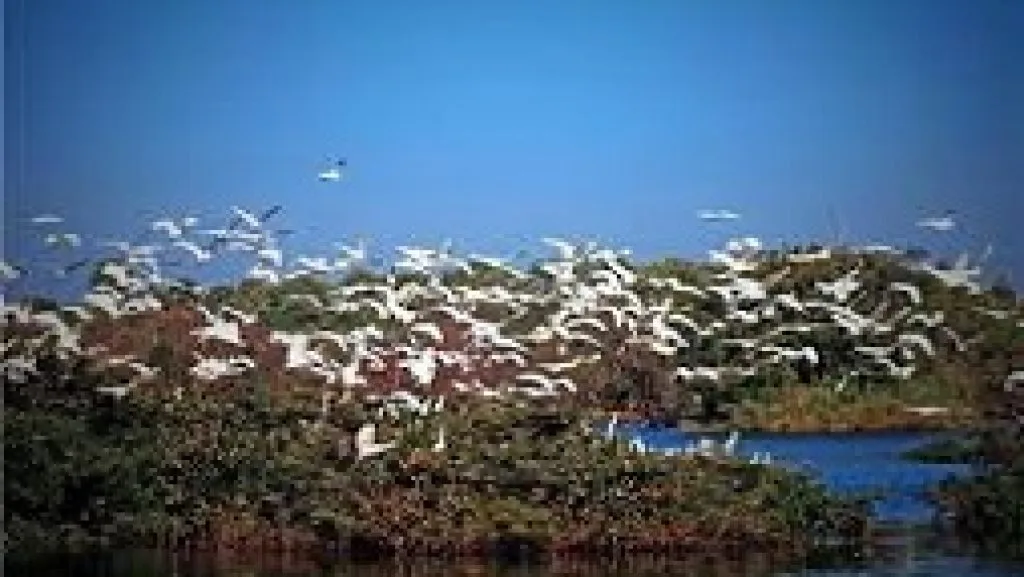
Samaspur Bird Sanctuary
In Uttar Pradesh’s Raebareli district, Samaspur is a wetland reserve where visitors can see resident birds, long-distance migrants and a variety of fish.
Key facts · verified by Ghumoopedia editors
- Type of place
- National park / sanctuary
- Best time to visit
- October to March
- Nearest railway station
- Raebareli Junction · about 30 km (straight line)
- Nearest airport
- Prayagraj (Bamrauli) Airport · about 71 km (straight line)
- Verified
- 21 Nov 2026
Plan a trip from Samaspur Bird Sanctuary — a day-by-day route through places nearby.
In Raebareli district, Uttar Pradesh, Samaspur Bird Sanctuary lies close to Salon. Established in 1987, it covers about 780 hectares and is around 122 km from Lucknow, beside the Lucknow–Varanasi highway. Unchahar is the nearest railway station, while Fursatganj is the nearest airport. More than 250 bird varieties can be seen here. Some migrants travel over 5,000 km to reach the sanctuary, among them greylag geese, pintails, common teals, Eurasian wigeons, northern shovelers and ruddy shelducks, known locally as Surkhab. Birds found locally include knob-billed ducks, lesser whistling-ducks, Indian spot-billed ducks, Eurasian spoonbills, kingfishers and vultures. The lake holds twelve varieties of fish. Uttar Pradesh is India's great heritage heartland: the Taj Mahal, Agra Fort and Fatehpur Sikri of the Mughals; Varanasi's ghats on the Ganga; the Krishna towns of Mathura and Vrindavan; Ayodhya, Prayagraj's Triveni Sangam; the Buddhist circuit of Sarnath, Kushinagar and Shravasti; Lucknow's Nawabi monuments and food; and the terai forests of Dudhwa and Pilibhit. Summers from April to June are very hot (often 43–47°C), the monsoon from July to September is humid with heavy showers, and winter from December to January is cold, with dense morning fog that regularly delays trains and flights by hours. The usual best time to visit is October to March. Timings, fees and access arrangements must be confirmed locally. For official information, see Uttar Pradesh Tourism at https://uptourism.gov.in.
Why it matters
Samaspur Bird Sanctuary is a protected wetland near Salon in Raebareli district, Uttar Pradesh. Established in 1987 across about 780 hectares, it is important locally as a lake-and-wetland habitat and regionally as a seasonal refuge for resident and migratory waterbirds. The sanctuary is associated with more than 250 varieties of birds, including species that travel long distances to reach the area; sightings vary with season and conditions. The Ramsar Convention lists Samaspur as a Wetland of International Importance, an international recognition of its wetland value. Its significance also includes the lake’s recorded diversity of fish. Visitors should follow current conservation rules and avoid disturbing wildlife.
Samaspur’s history as a protected natural area begins with its establishment as a bird sanctuary by the Uttar Pradesh authorities in 1987. The protected area covers about 780 hectares and centres on a lake and adjoining wetland habitats. Available summaries describe the sanctuary chiefly through its wildlife and conservation role; they do not identify a builder, an earlier royal estate, or a documented sequence of historic construction, so such origins should not be assumed. The site has since become known for both resident birds and seasonal migrants, with more than 250 varieties reported. Species recorded in the area include greylag goose, pintail, common teal, Eurasian wigeon, northern shoveler and ruddy shelduck, alongside local waterbirds. The lake is also reported to support twelve varieties of fish. Its later recognition under the Ramsar Convention as a Wetland of International Importance gives it an international conservation designation in addition to its state sanctuary status. The wetland’s ecology changes with water levels and seasons, so bird numbers and the character of the habitat can vary from year to year. Visitors should consult local management for current conservation work and access arrangements.
Spend unhurried time at Samaspur Bird Sanctuary: walk the marked paths, use official viewpoints and ask locally whether a guide, entry ticket or forest permission is needed. Weather can change quickly, so carry a rain layer even on a clear morning. A comfortable itinerary is one main visit in the morning, a local meal at midday and a short nearby stop before an afternoon return. Use the district list on this site to find other places in Raebareli, but check the route and its condition before combining stops. If a festival is on — such as Dev Deepawali on the Varanasi ghats, Holi in Mathura, Vrindavan and Barsana, the Magh Mela or Kumbh at Prayagraj, Deepotsav in Ayodhya or the Taj Mahotsav in Agra — roads and stays can be busy, and the experience can be unforgettable. Leave no litter: many sites are protected by the communities around them.
Suggested itineraries
Half day: Arrive in the morning; spend 2–3 hours walking permitted paths and observing birds from designated viewpoints; pause for a meal in a nearby town before returning. Full day: Visit in the morning for 3–4 hours of quiet birdwatching; take a midday break in Salon or another nearby town; spend the afternoon on a short, locally confirmed visit to Dalmau or Raebareli town, then return. Gentler option: Ask locally about the closest permitted viewing point, spend a shorter period there with frequent rests, and arrange a vehicle to avoid unnecessary walking.
The sanctuary lies in the Awadh region, where Hindi and Awadhi are widely used in everyday life; Urdu is also part of the wider regional cultural landscape. Local customs are shaped by village life, agriculture and seasonal observances rather than by a distinct visitor ritual at the sanctuary. Religious and family festivals across Raebareli commonly bring together devotional music, prayers and shared meals. Traditional clothing varies with occupation, weather and occasion, and there is no special dress associated with visiting the wetland. Birdwatching is a growing way for visitors to engage with the landscape, but the sanctuary is first a protected habitat, not a performance or festival venue.
Local communities
People in villages around the sanctuary are connected to the landscape through agriculture, local trade, transport and services for visitors. Their livelihoods may be affected by wetland conditions and conservation measures, so visitors should respect local guidance and avoid entering fields or private land without permission. The wider Raebareli area includes diverse rural communities, and Hindi and Awadhi are commonly heard. Do not assume that residents are available as guides or photographers; ask politely and agree on arrangements before accepting services. Support locally run food and transport businesses where practical, while following sanctuary rules intended to protect wildlife and habitat.
Festivals & events
No major annual festival is specifically identified as being held inside Samaspur Bird Sanctuary. In Raebareli and nearby towns, Hindu festivals such as Holi, Diwali and Navratri are observed seasonally, while Eid is celebrated by Muslim communities. These occasions can bring activity to town markets and places of worship, but do not necessarily affect sanctuary access. Regional fairs and religious gatherings may take place locally in different years; confirm details with residents or district sources before planning around one. During busy festival periods, transport and accommodation in larger towns may be more in demand. Keep celebrations and amplified sound away from the wetland and wildlife.
Local food in Uttar Pradesh includes Lucknow's Awadhi kebabs (galouti and kakori), biryani and sheermal, Agra's petha and bedai-jalebi breakfasts, Mathura's peda and Vrindavan's rabri, Varanasi's kachori-sabzi, tamatar chaat, winter malaiyyo, thick kulhad lassi and Banarasi paan. Ask what is fresh that day; many small eateries cook a limited daily menu. Street food is excellent but rich; choose busy stalls where food is cooked fresh in front of you. In Mathura, Vrindavan and Ayodhya, meat and alcohol are not served near the temples. Remote sites may have no restaurant at all. Carry water and snacks, eat a proper breakfast before long drives, and ask your accommodation for a packed lunch if you are heading out early. Try a home-cooked or local thali meal when you can — it is often the best food on the route. Choose clean places, drink sealed or filtered water, and carry your packaging back with you.
Shopping & local experiences
There is no need to expect a dedicated souvenir market at the sanctuary. Look for everyday goods and local snacks in Salon or Raebareli town, and ask residents about seasonal produce or locally made items. Markets in the district may offer household crafts and regional foods, but availability varies. If buying a memento, choose items made and sold locally rather than products derived from wildlife, feathers or plants. Carry reusable water bottles and bags where practical, and take rubbish with you. A meal at a locally run eatery is a simple way to support nearby businesses.
Samaspur is a wetland landscape centred on a lake, with marshy margins and surrounding rural land. Its water and vegetation provide habitat for waterbirds, fish and other wetland wildlife. More than 250 varieties of birds are reported from the sanctuary. Migratory species recorded include greylag goose, pintail, common teal, Eurasian wigeon, northern shoveler and ruddy shelduck; local birds include knob-billed duck, lesser whistling-duck, Indian spot-billed duck, Eurasian spoonbill, kingfishers and vultures. These are recorded species, not guaranteed sightings. Bird activity and water levels change through the year, and quiet observation improves the chance of seeing wildlife without disturbing it. The lake is reported to have twelve varieties of fish.
October to March
The nearest principal railway station by straight-line distance is Raebareli Junction, roughly 30 km away. The nearest operating airport by straight-line distance is Prayagraj (Bamrauli) Airport, roughly 71 km away. These figures are calculated from map coordinates — actual road distance is longer. Agra, Mathura, Lucknow, Kanpur, Prayagraj, Varanasi, Gorakhpur and Jhansi are the main rail hubs; Lucknow and Varanasi have the busiest airports, and western UP is also served from Delhi. For the final leg, UPSRTC buses (including air-conditioned Janrath and Volvo services), private coaches on the expressways, shared autos, e-rickshaws and cycle-rickshaws in the old cities link district towns. In the old cities of Varanasi, Mathura and Lucknow, lanes are too narrow for cars — the last stretch is on foot or by cycle-rickshaw. When comparing train, bus and flight, count the complete door-to-door time: a flight saves the most time only if the onward road transfer is short, while an overnight train can save a hotel night. In December and January, fog can delay trains and flights for hours — keep a buffer before onward connections. The Yamuna, Agra–Lucknow and Purvanchal expressways make road travel fast between the big cities. Book your return before you leave, because seats fill quickly on weekends, festivals and holidays. Current train numbers, timings, return services and fares are not listed here; check IRCTC and NTES for trains and the airline's own schedule for flights. No permit is needed to visit Uttar Pradesh. The Taj Mahal is closed to visitors every Friday, and monument tickets for the Taj, Agra Fort and Fatehpur Sikri are cheaper when bought online on the ASI portal. Jungle safaris in Dudhwa, Pilibhit and Katarniaghat must be booked through the UP forest department's official ecotourism booking, and the parks close for the monsoon, roughly mid-June to mid-November.
Confirm onward and return timings on IRCTC / NTES, the state bus operator or your airline before travel. A dash means current timings or fares have not been verified.
Getting around
Samaspur is near Salon in Raebareli district, on the Lucknow–Varanasi highway corridor. Arrange the final leg from Salon or another district town by local bus, shared vehicle, auto-rickshaw or taxi, checking locally which services reach the sanctuary entrance. Raebareli Junction is the nearest principal railway station by straight-line distance; Unchahar is also identified as a nearby rail point. Road travel may take longer than map distance suggests. Once there, expect to explore on foot along paths and designated viewing points. Confirm whether parking is available and do not assume boats operate on the lake.
Hours, tickets & permissions
Entry arrangements may depend on the season, the condition of the site and conservation requirements. A ticket, permission from sanctuary staff or other local entry procedure may apply; camera rules can also vary. Do not rely on old online listings for access information. Before travelling, confirm current visiting hours, fees, entry requirements and any temporary closures with the sanctuary’s managing authority or local administration. Carry identification if requested, and follow staff instructions at gates and designated viewing areas. No opening hours or charges are stated here because they can change.
Facilities
Facilities within the sanctuary may be limited and can change. Check locally whether toilets, drinking water, a staffed entry point, marked paths, seating or interpretation material are available. Food options are more likely in Salon and nearby towns than inside the protected area; carry water and snacks, and take all packaging back out. Local guides may be available, but do not assume that one is on duty. Parking, mobile reception and accessible facilities should also be confirmed before setting out. ATMs and a broader choice of shops are more likely in larger towns such as Raebareli than at the sanctuary.
Accessibility
The sanctuary is a natural wetland, so paths may be uneven, muddy or affected by seasonal water and rain. Walking distances and surfaces can vary, and shade or seating may be limited. Wheelchair and stroller access should not be assumed; check current path conditions and facilities with local management before travelling. Older visitors and anyone with limited mobility may prefer a brief visit to the nearest permitted viewpoint, with a companion and transport arranged for the approach. Wear stable footwear and carry water. Avoid stepping onto soft lake edges or leaving marked areas, even when a shorter route seems possible.
No permit is needed to visit Uttar Pradesh. The Taj Mahal is closed to visitors every Friday, and monument tickets for the Taj, Agra Fort and Fatehpur Sikri are cheaper when bought online on the ASI portal. Jungle safaris in Dudhwa, Pilibhit and Katarniaghat must be booked through the UP forest department's official ecotourism booking, and the parks close for the monsoon, roughly mid-June to mid-November. Carry a photo ID at all times and save the emergency number 112 and your accommodation's contact offline. Summer heat is a serious risk — carry water, cover your head and avoid midday sightseeing. Crowds at ghats, temples and festivals can be overwhelming; agree a meeting point with your group. Stay on marked paths, keep away from cliff edges and fast water, and never approach wild animals.
Visitor rules
Follow instructions from sanctuary staff and remain on permitted paths and viewing areas. Keep voices low, do not chase, feed or handle birds, and never disturb nests or other wildlife. Take litter away; avoid single-use plastic where possible and do not leave food waste. Wear practical clothing and closed, comfortable footwear suited to wet or uneven ground. Ask before photographing people, and check locally for restrictions on cameras, tripods or other equipment. Do not enter closed or restricted areas, collect plants or animals, or use loud music. Rules may change seasonally, so confirm them at the entrance.
Photography
Soft early-day light can make bird and wetland photography more comfortable, while quieter conditions may help visitors observe wildlife. Use only official viewpoints and permitted paths; the best accessible view can depend on water levels and vegetation. Photography may be subject to local restrictions, so check with staff before using specialist equipment. Do not approach birds for a closer frame, use playback calls, or disturb feeding and nesting behaviour. Drone use can be restricted in protected areas and may require formal permission; do not launch one without explicit approval. Ask people before taking their photographs and respect privacy.
Choose a stay by the full journey to Samaspur Bird Sanctuary, not just the district name. Agra, Lucknow and Varanasi have the widest choice; in Varanasi, a riverside guesthouse puts you on the ghats but involves walking through narrow lanes with luggage, while pilgrim towns have dharamshalas and ashram stays. In summer, check air-conditioning and backup power; in the monsoon, check that the property is accessible if roads flood. Book in advance for weekends, festivals and the peak season (October to March). Confirm the exact location, meals included, check-in time and cancellation terms in writing. Avoid sending money to unverified contacts or touts at stations. Carry some cash, as card and digital payments can be unreliable in remote areas.
Salon is the closest town commonly associated with the sanctuary and can be useful for local services. Within Raebareli district, Dalmau is a historic town on the Ganga, offering a different riverside landscape and a change of pace. Raebareli town is another practical stop for food, transport and district-level services. Unchahar is a nearby rail point mentioned in travel information, though it is not itself a wildlife attraction. Combining destinations requires checking road conditions and travel time locally; do not assume that a short map distance means an easy same-day connection. Choose one nearby stop rather than rushing between several.
For couples, Samaspur Bird Sanctuary rewards a slow pace: arrive early for soft light and fewer crowds, share a local meal and keep the evening free. Sunrise at the Taj Mahal, an evening boat during the Varanasi aarti or a Nawabi dinner in old Lucknow makes the trip memorable. Public displays of affection can be frowned upon in conservative communities and at religious sites, so be discreet. Keep a buffer in your itinerary, because weather and road conditions can delay plans.
Q: How much time should I allow for a visit? A: Allow a few hours for a relaxed birdwatching visit; add time for the road journey and any nearby stop. Q: When is the best season to visit? A: October to March is generally the most comfortable season in Uttar Pradesh, and winter is a useful period for looking for migratory birds. Sightings are never guaranteed. Q: Is there an entry ticket or permission requirement? A: Rules can change. Confirm current entry procedures, any ticket or permission requirement, and camera rules with the managing authority before travelling. Q: Is the sanctuary suitable for children and older visitors? A: It can be enjoyable for families, but paths may be uneven and facilities limited. Keep children close and consider a short visit to a permitted viewpoint for anyone with limited mobility. Q: Where can I stay nearby? A: Check accommodation availability in Raebareli and other nearby towns before travelling. Options immediately beside the sanctuary may be limited.
Be the first to share photos, stories, advice or a helpful contact for Samaspur Bird Sanctuary.
Loading…