
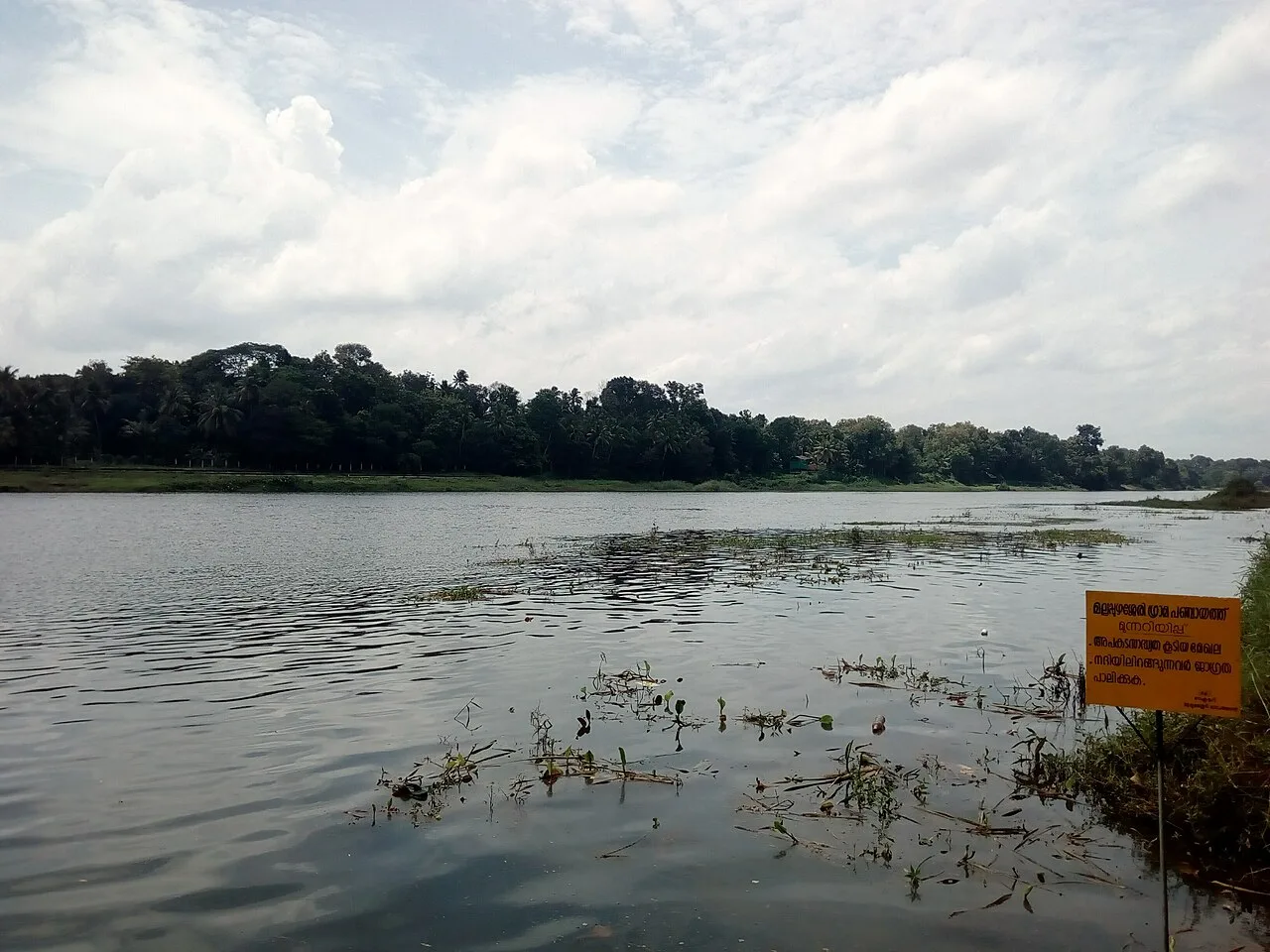
Aranmula Village
Aranmula, a village in Kerala’s Pathanamthitta district, is recognised as a temple town and attracts visitors for its religious character.
Key facts · verified by Ghumoopedia editors
- Type of place
- Temple / pilgrimage site
- Best time to visit
- September to March; June to August for monsoon Ayurveda and green landscapes
- Nearest railway station
- Chengannur (for Sabarimala) · about 10 km (straight line)
- Nearest airport
- Cochin International Airport · about 95 km (straight line)
- Verified
- 21 Nov 2026
Plan a trip from Aranmula Village — a day-by-day route through places nearby.
Aranmula is a village in Pathanamthitta district, Kerala. It is also known as a temple town, making its village setting and religious character the central features of the place. Visitors may come to experience this association with temples. The village is situated within Kerala’s Pathanamthitta district. Describing Aranmula as a temple town offers another way to understand its identity and why it may interest people seeking places associated with temples. These details present Aranmula as both a village and a temple town in Kerala. Kerala packs a lot into a narrow strip: the backwaters and houseboats of Alappuzha and Kumarakom, the tea hills of Munnar and the spice forests of Thekkady, the beaches of Kovalam, Varkala and Bekal, the colonial and Jewish heritage of Fort Kochi, and living art forms — Kathakali, Theyyam, Mohiniyattam and temple festivals with caparisoned elephants. Kerala is warm and humid at sea level all year. The southwest monsoon from June to September brings very heavy rain, and the northeast monsoon adds showers in October and November; the hill stations of Munnar, Wayanad and Vagamon are cool year-round and cold on winter nights. The usual best time to visit is September to March; June to August for monsoon Ayurveda and green landscapes. For official information, see Kerala Tourism at https://www.keralatourism.org.
Why it matters
Aranmula is best known as the home of the Parthasarathy Temple, a major Vaishnava place of worship beside the Pampa River in Pathanamthitta district. The temple is traditionally counted among the 108 Divya Desams praised in the Tamil hymns of the Alvar saints, giving it importance to Vaishnava pilgrims beyond Kerala. Aranmula is also associated with the annual Uthrittathi boat race and the Aranmula kannadi, a distinctive handmade metal mirror. The mirror-making craft has received a Geographical Indication (GI) tag; that recognition applies to the craft, not to the temple. The village’s religious life, river traditions and craft heritage are closely connected.
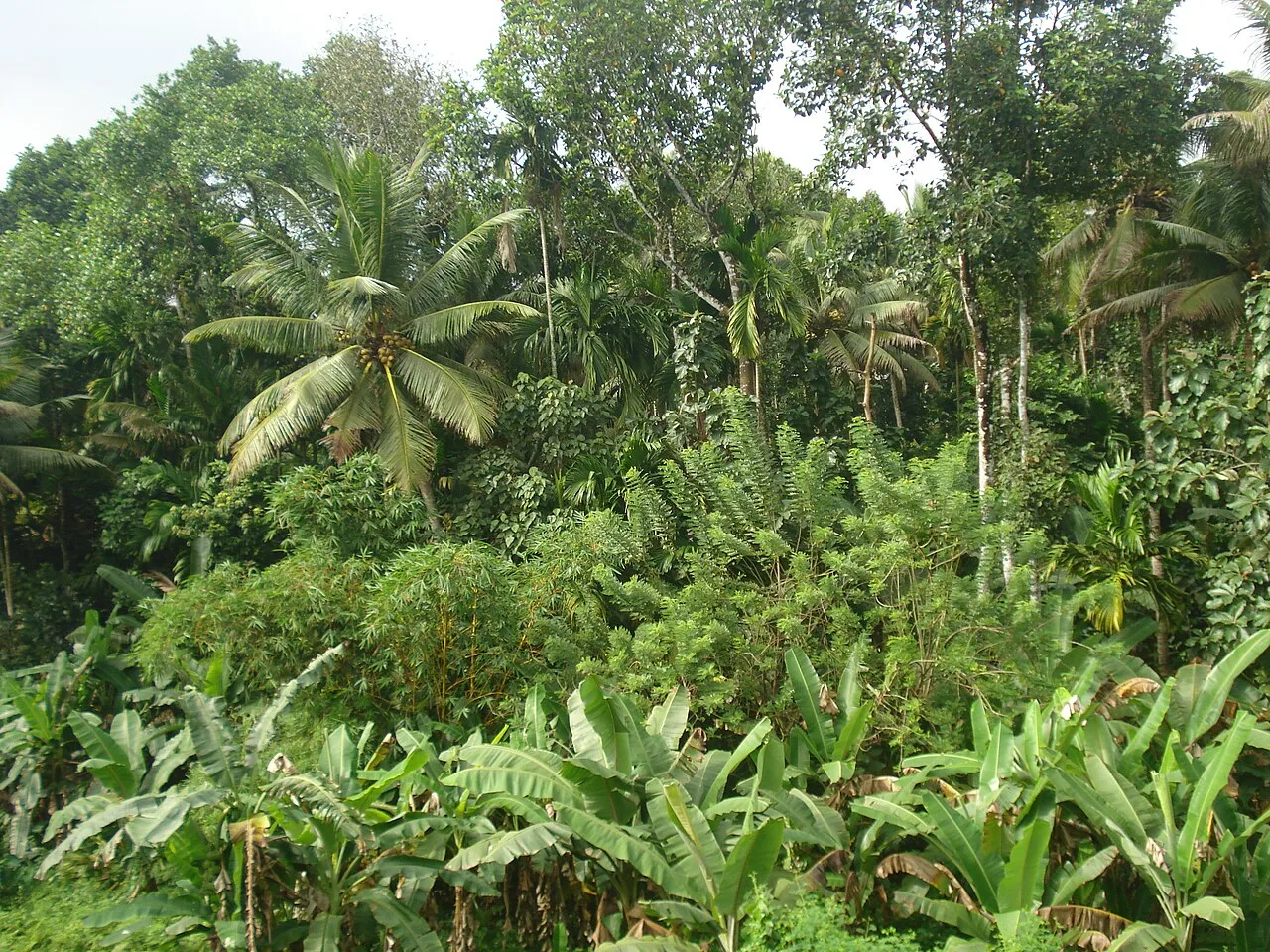
The history of Aranmula’s temple is intertwined with Vaishnava worship in Kerala. Its identification as one of the 108 Divya Desams rests on the Tamil devotional tradition associated with the Alvar saints; the temple’s exact foundation date and the identity of its original builders are not securely established in commonly available accounts. Local tradition connects the shrine to the Pandavas, but that is a sacred origin story rather than a verified construction record. Over time, the temple became an important regional centre of worship, drawing pilgrims from across Kerala and beyond. Its rituals and annual observances have also shaped the village’s calendar and river culture. Like many active Kerala temples, it has undergone repairs and upkeep across generations; visitors should not assume that every part visible today belongs to one historical period. Aranmula’s history is also linked to the making of its distinctive metal mirrors, produced by local artisan families. The craft is now recognised with a GI tag, while the Uthrittathi boat race and Vallasadya continue to connect temple observances with the Pampa and the village community.
Origin stories & folklore
According to local tradition, the Pandavas established temples in Kerala during their travels after the Mahabharata war, and Aranmula is linked particularly with Arjuna. The shrine’s name and its association with Parthasarathy—Krishna as Arjuna’s charioteer—are understood through this sacred narrative. Another widely told tradition says that the temple’s image was brought to Aranmula on a raft made from six pieces of bamboo; the name Aranmula is sometimes explained through this story. These accounts are important to local devotion, but they should be understood as legend rather than confirmed historical evidence. Stories about the Pampa River, the deity and the boat community remain part of how residents explain the village’s religious identity.
Architecture & design
The Parthasarathy Temple follows the traditional Kerala temple vocabulary, with a sacred inner shrine, surrounding ritual spaces and a compound organised around worship. Its layout is suited to circumambulation and festival processions. The central sanctum, or sreekovil, is the focus of devotion; visitors may also see familiar Kerala temple features such as the surrounding nalambalam, entrance structures and ritual fittings. Timber, stone and tiled or metal-covered roof forms are characteristic of the region’s temple building tradition, though the materials and age of individual parts can vary after repairs. The temple stands close to the Pampa River, whose presence shapes the setting and the village’s ceremonial life. Rather than a monumental stone complex, it is an active place of worship whose architecture is experienced through the movement between shrine, courtyard and festival spaces. Access to inner areas is governed by temple custom, so visitors should follow local directions.
Important objects & sculptures
The principal sacred focus is the image of Parthasarathy, Krishna understood as Arjuna’s charioteer. Worshippers may also notice the temple’s ritual fittings and offerings used in daily and festival observances, though access and viewing conditions depend on the service underway. The shrine is an active place of worship, not a museum, and its sacred image should be approached respectfully rather than treated as an exhibit. Aranmula’s famous handmade metal mirror is made by artisan families in the village, not displayed as a temple object; visitors interested in it should ask locally about responsible craft visits or sellers. Do not enter restricted areas to inspect objects more closely.
Religious significance
The temple is dedicated to Parthasarathy, a form of Krishna associated with his role as Arjuna’s charioteer in the Mahabharata. For Vaishnava worshippers, Aranmula is a significant pilgrimage destination and is traditionally counted among the 108 Divya Desams. Worship includes offerings and customary services conducted by temple priests; exact participation rules are determined by temple practice. The Pampa River and the temple’s annual observances are closely connected to local devotion. Vallasadya, a ceremonial feast associated with the snake-boat community, expresses the relationship between worship, hospitality and river traditions. Visitors who are not familiar with local customs should ask before joining a ritual, offering anything or entering a worship area, and should respect any restrictions on access.
The heart of a visit to Aranmula Village is meeting the artisans at work. Ask to see each stage of the work, from raw material to finishing; most families work at home or in small courtyard workshops, and a single piece can take hours or days. Many households and cooperative societies welcome visitors who show genuine interest, but this is a working village, not a museum: ask before entering a home or workshop, keep visits short during busy hours, and accept that some families may be away at fairs or markets. Buying directly from the maker or a registered cooperative is the best way to support the craft. Where a product carries a Geographical Indication (GI) tag or a handloom mark, ask for it; prices for handmade work reflect the time and skill involved, so bargain gently, if at all. Some workshops offer short hands-on sessions — ask locally rather than expecting a fixed schedule.
Suggested itineraries
Half day: Visit the Parthasarathy Temple; spend time at the riverfront; ask locally about an Aranmula mirror craft visit (about 3–4 hours). Full day: Visit the temple; explore the Pampa riverbank and village; arrange a respectful craft visit; have a local meal; finish with a nearby temple or cultural stop (about 6–8 hours). Gentler option: Arrange a vehicle drop near the temple entrance, visit the shrine and a nearby accessible riverside viewpoint, and keep walking to a minimum; confirm access and seating locally.
Aranmula’s living culture brings together temple worship, river life and skilled craft. The village is widely associated with its handmade metal mirrors, produced by artisan families using a specialised process, and with the snake boats that take part in local ceremonial events. Malayalam is the principal language of everyday life; English may be understood by some people working with visitors. Temple observances include devotional music and ritual performance, while festivals bring processions, shared meals and boat traditions into public view. Dress is generally modest around the shrine, and visitors should ask before entering homes or workshops. These are working and worshipping spaces, not staged attractions, so a courteous, unhurried approach is appreciated.
Festivals & events
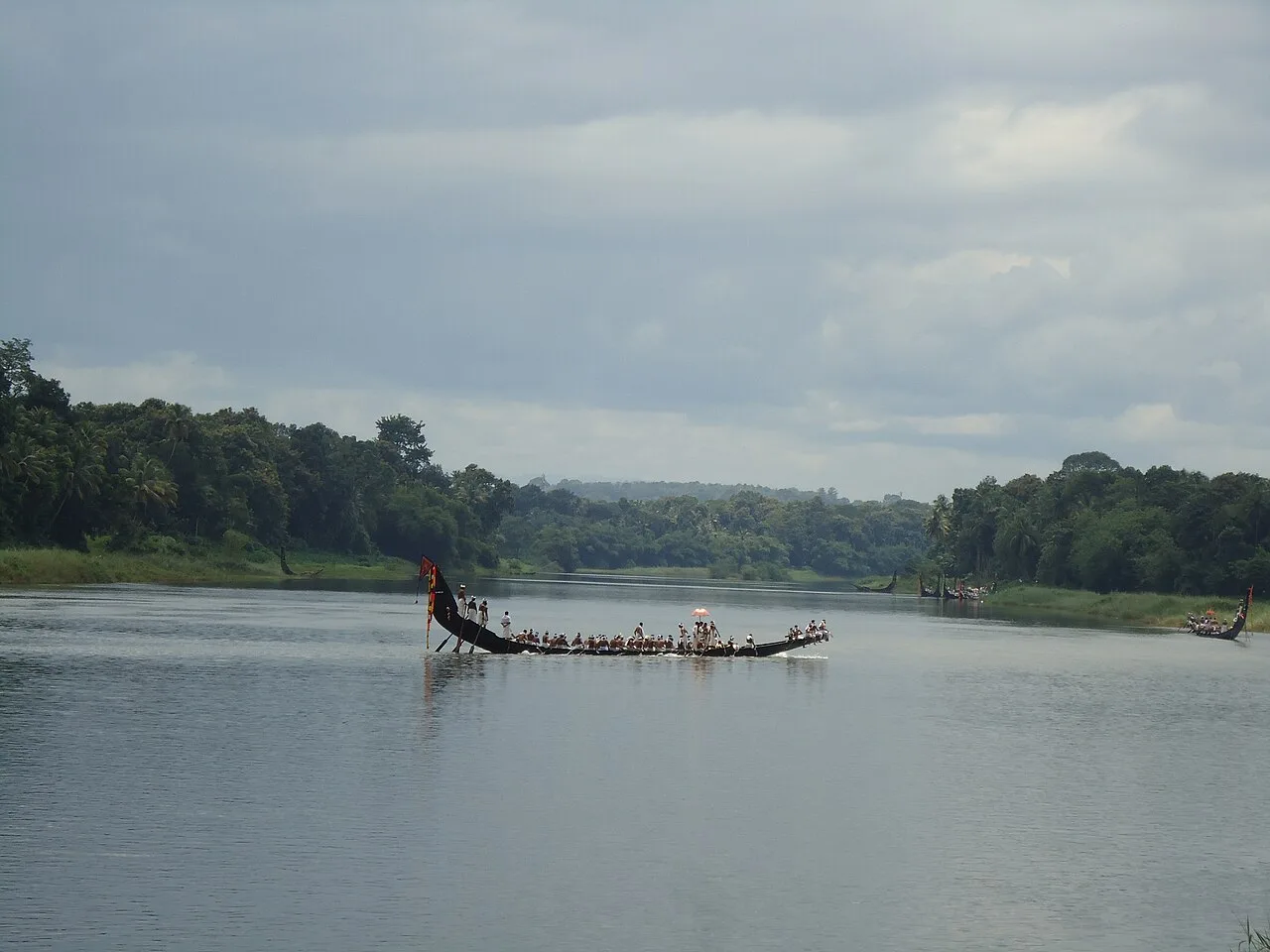
The Uthrittathi Vallamkali, or Aranmula boat race, is held during the Onam season, usually in August or September, on the Pampa River. Long snake boats, accompanied by traditional songs, make it a major community event and draw large crowds; roads and viewing areas can become busy. Vallasadya, a ceremonial feast associated with the temple and the boatmen, is also an important part of Aranmula’s religious calendar and is observed during the Malayalam monsoon season. The temple has annual festival observances as well. Seasons and arrangements can vary, so check locally before travelling, especially if you need quieter access or specific viewing arrangements.
Village food in Kerala is home cooking: appam with stew, puttu with kadala curry, idiyappam, the vegetarian sadya served on a banana leaf, Kerala parotta with beef or chicken fry, Malabar biryani and pathiri in the north, karimeen pollichathu (pearl-spot fish in banana leaf), toddy-shop fish curry, banana chips and many kinds of payasam. Aranmula Village itself may have only tea stalls and small eateries, so ask your host or guide where to eat, or arrange a home-cooked meal in advance — it is often the highlight of a village visit. Carry water and a snack if you plan to spend the whole day, and eat your main meal in the nearest town if no local option is open.
Shopping & local experiences
Aranmula’s best-known local craft is the Aranmula kannadi, a handmade metal mirror produced by skilled artisan families. Buy from a maker or a reputable local seller, ask about the craft’s origin and handling, and look for the GI identification where applicable. Workshop visits are not guaranteed; ask permission and accept that artisans may be working or away. Small village shops may carry devotional items and everyday goods, while broader shopping choices are available in nearby towns. Local meals and traditional feast experiences may be available around festival periods, but arrangements should be confirmed locally.
September to March; June to August for monsoon Ayurveda and green landscapes
The nearest principal railway station by straight-line distance is Chengannur (for Sabarimala), roughly 10 km away. The nearest operating airport by straight-line distance is Cochin International Airport, roughly 95 km away. These figures are calculated from map coordinates — actual road distance is longer. Thiruvananthapuram, Kollam, Kottayam, Ernakulam, Thrissur, Shoranur, Kozhikode and Kannur are the main rail stops along the coast line; Kochi, Thiruvananthapuram, Kozhikode and Kannur have international airports. Aranmula Village is a village, so the last stretch is by road: KSRTC buses (from ordinary to air-conditioned Swift services), fast private buses, metered autos, app cabs and the Water Transport Department's public ferries in the backwaters reach the nearest town, and from there a shared auto, local bus or reserved taxi covers the final few kilometres. Village roads can be narrow and unpaved; a taxi hired for the day from the nearest town is the simplest way to combine Aranmula Village with nearby sights and get back before dark. When comparing train, bus and flight, count the complete door-to-door time: a flight saves the most time only if the onward road transfer is short, while an overnight train can save a hotel night. Book your return before you leave, because seats fill quickly on weekends, festivals and holidays. Current train numbers, timings, return services and fares are not listed here; check IRCTC and NTES for trains and the airline's own schedule for flights. No permit is needed to visit Kerala. Several major temples, including Sree Padmanabhaswamy in Thiruvananthapuram and Guruvayur, admit only Hindus and enforce a strict dress code — men wear a mundu (dhoti) and remove shirts, women wear a saree or long skirt. Forest activities in Periyar, Eravikulam, Silent Valley, Parambikulam and Thattekad must be booked with the Kerala Forest Department, and Eravikulam National Park usually closes in February and March for the Nilgiri tahr calving season.
Confirm onward and return timings on IRCTC / NTES, the state bus operator or your airline before travel. A dash means current timings or fares have not been verified.
Getting around
Aranmula is reached by road from nearby towns, with local and private buses serving the area and autos or taxis useful for the final stretch. Chengannur is the nearest principal railway station by straight-line distance; actual road travel is longer. Within the village, the temple and riverfront can be explored on foot if you are comfortable with local roads and uneven surfaces. Ask locally whether public boat services are operating and whether they serve a useful route; do not assume a ferry provides direct temple access. Parking availability can be limited during festivals, so allow extra time and follow local traffic directions.
Hours, tickets & permissions
Entry is governed by the temple’s current worship schedule and customs. Some inner areas may have access restrictions, and rules can differ for worshippers and other visitors. Footwear must generally be removed before entering the temple precinct; modest dress is expected, and photography may be restricted. Tickets, permits or camera permissions, if applicable, should be checked with the managing authority rather than assumed. Confirm current opening arrangements, entry conditions and any fees directly with the temple before setting out, as festival days and ritual services may affect visitor access.
Facilities
Facilities in the temple precinct and village may include basic toilets, drinking water, small food outlets and parking, but availability and condition can vary. More shops, bank services and ATMs are usually easier to find in nearby towns than immediately beside the shrine. Food options may be limited during quiet periods and very busy during festivals. Guides are not guaranteed; ask the temple office or a local tourism contact about suitable help. Carry water and any personal essentials, and check locally about toilets, parking, meal arrangements and current visitor services before travelling.
Accessibility
The temple is an active traditional complex, so paths may include uneven paving, thresholds and steps; do not assume step-free access to the shrine or all public areas. The village roads and riverbank can also be irregular, and the amount of walking depends on parking and crowd control. Shade and places to sit may be limited in some areas, especially during festivals. Wheelchair and stroller access should be checked directly with the temple, as routes and restrictions can change. Elderly visitors may find a quieter day, a close vehicle drop-off and a companion helpful; plan rest breaks and avoid crowded processions if mobility is a concern.
No permit is needed to visit Kerala. Several major temples, including Sree Padmanabhaswamy in Thiruvananthapuram and Guruvayur, admit only Hindus and enforce a strict dress code — men wear a mundu (dhoti) and remove shirts, women wear a saree or long skirt. Forest activities in Periyar, Eravikulam, Silent Valley, Parambikulam and Thattekad must be booked with the Kerala Forest Department, and Eravikulam National Park usually closes in February and March for the Nilgiri tahr calving season. Carry a photo ID, some cash (card and UPI acceptance varies in villages) and a charged phone with offline maps; save the emergency number 112 and your host's contact. Heat in summer and heavy rain in the monsoon are the main weather risks; carry water, avoid midday sun and allow extra time when village roads flood. Respect local customs: dress modestly, remove footwear where asked, and always ask before photographing people, homes or rituals.
Visitor rules
Dress modestly and follow any clothing requirements displayed by the temple. Remove footwear where instructed, and obey restrictions on entry to inner shrines and ritual areas. Keep voices low during worship, do not touch sacred objects or interrupt ceremonies, and ask before offering items or joining a service. Photography may be prohibited in parts of the complex; follow signs and staff directions. Avoid littering and single-use plastic, and do not feed animals or enter private homes and workshops without permission. During festivals, respect crowd-control barriers and the instructions of organisers.
Photography
The riverfront and village surroundings can be attractive in soft morning or late-afternoon light, but views depend on weather and access. Photography inside the temple or near sacred images may be restricted, so check signs and ask staff before taking any pictures. Be considerate when photographing worshippers, priests, boat crews or artisans; seek permission, especially for close portraits or inside a workshop. Drone use may require official approval and can be inappropriate near a temple, crowds or a boat event. During festivals, follow organisers’ instructions and do not block processions or working areas for a photograph.
Most visitors see Aranmula Village on a day trip from the nearest town, which has the widest choice of hotels. A few villages have homestays or heritage stays; otherwise base yourself in the district town and hire a taxi for the day. Confirm the booking and the exact location before you travel, because village addresses can be hard to find.
Chengannur, a nearby town and rail connection, has the Chengannur Mahadeva Temple. Kaviyoor Mahadeva Temple, known for its rock-cut shrine, is another site in Pathanamthitta district. Pandalam, associated with the Ayyappa tradition, can be included by road as a separate pilgrimage stop. Visitors interested in the river landscape can explore the Pampa-side surroundings, subject to local access and conditions. Konni, known for its elephant training centre, is another district outing but requires a separate road journey. Check travel conditions and opening arrangements locally before combining these places, especially during heavy monsoon rain or major festival periods.
For couples, Aranmula Village is a chance to slow down: spend an unhurried morning with the makers, choose a piece together directly from the family that made it, share a home-cooked meal and keep the afternoon free. Stay in a nearby homestay or heritage property to make it a quiet overnight escape.
Q: How much time should I allow for a visit? A: A few hours can cover the temple and riverfront; allow most of a day if you are arranging a craft visit or combining nearby places. Q: When is a good season to visit? A: September to March is generally a comfortable period in Kerala. The monsoon brings heavy rain, while the Onam-season boat race is a crowded special event. Q: Is temple entry open to every visitor, and is there a fee? A: Entry rules and any fees can change, and some areas may have restrictions. Confirm current conditions with the temple before travelling. Q: Is the visit suitable for children and elderly visitors? A: Yes, with care. Expect possible steps, uneven surfaces and festival crowds; choose a quieter day and check access needs in advance. Q: Can I stay in Aranmula? A: Accommodation choices in the village may be limited. Nearby towns offer more options; confirm availability and transport locally before booking.
Be the first to share photos, stories, advice or a helpful contact for Aranmula Village.
Loading…