
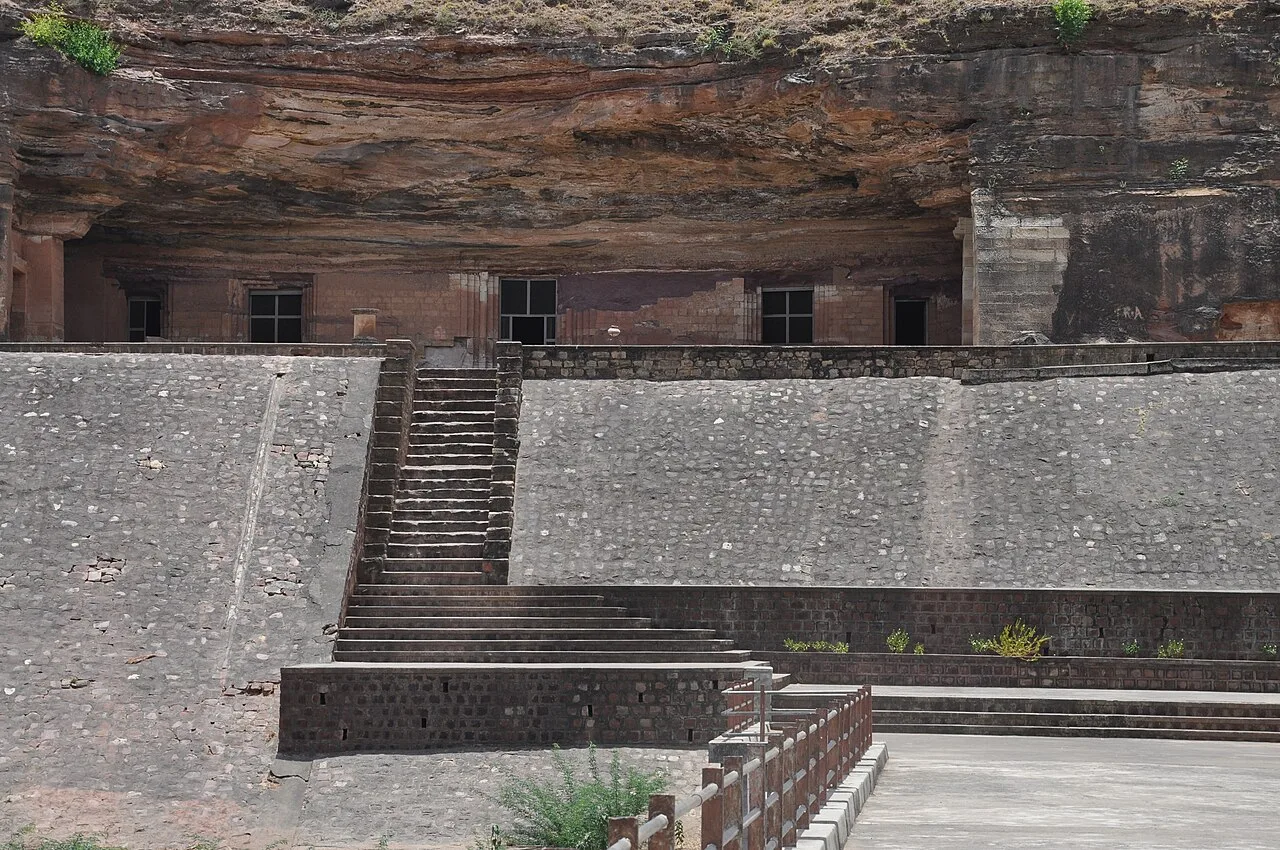
Bagh (Bagh Print Village)
In Madhya Pradesh’s Dhar district, Bagh is a settlement associated with the Bagh Caves, whose Buddhist rock-cut chambers and murals attract visitors.
Key facts · verified by Ghumoopedia editors
- Type of place
- Community & living culture
- Best time to visit
- October to March
- Nearest railway station
- Ratlam Junction · about 110 km (straight line)
- Verified
- 21 Nov 2026
Plan a trip from Bagh (Bagh Print Village) — a day-by-day route through places nearby.
Bagh, in Dhar district of Madhya Pradesh, is closely associated with the Bagh Caves. The caves contain Buddhist chambers carved into rock, with murals that are a notable feature of the site. The chambers date from the late fourth to the sixth centuries. They are abandoned, and local tradition connects the town’s name with tigers said to have lived inside the caves. In several languages of India, bagh means tiger. According to the legend, the animals gave the caves—and, in turn, the settlement—its name. Madhya Pradesh holds three UNESCO World Heritage Sites — the temples of Khajuraho, the Buddhist stupas of Sanchi and the Bhimbetka rock shelters — plus the forts and palaces of Gwalior, Orchha and Mandu, the marble gorges of Bhedaghat, the pilgrim towns of Ujjain and Omkareshwar, and some of India's best tiger country in Kanha, Bandhavgarh, Pench and Satpura. The state has very hot summers from March to June (often above 42°C in the north and west), a monsoon from late June to September that greens the forests but closes the tiger reserves' core zones, and a cool, pleasant winter from November to February — the best season for almost everything. The usual best time to visit is October to March. For official information, see Madhya Pradesh Tourism at https://www.mptourism.com.
Why it matters
Bagh is a small town in Dhar district, western Madhya Pradesh, known both for its traditional block-printed textiles and for the nearby Bagh Caves. The caves are Buddhist rock-cut chambers, traditionally dated to the late fourth through sixth centuries, with surviving mural paintings; they are protected by the Archaeological Survey of India. Bagh Print is a living regional craft practiced by artisan families and is recognised under the Geographical Indications system as “Bagh Prints of Madhya Pradesh.” The village offers a chance to encounter textile-making in its working setting, rather than only as a finished product in a shop. Bagh is not one of Madhya Pradesh’s UNESCO World Heritage Sites.
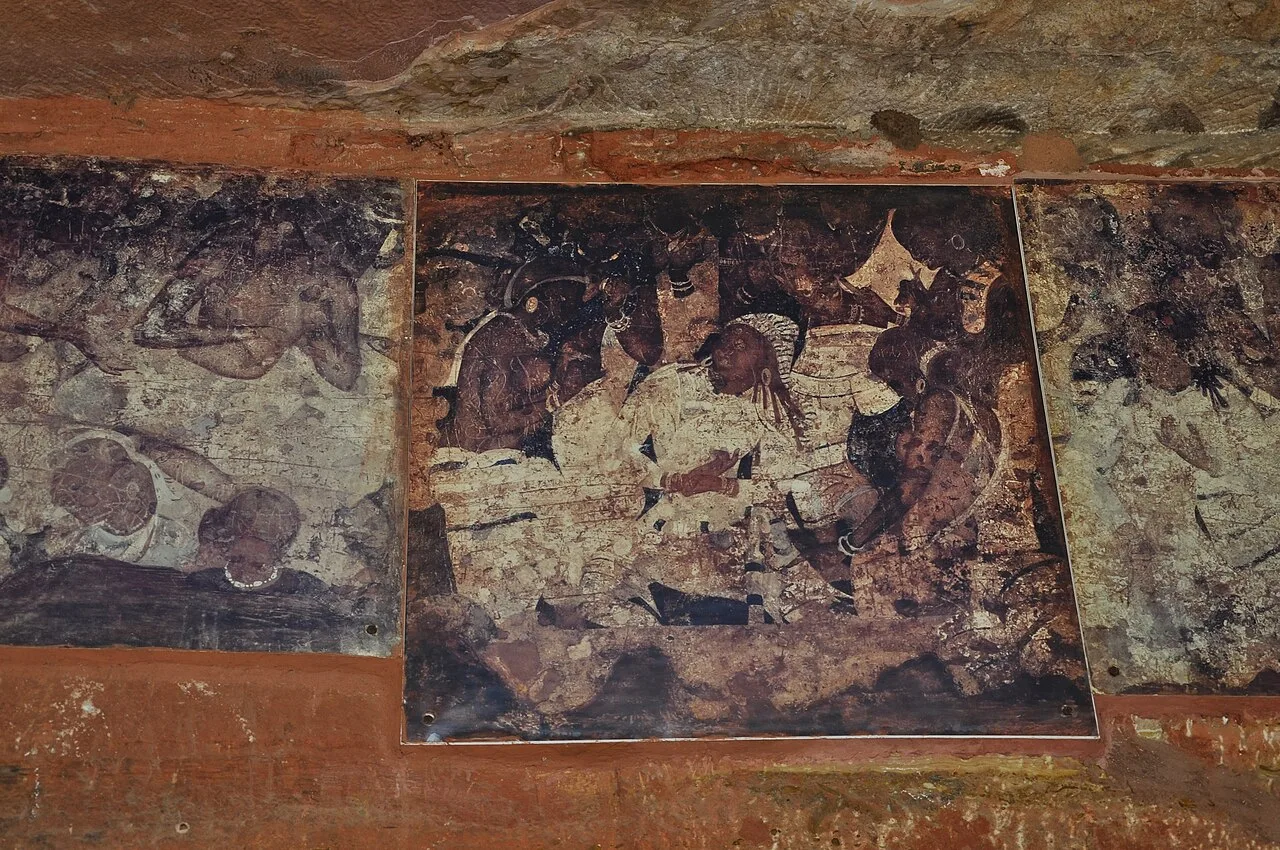
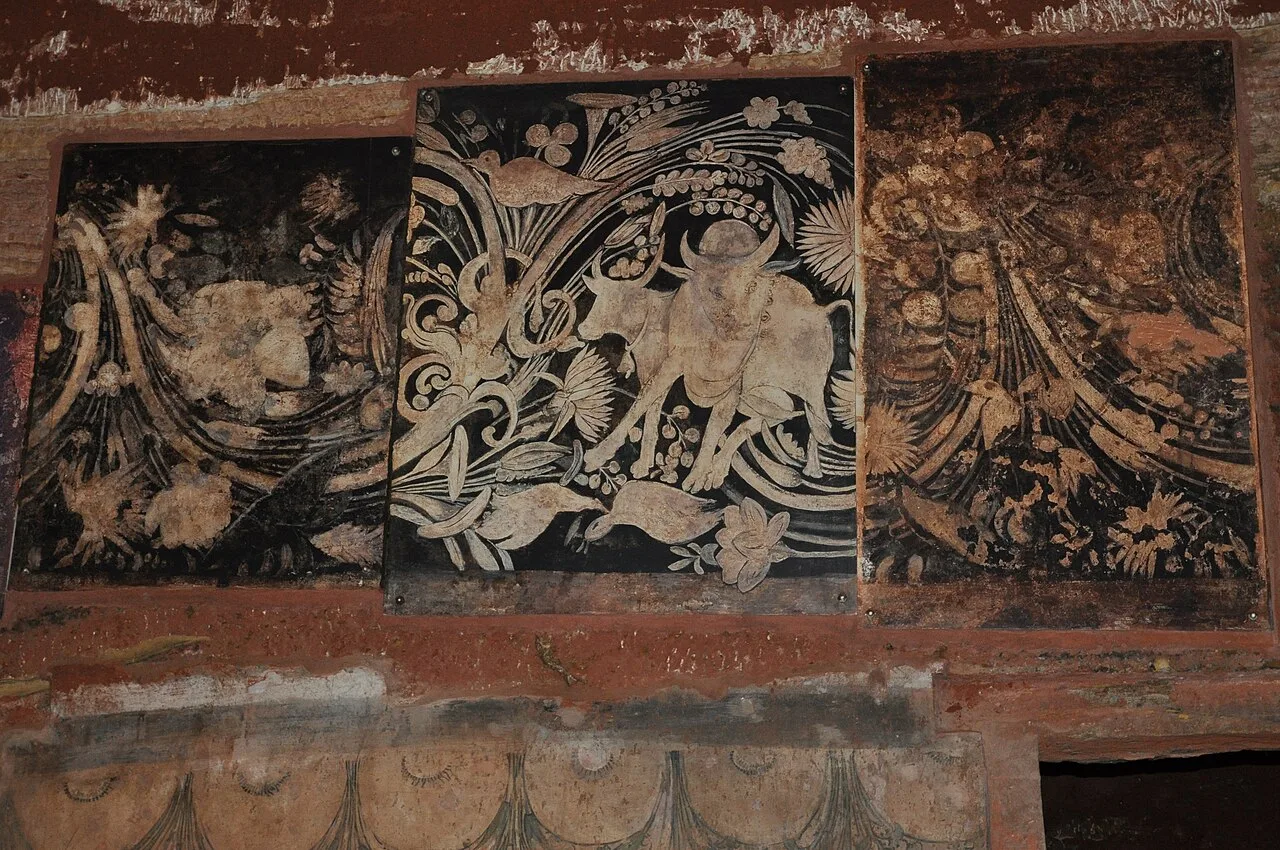
The best-known ancient remains near Bagh are a group of Buddhist rock-cut caves, generally dated to the late fourth through sixth centuries. They were cut into sandstone cliffs and used as monastic spaces. The surviving chambers include traces of mural painting, which has attracted scholarly attention for its subject matter and technique. Weathering and deterioration have affected the paintings over time; conservation and protection are now the responsibility of the Archaeological Survey of India. The caves are not the origin of the town’s textile tradition, though both shape Bagh’s identity today. Bagh’s hand block-printing practice developed through generations of artisan work. Its precise beginnings and the history of individual workshop families are not uniformly documented, so accounts of migration or a single founding date should be treated cautiously. The craft uses carved wooden blocks, prepared cloth and carefully controlled dyeing and washing stages. Families have adapted their work to changing markets while continuing to make printed fabrics. In 2008, “Bagh Prints of Madhya Pradesh” received Geographical Indication registration, formally recognising the craft’s association with the region. Workshops and cooperatives remain important places for production, learning and sales.
Origin stories & folklore
According to local tradition, the town takes its name from the Bagh Caves and the tigers said to have lived in the abandoned chambers. In several Indian languages, “bagh” means tiger; the story explains how the place-name became linked to the caves. It is folklore rather than a verified account of the town’s naming, and it should not be taken as evidence that tigers inhabit the caves today. The region’s stories may be told differently by different residents. Visitors can ask about local versions respectfully, while remembering that the documented history of the caves is distinct from the legend.
The heart of a visit to Bagh is meeting the artisans at work. Ask to see each stage of the work, from raw material to finishing; most families work at home or in small courtyard workshops, and a single piece can take hours or days. Many households and cooperative societies welcome visitors who show genuine interest, but this is a working village, not a museum: ask before entering a home or workshop, keep visits short during busy hours, and accept that some families may be away at fairs or markets. Buying directly from the maker or a registered cooperative is the best way to support the craft. Where a product carries a Geographical Indication (GI) tag or a handloom mark, ask for it; prices for handmade work reflect the time and skill involved, so bargain gently, if at all. Some workshops offer short hands-on sessions — ask locally rather than expecting a fixed schedule.
Suggested itineraries
Half day: Visit a consenting Bagh-print workshop (about 1–2 hours), then explore the Bagh Caves and their surroundings (about 1–2 hours). Full day: Begin at the Bagh Caves (about 2 hours), return to the village for lunch and a workshop visit (about 2 hours), then browse finished textiles and take a relaxed walk through the local area (about 1–2 hours). Gentler option: Arrange a vehicle between stops, visit one workshop with seating if available, and choose only the most accessible cave areas after checking conditions on site.
Bagh’s most visible living cultural tradition is hand block printing. Visitors may see artisans prepare fabric, apply carved blocks and work through dyeing, washing and finishing, though each workshop has its own routine. Hindi is widely useful; local speech may also include regional dialects and Bhili languages. Everyday dress and customs reflect a mix of rural western Madhya Pradesh influences, and the town’s markets and homes are part of ordinary community life. There is no fixed visitor performance schedule: music, dance and celebrations are more likely to be encountered during family or seasonal events than as staged attractions. Ask before entering a home or taking part in workshop activity.
Local communities
Khatri artisan families are closely associated with Bagh printing, with skills commonly passed through family and workshop practice. Local residents also earn livelihoods through farming, trade, transport, services and work connected with visitors to the caves and craft workshops. Bhil and Bhilala communities live across parts of Dhar district and the wider region; their traditions are diverse and should not be treated as a single visitor attraction. Not every household works in craft production, and not every artisan workshop is open to visitors. Buy directly where possible, ask permission before observing work, and avoid treating people’s homes or religious practices as displays.
Festivals & events
Holi, Diwali and Navratri are observed in the region, with local family and community customs shaping the celebrations. Bhagoria fairs, associated particularly with Bhil communities in parts of western Madhya Pradesh, usually take place in the period before Holi; ask locally whether a nearby event is being held during your visit. Such fairs can bring larger crowds, busy roads and temporary market activity. Dates and locations vary from year to year, so do not assume an event takes place in Bagh itself. Visitors should follow local guidance, dress respectfully and seek consent before photographing participants.
Village food in Madhya Pradesh is home cooking: poha with jalebi for breakfast, bhutte ka kees, dal bafla and dal baati, Indore's sarafa night-market snacks, Bhopal's seekh kebabs and biryani, mawa-bati and gajak sweets, and mahua-based tribal dishes in forest districts. Bagh itself may have only tea stalls and small eateries, so ask your host or guide where to eat, or arrange a home-cooked meal in advance — it is often the highlight of a village visit. Carry water and a snack if you plan to spend the whole day, and eat your main meal in the nearest town if no local option is open.
Shopping & local experiences
Look for hand block-printed cloth made by Bagh artisans, including fabric and finished household or clothing items. Ask who made the piece and whether the seller is an artisan, workshop or cooperative; buying directly can support local production. Bagh Prints of Madhya Pradesh has Geographical Indication recognition, so ask about relevant product identification rather than assuming every item is made locally. Handmade work varies, and its price reflects labour and skill; bargain gently, if at all. Small local shops may also carry everyday goods and snacks. Ask before handling fabric or entering a production area.
Bagh lies in a rural landscape of rocky ground, low hills and cultivated land in western Madhya Pradesh. The Baghini River is associated with the area and its caves, but water levels vary seasonally and some stretches may be low or dry outside the monsoon. The wider landscape includes dry deciduous and scrub vegetation, with greener conditions after the rains and more exposed terrain in the hot season. Common regional birds may be seen around fields, trees and water when conditions suit, but sightings are never assured. This is not a managed wildlife-viewing destination; visitors should not expect large mammals or approach wildlife. Take care around uneven rock, river edges and slippery surfaces after rain.
October to March
The nearest principal railway station by straight-line distance is Ratlam Junction, roughly 110 km away. The nearest operating airport by straight-line distance is Devi Ahilyabai Holkar Airport, Indore, roughly 115 km away. These figures are calculated from map coordinates — actual road distance is longer. Bhopal, Indore, Jabalpur and Gwalior are the main rail and air gateways; Khajuraho has its own airport and station, Jhansi (UP) serves Orchha and Datia, and Pipariya is the railhead for Pachmarhi. Bagh is a village, so the last stretch is by road: Madhya Pradesh State Road Transport Corporation buses, private sleeper coaches between the big cities, and shared jeeps and autos in smaller towns reach the nearest town, and from there a shared auto, local bus or reserved taxi covers the final few kilometres. Village roads can be narrow and unpaved; a taxi hired for the day from the nearest town is the simplest way to combine Bagh with nearby sights and get back before dark. When comparing train, bus and flight, count the complete door-to-door time: a flight saves the most time only if the onward road transfer is short, while an overnight train can save a hotel night. Book your return before you leave, because seats fill quickly on weekends, festivals and holidays. Current train numbers, timings, return services and fares are not listed here; check IRCTC and NTES for trains and the airline's own schedule for flights. No permit is needed to visit Madhya Pradesh. Tiger safaris in Kanha, Bandhavgarh, Pench, Satpura and Panna must be booked in advance on the official MP Forest online portal — zones and gates sell out weeks ahead in peak season, and the core zones are closed during the monsoon (roughly July to mid-October). Boating and angling in the National Chambal Sanctuary also need forest-department bookings.
Confirm onward and return timings on IRCTC / NTES, the state bus operator or your airline before travel. A dash means current timings or fares have not been verified.
Getting around
Bagh is best explored on foot within the village, but the caves and workshops may not be beside one another, so ask locally about the route before walking. Shared autos, local vehicles or a reserved taxi can help with the last stretch and with visits beyond the village. Local buses and shared jeeps may connect Bagh with nearby towns, though service and availability should be checked on arrival. There is no visitor boat service to plan around. Parking is likely to be informal or limited near smaller sites; do not block workshop entrances, homes or access roads.
Hours, tickets & permissions
The caves and textile workshops have different access arrangements. The caves are an ASI-protected site, where entry, photography, visitor conduct and any applicable ticket or camera rules are set by the managing authority. Craft workshops are working homes or small businesses, not public attractions with a standard schedule; ask in advance or locally before visiting. Carry identification if requested by site staff, and follow notices at the entrance. Confirm current opening arrangements and any fees with the Archaeological Survey of India or local tourism sources before setting out.
Facilities
Facilities in Bagh are modest and may vary. Basic food and drinking water are usually available in the village, but carry water and any personal supplies you need, especially in hot weather. Toilets may be limited at smaller attractions and workshops; check locally before beginning a visit. The caves may have basic visitor arrangements, but do not assume that all services are operating. Accommodation and ATMs are more limited than in larger towns, so plan ahead. Guides may be available locally but are not guaranteed; agree on the scope of a workshop visit directly with its host.
Accessibility
Expect uneven ground, exposed paths and steps or changes in level around the caves; sandstone surfaces may be slippery after rain. The distance between the village, workshops and caves can make a vehicle useful, and walking routes may have little shade. Wheelchair access should not be assumed, as historic rock-cut spaces and rural paths are not necessarily adapted. Strollers may be difficult to manage on rough surfaces. Older visitors or anyone with limited mobility may prefer a short visit, sturdy footwear, a companion and transport between stops. Check current site conditions with staff before setting out.
No permit is needed to visit Madhya Pradesh. Tiger safaris in Kanha, Bandhavgarh, Pench, Satpura and Panna must be booked in advance on the official MP Forest online portal — zones and gates sell out weeks ahead in peak season, and the core zones are closed during the monsoon (roughly July to mid-October). Boating and angling in the National Chambal Sanctuary also need forest-department bookings. Carry a photo ID, some cash (card and UPI acceptance varies in villages) and a charged phone with offline maps; save the emergency number 112 and your host's contact. Heat in summer and heavy rain in the monsoon are the main weather risks; carry water, avoid midday sun and allow extra time when village roads flood. Respect local customs: dress modestly, remove footwear where asked, and always ask before photographing people, homes or rituals.
Visitor rules
Follow signs and instructions at the ASI-protected caves, and keep to areas open to visitors. Wear comfortable, respectful clothing and secure footwear suitable for uneven ground. Do not touch, mark or lean on painted or carved surfaces, and do not leave litter; carry plastic and other waste back with you. Ask before entering a home, courtyard or workshop, and keep visits brief when artisans are busy. Respect any restricted areas and local customs. Do not handle tools, dyes or unfinished cloth without permission, and avoid disturbing residents, workers or other visitors.
Photography
Soft morning or late-afternoon light can suit outdoor views of the village and caves, though conditions change with season and weather. Photography at the caves is subject to current ASI rules and posted restrictions; confirm before using a camera. Always ask artisans and residents before photographing them, their homes or their work, and respect a refusal. Avoid flash or contact with fragile painted surfaces. Drone use may require permissions and can be restricted near protected monuments; do not fly without checking the rules with the relevant authority. Be especially considerate during worship or community events.
Most visitors see Bagh on a day trip from the nearest town, which has the widest choice of hotels. A few villages have homestays or heritage stays; otherwise base yourself in the district town and hire a taxi for the day. Confirm the booking and the exact location before you travel, because village addresses can be hard to find.
The Bagh Caves are the principal nearby historic attraction and can be combined with a village craft visit. Dhar town has additional historic sites, including Dhar Fort, and offers a broader look at the district’s past. Mandu, also in Dhar district, is known for its historic fort complex, palaces and other architectural remains and is a separate excursion that needs travel planning. These places are not substitutes for checking road conditions or local transport. Ask locally about current access at each site, and avoid trying to fit several distant stops into a short visit to Bagh.
For couples, Bagh is a chance to slow down: spend an unhurried morning with the makers, choose a piece together directly from the family that made it, share a home-cooked meal and keep the afternoon free. Stay in a nearby homestay or heritage property to make it a quiet overnight escape.
Q: How much time should I allow for Bagh? A: A half day can cover a workshop visit and the caves; allow a full day for a slower visit and time between stops. Q: When is the best season to visit? A: October to March is generally the most comfortable season. Summers can be very hot, while monsoon conditions may affect roads and outdoor access. Q: Is there an entry fee, and do I need to book a workshop? A: Cave entry rules and any fees can change, so confirm with the ASI. Workshops are working spaces; contact or ask locally before visiting rather than assuming a fixed schedule. Q: Is Bagh suitable for children and older visitors? A: It can be, with supervision and a flexible plan. Uneven ground, steps, heat and limited shade may make parts of the visit tiring. Q: Can I stay in Bagh? A: Local accommodation may be limited or variable. Check availability in advance; Dhar or other larger towns may offer more options, with onward travel to Bagh.
Be the first to share photos, stories, advice or a helpful contact for Bagh (Bagh Print Village).
Loading…