
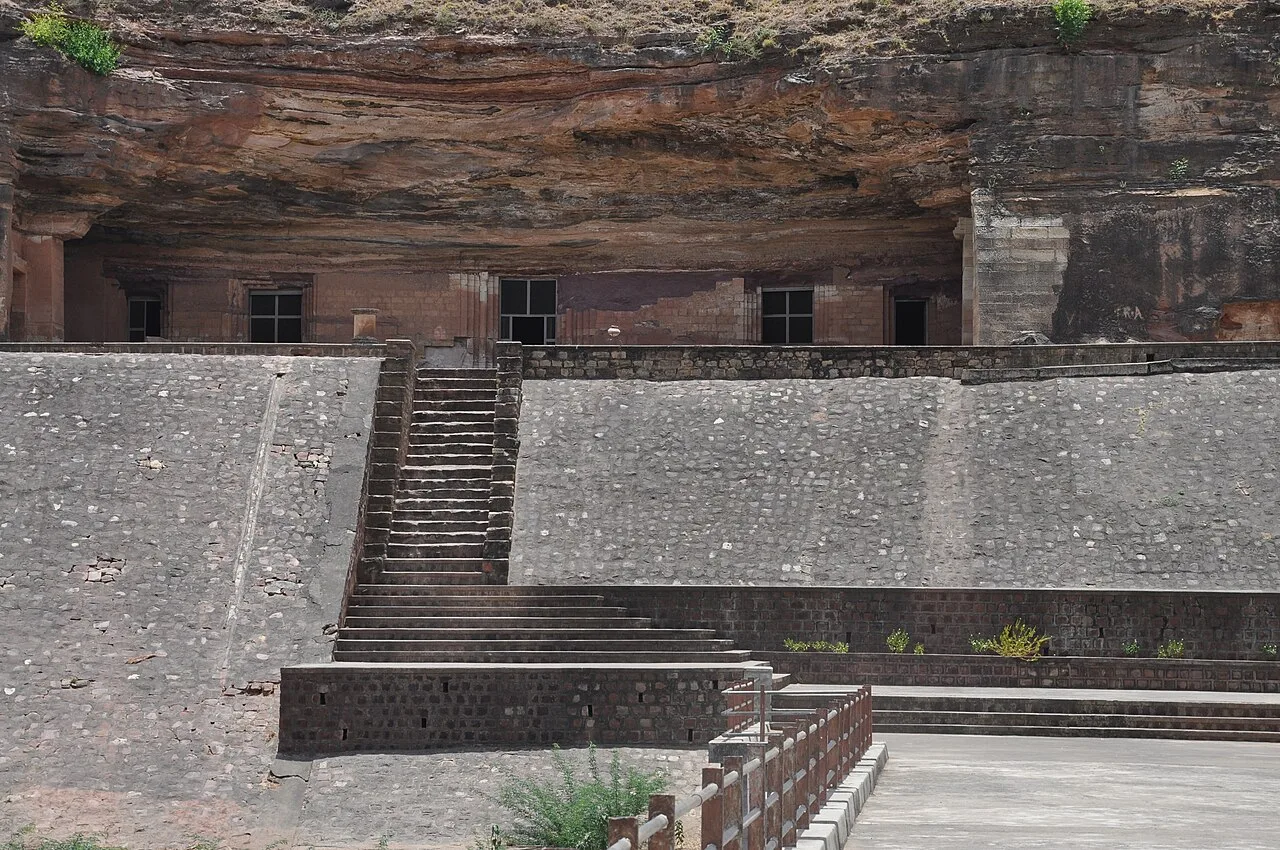
District · Madhya Pradesh
Dhar
Dhar district offers a compact introduction to western Madhya Pradesh’s layered history and varied terrain, from the Malwa plateau to the Vindhyan slopes.
Dhar district in western Madhya Pradesh brings together the Malwa plateau, the slopes of the Vindhya Range and a varied architectural heritage. Its best-known historic landscape is Mandu, also called Mandavgad, where palaces and other monuments spread across a hilltop setting. Jahaz Mahal, Hindola Mahal and Rupmati Pavilion offer different perspectives on this former royal centre. Dhar town has associations with the Paramara rulers and Raja Bhoja; Bhojshala is linked with traditions of Sanskrit learning. Farther west, the Bagh Caves preserve an important chapter of Buddhist rock-cut architecture and painting. Together, these places give the district a character shaped by royal patronage, religious traditions and the surrounding rural landscape.
Dhar district offers a compact introduction to western Madhya Pradesh’s layered history and varied terrain, from the Malwa plateau to the Vindhyan slopes. It is best known for Mandu, or Mandavgad, a hilltop historic settlement with palaces, pavilions and other monuments, including Jahaz Mahal and Hindola Mahal. Dhar town adds associations with the Paramara rulers, Raja Bhoja and traditions of Sanskrit learning at Bhojshala. The Bagh Caves, farther west, preserve Buddhist rock-cut architecture and painting. Travelling between these sites also reveals rural landscapes and settlements beyond the better-known monuments.
The Paramara dynasty ruled much of the Malwa region from around the 9th century, and Dhar became an important centre. Raja Bhoja, an 11th-century Paramara king, is associated with learning and building traditions in the region; Bhojshala in Dhar is linked with traditions of Sanskrit study. The Bagh Caves, generally dated to the early centuries of the first millennium, reflect an earlier Buddhist presence. From the 13th century, political control in Malwa shifted among powers including the Delhi Sultanate and regional rulers. Mandu rose to prominence under the Malwa Sultanate, founded in the early 15th century, and later came under Mughal and other regional control. Maratha influence grew in the 18th century, when Dhar became a princely state under the Pawar rulers. During British rule it remained a princely state rather than part of directly administered British India. After independence, Dhar joined the Indian Union in 1948 and became part of Madhya Pradesh when the state was formed in 1956. The present district reflects these successive political and cultural layers.
7 destination guides · 5 on the map
Bagh (Bagh Print Village)
In Madhya Pradesh’s Dhar district, Bagh is a settlement associated with the Bagh Caves, whose Buddhist rock-cut chambers and murals attract visitors.
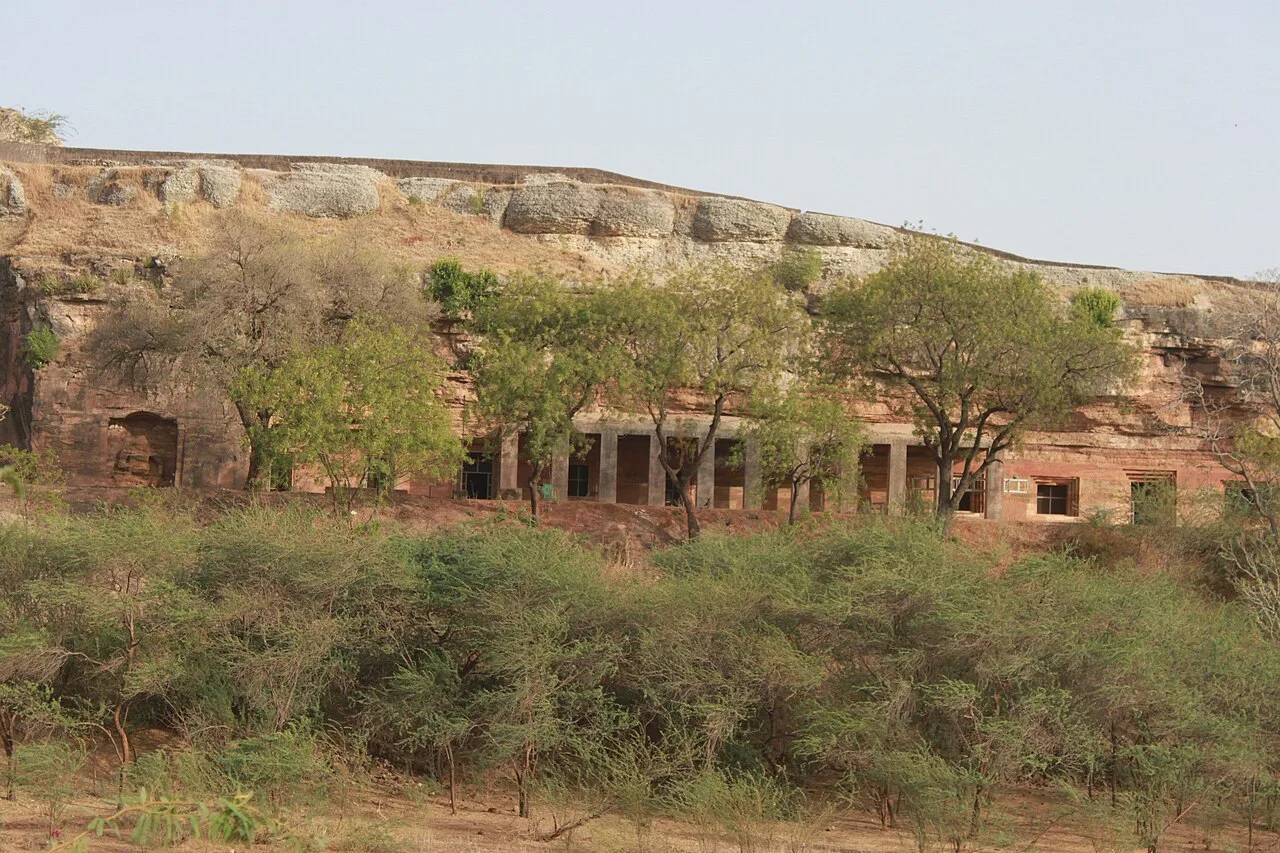
Bagh Caves
The Bagh Caves are Buddhist rock-cut monuments in Madhya Pradesh, known for their murals and monastic layouts. Visitors explore the surviving caves, including the painted Cave 4, called Rang Mahal.
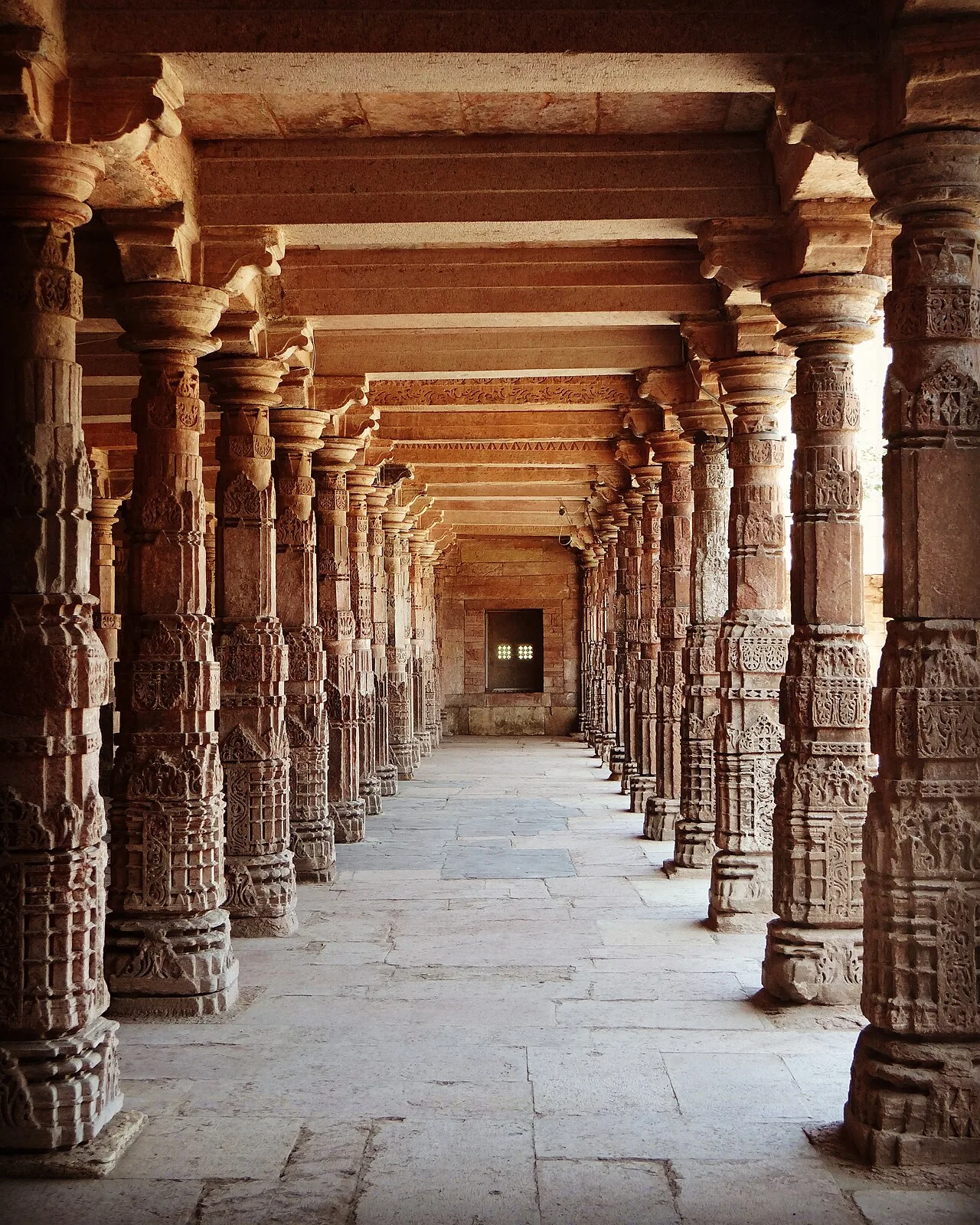
Bhojshala
Bhojshala is a historic complex in Dhar, Madhya Pradesh, associated with Sanskrit learning under the Paramāras. Visitors come to see its architecture, inscriptions and archaeological remains, as well as its layered religious history.
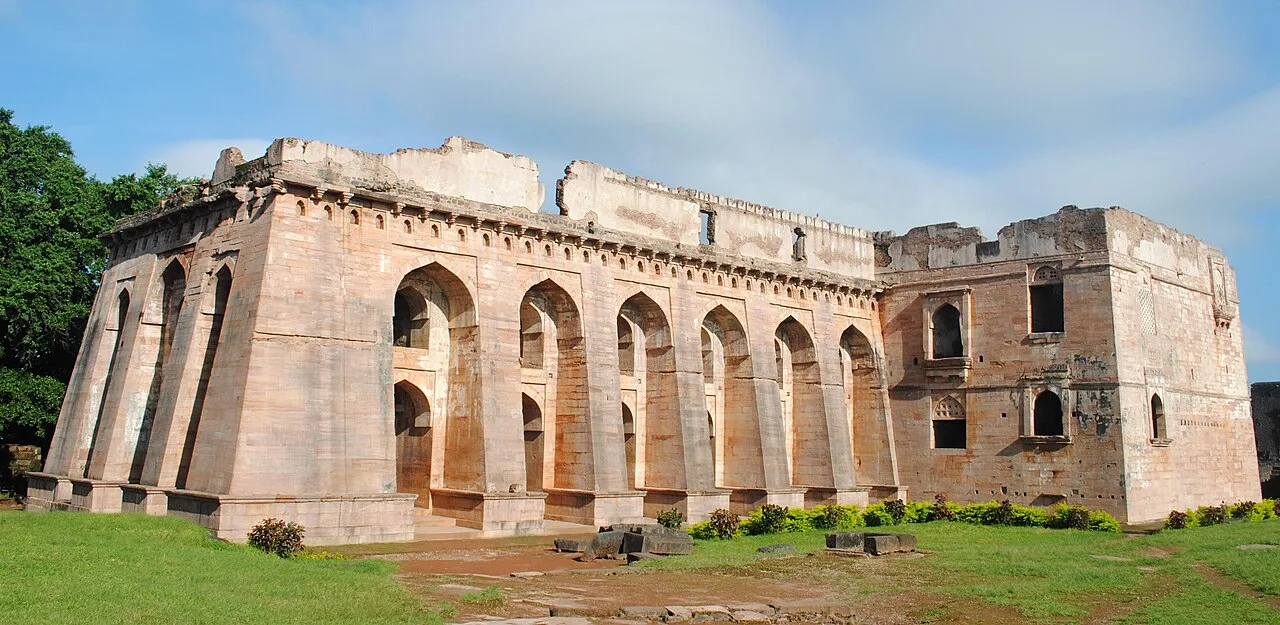
Hindola Mahal, Mandu
Hindola Mahal is a large assembly hall in Mandu, Madhya Pradesh. Visitors go to see it as a historic structure within the remains of the old city.
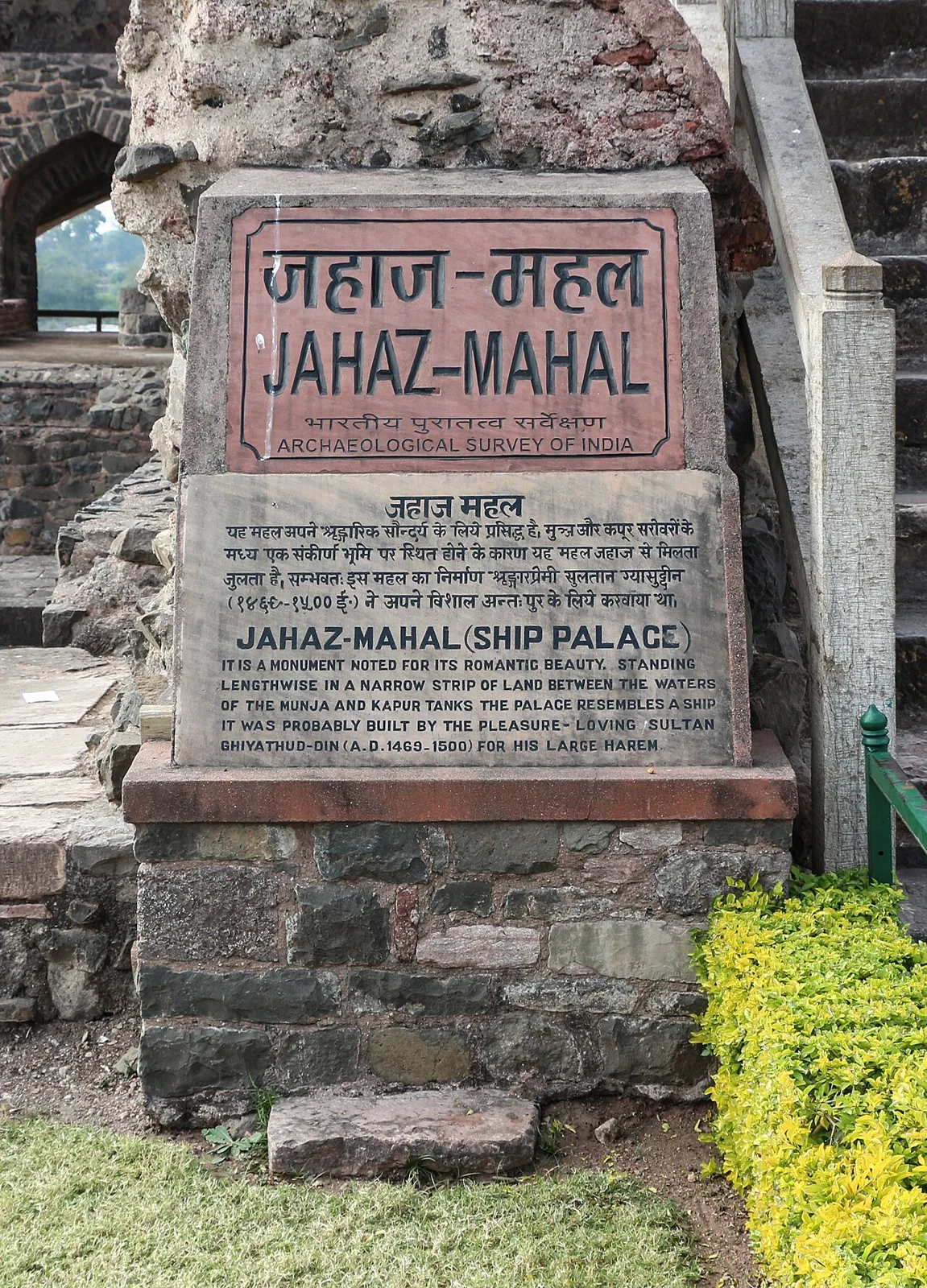
Jahaz Mahal (Mandu)
In Madhya Pradesh’s Dhar district, Jahaz Mahal (Mandu) is classified as a palace or haveli. Visitors come to see this building, identified among the state’s places of that kind.
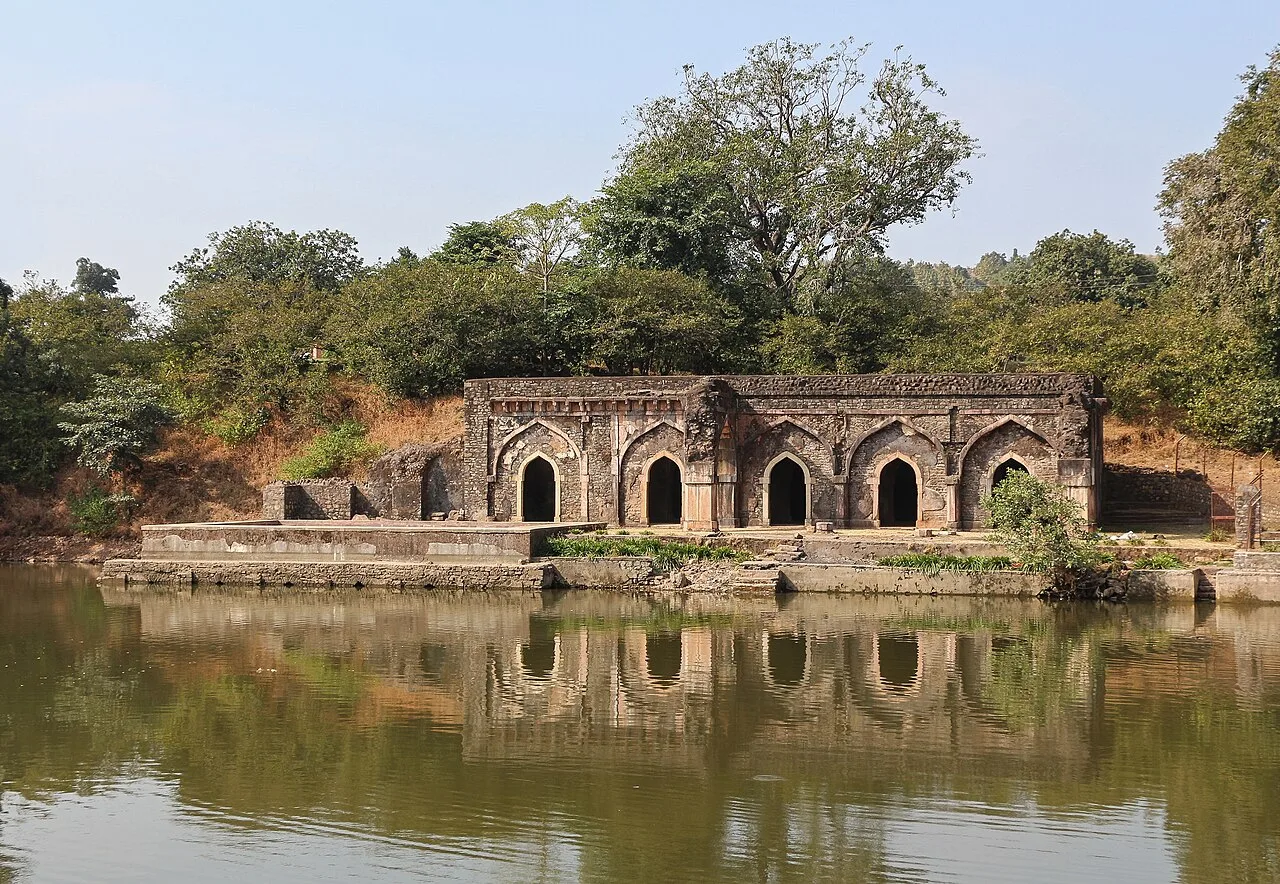
Mandu
Mandu, also known as Mandavgad, is an ancient settlement in Madhya Pradesh’s Dhar district. Visitors are drawn to its fortress setting and notable architecture.
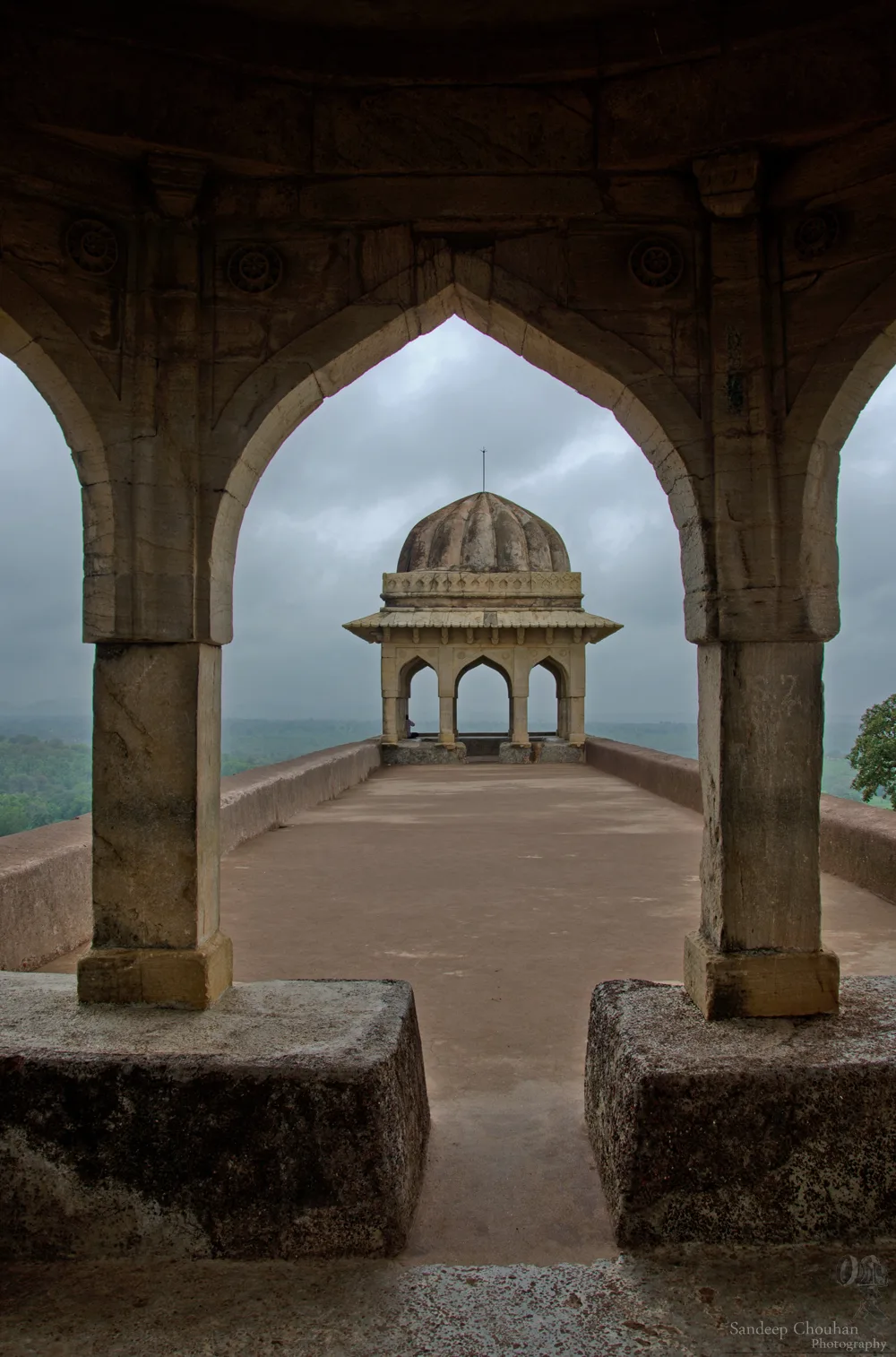
Rupmati Pavilion
Rupmati Pavilion is a heritage site in Madhya Pradesh’s Dhar district. People visit it for its heritage status and its association with the district.
Food in Dhar belongs broadly to the Malwa and wider Madhya Pradesh culinary landscape. Poha with jalebi is a familiar regional breakfast, while dal bafla pairs wheat dumplings with dal and generous amounts of ghee. Bhutte ka kees, made with grated corn, is another Malwa speciality worth asking for when available. Everyday meals at small eateries are often simpler combinations of roti, vegetables, dal and rice. Mawa-bati and seasonal gajak belong to the wider state's sweet traditions. Ask what has been freshly prepared, rather than expecting every regional dish on every menu.
Bagh in Dhar district is especially associated with Bagh hand-block printing, a well-established textile tradition recognised with a geographical indication. Artisans use carved wooden blocks to build repeating floral and geometric patterns, often in characteristic red and black against a light background. Traditional production involves carefully prepared dyes, repeated washing and several stages of treatment. Cotton fabrics, saris, scarves and household textiles offer accessible ways to encounter the craft. The ancient paintings associated with the Bagh Caves represent a separate, much older strand of the district's artistic heritage.
Holi, Diwali, Navratri and Eid are observed in towns and villages, with local customs varying between communities. In tribal areas of the wider Dhar region, Bhagoria fairs are held in the weeks before Holi and can bring lively crowds to market settlements. Mandu has also hosted cultural events and festivals, often in the cooler season, though programmes vary by year. During major fairs and public events, transport and accommodation in the immediate area may be busier than usual. Check locally for current dates and arrangements before planning around an event.
Elsewhere in Madhya Pradesh
The district spans parts of the Malwa plateau and the southern slopes of the Vindhya Range, descending towards the Narmada valley. Its terrain includes open agricultural land, low hills, wooded patches and seasonal streams; the Bagh Caves lie near the Baghini River. Mandu’s monuments occupy a raised plateau, while Bagh and other western settlements are reached across more varied rural roads. Plan visits by area rather than assuming the district’s attractions are close together.
Summer, from roughly March into June, is generally hot, so outdoor monument visits are more comfortable early or late in the day. The monsoon months bring rain, greener scenery and sometimes slower travel on rural roads. Winter, broadly from November to February, is usually the most comfortable season for exploring Mandu, Dhar and Bagh. The cooler months are a good general choice, though weekends and festival periods may be busier. Pack sun protection and drinking water in warm weather, and carry light rain protection during the monsoon. In winter, bring a warm layer for evenings and early starts.
Indore is a practical gateway for Dhar and Mandu, with flights through Devi Ahilyabai Holkar Airport and rail connections at Indore Junction. Ratlam Junction is another rail option to consider for Bagh, depending on your onward road arrangements. Road travel links Indore with Dhar town, with onward routes to Mandu and Bagh. Buses and shared vehicles may serve the main settlements; taxis offer greater flexibility for visiting scattered monuments. Within towns, ask about auto-rickshaws and other local transport. Plan Bagh as a separate excursion rather than assuming all district sights are close together. Check current services locally.
Dhar town, Mandu and Bagh are connected by road, but the sights are spread across the district and public transport options can be limited outside main settlements. Buses and shared vehicles may serve some routes; services and availability can vary. Auto-rickshaws are useful for local journeys in towns, while a taxi or hired vehicle offers more flexibility for Mandu’s monuments and a separate trip to Bagh. Ask locally about the onward road and return options before setting out, especially for Bagh.
2 days: Mandu → Jahaz Mahal (Mandu) → Hindola Mahal, Mandu → Rupmati Pavilion; sleep in Mandu on night 1. 3 days: Mandu → Jahaz Mahal (Mandu) → Hindola Mahal, Mandu → Rupmati Pavilion → Bagh Caves → Bhojshala; sleep in Mandu on night 1 and Dhar on night 2. 4 days: Mandu → Jahaz Mahal (Mandu) → Hindola Mahal, Mandu → Rupmati Pavilion → Bhojshala → Bagh Caves; sleep in Mandu on nights 1 and 2, and Dhar on night 3.
Mandu is the most convenient base for exploring its hilltop monuments, with hotels and guesthouses generally available. Dhar town suits visits to Bhojshala and can be a practical overnight stop when travelling between Mandu and Bagh. Bagh has fewer visitor facilities, so check local accommodation availability before relying on it as a base; some travellers prefer to arrange a return to a larger town. Options across the district may include modest hotels, guesthouses, homestays, government lodges or dharamshalas, with availability varying by season.
Wear sturdy footwear at Mandu and Bagh, where uneven paths, steps and exposed or rocky ground can make walking difficult. Carry drinking water and sun protection, and take extra care on rural roads during or after monsoon rain. Use a reliable vehicle and avoid assuming that transport or mobile connectivity will be available at every site. Keep valuables secure in crowds and follow local guidance at monuments and religious places. Visitors with mobility or health concerns should check access conditions in advance. Confirm current entry rules or any site-specific permissions with official authorities before travelling.
- Maheshwarabout 28 km
- Khargoneabout 37 km
- Indoreabout 71 km
- Omkareshwarabout 89 km
- Ujjainabout 106 km
- Khandwaabout 113 km
- Burhanpurabout 143 km
Straight-line distance between the centres of each district's destinations; road distance is longer.
All districts of Madhya Pradesh
Q: How many days should I spend in Dhar district? A: Two days can cover Mandu’s main monuments. Allow three or four days to include Dhar and the Bagh Caves without rushing. Q: When is the best time to visit? A: The cooler months, broadly November to February, are generally most comfortable for sightseeing. Q: What is the best base for a visit? A: Stay in Mandu for its monuments; Dhar town is useful for Bhojshala and onward travel. Bagh is a separate excursion. Q: How do I get to Dhar district? A: Indore is a practical air and rail gateway, with road connections onward to Dhar and Mandu. Ratlam can also suit some trips to Bagh; check current services and road plans. Q: Is the district suitable for families or elderly travellers? A: Yes, with planning. Some monuments involve steps, uneven paths and hill terrain, so choose sites and walking distances to suit each traveller.
This page draws on our 7 destination guides for Dhar and is updated as our team checks it.
Be the first to share photos, stories, advice or a helpful contact for Dhar.
Loading…