
District · Madhya Pradesh
Omkareshwar
Omkareshwar is a major pilgrimage destination in the Nimar region of Madhya Pradesh, on the Narmada River.
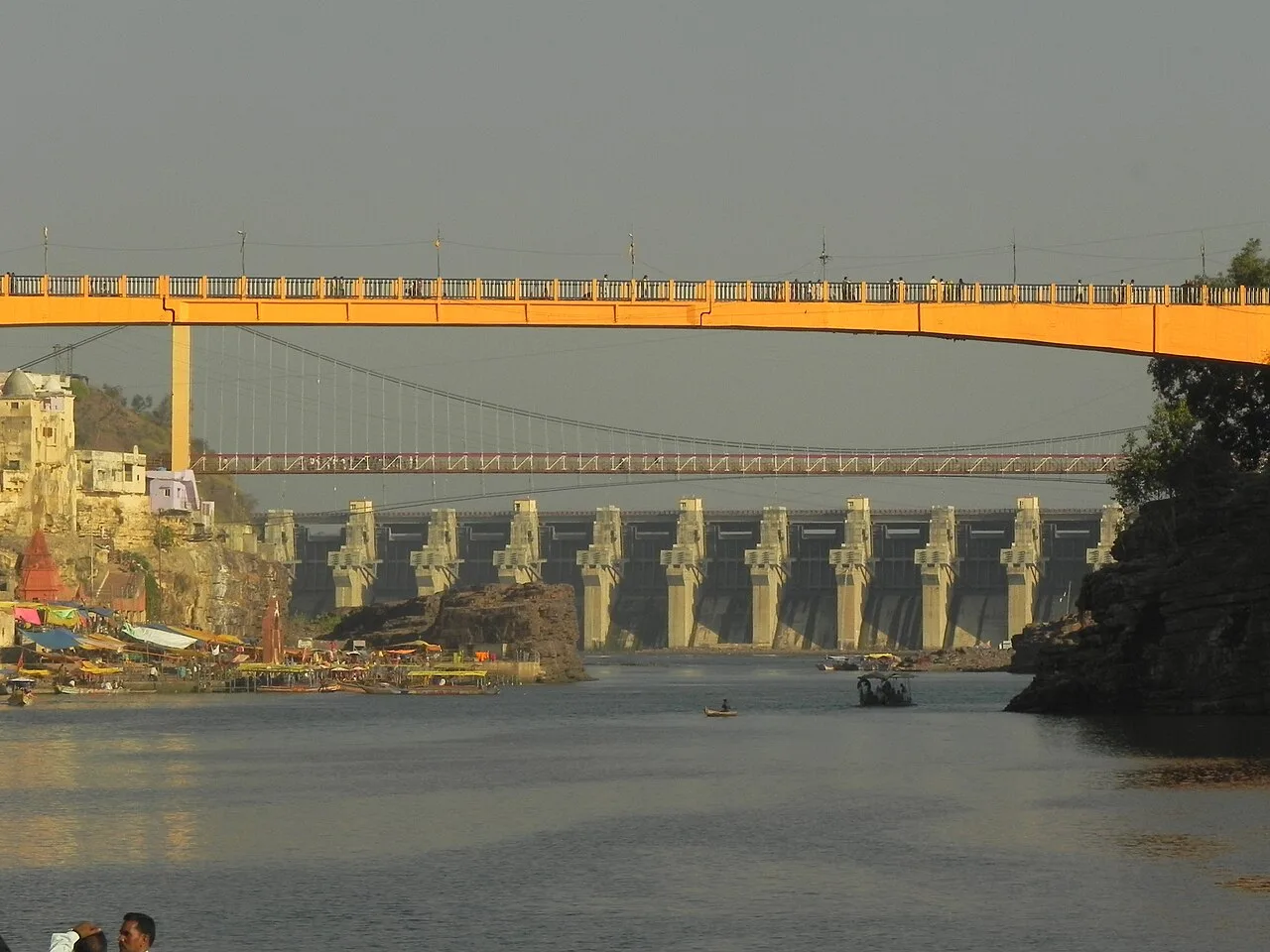
Omkareshwar lies on the Narmada River in Khandwa district, in the Nimar region of southwestern Madhya Pradesh. The river winds around Mandhata Island, whose landscape of rocky banks, wooded slopes and ghats gives the pilgrimage town a striking setting. Omkareshwar Temple, dedicated to Shiva, is one of India’s revered Jyotirlinga shrines; the nearby Mamleshwar temple stands across the river. Pilgrims visit throughout the year, and the riverfront’s temples, steps and small settlements shape the town’s daily rhythm. Omkareshwar is best understood as both a sacred river destination and a small town within a wider landscape of hills and agricultural plains.
Omkareshwar is a major pilgrimage destination in the Nimar region of Madhya Pradesh, on the Narmada River. It is best known for Omkareshwar Temple, a Shiva shrine associated with one of the twelve Jyotirlingas in Hindu tradition. The temple stands on Mandhata island, making the river and its crossings part of the visit as well as its setting. Travellers come for worship, the island’s sacred landscape and a slower riverside stay.
Omkareshwar’s history is closely tied to pilgrimage on the Narmada and to the sacred status of Mandhata island. Hindu traditions connect the site with Shiva and the Jyotirlinga; the nearby Mamleshwar shrine is also part of the area’s religious history. The temples and settlements have developed over many centuries, with the wider Malwa and Nimar region passing through the influence of different central Indian powers. The Paramara dynasty held power across much of Malwa during the medieval period, though the extent of its control at Omkareshwar is not always clear. Later, Maratha and Holkar-era patronage shaped religious life and temple activity in the region. Under British rule, the area formed part of the changing administrative landscape of central India. After independence and the creation of Madhya Pradesh in 1956, Omkareshwar remained within Khandwa district, historically also known as East Nimar. Omkareshwar is not a separate district, so there is no distinct Omkareshwar district formation date.
Food in Omkareshwar is generally simple, with vegetarian meals readily available around the pilgrimage area. Menus vary, but visitors may find familiar Madhya Pradesh and central Indian dishes such as poha, dal, seasonal vegetables, roti and dal bafla. Poha with jalebi is a popular regional breakfast, while bhutte ka kees is a well-known Madhya Pradesh speciality rather than a dish specific to Omkareshwar. Small eateries may prepare only a limited selection each day, so it is useful to ask what is fresh. Wider Nimar food traditions also reflect local produce and household cooking.
Omkareshwar is better known as a pilgrimage centre than as a major craft-producing town, and no single craft is widely documented as specific to it. In the wider region, visitors may encounter handloom textiles and craft traditions associated with local communities. Maheshwari weaving, including the distinctive Maheshwari sari, is centered in nearby Maheshwar, across the Narmada in Khargone district; it is a regional craft, not an Omkareshwar speciality. Shops in the pilgrimage town also sell devotional objects and souvenirs, though these should not be confused with locally made craft.
Mahashivratri is a major occasion at Omkareshwar, drawing worshippers for temple visits and riverfront observances. The Shravan season, generally during the monsoon, is also important for Shiva worship and can bring heavier pilgrim traffic. Kartik Purnima and Narmada-related religious occasions are observed in the wider region, with local practices varying. During prominent festival periods, queues, road congestion and demand for rooms can increase, especially near the temple and river. Travellers seeking a quieter visit should consider travelling outside major religious occasions and arrange accommodation ahead when visiting during peak pilgrimage seasons.
Elsewhere in Madhya Pradesh
The Narmada River is the defining feature of Omkareshwar. Mandhata island lies amid its waters, with temple areas, river ghats and settlement clustered along the banks. The surrounding Nimar landscape includes rocky river margins, low hills and cultivated land; the terrain is not uniformly flat, and steps and uneven paths are common around religious sites. The river shapes local movement, with bridges and, when operating, boats linking parts of the pilgrimage area. Monsoon flows can change river conditions and affect access to the water, so visitors should follow local instructions rather than treating the river as a recreational swimming area.
Summer is generally hot, with strong sun making midday walks and temple approaches tiring. The monsoon brings rain, greener surroundings and higher or faster river flows; wet steps and slippery paths need care. Winter is usually more comfortable for walking and sightseeing, though mornings and evenings can feel cool. The most convenient months for many visitors are in the cooler part of the year, broadly from autumn through winter, while festival periods may be busy. Pack modest temple-appropriate clothing, comfortable footwear that is easy to remove, sun protection and water. In the monsoon, add rain protection and footwear with a good grip.
Khandwa Junction is the principal nearby railway station, and Devi Ahilyabai Holkar Airport in Indore is the nearest operating airport. From Indore or Khandwa, travellers can continue by road using buses, taxis or other locally available services; road journeys are longer than map distances suggest. Omkareshwar is connected by road to nearby towns, and local movement around the temple area is often on foot. Autos or taxis may be available for trips beyond the central ghats, while river crossings depend on locally operating boats and conditions. Check current services locally before travelling.
Omkareshwar is reached by road, with connections from Khandwa and other regional centres such as Indore. Buses and shared vehicles serve some routes, while taxis can be useful for direct travel or flexible day trips; availability varies by season and time of day. Within the town, many temple and riverfront areas are reached on foot, often over steps or uneven paths. Autos may be available for local journeys, and boats may operate across parts of the river when conditions permit. Confirm current services locally, and do not assume boats operate during high flows or restricted river conditions.
2 days: Omkareshwar Temple; sleep in Omkareshwar on both nights, allowing time for worship and the island area. 3 days: Omkareshwar Temple; sleep in Omkareshwar each night, keeping an extra day for a slower visit and local exploration.
Omkareshwar is the most practical base for temple visits and short stays. Accommodation in town generally includes hotels, guesthouses and dharamshalas, with simpler options often close to the pilgrimage area. Availability and comfort levels vary, so check facilities and access needs before booking, particularly for visitors who find steps difficult. Khandwa can be a useful alternative base for travellers combining Omkareshwar with wider regional journeys, with a broader choice of town accommodation. Book ahead around major festivals and busy pilgrimage seasons.
Expect steps, uneven paths and crowded approaches near the temple, and take extra care if travelling with children or anyone with limited mobility. River levels and currents can change, especially during the monsoon; follow local warnings and avoid swimming or entering restricted areas. Carry drinking water, use sun protection in hot weather and take care on wet stone surfaces. Road conditions and public transport availability can vary, so confirm onward travel locally. Mobile coverage may be less dependable away from settled areas. Wildlife is not a central feature of the town visit, but keep a respectful distance from any animals encountered. No special permit is generally associated with a temple visit; confirm officially if your plans include other restricted areas.
- Khandwaabout 24 km
- Khargoneabout 59 km
- Indoreabout 60 km
- Maheshwarabout 84 km
- Burhanpurabout 87 km
- Dharabout 89 km
- Ujjainabout 113 km
- Sehoreabout 165 km
Straight-line distance between the centres of each district's destinations; road distance is longer.
All districts of Madhya Pradesh
Q: How many days should I spend in Omkareshwar? A: Two days suit a focused temple visit; three days allow a more unhurried stay and local exploration. Q: When is the best time to visit? A: The cooler months are generally more comfortable for walking, though festival periods can be crowded. Q: What is the best base for visiting the temple? A: Stay in Omkareshwar for convenient temple access; Khandwa can suit a wider regional itinerary. Q: How do I get to Omkareshwar? A: Road travel from Khandwa, Indore and other regional centres is the usual approach; check current bus and shared-vehicle connections. Q: Is Omkareshwar suitable for families or elderly travellers? A: Yes, but crowds, steps and uneven paths may be challenging; plan a slower visit and check access needs in advance.
This page draws on our 1 destination guides for Omkareshwar and is updated as our team checks it.
Be the first to share photos, stories, advice or a helpful contact for Omkareshwar.
Loading…