
District · Madhya Pradesh
Chitrakoot
Chitrakoot is a pilgrimage town in Madhya Pradesh’s Satna district, part of a sacred landscape that extends across the state boundary into Uttar Pradesh.
Chitrakoot in Madhya Pradesh is a pilgrimage town in Satna district, rather than a separate Madhya Pradesh district; the adjoining district of Chitrakoot lies in Uttar Pradesh. The sacred landscape crosses this state boundary, bringing together wooded hills, the Mandakini River, ghats and temple settlements. Its religious identity rests on traditions connecting the area with Rama, Sita and Lakshmana during their exile, while centuries of pilgrimage have shaped its everyday character. Kamadgiri and the riverfront are important focuses of devotion across the wider pilgrimage area. Beyond the busiest shrines, the landscape has a quieter, rural Bundelkhand character. Visitors should plan around the shared sacred geography rather than treating the state boundary as a division between destinations.
Chitrakoot is a pilgrimage town in Madhya Pradesh’s Satna district, part of a sacred landscape that extends across the state boundary into Uttar Pradesh. Travellers come for its association with the Ramayana traditions of Rama, Sita and Lakshmana, and for the linked riverfront, hills and places of worship. Kamadgiri and the Mandakini River are central to the wider pilgrimage experience. The town is a useful base for exploring this shared religious region, while its quieter surroundings offer a glimpse of rural Bundelkhand. Plan for the area as one connected destination rather than treating the state border as a break in the pilgrimage.
Chitrakoot’s history is closely tied to religious tradition: the Ramayana associates the surrounding forest landscape with the exile of Rama, Sita and Lakshmana. These accounts are foundational to the region’s pilgrimage identity, though they belong to sacred tradition rather than a precisely dated political record. The wider area lies near the historical regions of Bundelkhand and Baghelkhand. Chandela rulers held power across parts of Bundelkhand during the medieval period, while the Baghela kingdom, centred on Rewa from the later medieval era, shaped the political history of the surrounding region. In the eighteenth century, regional politics also involved Maratha influence. Under British paramountcy, much of what is now Satna district formed part of the princely state of Rewa. After independence, former princely territories were reorganised within Vindhya Pradesh; that state was incorporated into Madhya Pradesh in 1956. Chitrakoot itself is a town in Satna district, not a separate district in Madhya Pradesh. The adjoining Chitrakoot district is in Uttar Pradesh.
Food around Chitrakoot’s pilgrimage areas is often straightforward and vegetarian, with dal, roti, rice and seasonal vegetables forming dependable meals. Ask small eateries what has been cooked fresh, since menus may be limited. Poha and jalebi are familiar breakfast choices across Madhya Pradesh, while dal bafla belongs to the state’s wider food tradition rather than being a Chitrakoot speciality. Sweets and simple snacks suit the rhythm of temple visits and journeys between shrines. Travellers seeking non-vegetarian food should ask locally, as establishments close to sacred sites may serve only vegetarian meals.
Chitrakoot is better known for pilgrimage than for a widely documented signature craft. Markets around religious sites are places to look for devotional pictures, prayer beads and small souvenirs, but sale here does not establish local manufacture. In the wider Bundelkhand region, decorative wall and floor designs form part of household and festival traditions. Madhya Pradesh also has celebrated handloom traditions, notably Chanderi and Maheshwari weaving, though these originate elsewhere in the state. When buying textiles or religious objects, ask sellers where they were made and whether they are handmade.
Religious gatherings are held throughout the year, with especially large crowds on new-moon pilgrimage days, commonly called Amavasya. Ram Navami in spring and Diwali in autumn are also important in the wider Chitrakoot region; Diwali draws pilgrims connected with the tradition of Rama’s return. Festival periods can make roads, ghats and shrine approaches busy, and accommodation may be harder to find, particularly around major observances. Dates vary with the lunar calendar, so check the local calendar and arrange a room ahead during anticipated fairs or large gatherings.
Elsewhere in Madhya Pradesh
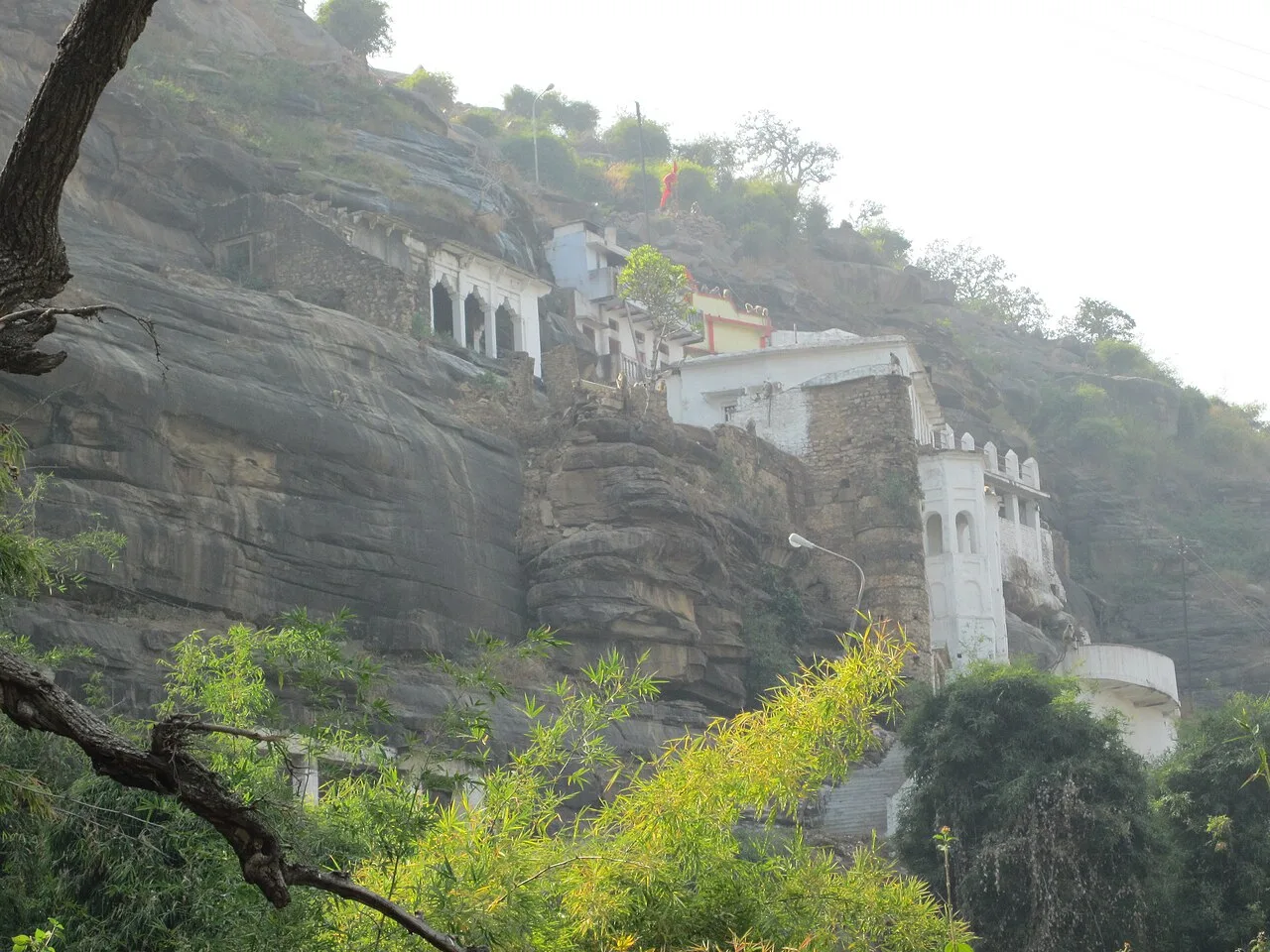
The wider pilgrimage area occupies a transition between the wooded Vindhyan hills and the Bundelkhand countryside. The Mandakini River runs through the sacred landscape, with ghats and settlements along its banks; low hills and patches of forest surround parts of the town. Roads link these features, but access can vary between built-up shrine areas and quieter rural stretches. The terrain is not generally mountainous, though uneven paths, steps and exposed sections around hills and riverbanks can affect walking. In the monsoon, wet tracks and swollen watercourses may make some approaches slower.
Chitrakoot has hot summers, a monsoon season and cooler, generally more comfortable winters. Summer heat can make outdoor walking tiring, so carry water, sun protection and light clothing, and plan breaks. Monsoon weather brings greener surroundings but can also mean slippery paths, muddy rural roads and changes in river conditions. Winter, broadly from late autumn into early spring, is usually the most pleasant period for visiting shrines and walking outdoors. For most travellers, the cooler months are the best choice. Pack comfortable walking shoes, modest clothing for places of worship, sun protection and a light warm layer for winter evenings.
Chitrakoot Dham Karwi railway station, on the Uttar Pradesh side, is a principal rail gateway for the pilgrimage area. Rewa Airport is the nearest operating airport identified, though suitable flights and onward connections need confirmation. Road approaches connect Chitrakoot with Karwi, Satna and other towns in the surrounding region; buses and hired vehicles are practical options. Within the pilgrimage area, walking, auto-rickshaws and hired cars can be combined, depending on the shrine and road access. Allow extra time during major religious gatherings and check current services locally.
Road travel is the main way to move around the pilgrimage area. Local buses and shared vehicles serve some routes, while auto-rickshaws and hired cars are useful for reaching shrine areas or making several stops in a day. Chitrakoot Dham Karwi station, in Uttar Pradesh, is a rail gateway; onward travel is by road. Services and road conditions can change, so confirm arrangements locally, especially during large gatherings. Walking works well around compact temple and riverfront areas, but hills, steps and the spread of sites may make a vehicle helpful for some visitors.
2 days: Chitrakoot; sleep in Chitrakoot overnight. 3 days: Chitrakoot at an unhurried pace; sleep in Chitrakoot on both nights.
Chitrakoot is the most convenient base for visitors focused on the pilgrimage area, with accommodation ranging from simple hotels and guesthouses to dharamshalas. Karwi, across the state boundary in Uttar Pradesh, can suit travellers arriving by rail or seeking another base for the wider region. Government-run lodging may be available, but facilities and availability vary. During major religious gatherings, rooms can fill quickly, so reserve ahead where possible. Check the location and access arrangements before booking, as the sacred area spans two states.
Expect crowds around major shrines and riverfront areas during religious gatherings; keep valuables secure and agree on a meeting point if travelling in a group. Paths may be uneven, steep or slippery, especially after rain, and river conditions can change during the monsoon. Use safe drinking water and take heat precautions in summer. Rural roads and mobile connectivity can be inconsistent away from town. Forested edges are best visited cautiously; do not approach wildlife or enter unfamiliar trails alone. No special permit is generally associated with the town pilgrimage, but confirm officially before entering any notified forest or restricted area.
- Banda · Uttar Pradeshabout 35 km
- Kaushambi · Uttar Pradeshabout 68 km
- Rewaabout 71 km
- Satnaabout 72 km
- Chhatarpurabout 84 km
- Khajurahoabout 93 km
- Prayagraj · Uttar Pradeshabout 114 km
- Raebareli · Uttar Pradeshabout 124 km
Straight-line distance between the centres of each district's destinations; road distance is longer.
All districts of Madhya Pradesh
Q: How many days should I spend in Chitrakoot? A: Two days allow for a focused visit; three days give more time to travel at an easier pace. Q: When is the best time to visit? A: The cooler months from late autumn into early spring are generally most comfortable for walking and sightseeing. Q: Where is the best base? A: Chitrakoot is convenient for the pilgrimage area; Karwi in Uttar Pradesh may suit rail arrivals. Q: How do I get to Chitrakoot? A: Chitrakoot Dham Karwi is a principal rail gateway. Road connections and local vehicles complete the journey; check current services before travelling. Q: Is Chitrakoot suitable for families or elderly travellers? A: Yes, with planning. Some paths have steps or uneven surfaces, so consider mobility needs and use a vehicle where walking would be difficult.
This page draws on our 1 destination guides for Chitrakoot and is updated as our team checks it.
Be the first to share photos, stories, advice or a helpful contact for Chitrakoot.
Loading…