
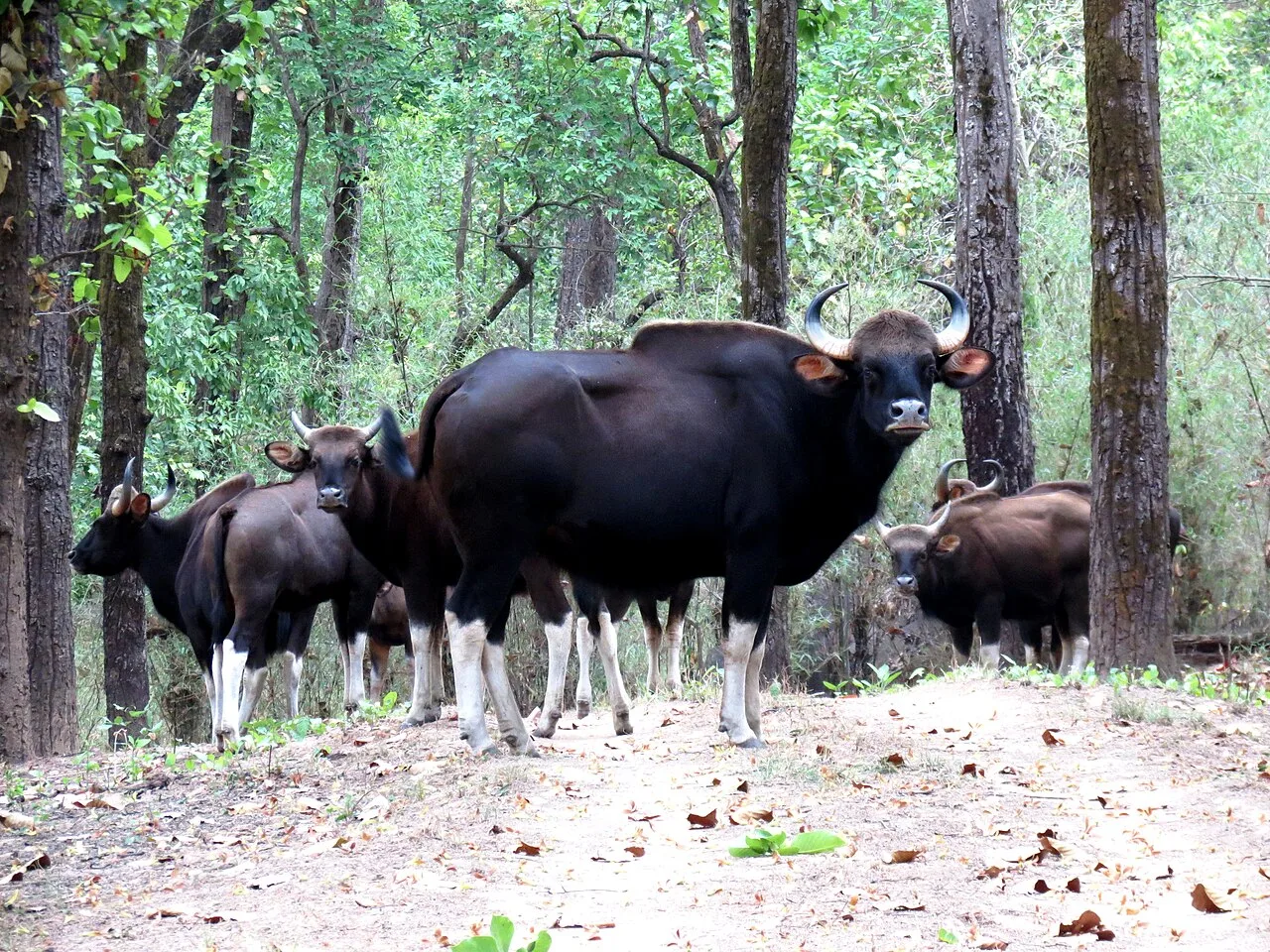
District · Madhya Pradesh
Kanha
Kanha is not a separate administrative district; Kanha Tiger Reserve lies across parts of Mandla and Balaghat districts in eastern Madhya Pradesh.
The Kanha area, in the Maikal highlands of eastern Madhya Pradesh, spans parts of Mandla and Balaghat districts. Sal and mixed forests, open grasslands and the Banjar and Halon river valleys shape its landscape. The forest has long been home to Gond and Baiga communities, whose traditions are part of the region’s cultural character. Kanha National Park was established in 1955 and later became a tiger reserve under Project Tiger. It is especially noted for the recovery of the hard-ground barasingha, as well as its tiger habitat. Today, conservation and safari tourism shape many visits, while nearby settlements remain part of a wider forest and farming landscape.
Kanha is not a separate administrative district; Kanha Tiger Reserve lies across parts of Mandla and Balaghat districts in eastern Madhya Pradesh. Travellers come chiefly for the reserve’s sal forests, grasslands and wildlife, including its well-known tiger habitat and conservation work for the hard-ground barasingha. It offers a forest-based experience in the Maikal hill region, distinct from the state’s major urban and heritage circuits. Plan around the park’s authorised entry points and safari arrangements.
The area around Kanha forms part of the historic Gond heartland of central India. The Gond kingdom of Garha-Mandla, centred at different times on Mandla and nearby strongholds, shaped the region’s political history before Maratha influence expanded in the 18th century. British rule followed in the 19th century, and the area became part of the Central Provinces. Today, the reserve falls within Mandla and Balaghat districts; Kanha itself is not an administrative district. The protected landscape has a more recent conservation history: Kanha National Park was established in 1955, and the area became part of Project Tiger in 1973. Management and habitat protection later supported the recovery of the hard-ground barasingha, a species closely associated with Kanha. The reserve’s present identity therefore reflects both the region’s older Gond history and modern wildlife conservation. Nearby communities, including Gond and Baiga people, have longstanding ties to the forests and surrounding countryside.
Food around Kanha draws on wider Madhya Pradesh and eastern-region traditions. Poha, sometimes served with jalebi, is a familiar breakfast; dal bafla and dal baati are hearty regional meals, while bhutte ka kees is another well-known Madhya Pradesh dish. In forest districts, some community food traditions use locally gathered ingredients, including mahua, but recipes and availability vary. Eateries near the reserve may offer a small, changing menu, so ask what has been freshly prepared. Vegetarian options are common, and travellers can also find meat dishes in some local restaurants.
The wider Mandla–Dindori region has strong Gond and Baiga cultural traditions. Gond painting is well known in Madhya Pradesh, though its best-known centres are outside the immediate Kanha area; local availability can vary. Bamboo and other forest-material crafts, including practical household and basketry work, are made in parts of the region, but should not be assumed to be sold at every reserve gate. Where possible, look for community-run outlets or ask locally about the maker and the work’s origin.
Holi, Diwali and Dussehra are observed across the region, while Gond and Baiga communities maintain local customs and seasonal celebrations that vary by village. Hareli and Pola are among the agricultural festivals observed in parts of Madhya Pradesh, though practices differ locally. These occasions can bring extra visitors to towns and villages, but the busiest periods for accommodation near Kanha are generally the main wildlife-tourism season, school holidays and public-holiday weekends. Reserve lodges and rooms near popular gates can be harder to secure then, so arrange stays and safari permits ahead. Festival dates shift from year to year.
Elsewhere in Madhya Pradesh
Kanha lies in the forested Maikal hills, with wooded slopes, open meadows and sal-dominated forest. The Banjar and Halon river systems and their tributaries run through the wider reserve landscape. The terrain is inland and hilly rather than coastal, and roads between settlements and park gates can be winding or uneven. Travel is shaped by the location of the authorised entry gate: accommodation and safari access are spread around different sides of the reserve, so choose a base that matches your booking. Wildlife viewing takes place within managed park zones, not on unrestricted road routes.
Summer, from roughly March into June, is hot and dry; forest water sources become important to wildlife viewing, but daytime travel can feel tiring. The monsoon usually runs from June into September, bringing greener scenery and wet, sometimes difficult roads; park access and safari operations may be restricted or seasonal. Winter, from about November through February, is generally the most comfortable period for a visit, with cool mornings and evenings. Many visitors favour the cooler months through early summer, while checking current park operations before travel. Pack light breathable clothing, a warm layer for dawn, sun protection, insect repellent and rain protection in the monsoon season.
Balaghat Junction is a nearby railway option, while Jabalpur (Dumna) Airport is the nearest operating airport identified for the area; road journeys from either are longer than map distances suggest. Jabalpur and other regional towns provide road connections towards the reserve’s designated gates. Taxis can be arranged for the onward journey, and bus services may serve towns along the way, but public transport for the final leg can be limited. Within the reserve, safaris use authorized vehicles and designated routes. Check current services locally before travelling.
The reserve is reached by road from towns in Mandla and Balaghat districts, with approach routes depending on whether your entry is at Khatia, Mukki or Sarhi. Local buses connect some larger settlements, but service to park gates and lodges can be limited. Shared vehicles and autos may be available around towns, though they are not a dependable way to reach a specific safari gate at a chosen time. A pre-arranged taxi or lodge transfer is usually the practical option for arrival and inter-gate travel. Safari vehicles inside the reserve are separately regulated; confirm arrangements with the official park authority.
2 days: Kanha Tiger Reserve; sleep both nights near your booked entry gate, such as Khatia or Mukki. 3 days: Kanha Tiger Reserve on two separate days; sleep each night near your booked entry gate. 4 days: Kanha Tiger Reserve over three days; sleep each night near your booked entry gate, keeping the same base where possible.
Choose accommodation near the entry gate for which you have a safari booking: Khatia/Kisli, Mukki and Sarhi each serve different parts of the reserve. These areas have private lodges and resorts, with some homestays; availability and facilities vary. Government accommodation may be available, but confirm directly through official channels. Mandla, Baihar and other larger settlements can suit an overnight road stop, though they may be less convenient for early access to a particular gate. For a short visit, staying in one gate area avoids unnecessary road transfers.
Follow park rules and remain inside authorised areas; wildlife, including large mammals, is unpredictable, and visitors must not approach or feed animals. Entry and safari access require official protected-area arrangements, so confirm current permits, gate rules and seasonal operations through official park channels. Carry safe drinking water and sun protection, and use insect repellent. Monsoon roads can be muddy or disrupted, while forest roads may be rough and mobile connectivity unreliable. Arrange transport and essential medicines in advance, especially if staying near a remote gate. Holiday periods and the main safari season can be crowded, so book accommodation and permits early and verify all arrangements officially.
- Kabirdham · Chhattisgarhabout 53 km
- Rajnandgaon · Chhattisgarhabout 116 km
- Amarkantakabout 125 km
- Jabalpurabout 132 km
- Durg · Chhattisgarhabout 138 km
- Bilaspur · Chhattisgarhabout 150 km
- Gondia · Maharashtraabout 152 km
- Seoniabout 154 km
Straight-line distance between the centres of each district's destinations; road distance is longer.
All districts of Madhya Pradesh
Q: How many days should I spend around Kanha? A: Two or three days allow time for more than one reserve visit and a less rushed stay; add time if road transfers are long. Q: When is the best time to visit? A: The cooler months from roughly November to February are comfortable; check official updates because seasonal access can vary. Q: What is the best base? A: Stay near the entry gate shown on your safari booking, such as Khatia, Mukki or Sarhi. Q: How do I get to Kanha? A: Travel by road from a larger regional town or transport hub, then arrange a taxi or lodge transfer to your chosen gate. Q: Is Kanha suitable for families or elderly travellers? A: It can suit visitors who are comfortable with early starts, bumpy roads and time in a safari vehicle; consider mobility needs and consult a clinician about individual health concerns.
This page draws on our 1 destination guides for Kanha and is updated as our team checks it.
Be the first to share photos, stories, advice or a helpful contact for Kanha.
Loading…