
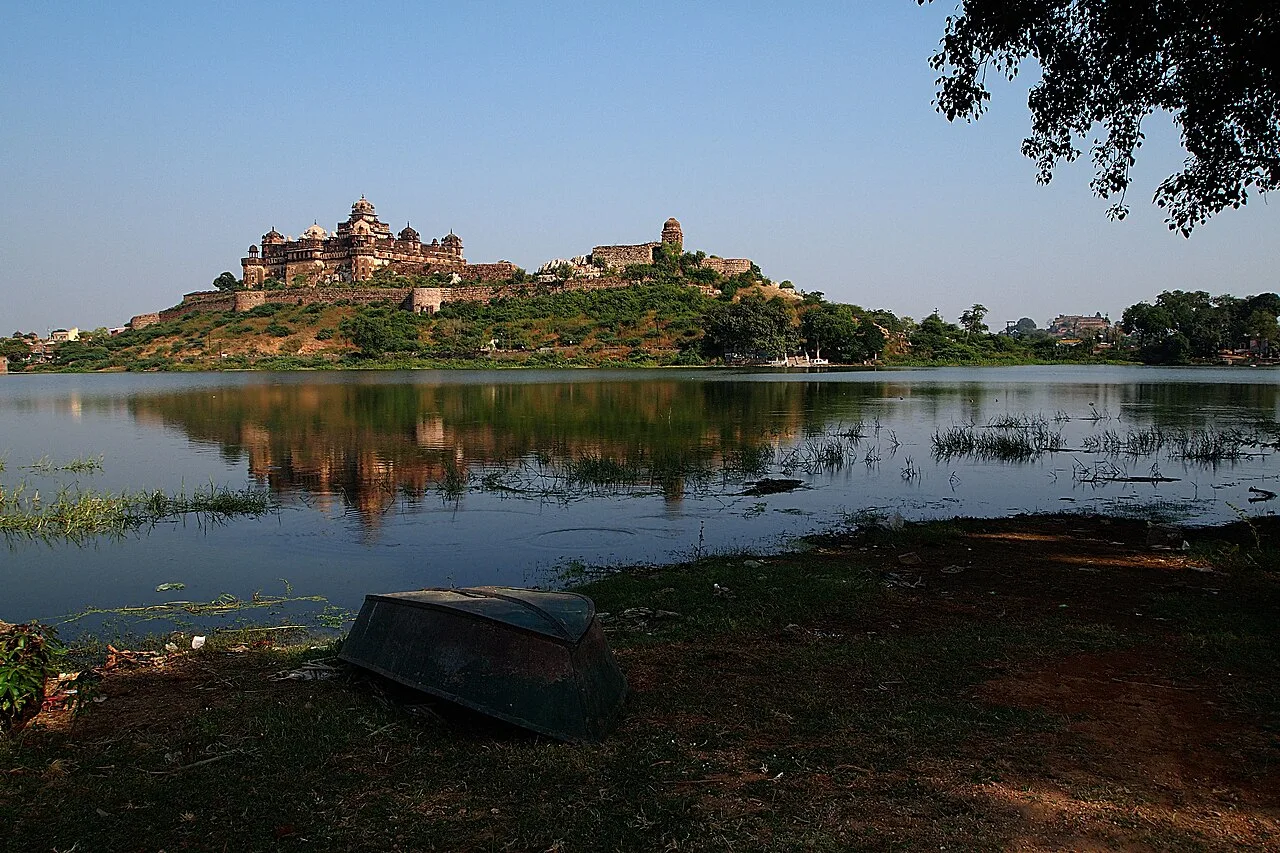
District · Madhya Pradesh
Datia
Datia lies in northern Madhya Pradesh in the Bundelkhand cultural region, close to the travel corridor linking Gwalior and Jhansi.
Datia lies in northern Madhya Pradesh, in the historic Bundelkhand region. Its landscape includes rocky uplands, cultivated plains and seasonal streams, with the wider area shaped by dry conditions and agriculture. The district’s identity is closely tied to its former princely state and the Bundela rulers. In Datia town, the imposing Datia Palace—also called Bir Singh Palace or Bir Singh Dev Palace—reflects this history and is a prominent landmark. Temples and religious institutions add to the town’s character, while nearby Jhansi and Gwalior connect the district to the wider history and travel routes of central India. Datia offers a quieter, small-town experience alongside its architectural heritage.
Datia lies in northern Madhya Pradesh in the Bundelkhand cultural region, close to the travel corridor linking Gwalior and Jhansi. It offers a way to explore the area’s Bundela heritage and historic architecture, with Datia Palace—also called Bir Singh Palace—as the destination currently documented in this district index. The wider district is also associated with pilgrimage traditions, including those of Pitambara Peeth and the Jain centre at Sonagiri. Datia can suit travellers seeking a quieter stop between larger regional cities, or a focused visit to a historic palace and its setting.
Datia’s history is closely linked to the Bundela Rajput rulers of Bundelkhand. In the early seventeenth century, Raja Bir Singh Deo of Orchha commissioned the palace now known as Datia Palace or Bir Singh Palace. Datia later developed as a separate Bundela princely state, governed by its own ruling house. The region experienced the changing political influence of Mughal power and, later, British paramountcy; during the colonial period, Datia was among the princely states administered within the Central India Agency. After independence, the former princely state became part of Vindhya Pradesh. In 1956, following the reorganisation of Indian states, Datia was incorporated into Madhya Pradesh and continued as a district. Its built heritage and regional traditions reflect this layered history, though the surviving record and visitor interpretation are most visible in the town’s palace and religious institutions.
Datia’s food belongs to the wider Bundelkhand and Madhya Pradesh traditions. Everyday meals often centre on grains, lentils and seasonal vegetables; local menus can vary with the harvest and the season. Across Madhya Pradesh, poha is a familiar breakfast, while dal bafla and dal baati are well-known regional meals. Sweets such as gajak and mawa-based treats are found in parts of the state, though availability differs by town. Small eateries may prepare only a limited menu each day, so it is worth asking what is freshly cooked. Vegetarian food is widely available, and some establishments also serve meat dishes.
Datia’s craft scene is best understood within the broader Bundelkhand region rather than as a single distinctive local speciality. Traditional skills across the region include pottery, weaving and work in wood or stone, though what visitors can find varies between towns and villages. Madhya Pradesh is also known for several regional textile and craft traditions, but these should not automatically be attributed to Datia itself. Visitors interested in locally made goods can ask in town markets or at cultural venues about current makers and products. Buying directly from artisans, where possible, helps support working craft traditions.
Navratri observances bring pilgrims to the district, especially to Pitambara Peeth, and can make nearby accommodation and roads busier. Dussehra, Diwali and Holi are also celebrated locally, generally in their usual autumn and spring seasons. Jain observances at Sonagiri, including events associated with Mahavir Jayanti in spring, draw visitors from beyond the district. Crowd levels vary by year and event, but travellers visiting during major religious occasions should allow extra time and check room availability in advance.
Elsewhere in Madhya Pradesh
Datia is part of the Bundelkhand upland, with gently undulating and locally rocky ground, cultivated plains and patches of scrub or woodland. Seasonal streams and watercourses shape parts of the countryside, while the settled areas are linked by road across relatively open terrain. The district has no coastline or high mountain ranges, but uneven ground and seasonal water can affect rural routes. Datia town is the most practical base for the palace; journeys beyond town may take longer during or after heavy monsoon rain.
The year generally has hot summers, a monsoon season and cooler winters. Summer days can be demanding for outdoor sightseeing, so plan visits for the cooler parts of the day and carry sun protection and water. Monsoon rain brings greener surroundings but may make some rural roads slower or uneven. October to March is usually the most comfortable period for exploring, with pleasant daytime conditions and cooler winter mornings and evenings. Pack light, breathable clothing for warmer months, a rain layer during the monsoon, and an extra layer for winter mornings and nights.
Datia Railway Station is the nearest principal rail stop for Datia town. The nearest operating airport is Gwalior’s Rajmata Vijaya Raje Scindia Airport; road travel from the airport takes longer than a straight-line map estimate. Datia is linked by road with Gwalior and Jhansi, and buses and private vehicles serve regional routes. Within town, auto-rickshaws and taxis can help with local journeys; confirm availability for trips beyond the centre. Jhansi, across the Uttar Pradesh border, is another useful regional transport hub. Check current services locally before setting out.
Datia town is connected by road with regional centres including Jhansi and Gwalior, and rail services on the Gwalior–Jhansi corridor provide another way to reach the area. Within town, auto-rickshaws and local taxis can be useful for reaching the palace and other stops. Local buses and shared vehicles serve some routes between settlements, though coverage and frequency can vary. For travel outside town or a flexible day trip, arrange a taxi locally and confirm the return plan before setting out. Allow additional time on rural roads during wet weather.
2 days: Datia Palace; sleep night 1 in Datia. 3 days: Datia Palace, with a slower second visit or extra time to explore; sleep nights 1 and 2 in Datia.
Datia town is the most convenient base for visiting Datia Palace and keeping travel within the district simple. Visitors can look for hotels and guesthouses, while dharamshalas may suit pilgrims; facilities and availability vary, particularly during major religious observances. Book ahead if travelling during a festival period. For a wider choice of accommodation, some travellers use larger nearby regional cities as bases, but this adds road travel to a Datia visit. Check recent reviews and confirm access and amenities directly before booking.
Datia Palace is a historic structure, so expect stairs, uneven surfaces and limited accessibility in some areas; elderly visitors may want assistance and time to move carefully. Summer heat calls for water, shade and sun protection, while monsoon showers can slow travel on rural roads. Use bottled or reliably treated drinking water. Religious events can bring dense crowds, so agree on a meeting point and keep belongings secure. Mobile connectivity is generally more dependable in towns than in some rural areas. Take ordinary care on local roads, especially after rain; no special permit is generally required for a town visit, but confirm requirements officially for any restricted site or activity you plan to visit.
- Jhansi · Uttar Pradeshabout 27 km
- Orchhaabout 40 km
- Niwariabout 40 km
- Shivpuriabout 66 km
- Gwaliorabout 68 km
- Bhindabout 84 km
- Morenaabout 88 km
- Chanderiabout 111 km
Straight-line distance between the centres of each district's destinations; road distance is longer.
All districts of Madhya Pradesh
Q: How many days should I spend in Datia? A: One or two days can cover a focused visit to Datia Palace; allow longer if you want a slower pace or to explore the wider district. Q: When is the best time to visit? A: October to March is usually the most comfortable season. Summer can be hot, and monsoon rain may slow road journeys. Q: What is the best base for visiting the district? A: Datia town is the most convenient base for Datia Palace. Larger regional cities offer more accommodation choice but involve extra travel. Q: How can I get to Datia? A: Datia is accessible by road from regional centres such as Jhansi and Gwalior, and by rail on the Gwalior–Jhansi corridor. Check current connections before travelling. Q: Is Datia suitable for families or elderly travellers? A: Yes, though historic palace surfaces and stairs may be challenging for some visitors. Families and older travellers should allow time, carry water and take care in crowds and hot weather.
This page draws on our 1 destination guides for Datia and is updated as our team checks it.
Be the first to share photos, stories, advice or a helpful contact for Datia.
Loading…