
District · Madhya Pradesh
Khandwa
Khandwa lies in the Nimar region of southwestern Madhya Pradesh, linking the Narmada valley with cultivated plains and the Satpura landscape.
Khandwa district lies in the Nimar region of southwestern Madhya Pradesh, where the Narmada valley, cultivated plains and the wooded slopes of the Satpura landscape shape its character. Khandwa town has long been a commercial and railway centre for the surrounding countryside. The district also has an important sacred landscape at Omkareshwar, whose island setting and Shiva pilgrimage traditions draw visitors from across India. Just upstream of Mandhata, the Omkareshwar Dam adds a modern engineering landmark to the river setting. Hanuwantiya, on the Indira Sagar reservoir, represents another side of the district: broad expanses of water and leisure-oriented tourism. Together, farming settlements, pilgrimage routes and reservoir landscapes give Khandwa a varied identity.
Khandwa lies in the Nimar region of southwestern Madhya Pradesh, linking the Narmada valley with cultivated plains and the Satpura landscape. It is best known to visitors for Omkareshwar, an important Shiva pilgrimage centre on the Narmada, and for the river setting of the Omkareshwar Dam. Hanuwantiya, beside the Indira Sagar reservoir, offers a contrasting water-and-leisure experience. Khandwa town is also a longstanding market and railway centre, making it a useful arrival point for journeys around the district. Travellers can combine sacred sites, reservoir scenery and regional town life, while allowing for road journeys between the different visitor areas.
The Nimar region has been shaped by successive powers whose influence extended across central India, including the Mauryas, regional kingdoms and, later, the Delhi Sultanate and Mughals. Control shifted among local rulers and larger states over the centuries. The Narmada crossing and pilgrimage landscape at Omkareshwar gave the area religious importance as well as a place in regional routes. Maratha influence grew in the early modern period, including that of the Holkars in parts of the wider region. British authority expanded after Maratha power receded in the early nineteenth century; Nimar was subsequently administered within the Central Provinces. Following independence and the reorganisation of states, the area became part of Madhya Pradesh. Khandwa has served as an important administrative, commercial and railway centre. The district was commonly known administratively as East Nimar, distinguishing it from West Nimar; Burhanpur became a separate district in 2003. Administrative boundaries and names have changed over time, so older references to Nimar may not describe the present district exactly.
2 destination guides
Hanuwantiya Island
Hanuwantiya Island is a tourism destination in Khandwa district, Madhya Pradesh. Visitors come to the island, which the state tourism corporation developed as a hub for tourism.
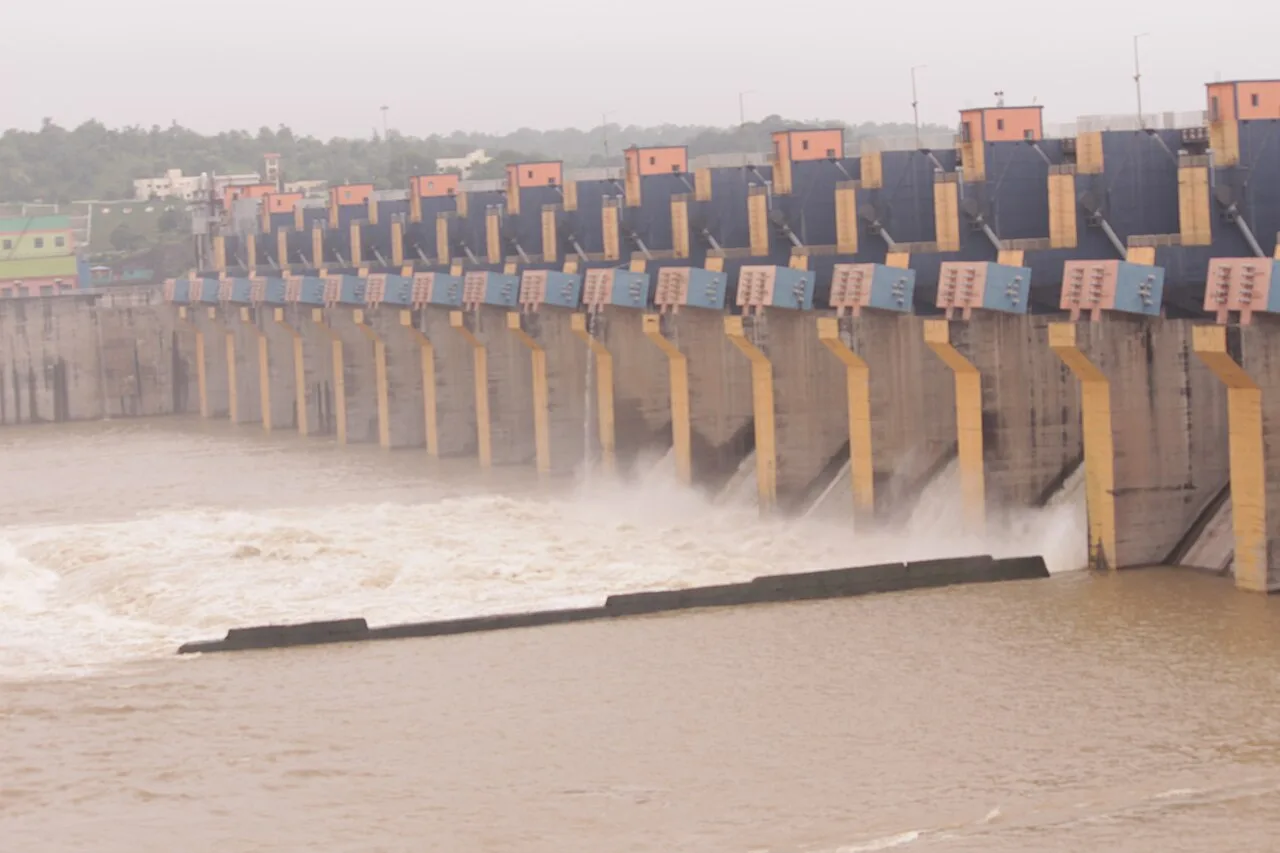
Omkareshwar Dam
Omkareshwar Dam is a gravity dam on the Narmada in Madhya Pradesh, upstream of Mandhata. Visitors can view the structure and its associated hydroelectric station, built alongside an irrigation project.
Food in Khandwa reflects the wider Nimar and Madhya Pradesh table rather than a sharply separate district cuisine. Poha with jalebi is a familiar regional breakfast, while dal bafla offers a substantial meal of baked wheat dumplings, dal and ghee. Bhutte ka kees, made with grated corn, is associated especially with nearby Malwa and may appear on regional menus. Everyday meals commonly centre on roti, dal and seasonal vegetables. Vegetarian food is readily available around pilgrimage areas such as Omkareshwar. In smaller eateries, ask what has been freshly prepared rather than expecting every regional speciality daily.
Khandwa belongs to the wider Nimar cultural region, but a distinctive district-wide craft speciality should not be assumed. The best-known nearby handloom tradition is Maheshwari weaving, centred on Maheshwar in neighbouring Khargone district, not Khandwa itself. Its cotton and silk-cotton saris and fabrics are recognised for fine textures, borders and restrained geometric patterns. Travellers interested in regional textiles can look for clearly identified Maheshwari products and ask about their place of production. Pilgrimage souvenirs sold around Omkareshwar are not necessarily locally handmade, so provenance is worth checking.
Mahashivratri is an important occasion at Omkareshwar, and pilgrimage crowds can increase around the festival season. Narmada Jayanti, usually observed in January or February, is marked at river centres in the wider Narmada region. Navratri and Diwali are celebrated in towns and villages, with local temple activity and family gatherings. Some communities across the wider Nimar region observe seasonal and tribal festivals, including Bhagoria in the weeks before Holi; practices vary by place. During major pilgrimage periods, accommodation near Omkareshwar can be in greater demand, so booking ahead is sensible.
Elsewhere in Madhya Pradesh
The district lies in the Narmada valley, with cultivated lowlands, riverbanks and wooded rises toward the Satpura landscape. The Narmada is central to the setting at Omkareshwar, while the Indira Sagar reservoir creates broad expanses of water around Hanuwantiya. This varied terrain means visits are mainly linked by road rather than by a single compact town centre. Reservoir-side routes can feel remote, and travel may take longer than a map suggests. Seasonal water levels and local access arrangements can also affect shoreline activities and boat services.
Khandwa has hot summers, a monsoon season and generally milder, drier winters. Summer heat can make midday sightseeing tiring, especially on exposed roads and near the water. Monsoon rains bring greener scenery but may affect rural roads, shoreline access and travel plans. The cooler months, broadly from October to February, are usually the most comfortable for visiting Omkareshwar and Hanuwantiya. Pack light clothing and sun protection for warm days, plus a refillable water bottle. In winter, carry a light layer for mornings and evenings; in the rainy season, bring rain protection and footwear suitable for wet paths.
Khandwa Junction is the principal rail gateway for the district, with onward road travel needed for Omkareshwar Dam and Hanuwantiya. Devi Ahilyabai Holkar Airport in Indore is the nearest major operating airport for these destinations. Road approaches from Indore and Khandwa serve the district's main visitor areas; choose your arrival point according to the places you plan to visit rather than straight-line proximity. Buses and shared vehicles connect towns, while hired taxis offer greater flexibility for reservoir-side trips. Auto-rickshaws are useful for short journeys in town. Check current services locally.
Khandwa town is the district's main rail and road hub, with road journeys needed to reach Omkareshwar Dam and Hanuwantiya. Local buses and shared vehicles serve towns and settlements, though services may be less convenient for reservoir-side stops. Taxis or a hired vehicle allow greater flexibility for combining the sights. Auto-rickshaws are useful for short trips within Khandwa and other towns. Boats may be available for recreation around Hanuwantiya, depending on current operations and water conditions; confirm locally and follow operator safety instructions. Check road and transport conditions before setting out.
2 days: Omkareshwar Dam; sleep near Omkareshwar or Mandhata. Hanuwantiya Island; sleep near Hanuwantiya. 3 days: Omkareshwar Dam; sleep near Omkareshwar or Mandhata. Hanuwantiya Island; sleep near Hanuwantiya. Hanuwantiya Island; sleep near Hanuwantiya. 4 days: Hanuwantiya Island; sleep near Hanuwantiya. Hanuwantiya Island; sleep near Hanuwantiya. Omkareshwar Dam; sleep near Omkareshwar or Mandhata. Omkareshwar Dam; sleep near Omkareshwar or Mandhata.
For a pilgrimage-focused visit, stay near Omkareshwar or Mandhata, where accommodation caters to visitors and pilgrims. Khandwa town is a practical base for rail connections and local services, but involves road travel to the main sights. Hanuwantiya is the most convenient base for time beside the reservoir; available stays and services may be more limited than in town. Options across the district can include hotels, guesthouses, homestays, government lodges and dharamshalas. Availability varies by season and festival demand, so confirm arrangements before travelling.
Summer heat calls for sun protection, regular water breaks and avoiding strenuous outdoor activity in the hottest part of the day. During monsoon, check road conditions and take care on wet or uneven paths. Do not enter the Narmada or reservoir water except through authorised activities; follow local advice around dams, shorelines and boat trips, and use properly equipped operators. Crowds can be heavy at Omkareshwar during major festivals. Mobile coverage may be patchy on some rural and reservoir-side routes, so plan ahead. Wildlife may be present in wooded areas; keep a respectful distance. Confirm any access restrictions or permits with official local authorities before travel.
- Omkareshwarabout 24 km
- Indoreabout 79 km
- Burhanpurabout 81 km
- Khargoneabout 82 km
- Maheshwarabout 106 km
- Dharabout 113 km
- Ujjainabout 128 km
- Amravati · Maharashtraabout 148 km
Straight-line distance between the centres of each district's destinations; road distance is longer.
All districts of Madhya Pradesh
Q: How many days should I spend in Khandwa district? A: Two to three days can cover the main visitor areas; allow longer if you want a slower pilgrimage visit or more time at Hanuwantiya. Q: When is the best time to visit? A: October to February is generally the most comfortable period. Monsoon brings greener scenery but can affect road and shoreline access. Q: What is the best base for visiting the sights? A: Stay near Omkareshwar or Mandhata for pilgrimage, near Hanuwantiya for the reservoir, or in Khandwa town for rail and town services. Q: How do I get to Khandwa and its visitor areas? A: Khandwa Junction is the principal rail gateway. Indore airport is the nearest major operating airport; continue by road and check current local transport options. Q: Is Khandwa suitable for families or elderly travellers? A: Yes, with planning. Choose road transfers suited to your needs, allow rest between sites, and check steps, walking distances and access conditions locally.
This page draws on our 2 destination guides for Khandwa and is updated as our team checks it.
Be the first to share photos, stories, advice or a helpful contact for Khandwa.
Loading…