
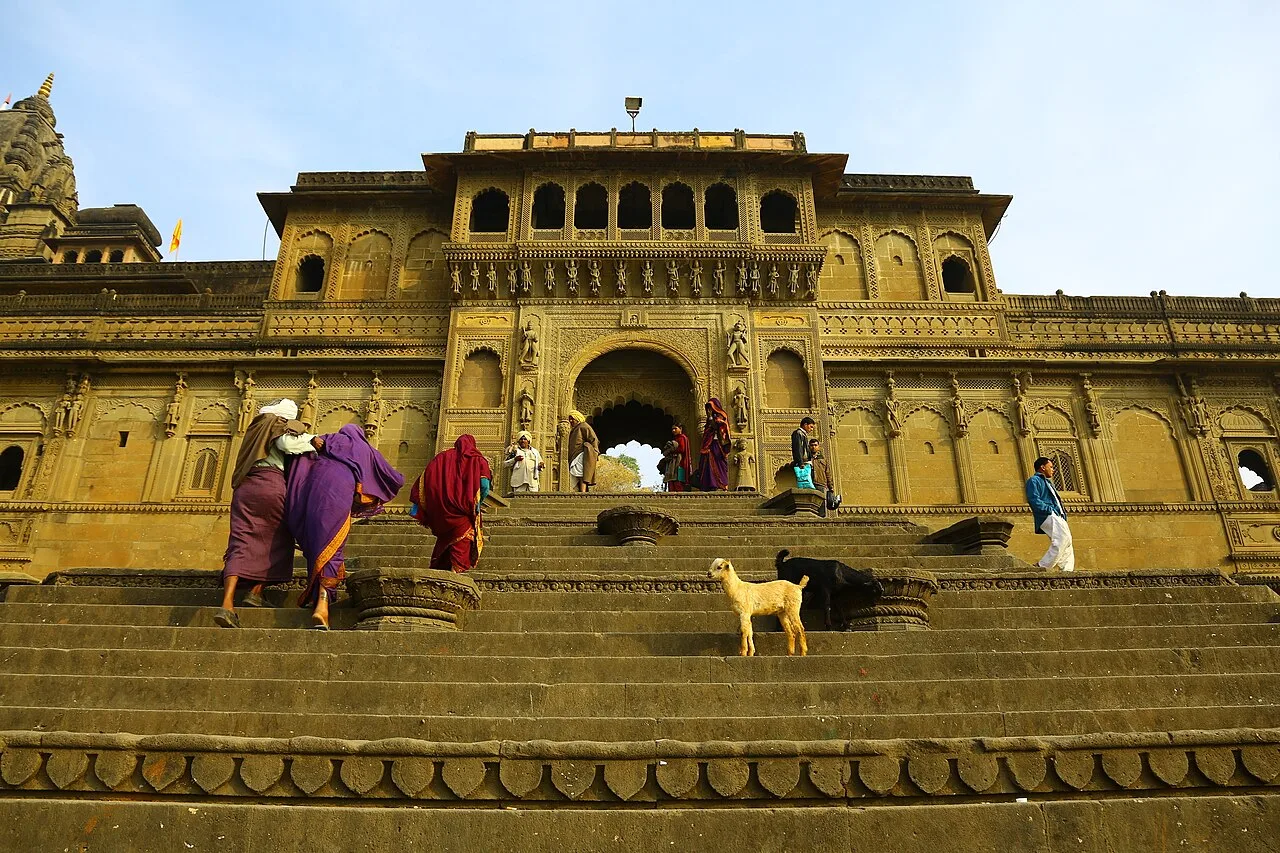
District · Madhya Pradesh
Maheshwar
Maheshwar is a historic town in Khargone district, in the Nimar region of southwestern Madhya Pradesh.
Maheshwar is a historic town in Khargone district, rather than a separate administrative district, in southwestern Madhya Pradesh. Set beside the Narmada River in the Nimar region, it is defined by broad river views, stepped ghats, temples and the fort above the waterfront. Its best-known historical association is with the eighteenth-century Holkar ruler Ahilyabai Holkar, who made Maheshwar her seat of government and supported religious building and public works. The ghats and Ahilya Fort anchor a visit, while lanes behind the riverfront reveal a town shaped by pilgrimage and handloom weaving. Maheshwar’s character is quieter and more intimate than that of a large city, with everyday worship and textile production remaining important parts of local life.
Maheshwar is a historic town in Khargone district, in the Nimar region of southwestern Madhya Pradesh. Beside the Narmada, it offers a distinctive combination of riverfront ghats, temples and a fort overlooking the water. Its strongest historical association is with Ahilyabai Holkar, the eighteenth-century ruler who made Maheshwar her seat of government and supported religious buildings and public works. Visitors can explore the waterfront on foot and see how worship and handloom weaving remain part of everyday town life. Maheshwar suits travellers seeking a cultural and riverside visit rather than a large-city itinerary; it can also be combined with other stops in the region.
Maheshwar has long been a settlement on the Narmada, a river important to pilgrimage and regional trade. Local tradition identifies the town with the ancient city of Mahishmati, though accounts connecting the two are not all historically verifiable. In the eighteenth century, Maheshwar became closely associated with the Holkar dynasty, a Maratha ruling house. Ahilyabai Holkar made it her seat of government and is remembered for supporting temples, ghats and other public works. The town’s fort and riverfront preserve much of this association, while its handloom tradition developed as an enduring part of local life. Under British paramountcy, the Holkars ruled the princely state of Indore, within which the wider region lay. After Indian independence, the princely state joined the Indian Union in 1948 and later became part of Madhya Pradesh. Maheshwar is now a town in Khargone district, not a separate district. Khargone was formerly known as West Nimar district; the district’s name changed to Khargone in the late twentieth century.
2 destination guides · 1 on the map
Ahilya Fort
Ahilya Fort is a fort in Maheshwar district, Madhya Pradesh. It may interest visitors looking to see a fort recorded among the state’s places.
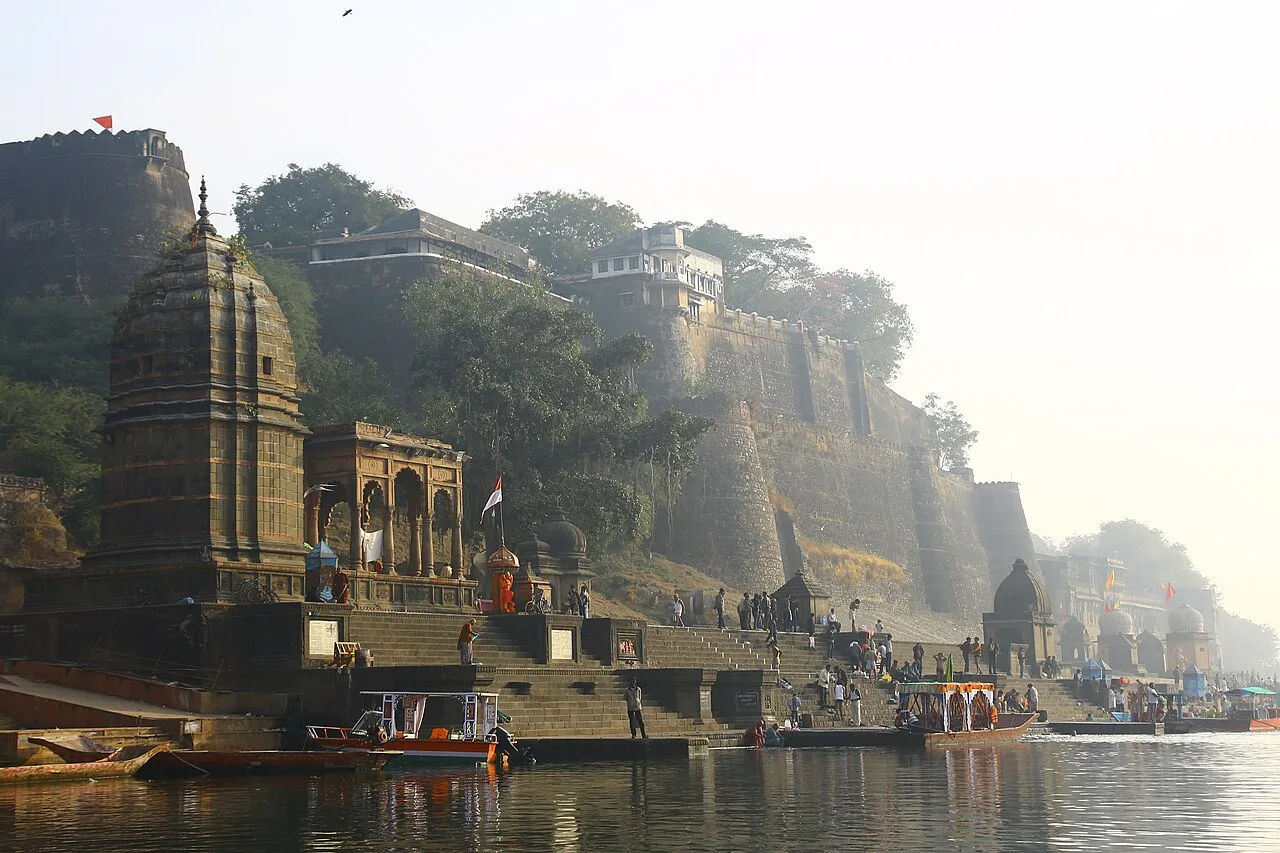
Maheshwar Ghats
Maheshwar Ghats are riverfront steps in a historic town on the Narmada in Madhya Pradesh. Visitors come to see the ghats and learn about Maheshwar’s past as a capital under the Holkars.
Food in Maheshwar draws on the wider traditions of Nimar, Malwa and Madhya Pradesh. Poha with jalebi is a familiar regional breakfast, while dal bafla, wheat dumplings served with dal and ghee, is worth asking for at eateries offering regional meals. Bhutte ka kees, made from grated corn, is associated especially with nearby Malwa and Indore rather than exclusively with Maheshwar. Simple vegetarian meals suit many visitors to this pilgrimage town. Small establishments may prepare only a few dishes each day, so ask what has been freshly cooked rather than expecting every regional speciality to be available.
Maheshwar is especially associated with Maheshwari handloom textiles, a weaving tradition whose development is closely linked to Ahilyabai Holkar’s patronage. Maheshwari saris commonly combine cotton and silk, with lightweight fabrics, striped or checked fields and distinctive borders. Contemporary weavers also produce dupattas, stoles and dress materials. Visiting a weaving workshop or a reputable cooperative offers a useful introduction to loom work and the differences between fabrics. When buying, ask about fibre composition, whether the piece is handwoven and where it was made; not every textile sold in town is necessarily locally woven.
Religious observances shape the calendar in Maheshwar. Mahashivratri, Navratri and Diwali are celebrated locally, while Narmada Jayanti, usually in January or February, draws worshippers to the riverfront. The wider Nimar region also observes major Hindu festivals such as Holi. Celebrations can bring more visitors to the ghats and temples, and accommodation may be busier around prominent religious occasions and holiday periods. Festival dates follow religious calendars and vary each year, so travellers planning a stay around an event should check local information and arrange rooms ahead where possible.
Elsewhere in Madhya Pradesh
Maheshwar stands beside the Narmada in the broad valley between the Vindhya and Satpura ranges. The river, stepped ghats and rocky stretches define the town’s main views and shape its walking routes. Beyond the waterfront, the surrounding Nimar landscape includes agricultural areas and low, uneven terrain; this is not a coastal or high-mountain destination. The river is central to local worship and gives the town its distinctive setting, but its level and current change with the season. Roads connect Maheshwar with nearby towns and the wider region, while walking is practical around the compact historic centre.
Maheshwar has a hot summer, a monsoon season and a generally milder winter. The hotter months before the rains can make midday sightseeing tiring, so plan walks for cooler parts of the day and carry sun protection. Monsoon weather brings rain and can make steps, roads and river edges slippery; river conditions may also change. Winter, broadly from November to February, is usually the most comfortable season for exploring the ghats and town on foot. These months are a good general choice for a visit, though festival periods can be busier. Pack light clothing, comfortable footwear, sun protection and a light layer for cooler winter evenings; carry rain protection during the monsoon.
Devi Ahilyabai Holkar Airport in Indore is the main nearby air gateway, and Indore Junction is a practical major railway gateway for Maheshwar. Continue by road using a taxi or a bus connection after confirming the route and boarding point. Maheshwar has road links with Indore, Dhamnod and Khargone; connections through Dhamnod may be useful depending on available services. Within town, walking works well around the ghats and adjoining lanes, while auto-rickshaws can help with longer local trips. Riverfront steps and uneven surfaces may require extra care. Check current services locally.
Walking is convenient for the ghats, fort area and adjoining lanes, though steps and uneven surfaces require care. Auto-rickshaws can help with local journeys, and taxis may be arranged for trips beyond town. Road links connect Maheshwar with Dhamnod, Khargone and Indore; local buses and shared vehicles may operate on regional routes, but services and boarding points can vary. Confirm current connections locally, especially when travelling onward through Dhamnod. Boats may be available for river experiences, depending on local operations and river conditions; check that conditions are suitable before boarding.
2 days: Maheshwar Ghats → Ahilya Fort; sleep in Maheshwar on night 1. 3 days: Ahilya Fort → Maheshwar Ghats; sleep in Maheshwar on nights 1 and 2.
Maheshwar is the practical base for visiting both the riverfront and fort, and suits a short cultural stay. Accommodation commonly includes small hotels, guesthouses and homestays; simple religious lodging such as dharamshalas may also be available. Some visitors use Indore as a broader regional base, especially when combining Maheshwar with other parts of Madhya Pradesh, but it involves additional road travel for a visit here. Check the location and facilities of a stay in advance, particularly if steps, limited mobility or festival crowds are a concern.
Take care on the steep, sometimes uneven ghat steps, especially after rain, and avoid entering the Narmada unless local conditions and advice make it safe; currents and water levels can change. Use sun protection in hot weather and carry drinking water, preferably sealed or treated. Monsoon rain may affect road conditions, so allow flexibility for regional journeys and check locally before setting out. Mobile connectivity can vary, and it is sensible to keep essential details accessible offline. Crowds can increase during religious observances. Ordinary visits to Maheshwar do not generally require protected-area permits; confirm officially if your itinerary includes a separately regulated site.
- Khargoneabout 25 km
- Dharabout 28 km
- Omkareshwarabout 84 km
- Indoreabout 86 km
- Khandwaabout 106 km
- Burhanpurabout 121 km
- Ujjainabout 129 km
Straight-line distance between the centres of each district's destinations; road distance is longer.
All districts of Madhya Pradesh
Q: How many days should I spend in Maheshwar? A: Two days allow time for the ghats and fort at an unhurried pace; a third day gives more time to relax or explore locally. Q: When is the best time to visit? A: Winter, broadly November to February, is generally the most comfortable season for walking and sightseeing. Q: Where is the best base? A: Stay in Maheshwar for easy access to the ghats and fort; Indore can work as a wider regional base but requires more road travel. Q: How do I get to Maheshwar? A: Indore is the main nearby air and major rail gateway. Continue by road, checking current bus connections, boarding points or taxi options. Q: Is Maheshwar suitable for families or elderly travellers? A: Yes, but the ghat steps and uneven surfaces can be challenging. Plan for assistance or limited access where needed, and take care near the river.
This page draws on our 2 destination guides for Maheshwar and is updated as our team checks it.
Be the first to share photos, stories, advice or a helpful contact for Maheshwar.
Loading…