
District · Madhya Pradesh
Vidisha
Vidisha offers a close look at central India’s ancient religious and trading history, with archaeological sites that span several centuries.
Vidisha district lies in central Madhya Pradesh, where open agricultural country, low rocky rises and river valleys shape a landscape between Bhopal and the northern plateau. The district’s history is especially visible around Vidisha town and nearby Besnagar, once an important centre on ancient trade routes. The Heliodorus pillar, erected around 113 BCE, reflects contact between local rulers and the wider Hellenistic world, while the Udayagiri Caves preserve important early Hindu rock-cut sculpture from the Gupta period. Today the district combines a working regional town and rural settlements with archaeological sites that reward a slower visit. It is also a useful base for exploring historic places in the surrounding region.
Vidisha offers a close look at central India’s ancient religious and trading history, with archaeological sites that span several centuries. It is best known for the Udayagiri Caves, whose early Gupta-period carvings include important Hindu imagery, and the Heliodorus pillar at ancient Besnagar, an unusual record of cultural contact in the second century BCE. The district lies north-east of Bhopal and is part of the wider heritage-rich region around Sanchi, which is in neighbouring Raisen district. Vidisha also offers a quieter base for exploring historic sites and the agricultural landscapes of the Betwa basin.
The area around present-day Vidisha was an important settlement and trading centre in ancient India. Besnagar, near the modern town, is associated with the Heliodorus pillar, erected around 113 BCE by a Greek envoy to the Shunga court. The region later flourished under the Guptas: Udayagiri’s rock-cut sanctuaries and inscriptions provide evidence of royal patronage in the early fifth century CE. Later centuries brought changing central Indian powers, including the Paramaras and Sultanate and Mughal authorities, while local settlements remained connected to routes across the Malwa region. Maratha influence grew in the eighteenth century. In the later princely period, parts of the present district were administered within the Bhopal State; after independence, the area was incorporated into the reorganised states of central India and then Madhya Pradesh. Vidisha became the district’s principal town, while the district’s present administrative boundaries reflect post-independence reorganisation. The name Vidisha replaced the older name Bhilsa for the town.
3 destination guides · 2 on the map
Bijakhal
Bijakhal is a heritage site in Vidisha district, Madhya Pradesh, and may interest visitors exploring the district’s recognised heritage.
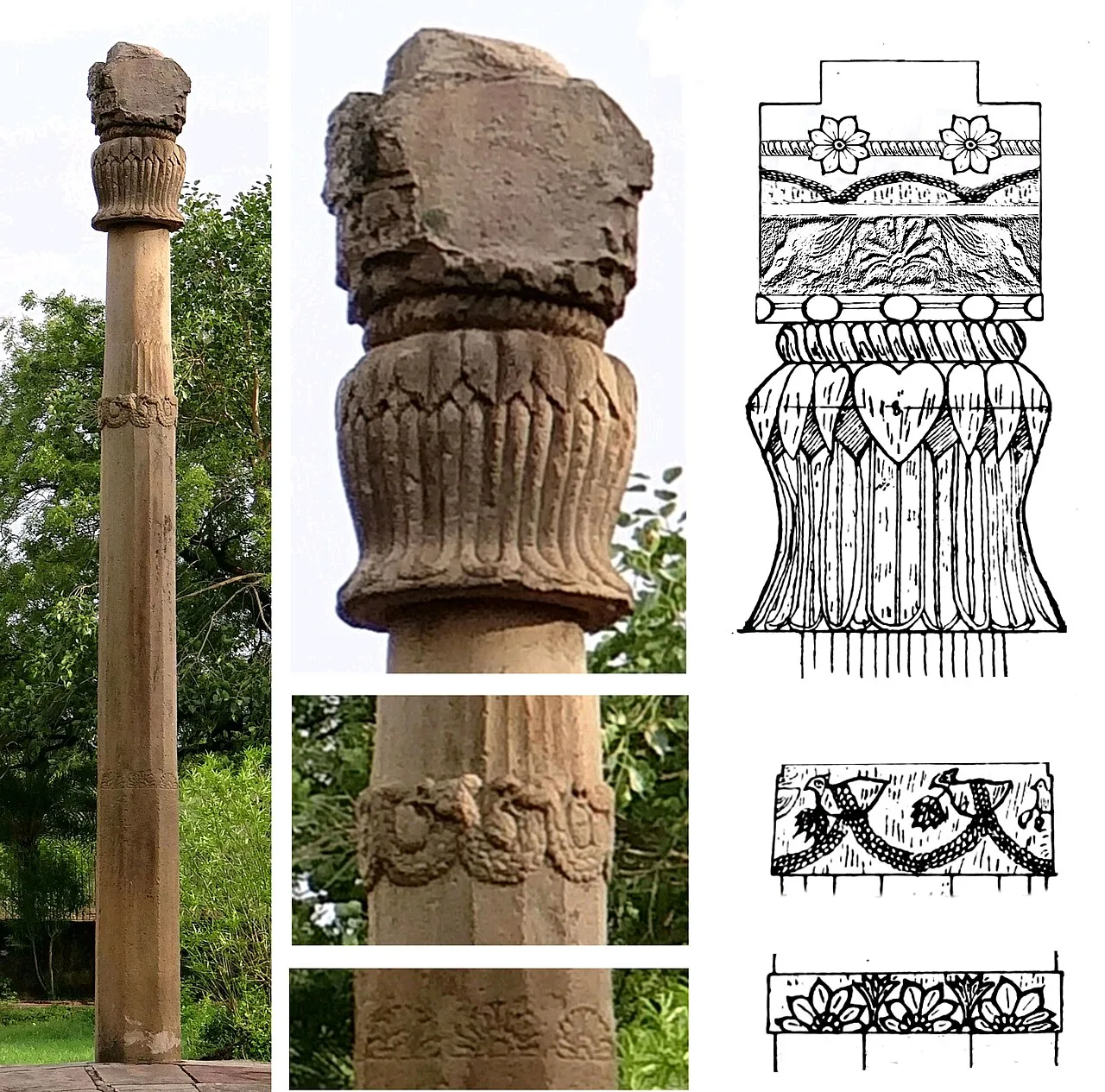
Heliodorus pillar
This ancient column at Besnagar bears a dedication to Vāsudeva by the Greek envoy Heliodorus. Visitors come to see its inscription and its significance in the early history of Vaishnavism.
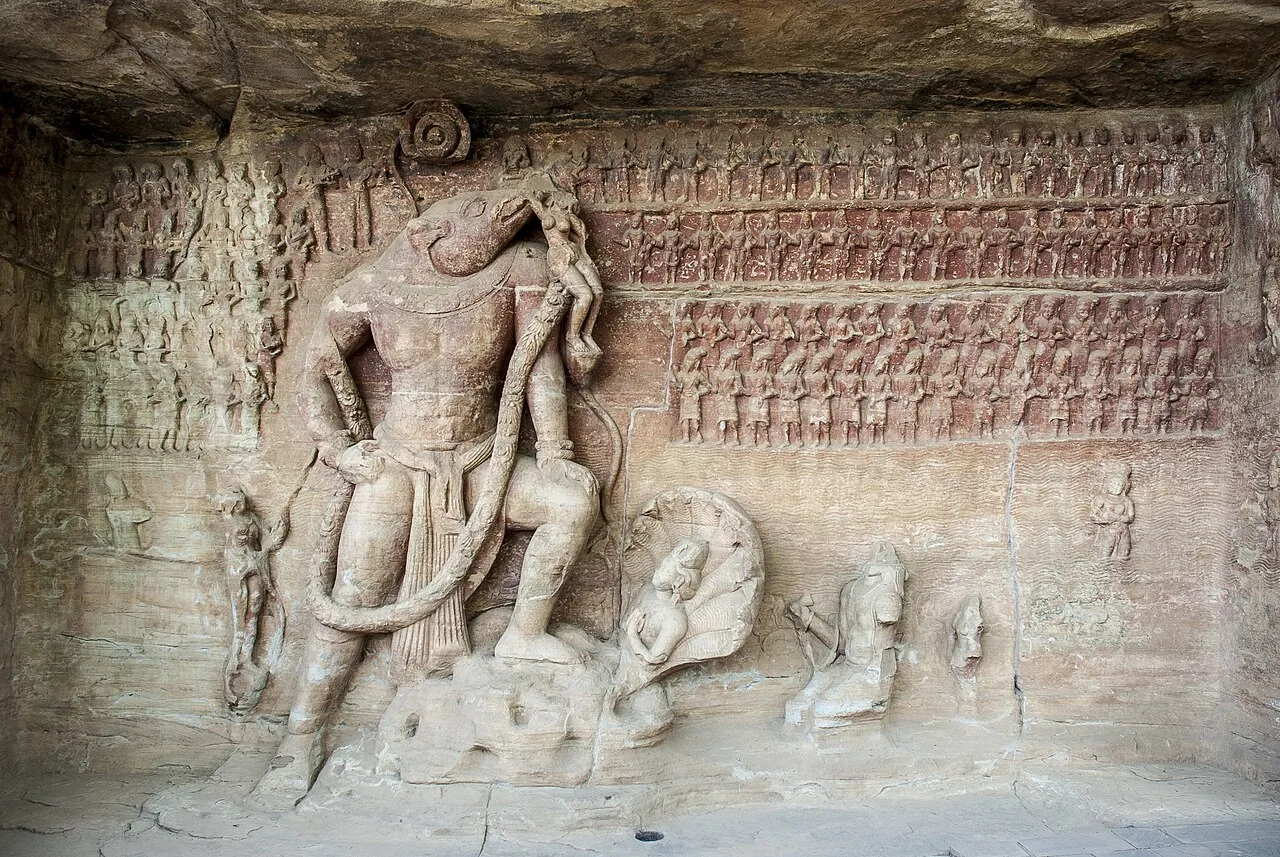
Udayagiri Caves
Udayagiri is a group of twenty caves in Madhya Pradesh, known for early Hindu and Jain imagery, Gupta-era inscriptions and a monumental carving of Vishnu as Varaha.
Vidisha’s everyday food belongs to the wider central Madhya Pradesh tradition rather than a cuisine exclusive to the district. Poha, often served with jalebi, is a familiar breakfast; wheat-based meals, lentils and seasonal vegetables are common. Across the state, travellers may also encounter dal bafla, dal baati, bhutte ka kees and sweets such as gajak or mawa-based treats, though availability varies by town and season. Small eateries may prepare a limited daily menu, so it is worth asking what is fresh. Both vegetarian meals and non-vegetarian options can be found in larger towns.
No particular craft can be confidently described as unique to Vidisha district. In the wider Madhya Pradesh region, visitors may come across handloom textiles, embroidery, terracotta, metalwork and carved objects, with styles and availability varying considerably between places. Chanderi, a renowned handloom centre, lies elsewhere in Madhya Pradesh and should not be mistaken for a Vidisha tradition. In Vidisha town, ask local sellers about the origin and making of an item rather than assuming it was produced nearby; crafts sold in markets may come from other districts.
Diwali, Holi, Navratri and Eid are observed in Vidisha and other district towns, with religious gatherings and family visits especially noticeable around the major festival seasons. Local temple observances and village fairs also follow the regional religious and agricultural calendar; their scale and dates can vary from place to place. These occasions may make town markets and roads busier, and accommodation can be more sought after around popular celebrations. Visitors planning travel during a festival period should check locally for event schedules and book a room ahead where possible.
Elsewhere in Madhya Pradesh
Vidisha district lies on the Malwa and central Indian plateau, with broad cultivated plains, low rocky rises and patches of scrub and woodland. The Betwa River and smaller waterways shape the countryside and provide a green contrast to the fields, especially during and soon after the monsoon. The Udayagiri rock-cut sites occupy exposed hillsides, so visiting them involves walking over uneven ground and steps. Most travel is by road through settled agricultural areas; rural stretches can be less built-up, and journeys between sites may take longer in wet weather.
Summer, broadly from March into June, is hot and can make walking at exposed archaeological sites tiring; plan outdoor visits for the cooler parts of the day. The monsoon usually runs from around June to September, bringing greener scenery but also the possibility of heavy showers, muddy approaches and slower road travel. Winter, from roughly November to February, is generally the most comfortable season for sightseeing, with cooler mornings and evenings. October and early spring can also be pleasant. Carry sun protection and water in hot weather, a light rain layer during the monsoon, and warm layers for winter mornings and evenings.
Vidisha railway station is the nearest principal station for visiting Vidisha town and nearby sites. The nearest major airport is Raja Bhoj Airport in Bhopal; road travel from there is needed for the final leg. Vidisha is connected by road with Bhopal and other towns in the region, with buses and private vehicles serving the area. Within the district, auto-rickshaws and hired cars can help reach sites outside the town; confirm local availability before setting out, especially for rural or archaeological locations. Check current transport services and road conditions locally before travelling.
Vidisha town is the most practical starting point for the district’s main heritage sites. Roads connect it with nearby towns and with Bhopal, and local buses serve some routes, though service and onward connections may be limited for smaller sites. Autos are useful within town; for Udayagiri Caves, Besnagar and rural destinations, a hired taxi or locally arranged vehicle offers more flexibility. Shared jeeps may operate on some routes but should not be relied on for a fixed sightseeing plan. Check road conditions and local access to Bijakhal before setting out, particularly during the monsoon.
2 days: Heliodorus pillar, Udayagiri Caves; sleep in Vidisha each night. 3 days: Heliodorus pillar, Udayagiri Caves, Bijakhal; sleep in Vidisha each night, and confirm Bijakhal access and routing locally.
Vidisha is the most convenient base for the Heliodorus pillar and Udayagiri Caves, with hotels and guesthouses suited to short visits. Modest accommodation and dharamshalas may also be found in larger towns, though choices can be limited outside Vidisha. For a district-wide itinerary that includes Bijakhal, check in advance whether staying in Vidisha is practical for the route, and ask locally about accommodation nearer the site. Government lodging or homestays may be available in the wider region but should not be assumed without checking.
At Udayagiri, expect uneven rock, steps and exposed paths; wear sturdy footwear and take care in rain or heat. Carry drinking water, sun protection and any personal medicines, and use sealed or treated water if unsure about local supplies. Rural roads can be narrow or slower after monsoon showers, so allow flexibility and avoid rushing after dark. Mobile coverage may vary outside towns. Crowds can increase during festivals. No special permit is generally associated with the listed sites, but confirm access rules with local authorities before travel; check specifically before visiting Bijakhal. Follow any site instructions and do not climb on carvings or fragile structures.
- Sanchiabout 9 km
- Raisenabout 51 km
- Bhopalabout 52 km
- Sehoreabout 56 km
- Sagarabout 65 km
- Narmadapuramabout 111 km
- Lalitpur · Uttar Pradeshabout 119 km
- Hoshangabadabout 133 km
Straight-line distance between the centres of each district's destinations; road distance is longer.
All districts of Madhya Pradesh
Q: How many days should I spend in Vidisha district? A: Two days can cover the Heliodorus pillar and Udayagiri Caves at a relaxed pace. Allow an extra day if you plan to visit Bijakhal, after confirming access and routing. Q: When is the best time to visit? A: Winter, from roughly November to February, is generally the most comfortable for outdoor sightseeing. October and early spring can also be pleasant. Q: What is the best base for visiting the main sites? A: Vidisha town is the most practical base for the Heliodorus pillar and Udayagiri Caves, with the widest choice of local services. Q: How do I get to Vidisha? A: Vidisha is connected by rail and road. Travellers can also reach the region via Bhopal, which has rail, road and air connections, then continue by road or train. Q: Is Vidisha suitable for families or elderly travellers? A: Yes, with planning. The town-based sights can suit families, but Udayagiri has steps and uneven surfaces that may be difficult for visitors with limited mobility.
This page draws on our 3 destination guides for Vidisha and is updated as our team checks it.
Be the first to share photos, stories, advice or a helpful contact for Vidisha.
Loading…