
Udayagiri Caves
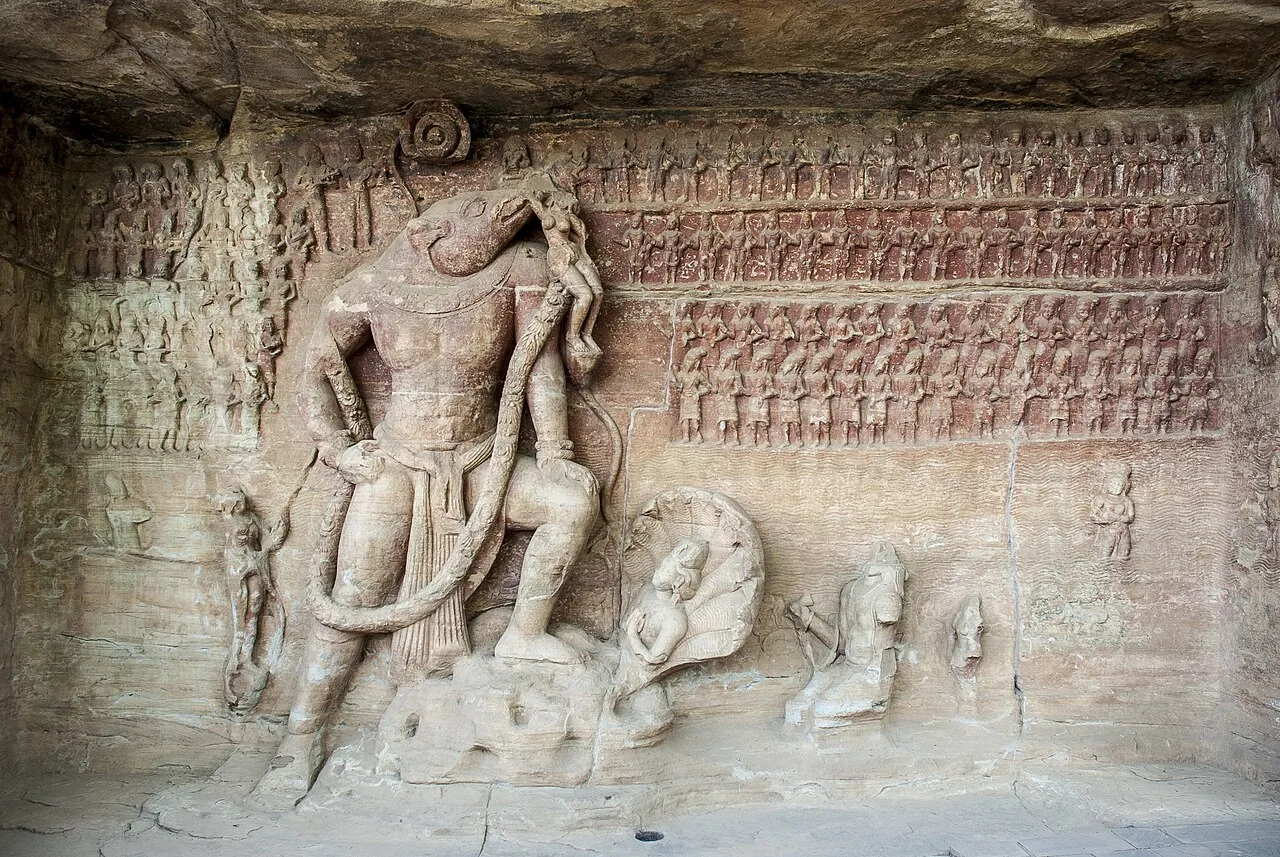
Udayagiri is a group of twenty caves in Madhya Pradesh, known for early Hindu and Jain imagery, Gupta-era inscriptions and a monumental carving of Vishnu as Varaha.
Key facts · verified by Ghumoopedia editors
- Type of place
- Heritage monument
- Best time to visit
- October to March
- Nearest railway station
- Vidisha · about 4 km (straight line)
- Verified
- 21 Nov 2026
Plan a trip from Udayagiri Caves — a day-by-day route through places nearby.
In Vidisha district of Madhya Pradesh, Udayagiri is a group of twenty caves cut into rock. Their religious imagery dates from the opening years of the third century CE through the fifth century. Most chambers are Hindu, with associations chiefly to Vishnu and Shiva; one is Jain. The site preserves some of India’s earliest surviving Hindu shrine architecture and sculpted religious imagery. The best-known carving shows Vishnu as Varaha, the boar-man form. In this large relief, Bhudevi, the earth goddess, holds to one of the boar’s tusks as he raises her from danger, an episode drawn from Hindu myth. Inscriptions link the place to Gupta rulers, recording the periods of Chandragupta II (about 375–415) and Kumaragupta I (about 415–455). The Hindu inscriptions date to 401 CE, while a Jain record from 425 CE is among the earliest known Jain inscriptions. Across the twenty chambers, the Jain cave is a single exception to the Hindu character of the rest. Udayagiri is the only known site whose inscription evidence securely connects it with a Gupta-period king. The hill and cave group are protected by the Archaeological Survey of India. Remains extend beyond the carved chambers: rock shelters, engraved marks, ruined structures, inscriptions, water arrangements, fortifications and settlement mounds are also present and continue to be studied. Other Indian places share the name, including a hill at Rajgir in Bihar and the Udayagiri and Khandagiri Caves in Odisha. Madhya Pradesh holds three UNESCO World Heritage Sites — the temples of Khajuraho, the Buddhist stupas of Sanchi and the Bhimbetka rock shelters — plus the forts and palaces of Gwalior, Orchha and Mandu, the marble gorges of Bhedaghat, the pilgrim towns of Ujjain and Omkareshwar, and some of India's best tiger country in Kanha, Bandhavgarh, Pench and Satpura. The state has very hot summers from March to June (often above 42°C in the north and west), a monsoon from late June to September that greens the forests but closes the tiger reserves' core zones, and a cool, pleasant winter from November to February — the best season for almost everything. The usual best time to visit is October to March. Timings, fees and access arrangements must be confirmed locally. For official information, see Madhya Pradesh Tourism at https://www.mptourism.com.
Why it matters
Udayagiri is an important archaeological site near Vidisha, known for its early Hindu cave shrines and sculptural programme. The Archaeological Survey of India (ASI) protects and manages the caves as a monument. Their Gupta-period inscriptions connect the site with the reigns of Chandragupta II and Kumaragupta I, making Udayagiri a significant source for the study of Gupta political and religious history. The caves include Hindu shrines and one Jain cave, as well as the monumental relief of Vishnu as Varaha. Scholars study the complex alongside nearby Vidisha and Sanchi to understand religious art, patronage and settlement in central India. Udayagiri is not a UNESCO World Heritage Site.
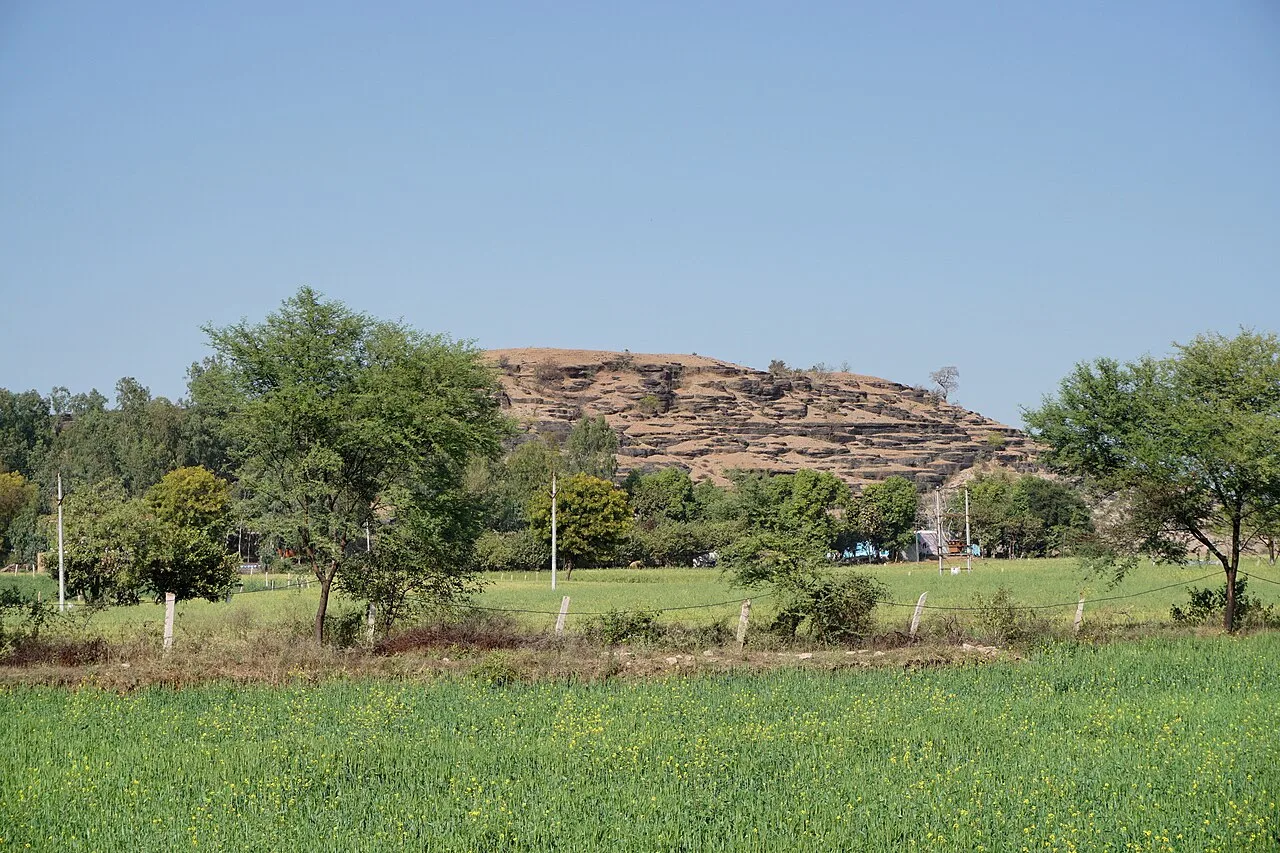
The caves were excavated into the sandstone hills near Vidisha, principally during the Gupta period, around the late fourth and early fifth centuries CE. Their inscriptions provide unusually specific evidence for the era: a record dated 401 CE refers to Chandragupta II’s reign and names his minister Virasena, while a Jain inscription dated 425 CE belongs to the reign of Kumaragupta I. These records indicate royal and courtly connections, although the complex was shaped by more than one act of patronage. Of the twenty caves, nineteen are Hindu and one is Jain, reflecting the presence of more than one religious tradition at the site. The shrines and reliefs were made for worship as well as visual expression, and Udayagiri’s position in a landscape of settlements and routes added to its importance. Over subsequent centuries, the caves remained part of a changing religious and local landscape; their original uses and the extent of later activity vary across the complex. The hills also contain shelters, inscriptions, water features and other archaeological remains. The ASI now protects the caves and undertakes conservation and site management. No single modern restoration should be assumed to represent the original appearance of every cave.
Origin stories & folklore
The best-known sacred story represented at Udayagiri is the Hindu account of Vishnu’s Varaha incarnation. In the legend, the earth is submerged or carried away by a cosmic force, and Vishnu takes the form of a boar to raise her from the waters. At Udayagiri, the earth goddess Bhudevi is shown beside Varaha, clinging to his tusk. The scene is a sculptural telling of the myth, not a record of a historical event. The name Udayagiri is often interpreted as “sunrise hill,” though visitors should treat this as a common interpretation rather than a verified local origin story. The caves also reflect Jain worship, but no particular local legend about their excavation is securely established.
Architecture & design
The complex comprises twenty caves cut into a sandstone hillside. These are mostly modest rock-cut chambers and shrines rather than large, pillared cave halls. Their plans vary: some have a small sanctum or cell, while others are open shelters or niches with sculpted surfaces. Doorways, pillars, wall panels and reliefs are carved directly from the rock, with the stone left exposed. The principal visual focus is the monumental Varaha panel, whose figures are arranged across a broad rock face to convey movement and scale. Other caves include images and symbols associated with Vishnu, Shiva and other Hindu traditions, while one cave is Jain. The hillside setting, natural rock and changing levels form part of the experience; visitors move between caves along paths and steps. Inscriptions are cut into the stone and help identify the site’s Gupta-period connections. The caves are not uniform in finish or preservation, so details may be weathered or difficult to distinguish. Avoid touching carved surfaces, which can be damaged by contact.
Important objects & sculptures
Look for the large relief of Vishnu as Varaha, the boar who rescues Bhudevi, and take time to notice how the figures are arranged around the central image. Other carvings and niches depict Hindu deities and symbols associated particularly with Vishnu and Shiva. The inscriptions are among the site’s most important objects: the record dated 401 CE links the complex to Chandragupta II’s reign, and a Jain inscription dated 425 CE is associated with Kumaragupta I. Their lettering and placement are worth observing, even if you cannot read them. One cave is dedicated to Jainism; the rest are Hindu. Some carvings are worn, so follow signs and do not touch, rub or apply anything to the stone.
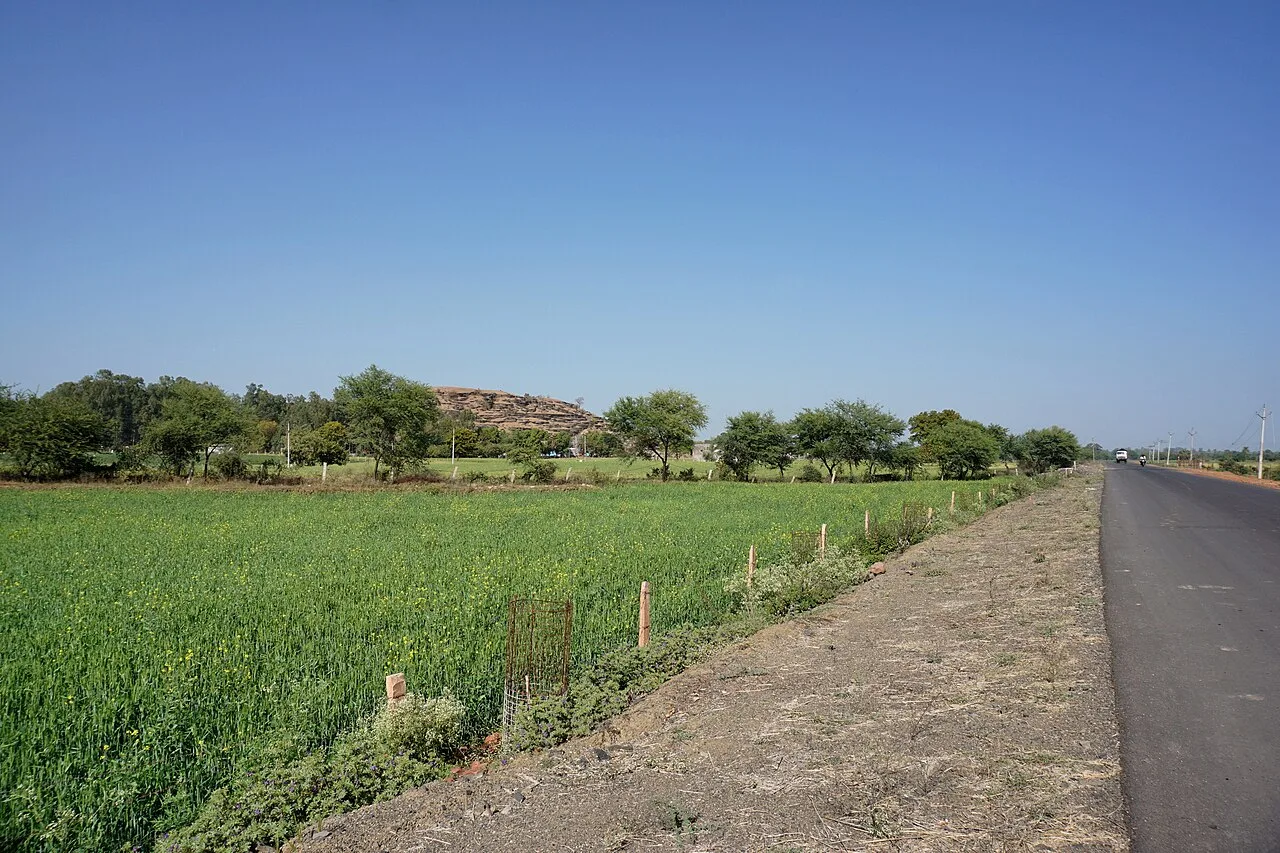
Spend unhurried time at Udayagiri Caves: walk the marked paths, use official viewpoints and ask locally whether a guide, entry ticket or forest permission is needed. Follow the marked route inside the caves, carry a small torch and never touch the ancient paintings or carvings — at Bhimbetka and Udayagiri the rock art is fragile and irreplaceable. A comfortable itinerary is one main visit in the morning, a local meal at midday and a short nearby stop before an afternoon return. Use the district list on this site to find other places in Vidisha, but check the route and its condition before combining stops. If a festival is on — such as the Khajuraho Dance Festival, the Tansen Samaroh in Gwalior, Lokrang in Bhopal or the Simhastha Kumbh at Ujjain — roads and stays can be busy, and the experience can be unforgettable. Leave no litter: many sites are protected by the communities around them.
Suggested itineraries
Half day: Reach Udayagiri from Vidisha, spend about 1.5–2.5 hours following the marked route and viewing the caves, then return to town. Full day: Visit Udayagiri in the morning, pause for a meal in Vidisha, then visit nearby Besnagar or Sanchi if transport and conditions allow; return before evening. Gentler option: Arrange a vehicle drop-off and pick-up, explore a small selection of accessible caves at an unhurried pace, and rest between sections; check the path and steps on arrival.
Udayagiri is a protected archaeological monument rather than a performance venue, but its setting remains part of a living region with Hindu and Jain communities. Vidisha and nearby towns are largely Hindi-speaking; local speech may include regional forms of Hindi. Visitors may encounter everyday worship at temples in the wider area, though the caves themselves should be treated as heritage spaces and not assumed to host regular ceremonies. Dress comfortably and respectfully, and be considerate if local visitors are praying or observing the site quietly. Regional food, household customs and religious observances reflect the broader culture of Madhya Pradesh. Ask before photographing people, especially during worship, and follow any instructions from site staff.
Festivals & events
Holi, usually in spring, and Diwali, usually in autumn, are widely observed in the Vidisha region; Navratri is also celebrated in many communities. These are regional festivals, not a guarantee of organised events at Udayagiri itself. Religious calendars and local programmes can vary from year to year. Festival periods may bring more visitors to towns and temples, and local transport or accommodation can feel busier. Check with Vidisha’s tourism or local authorities before planning around a particular celebration, and keep the caves’ conservation rules in mind if visiting during a busy period.
Local food in Madhya Pradesh includes poha with jalebi for breakfast, bhutte ka kees, dal bafla and dal baati, Indore's sarafa night-market snacks, Bhopal's seekh kebabs and biryani, mawa-bati and gajak sweets, and mahua-based tribal dishes in forest districts. Ask what is fresh that day; many small eateries cook a limited daily menu. Vegetarian travellers eat well across the state, and most towns also have good non-vegetarian food; Indore's Sarafa Bazaar turns into a famous night food market. Remote sites may have no restaurant at all. Carry water and snacks, eat a proper breakfast before long drives, and ask your accommodation for a packed lunch if you are heading out early. Try a home-cooked or local thali meal when you can — it is often the best food on the route. Choose busy, clean places, drink sealed or filtered water, and carry your packaging back with you.
Shopping & local experiences
Vidisha is the most practical place nearby to browse local shops for everyday goods, snacks and regional food. Small craft or souvenir options at the monument may be limited or unavailable, so do not count on finding a particular item on site. Look for locally made handicrafts in town markets where available, and ask sellers about materials and provenance. A meal or snack in Vidisha offers a better chance to sample everyday Madhya Pradesh cooking than relying on facilities at the caves. Buy responsibly and avoid any object presented as an antique or carved fragment from the site.
October to March
The nearest principal railway station by straight-line distance is Vidisha, roughly 4 km away. The nearest operating airport by straight-line distance is Raja Bhoj Airport, Bhopal, roughly 52 km away. These figures are calculated from map coordinates — actual road distance is longer. Bhopal, Indore, Jabalpur and Gwalior are the main rail and air gateways; Khajuraho has its own airport and station, Jhansi (UP) serves Orchha and Datia, and Pipariya is the railhead for Pachmarhi. For the final leg, Madhya Pradesh State Road Transport Corporation buses, private sleeper coaches between the big cities, and shared jeeps and autos in smaller towns link district towns. A private taxi gives more flexibility for remote sites such as forts, caves and forest gates. When comparing train, bus and flight, count the complete door-to-door time: a flight saves the most time only if the onward road transfer is short, while an overnight train can save a hotel night. Book your return before you leave, because seats fill quickly on weekends, festivals and holidays. Current train numbers, timings, return services and fares are not listed here; check IRCTC and NTES for trains and the airline's own schedule for flights. No permit is needed to visit Madhya Pradesh. Tiger safaris in Kanha, Bandhavgarh, Pench, Satpura and Panna must be booked in advance on the official MP Forest online portal — zones and gates sell out weeks ahead in peak season, and the core zones are closed during the monsoon (roughly July to mid-October). Boating and angling in the National Chambal Sanctuary also need forest-department bookings.
Confirm onward and return timings on IRCTC / NTES, the state bus operator or your airline before travel. A dash means current timings or fares have not been verified.
Getting around
Vidisha is the practical nearby town for arranging the final approach to Udayagiri. Autos or a hired taxi may be available locally; confirm the return arrangement before setting out, particularly if travelling later in the day. Local buses and shared vehicles serve routes in the wider district, but service to the caves may not be convenient for every visitor. The site is best explored on foot once there, using marked paths and taking care on uneven ground. Check locally about vehicle access and parking, and allow extra time if combining the caves with other stops.
Hours, tickets & permissions
Entry arrangements are administered by the ASI and may include a ticket, restrictions on certain activities, or separate rules for groups and photography. Requirements can change, and rules may differ between the caves and other parts of the archaeological landscape. There is no need to assume a particular dress code, permit or camera fee; confirm what applies before travelling. Check current visiting hours, entry conditions and fees directly with the ASI or the site authority, and follow notices at the entrance.
Facilities
Facilities at the caves may be limited. Toilets, drinking water, shade, seating and refreshments are not guaranteed throughout the site, so carry water and plan food in Vidisha. Parking and basic visitor information may be available, but check locally rather than relying on particular services. A guide may be arrangeable in the area, subject to availability and current site rules. Vidisha is the more reliable place to look for meals, cash and other essentials; do not assume there is an ATM, shop or staffed guide desk at the monument.
Accessibility
The caves are set across a rocky hillside, with walking between separate openings and uneven paths; some sections involve steps or changes in level. The amount of walking depends on which caves you visit, and there may be limited shade, so take breaks and carry water. Wheelchair and stroller access is likely to be difficult on rough ground and steps; do not assume ramps or step-free routes. Older visitors or anyone with reduced mobility may prefer to visit fewer caves with a companion and arrange transport close to the site where permitted. Check current path conditions with site staff before setting out.
No permit is needed to visit Madhya Pradesh. Tiger safaris in Kanha, Bandhavgarh, Pench, Satpura and Panna must be booked in advance on the official MP Forest online portal — zones and gates sell out weeks ahead in peak season, and the core zones are closed during the monsoon (roughly July to mid-October). Boating and angling in the National Chambal Sanctuary also need forest-department bookings. Carry a photo ID at all times and save the emergency number 112 and your accommodation's contact offline. Heat in summer and heavy rain in the monsoon are the main weather risks; carry water, avoid midday sun and allow extra time when roads flood. Stay on marked paths, keep away from cliff edges and fast water, and never approach wild animals.
Photography
Soft morning or late-afternoon light can bring out the reliefs and sandstone textures, though shadows vary by cave and season. Use marked paths and viewpoints, and check posted rules or ask site staff before photographing inside particular caves. Do not touch carvings to pose or steady a camera. Drone use may be restricted at this protected monument; obtain permission from the relevant authority rather than flying on assumption. Be considerate of other visitors and ask before photographing people, worship or private activities.
Choose a stay by the full journey to Udayagiri Caves, not just the district name. Bhopal, Indore, Gwalior and Jabalpur offer the widest choice; Khajuraho, Orchha and Pachmarhi have hotels and MP Tourism lodges, which are reliable value, and pilgrim towns have dharamshalas. In summer, check air-conditioning; in the monsoon, check that the property is accessible if roads flood. Book in advance for weekends, festivals and the peak season (October to March). Confirm the exact location, meals included, check-in time and cancellation terms in writing. Avoid sending money to unverified contacts or touts at stations. Carry some cash, as card and digital payments can be unreliable in remote areas.
Vidisha is the nearest town for local services and a visit to its historic centre. Besnagar, an ancient archaeological site near Vidisha, is known for the Heliodorus Pillar. Sanchi, in the neighbouring area, is renowned for its Buddhist monuments and stupa complex. These sites can make a rewarding history-focused outing, but allow for road travel and check current access before combining them. Gyaraspur, also in Vidisha district, has historic temples and other remains and may suit visitors with a full day and arranged transport. Confirm route conditions locally, as straight-line proximity does not indicate actual road distance.
For couples, Udayagiri Caves rewards a slow pace: arrive early for soft light and fewer crowds, share a local meal and keep the evening free. Sunset over the marble rocks at Bhedaghat, a boat ride on the Narmada at Maheshwar or a night drive under the stars near a forest lodge makes the trip memorable. Public displays of affection can be frowned upon in conservative communities and at religious sites, so be discreet. Keep a buffer in your itinerary, because weather and road conditions can delay plans.
Q: How much time should I allow for Udayagiri Caves? A: Allow roughly two hours to explore at a relaxed pace; add travel time from Vidisha and more time if you want to see the wider archaeological landscape. Q: When is the best season to visit? A: October to March is generally the most comfortable period in Madhya Pradesh. Carry water and take extra care in hot weather. Q: Is there an entry ticket or permit? A: Entry rules and fees are set by the managing authority and can change. Check current requirements with the ASI before your visit. Q: Can children or elderly visitors explore the caves? A: Children can visit with supervision. Uneven paths and steps may make the full route tiring for elderly visitors or anyone with limited mobility; choose a shorter visit if needed. Q: Where should I stay nearby? A: Vidisha is the nearest practical town for accommodation and services. Bhopal offers a wider range of stays, but requires additional travel.
Be the first to share photos, stories, advice or a helpful contact for Udayagiri Caves.
Loading…