
District · Madhya Pradesh
Sanchi
Sanchi is a historic town and travel area in Raisen district, Madhya Pradesh; it is not a separate current administrative district.
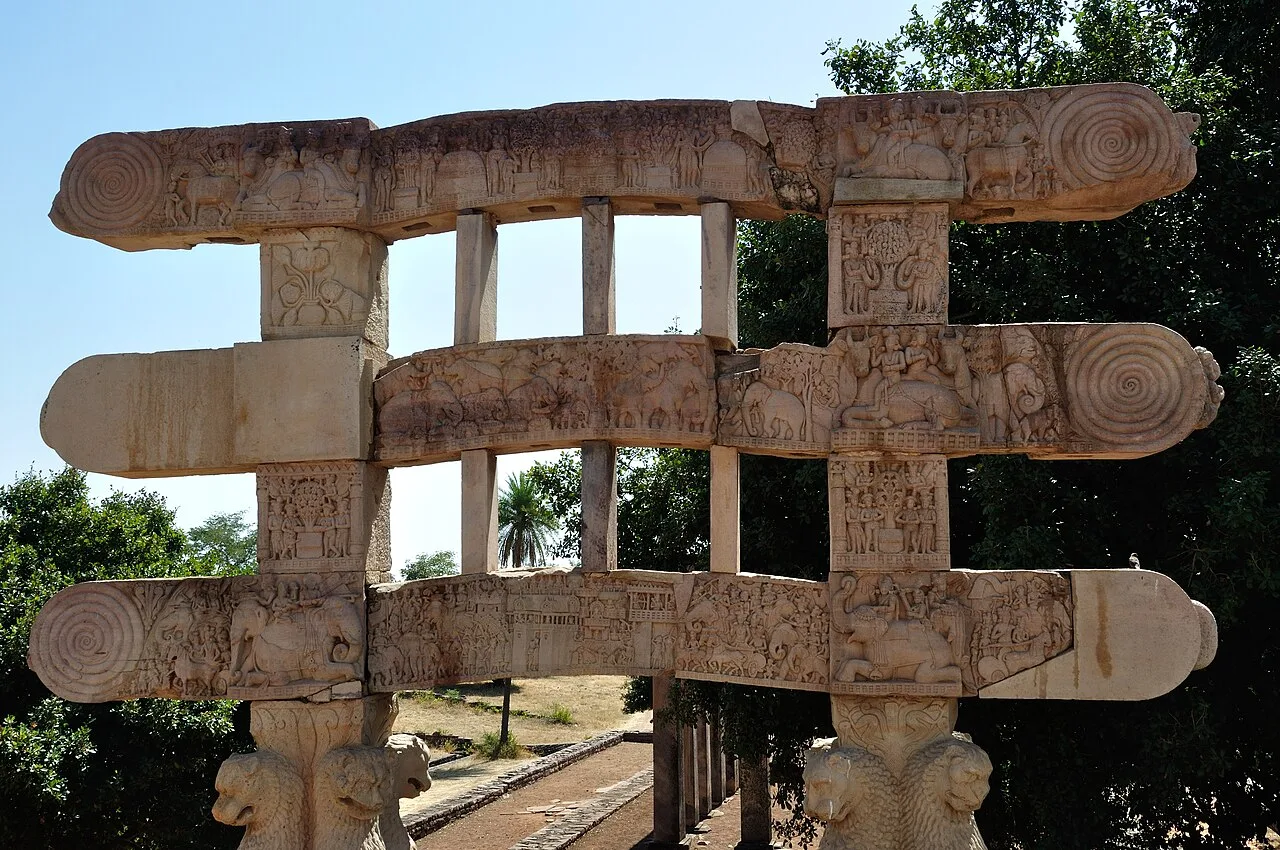
Sanchi is a hilltop heritage town in Raisen district, not a separate district. Its setting of low, rocky hills and cultivated plains is typical of central Madhya Pradesh, with the Betwa valley nearby. The town is best known for its Buddhist monuments, especially the Great Stupa, whose origins date to the 3rd century BCE and the reign of Emperor Ashoka. Later generations added stupas, monasteries and elaborately carved gateways. The complex is a UNESCO World Heritage Site and an important place for studying Buddhist art and architecture. Today, Sanchi is a quiet settlement whose pace is shaped by heritage tourism, pilgrimage and village life.
Sanchi is a historic town and travel area in Raisen district, Madhya Pradesh; it is not a separate current administrative district. Its hilltop Buddhist complex, especially the Great Stupa, makes it one of the state’s best-known heritage destinations and an important place for understanding the spread of Buddhism in central India. Carved gateways, monasteries and other remains make the site rewarding for visitors interested in art, architecture and archaeology. Sanchi also works well as a short excursion from Bhopal or Vidisha. The published destination list for this area currently features Sanchi Stupa and does not imply that every local attraction is documented.
Sanchi’s Buddhist monuments began in the Mauryan period. Emperor Ashoka, who ruled in the third century BCE, is associated with the earliest Great Stupa and a pillar at the site. The complex was enlarged and reshaped in later centuries: the Shunga period saw major additions, while the distinctive carved gateways are generally dated to around the first century BCE. Monasteries and temples from subsequent periods record continued use and changing forms of Buddhist architecture. Buddhism eventually declined as an active tradition in the area, and the monuments were partly neglected before attracting renewed scholarly and conservation attention in the modern era. The wider region later came under successive central Indian powers, including the Paramaras, the Delhi Sultanate and the Mughals; control of Raisen Fort also shifted among regional rulers. Much of the area was associated with the princely state of Bhopal during the colonial period, under British paramountcy. Bhopal joined independent India in 1949, and the region became part of Madhya Pradesh when the state was reorganized in 1956. Raisen is the present district; Sanchi is a town within it.
Sanchi’s everyday food belongs to the wider central Madhya Pradesh tradition. Poha, often eaten with jalebi, is a familiar breakfast; dal bafla, wheat-based dishes and seasonal vegetables are common regional fare. Bhutte ka kees, made with grated corn, is associated with Madhya Pradesh, though it is more strongly identified with other parts of the state. Bhopal, within reach of Sanchi, is known for dishes such as kebabs and biryani. Small eateries may offer a limited menu, so ask what has been freshly prepared. Vegetarian meals are readily available, and offerings vary by season and establishment.
Sanchi is better known for its ancient stone architecture than for a distinct contemporary craft tradition. Across Madhya Pradesh, craft traditions include handloom weaving, printed and dyed textiles, metalwork, pottery and tribal painting, with styles varying considerably by region. Chanderi weaving and Bhopal’s zari and zardozi work are examples from elsewhere in the state, rather than crafts specific to Sanchi. Visitors may find locally made souvenirs, but should check where an item was produced if its regional origin matters to them.
Buddha Purnima, in spring, is observed by Buddhist communities and may draw visitors to Sanchi for religious gatherings. Buddhist cultural events are also held in the region from time to time, but their schedules vary by year, so check locally before planning around one. Holi in spring and Diwali in autumn are widely celebrated across Madhya Pradesh, including the Raisen area. These occasions can make transport and accommodation busier, particularly around larger towns and event venues. Sanchi has a relatively small choice of rooms, so booking ahead is sensible if a major event is announced.
Elsewhere in Madhya Pradesh
Sanchi stands on a low hill amid the undulating plateau country of central Madhya Pradesh. The surrounding Raisen region has cultivated plains, rocky rises, scattered woodland and seasonal streams; the Betwa river flows through the wider area near Vidisha. The stupa complex itself involves sloping paths and steps, while roads between towns cross gently rolling countryside. Travel is generally straightforward by road, but rural stretches have fewer services and can feel slow during heavy monsoon rain. The landscape is open rather than coastal or mountainous, with shade and water access more limited around exposed heritage areas.
The most comfortable general visiting season is October to March, when days are usually milder and the heritage site is easier to explore on foot. Summer, roughly from April into June, can be very hot, so plan outdoor visits for cooler parts of the day and carry water and sun protection. The monsoon usually runs from June into September, bringing greener scenery but also wet paths and occasional delays on rural roads. Pack light clothing for warm weather, a hat, sunscreen and sturdy walking shoes; in winter, bring a light warm layer for mornings and evenings. During the rains, add a compact rain jacket and footwear with good grip.
Sanchi railway station is the nearest station to the monuments; services may be limited, so Bhopal or Vidisha can be useful rail gateways. The nearest operating airport is Raja Bhoj Airport in Bhopal. Sanchi is connected by road with Vidisha and Bhopal, and visitors can reach the site by taxi or local bus, depending on available services. Auto-rickshaws and taxis are practical for short trips around the area, though availability may vary. Check current transport services locally before setting out.
Sanchi is connected by road with Vidisha and Bhopal, and local buses and private vehicles serve the broader corridor. Sanchi also has rail access, while Bhopal and Vidisha are useful points for onward connections; check current services before travel. Autos or shared vehicles may be available locally, but frequency can be limited, so arrange a return ride or taxi in advance if needed. The stupa complex is explored on foot, with slopes and steps inside the site. There are no boat journeys needed for the listed destination, and public transport options become less frequent outside the main towns.
Sanchi is the most convenient base for an early or unhurried visit to Sanchi Stupa, but its accommodation choice is limited. Vidisha offers another base in the surrounding region, while Bhopal has the broadest range of hotels and transport connections and suits visitors combining Sanchi with wider central-India travel. Depending on the town and season, visitors may find hotels, guesthouses, homestays or government accommodation; availability varies. Confirm the location and current operating status directly, especially during festivals or school holidays.
The heritage complex has uneven surfaces, steps and sloping paths; wear secure footwear and take care in wet weather or if mobility is limited. Summer heat can cause dehydration, so carry drinking water and sun protection, and use sealed or reliably treated water. Monsoon rain may make paths slippery and slow road journeys. Traffic conditions vary outside town centres, and rural services and mobile connectivity can be patchy. Crowds may increase during religious events, so keep valuables secure and follow site instructions. No special visitor permit is generally required for Sanchi Stupa; confirm current access rules with official sources before travelling.
- Vidishaabout 9 km
- Raisenabout 43 km
- Bhopalabout 44 km
- Sehoreabout 48 km
- Sagarabout 72 km
- Narmadapuramabout 105 km
- Lalitpur · Uttar Pradeshabout 127 km
- Hoshangabadabout 129 km
Straight-line distance between the centres of each district's destinations; road distance is longer.
All districts of Madhya Pradesh
Q: How many days should I spend in Sanchi? A: One full day is usually enough for Sanchi Stupa; allow two days if you prefer a slower visit or want time for travel connections. Q: When is the best time to visit? A: October to March is generally the most comfortable season for walking around the complex. Q: What is the best base? A: Stay in Sanchi for convenience, or use Bhopal for a wider choice of accommodation and onward transport. Q: How do I get to Sanchi? A: Reach the area by road or rail, using Sanchi, Vidisha or Bhopal connections; check current services before setting out. Q: Is Sanchi suitable for families or elderly travellers? A: Yes, but the site has slopes, steps and uneven paths, so visitors with limited mobility should assess their needs and take breaks.
This page draws on our 1 destination guides for Sanchi and is updated as our team checks it.
Be the first to share photos, stories, advice or a helpful contact for Sanchi.
Loading…