
Banavasi
Banavasi, a village in Karnataka’s Uttara Kannada district, is known for its temples and its past as the Kadamba dynasty’s capital, making it a place of historical interest.
Key facts · verified by Ghumoopedia editors
- Type of place
- Heritage monument
- Best time to visit
- October to February; June to September for monsoon greenery in the Western Ghats
- Nearest railway station
- Haveri · about 50 km (straight line)
- Nearest airport
- Hubballi Airport · about 90 km (straight line)
- Verified
- 21 Nov 2026
Plan a trip from Banavasi — a day-by-day route through places nearby.
Banavasi lies in Uttara Kannada district, near Sirsi. It is an old temple town, and Sirsi is the closest large city. The two are linked by State Highway 77, with Banavasi 24 km from Sirsi by this route. The town served as the capital of the Kadamba dynasty, whose rule extended across the territory that now forms Karnataka. The dynasty was the first native empire to give prominence to Kannada and Karnataka. Banavasi’s temple-town character and its place in the region’s political and cultural history are central to its significance. Its association with the Kadambas makes it a point of interest for those exploring Karnataka’s past. Karnataka holds the boulder-strewn ruins of Hampi, the Hoysala temple jewels of Belur and Halebidu, the Chalukyan monuments of Badami, Aihole and Pattadakal, the palaces of Mysuru, the coffee hills of Coorg and Chikkamagaluru, the temple-and-beach town of Gokarna and the tiger forests of Bandipur and Nagarhole. Bengaluru and the plateau are mild most of the year; the coast is hot and humid; the Malnad hills (Coorg, Chikkamagaluru, Agumbe) get very heavy monsoon rain from June to September. October to February is pleasant almost everywhere. The usual best time to visit is October to February; June to September for monsoon greenery in the Western Ghats. For official information, see Karnataka Tourism at https://karnatakatourism.org.
Why it matters
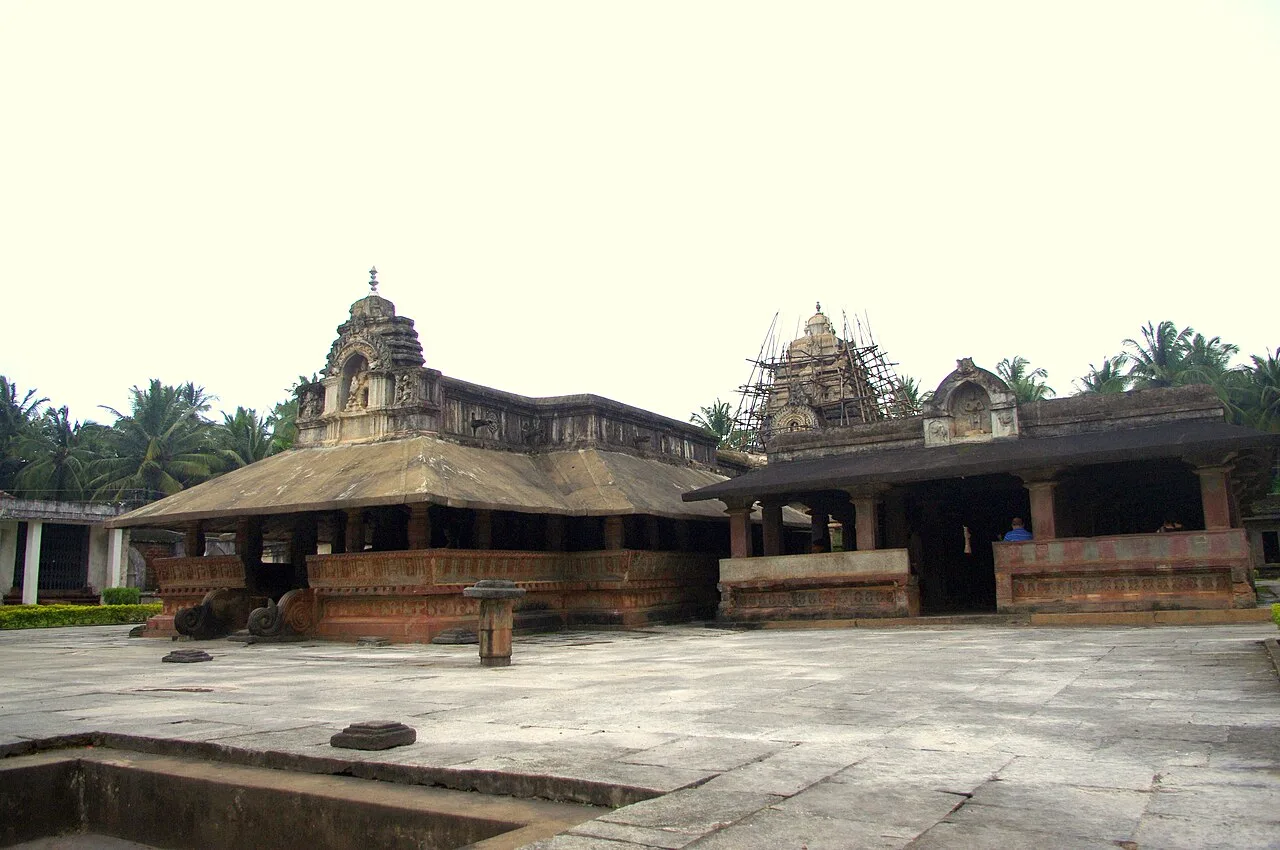
Banavasi is an old temple town in Uttara Kannada district and was the capital of the Kadamba dynasty, an early ruling house associated with the rise of Kannada and Karnataka as political and cultural identities. The Madhukeshwara Temple remains the town’s principal heritage landmark and a place of worship, linking its historical importance with living religious practice. Banavasi is valued regionally for its Kadamba associations and layered temple heritage, and locally for its streets, homes and traditions. The town is not a UNESCO World Heritage Site. Its current protection or listing status should be checked with the relevant state archaeology or temple authority rather than assumed.
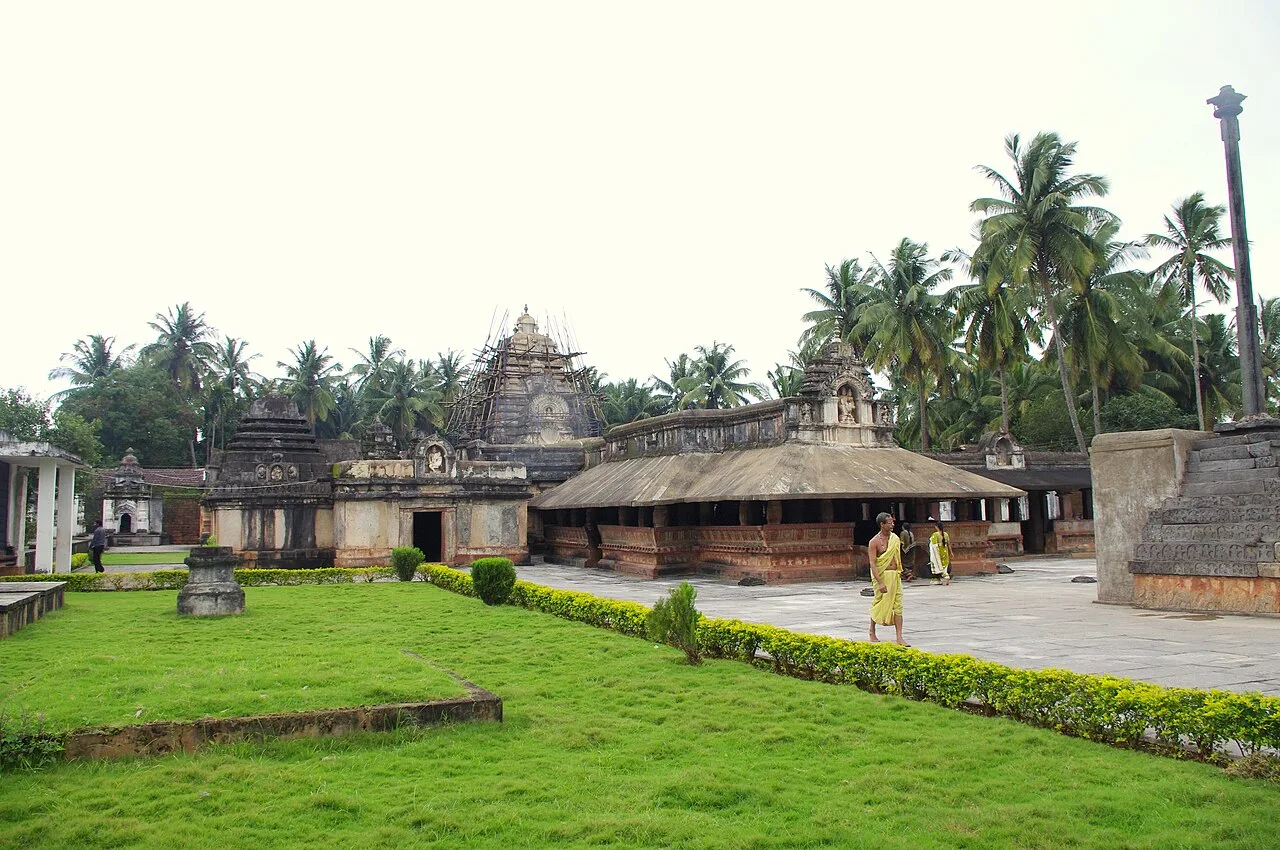
Banavasi, also known in historical accounts as Vaijayanti, served as the capital of the Kadambas, an early dynasty that ruled parts of present-day Karnataka. The Kadambas are generally placed from the fourth to the sixth centuries CE as a major independent power in the region; inscriptions and later historical writing help establish Banavasi’s importance. They are particularly associated with the growth of Kannada in administration and public life, though the town’s history is older and continued well beyond their rule. The Madhukeshwara Temple is the town’s most visible historic monument. Its fabric reflects construction and additions from more than one period, rather than a single, unchanged building from the Kadamba age. Later powers, including the Chalukyas and other regional dynasties, shaped the religious and architectural landscape of the area. Banavasi also has a place in Kannada literary memory and is linked with the wider cultural history of the Western Ghats region. The temple remains an active place of worship. Repairs and upkeep have taken place over time, but details of particular conservation campaigns should be confirmed with the managing authority. Visitors should treat the site as both a heritage monument and a living temple.
Origin stories & folklore
According to local tradition, the Madhukeshwara Temple is associated with ancient sages and a sacred manifestation of Shiva. Stories explaining the name Madhukeshwara and the temple’s beginnings vary, and should be understood as religious lore rather than verified history. Banavasi is also linked in regional memory with the early Kadamba rulers; stories about the dynasty’s origins are told alongside the historical account of its rise. Such narratives help explain why the town is regarded as a place of deep antiquity. Ask a local guide or temple representative about versions current in the community, and distinguish oral tradition from evidence provided by inscriptions or historical research.
Architecture & design
The Madhukeshwara Temple is a stone-built complex whose present appearance reflects additions and alterations across different periods. Its main shrine is dedicated to Shiva, represented by a linga, with halls and subsidiary spaces arranged within the temple precinct. Carved pillars, doorways and sculptural details reward a slow walk around the complex. The temple’s form draws on regional South Indian traditions; features associated with the Kadamba style are part of the area’s architectural heritage, but not every element should be assigned to the earliest dynasty. Later regional influences are also visible in the building’s layered plan and ornament. Stone construction gives the complex a substantial, grounded character. Observe the relationship between the sanctum, halls and courtyard, while remembering that some areas may be reserved for worshippers or temple activities.
Important objects & sculptures
Look for the Shiva linga in the principal shrine, the Nandi image associated with Shiva worship, and the carved stonework on pillars, entrances and other architectural surfaces. The temple’s sculptures and details are best appreciated at walking pace; some may be weathered or difficult to see in low light. Inscriptions are important evidence for Banavasi’s history, but their location, legibility and visitor access can vary, and not every inscribed surface is necessarily on open display. Do not touch, climb on or apply substances to sculptures or sacred objects. Photography inside shrines may be restricted, so ask temple staff before taking pictures of objects or ritual activity.
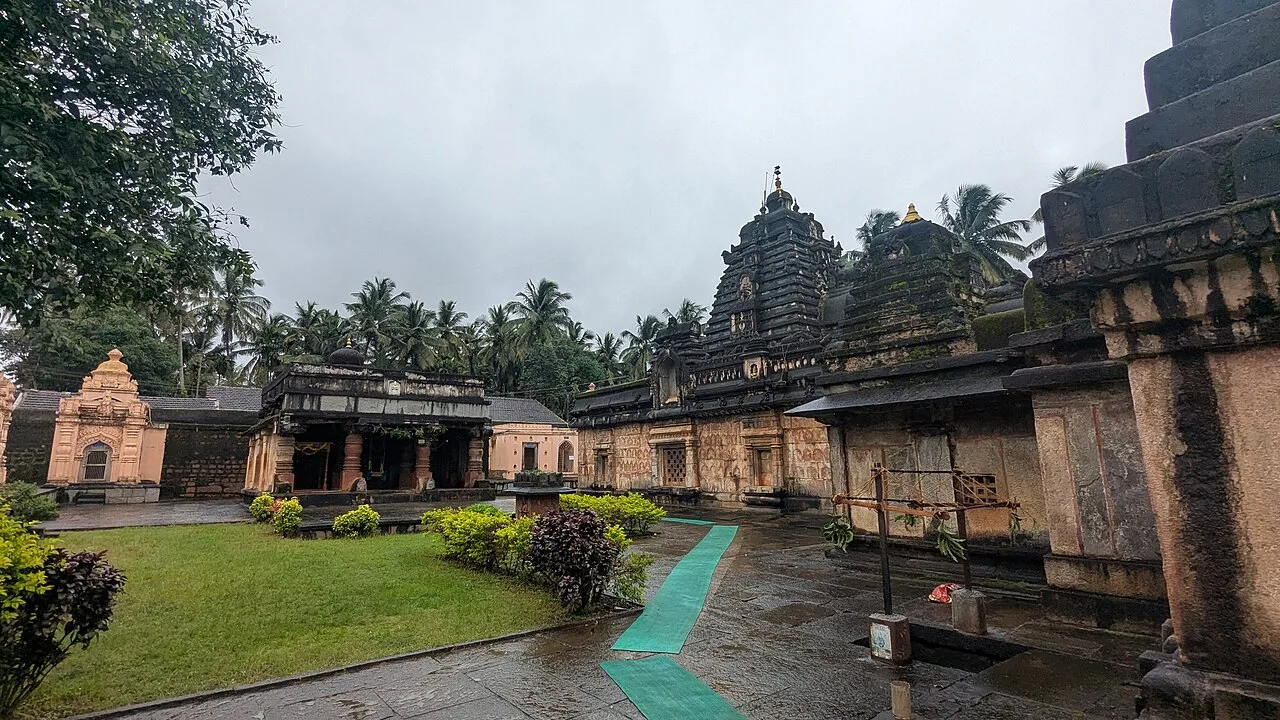
Walk through Banavasi slowly to take in its old houses, streets and places of worship, ideally with a local guide or host who can explain the village's history and families. Many heritage houses are private homes — admire them from outside unless you are invited in or the house is open to visitors — and ask before photographing people. Look out for local food, crafts and festivals that are part of the village's living heritage, and combine your visit with nearby temples, forts or towns in Uttara Kannada district.
Suggested itineraries
Half day: Allow about 3–4 hours to visit Madhukeshwara Temple, notice its stonework and surrounding streets, and take a short village walk with a local guide or host. Full day: Set aside about 6–8 hours for the temple and village walk, a relaxed meal, and an excursion to a nearby attraction such as Sahasralinga, subject to road conditions and local access. Gentler option: Spend about 2–3 hours near the temple, taking seated breaks and limiting the walk to accessible areas; ask locally about steps and uneven surfaces before setting out.
Banavasi’s heritage is part of a living village setting: the Madhukeshwara Temple continues to serve worshippers, while homes, streets and local livelihoods contribute to the town’s character. Kannada is widely used in the region; other languages may be understood by individual guides or hosts, so arrange language needs in advance. Religious observances follow customary temple practice, including removing footwear where directed and dressing respectfully. Local music, devotional singing and cultural programmes may be heard during festivals or special events, but schedules vary. Visitors can learn more by speaking with a local guide or host, while respecting residents’ privacy and asking permission before photographing people or entering private homes.
Festivals & events
Mahashivaratri is an important occasion at Shiva temples and may bring additional worshippers and activity to Madhukeshwara Temple. Banavasi is also associated with Kadambotsava, a cultural festival celebrating the town’s Kadamba heritage; programmes and timing can vary from year to year, so check local announcements. Temple festivals and regional events may include devotional music, performances or processions, with larger crowds around the temple and village streets. For a quieter visit, avoid festival periods or ask locally about expected activity. Follow instructions from temple staff and event organisers, particularly around ceremonies and restricted areas.
Village food in Karnataka is home cooking: bisi bele bath, Mysore masala dosa, ragi mudde with sambar, Coorg's pandi (pork) curry, Mangalorean fish curry with neer dosa, Davangere benne dosa, Dharwad pedha and filter coffee everywhere. Banavasi itself may have only tea stalls and small eateries, so ask your host or guide where to eat, or arrange a home-cooked meal in advance — it is often the highlight of a village visit. Carry water and a snack if you plan to spend the whole day, and eat your main meal in the nearest town if no local option is open.
Shopping & local experiences
Look for everyday local produce and regional snacks in village shops or markets, rather than expecting a dedicated heritage souvenir centre. Arecanut and other agricultural products are part of the wider Uttara Kannada economy, but availability for visitors varies. Ask locally about small craft items or festival publications, and buy directly from makers where possible. Food choices are likely to be simple and locally oriented; availability can change by day. Respect private property and do not remove stones, plants or temple objects as souvenirs.
October to February; June to September for monsoon greenery in the Western Ghats
The nearest principal railway station by straight-line distance is Haveri, roughly 50 km away. The nearest operating airport by straight-line distance is Hubballi Airport, roughly 90 km away. These figures are calculated from map coordinates — actual road distance is longer. Bengaluru is the hub for the south and centre; Hubballi and Belagavi serve the north; Mangaluru serves the coast; Mysuru is the gateway to Coorg, and Hosapete is the railhead for Hampi. Banavasi is a village, so the last stretch is by road: KSRTC buses including comfortable Airavat coaches, private sleeper coaches, and app cabs in Bengaluru, Mysuru and Mangaluru reach the nearest town, and from there a shared auto, local bus or reserved taxi covers the final few kilometres. Village roads can be narrow and unpaved; a taxi hired for the day from the nearest town is the simplest way to combine Banavasi with nearby sights and get back before dark. When comparing train, bus and flight, count the complete door-to-door time: a flight saves the most time only if the onward road transfer is short, while an overnight train can save a hotel night. Book your return before you leave, because seats fill quickly on weekends, festivals and holidays. Current train numbers, timings, return services and fares are not listed here; check IRCTC and NTES for trains and the airline's own schedule for flights. No permit is needed to visit Karnataka. Tiger safaris in Bandipur, Nagarhole and the Kali Tiger Reserve must be booked in advance through the forest department or authorised lodges — weekend slots sell out. Treks in Kudremukh National Park and some Western Ghat peaks need forest entry permission. Hampi's monuments have ASI entry tickets; the core zone is best seen with a bicycle, moped or autorickshaw for the day.
Confirm onward and return timings on IRCTC / NTES, the state bus operator or your airline before travel. A dash means current timings or fares have not been verified.
Getting around
Banavasi is a village, so most visitors arrive by road and make the final approach from a nearby town such as Sirsi. Local buses, shared autos and reserved taxis may be available, but service frequency and pickup points can vary; check locally before relying on a connection. The temple and village centre can generally be explored on foot, though roads may be narrow and uneven. Ask the driver where to park, as parking arrangements can be informal and space may be limited during festivals. There are no visitor boat services to plan around.
Hours, tickets & permissions
Entry arrangements depend on the temple’s current schedule and religious activities. There may be separate expectations for worship areas, footwear, dress and photography; follow signs and instructions from temple staff. Do not assume that every part of the complex is open to visitors or that camera use is allowed inside. Tickets or permits should not be assumed either way. Confirm current visiting hours, access rules and any fees directly with the managing temple authority or a reliable local contact before travelling.
Facilities
Facilities in Banavasi are village-scale. Toilets, drinking water, simple food options and parking may be available in or near the village, but provision and opening may vary; check locally and carry water. Do not expect a large visitor centre or extensive on-site interpretation. Local guides or knowledgeable hosts may be arranged, but confirm availability in advance. ATMs and a wider choice of shops or services are more likely in Sirsi than in the village. Keep the temple and streets clean, and ask before using facilities in private premises.
Accessibility
Expect a historic temple and village environment with stone flooring, thresholds, possible steps and uneven outdoor surfaces. The amount of walking depends on which parts of the complex are open and how much of the village you explore. Shade may be limited in courtyards and along exposed streets, so plan rests and carry water, especially in warm weather. Wheelchair and stroller access should not be assumed; confirm the route and any steps with the temple authority before arrival. Older visitors or anyone with limited mobility may prefer a short visit, a companion, and a vehicle drop-off as close as locally permitted.
No permit is needed to visit Karnataka. Tiger safaris in Bandipur, Nagarhole and the Kali Tiger Reserve must be booked in advance through the forest department or authorised lodges — weekend slots sell out. Treks in Kudremukh National Park and some Western Ghat peaks need forest entry permission. Hampi's monuments have ASI entry tickets; the core zone is best seen with a bicycle, moped or autorickshaw for the day. Carry a photo ID, some cash (card and UPI acceptance varies in villages) and a charged phone with offline maps; save the emergency number 112 and your host's contact. Heat in summer and heavy rain in the monsoon are the main weather risks; carry water, avoid midday sun and allow extra time when village roads flood. Respect local customs: dress modestly, remove footwear where asked, and always ask before photographing people, homes or rituals.
Photography
Soft morning or late-afternoon light can bring out the temple’s stone texture, but conditions vary with weather and shade. Courtyards and exterior details may offer the most practical viewpoints; avoid blocking worshippers or ceremony routes. Ask before photographing inside the temple, sacred objects, rituals or local residents, and follow any posted restrictions. Drone use may require permissions and can disturb worship or village life; do not fly one without confirming current rules with the relevant authorities. Never climb on architectural features for a photograph.
Most visitors see Banavasi on a day trip from the nearest town, which has the widest choice of hotels. A few villages have homestays or heritage stays; otherwise base yourself in the district town and hire a taxi for the day. Confirm the booking and the exact location before you travel, because village addresses can be hard to find.
Sirsi is the nearest larger town and offers additional services and its own Marikamba Temple. Sahasralinga, on the Shalmala River near Sirsi, is known for numerous Shiva lingas carved into rocks and is a possible excursion; check access and river conditions locally. Yana’s distinctive rock formations and Unchalli Falls are other Uttara Kannada attractions that may suit a longer regional trip, though road journeys can take time. Confirm local conditions, seasonal access and transport before combining several sites in one day.
For couples, Banavasi is a chance to slow down: walk the lanes in the soft morning light, share a home-cooked meal and keep the afternoon free. Stay in a nearby homestay or heritage property to make it a quiet overnight escape.
Q: How much time should I allow for Banavasi? A: A half day is enough for the main temple and a short village walk; allow longer if adding a nearby excursion. Q: When is the best season to visit? A: October to February is generally pleasant. June to September brings monsoon greenery but can mean heavy rain and more difficult travel. Q: Is there an entry ticket, and can I enter the temple? A: Rules may depend on the area and current temple activity. Confirm entry, fees and photography rules with the managing authority before visiting. Q: Is the visit suitable for children and elderly visitors? A: It can be, but expect uneven stone surfaces and possible steps. Keep children supervised and plan rests for anyone with limited mobility. Q: Can I stay in Banavasi? A: Accommodation choices in the village may be limited. Sirsi is a practical base for a wider range of services; confirm lodging locally before travel.
Be the first to share photos, stories, advice or a helpful contact for Banavasi.
Loading…