
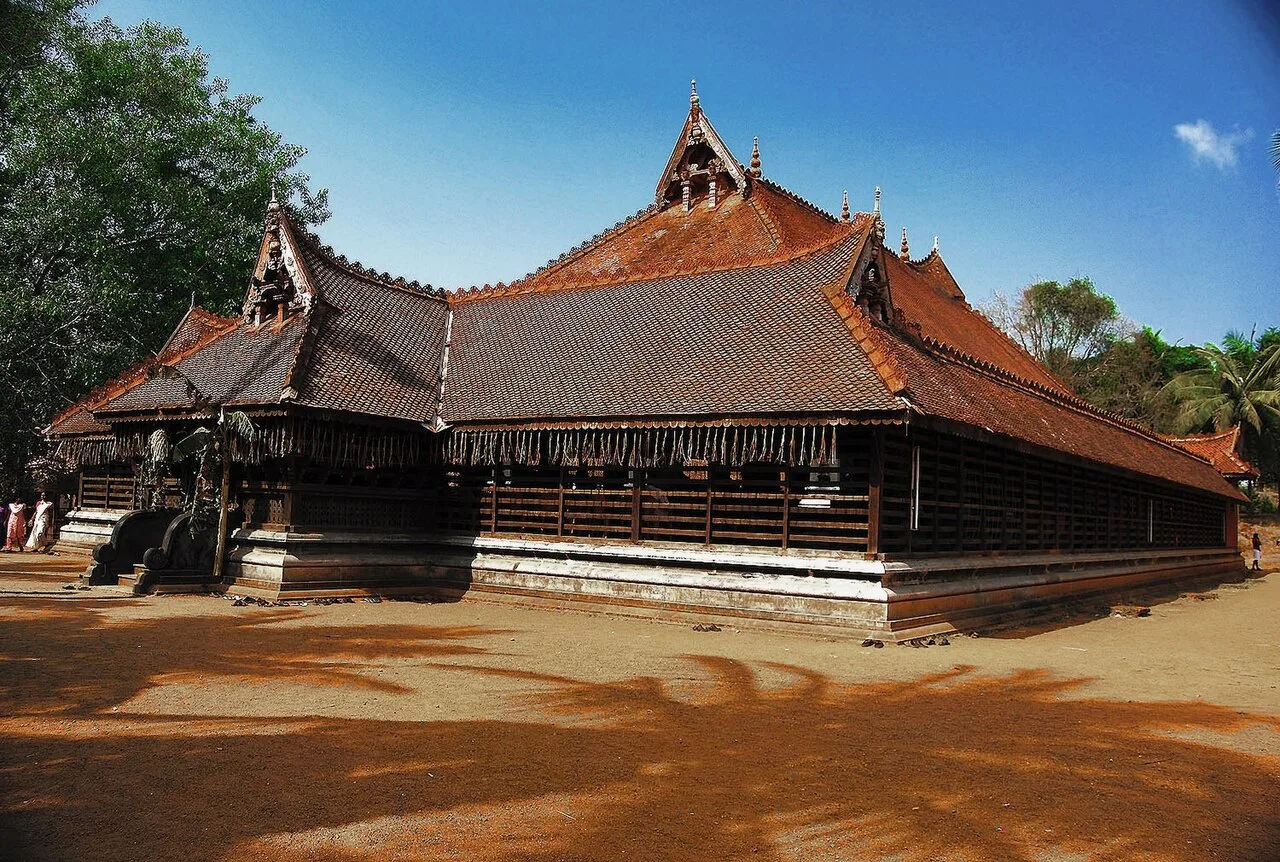
Cheruthuruthy
Cheruthuruthy, also called Vallathol Nagar, is a settlement in Kerala’s Thrissur district, beside the Nila, or Bharathapuzha. Its riverside location near Wadakkanchery is a point of interest for visitors.
Key facts · verified by Ghumoopedia editors
- Type of place
- Natural attraction
- Best time to visit
- September to March; June to August for monsoon Ayurveda and green landscapes
- Nearest railway station
- Shoranur Junction · about 5 km (straight line)
- Verified
- 21 Nov 2026
Plan a trip from Cheruthuruthy — a day-by-day route through places nearby.
In Thrissur district, Kerala, Cheruthuruthy is described as both a village and a small town. Vallathol Nagar is another name used for the place. The settlement is close to Wadakkanchery and stands beside the Nila River, which is also known as the Bharathapuzha. These names refer to the same river. Its location links Cheruthuruthy with the surrounding area of Thrissur district and the riverbank. Visitors looking for a place near Wadakkanchery may find its position by the Nila useful when orienting themselves. Kerala packs a lot into a narrow strip: the backwaters and houseboats of Alappuzha and Kumarakom, the tea hills of Munnar and the spice forests of Thekkady, the beaches of Kovalam, Varkala and Bekal, the colonial and Jewish heritage of Fort Kochi, and living art forms — Kathakali, Theyyam, Mohiniyattam and temple festivals with caparisoned elephants. Kerala is warm and humid at sea level all year. The southwest monsoon from June to September brings very heavy rain, and the northeast monsoon adds showers in October and November; the hill stations of Munnar, Wayanad and Vagamon are cool year-round and cold on winter nights. The usual best time to visit is September to March; June to August for monsoon Ayurveda and green landscapes. For official information, see Kerala Tourism at https://www.keralatourism.org.
Why it matters
Cheruthuruthy is a small settlement in Thrissur district, on the banks of the Nila, also known as the Bharathapuzha. Its river setting gives it local importance as part of the cultural and agricultural landscape of central Kerala. The town is also known as Vallathol Nagar, after poet Vallathol Narayana Menon, and is closely associated with Kerala Kalamandalam, an important institution for training in Kerala’s performing arts. This association connects the village with Kathakali, Mohiniyattam and other classical traditions. The river and the institution are the best-known reasons visitors include Cheruthuruthy in a regional itinerary.
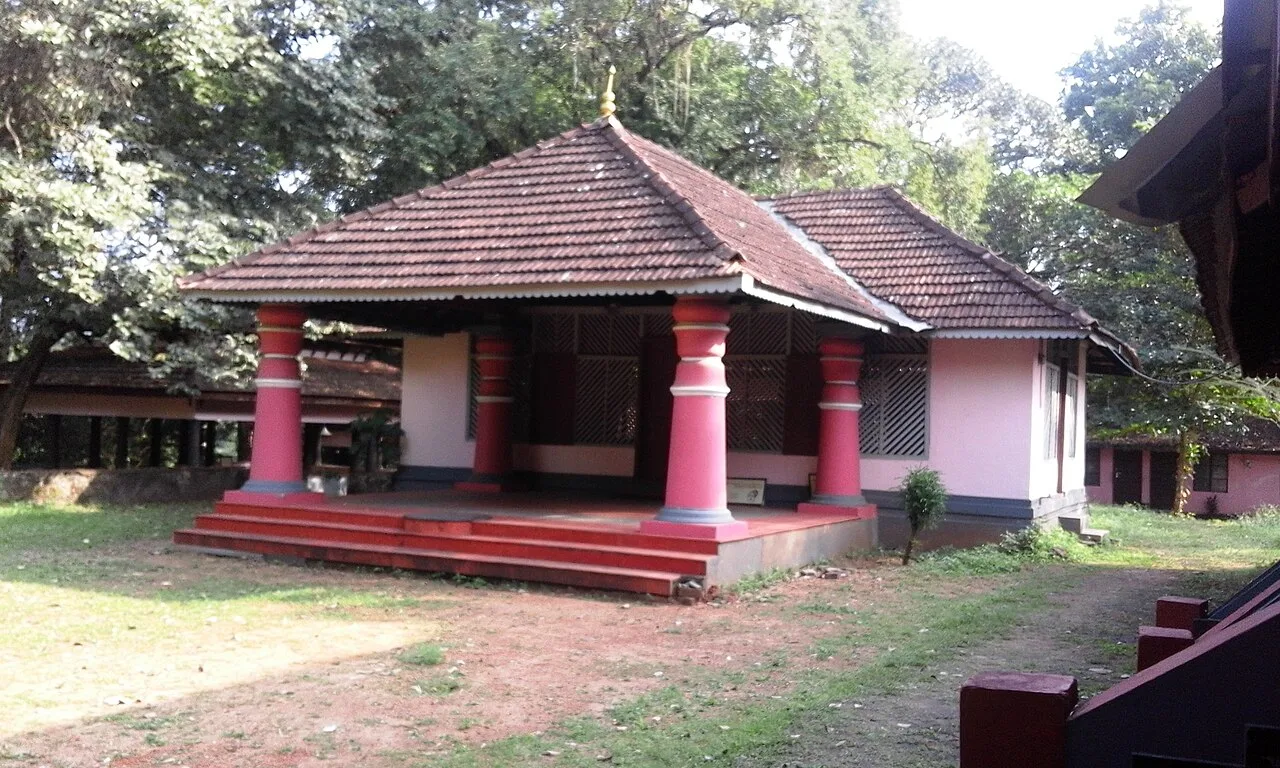
Cheruthuruthy developed as a village beside the Nila, whose banks have long supported settlement, cultivation and movement through this part of Kerala. The river remains an important feature of the local landscape, although its flow and exposed banks vary with the seasons. The name Vallathol Nagar commemorates poet Vallathol Narayana Menon, a major figure in modern Malayalam literature and the revival of Kerala performance traditions. Institutional histories record that Kerala Kalamandalam was founded in 1930 by Vallathol Narayana Menon and Manakkulam Mukunda Raja, initially elsewhere in the district, and moved to Cheruthuruthy in 1936. Its presence helped make the village a centre for formal instruction in art forms including Kathakali, Mohiniyattam and traditional percussion. The institution has continued to develop its teaching and performance activities over time. Cheruthuruthy itself remains a lived-in village rather than a preserved historic precinct: homes, places of worship and everyday streets should be approached as parts of a contemporary community. Claims about the age or restoration history of individual houses should be verified locally.
Origin stories & folklore
There is no single well-documented origin legend for Cheruthuruthy that can safely be presented as established local history. Across Kerala, the Nila is often regarded with affection and reverence, and stories, poems and cultural works have connected the river with memory, learning and the life of its communities. Such associations are better understood as broad river traditions than as a specific tale about this village. Visitors may hear local accounts about the river, settlement or family history; these can vary between tellers. Ask permission before recording or publishing personal stories, and distinguish oral belief from documented history.
Walk through Cheruthuruthy slowly to take in its old houses, streets and places of worship, ideally with a local guide or host who can explain the village's history and families. Many heritage houses are private homes — admire them from outside unless you are invited in or the house is open to visitors — and ask before photographing people. Look out for local food, crafts and festivals that are part of the village's living heritage, and combine your visit with nearby temples, forts or towns in Thrissur district.
Suggested itineraries
Half day: 1–2 hours for a slow village walk; allow another 1–2 hours for a confirmed Kerala Kalamandalam visit or performance, if available; finish with a brief, safe riverside stop. Full day: Begin with a village walk; spend 2–3 hours at Kerala Kalamandalam if visitor access or a programme is confirmed; take a meal break; then visit a nearby town or temple such as Thiruvilwamala, checking access and travel conditions locally. Gentler option: Arrange a vehicle between a confirmed venue and an accessible riverside viewpoint, keep walking to short, level sections, and take breaks in shaded places where available.
Cheruthuruthy’s cultural identity is strongly linked to Kerala Kalamandalam and the teaching and performance of classical arts. Kathakali, Mohiniyattam, Kerala percussion and other traditional forms are part of the institution’s wider artistic life; public performances and visitor access depend on its current programme and rules. Malayalam is the principal language of the area, while English may be understood in visitor-facing settings. Everyday village life includes local places of worship, family customs and food traditions. Dress is generally modest, especially at religious sites. Visitors should follow directions at the institution and avoid treating classes, rehearsals or rituals as performances open to observation without permission.
Local communities
Cheruthuruthy is home to families whose lives are connected with local services, education, small businesses, agriculture and the riverine landscape. Kerala Kalamandalam also brings together students, teachers, artists and staff from different parts of Kerala and beyond. The wider region has Malayalam-speaking communities with varied religious and cultural practices. These are living communities, not attractions: ask before entering homes, photographing people or attending private events. Where a local guide or host is available, their explanations can help visitors understand village history and customs without intruding on residents’ privacy.
Festivals & events
Festival activity in Cheruthuruthy and nearby towns follows Kerala’s varied temple and cultural calendars. Temple festivals in the wider Thrissur region commonly take place at different points in the year and may include processions, percussion or other ritual arts; arrangements vary by temple and season. Kerala Kalamandalam may hold performances or cultural programmes, but these depend on its own schedule. Thrissur is known for major festival activity, including Thrissur Pooram, usually in spring, though it is not a Cheruthuruthy event. Festival roads and public spaces can become crowded, so check locally, plan for delays and respect restrictions around ceremonies.
Village food in Kerala is home cooking: appam with stew, puttu with kadala curry, idiyappam, the vegetarian sadya served on a banana leaf, Kerala parotta with beef or chicken fry, Malabar biryani and pathiri in the north, karimeen pollichathu (pearl-spot fish in banana leaf), toddy-shop fish curry, banana chips and many kinds of payasam. Cheruthuruthy itself may have only tea stalls and small eateries, so ask your host or guide where to eat, or arrange a home-cooked meal in advance — it is often the highlight of a village visit. Carry water and a snack if you plan to spend the whole day, and eat your main meal in the nearest town if no local option is open.
Shopping & local experiences
Cheruthuruthy has everyday local shops rather than a guaranteed dedicated souvenir market. Look for Kerala snacks, locally made goods and practical travel supplies in the village or nearby town centres. Kuthampully, in the wider region, is known for handloom textiles; availability, working hours and visitor access vary, so check before making a special trip. If Kerala Kalamandalam offers publications or art-related items during a visit, confirm what is available rather than assuming a shop is open. Buy directly from local makers where possible, and ask before photographing workshops or workers.
The Nila (Bharathapuzha) is the defining natural feature of Cheruthuruthy. The settlement occupies a riverbank landscape of water, open ground and cultivated or built-up areas, with vegetation typical of inhabited parts of Kerala. The river’s visible width, flow and exposed banks change with rainfall and season; monsoon conditions can bring strong currents, flooding or unstable edges. This is not a designated wildlife-viewing site, and sightings of birds or other animals cannot be guaranteed. Visitors may notice common river and village birdlife, especially in quieter areas, but should observe from a safe distance. Avoid littering, entering the water without local advice or walking onto banks that appear eroded.
September to March; June to August for monsoon Ayurveda and green landscapes
The nearest principal railway station by straight-line distance is Shoranur Junction, roughly 5 km away. The nearest operating airport by straight-line distance is Calicut International Airport, Karipur, roughly 55 km away. These figures are calculated from map coordinates — actual road distance is longer. Thiruvananthapuram, Kollam, Kottayam, Ernakulam, Thrissur, Shoranur, Kozhikode and Kannur are the main rail stops along the coast line; Kochi, Thiruvananthapuram, Kozhikode and Kannur have international airports. Cheruthuruthy is a village, so the last stretch is by road: KSRTC buses (from ordinary to air-conditioned Swift services), fast private buses, metered autos, app cabs and the Water Transport Department's public ferries in the backwaters reach the nearest town, and from there a shared auto, local bus or reserved taxi covers the final few kilometres. Village roads can be narrow and unpaved; a taxi hired for the day from the nearest town is the simplest way to combine Cheruthuruthy with nearby sights and get back before dark. When comparing train, bus and flight, count the complete door-to-door time: a flight saves the most time only if the onward road transfer is short, while an overnight train can save a hotel night. Book your return before you leave, because seats fill quickly on weekends, festivals and holidays. Current train numbers, timings, return services and fares are not listed here; check IRCTC and NTES for trains and the airline's own schedule for flights. No permit is needed to visit Kerala. Several major temples, including Sree Padmanabhaswamy in Thiruvananthapuram and Guruvayur, admit only Hindus and enforce a strict dress code — men wear a mundu (dhoti) and remove shirts, women wear a saree or long skirt. Forest activities in Periyar, Eravikulam, Silent Valley, Parambikulam and Thattekad must be booked with the Kerala Forest Department, and Eravikulam National Park usually closes in February and March for the Nilgiri tahr calving season.
Confirm onward and return timings on IRCTC / NTES, the state bus operator or your airline before travel. A dash means current timings or fares have not been verified.
Getting around
On arrival, local buses connect the area with nearby towns, while auto-rickshaws are useful for short trips; taxis or app-based rides may be available, but check locally. Shoranur Junction is the nearest principal railway station by straight-line distance, roughly 5 km away; the road journey is longer. Walking can work for a short village visit, but routes may have uneven shoulders and traffic. Ask locally about suitable access to the river and whether any approach is closed or unsafe. Parking availability varies by venue, so follow signs and avoid blocking homes or narrow roads. Do not assume a public ferry serves this location.
Hours, tickets & permissions
Cheruthuruthy is a village rather than a single ticketed attraction, and access to public roads and river views may differ from access to particular institutions, temples or private properties. Kerala Kalamandalam and other managed venues can have their own entry rules, visitor areas, performance arrangements and photography restrictions. Tickets, permits, identification, dress expectations and camera rules may apply at specific places. Do not assume that a class, rehearsal or campus area is open to casual visitors. Confirm current hours, entry requirements and fees with the managing authority or venue before travelling.
Facilities
Facilities depend on the venue and part of the village. Kerala Kalamandalam and nearby commercial areas may have visitor services, but toilets, drinking water, food and seating are not assured at every stop; check locally before setting out. Small shops and eateries are available in the wider area, while a broader choice of services can be found in nearby towns. Parking may be limited, particularly near institutions or during events. Guides should be arranged in advance where possible. ATMs and other banking services are more likely in nearby town centres than at a riverside stop.
Accessibility
Cheruthuruthy is a lived-in village, not a purpose-built visitor site, so paths and roadside surfaces can be uneven, and walking distances depend on the places selected. The river edge may be sloped, sandy, muddy or unstable, especially after rain; avoid it if conditions are uncertain. Shade is intermittent. Wheelchair and stroller access cannot be assumed, and some buildings may have steps or restricted visitor routes. Older visitors may prefer a vehicle between stops and short walks with rest breaks. Contact any venue in advance to ask about its current accessible entrance, toilets and seating rather than relying on assumed facilities.
No permit is needed to visit Kerala. Several major temples, including Sree Padmanabhaswamy in Thiruvananthapuram and Guruvayur, admit only Hindus and enforce a strict dress code — men wear a mundu (dhoti) and remove shirts, women wear a saree or long skirt. Forest activities in Periyar, Eravikulam, Silent Valley, Parambikulam and Thattekad must be booked with the Kerala Forest Department, and Eravikulam National Park usually closes in February and March for the Nilgiri tahr calving season. Carry a photo ID, some cash (card and UPI acceptance varies in villages) and a charged phone with offline maps; save the emergency number 112 and your host's contact. Heat in summer and heavy rain in the monsoon are the main weather risks; carry water, avoid midday sun and allow extra time when village roads flood. Respect local customs: dress modestly, remove footwear where asked, and always ask before photographing people, homes or rituals.
Photography
Soft morning or late-afternoon light can suit views of the river and village streets, but there is no single designated viewpoint guaranteed to be open. Photography in public areas is generally less sensitive than inside homes, temples or institutional spaces; ask before taking pictures of people, worship or teaching. Kerala Kalamandalam may have specific rules for performances, classes and campus areas, so confirm before using a camera. Do not use a drone without checking current aviation rules and obtaining any required permissions. Avoid obstructing paths or ceremonies while taking photographs.
Most visitors see Cheruthuruthy on a day trip from the nearest town, which has the widest choice of hotels. A few villages have homestays or heritage stays; otherwise base yourself in the district town and hire a taxi for the day. Confirm the booking and the exact location before you travel, because village addresses can be hard to find.
Kerala Kalamandalam is the principal cultural visit in Cheruthuruthy; confirm visitor access and programmes before planning around it. Shoranur, a nearby railway town, can be useful for onward travel and local services. Thiruvilwamala, in Thrissur district, is known for the Vilwadrinatha Temple; visitors should check temple access and customs locally. Kuthampully is known for handloom weaving and may suit a craft-focused excursion; verify workshop or shop access in advance. Thrissur town offers a wider range of museums, temples and urban services, but requires additional travel. These places are separate stops, not all within an easy walking distance.
For couples, Cheruthuruthy is a chance to slow down: walk the lanes in the soft morning light, share a home-cooked meal and keep the afternoon free. Stay in a nearby homestay or heritage property to make it a quiet overnight escape.
Q: How much time should I allow for Cheruthuruthy? A: A half day can cover a village walk and one confirmed venue; allow longer if combining the visit with a nearby town or temple. Q: When is a good season to visit? A: September to March is generally more comfortable for travel. Monsoon months bring heavy rain and can make riverbank access unsafe. Q: Is there an entry ticket for Cheruthuruthy? A: The village itself is not a single ticketed attraction. Individual institutions, performances or religious sites may have their own entry rules; confirm locally. Q: Is the visit suitable for children and elderly visitors? A: It can be, with supervision near roads and the river. Choose short walks, take breaks and avoid slippery or unstable banks. Q: Where can I stay nearby? A: Check current accommodation in Cheruthuruthy and nearby towns such as Shoranur or Thrissur; availability and facilities vary by season.
Be the first to share photos, stories, advice or a helpful contact for Cheruthuruthy.
Loading…