
Kokrebellur
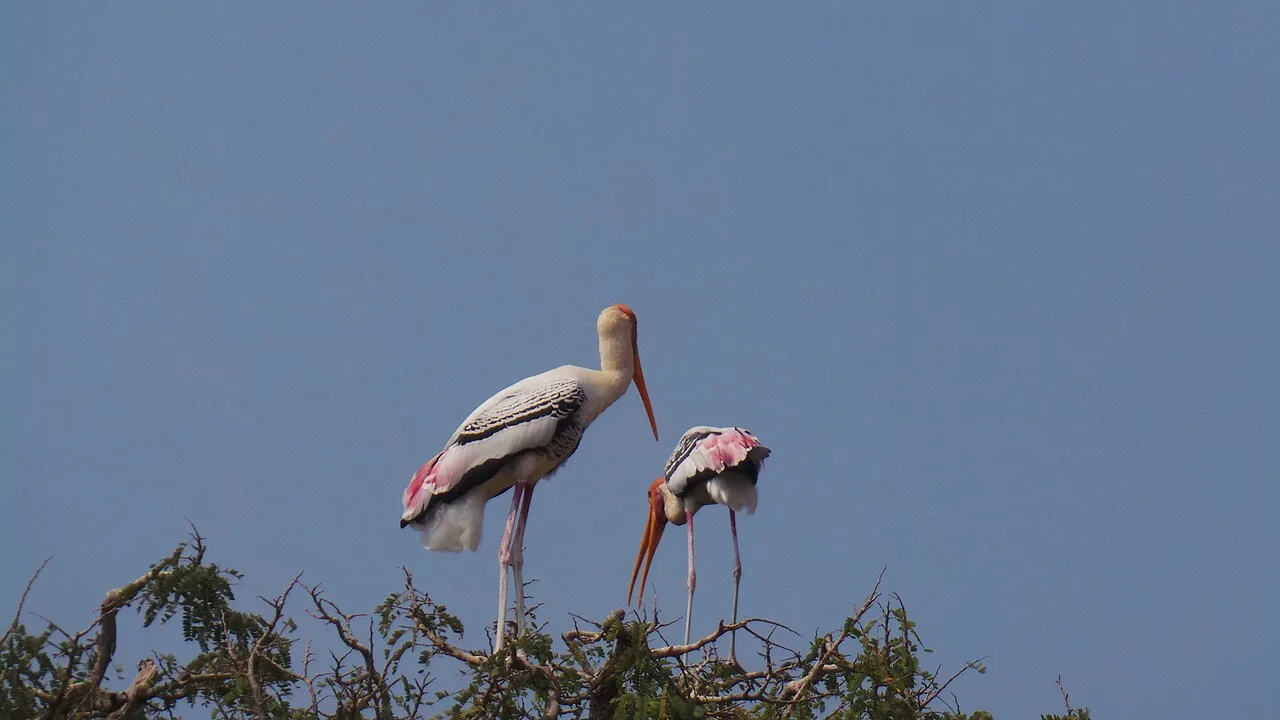
Kokrebellur, in Karnataka’s Mandya district, is known for nesting painted storks and spot-billed pelicans, whose presence has fostered a longstanding relationship with local residents.
Key facts · verified by Ghumoopedia editors
- Type of place
- National park / sanctuary
- Best time to visit
- October to February; June to September for monsoon greenery in the Western Ghats
- Nearest railway station
- Mysuru Junction · about 55 km (straight line)
- Nearest airport
- Mysuru Airport · about 55 km (straight line)
- Verified
- 21 Nov 2026
Plan a trip from Kokrebellur — a day-by-day route through places nearby.
Kokrebellur is a settlement in Maddur taluk, Mandya district, Karnataka, India. Its name comes from kokkare, the Kannada word for the painted stork (Mycteria leucocephala). Large numbers of these birds return to nest in the village each year. The settlement is close to Maddur, between Mysore and Bangalore. Painted storks share the village with many spot-billed pelicans. The two species are listed as Near Threatened on the IUCN Red List, and Kokrebellur is among 21 places in India where they breed. Their nesting has fostered a lasting connection with the community. Residents regard the pelicans as part of their local heritage and see the birds as signs of good fortune and prosperity. This recurring presence remains central to the village’s shared heritage. The relationship also has practical value. The birds’ droppings, known as guano, are used as manure rich in phosphorus and potassium, bringing commercial benefits to villagers. The enduring bond between residents and the birds has attracted tourists to Kokrebellur over time. Karnataka holds the boulder-strewn ruins of Hampi, the Hoysala temple jewels of Belur and Halebidu, the Chalukyan monuments of Badami, Aihole and Pattadakal, the palaces of Mysuru, the coffee hills of Coorg and Chikkamagaluru, the temple-and-beach town of Gokarna and the tiger forests of Bandipur and Nagarhole. Bengaluru and the plateau are mild most of the year; the coast is hot and humid; the Malnad hills (Coorg, Chikkamagaluru, Agumbe) get very heavy monsoon rain from June to September. October to February is pleasant almost everywhere. The usual best time to visit is October to February; June to September for monsoon greenery in the Western Ghats. For official information, see Karnataka Tourism at https://karnatakatourism.org.
Why it matters
Kokkarebellur, commonly called Kokrebellur, is known for the close relationship between village life and nesting painted storks and spot-billed pelicans. The name refers to the painted stork, or “kokkare” in Kannada. The birds use trees in and around the settlement as breeding sites, making the village a notable example of people and wildlife sharing a lived-in landscape. The villagers have traditionally valued the birds as signs of good fortune and have made use of nutrient-rich guano as manure. The site is often described as a bird sanctuary, but it is not a conventional fenced national park with a visitor circuit. Its importance lies in its community-linked conservation and birdlife; confirm any formal protection status with the relevant Karnataka authorities.
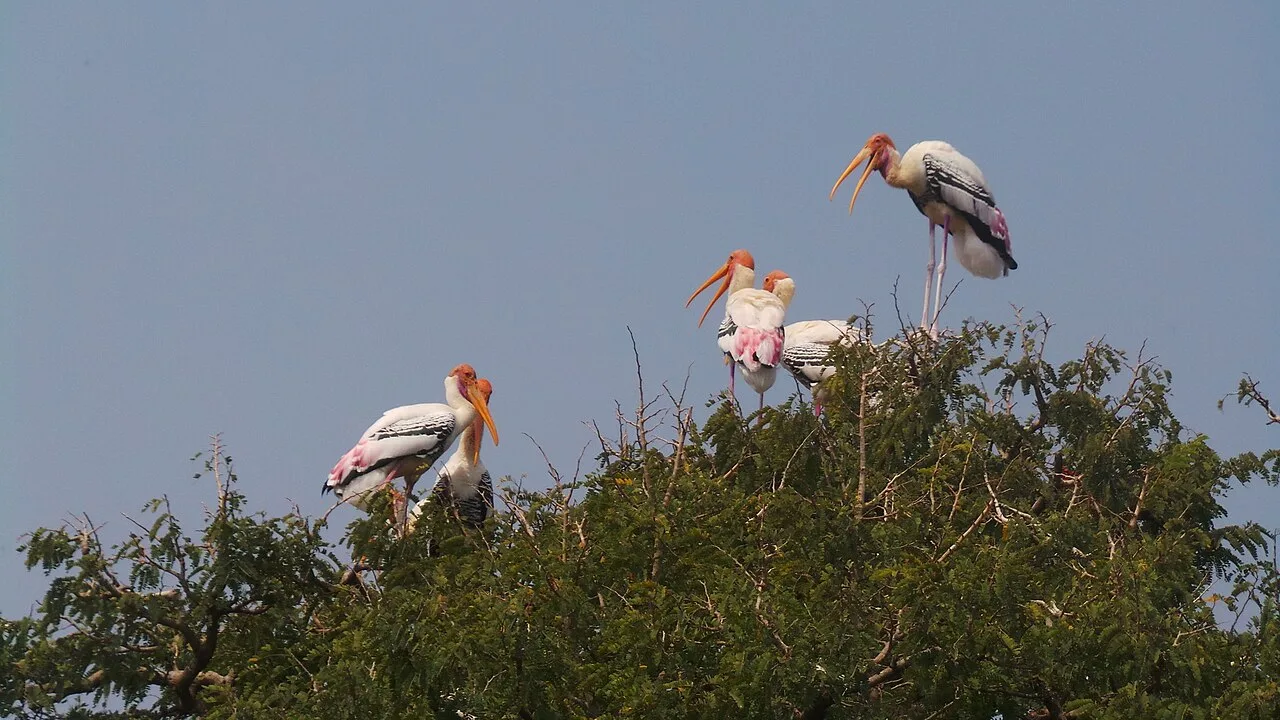
Kokkarebellur developed as a village in Maddur taluk, in what is now Mandya district. Its name is associated with the painted stork: “kokkare” is the Kannada name for the bird. The village is not known for a palace, fort or monumental complex, and accounts of its past centre instead on the relationship between residents and nesting birds. Spot-billed pelicans and painted storks have bred in the settlement, and generations of villagers have accommodated them in trees near homes and fields. Residents have regarded the birds as auspicious and have used their droppings, rich in plant nutrients, as manure. This relationship has drawn visitors and conservation interest over time. The village’s story is therefore one of a living settlement and shared habitat rather than a single founding event or royal building project. No widely established date for the beginning of nesting, or a major restoration campaign, should be assumed. Visitors seeking current information about conservation management or formal designations should check with local or Karnataka wildlife authorities.
Kokrebellur rewards slow travel: walk the village paths and fields with a local guide, learn how the community manages its water, forests or wildlife, and stay overnight if a homestay is available to see village life at dawn and dusk. Wildlife and nature events depend on the season and are never guaranteed — ask locally what can be seen when you plan to visit. Keep noise low, carry your rubbish out and follow any rules the village has set for visitors; community-led conservation is the reason these places are worth visiting.
Suggested itineraries
Half day: Arrive by road; spend about 1–2 hours walking village paths with local guidance; pause to observe the landscape quietly; leave time to speak with a community member if available. Full day: Explore the village on foot in the morning; take a relaxed meal break nearby; learn about local bird conservation and rural life; visit a nearby town or attraction in the afternoon, allowing for road travel. Gentler option: Arrange a vehicle drop-off at a suitable point, keep to a short level walk with frequent rests, and observe from a respectful distance rather than trying to cover the whole village.
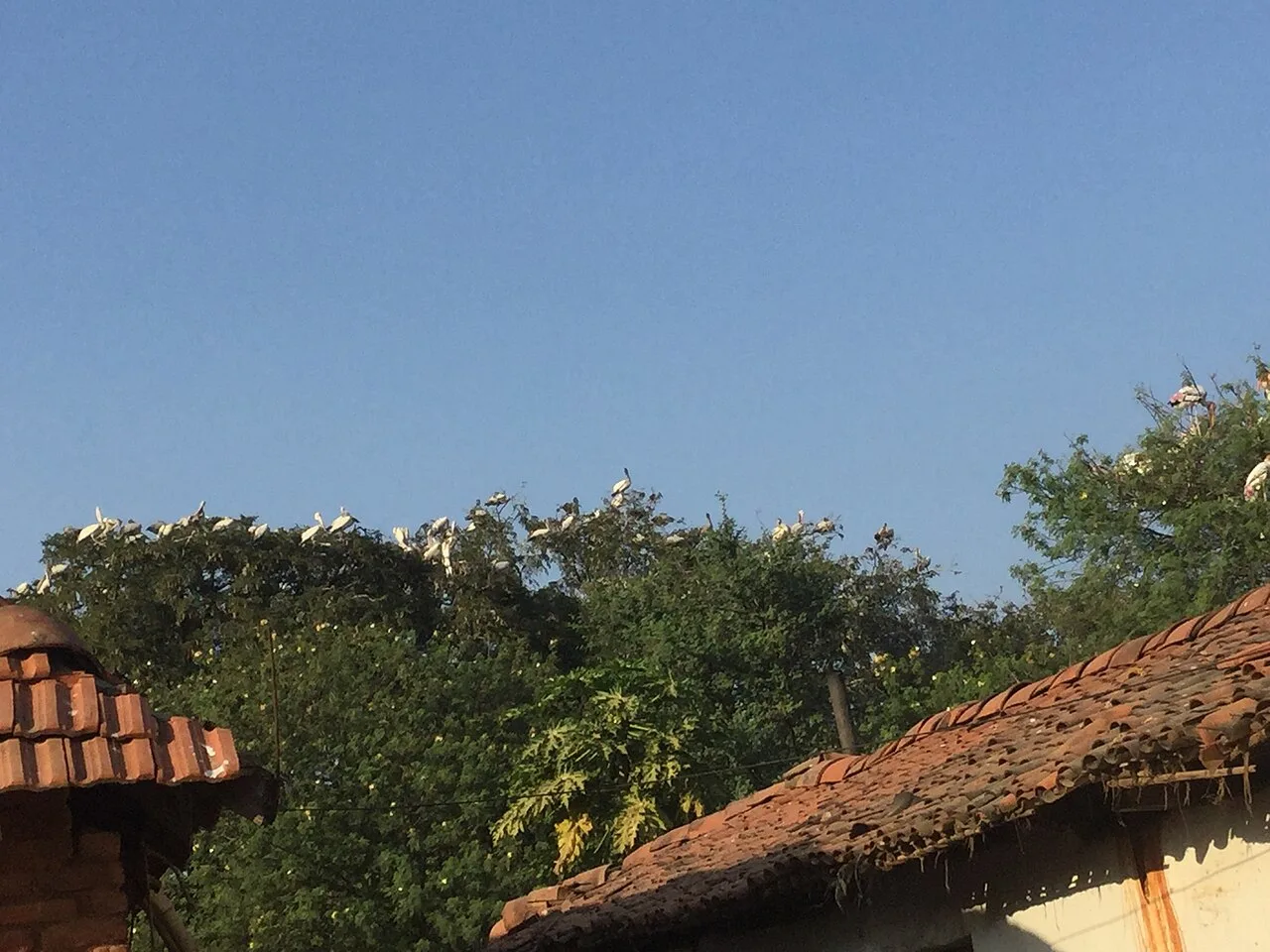
Kannada is the main language of everyday life in the village and surrounding area; visitors may also encounter other languages spoken by travellers and residents. Kokrebellur’s most visible living tradition is the community’s long association with nesting birds, which residents have treated as part of local heritage. Village routines follow a rural rhythm, with activity around homes, fields and shared roads. Customs and celebrations are generally family- and community-centred, rather than staged for visitors. Do not assume that a particular dance, costume or performance is part of a visit. Ask before photographing residents, homes or gatherings, and follow local guidance around nesting trees and private property.
Local communities
Kokrebellur is a lived-in village, not an uninhabited wildlife enclosure. Residents have long shared their settlement with painted storks and spot-billed pelicans, and their knowledge and tolerance have helped sustain the birds’ nesting presence. Agriculture and other rural livelihoods form part of the wider area’s economy; visitors should not assume every household offers tours, food or accommodation. Local guides or community members may be able to explain village conservation practices when available. Treat residents as hosts and neighbours, not as attractions: ask permission before entering private spaces or taking portraits, and support locally offered services respectfully.
Festivals & events
Ugadi, the Kannada New Year, and Makar Sankranti are observed in Karnataka, though the form and scale of celebrations vary by community. Village and temple festivities may also take place locally, but dates and visitor access are not fixed; ask residents before planning around an event. Mysuru Dasara is a major celebration in the wider region, while Srirangapatna and other nearby towns have their own religious and cultural calendars. Festival periods can bring more traffic, visitors and limited accommodation availability around popular towns. Kokrebellur is not known for a guaranteed annual bird festival, so confirm any event locally rather than expecting one.
Village food in Karnataka is home cooking: bisi bele bath, Mysore masala dosa, ragi mudde with sambar, Coorg's pandi (pork) curry, Mangalorean fish curry with neer dosa, Davangere benne dosa, Dharwad pedha and filter coffee everywhere. Kokrebellur itself may have only tea stalls and small eateries, so ask your host or guide where to eat, or arrange a home-cooked meal in advance — it is often the highlight of a village visit. Carry water and a snack if you plan to spend the whole day, and eat your main meal in the nearest town if no local option is open.
Shopping & local experiences
Kokrebellur is not primarily a shopping destination, and dedicated craft stalls are not guaranteed. In Maddur, look for locally made Maddur vada at food shops or eateries, subject to availability. Nearby town markets may carry everyday goods and regional produce, but stock varies. If a local guide or household offers a service or product, ask about it directly and agree arrangements respectfully. Avoid buying feathers, eggs, wildlife products or anything presented as collected from nests. Choose locally made goods where available and take packaging away if bins are scarce.
Kokrebellur is a rural landscape of houses, trees, fields and village paths in the Mandya district, rather than a large continuous forest. Its best-known wildlife is the painted stork and the spot-billed pelican, both of which nest in the village when conditions suit them. The surrounding countryside supports common farmland and wetland-associated birds, while trees provide nesting and roosting places. Seasonal water availability and the breeding cycle influence what visitors may encounter. The wider region includes cultivated land and water bodies, but this is not a promise of a particular habitat or sighting at the village. Keep a respectful distance from nests, avoid disturbing birds, and remember that wildlife activity varies by season and year.
October to February; June to September for monsoon greenery in the Western Ghats
The nearest principal railway station by straight-line distance is Mysuru Junction, roughly 55 km away. The nearest operating airport by straight-line distance is Mysuru Airport, roughly 55 km away. These figures are calculated from map coordinates — actual road distance is longer. Bengaluru is the hub for the south and centre; Hubballi and Belagavi serve the north; Mangaluru serves the coast; Mysuru is the gateway to Coorg, and Hosapete is the railhead for Hampi. Kokrebellur is a village, so the last stretch is by road: KSRTC buses including comfortable Airavat coaches, private sleeper coaches, and app cabs in Bengaluru, Mysuru and Mangaluru reach the nearest town, and from there a shared auto, local bus or reserved taxi covers the final few kilometres. Village roads can be narrow and unpaved; a taxi hired for the day from the nearest town is the simplest way to combine Kokrebellur with nearby sights and get back before dark. When comparing train, bus and flight, count the complete door-to-door time: a flight saves the most time only if the onward road transfer is short, while an overnight train can save a hotel night. Book your return before you leave, because seats fill quickly on weekends, festivals and holidays. Current train numbers, timings, return services and fares are not listed here; check IRCTC and NTES for trains and the airline's own schedule for flights. No permit is needed to visit Karnataka. Tiger safaris in Bandipur, Nagarhole and the Kali Tiger Reserve must be booked in advance through the forest department or authorised lodges — weekend slots sell out. Treks in Kudremukh National Park and some Western Ghat peaks need forest entry permission. Hampi's monuments have ASI entry tickets; the core zone is best seen with a bicycle, moped or autorickshaw for the day.
Confirm onward and return timings on IRCTC / NTES, the state bus operator or your airline before travel. A dash means current timings or fares have not been verified.
Getting around
Visitors usually reach the area by road from Maddur or another nearby town. From the village entrance, walking is a practical way to explore paths, provided residents’ privacy and any restricted areas are respected. Local buses, shared autos or reserved taxis may serve the wider area, but availability can vary; arrange onward transport in advance if relying on a return ride. There may be informal places to stop a vehicle, but do not block narrow roads, house entrances or farm access. Boats are not a standard way to get around Kokrebellur.
Hours, tickets & permissions
Kokrebellur is a village rather than a standard ticketed park, so entry arrangements may differ from those at a managed wildlife sanctuary. Do not assume that tickets, permits, camera fees or visitor facilities are available, or that every path is open to visitors. Access near homes, nesting trees or conservation areas may be guided by local requests or official rules. Confirm current visiting conditions, any applicable fees and the managing authority’s requirements locally before travelling. Respect signs and directions from residents or officials.
Facilities
Facilities within the village may be basic and are not guaranteed to operate as visitor services. Toilets, drinking water, food, parking and local guiding may be available in or near the settlement, but check locally and carry water and essential supplies. Maddur and other nearby towns are more likely to offer shops, eateries and cash services; do not rely on finding an ATM at the village. Homestays or other overnight options should be confirmed in advance. Take rubbish away if suitable disposal is not available.
Accessibility
The village is a working rural settlement, with paths and roads that may be uneven, narrow or affected by weather. Walking distances depend on which parts are accessible, and shade can vary along the route. Do not assume there are ramps, accessible toilets, benches or a step-free visitor trail. Wheelchair and stroller access may be difficult on rough or unpaved surfaces; check current conditions and arrange assistance before travelling. Older visitors may find a short, slow visit more comfortable than a long walk. A vehicle can help reduce walking, but safe stopping places are limited and should be agreed locally.
No permit is needed to visit Karnataka. Tiger safaris in Bandipur, Nagarhole and the Kali Tiger Reserve must be booked in advance through the forest department or authorised lodges — weekend slots sell out. Treks in Kudremukh National Park and some Western Ghat peaks need forest entry permission. Hampi's monuments have ASI entry tickets; the core zone is best seen with a bicycle, moped or autorickshaw for the day. Carry a photo ID, some cash (card and UPI acceptance varies in villages) and a charged phone with offline maps; save the emergency number 112 and your host's contact. Heat in summer and heavy rain in the monsoon are the main weather risks; carry water, avoid midday sun and allow extra time when village roads flood. Respect local customs: dress modestly, remove footwear where asked, and always ask before photographing people, homes or rituals.
Visitor rules
Follow any instructions from residents, guides or wildlife officials, and keep to paths where visitors are welcome. Wear practical, modest clothing and closed, comfortable footwear suitable for village roads. Keep voices low, do not feed, chase or touch birds, and never approach nests or climb nesting trees. Carry rubbish out and avoid single-use plastic where possible. Ask before photographing people, homes or private land. Entry into restricted areas may be prohibited, and local or official rules take precedence over general visitor guidance.
Photography
Soft morning or late-afternoon light can suit village and landscape photography, but bird activity and visibility vary with season and conditions. Photograph only from places where visitors are welcome, keeping well away from nests and roosting birds. Do not use flash or make noise to attract wildlife. Ask permission before photographing residents, homes or children. Drone use may be restricted by aviation rules, local permissions or wildlife protections; do not fly one without checking requirements in advance. Be prepared to put the camera away if asked.
Most visitors see Kokrebellur on a day trip from the nearest town, which has the widest choice of hotels. Community homestays, where available, are the best way to experience village life — book through a known operator or the village's own contact, confirm what is included, and expect simple rooms and shared meals. Confirm the booking and the exact location before you travel, because village addresses can be hard to find.
Maddur is the nearest familiar town for local services and is associated with Maddur vada, a regional snack. In the wider Mandya region, visitors can consider Melukote, known for its hilltop temple setting, and the KRS dam and Brindavan Gardens. Srirangapatna offers historic and religious sites, while Ranganathittu Bird Sanctuary is another established birding destination in the region. These places require separate road travel and should not be treated as part of a walk from Kokrebellur. Check current access and conditions before combining stops.
For couples, Kokrebellur is a chance to slow down: walk the lanes in the soft morning light, share a home-cooked meal and keep the afternoon free. Stay in a nearby homestay or heritage property to make it a quiet overnight escape.
Q: How much time should I allow for a visit? A: A half day allows for a quiet village walk; a full day can include a nearby town or attraction, with road travel. Q: When is the best season to visit? A: October to February is generally pleasant in Karnataka. Bird nesting and sightings vary, so ask locally about current conditions. Q: Is there an entry ticket or permit? A: Do not assume there is a standard ticket. Confirm current access rules, fees and any permissions with local or wildlife authorities. Q: Is Kokrebellur suitable for children and elderly visitors? A: It can suit a calm visit, but paths may be uneven and facilities limited. Keep children quiet near birds and plan a short route with rests. Q: Can I stay overnight nearby? A: Accommodation may be available in nearby towns, while village homestays are not guaranteed. Confirm options and transport before travelling.
Be the first to share photos, stories, advice or a helpful contact for Kokrebellur.
Loading…