
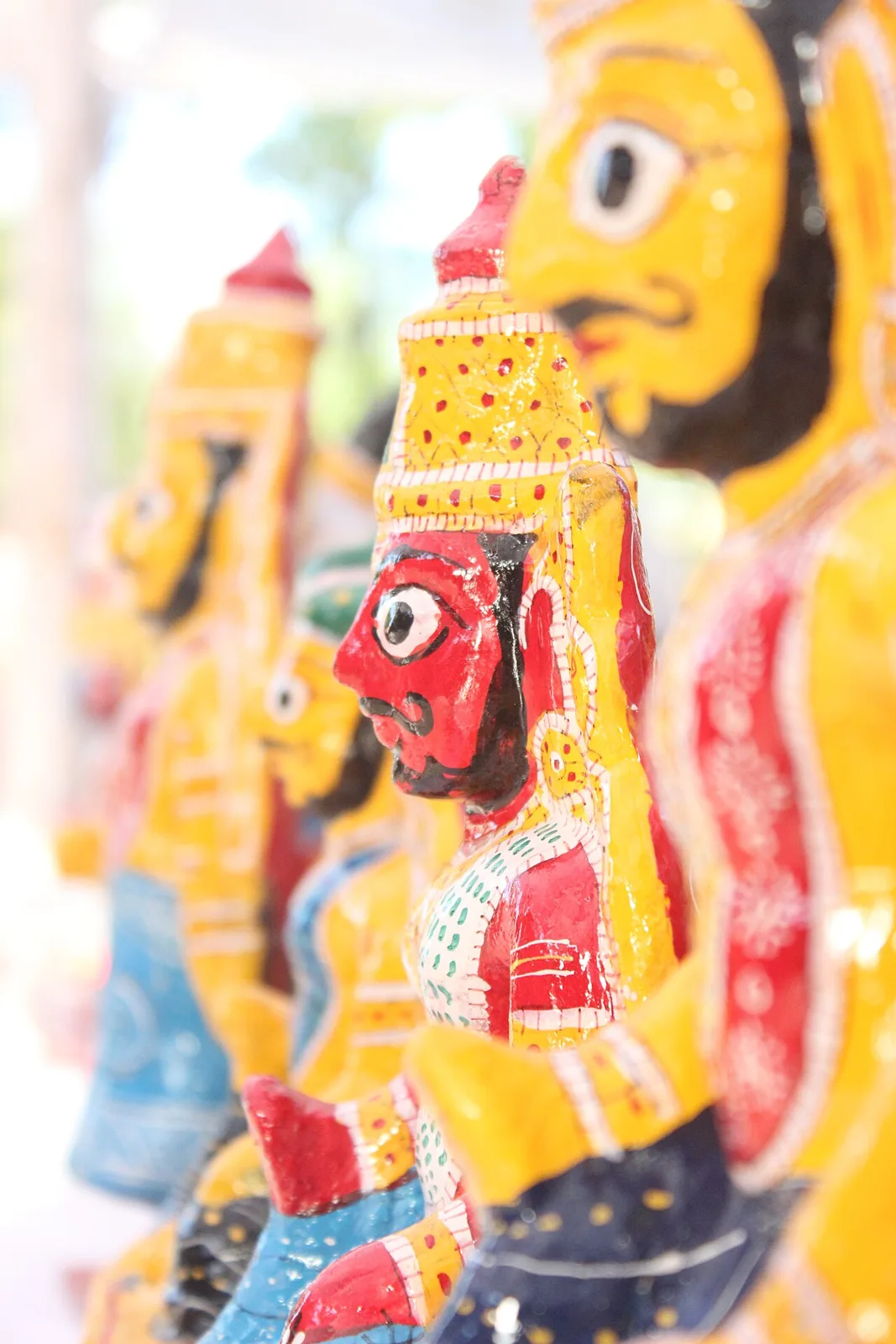
Molela Terracotta Village
Molela Terracotta Village, in Rajasthan’s Rajsamand district near Nathdwara, is known for pottery depicting folk deities. People visit to see votive terracotta plaques made for shrines in Rajasthan and Gujarat.
Key facts · verified by Ghumoopedia editors
- Type of place
- Temple / pilgrimage site
- Best time to visit
- October to March
- Verified
- 21 Nov 2026
Molela lies in Rajsamand district, close to Nathdwara, in Rajasthan. The village’s potters work in terracotta, making plaques that depict folk deities. These plaques are made as votive objects and travel from Molela to shrines across Rajasthan and Gujarat. Their connection with places of worship in both states gives the pottery a purpose beyond decoration. Visitors come to see the craft associated with the village: potters shape terracotta into devotional plaques. The subjects are folk deities, and the finished pieces serve as offerings at shrines. Molela is closely linked with both the making and use of these objects. Rajasthan is the land of Rajput forts and palaces, painted havelis, desert folk music, puppetry and colourful fairs such as the Pushkar camel fair. Rajasthan is very hot from April to June — often above 45 °C in the desert — with a short monsoon in July–September. Winter days are pleasant and nights are cold, especially in the Thar Desert. Mount Abu is the state's only hill station and stays cooler. The usual best time to visit is October to March. For official information, see Rajasthan Tourism at https://www.tourism.rajasthan.gov.in.
Why it matters
Molela is a village in Rajasthan’s Rajsamand district, near Nathdwara, known for its potters’ handmade terracotta plaques of folk deities. These votive images are used at shrines in Rajasthan and Gujarat, linking village workshops with regional devotional life. The craft is also an important source of local livelihood and an example of living, community-based ceramic practice. India’s Geographical Indications registry lists Molela Clay Work as a registered geographical indication; visitors can ask makers or a cooperative about current marking and provenance. Molela is not itself a single monumental temple complex: its significance lies chiefly in the workshops, the makers’ knowledge and the devotional objects produced there. Confirm locally which workshops welcome visitors.
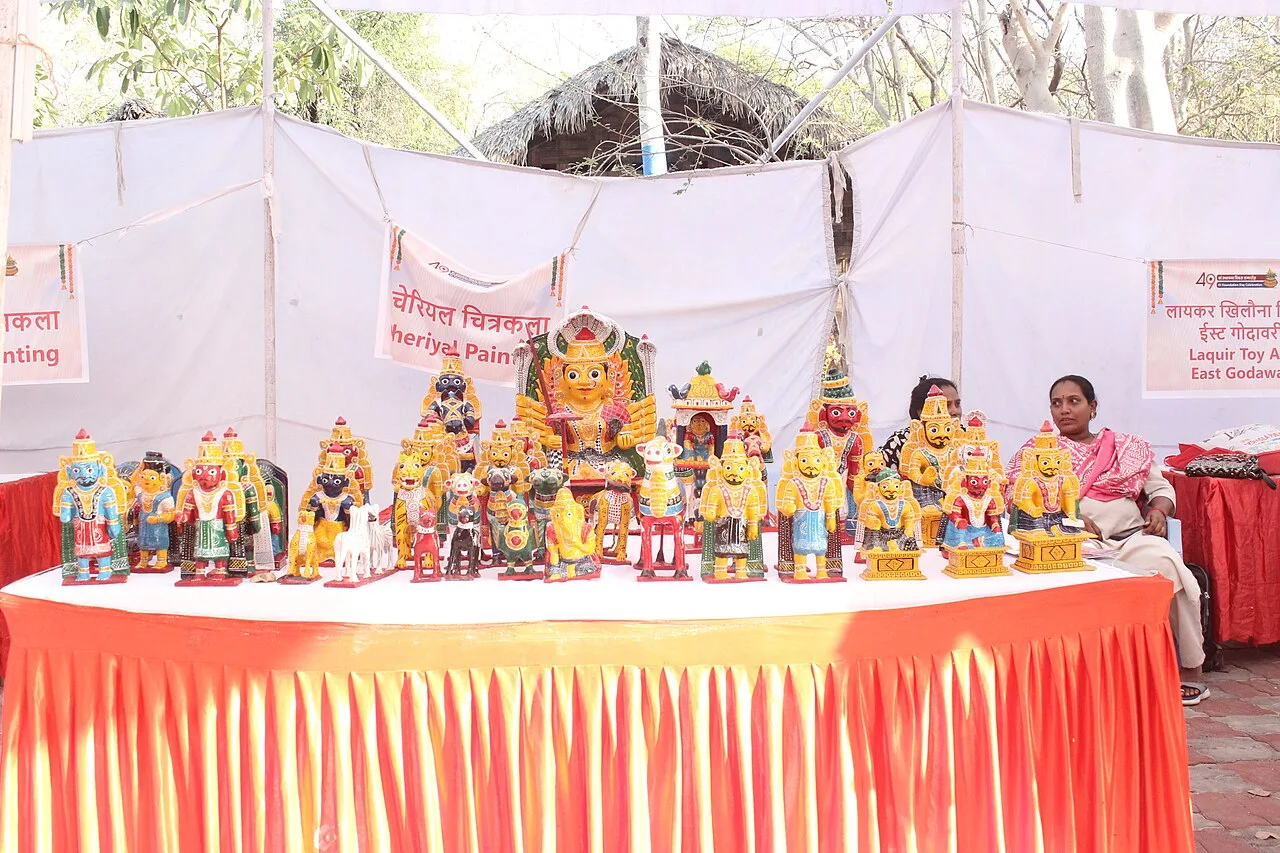
Molela’s terracotta practice is a hereditary craft maintained by potter families, commonly identified with the Kumhar community. Its precise beginnings are not securely documented, so accounts of its age should be treated as traditional rather than as a dated history. The craft developed around making relief plaques of folk and regional deities for worshippers and shrines, rather than only household pottery. Makers form clay into figures and scenes, dry the work, and fire it before adding colour or other finishing details. The plaques have travelled beyond the village, especially to devotional settings in Rajasthan and Gujarat, giving Molela a regional network of patrons. Over time, demand for decorative pieces and visitor interest have supplemented the ritual market, while family workshops remain central to production. The work has also received recognition through India’s Geographical Indications system as Molela Clay Work. This recognition identifies the craft’s association with its place of origin; it does not mean every item sold nearby is necessarily made by a Molela artisan. There is no single public monument whose construction or restoration defines the village’s history. Today, continuity depends on artisans, household knowledge, cooperative activity and buyers who value handmade work.
Origin stories & folklore
Stories about the beginnings of Molela’s craft belong to oral tradition and may differ between families; there is no single verified founding account to present as fact. In local belief, plaques are not merely pictures but images through which a deity may be honoured or invited into a shrine. Devotees may associate particular forms with protection, healing, fulfilment of vows or gratitude, depending on the deity and community. Some makers describe their inherited skill as a blessing or calling. Visitors should receive such accounts respectfully, ask before recording them, and avoid treating a family’s religious explanation as a staged performance.
Architecture & design
Molela is a working village of homes and small workshops rather than a purpose-built temple precinct. Its best-known visual form is the terracotta plaque: a flat or gently curved clay panel with figures modelled in relief. Artisans shape local clay by hand, joining separately formed elements to create deities, attendants, animals and narrative scenes. Plaques are dried and fired; colour may be added as a finishing layer. The relief format makes images visible when installed against a wall or shrine surface. Designs vary by maker and intended use, so visitors may see differences in scale, composition and detail. Courtyard workspaces and household production are part of the craft’s setting, but not every home is open to visitors. The village’s narrow lanes and ordinary domestic buildings should not be mistaken for a formal visitor route or a single architectural complex.
Important objects & sculptures
Look for votive terracotta plaques portraying folk deities and devotional scenes, including locally requested forms whose identities are best explained by the maker. Figures may be shown with attendants, animals, weapons or other attributes that help devotees recognise them. Relief modelling, layered ornaments, facial features and traces of hand-finishing are useful details to notice. Workshops may also display smaller decorative pieces or works in progress, but stock changes with orders and seasons. There is no guaranteed public collection or museum display in the village. Ask before handling any object, and ask the artisan to explain a figure rather than guessing its identity from appearance alone.
Religious significance
Molela’s craft serves folk and regional Hindu devotional traditions. Potters make votive plaques of deities worshipped at shrines across Rajasthan and Gujarat; worshippers may commission or acquire an image as an offering, in fulfilment of a vow, or for installation at a shrine. The particular deity, ritual and meaning vary between communities, and a workshop should not be assumed to function as a temple. Visitors may encounter images intended for worship, so they should ask before touching, photographing or discussing an object. The village’s religious importance is therefore connected to the making and circulation of sacred images, as well as to the beliefs of the people who commission and use them.
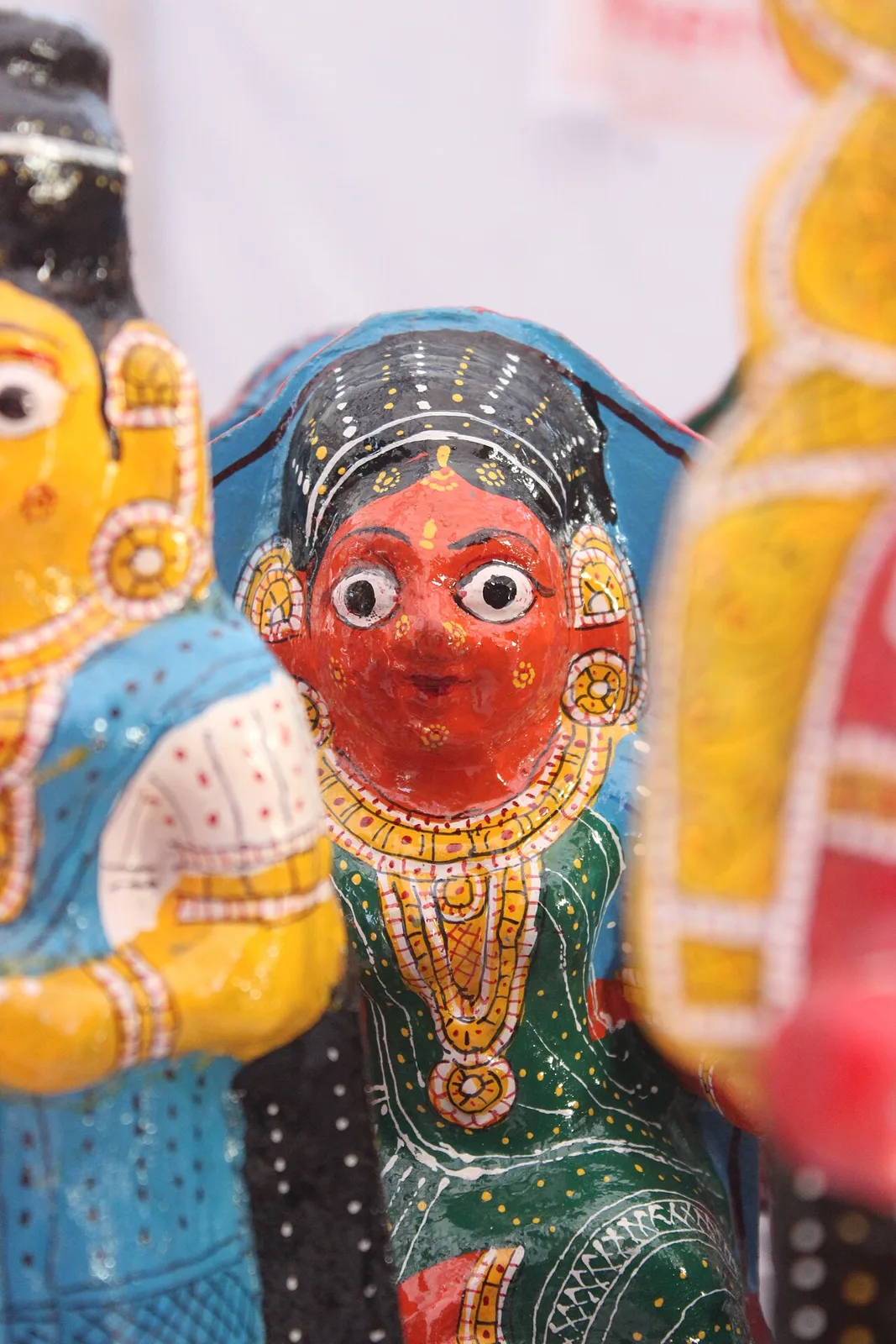
The heart of a visit to Molela Terracotta Village is meeting the artisans at work. Ask to see each stage of the work, from raw material to finishing; most families work at home or in small courtyard workshops, and a single piece can take hours or days. Many households and cooperative societies welcome visitors who show genuine interest, but this is a working village, not a museum: ask before entering a home or workshop, keep visits short during busy hours, and accept that some families may be away at fairs or markets. Buying directly from the maker or a registered cooperative is the best way to support the craft. Where a product carries a Geographical Indication (GI) tag or a handloom mark, ask for it; prices for handmade work reflect the time and skill involved, so bargain gently, if at all. Some workshops offer short hands-on sessions — ask locally rather than expecting a fixed schedule.
Suggested itineraries
Half day: Meet an artisan or cooperative, observe plaque-making and finishing, browse available work, then take a short village walk if invited (about 3–4 hours). Full day: Visit Molela’s workshops, allow time for conversation and shopping, then continue to Nathdwara’s Shrinathji Temple or Rajsamand Lake (about 6–8 hours, depending on road conditions and access). Gentler option: Arrange a vehicle to drop close to a welcoming workshop, spend a seated visit with an artisan, and skip the longer village walk.
Molela’s cultural life is closely tied to family-based pottery skills and the daily work of shaping, drying and finishing clay. Knowledge is passed through generations, while makers adapt designs to the needs of patrons and changing markets. Rajasthani is widely spoken in the area; Hindi is also useful for visitors, though language varies by household. The village belongs to a region known for folk music, dance, fairs and colourful dress, but performances are not a regular feature of workshop visits. Courtesy matters: ask permission before entering a courtyard, interrupting work or photographing people. A conversation with an artisan, when welcomed, can offer more insight than treating the village as a display.
Festivals & events
Molela is not known for a single fixed public festival calendar. The plaques made here are connected with worship and fairs in the wider region, and some artisans may be away selling or demonstrating work during market periods. Nearby Nathdwara draws visitors for religious observances and festivals associated with Shrinathji, with larger crowds around major occasions. Rajasthan’s broader fair season is especially active in the cooler months, though local dates and events vary by year. Festival traffic can make nearby roads and accommodation busier; check current local information before planning a visit around an event.
Village food in Rajasthan is home cooking: dal baati churma, gatte ki sabzi, ker sangri, laal maas, pyaaz kachori, mirchi vada, ghewar, mawa kachori and chaach (spiced buttermilk). Molela Terracotta Village itself may have only tea stalls and small eateries, so ask your host or guide where to eat, or arrange a home-cooked meal in advance — it is often the highlight of a village visit. Carry water and a snack if you plan to spend the whole day, and eat your main meal in the nearest town if no local option is open.
Shopping & local experiences
The most meaningful purchase is a terracotta piece bought directly from its maker or through a registered cooperative. Ask who made it, whether it is intended for worship or decoration, and how it should be handled. Molela Clay Work has a registered geographical indication, but ask about provenance rather than assuming every nearby item is locally made. Handmade pieces vary in size, finish and price according to labour and design; bargain gently, if at all. Pack fragile work carefully for travel. Nearby towns may offer regional snacks and other crafts, but Molela’s distinctive shopping experience is meeting the potters and supporting their work.
October to March
These figures are calculated from map coordinates — actual road distance is longer. Jaipur, Ajmer, Jodhpur, Udaipur and Kota are the main rail hubs, and Jaipur, Udaipur and Jodhpur have the most flights; Delhi is the usual gateway for the north-east of the state. Molela Terracotta Village is a village, so the last stretch is by road: Rajasthan State Road Transport Corporation (RSRTC) buses and private coaches reach the nearest town, and from there a shared auto, local bus or reserved taxi covers the final few kilometres. Village roads can be narrow and unpaved; a taxi hired for the day from the nearest town is the simplest way to combine Molela Terracotta Village with nearby sights and get back before dark. When comparing train, bus and flight, count the complete door-to-door time: a flight saves the most time only if the onward road transfer is short, while an overnight train can save a hotel night. Book your return before you leave, because seats fill quickly on weekends, festivals and holidays. Current train numbers, timings, return services and fares are not listed here; check IRCTC and NTES for trains and the airline's own schedule for flights. No permit is needed to visit Rajasthan. Land close to the international border west of Jaisalmer and Barmer is restricted beyond certain points: places such as Tanot can be visited, but border outposts need Border Security Force permission. Forts and palaces charge entry and camera fees, and tiger-reserve safaris must be booked through the official forest department portal.
Getting around
The final approach to Molela is by road. RSRTC buses and private coaches serve towns in the region; from the nearest suitable stop, visitors can continue by local bus, shared auto or reserved taxi, subject to availability. A taxi arranged for the day is often the simplest option for combining Molela with nearby sights. Village lanes may be narrow, so a vehicle may not reach every courtyard; expect some walking and ask the driver where stopping is practical. Confirm the return ride before leaving a town or workshop, as local services may be limited. Parking arrangements are informal and should be checked on arrival.
Hours, tickets & permissions
Molela is a living village, not a ticketed monument with one dependable entry schedule. Workshop access is at the discretion of individual families or cooperatives, and a visit may require asking locally or arranging access in advance. Do not assume that every workshop is open, that demonstrations are scheduled, or that entry is free. Dress modestly when visiting homes or religious settings, and follow any request about footwear, photography or restricted areas. Confirm current hours, entry rules and any fees with the workshop, cooperative or relevant local authority before travelling.
Facilities
Facilities in Molela are those of a working village and may be limited. Toilets, drinking water, refreshments and places to sit are not assured at every workshop; check locally and carry water. Nearby towns offer a wider choice of food, shops and basic services. ATMs and medical facilities are more likely to be found in larger nearby towns than within the village. Parking is informal, and a guide is not guaranteed; ask a cooperative or local contact whether someone can introduce the craft. Bring essentials with you rather than relying on a visitor centre or fixed public amenities.
Accessibility
Molela’s lanes and workshop courtyards are everyday village spaces, not a purpose-built accessible attraction. Surfaces may be uneven, narrow or unpaved, and thresholds or steps can occur at homes. Walking distances depend on which workshop is open and where a vehicle can stop; shade and seating may be limited. Wheelchair and stroller access cannot be assumed, and assistance may be needed for some entrances. Older visitors may find a short, pre-arranged visit to one accessible workshop more comfortable than walking between homes. Contact a local host in advance to discuss mobility needs, drop-off and seating.
No permit is needed to visit Rajasthan. Land close to the international border west of Jaisalmer and Barmer is restricted beyond certain points: places such as Tanot can be visited, but border outposts need Border Security Force permission. Forts and palaces charge entry and camera fees, and tiger-reserve safaris must be booked through the official forest department portal. Carry a photo ID, some cash (card and UPI acceptance varies in villages) and a charged phone with offline maps; save the emergency number 112 and your host's contact. Heat in summer and heavy rain in the monsoon are the main weather risks; carry water, avoid midday sun and allow extra time when village roads flood. Respect local customs: dress modestly, remove footwear where asked, and always ask before photographing people, homes or rituals.
Visitor rules
Ask permission before entering a home, courtyard or workshop, and respect a refusal or a request to keep a visit brief. Dress modestly, especially near worship spaces, and remove footwear only when asked or where customary. Do not touch wet clay, unfinished work or devotional plaques without permission. Keep voices low around people at prayer or at work, and avoid blocking lanes. Carry litter out and minimise single-use plastic. Follow any workshop or shrine restrictions on photography, footwear and access; private homes and work areas are not automatically public spaces.
Photography
Soft morning or late-afternoon light can bring out the relief and surface texture of plaques, but workshop access and working conditions matter more than a particular viewpoint. Ask before photographing artisans, residents, interiors or pieces being prepared for worship; some families may prefer no photographs. Avoid flash if it could disturb people or interfere with work. Do not handle an object to improve a picture. Drone use may be restricted by aviation rules and local privacy or security concerns, so do not fly without checking applicable permissions and obtaining consent. Never photograph a ritual as though it were staged.
Most visitors see Molela Terracotta Village on a day trip from the nearest town, which has the widest choice of hotels. A few villages have homestays or heritage stays; otherwise base yourself in the district town and hire a taxi for the day. Confirm the booking and the exact location before you travel, because village addresses can be hard to find.
Nathdwara, a nearby town, is known for Shrinathji Temple and its devotional setting. Rajsamand Lake, in the district, is a notable historic lake and a possible stop for a quieter landscape visit. Haldighati, associated with the history and memory of Maharana Pratap, is another recognised destination in Rajsamand district. Kumbhalgarh Fort, also in the district, is a substantial hill fort that generally needs more time for travel and exploration. These places are best combined according to road conditions and the visitor’s interests; check current access and local conditions, especially around religious festivals.
For couples, Molela Terracotta Village is a chance to slow down: spend an unhurried morning with the makers, choose a piece together directly from the family that made it, share a home-cooked meal and keep the afternoon free. Stay in a nearby homestay or heritage property to make it a quiet overnight escape.
Q: How much time should I allow for Molela? A: Allow a few hours to visit a welcoming workshop, understand the process and browse; a longer day can include nearby Nathdwara or Rajsamand Lake. Q: When is the best season to visit? A: October to March is generally more comfortable in Rajasthan. Check weather and local conditions before travelling. Q: Is there an entry ticket, and can I visit any workshop? A: Molela is a village, not a single ticketed monument. Workshop visits depend on each household or cooperative, so ask and confirm arrangements locally. Q: Is the visit suitable for children and elderly visitors? A: It can be, with supervision around tools and unfinished work. Uneven lanes and thresholds may challenge visitors with limited mobility; arrange a short, seated visit where possible. Q: Where can I stay nearby? A: Nathdwara and other larger towns in the region offer more accommodation choices than the village. Confirm availability and transport arrangements before setting out.
Be the first to share photos, stories, advice or a helpful contact for Molela Terracotta Village.
Loading…