
Natungram
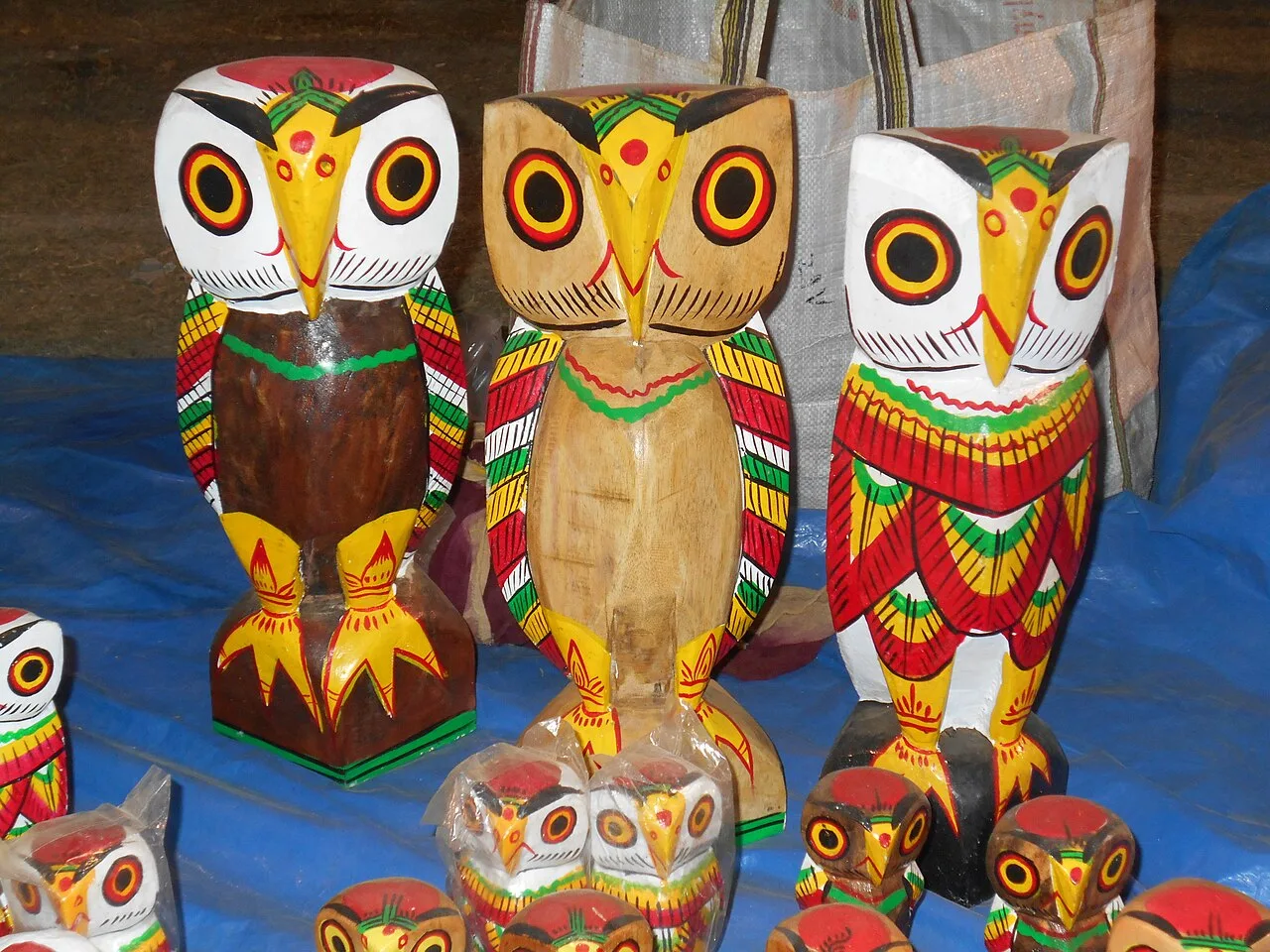
Natungram, in Purba Bardhaman district, West Bengal, is known for wooden figures made by Sutradhar artisans. Visitors come to see the craft, particularly its owl designs linked to Lakshmi.
Key facts · verified by Ghumoopedia editors
- Type of place
- Temple / pilgrimage site
- Best time to visit
- October to March for the plains and coast; March to May and October to December for the Darjeeling hills
- Verified
- 21 Nov 2026
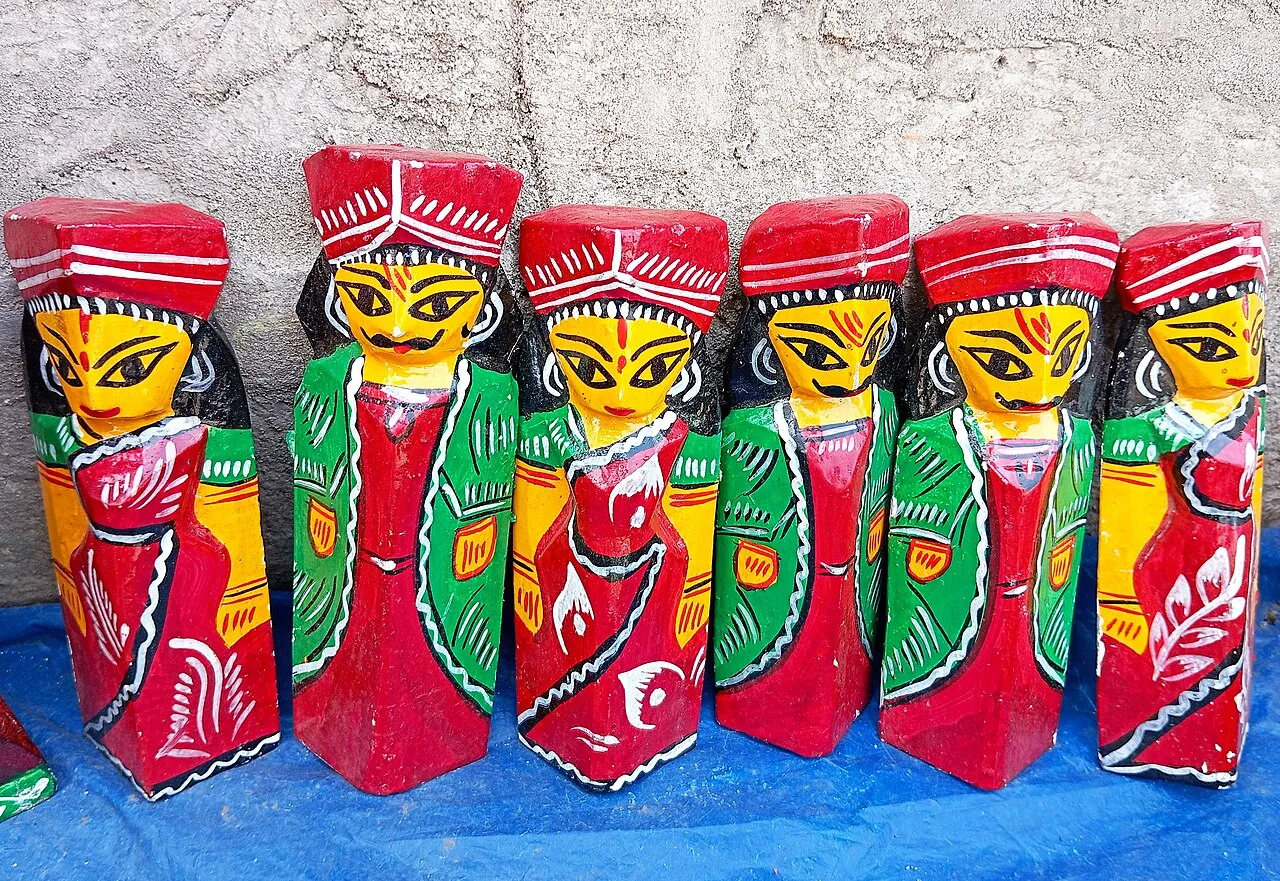
Sutradhar families in Natungram carve wooden figures and decorate them with paint. The owl, associated with the goddess Lakshmi, is a prominent design. The craft forms part of a wider Indian tradition of wooden doll-making. Natungram’s figures are known across India, especially in Bardhaman, and their link with Lakshmi gives them particular cultural importance. Other designs include Gour-Nitai, Krishna and royal couples. Together, these figures offer visitors a glimpse of the village’s varied doll-making practice. West Bengal stretches from the Himalayan tea gardens of Darjeeling to the mangrove delta of the Sundarbans, with Kolkata's colonial architecture, the terracotta temples of Bishnupur, Tagore's Santiniketan and the Nawabi heritage of Murshidabad. The plains are hot and humid from March to June, receive heavy monsoon rain from June to September and are pleasant from November to February; the Darjeeling hills are cool year-round and cold in winter, and the coast and Sundarbans can be hit by cyclones in May and October–November. The usual best time to visit is October to March for the plains and coast; March to May and October to December for the Darjeeling hills. For official information, see West Bengal Tourism at https://wbtourism.gov.in.
Why it matters
Natungram is known primarily as a living craft village in Purba Bardhaman, not as a documented temple or pilgrimage centre. Sutradhar families carve and paint wooden dolls, especially owl figures associated with Lakshmi. The craft gives the village regional cultural importance and offers visitors a chance to see handmade work in its working setting. Natungram dolls are part of West Bengal’s wider craft heritage; Gour-Nitai, Krishna and royal-couple figures are among other forms made here. No UNESCO listing, ASI protection or other official heritage designation for a Natungram temple is established in the available information. Visitors should treat workshop visits as visits to private homes and working spaces, not as entry to a formal museum or shrine.
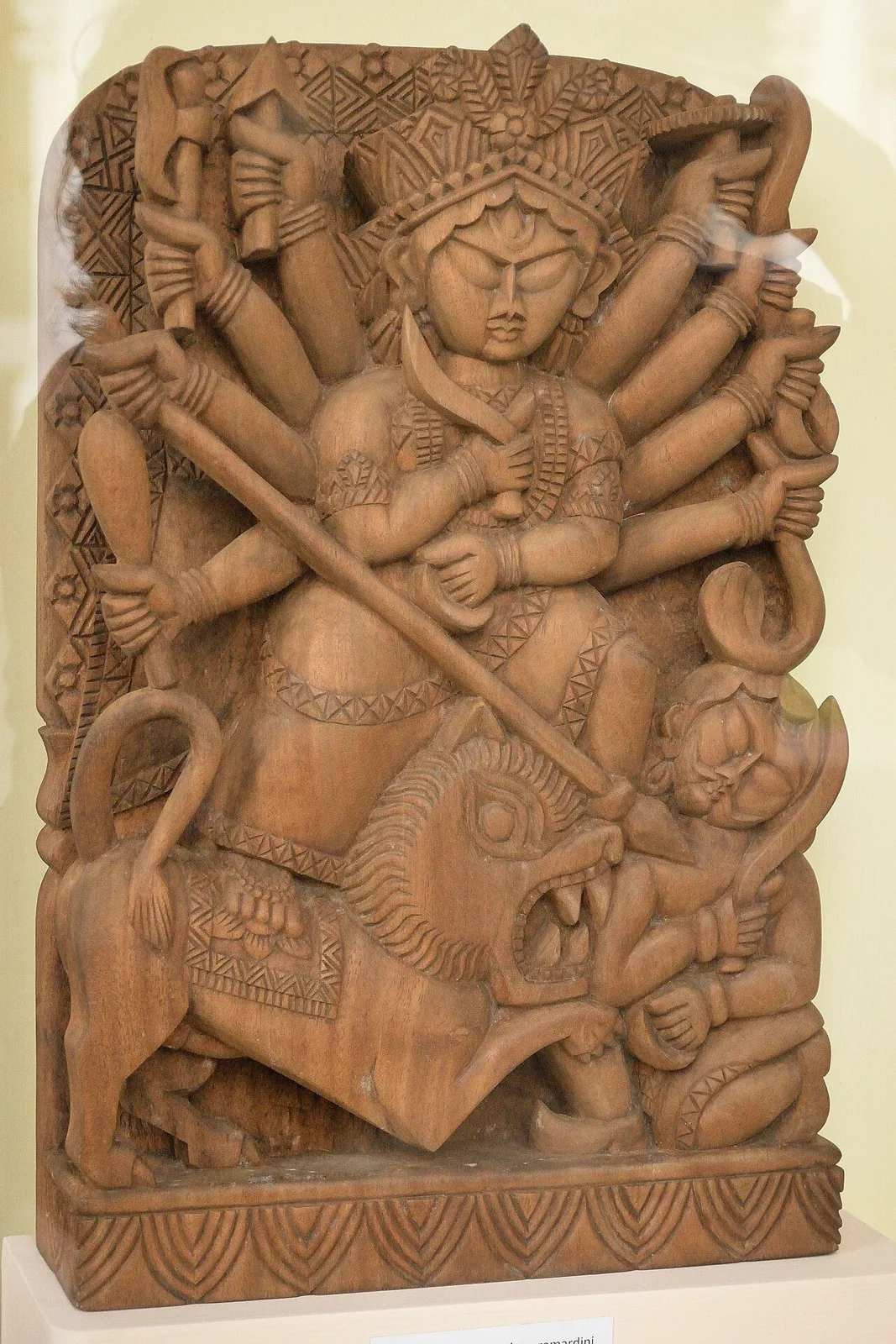
The best-established history of Natungram is that of its wooden-doll craft and the Sutradhar families who practise it. The craft is traditionally carried within families, with carving and painting skills learned through observation and hands-on work. No reliable founding date for the village’s doll-making tradition, named founder, or documented sequence of historical periods is established here, so precise dates should not be assumed. Natungram dolls have become known beyond the village, particularly for their painted owl form associated with Lakshmi. Artisans also make Gour-Nitai, Krishna and royal-couple figures. Production remains largely household-based: families work at home or in small courtyard workshops, and individual pieces may require hours or days. Visitors may find makers selling directly or through cooperative societies, while some artisans travel to fairs and markets. This links the craft to changing outlets beyond the village without displacing its domestic character. No specific restoration history or formally documented temple-building history is available for Natungram. For a visit, the most useful historical perspective is often the account of an artisan explaining how techniques and designs have been passed on and adapted within the family.
Origin stories & folklore
According to Hindu belief, the owl is associated with Lakshmi, the goddess of prosperity, and Natungram’s painted owl dolls draw on that connection. Some people keep or purchase such figures as auspicious images, but meanings and household practices can vary. The association is best understood as religious symbolism rather than a claim that the dolls belong to a particular temple legend. No well-documented local origin legend for a Natungram shrine is established in the available information. Visitors may hear stories from artisans or residents about particular designs or family practices; these should be treated as local oral tradition and attributed to the person sharing them, rather than presented as verified history.
Architecture & design
Natungram is a village craft destination rather than a verified temple complex, so visitors should not expect a defined pilgrimage-site plan, monumental shrine architecture or an established collection of historic buildings. The craft is practised mainly in family homes and small courtyard workshops. These are working domestic spaces, not public galleries, and layouts differ from household to household. The characteristic objects are carved from wood and painted by hand. Artisans shape figures such as owls, deities and royal couples, then apply colour and finishing details. The scale, materials and methods of individual pieces can vary; ask the maker about a particular object instead of assuming every workshop follows an identical process. There is no verified public architectural inventory or engineering history for a Natungram temple. Visitors should request permission before entering a courtyard or workshop and follow the household’s guidance about where they may stand or sit.
Important objects & sculptures
Look for Natungram’s wooden dolls, especially the painted owl figures associated with Lakshmi. Other forms made by local artisans include Gour-Nitai, Krishna and royal-couple figures. A visit may let you see pieces at different stages, from shaped wood to painted and finished work; availability depends on what a household is making or has for sale. These are craft objects, not necessarily consecrated temple idols. Ask the maker about the wood, carving, paint and meaning of a design, and whether a piece is intended for worship, decoration or collecting. No particular historic sculpture, inscription or public temple collection at Natungram is established here.
Religious significance
Natungram is not established here as a formal pilgrimage site with a documented temple, resident priest or scheduled public ritual. Its religious association is chiefly through the wooden owl figures linked with Lakshmi, the Hindu goddess of prosperity. Some households may regard or use such figures as auspicious, while others may make them chiefly as craft and decorative objects; practices vary. Visitors interested in worship should ask residents respectfully whether a household shrine or local observance is open to visitors, and should not assume that a workshop is a place of public prayer. The village’s significance lies in a living craft tradition that draws on religious imagery as well as cultural and artistic forms. Follow the host’s directions around any private shrine, offerings or household observances.
The heart of a visit to Natungram is meeting the artisans at work. Ask to see each stage of the work, from raw material to finishing; most families work at home or in small courtyard workshops, and a single piece can take hours or days. Many households and cooperative societies welcome visitors who show genuine interest, but this is a working village, not a museum: ask before entering a home or workshop, keep visits short during busy hours, and accept that some families may be away at fairs or markets. Buying directly from the maker or a registered cooperative is the best way to support the craft. Where a product carries a Geographical Indication (GI) tag or a handloom mark, ask for it; prices for handmade work reflect the time and skill involved, so bargain gently, if at all. Some workshops offer short hands-on sessions — ask locally rather than expecting a fixed schedule.
Suggested itineraries
Half day: Arrange a workshop visit in advance; spend about 1–2 hours meeting an artisan and seeing the doll-making stages; allow another hour to browse available work and walk through the village respectfully. Full day: Begin with a pre-arranged workshop visit; take a relaxed break for food locally; visit another household or cooperative if invited; leave time to purchase directly from makers and confirm onward transport. Gentler option: Arrange for a host to receive you near an accessible village lane, spend a short seated visit with one artisan, and avoid trying to cover multiple workshops on foot.
Natungram’s distinctive living tradition is wooden-doll making among Sutradhar families. Work commonly takes place in homes or small courtyards, and visitors can ask artisans to explain the carving and painting process. The village is a working community: families may be occupied with orders or away at fairs and markets, so access and availability vary. Bengali is widely used in the region; visitors can ask locally about language support rather than expect a guide at every workshop. The craft’s subjects range from Lakshmi-associated owls to Gour-Nitai, Krishna and royal couples. Approach makers as hosts and skilled practitioners, ask before taking photographs, and allow them to set the pace of a visit.
Festivals & events
Lakshmi Puja, usually observed in autumn, is relevant to the owl figures’ religious association, but no fixed public festival programme at Natungram is established here. Families may observe household religious occasions privately. Artisans also take work to fairs and markets, though dates and venues can vary from year to year; ask locally whether any event is taking place during your visit. Festival periods and market days can make makers busier or temporarily absent, and may affect workshop access. Confirm arrangements with a household or cooperative before travelling specifically for an event.
Village food in West Bengal is home cooking: macher jhol (fish curry), shorshe ilish (hilsa in mustard), kosha mangsho, luchi with alur dom, kathi rolls and phuchka in Kolkata, mishti doi, rosogolla and sandesh; in the Darjeeling hills, momos, thukpa, shaphaley and first-flush Darjeeling tea. Natungram itself may have only tea stalls and small eateries, so ask your host or guide where to eat, or arrange a home-cooked meal in advance — it is often the highlight of a village visit. Carry water and a snack if you plan to spend the whole day, and eat your main meal in the nearest town if no local option is open.
Shopping & local experiences
The principal purchase is a wooden doll made by a Natungram artisan, especially the Lakshmi-associated owl; Gour-Nitai, Krishna and royal-couple figures are also made. Buying directly from a maker or a registered cooperative supports the craft. Ask about the materials, finishing and care of a piece, and whether any relevant GI tag or handloom mark applies; do not assume every item carries one. Handmade work takes time, so bargain gently, if at all. Local food or market options may be available, but check what is open rather than planning around a particular shop.
October to March for the plains and coast; March to May and October to December for the Darjeeling hills
These figures are calculated from map coordinates — actual road distance is longer. Howrah, Sealdah and Kolkata stations and Kolkata airport serve the south; New Jalpaiguri station and Bagdogra airport near Siliguri are the gateways to the Darjeeling hills and the Dooars. Natungram is a village, so the last stretch is by road: West Bengal Transport Corporation, North Bengal State Transport and South Bengal State Transport buses, private buses and shared jeeps in the hills reach the nearest town, and from there a shared auto, local bus or reserved taxi covers the final few kilometres. Village roads can be narrow and unpaved; a taxi hired for the day from the nearest town is the simplest way to combine Natungram with nearby sights and get back before dark. When comparing train, bus and flight, count the complete door-to-door time: a flight saves the most time only if the onward road transfer is short, while an overnight train can save a hotel night. Book your return before you leave, because seats fill quickly on weekends, festivals and holidays. Current train numbers, timings, return services and fares are not listed here; check IRCTC and NTES for trains and the airline's own schedule for flights. No permit is needed for Indian citizens to visit West Bengal. Entry to the Sundarbans Tiger Reserve needs a forest permit, usually arranged through a registered boat operator or the forest office at Sajnekhali or Canning; trekking in Singalila National Park (Sandakphu) needs an entry permit and a registered guide from Maneybhanjan. Durga Puja in October brings huge crowds to Kolkata, so book transport and stays well ahead.
Getting around
Natungram is a village, so visitors generally travel by road for the final leg. Local buses or shared vehicles may serve the nearest town or connecting routes; from there, a locally arranged auto, shared vehicle or reserved taxi may be needed. Availability can vary, so confirm the route locally before setting out. Village lanes may be narrow, and it may be easier to walk between nearby homes once there. Ask a host where vehicles can be left without blocking access; do not assume there is a formal visitor car park. Carry onward transport details, as return options may be limited.
Hours, tickets & permissions
Natungram has no verified central visitor entrance or published site-wide visiting schedule. Workshop access depends on individual households and cooperative arrangements. There is no confirmed general ticket, permit, camera fee, dress code or ID requirement for visiting the village craft workshops; a private host may set their own conditions. Ask permission before entering and confirm current access arrangements, any fees and relevant rules directly with the household or cooperative before travelling.
Facilities
Natungram is a working village, not a developed visitor complex. Small shops or food options may be available in the village or nearby, but do not rely on a particular service being open. Carry drinking water and essential medicines. ATMs and broader services are more likely in a larger town, so arrange cash and other needs before travelling. A household or cooperative may help explain the craft, but a formal guide service is not assured.
Accessibility
Workshop visits take place in homes and courtyards, where surfaces, thresholds and available seating vary. Village lanes may be uneven or narrow, and there is no verified information about step-free access, ramps or accessible toilets. Ask the host in advance about the approach, doorway and seating if using a wheelchair or stroller. Walking between workshops may involve uneven ground; keep distances flexible and take breaks. Older visitors may prefer a single pre-arranged visit rather than walking between several households. Shade and shelter depend on the location, so plan for heat or rain and avoid assuming that all workspaces are accessible.
No permit is needed for Indian citizens to visit West Bengal. Entry to the Sundarbans Tiger Reserve needs a forest permit, usually arranged through a registered boat operator or the forest office at Sajnekhali or Canning; trekking in Singalila National Park (Sandakphu) needs an entry permit and a registered guide from Maneybhanjan. Durga Puja in October brings huge crowds to Kolkata, so book transport and stays well ahead. Carry a photo ID, some cash (card and UPI acceptance varies in villages) and a charged phone with offline maps; save the emergency number 112 and your host's contact. Heat in summer and heavy rain in the monsoon are the main weather risks; carry water, avoid midday sun and allow extra time when village roads flood. Respect local customs: dress modestly, remove footwear where asked, and always ask before photographing people, homes or rituals.
Visitor rules
Ask permission before entering any home, courtyard or workshop, and respect a household’s decision if it cannot receive visitors. Follow the host’s instructions around tools, unfinished work and private areas. Dress modestly and behave considerately if invited near a household shrine or religious observance. Do not handle dolls or materials without permission. Avoid littering and reduce single-use plastic where possible. Photography may be limited by the household or by the nature of the work; ask first, especially before photographing people, children, private spaces or rituals.
Photography
Daylight is generally useful for photographing painted dolls and demonstrations, but workshop lighting and available working space vary. Ask the artisan before photographing a person, home, work in progress or private religious image; accept any restrictions. Keep clear of tools and do not interrupt a demonstration for a picture. There is no verified public viewpoint or designated photography area. Drone use over homes and village spaces can intrude on privacy and may be subject to aviation rules; do not fly one without checking current regulations and obtaining the necessary permissions.
Most visitors see Natungram on a day trip from the nearest town, which has the widest choice of hotels. A few villages have homestays or heritage stays; otherwise base yourself in the district town and hire a taxi for the day. Confirm the booking and the exact location before you travel, because village addresses can be hard to find.
For a broader Purba Bardhaman visit, Bardhaman town has landmarks including Curzon Gate and Sarbamangala Temple. Kalna is known for its temple architecture, including the Rajbari temple complex and the 108 Shiva temples at Nawabhat. These are regional additions rather than confirmed immediate neighbours of Natungram; check road routes and allow separate travel time before combining them. Ask locally about the most practical order of visits, since transport connections and journey conditions can vary.
For couples, Natungram is a chance to slow down: spend an unhurried morning with the makers, choose a piece together directly from the family that made it, share a home-cooked meal and keep the afternoon free. Stay in a nearby homestay or heritage property to make it a quiet overnight escape.
Q: How much time should I allow for Natungram? A: Allow at least a half day for a pre-arranged workshop visit and time to speak with artisans; a full day allows a slower visit or a regional excursion. Q: When is the best season to visit? A: October to March is generally more comfortable for the West Bengal plains. Check local conditions and workshop availability before travelling. Q: Is there an entry ticket or a temple entrance? A: No site-wide ticket or formal temple entrance is verified here. Workshop access is arranged with individual households or cooperatives; confirm any conditions directly. Q: Can children or elderly visitors come? A: Yes, with care. Ask about the workshop approach and seating, supervise children around tools, and keep walking plans flexible because lanes and thresholds may be uneven. Q: Is there accommodation in Natungram? A: Check locally for any homestay arrangements or consider staying in a larger town and arranging road transport.
Be the first to share photos, stories, advice or a helpful contact for Natungram.
Loading…