
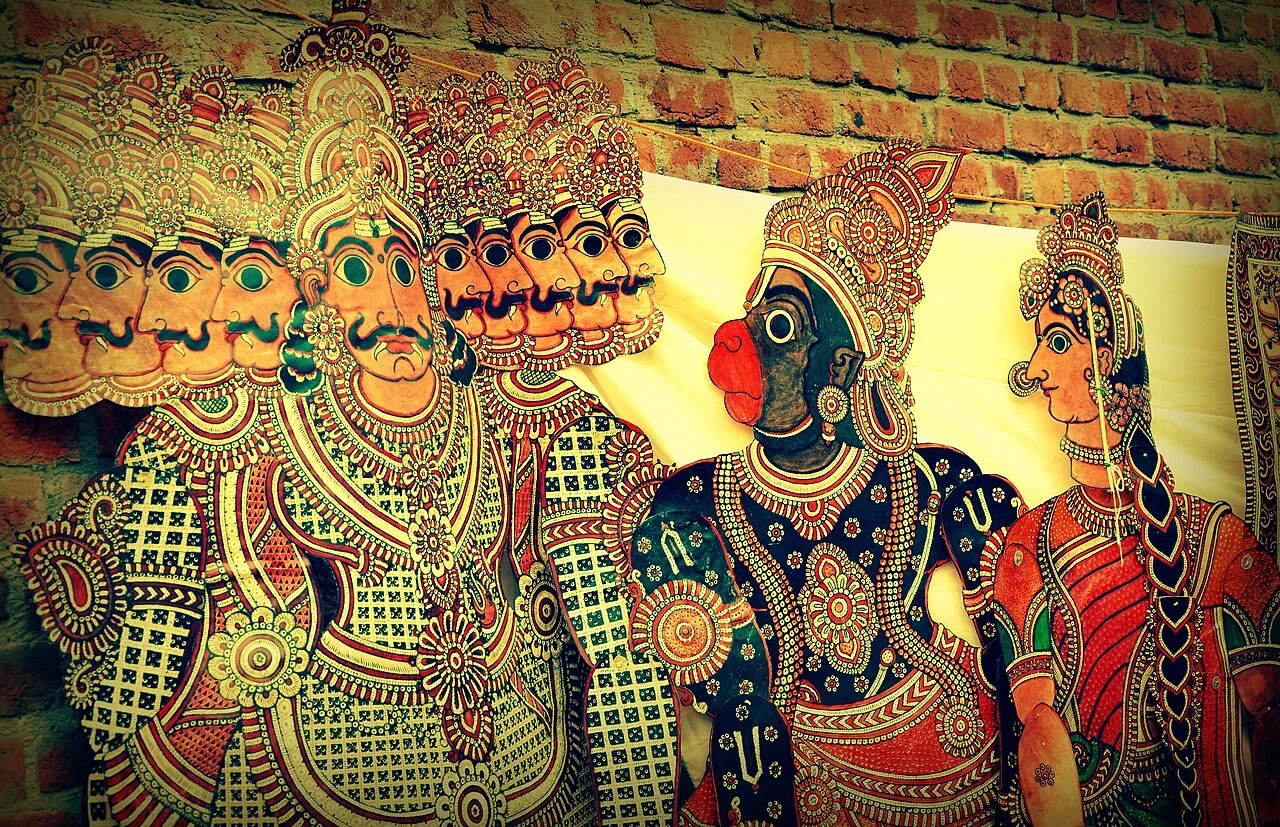
Nimmalakunta Leather Puppet Village
Nimmalakunta, near Dharmavaram in Andhra Pradesh’s Sri Sathya Sai district, is known for painted leather puppets made for Tholu Bommalata. Visitors encounter a craft rooted in the state’s shadow-theatre tradition.
Key facts · verified by Ghumoopedia editors
- Type of place
- Community & living culture
- Best time to visit
- November to February; Araku and Horsley Hills are pleasant for much of the year
- Verified
- 21 Nov 2026
Nimmalakunta, close to Dharmavaram in Sri Sathya Sai district, Andhra Pradesh, is associated with painted leather figures made for Tholu Bommalata, the state’s shadow-theatre tradition. This performance form has roots extending to the third century BCE. Its performers were historically among travelling entertainers and traders who moved between villages throughout the year. Their activities could include singing ballads, telling fortunes, selling amulets, performing acrobatics, charming snakes, making fishing nets, tattooing local residents and mending pots. The art also received lasting royal support and is considered a forerunner of Wayang. For centuries, before radio, films and television, these performances shared Hindu epic narratives, local folktales and news; the tradition spread across the Indian subcontinent. Shows often continued through the night, with puppeteers presenting stories from the Ramayana and Mahabharata. Through the puppets, performers brought these accounts to village audiences, while their other skills and services connected them with local communities. Andhra Pradesh stretches from the beaches and harbour hills of Visakhapatnam through the lush Godavari–Krishna delta to the sacred hills of Tirumala and the granite gorge of Gandikota, with ancient Buddhist sites at Amaravati and Nagarjunakonda, the forts of Kondaveedu and Chandragiri and the cave systems of Belum and Borra. The coast is hot and humid from March to June, the southwest monsoon brings rain from June to September, and October to December can bring cyclones off the Bay of Bengal. The pleasant season is November to February; the Eastern Ghat hills around Araku stay cooler. The usual best time to visit is November to February; Araku and Horsley Hills are pleasant for much of the year. For official information, see Andhra Pradesh Tourism at https://aptourism.gov.in.
Why it matters
Nimmalakunta, near Dharmavaram in Sri Sathya Sai district, is known for making painted leather puppets used in Tholu Bommalata, Andhra Pradesh’s shadow-puppet theatre. Its importance is both local and regional: artisan households sustain skills in preparing, cutting and painting translucent leather, while the puppets serve a performance tradition associated with stories from the Ramayana and Mahabharata. The craft also connects visitors with a living form of work rather than a solely preserved display. No UNESCO World Heritage or Archaeological Survey of India protected-site status is established for the village itself. Visitors should confirm locally whether artisans or cooperative groups are receiving guests.
Nimmalakunta’s craft is closely linked to Tholu Bommalata, the leather shadow-puppet theatre of Andhra Pradesh. Accounts of the theatre describe a long history, with some sources tracing its roots to antiquity and noting periods of royal patronage; precise dates for the beginning of puppet-making in Nimmalakunta are not established in the available guide. The village’s artisans have made painted leather figures for performances, where light passing through selected parts of a puppet creates colour and detail on a screen. Traditionally, travelling performers moved between villages and presented all-night narratives, especially episodes from Hindu epics and local tales. Over time, radio, cinema and television reduced the place of touring performances in everyday entertainment. Puppet-making has continued as a skilled household craft, with work also adapted for decorative and visitor markets. The village is not a single monument with a documented construction or restoration history: its significance lies in the continuing practice and the families and groups that maintain it. Workshop access and the current scale of performance activity should be checked locally.
Origin stories & folklore
No single origin legend for Nimmalakunta’s puppet craft is documented in the available guide. The stories most closely associated with the tradition are the narratives performed behind the screen. Tholu Bommalata artists have traditionally presented episodes from the Ramayana and Mahabharata, alongside folk stories; these are religious and cultural narratives rather than accounts of the village’s founding. In the broader tradition, travelling entertainers carried stories from settlement to settlement, sharing news and performance as they went. Visitors may hear local versions or family histories from artisans, but accounts can differ. Treat them as oral tradition, and ask permission before recording a storyteller or a performance.
The heart of a visit to Nimmalakunta Leather Puppet Village is meeting the artisans at work. Ask to see each stage of the work, from raw material to finishing; most families work at home or in small courtyard workshops, and a single piece can take hours or days. Many households and cooperative societies welcome visitors who show genuine interest, but this is a working village, not a museum: ask before entering a home or workshop, keep visits short during busy hours, and accept that some families may be away at fairs or markets. Buying directly from the maker or a registered cooperative is the best way to support the craft. Where a product carries a Geographical Indication (GI) tag or a handloom mark, ask for it; prices for handmade work reflect the time and skill involved, so bargain gently, if at all. Some workshops offer short hands-on sessions — ask locally rather than expecting a fixed schedule.
Suggested itineraries
Half day: Meet an artisan or cooperative by prior arrangement (30–60 minutes); observe puppet-making and ask about materials (1–2 hours); browse finished work and have a local meal (about 1 hour). Full day: Begin with a planned workshop visit (2–3 hours); take a break in the nearby town; visit Dharmavaram for its handloom context or local market (2–3 hours); return for a second short artisan visit if invited. Gentler option: Arrange a vehicle drop-off close to one accessible workshop, sit for a short demonstration and conversation, then return by vehicle; confirm seating, access and toilet arrangements in advance.
The village’s best-known living tradition is leather-puppet making for Tholu Bommalata. Craft work can involve preparing leather, cutting figures and painting them, with the sequence and materials varying between makers. In performance, puppets are shown against a lit screen and accompanied by spoken or sung narration and music; performances often draw on epic stories. Telugu is the principal language of the surrounding area, though visitors should not assume every artisan speaks English. Nimmalakunta is also near Dharmavaram, known for its handloom tradition. A visit is most rewarding when treated as an exchange with working artists: ask questions respectfully, allow makers to continue their work, and do not expect a staged demonstration.
Local communities
Nimmalakunta’s identity is closely connected with the artisan families who make leather puppets and with performers who use them in Tholu Bommalata. Making, finishing and selling puppets can support household livelihoods, while performances and fairs may provide additional outlets. Cooperative societies and other local groups may also help artisans organise or reach buyers, but their current activities and visitor access should be confirmed locally. Dharmavaram’s wider economy includes handloom work, though it is a distinct craft tradition. Avoid treating all residents as performers or assuming that every household welcomes visitors; ask before entering a home or workshop and respect families’ privacy.
Festivals & events
Tholu Bommalata performances have traditionally been associated with village gatherings and religious occasions, but a performance in Nimmalakunta is not guaranteed on any particular festival day. Ram Navami and Dussehra, usually observed in spring and autumn respectively, are periods when epic stories may be especially relevant to local performance traditions; ask locally whether anything is scheduled. Dharmavaram and other nearby towns also hold seasonal religious observances and fairs, whose programmes vary. Festival days can bring busier roads, crowds and limited availability at workshops. Confirm arrangements with local hosts or artisan groups before planning a visit around a celebration.
Village food in Andhra Pradesh is home cooking: Andhra meals on a banana leaf with fiery gongura and avakaya pickles, pesarattu with upma, pulihora, Rayalaseema ragi sangati, fresh seafood along the coast, bandar laddu and pootharekulu sweets, and Tirupati laddu prasadam. Nimmalakunta Leather Puppet Village itself may have only tea stalls and small eateries, so ask your host or guide where to eat, or arrange a home-cooked meal in advance — it is often the highlight of a village visit. Carry water and a snack if you plan to spend the whole day, and eat your main meal in the nearest town if no local option is open.
Shopping & local experiences
Painted leather puppets and related craft pieces are the most characteristic purchases to look for. Ask the maker how an item was produced, whether it is intended for performance or display, and how best to care for it. Buying directly from an artisan or a registered cooperative can support the craft; prices reflect the time and skill involved, so bargain gently, if at all. Ask whether any applicable craft identification or GI documentation accompanies the product rather than assuming it does. Dharmavaram is known for handloom sarees, a separate local craft. Food and market offerings vary; check locally for seasonal specialties.
Nimmalakunta lies in the inland Rayalaseema region, in a predominantly settled and cultivated landscape around Dharmavaram. The surroundings are not presented as a formal nature reserve or wildlife destination. Depending on season and local land use, visitors may see fields, village trees and dry-ground vegetation; conditions change with rainfall and agricultural activity. The wider district has a hot, seasonally dry climate, with monsoon rains generally arriving from June to September. Carry water, avoid disturbing crops or livestock, and ask before walking across private land.
November to February; Araku and Horsley Hills are pleasant for much of the year
These figures are calculated from map coordinates — actual road distance is longer. Visakhapatnam, Vijayawada and Tirupati are the main rail and air gateways; Rajahmundry serves the Godavari districts, and Renigunta is the railhead for Tirumala. Nimmalakunta Leather Puppet Village is a village, so the last stretch is by road: APSRTC buses (one of India's largest fleets), private sleeper coaches between the cities, and app cabs in Visakhapatnam, Vijayawada and Tirupati reach the nearest town, and from there a shared auto, local bus or reserved taxi covers the final few kilometres. Village roads can be narrow and unpaved; a taxi hired for the day from the nearest town is the simplest way to combine Nimmalakunta Leather Puppet Village with nearby sights and get back before dark. When comparing train, bus and flight, count the complete door-to-door time: a flight saves the most time only if the onward road transfer is short, while an overnight train can save a hotel night. Book your return before you leave, because seats fill quickly on weekends, festivals and holidays. Current train numbers, timings, return services and fares are not listed here; check IRCTC and NTES for trains and the airline's own schedule for flights. No permit is needed to visit Andhra Pradesh. For Tirumala, book darshan in advance on the official TTD website — Special Entry Darshan tickets sell out weeks ahead, and the free sarva darshan queue can take many hours; the TTD dress code (dhoti or kurta-pyjama for men, saree or salwar for women) is enforced inside the temple. Forest areas such as Papikondalu and Maredumilli may need forest-department entry permission, and boats on the Godavari are run by licensed operators.
Getting around
On arrival in the area, local buses, shared autos and reserved taxis can help visitors reach the village from a nearby town; the final approach is by road. Services and vehicle availability vary, so arrange onward transport locally, especially for a return journey later in the day. Walking is practical for short distances within the village, but workshops are dispersed and not every lane is suited to larger vehicles. Ask your driver or host about a suitable drop-off and parking; do not block narrow lanes or entrances. There are no visitor boat services associated with the village.
Hours, tickets & permissions
Nimmalakunta is a working village, not a ticketed monument with a verified central entrance. Workshop access, demonstrations and any performance arrangements depend on the artisan household or cooperative and should be agreed in advance where possible. No standard entry ticket, permit, camera fee or dress rule is confirmed here. Ask before entering homes or workspaces, and follow any conditions set by the host. Confirm current opening arrangements, any applicable fees and local access guidance directly with the managing group or artisan you plan to visit.
Facilities
Facilities are village-scale and may not be organised for regular tourism. Tea shops or simple food options may be available locally, while a wider choice of services is more likely in Dharmavaram. Public toilets, drinking-water points, visitor parking, formal guides and ATMs should not be assumed at workshops; check locally and plan essentials before arrival. Some artisans or cooperative groups may be able to explain the craft, but a dedicated guide service is not verified. Carry drinking water and any medication you need, and ask your host about the nearest suitable facilities.
Accessibility
The village has ordinary roads and lanes rather than a verified visitor route designed for accessibility. Surfaces may be uneven, narrow or difficult after rain, and workshops may be inside homes or courtyard spaces with thresholds or limited seating. No ramps, lifts or accessible toilets are confirmed. Walking distances between makers can vary, so arrange a vehicle drop-off and a single workshop visit if needed. Shade and seating depend on the household. Wheelchair users, visitors with strollers and people who find steps difficult should contact a host beforehand to discuss the exact entrance and facilities; older visitors may find a short, seated visit more comfortable.
No permit is needed to visit Andhra Pradesh. For Tirumala, book darshan in advance on the official TTD website — Special Entry Darshan tickets sell out weeks ahead, and the free sarva darshan queue can take many hours; the TTD dress code (dhoti or kurta-pyjama for men, saree or salwar for women) is enforced inside the temple. Forest areas such as Papikondalu and Maredumilli may need forest-department entry permission, and boats on the Godavari are run by licensed operators. Carry a photo ID, some cash (card and UPI acceptance varies in villages) and a charged phone with offline maps; save the emergency number 112 and your host's contact. Heat in summer and heavy rain in the monsoon are the main weather risks; carry water, avoid midday sun and allow extra time when village roads flood. Respect local customs: dress modestly, remove footwear where asked, and always ask before photographing people, homes or rituals.
Visitor rules
Ask permission before entering a home, courtyard or work area, and follow the host’s instructions about where to stand and what materials may be handled. This is a working village, so keep visits considerate and avoid interrupting busy tasks. Wear practical, modest clothing and footwear suited to uneven lanes; remove footwear only if requested by the household. Do not touch puppets, tools or unfinished work without permission. Use bins where available and avoid leaving plastic behind. Be respectful during prayers, performances and private family occasions, and do not enter areas marked or described as private.
Photography
Soft morning or late-afternoon daylight can suit village scenes and the fine detail of painted puppets, but ask the artisan where to stand and whether a puppet may be photographed. Photography inside homes or workshops is not automatically permitted; seek consent before taking pictures of people, tools or unfinished work. Ask separately before making video or audio recordings, especially during a performance. Avoid flash if it distracts the maker or audience. Drone use may be restricted by aviation rules and local privacy concerns; do not fly one over homes, gatherings or workshops without the required permissions.
Most visitors see Nimmalakunta Leather Puppet Village on a day trip from the nearest town, which has the widest choice of hotels. A few villages have homestays or heritage stays; otherwise base yourself in the district town and hire a taxi for the day. Confirm the booking and the exact location before you travel, because village addresses can be hard to find.
Dharmavaram is the nearest town named in the village guide and is known for its handloom saree tradition, making it a natural companion visit for travellers interested in craft. Puttaparthi, in Sri Sathya Sai district, is associated with Prasanthi Nilayam and offers a different religious and visitor context; check its access rules independently. Penukonda is another historic town in the wider district, though suitability and travel time depend on the route. These places are not substitutes for arranging access with Nimmalakunta artisans. Confirm road conditions and local opening arrangements before combining stops.
For couples, Nimmalakunta Leather Puppet Village is a chance to slow down: spend an unhurried morning with the makers, choose a piece together directly from the family that made it, share a home-cooked meal and keep the afternoon free. Stay in a nearby homestay or heritage property to make it a quiet overnight escape.
Q: How much time should I allow for a visit? A: A half day can cover one planned workshop visit; allow longer if you wish to meet several makers or combine the village with Dharmavaram. Q: When is the best season to visit? A: November to February is generally the more pleasant season in Andhra Pradesh. The inland area can be hot, so check seasonal conditions before travelling. Q: Is there an entry ticket? A: No standard village ticket is confirmed. Workshop visits or demonstrations depend on the host; agree arrangements and any charges directly with them. Q: Is the visit suitable for children or elderly visitors? A: It can be, if the visit is planned around a short, seated workshop encounter. Lanes and entrances may be uneven, so check access in advance. Q: Where can I stay nearby? A: Dharmavaram and Puttaparthi are possible bases in the wider area. Confirm accommodation availability and onward transport before setting out.
Be the first to share photos, stories, advice or a helpful contact for Nimmalakunta Leather Puppet Village.
Loading…