
Nirona
This settlement in Gujarat’s Kutch district draws visitors for its resident craftspeople, whose work includes rogan textiles, hammered copper bells and lacquered wood.
Key facts · verified by Ghumoopedia editors
- Type of place
- Community & living culture
- Best time to visit
- November to February
- Verified
- 21 Nov 2026
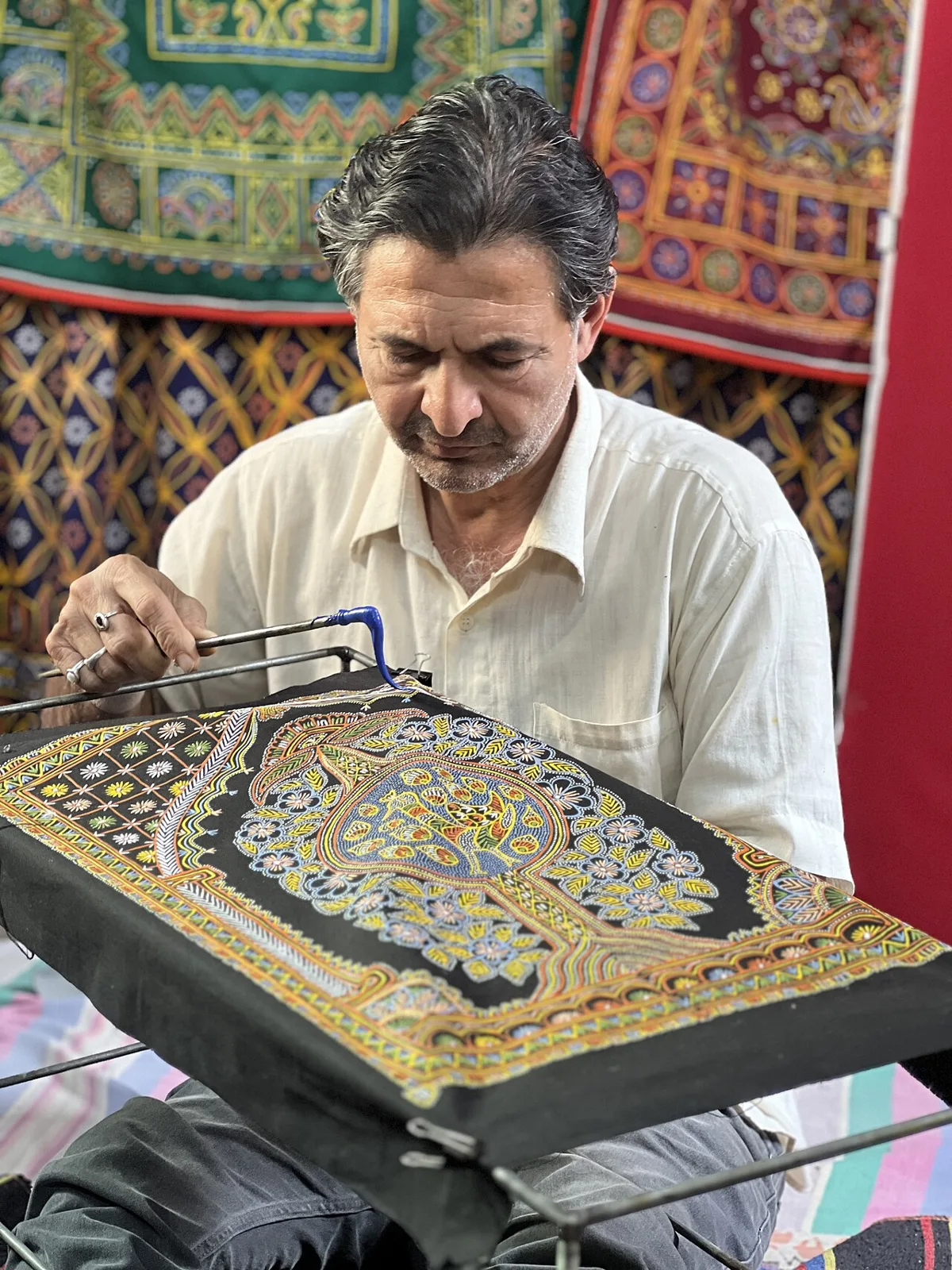
Nirona is in Kutch district, Gujarat, northwest of Bhuj. Local artisan households make rogan-decorated textiles, copper bells by hand-hammering, and lacquer-finished wooden objects. Rogan is a form of cloth painting practised in India and Afghanistan. To prepare its paint, oil is boiled and mixed with vegetable dyes; a tulika, or stylus, is used to place it on fabric. The tradition’s history is associated with places extending from Patliputra in Bihar to Bamiyan and Gujarat. Research by UNESCO in 2008 reported Buddhist rogan works dating to the fifth or sixth century. The method is called the drying-oil technique as well. Its three approaches are freehand rogan, nirmika, which uses block printing, and varnika, embellished with extra colours. Gujarat combines Harappan cities at Dholavira and Lothal, the stepwells and Sultanate mosques of Ahmedabad and Patan, the Jain hills of Palitana and Girnar, Gandhi's Sabarmati Ashram, the Asiatic lions of Gir and the white salt desert and craft villages of Kutch. Gujarat is very hot from March to June (Kutch and north Gujarat often exceed 42°C), receives monsoon rain from late June to September, heaviest in the south and the Dangs, and is pleasant and dry from November to February with cold desert nights in Kutch. The usual best time to visit is November to February. For official information, see Gujarat Tourism at https://www.gujarattourism.com.
Why it matters
Nirona is a village in Kutch district, north-west of Bhuj, whose importance rests on living craft traditions rather than a single monument. Resident artisan families are known for Rogan painting on cloth, hand-beaten copper bells and lacquered woodwork. Visitors can see how these different skills are practised in homes and small workshops, when makers are available. Rogan painting is an old oil-based textile-art technique also practised historically beyond Gujarat. A UNESCO research study in 2008 reportedly discussed Buddhist Rogan paintings dating to the 5th or 6th century; this is not the same as UNESCO World Heritage status for Nirona. No ASI-protected monument or UNESCO designation for the village is confirmed here.
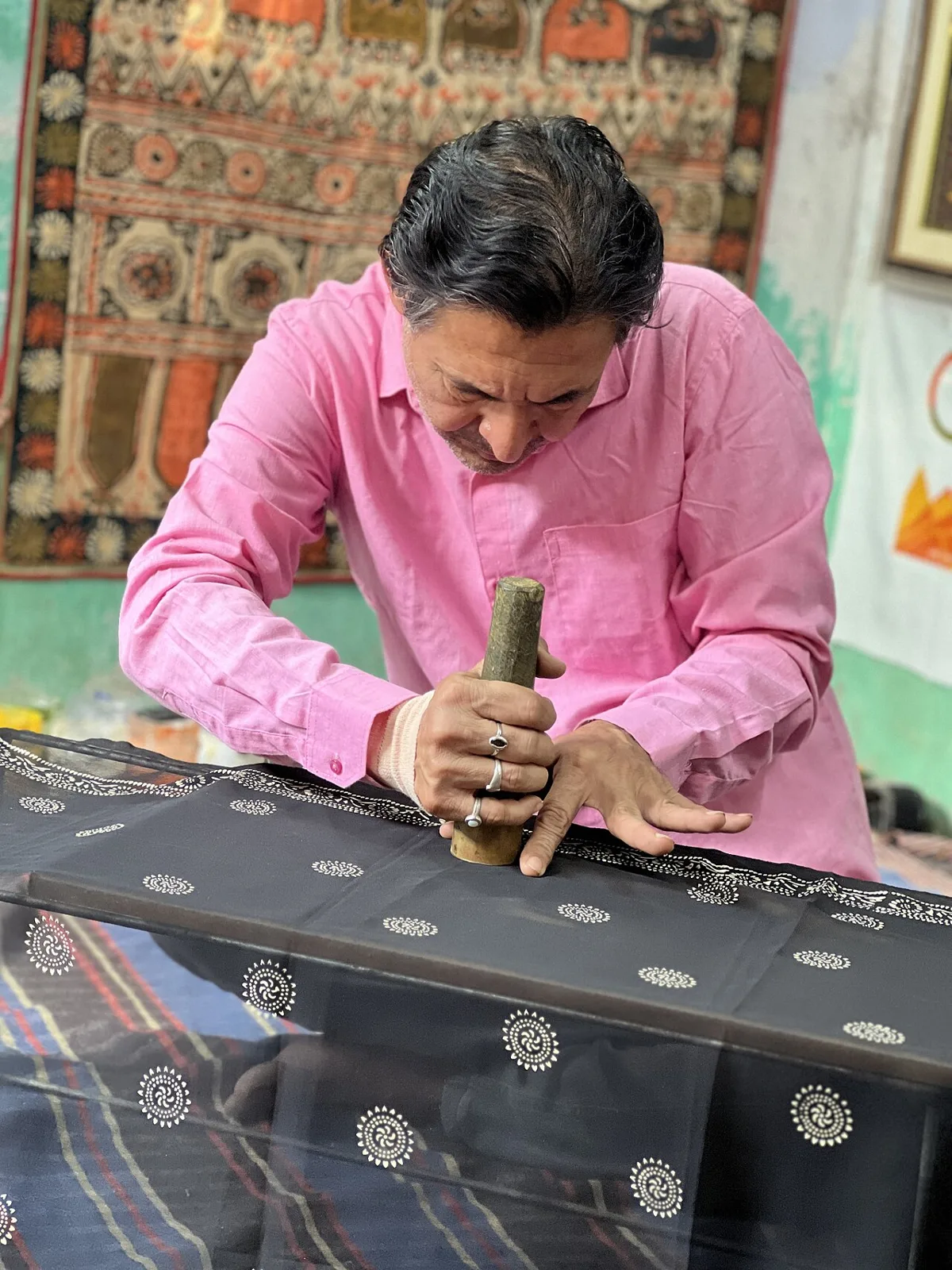
Nirona’s documented significance is chiefly tied to craft practices maintained by artisan families, rather than to a well-established record of royal builders or a single historic monument. Rogan painting is described as a cloth-printing art practised in India and Afghanistan. Its origins have been associated broadly with places ranging from Patliputra in Bihar to Bamiyan and Gujarat, but this wide geographical account does not establish a precise date or a single point of origin for the craft in Nirona. The technique uses oil paint made from boiled oil and vegetable dyes, applied to cloth with a tulika, or stylus. A UNESCO research study conducted in 2008 reportedly dated Buddhist Rogan paintings to the 5th or 6th century; that reference concerns the history of the art, not a dated building or an official heritage listing for Nirona. Rogan work is also called the drying-oil technique. Accounts distinguish freehand Rogan art, nirmika Rogan involving block printing, and varnika Rogan with added embellishments and colours. In Nirona, the craft’s continuity depends on skills transmitted within resident artisan households. Copper bell-making and lacquered woodwork add to the village’s craft identity. Specific dates for the arrival, development or restoration of these village traditions are not reliably established.
Origin stories & folklore
Stories told by artisan families about how a skill entered a household or passed between generations should be understood as family histories and oral tradition, not as a settled historical account. Rogan painting’s origins are sometimes connected in broad accounts with several regions, including Patliputra, Bamiyan and Gujarat; these associations do not establish a specific founding story for Nirona. Visitors interested in local narratives can ask makers whether they are comfortable sharing them. Do not press for private family knowledge or assume that every household tells the same story.
The heart of a visit to Nirona is meeting the artisans at work. Ask to see each stage of the work, from raw material to finishing; most families work at home or in small courtyard workshops, and a single piece can take hours or days. Many households and cooperative societies welcome visitors who show genuine interest, but this is a working village, not a museum: ask before entering a home or workshop, keep visits short during busy hours, and accept that some families may be away at fairs or markets. Buying directly from the maker or a registered cooperative is the best way to support the craft. Where a product carries a Geographical Indication (GI) tag or a handloom mark, ask for it; prices for handmade work reflect the time and skill involved, so bargain gently, if at all. Some workshops offer short hands-on sessions — ask locally rather than expecting a fixed schedule.
Suggested itineraries
Half day: Allow about 3–4 hours to meet available artisans, observe one or two craft processes, browse finished work and take a relaxed village walk with permission. Full day: Allow about 6–8 hours for a morning visit to several artisan households, a local meal or rest break, more workshop visits in the afternoon and a stop in Bhuj if transport and energy allow. Gentler option: Arrange a vehicle drop close to one workshop, visit a single maker with seating and shade if available, and keep walking to a minimum.
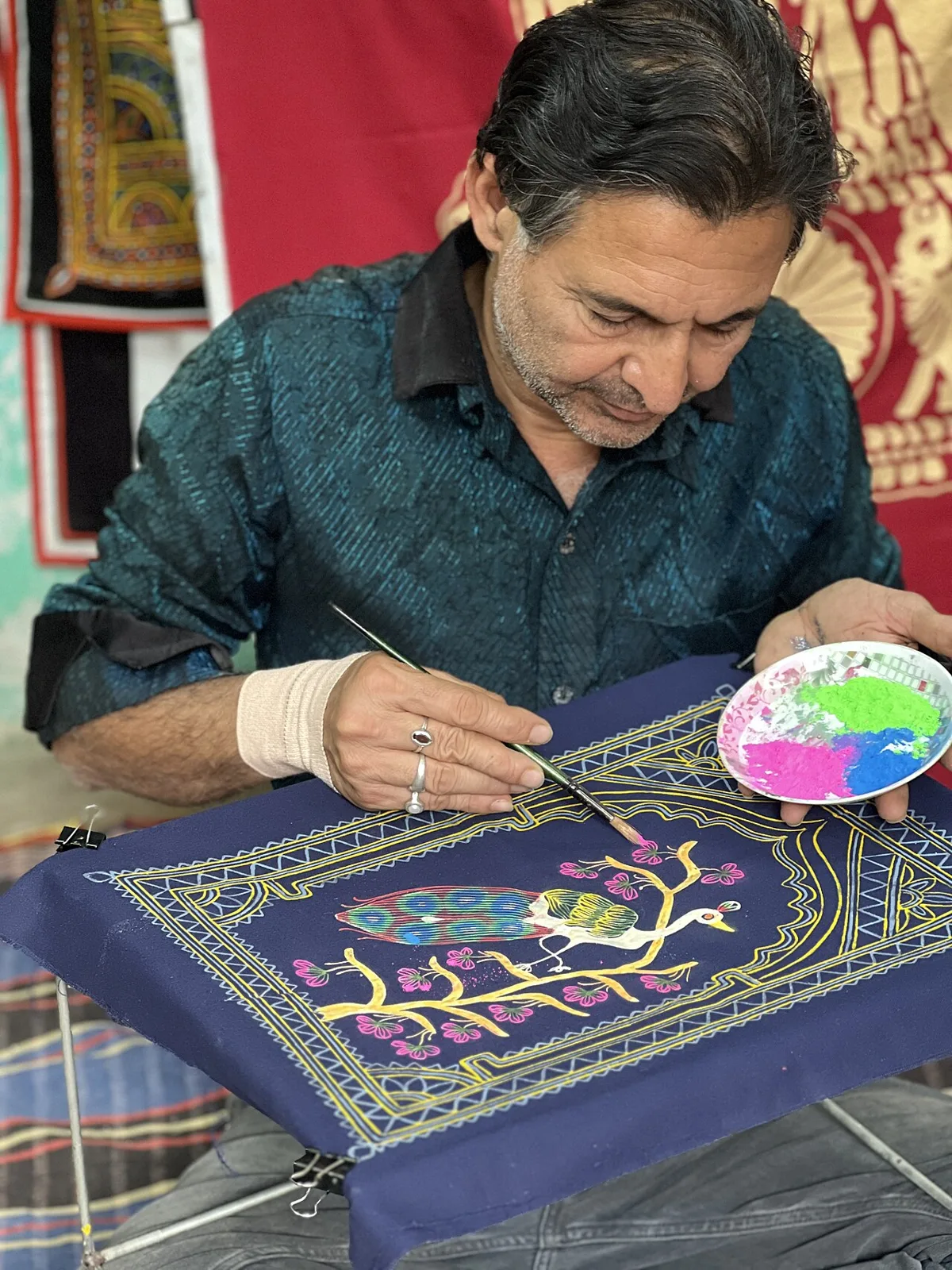
Nirona’s cultural life is closely connected to making and demonstrating crafts. Rogan painting, copper bell-making and lacquered woodwork are practised by resident artisan families, often at home or in small courtyard workshops. Visitors may be able to observe stages of work, but demonstrations depend on the household’s availability and should be requested rather than expected. Kutchi and Gujarati are commonly associated with daily life in the region; Hindi may also be useful with visitors and traders, though language abilities vary. Craft knowledge is passed through practice and family learning. Customs are best approached with courtesy: ask before entering a home, photographing people or handling unfinished work.
Local communities
The village is associated with artisan households whose livelihoods include Rogan painting on cloth, hand-beaten copper bell-making and lacquered woodwork. Some makers sell directly to visitors, while others may trade through markets, fairs or cooperative networks; arrangements vary by family. These are distinct skills, and not every household practises every craft. Nirona is also a lived-in village with residents whose work and routines extend beyond tourism. Visitors should treat workshops as workplaces and homes, ask before entering, and avoid assuming that artisans are available for demonstrations or sales at all times.
Festivals & events
Residents observe regional and religious festivals, but public schedules and village-specific events are not reliably documented. Navratri, generally in autumn, and Diwali, usually in autumn, are widely observed across Gujarat; local celebrations vary. Kutch’s Rann Utsav is a seasonal tourism event associated with the winter period and the Great Rann area, not a festival held in Nirona itself. During regional holidays or major events, roads and popular destinations in Kutch can be busier, and artisans may be away or occupied. Confirm local arrangements before planning a workshop visit around a festival.
Village food in Gujarat is home cooking: dhokla, khandvi, thepla, fafda-jalebi, undhiyu in winter, the Gujarati thali, Kutchi dabeli, Surti locho and ponk, kadhi-khichdi, and sweets such as mohanthal and shrikhand; much of Gujarat's food is vegetarian and lightly sweet. Nirona itself may have only tea stalls and small eateries, so ask your host or guide where to eat, or arrange a home-cooked meal in advance — it is often the highlight of a village visit. Carry water and a snack if you plan to spend the whole day, and eat your main meal in the nearest town if no local option is open.
Shopping & local experiences
Look for Rogan-painted cloth, hand-beaten copper bells and lacquered wooden items made by local artisan families. Buying directly from the maker or a registered cooperative can help support the people producing the work. Ask about materials, making time and care instructions, and request information about any GI tag or handloom mark where applicable; do not assume every item carries one. Handmade pieces take skill and time, so bargain gently, if at all. Shops and makers’ availability vary, and some families may be away at fairs or markets. Ask locally about food options rather than expecting a fixed visitor market.
Nirona lies in Kutch’s generally dry landscape, where open country, cultivated plots and settlement give way to semi-arid terrain. Conditions change with the monsoon: summer is hot, while the cooler season is usually more comfortable for exploring. Water availability and the appearance of vegetation vary with rainfall, and visitors should not expect a continuously green landscape. The wider Kutch region includes salt flats, grasslands and coastal habitats, but these are not all immediate village features. Birds and other wildlife occur across the district, yet sightings near Nirona are never guaranteed. Carry water, protect yourself from sun and dust, and avoid disturbing animals or entering fields and private land without permission.
November to February
These figures are calculated from map coordinates — actual road distance is longer. Ahmedabad, Vadodara, Surat and Rajkot are the main rail and air gateways; Bhuj serves Kutch, and Veraval, Junagadh, Dwarka and Porbandar serve Saurashtra. Nirona is a village, so the last stretch is by road: Gujarat State Road Transport Corporation (GSRTC) buses, private sleeper coaches and shared chhakdas and autos in rural areas reach the nearest town, and from there a shared auto, local bus or reserved taxi covers the final few kilometres. Village roads can be narrow and unpaved; a taxi hired for the day from the nearest town is the simplest way to combine Nirona with nearby sights and get back before dark. When comparing train, bus and flight, count the complete door-to-door time: a flight saves the most time only if the onward road transfer is short, while an overnight train can save a hotel night. Book your return before you leave, because seats fill quickly on weekends, festivals and holidays. Current train numbers, timings, return services and fares are not listed here; check IRCTC and NTES for trains and the airline's own schedule for flights. No permit is needed to visit Gujarat. Gujarat is a dry state: alcohol sale and consumption are prohibited except with a liquor permit, which visitors from outside the state can apply for at authorised hotel liquor shops with ID — never carry alcohol across the state border without one. Lion safaris in Gir and entry to parts of the Rann of Kutch near the border need advance online booking or a permit, and the White Rann around Dhordo is busiest during the Rann Utsav (roughly November to February).
Getting around
Nirona is reached by road, and the final journey is best arranged from Bhuj or another nearby town. Local buses, shared autos or chhakdas may serve rural routes, but availability and connections can vary; confirm locally. A reserved taxi or hired vehicle is a practical way to visit several craft households and nearby places, especially if you want to return to Bhuj the same day. Within the village, walking between workshops may be possible, but ask for directions and permission. Roads can be narrow, and parking is informal; leave space for residents and local traffic.
Hours, tickets & permissions
Nirona is a village, not a single ticketed attraction with one confirmed entry schedule. Workshop visits depend on individual families, their work and whether they are receiving visitors; ask locally before setting out or entering a home. If visiting a separately managed attraction nearby, check its own rules. Confirm current access arrangements, hours and any fees with the relevant workshop, cooperative or managing authority before travel.
Facilities
Facilities are modest and vary between village households. Toilets, drinking water, refreshments and shaded seating may be available at a workshop or nearby establishment, but should not be assumed; check locally and carry water. Food choices in the village may be limited, so plan meals in Bhuj or ask residents about current options. Parking is informal rather than a guaranteed visitor facility.
Accessibility
Nirona is a working village rather than a purpose-built visitor site. Routes between homes and workshops may include uneven ground, narrow lanes, thresholds or unpaved stretches, and access conditions differ from one household to another. Wheelchair and stroller access cannot be assumed; ask a specific workshop about its entrance and available seating before travelling. Shade and places to rest may be limited outdoors, so plan breaks and avoid the hottest part of the day. Older visitors or anyone with limited mobility may find a vehicle-based visit to one pre-arranged workshop easier than walking between several locations.
No permit is needed to visit Gujarat. Gujarat is a dry state: alcohol sale and consumption are prohibited except with a liquor permit, which visitors from outside the state can apply for at authorised hotel liquor shops with ID — never carry alcohol across the state border without one. Lion safaris in Gir and entry to parts of the Rann of Kutch near the border need advance online booking or a permit, and the White Rann around Dhordo is busiest during the Rann Utsav (roughly November to February). Carry a photo ID, some cash (card and UPI acceptance varies in villages) and a charged phone with offline maps; save the emergency number 112 and your host's contact. Heat in summer and heavy rain in the monsoon are the main weather risks; carry water, avoid midday sun and allow extra time when village roads flood. Respect local customs: dress modestly, remove footwear where asked, and always ask before photographing people, homes or rituals.
Visitor rules
Ask permission before entering a home, courtyard or workshop, and follow the host’s instructions about where visitors may stand. Keep visits considerate and brief if makers are busy; do not touch tools, materials or unfinished pieces without permission. Wear practical clothing and footwear suitable for village lanes and the weather. Ask before photographing people, work in progress or private interiors, and respect any refusal. Do not leave litter or plastic, block lanes, or treat residents’ homes as public displays. Any restrictions at a separately managed site nearby should be followed.
Photography
Soft morning or late-afternoon light can be pleasant for village streets and craft details, though workshop lighting depends on the space. Ask each artisan before photographing people, tools, interiors or work in progress; some makers may prefer that particular stages or designs not be photographed. Photographing finished work for personal use should also be agreed with its maker. Avoid interrupting demonstrations to get a picture. Drone use may be restricted by aviation rules or local sensitivities, so do not fly without checking current requirements and securing any necessary permissions. Never photograph private activity without consent.
Most visitors see Nirona on a day trip from the nearest town, which has the widest choice of hotels. A few villages have homestays or heritage stays; otherwise base yourself in the district town and hire a taxi for the day. Confirm the booking and the exact location before you travel, because village addresses can be hard to find.
Bhuj is the main nearby town and a useful base for transport, supplies and further sightseeing. In Bhuj, visitors can look for the Kutch Museum, Aina Mahal and Prag Mahal; check current access arrangements for each. Bhujodi, near Bhuj, is known for textile and handicraft activity and can complement a craft-focused trip. The Great Rann of Kutch is a major regional landscape destination, but it is not a village-side stop; plan separate road travel and check seasonal access conditions. Combining Nirona with several stops is easiest by arranging a vehicle for the day.
For couples, Nirona is a chance to slow down: spend an unhurried morning with the makers, choose a piece together directly from the family that made it, share a home-cooked meal and keep the afternoon free. Stay in a nearby homestay or heritage property to make it a quiet overnight escape.
Q: How much time should I allow for Nirona? A: Allow at least a half day for a considered visit; a full day gives more flexibility for meeting makers and combining the village with Bhuj. Q: When is the best season to visit? A: November to February is generally the most comfortable period in Kutch. Summers can be very hot, and monsoon conditions vary. Q: Is there an entry ticket for the village or its workshops? A: No single village-wide ticket arrangement is confirmed. Workshop visits are arranged with individual families; confirm any current requirements locally. Q: Is Nirona suitable for children and elderly visitors? A: It can be, with planning. Ask before visiting, supervise children around tools and work areas, and account for uneven lanes and limited shade. Q: Where should I stay nearby? A: Bhuj is the practical base for a wider choice of accommodation and transport. Confirm any village homestay directly before relying on it.
Be the first to share photos, stories, advice or a helpful contact for Nirona.
Loading…