
Phulia
Phulia, known by the alternate spelling Fulia, is a settlement in Nadia district, West Bengal, within Santipur CD block in Ranaghat subdivision. Visitors are drawn by its association with Krittibas Ojha, who was born there.
Key facts · verified by Ghumoopedia editors
- Type of place
- Community & living culture
- Best time to visit
- October to March for the plains and coast; March to May and October to December for the Darjeeling hills
- Nearest railway station
- Krishnanagar City Junction · about 20 km (straight line)
- Verified
- 21 Nov 2026
Plan a trip from Phulia — a day-by-day route through places nearby.
Phulia is in Nadia district, in the Indian state of West Bengal. Its administrative area is Santipur CD block, which forms part of Ranaghat subdivision. The settlement is described as both a village and a town; Fulia is another spelling of its name. Phulia is recognised as the birthplace of Krittibas Ojha, known as Bengal's Adi Kavi. This link with the Bengali poet gives the settlement its particular significance and is a reason people visit. West Bengal stretches from the Himalayan tea gardens of Darjeeling to the mangrove delta of the Sundarbans, with Kolkata's colonial architecture, the terracotta temples of Bishnupur, Tagore's Santiniketan and the Nawabi heritage of Murshidabad. The plains are hot and humid from March to June, receive heavy monsoon rain from June to September and are pleasant from November to February; the Darjeeling hills are cool year-round and cold in winter, and the coast and Sundarbans can be hit by cyclones in May and October–November. The usual best time to visit is October to March for the plains and coast; March to May and October to December for the Darjeeling hills. For official information, see West Bengal Tourism at https://wbtourism.gov.in.
Why it matters
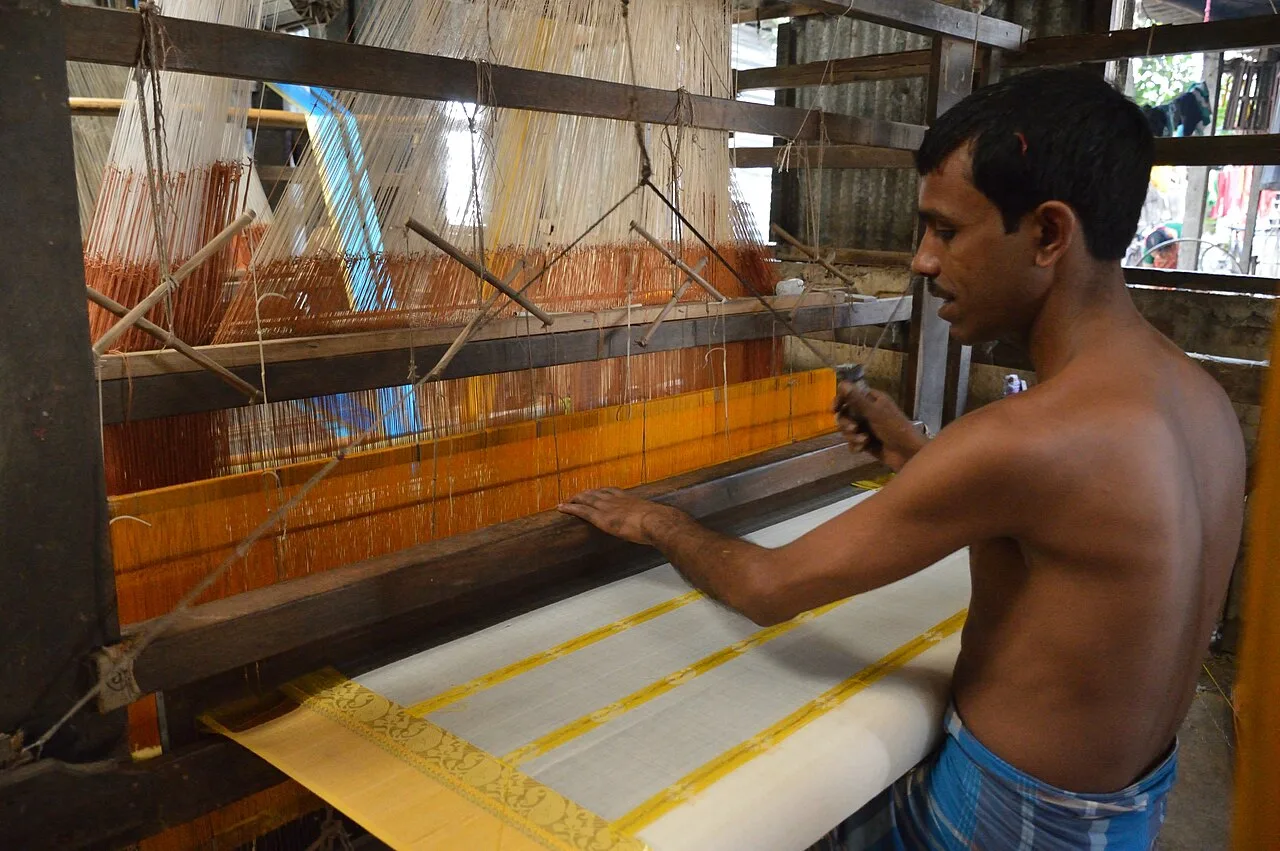
Phulia, also spelled Fulia, is a handloom centre in Nadia district, associated with the weaving of Tangail-style saris and other Bengali textiles. Its importance is both economic and cultural: weaving remains part of everyday work, and visitors can sometimes see yarn preparation and loom work in family workshops or cooperative settings. Phulia is also remembered as the birthplace of the Bengali poet Krittibas Ojha, traditionally dated to the fifteenth century and known for his Bengali retelling of the Ramayana. The Tangail Saree of Bengal has received Geographical Indication recognition, reflecting the regional identity of the textile tradition; this recognition does not mean every sari made in Phulia carries that status. Phulia is not known as a UNESCO-listed or ASI-protected destination.
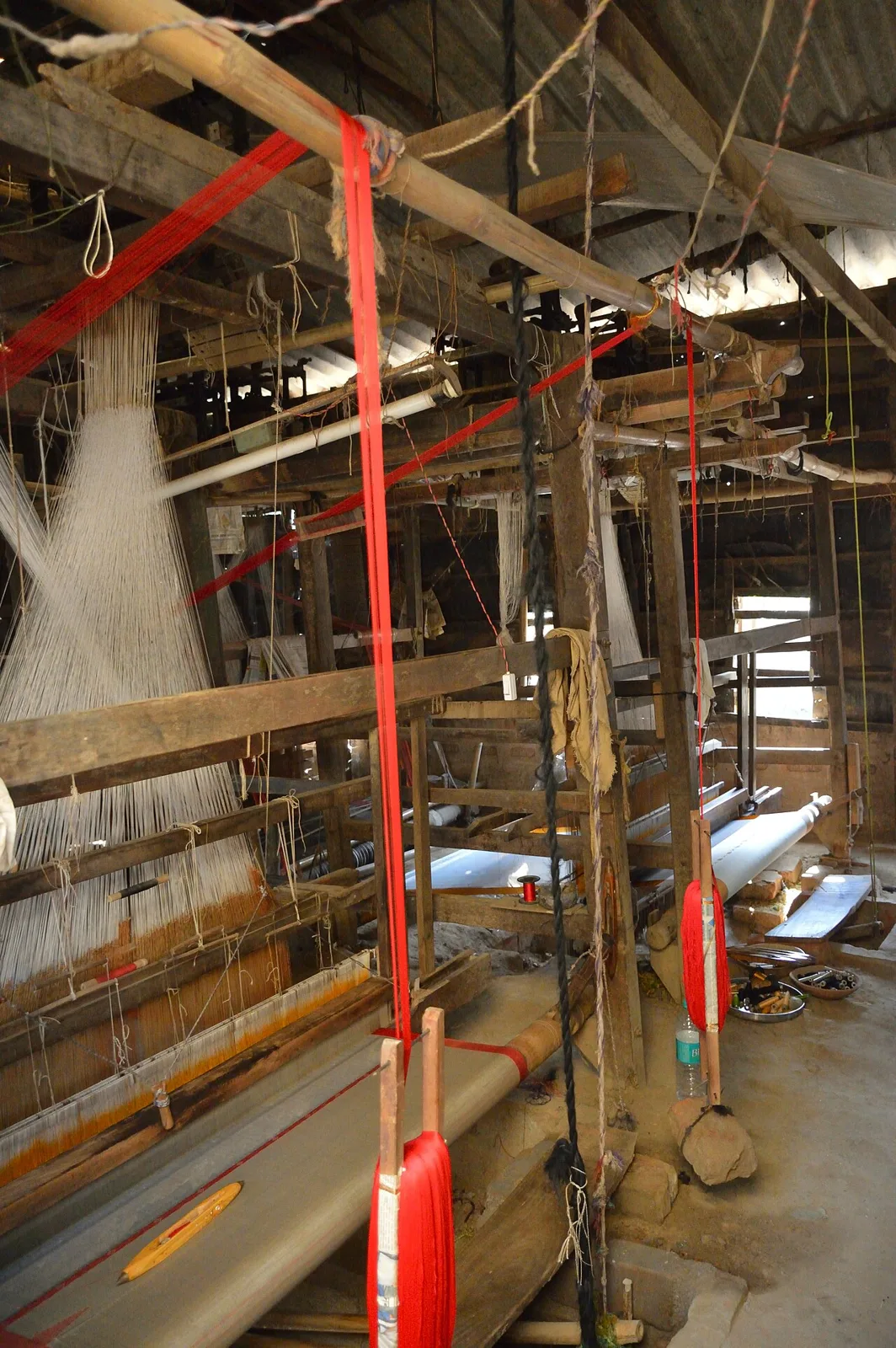
Phulia’s local identity draws on two distinct histories: the literary memory of Krittibas Ojha and the growth of its handloom industry. Krittibas is traditionally associated with Phulia and usually placed in the fifteenth century. His Bengali Ramayana helped make a major Sanskrit epic accessible to Bengali-speaking audiences, though details of his life and dates are not equally well documented across accounts. A memorial in the area keeps this literary association visible to residents and visitors. The weaving community’s more recent history is closely connected with migration from East Bengal, now Bangladesh. After Partition, weaving families, including people whose craft lineage is associated with Tangail, settled in Nadia and neighbouring parts of Bengal. They adapted and continued handloom practices, building a local textile economy around sari production. Phulia became known for Tangail-style patterned saris as well as other handwoven cloth. The work is often organised through household looms, small workshops and cooperative or market networks. Designs, materials and selling arrangements have changed with customer demand and access to markets, while handloom skills remain central to the town’s reputation. Visitors should treat workshops as active workplaces rather than heritage exhibits.
Origin stories & folklore
According to local tradition, Phulia is the birthplace of Krittibas Ojha, the poet remembered for composing a Bengali version of the Ramayana. The association is a source of local pride, and the poet is often referred to as Bengal’s Adi Kavi, or early poet. Stories about his life and the exact details of his birth belong partly to literary tradition; they should not all be treated as independently verified biography. The memorial and local remembrance connect the town with his legacy. Phulia’s weaving heritage also carries family histories passed down through generations, but accounts differ between households. Visitors can ask residents about these traditions respectfully, while recognising that personal or family knowledge is not necessarily intended as a public performance.
The heart of a visit to Phulia is meeting the weavers at work. Watch the stages that come before the loom — dyeing, warping and, in ikat villages, tying and resist-dyeing the yarn so the pattern appears as it is woven — and then the steady rhythm of the loom itself. A single sari can take days or weeks. Many households and cooperative societies welcome visitors who show genuine interest, but this is a working village, not a museum: ask before entering a home or workshop, keep visits short during busy hours, and accept that some families may be away at fairs or markets. Buying directly from the maker or a registered cooperative is the best way to support the craft. Where a product carries a Geographical Indication (GI) tag or a handloom mark, ask for it; prices for handmade work reflect the time and skill involved, so bargain gently, if at all. Some workshops offer short hands-on sessions — ask locally rather than expecting a fixed schedule.
Suggested itineraries
Half day: Begin at the Krittibas memorial area if open (about 30–45 minutes); visit one pre-arranged weaving workshop (about 1–2 hours); finish by browsing a local textile outlet (about 30–45 minutes). Full day: Start with the Krittibas memorial area (about 45 minutes); spend the morning at a workshop learning about yarn preparation and weaving (about 2 hours); take a relaxed lunch break; visit a cooperative or maker-run outlet (about 1 hour); leave time for a second, pre-arranged workshop or a gentle neighbourhood walk (about 1–2 hours). Gentler option: Arrange vehicle drop-offs near each stop, visit one accessible workshop and a nearby textile shop, and keep walking to short, level stretches with seated breaks.
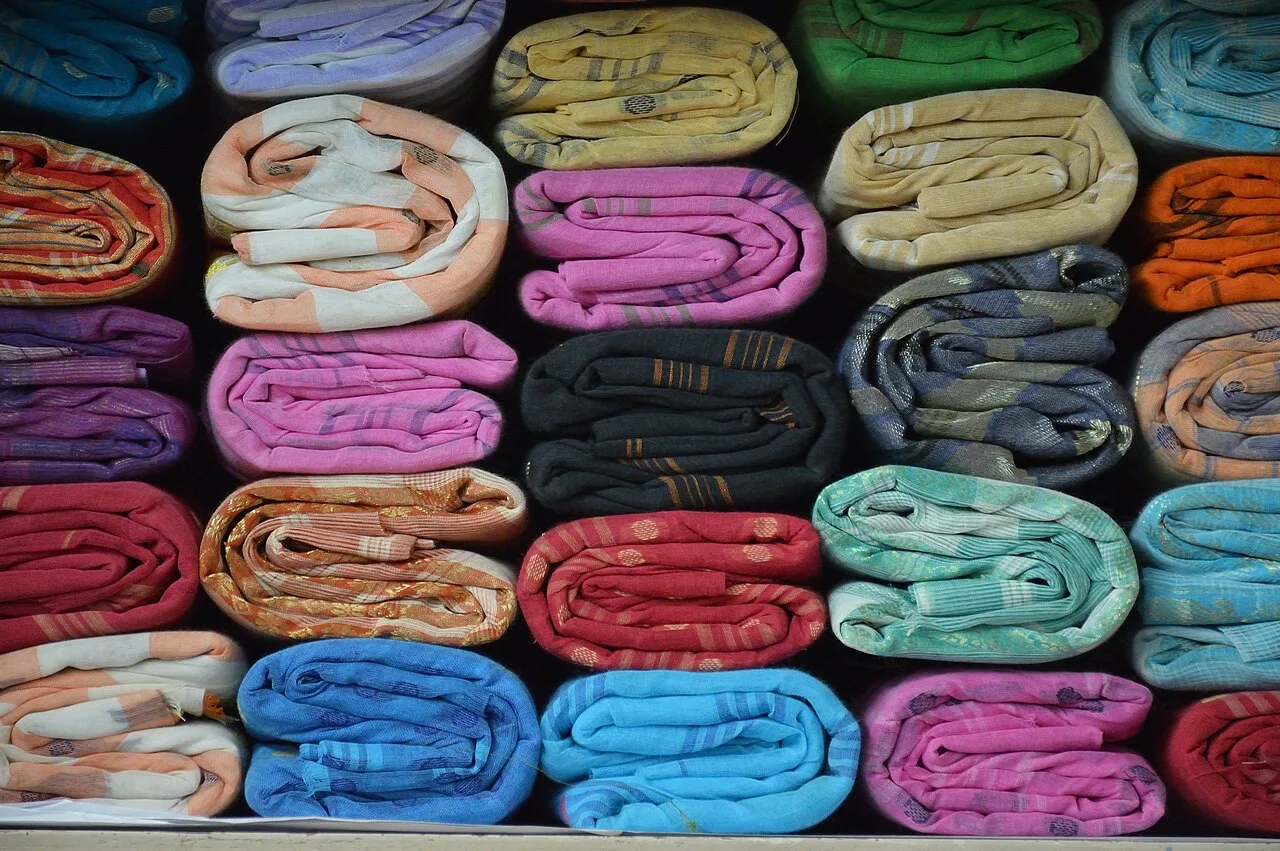
Handloom weaving is the most visible living tradition in Phulia. Depending on the workshop, visitors may encounter yarn preparation, dyeing, warping and the careful work of setting patterns before weaving begins. Bengali is the main language of everyday life; Hindi may also be understood in some visitor-facing settings. Family and cooperative networks link production with local markets and textile trade. Saris and other handwoven garments are part of regional dress and gifting traditions, though clothing choices vary widely in contemporary life. Religious and community observances bring neighbours together through pujas, processions and seasonal gatherings. A workshop visit is a chance to learn about skilled work, not a staged cultural show, so ask before entering and follow the household’s lead.
Local communities
Phulia’s identity is closely connected with its weaving families, including communities whose textile skills and family histories are linked to Tangail and other handloom centres of Bengal. Weaving, yarn preparation, dyeing, trading and finishing provide livelihoods, often through household workshops and small businesses. Cooperative societies and textile sellers also connect makers with buyers. The town’s wider population includes people engaged in services, farming, transport and other local work. Not every household is involved in weaving, and practices vary from one workshop to another. Visitors should avoid assuming that a community has a single shared history or asking intrusive questions about caste, income or private family matters.
Festivals & events
Local religious observances, including Durga Puja, Kali Puja, Saraswati Puja and Dol, are part of the seasonal calendar; the scale and programme vary by neighbourhood. Krittibas Ojha is remembered through local literary and cultural activities, though visitors should confirm whether any event is taking place during their visit. Nearby Santipur is known for its Ras festival, generally held in the autumn season, which can draw large crowds and affect local movement. Festival dates follow local calendars and change from year to year. During major pujas or fairs, expect busy roads, louder activity and limited space around gathering areas; ask locally about access and any temporary restrictions.
Village food in West Bengal is home cooking: macher jhol (fish curry), shorshe ilish (hilsa in mustard), kosha mangsho, luchi with alur dom, kathi rolls and phuchka in Kolkata, mishti doi, rosogolla and sandesh; in the Darjeeling hills, momos, thukpa, shaphaley and first-flush Darjeeling tea. Phulia itself may have only tea stalls and small eateries, so ask your host or guide where to eat, or arrange a home-cooked meal in advance — it is often the highlight of a village visit. Carry water and a snack if you plan to spend the whole day, and eat your main meal in the nearest town if no local option is open.
Shopping & local experiences
Look for handwoven saris, dupattas and other textiles at maker-run shops, cooperative outlets or sellers who can explain how a piece was made. Ask whether the item is handloom, what fibres and techniques it uses, and whether any GI or handloom identification applies to that particular product; do not assume every Phulia textile carries a mark. Buying directly from a maker or registered cooperative can support the craft. Handmade work reflects time and skill, so bargain gently, if at all. Small local eateries may offer Bengali snacks and meals, but availability varies. Confirm product details and care instructions before buying.
Phulia sits in the low-lying, fertile plains of Nadia, where built-up neighbourhoods, roads, ponds and cultivated fields form the everyday landscape. This is not a forest or wildlife destination, and visitors should not expect dedicated nature trails or guaranteed animal sightings. Seasonal rain changes the look and condition of fields and village lanes; monsoon periods can bring waterlogging or muddy stretches. Trees and garden plants around homes and roads provide shade, while ponds may support common local waterbirds and other familiar urban and rural wildlife. Birdlife varies with season and habitat, and sightings are never assured. Keep to public routes, do not enter fields or pond edges without permission, and avoid disturbing people, crops or animals.
October to March for the plains and coast; March to May and October to December for the Darjeeling hills
The nearest principal railway station by straight-line distance is Krishnanagar City Junction, roughly 20 km away. The nearest operating airport by straight-line distance is Netaji Subhas Chandra Bose International Airport, Kolkata, roughly 65 km away. These figures are calculated from map coordinates — actual road distance is longer. Howrah, Sealdah and Kolkata stations and Kolkata airport serve the south; New Jalpaiguri station and Bagdogra airport near Siliguri are the gateways to the Darjeeling hills and the Dooars. Phulia is a village, so the last stretch is by road: West Bengal Transport Corporation, North Bengal State Transport and South Bengal State Transport buses, private buses and shared jeeps in the hills reach the nearest town, and from there a shared auto, local bus or reserved taxi covers the final few kilometres. Village roads can be narrow and unpaved; a taxi hired for the day from the nearest town is the simplest way to combine Phulia with nearby sights and get back before dark. When comparing train, bus and flight, count the complete door-to-door time: a flight saves the most time only if the onward road transfer is short, while an overnight train can save a hotel night. Book your return before you leave, because seats fill quickly on weekends, festivals and holidays. Current train numbers, timings, return services and fares are not listed here; check IRCTC and NTES for trains and the airline's own schedule for flights. No permit is needed for Indian citizens to visit West Bengal. Entry to the Sundarbans Tiger Reserve needs a forest permit, usually arranged through a registered boat operator or the forest office at Sajnekhali or Canning; trekking in Singalila National Park (Sandakphu) needs an entry permit and a registered guide from Maneybhanjan. Durga Puja in October brings huge crowds to Kolkata, so book transport and stays well ahead.
Confirm onward and return timings on IRCTC / NTES, the state bus operator or your airline before travel. A dash means current timings or fares have not been verified.
Getting around
On arrival, local movement is generally by road, with auto-rickshaws, battery-operated local vehicles, cycle-rickshaws or taxis available depending on the area and time. Walking is practical for short visits within a neighbourhood, but workshops may be spread out and lanes can be busy. Local buses connect settlements in the wider area; ask locally about the most suitable stop for a specific destination. Arrange a return pickup if visiting a workshop away from the main road. Parking may be limited near narrow residential lanes, so avoid blocking entrances or loom-house access. Confirm any transport arrangements locally rather than relying on a fixed service.
Hours, tickets & permissions
Phulia is a lived-in town rather than a single ticketed attraction, so there is no one entrance or unified visitor schedule. Access to a weaving household, workshop or cooperative depends on its working day and whether visitors can be received. Any memorial or organised cultural venue may have its own entry arrangements, rules or charges. Ask locally before setting out, and confirm current opening arrangements and any fees with the relevant managing authority or venue. Do not assume that a loom will be operating or that a workshop can accept walk-ins.
Facilities
Basic shops and small food outlets are usually available in the town, but choice and services can vary by neighbourhood. Toilets, drinking water, seating and visitor information are not guaranteed at individual workshops; check before travelling and carry water. Larger shops or cooperative outlets may be more accustomed to visitors than private homes. ATMs and other everyday services may be found in the wider town area, but do not rely on one being beside a workshop. Parking is usually a local roadside matter rather than a dedicated visitor facility. There is no standard guided-tour desk, so arrange introductions or visits in advance where possible.
Accessibility
Phulia is a working town with ordinary streets and residential lanes rather than a purpose-built visitor site. Surfaces may be uneven, and narrow lanes, steps at house entrances or workshop thresholds can make access difficult. Shade and places to sit vary, so plan breaks, especially in hot or humid weather. Wheelchair and stroller access cannot be assumed inside homes, loomsheds or older buildings; ask the host about the specific entrance and floor surface before visiting. Older visitors may find it easier to travel between stops by vehicle and limit walking. A quieter, shorter visit to one pre-arranged workshop is often more manageable than trying to cover several dispersed locations.
No permit is needed for Indian citizens to visit West Bengal. Entry to the Sundarbans Tiger Reserve needs a forest permit, usually arranged through a registered boat operator or the forest office at Sajnekhali or Canning; trekking in Singalila National Park (Sandakphu) needs an entry permit and a registered guide from Maneybhanjan. Durga Puja in October brings huge crowds to Kolkata, so book transport and stays well ahead. Carry a photo ID, some cash (card and UPI acceptance varies in villages) and a charged phone with offline maps; save the emergency number 112 and your host's contact. Heat in summer and heavy rain in the monsoon are the main weather risks; carry water, avoid midday sun and allow extra time when village roads flood. Respect local customs: dress modestly, remove footwear where asked, and always ask before photographing people, homes or rituals.
Visitor rules
Ask permission before entering a home, workshop or cooperative work area, and follow the host’s instructions about where to stand. These are workplaces: keep clear of looms, yarn and tools, supervise children closely, and do not touch unfinished work without permission. Dress comfortably and respectfully for a residential setting; practical footwear is useful on uneven lanes. Avoid blocking doorways or disrupting work, and keep visits brief if makers are busy. Carry reusable water containers where practical and dispose of waste responsibly. Respect any private, safety-sensitive or restricted areas, and follow local directions during festivals or public gatherings.
Photography
Soft morning or late-afternoon light can suit outdoor streetscapes and textile details, but the best viewpoint depends on the workshop and its layout. Always ask before photographing people, homes, looms or work in progress; a host may decline or set limits. Do not photograph children without permission from a guardian, and avoid interrupting a weaver to compose a picture. Photography at a memorial or during a religious gathering should follow posted rules and local guidance. Drone use may require permissions and can intrude on homes or working areas, so do not fly one without checking applicable rules and obtaining consent.
Most visitors see Phulia on a day trip from the nearest town, which has the widest choice of hotels. A few villages have homestays or heritage stays; otherwise base yourself in the district town and hire a taxi for the day. Confirm the booking and the exact location before you travel, because village addresses can be hard to find.
Santipur, in the same district, is known for its handloom tradition and can be combined with a textile-focused visit. Nabadwip and Mayapur are nearby regional destinations associated with Vaishnava religious history and active pilgrimage; observe local customs and crowd conditions. Krishnanagar offers a town visit and the historic Rajbari area, though access to individual buildings may vary. Bethuadahari Wildlife Sanctuary is another Nadia district option for visitors interested in a managed natural area; check current access arrangements before travelling. These places are separate outings rather than a compact walking circuit, so allow for road travel and confirm local transport and opening arrangements.
For couples, Phulia is a chance to slow down: spend an unhurried morning with the makers, choose a piece together directly from the family that made it, share a home-cooked meal and keep the afternoon free. Stay in a nearby homestay or heritage property to make it a quiet overnight escape.
Q: How much time should I allow for Phulia? A: A half day can cover one pre-arranged workshop and the Krittibas memorial area; a full day allows a slower visit and time to browse textiles. Q: When is a good season to visit? A: October to March is generally more comfortable in the plains. Summer can be hot and humid, while monsoon rain may make local travel less convenient. Q: Is there an entry ticket for Phulia? A: The town has no single visitor entrance or unified ticket. Individual venues may have their own arrangements, so check locally. Q: Is Phulia suitable for children and elderly visitors? A: It can be, with a short, planned route and supervision around looms. Uneven lanes and workshop thresholds may be difficult for some visitors. Q: Where can I stay nearby? A: Check accommodation options in the wider Santipur, Krishnanagar or Nabadwip area and confirm availability before travelling; do not assume a workshop offers homestays.
Be the first to share photos, stories, advice or a helpful contact for Phulia.
Loading…