
Ghumoopedia — Explore, Discover, Experience
Sign in
Phulia, near Santipur

City guide · West Bengal

Santipur

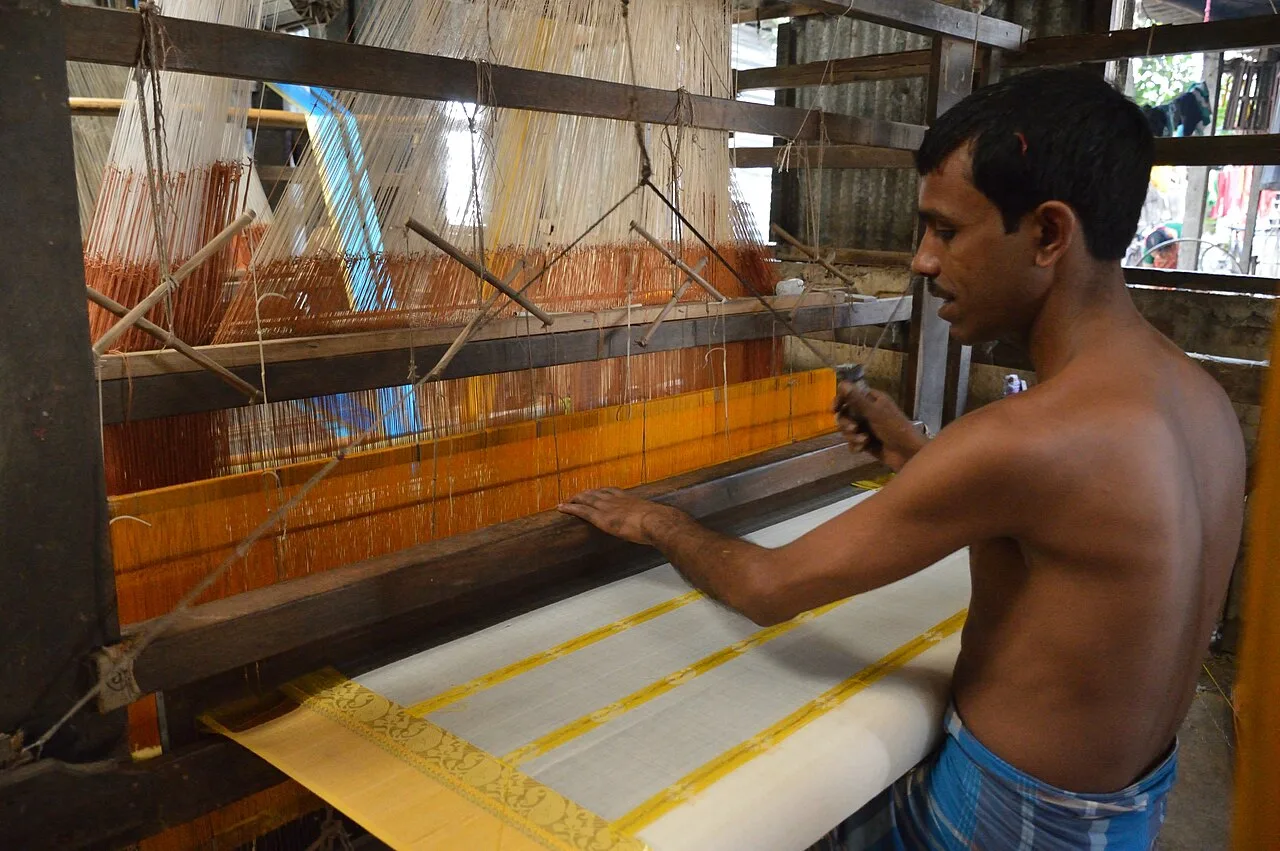
Santipur, also spelled Shantipur, is a historic town in Nadia district, in the Bhagirathi river plain of West Bengal. Its identity rests above all on handloom weaving: Shantipuri cotton sarees are valued for their fine fabric, traditional patterns and carefully worked borders.

Famous for

  • Shantipuri handloom sarees
  • Cotton weaving traditions
  • Shantipur Ras festival
  • Vaishnava heritage
  • Phulia weaving community
In the city
1
District
Nadia

Why Santipur matters

Santipur, also spelled Shantipur, is a historic town in Nadia district, in the Bhagirathi river plain of West Bengal. Its identity rests above all on handloom weaving: Shantipuri cotton sarees are valued for their fine fabric, traditional patterns and carefully worked borders. Weaving remains part of everyday economic and cultural life, with nearby Phulia also known for its strong community of weavers.

The town draws visitors for its textile workshops and shops, its Vaishnava associations and the lively Shantipur Ras festival. Its older quarters and places of worship offer a glimpse of Nadia’s devotional traditions, while the Bhagirathi landscape shapes the wider setting. Santipur is also a local service and trading centre, connected by rail to other towns in the region. For travellers, it offers a way to see Bengal’s living handloom heritage alongside a festival culture that brings neighbourhoods and religious traditions into public view.

Famous for: crafts, trade & products

Shantipuri sarees are the town’s best-known craft and have a Geographical Indication tag. These handwoven cotton sarees are associated with fine, light fabric, patterned fields and distinctive borders. Designs and weaving methods vary, and the work depends on the skill of local handloom families. Phulia, close to Santipur, is another important weaving centre; its growth was strengthened by weavers who migrated from Dhaka after the Partition of India.

Visitors can look for sarees in Santipur’s weaving neighbourhoods and local textile shops, and in Phulia’s weaving areas and outlets. Buying directly from a weaver or a specialist shop can offer a closer look at the looms and the differences between designs. The town’s textile trade is closely tied to its identity, rather than being confined to a single market or workshop. Ask sellers about the fabric, weave and place of production when comparing pieces, since handloom products and designs differ. Sarees are the principal local product; the surrounding region also has small businesses and services connected with weaving and trade.

History

Santipur developed as a settlement in Nadia’s riverine plains, where waterways and regional routes supported agriculture, trade and craft. Its history is closely linked with Vaishnavism. The town is associated with Advaita Acharya, an important figure in the devotional movement connected with Chaitanya, and its religious traditions continue to shape local life.

The fort area, known as Daak-Garh, is traditionally thought to have been built by Raja Krishnachandra of Nadia. Santipur’s handloom tradition grew over generations and became central to its economy and reputation. During the colonial era, weaving and the trade in cloth remained important, though local production faced wider changes in markets and manufacturing. After the Partition of India, weavers from Dhaka settled in the nearby Phulia area and contributed to the region’s weaving community. In modern times, Santipur has continued as a municipal town and a centre for textiles, local commerce and religious festivals, while its sarees have gained recognition beyond Nadia.

Food, festivals & culture

Santipur’s cultural calendar is shaped by Vaishnava worship and the annual Ras festival, usually held in the autumn, around the Kartik season. The festival centres on Krishna devotion, with decorated images, religious observances and public celebrations across the town. Dol Jatra, celebrated in spring, and the wider Bengali calendar of Durga Puja and Kali Puja also bring families and neighbourhoods together. Kirtan and other forms of devotional singing are part of the town’s religious life.

Bengali is the main language of daily life; Hindi is also understood in many settings. Local meals follow familiar Bengali patterns, including rice, fish, vegetables and lentils. Sweet shops serve Bengali sweets, especially during festivals and religious occasions, though specialities and offerings vary between shops. Places associated with worship and local history include sites linked with Advaita Acharya, along with neighbourhood temples where seasonal observances take place. Visitors can experience the town’s culture most directly during festival periods, while everyday life in the weaving quarters offers a quieter view of its craft traditions.

Visiting the city

October to March is generally a comfortable season to visit, with autumn also offering the chance to experience the Ras celebrations. The nearest major airport is Netaji Subhas Chandra Bose International Airport in Kolkata. Santipur railway station is the town’s main rail station and connects it with the wider regional network.

Auto-rickshaws and e-rickshaws are useful for getting around town; local taxis and buses serve broader routes. Explore the older town and its temples, the weaving neighbourhoods and shops, and the riverfront along the Bhagirathi. Phulia, nearby, is worth considering for its weaving community and textile outlets. During festivals, allow time for crowded streets and local processions, and check locally for current event arrangements.

Attractions

Places to visit in Santipur

Sights within about 12 km of each other, even when they fall in different districts.

Map

Santipur on the map

  1. 1Phulia

West Bengal

Other cities to explore