
Ghumoopedia — Explore, Discover, Experience
Sign in
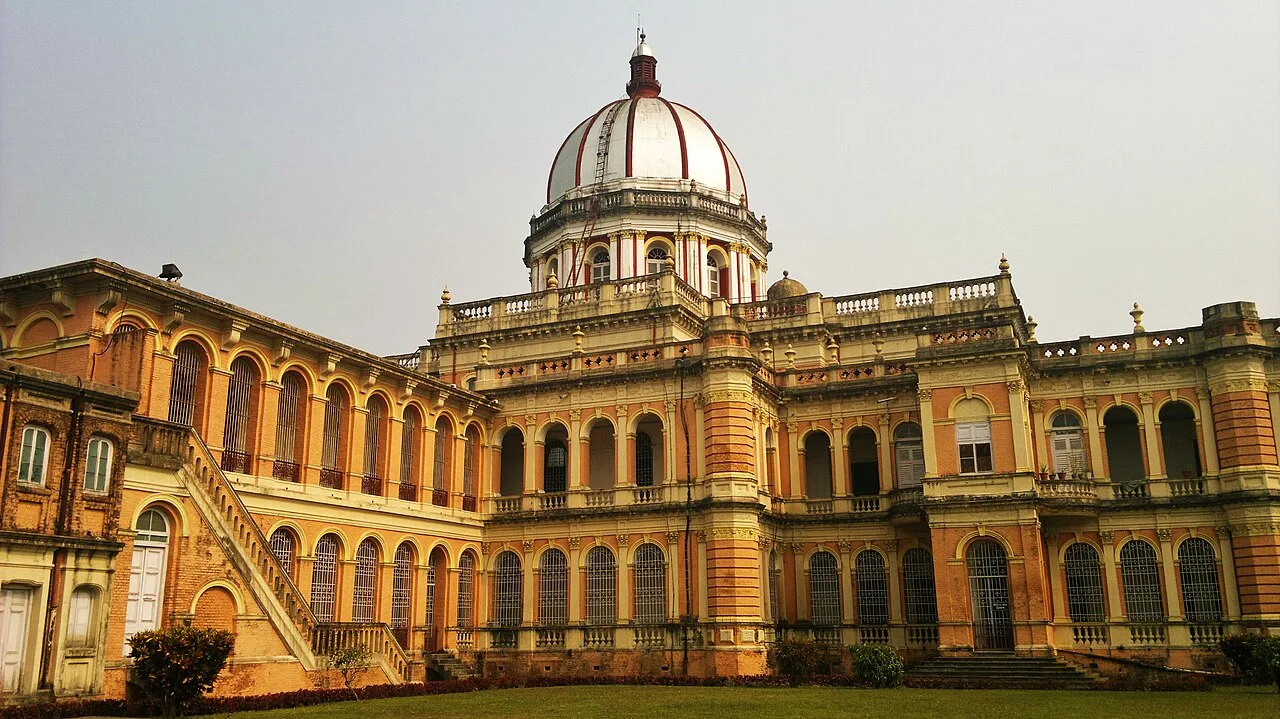
Cooch Behar Palace, near Cooch Behar

City guide · West Bengal

Cooch Behar

Cooch Behar is a historic town in northern West Bengal and the administrative headquarters of Cooch Behar district. It grew as the capital of the Koch kingdom and later served as the seat of a princely state under British rule.

Famous for

  • Cooch Behar Palace
  • Koch royal heritage
  • Madan Mohan Temple
  • Cooch Behar Ras Mela
  • North Bengal Bhawaiya
In the city
1
District
Cooch Behar

Why Cooch Behar matters

Cooch Behar is a historic town in northern West Bengal and the administrative headquarters of Cooch Behar district. It grew as the capital of the Koch kingdom and later served as the seat of a princely state under British rule. Its planned streets and royal landmarks give it a distinctive character among North Bengal’s towns, while its location near the Torsa River connects it to a wider landscape of rivers, farmland and tea-growing districts.

Visitors are drawn particularly to Cooch Behar Palace, a landmark of the town’s royal era, and to Madan Mohan Temple and the water bodies around the centre. The annual Ras Mela adds a major seasonal gathering, combining religious observance with a lively fair. Today Cooch Behar is also a regional service and trading centre, with schools, colleges, government offices and markets serving surrounding communities. Its appeal lies in the mix of architectural heritage, Bengali and Rajbanshi cultural traditions, and an unhurried town atmosphere.

Famous for: crafts, trade & products

Cooch Behar is best known for its royal heritage rather than for a signature textile, craft or manufactured product. The palace and temple draw visitors, while the town’s markets serve residents from the district and nearby areas. There is no widely recognised GI-tagged product specifically associated with the city, and it is not generally identified as a major craft-production centre.

Central bazaar areas are practical places to browse for everyday clothing, household goods, sweets, fish and seasonal vegetables and fruit. These reflect the region’s ordinary trade rather than a distinct local export tradition. Shops may stock Bengali cotton and silk garments, but these should not be confused with textiles made exclusively in Cooch Behar. Local agricultural trade includes staples and produce from the surrounding countryside. For visitors, the most characteristic purchases are often food items and small souvenirs connected with the town’s landmarks, rather than a specialised craft. Ask locally about current market activity, as stalls and seasonal offerings can vary.

History

The region around Cooch Behar formed part of early eastern Indian kingdoms before becoming associated with the Kamata kingdom. In the sixteenth century, Biswa Singha established the power of the Koch dynasty, and his son Nara Narayan presided over a period of expansion. The kingdom’s capital shifted locations before settling at Guriahati, the site of the present town, in the late seventeenth or early eighteenth century.

After conflict with Bhutan in the 1770s, the Koch rulers entered a defence agreement with the English East India Company, and Cooch Behar continued as a princely state under British influence. Maharaja Nripendra Narayan oversaw important modernisation and the construction of Cooch Behar Palace, completed in 1887 in an Italianate style. At the end of British rule, the ruler transferred authority to the Indian government. Cooch Behar became part of West Bengal in 1950 and developed as a district headquarters and regional centre.

Food, festivals & culture

Food in Cooch Behar reflects Bengali and North Bengal home cooking: rice, freshwater fish, lentils, seasonal vegetables and fish curries are familiar staples. Sweet shops sell Bengali favourites such as sandesh and rasgulla, while pitha and other rice-based treats may appear during seasonal and winter celebrations. These foods are shared across the region rather than being exclusive to the town.

Durga Puja, usually in autumn, is widely observed, and the Ras Mela is a prominent annual event associated with Madan Mohan Temple. Its religious observances take place alongside a fair that brings visitors and traders into town. Bengali is widely spoken; Rajbanshi and Hindi are also heard. North Bengal’s Bhawaiya folk tradition, often accompanied by instruments such as the dotara, is part of the area’s musical heritage. Madan Mohan Temple is a central place of worship, with other temples in and around town reflecting local Hindu traditions.

Visiting the city

October to March is generally the most comfortable period to visit, with less rain than during the monsoon. The monsoon months can bring heavy rainfall, so allow flexibility for outdoor plans. Cooch Behar Airport is the nearest airport; Bagdogra Airport is another option for a wider range of air connections. New Cooch Behar railway station is the main rail gateway and lies outside the central town.

Auto-rickshaws and cycle-rickshaws are useful for getting around locally, while taxis can be arranged for longer trips. Explore the central area around Cooch Behar Palace, Madan Mohan Temple and Sagardighi, whose waterside setting is a local landmark. The palace precinct and older town streets are easy to combine in a visit. Check locally for access arrangements at individual attractions, especially during festivals or seasonal events.

Attractions

Places to visit in Cooch Behar

Sights within about 12 km of each other, even when they fall in different districts.

Map

Cooch Behar on the map

  1. 1Cooch Behar Palace

West Bengal

Other cities to explore