
Ghumoopedia — Explore, Discover, Experience
Sign in
Jhargram, near Jhargram

City guide · West Bengal

Jhargram

Jhargram is a municipal city in West Bengal and the administrative centre of its district; travellers come for its forests, ancient temples and royal palaces.

Famous for

  • Jhargram Raj Palace
  • Sabai grass crafts
  • Junglemahal forests
  • Chilkigarh Kanak Durga Temple
  • Jhumur and tribal culture
In the city
1
District
Jhargram

Why Jhargram matters

Jhargram is a town in southwestern West Bengal and the administrative headquarters of Jhargram district. It is a gateway to the forested Junglemahal region, where sal woods, village landscapes and a strong mix of Bengali and Adivasi traditions shape the visitor experience. The town is best known for Jhargram Raj Palace and for nearby temples and woodland destinations, including Chilkigarh and Kankrajhore.

Visitors come for a quieter alternative to the state’s larger cities: to explore the palace’s Indo-Saracenic exterior, visit local places of worship, and take excursions into the surrounding forests. Jhargram also serves as a practical base for exploring the district, with rail and road connections and a town centre offering everyday services. Its cultural character reflects Santhal, Munda, Bhumij and other communities alongside Bengali life. That combination of regional history, forest scenery and living cultural traditions gives Jhargram importance beyond its role as a district headquarters.

Famous for: crafts, trade & products

Jhargram is not a major saree or textile centre. Its better-known craft connection is sabai-grass work: locally made ropes, mats, baskets and other household articles use a grass cultivated in parts of the region. Small craft producers and community groups sell such goods through local markets, fairs and exhibitions; visitors can ask in town about current availability. Bamboo and leaf-based household items may also be encountered, though selection varies. The town is a useful place to look for everyday regional products, rather than a single specialist craft bazaar.

The district’s forest-based livelihoods include seasonal gathering of non-timber produce, but these goods are not always available through formal retail outlets. Jhargram is not especially associated with a nationally recognised GI-tagged product, a signature saree, or a large manufacturing industry. For a sense of local commerce, browse the town’s general markets and shops near the central areas, where food, household goods and regional items are sold. Cultural fairs can offer a broader view of local craft traditions, with displays and sales that vary by event.

History

Local tradition traces Jhargram’s ruling house to Sarveshwar Singh, who is said to have arrived in the region in the late sixteenth century. The surrounding forest country was home to Santhal, Munda, Bhumij, Kudmi Mahato and Lodha communities. The name Jhargram is commonly understood as referring to a forest settlement enclosed by walls or canals; stories about the early fort and the name’s older forms remain part of local heritage.

The rulers resisted British expansion in the eighteenth century, but the East India Company eventually brought the estate under colonial control. Jhargram later continued as a zamindari estate. Raja Narasingha Malla Deb commissioned the present Raj Palace in 1931 and supported education and public welfare. During the twentieth century the town developed as an administrative and educational centre, with institutions including Jhargram Raj College. Jhargram became the headquarters of a separate district in 2017, strengthening its role as the principal service centre for the surrounding region.

Food, festivals & culture

Bengali is widely used in town, while Santali and other regional languages are part of everyday life in surrounding communities. Meals commonly draw on Bengali staples such as rice, lentils, vegetables and fish; forest-edge communities also have their own food traditions, including seasonal greens and locally gathered ingredients. Bengali sweets are available in town, though Jhargram is not defined by one signature sweet.

Durga Puja, usually celebrated in autumn, is a major public festival. Tusu festivities in winter, around the harvest season, and Bandna, associated with the post-harvest period, reflect rural and Adivasi traditions. Karam observances and other community celebrations also feature in the wider district. Jhumur songs and dance, along with Santhal and other Adivasi performance traditions, are important expressions of regional culture; local programmes and fairs are good opportunities to encounter them. Places of worship include temples, mosques and churches in town. The Kanak Durga Temple at Chilkigarh is a notable nearby shrine and a popular excursion.

Visiting the city

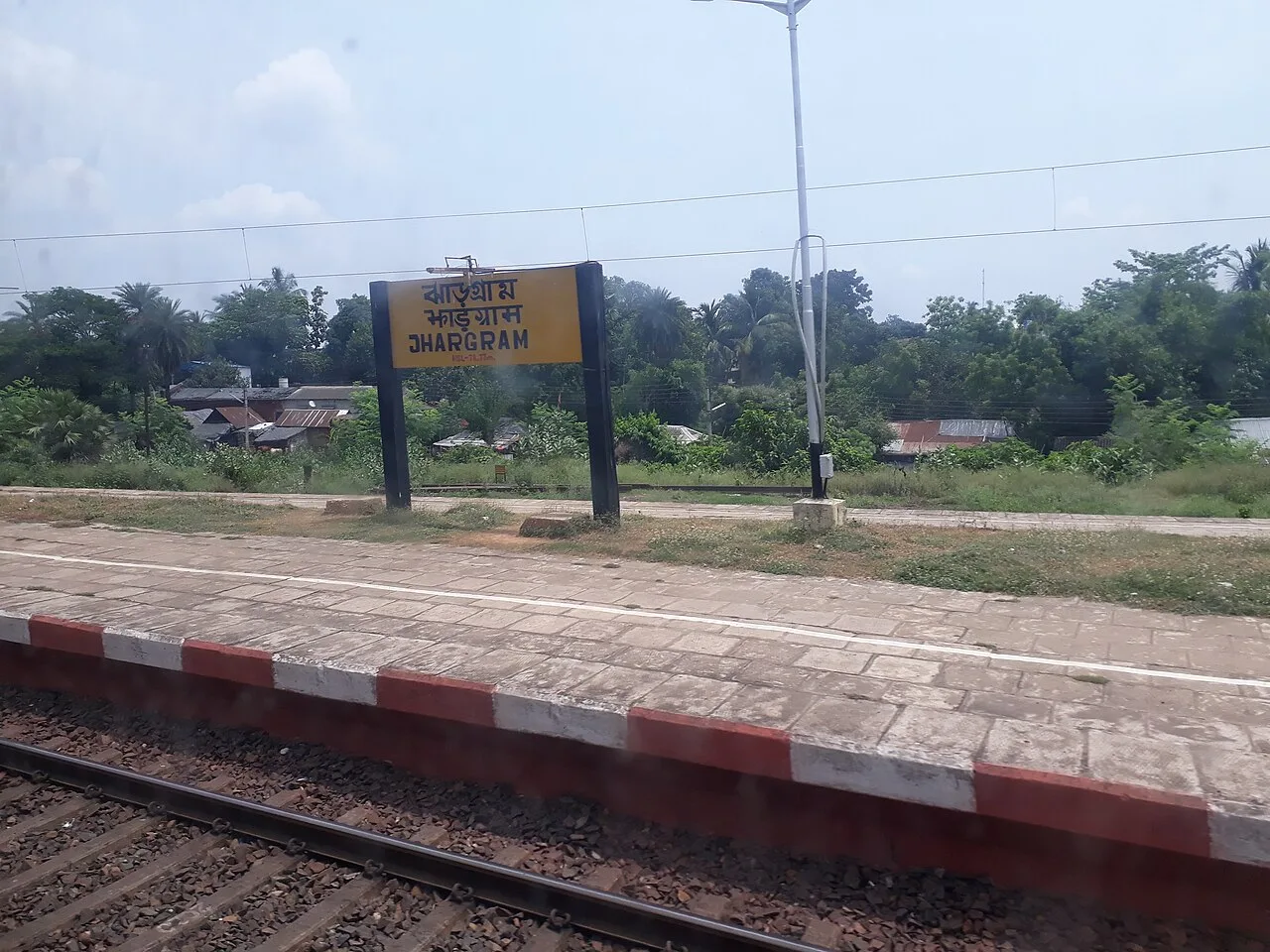
The cooler months, roughly November to February, are generally the most comfortable for exploring. Summer can be very hot, while monsoon brings greener forests but also heavier rain. Jhargram Railway Station is the main rail arrival point. The nearest major airport is Netaji Subhas Chandra Bose International Airport in Kolkata; onward travel is by road or rail.

Auto-rickshaws, taxis and local buses serve the town, while a hired vehicle is useful for forest and temple excursions. Explore the town centre and the Raj Palace surroundings, checking locally whether palace access is available. Chilkigarh and its Kanak Durga Temple make a rewarding nearby outing; longer trips can reach forest areas such as Kankrajhore. Confirm road conditions and local transport before setting out beyond town.

Attractions

Places to visit in Jhargram

Sights within about 12 km of each other, even when they fall in different districts.

Map

Jhargram on the map

  1. 1Jhargram

West Bengal

Other cities to explore