
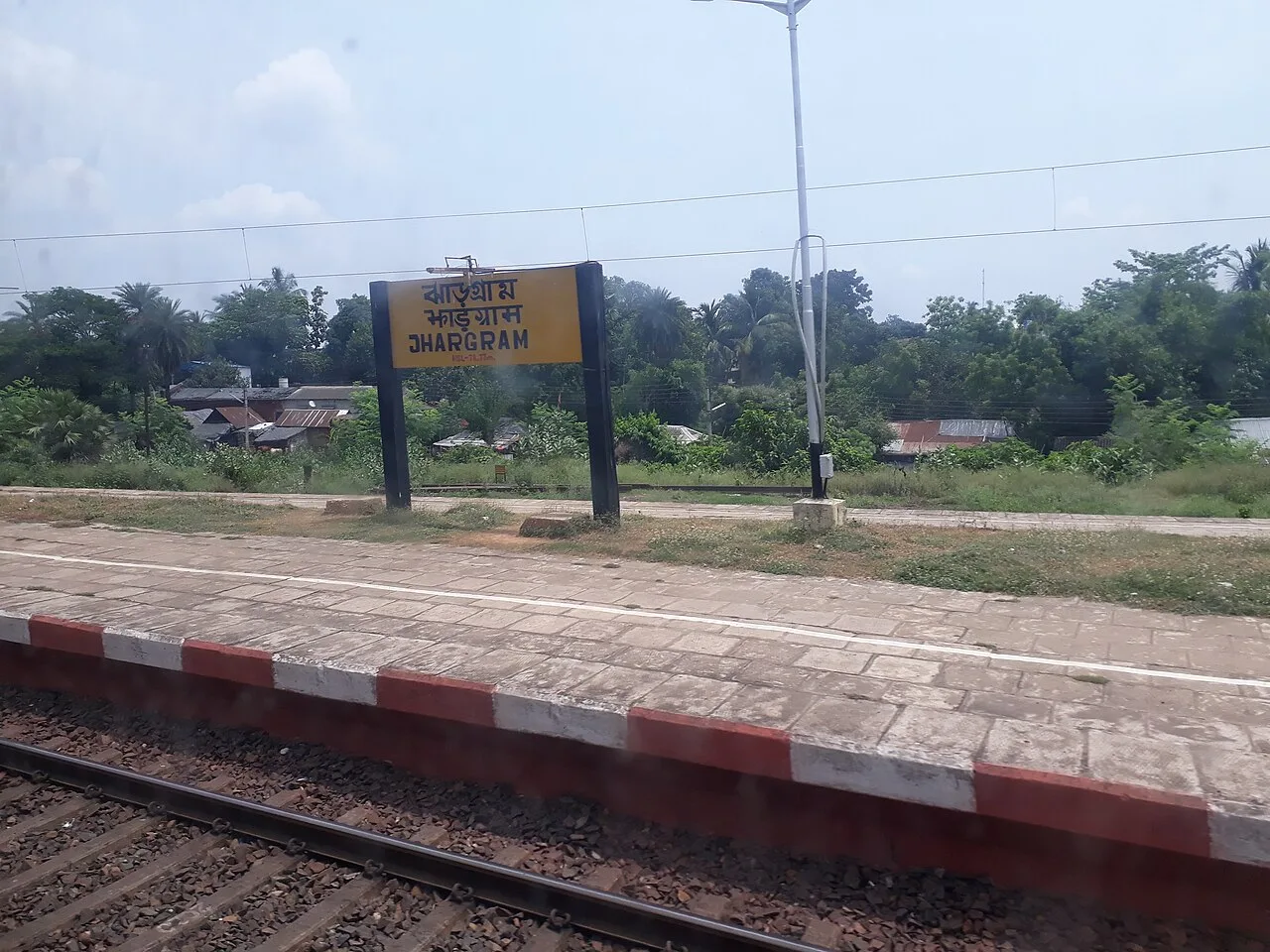
Jhargram
Jhargram is a municipal city in West Bengal and the administrative centre of its district; travellers come for its forests, ancient temples and royal palaces.
Key facts · verified by Ghumoopedia editors
- Type of place
- Destination
- Best time to visit
- October to March for the plains and coast; March to May and October to December for the Darjeeling hills
- Nearest railway station
- Jhargram · about 5 km (straight line)
- Nearest airport
- Durgapur (Kazi Nazrul Islam) Airport · about 135 km (straight line)
- Verified
- 21 Nov 2026
Plan a trip from Jhargram — a day-by-day route through places nearby.
Situated in West Bengal’s Jhargram district, Jhargram is an urban centre with municipal status. It also serves as the district headquarters, giving it an administrative role in the area. Its appeal to visitors is connected with both its wooded landscape and its historic architecture. People visit to explore the dense woodland, see the old temples and view the royal palaces. Together, these attractions give Jhargram a character shaped by forest surroundings, places of worship and buildings associated with royalty. The city’s tourism draws on this combination of natural scenery and historic sites. West Bengal stretches from the Himalayan tea gardens of Darjeeling to the mangrove delta of the Sundarbans, with Kolkata's colonial architecture, the terracotta temples of Bishnupur, Tagore's Santiniketan and the Nawabi heritage of Murshidabad. The plains are hot and humid from March to June, receive heavy monsoon rain from June to September and are pleasant from November to February; the Darjeeling hills are cool year-round and cold in winter, and the coast and Sundarbans can be hit by cyclones in May and October–November. The usual best time to visit is October to March for the plains and coast; March to May and October to December for the Darjeeling hills. Timings, fees and access arrangements must be confirmed locally. For official information, see West Bengal Tourism at https://wbtourism.gov.in.
Why it matters
Jhargram is the administrative headquarters of Jhargram district in southwestern West Bengal and an important town for the surrounding forested and rural communities. The district was created in 2017 from the former Paschim Medinipur district. Jhargram is known regionally for its association with the Jhargram Raj family, its palace, and access to nearby temples, woodland and settlements. The wider area is home to Adivasi communities, including Santhal, Munda, Bhumij and Lodha people, whose living traditions are part of the region’s identity. Jhargram is a useful base for exploring these varied landscapes and communities, but visitors should approach cultural sites with respect. No UNESCO or ASI status is asserted here for the town’s main attractions.
The history of Jhargram is closely linked to the Jhargram Raj estate and to communities that lived in the forested region before the town developed. Family and local accounts traditionally date the establishment of the estate to the late sixteenth century; details of its early origins vary, so this date is best treated as a tradition rather than a settled account. The Raj family’s residence and estate administration helped shape Jhargram as a local centre. The wider area was part of the forest frontier commonly associated with the historic Jungle Mahal region, where local rulers, landholders and forest-dwelling communities shaped patterns of authority and livelihood. Under British rule, estate administration continued within the changing colonial system, while rail and road connections later strengthened the town’s role as a regional hub. After Indian independence, Jhargram developed as a municipal and administrative centre. In 2017, it became the headquarters of the newly formed Jhargram district, separated from Paschim Medinipur. The Raj palace remains a prominent reminder of the estate’s past; visitors should check locally which parts, if any, are open to the public, as access and use can change.
Use Jhargram as a base to understand local life: walk through the market, look for local crafts and ask your host about nearby viewpoints and short excursions. Always ask before photographing people, homes or ceremonies. A comfortable itinerary is one main visit in the morning, a local meal at midday and a short nearby stop before an afternoon return. Use the district list on this site to find other places in Jhargram, but check the route and its condition before combining stops. If a festival is on — such as Durga Puja, Kali Puja or the Poush Mela at Santiniketan — roads and stays can be busy, and the experience can be unforgettable. Leave no litter: many sites are protected by the communities around them.
Suggested itineraries
Half day: Explore the central market (about 1 hour), visit Jhargram Raj Palace if access is confirmed (about 1–2 hours), then pause for a local meal (about 1 hour). Full day: Visit Jhargram Raj Palace if open (about 1–2 hours), travel to Chilkigarh and see the Kanak Durga Temple (about 2 hours), have lunch locally, then return to town with time for the market (about 1 hour); allow extra travel time and confirm road conditions. Gentler option: Keep to the town centre, use a vehicle between stops, and choose one accessible-to-you site with rest breaks rather than combining distant excursions.
Bengali is widely used in town, alongside languages such as Santali, Kurmali and Hindi in the wider region. Jhargram district has substantial Adivasi communities, including Santhal, Munda, Bhumij and Lodha people, each with distinct identities and customs. Jhumur songs and dance traditions are associated with the broader southwestern Bengal region, while community performances and seasonal observances vary by place. Traditional clothing may be worn for festivals and ceremonies, but everyday dress is diverse. Visitors may encounter local music, dance or rituals during a visit; these are living cultural practices, not performances to assume are available on demand. Ask permission before taking photographs or joining an event.
Festivals & events
Durga Puja and Kali Puja are observed in Jhargram and nearby communities, usually in autumn, and can bring busy roads, markets and accommodation. Winter harvest-season observances, including Tusu festivities around the Poush-Makar period, are important in parts of the region; dates and forms vary by community. Adivasi festivals such as Karam and Sarhul are celebrated by some communities, with timing and practices differing locally. Temple fairs and village events may also take place during the year. Ask locally before attending, and expect increased visitor traffic and limited availability of stays during major celebrations.
Local food in West Bengal includes macher jhol (fish curry), shorshe ilish (hilsa in mustard), kosha mangsho, luchi with alur dom, kathi rolls and phuchka in Kolkata, mishti doi, rosogolla and sandesh; in the Darjeeling hills, momos, thukpa, shaphaley and first-flush Darjeeling tea. Ask what is fresh that day; many small eateries cook a limited daily menu. Vegetarian travellers eat well across the state, and most towns also have fish and meat dishes. Remote sites may have no restaurant at all. Carry water and snacks, eat a proper breakfast before long drives, and ask your accommodation for a packed lunch if you are heading out early. Try a home-cooked or local thali meal when you can — it is often the best food on the route. Choose busy, clean places, drink sealed or filtered water, and carry your packaging back with you.
Shopping & local experiences
The town market is a place to browse everyday goods, snacks and locally made items. Depending on availability, visitors may find crafts or products associated with nearby Adivasi communities and Sabai grass work; ask sellers about the maker and origin rather than assuming an item is locally produced. Buying directly from artisans or community-run outlets, where available, can help support local livelihoods. Look for regional ingredients and simple Bengali meals at local eateries, and ask what is seasonal. Seek permission before photographing stalls or makers, and avoid buying wildlife products or objects presented as antiquities.
October to March for the plains and coast; March to May and October to December for the Darjeeling hills
The nearest principal railway station by straight-line distance is Jhargram, roughly 5 km away. The nearest operating airport by straight-line distance is Durgapur (Kazi Nazrul Islam) Airport, roughly 135 km away. These figures are calculated from map coordinates — actual road distance is longer. Howrah, Sealdah and Kolkata stations and Kolkata airport serve the south; New Jalpaiguri station and Bagdogra airport near Siliguri are the gateways to the Darjeeling hills and the Dooars. For the final leg, West Bengal Transport Corporation, North Bengal State Transport and South Bengal State Transport buses, private buses and shared jeeps in the hills link district towns. A private taxi gives more flexibility for remote sites. When comparing train, bus and flight, count the complete door-to-door time: a flight saves the most time only if the onward road transfer is short, while an overnight train can save a hotel night. Book your return before you leave, because seats fill quickly on weekends, festivals and holidays. Current train numbers, timings, return services and fares are not listed here; check IRCTC and NTES for trains and the airline's own schedule for flights. No permit is needed for Indian citizens to visit West Bengal. Entry to the Sundarbans Tiger Reserve needs a forest permit, usually arranged through a registered boat operator or the forest office at Sajnekhali or Canning; trekking in Singalila National Park (Sandakphu) needs an entry permit and a registered guide from Maneybhanjan. Durga Puja in October brings huge crowds to Kolkata, so book transport and stays well ahead.
Confirm onward and return timings on IRCTC / NTES, the state bus operator or your airline before travel. A dash means current timings or fares have not been verified.
Getting around
Autos and other locally available shared or private vehicles are practical for getting around town; availability and routes can vary. Taxis or a hired car are useful for combining outlying stops such as temples or forest-area destinations, where public transport may be less convenient. Local buses connect some towns and villages, but check routes and service conditions locally. The central market and nearby streets can be explored on foot, though heat, uneven pavements and traffic may make walking tiring. Ask your accommodation about current vehicle options and safe return arrangements, especially for rural excursions. Check parking availability at each stop.
Hours, tickets & permissions
Jhargram is a town rather than a single ticketed attraction, so there is no general entry procedure. Individual sites, including the palace and temples, may have their own access rules, visitor areas, photography restrictions or event-related closures. Some religious places may expect modest dress and respectful conduct. Carry identification if a site or accommodation requests it, but requirements vary. Confirm current opening arrangements, entry conditions and any fees directly with the managing authority or locally before setting out; do not assume that a landmark visible from outside is open for visits.
Facilities
Jhargram town has food shops, eateries, accommodation and everyday services. Toilets and drinking water are more likely to be available in town than at smaller temples or rural viewpoints; carry water and check locally before travelling. ATMs and basic medical services are generally easier to find in the town centre, but do not rely on every facility being open or stocked. Parking may be available near larger attractions, though arrangements vary. Guides are not guaranteed at each site, so ask your accommodation or a local information point about current services and access before departure.
Accessibility
Conditions vary between town streets, palace grounds, temples and rural attractions. Central areas may involve uneven pavements, traffic and steps; temple approaches and outdoor sites can have rough or unpaved surfaces. Woodland and waterfall-area visits may require longer walks over irregular ground, with limited shade or seating. Wheelchair and stroller access should not be assumed, and older visitors may find heat, steps or uneven paths tiring. Confirm the route and facilities with the site or your accommodation, travel with assistance if needed, and plan rest stops. A vehicle-based town visit with one carefully chosen stop is often the gentler option.
No permit is needed for Indian citizens to visit West Bengal. Entry to the Sundarbans Tiger Reserve needs a forest permit, usually arranged through a registered boat operator or the forest office at Sajnekhali or Canning; trekking in Singalila National Park (Sandakphu) needs an entry permit and a registered guide from Maneybhanjan. Durga Puja in October brings huge crowds to Kolkata, so book transport and stays well ahead. Carry a photo ID at all times and save the emergency number 112 and your accommodation's contact offline. Heat in summer and heavy rain in the monsoon are the main weather risks; carry water, avoid midday sun and allow extra time when roads flood. Watch your belongings in crowds and on public transport, and follow posted instructions.
Photography
For outdoor views, softer light in the morning or late afternoon can be more comfortable and flattering than midday sun. Ask on arrival whether photography is allowed inside the palace, temples or other managed spaces; restrictions can differ between sites and during ceremonies. Avoid photographing people, homes or community events without clear permission, and follow requests not to photograph sacred objects or rituals. Drone use may require permissions and can be restricted near public, religious or sensitive locations; check applicable rules before flying. Keep equipment and movement from obstructing worshippers or other visitors.
Choose a stay by the full journey to Jhargram, not just the district name. Kolkata offers the widest choice; on the coast, Digha and Mandarmani have many hotels, and the Sundarbans have eco-resorts and boat stays near Pakhiralay and Bali island. In summer, check air-conditioning; in the monsoon, check that the property is accessible if roads flood. Book in advance for weekends, festivals and the peak season (October to March for the plains and coast; March to May and October to December for the Darjeeling hills). Confirm the exact location, meals included, check-in time and cancellation terms in writing. Avoid sending money to unverified contacts or touts at stations. Carry some cash, as card and digital payments can be unreliable in remote areas.
Jhargram Raj Palace is a prominent town landmark, but confirm public access before planning a visit. Chilkigarh, in the district, is known for the Kanak Durga Temple and can be combined with a visit to the surrounding area. Belpahari and Kankrajhor are options for visitors interested in the district’s wooded landscapes; travel conditions and facilities can be limited, so check locally before setting out. Ghagra Waterfall is another nature stop associated with the Belpahari area, but access can depend on season and local conditions. These places are not all close together, so avoid assuming they fit into one short outing.
For couples, Jhargram rewards a slow pace: arrive early for soft light and fewer crowds, share a local meal and keep the evening free. A toy-train ride in the Darjeeling hills, a boat on the Hooghly at sunset or an evening of adda over tea in Kolkata makes the trip memorable. Public displays of affection can be frowned upon in conservative communities and at religious sites, so be discreet. Keep a buffer in your itinerary, because weather and road conditions can delay plans.
Q: How much time should I allow for Jhargram? A: A half day can cover a town visit; allow a full day or more if you plan a trip to Chilkigarh, Belpahari or other outlying places. Q: When is a good season to visit? A: October to March is generally more comfortable for exploring the plains; summer can be hot and monsoon conditions may affect roads and outdoor stops. Q: Is there one entry ticket for Jhargram? A: No. The town has no general entry ticket, and access rules for individual attractions vary. Confirm locally before visiting. Q: Is Jhargram suitable for children and older visitors? A: It can be, especially with a vehicle and a relaxed town-based plan, but steps, uneven ground, heat and longer rural walks may be challenging. Q: Can I stay near the attractions? A: Jhargram town has accommodation options, but availability and facilities vary. Book ahead during festivals and confirm whether a chosen outlying attraction has nearby services.
Be the first to share photos, stories, advice or a helpful contact for Jhargram.
Loading…