
District · West Bengal
Jhargram
Jhargram offers a view of western West Bengal quite different from the state’s riverine plains: red laterite soil, sal woodland, low hills and villages shape its rural character.
Jhargram district lies in western West Bengal, where red-earth countryside, sal forests and scattered low hills distinguish the landscape from the state’s riverine plains. The Subarnarekha flows through its southern countryside, while villages and cultivated fields interrupt the wooded stretches. Created as a separate district in 2017 from Paschim Medinipur, Jhargram takes its name from its principal town, historically associated with the Jhargram royal estate. The palace remains an important landmark of that history. Santhal and other Adivasi communities contribute significantly to the district’s cultural character, alongside wider Bengali traditions. Its appeal lies in forest scenery, village landscapes and living cultural traditions rather than a dense concentration of urban attractions.
Jhargram offers a view of western West Bengal quite different from the state’s riverine plains: red laterite soil, sal woodland, low hills and villages shape its rural character. The district, created in 2017 from Paschim Medinipur, is part of the forested, culturally diverse belt adjoining western Bengal and eastern India. Its principal town, Jhargram, is associated with the historic Jhargram Raj estate and its palace. Santhal and other Adivasi communities, alongside Bengali communities, contribute to local traditions and seasonal celebrations. Travellers come chiefly for woodland and countryside, a quieter town-based break, and opportunities to experience the region’s cultural life.
Jhargram lies in a forested frontier region of southwest Bengal whose local powers and administrative boundaries changed over time. The Jhargram Raj family’s origins are traditionally traced to the late sixteenth century and to Sarveshwar Singh; accounts of its early expansion combine estate history and local tradition. The estate later became an important local centre, represented today by the palace in Jhargram town. During the late eighteenth century, the wider Jungle Mahal region saw Chuar uprisings against expanding colonial authority and revenue demands. British rule brought changing administrative arrangements for the forested tracts and their estates; Jhargram was not an independent kingdom on the scale of the major states of the subcontinent. After independence, the area formed part of Midnapore district and later Paschim Medinipur. On 4 April 2017, Jhargram was established as a separate district from Paschim Medinipur, with Jhargram town as its administrative centre.
Food in Jhargram draws on the everyday cooking of western Bengal: rice, dal, seasonal vegetables and fish curries are familiar staples. Luchi with alur dom, meat preparations such as kosha mangsho, and sweets including mishti doi, rosogolla and sandesh belong to the wider Bengali repertoire rather than being district specialities. Adivasi households have their own food traditions, shaped by cultivated crops and locally available seasonal ingredients; these are not necessarily offered in ordinary restaurants. Ask small eateries what has been freshly prepared, as daily menus may be limited. Carry drinking water and food when visiting remote forest or village sites, where restaurants may be absent.
Craft traditions around Jhargram are best understood within the broader cultural landscape of western Bengal. Bamboo basketry, utilitarian woven objects and articles made from stitched sal leaves reflect the region’s close relationship with forests and rural livelihoods. Availability varies between villages and markets, so locally made goods should not be assumed to be on sale everywhere. Bengal’s better-known traditions, including terracotta, dokra metal casting and patachitra painting, provide useful regional context but should not automatically be labelled Jhargram specialities. Ask sellers where an item was made, and favour purchases directly from makers when possible.
Seasonal festivals reflect both Adivasi and Bengali traditions. Tusu is associated with the winter harvest season and Poush Sankranti; Bhadu is observed during the Bengali month of Bhadra, while Karam celebrations generally fall in the monsoon or early autumn. Bandna, linked with cattle and the post-harvest period, is also observed in parts of the region. Durga Puja brings the familiar town celebrations of Bengal. Practices and scale vary between villages and years. Larger town festivities can make central areas busier, so visitors seeking accommodation during major festival periods should arrange it ahead.
Elsewhere in West Bengal
Jhargram’s landscape is shaped by laterite and red-earth ground, sal forest, cultivated clearings and scattered low hills. The Subarnarekha flows through the district’s southern countryside, while smaller settlements and fields break up the wooded stretches. This is not continuous dense forest: woodland, roads and villages form a patchwork. The terrain is generally accessible by road, but rural routes can be uneven and travel between scattered places takes planning. In the monsoon, wet roads and seasonal conditions may slow journeys; forested areas are best explored with local guidance.
Summer is generally hot, with strong sun over exposed laterite countryside; plan outdoor travel for cooler parts of the day and carry water and sun protection. The monsoon brings rain, greener vegetation and potentially muddy or slower rural roads. Winter is usually the most comfortable season for walking and exploring the town and countryside, though evenings can feel cool. October to February is commonly a favourable period to visit, with conditions varying from year to year. Pack light breathable clothes, a hat and sunscreen in warmer months, and a light layer for winter evenings. In the rainy season, bring rain protection and suitable footwear.
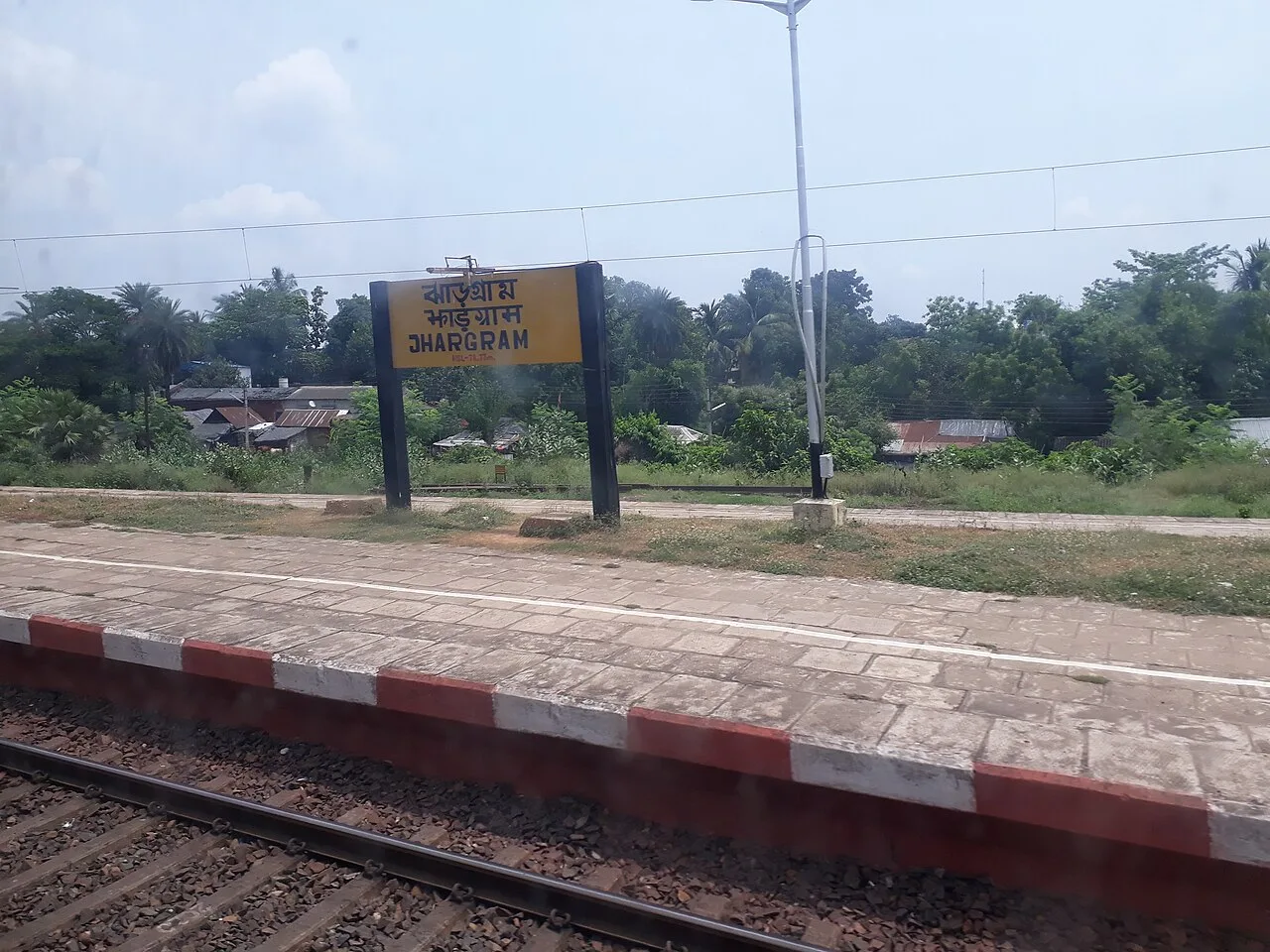
Jhargram railway station is the main rail gateway, with connections along the Howrah–Kharagpur–Tatanagar route. Durgapur’s Kazi Nazrul Islam Airport is the nearest airport by straight-line distance, although Kolkata’s Netaji Subhas Chandra Bose International Airport is another practical gateway; compare onward road or rail connections before choosing. Road access from Kolkata is generally via Kharagpur, with regional roads linking Jhargram town to surrounding settlements. Buses serve the town and nearby areas, while auto-rickshaws and hired cars are useful for local travel. A hired vehicle can simplify visits to scattered rural attractions. Check current services locally.
Jhargram town is the main base and road hub for visiting the surrounding district. Buses connect the town with nearby settlements, but service frequency and onward options can be limited in rural areas. Auto-rickshaws are useful for shorter journeys around town and nearby localities; hired cars offer greater flexibility for forest edges and dispersed countryside stops. Agree on the route and return arrangements with a driver before setting out. Rural roads may be narrow or rough, especially after rain, and mobile connectivity can be less reliable beyond town. Check current transport options locally.
2 days: Jhargram; sleep in Jhargram after Day 1. 3 days: Jhargram on each day; sleep in Jhargram after Days 1 and 2.
Jhargram town is the practical base for a short visit, with the widest choice of ordinary hotels and access to local transport. For a slower countryside stay, look for homestays or lodges in the wider district, checking road access and services before booking. Government accommodation may be available in the region, but availability and booking arrangements vary. Options outside town are more limited, so confirm meals, transport and connectivity in advance. During major festivals or holiday periods, reserve accommodation early.
Carry drinking water and protect yourself from sun, rain and insects, particularly on rural outings. Use footwear suited to uneven ground and check road conditions after heavy rain. Forests and their edges are wildlife habitat; do not approach animals, enter restricted areas or travel into unfamiliar woodland without local advice. Elephant movement can affect parts of the wider forest belt, so heed local directions and forest advisories. Keep a charged phone, but do not rely on continuous connectivity outside town. Ask locally about safe routes and current conditions. Confirm any access or permit requirements with the relevant authorities before entering restricted forest areas.
- Bankuraabout 70 km
- Mayurbhanj · Odishaabout 84 km
- East Singhbhum · Jharkhandabout 90 km
- Purba Medinipurabout 111 km
- Balasore · Odishaabout 114 km
- Seraikela Kharsawan · Jharkhandabout 114 km
- Puruliaabout 128 km
- Howrahabout 139 km
Straight-line distance between the centres of each district's destinations; road distance is longer.
Q: How many days should I spend in Jhargram? A: Two days allow a short town-based visit; three days give more time for a relaxed pace and local excursions. Q: When is the best time to visit? A: October to February is generally the most comfortable period, while monsoon travel can be affected by rain and road conditions. Q: What is the best base for a visit? A: Jhargram town is the most convenient base for accommodation and local transport. Q: How do I get to Jhargram? A: Jhargram railway station is the main rail gateway. Road connections are also available; check current onward services when planning. Q: Is Jhargram suitable for families or elderly travellers? A: Yes, particularly for a town-based stay, though rural outings can involve uneven paths, limited services and longer road journeys. Plan transport and rest breaks to suit the group.
This page draws on our 1 destination guides for Jhargram and is updated as our team checks it.
Be the first to share photos, stories, advice or a helpful contact for Jhargram.
Loading…