
District · West Bengal
Murshidabad
Murshidabad is a historic district in the lower Ganges plain of West Bengal, shaped by the Bhagirathi River and its farming and trading towns.
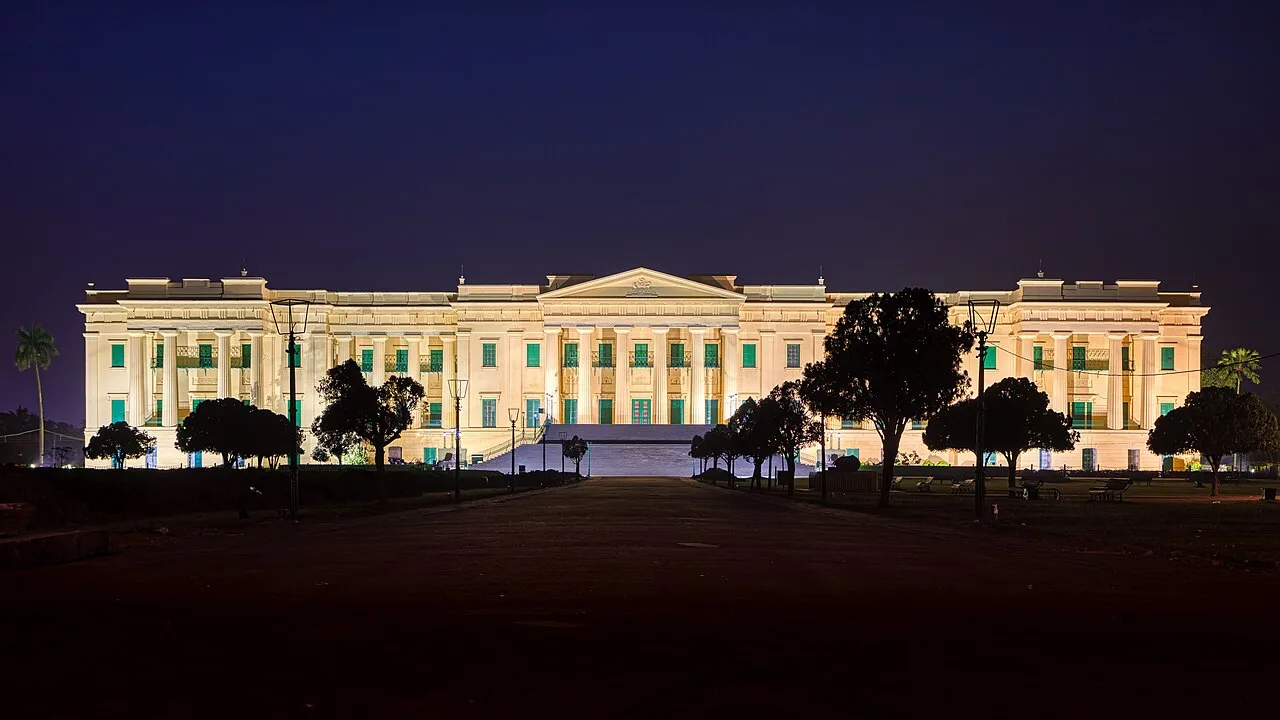
Murshidabad lies in West Bengal’s riverine plains, where the Bhagirathi flows through a landscape of cultivated fields, settlements and historic riverfronts. The district was a centre of political power and commerce when Murshidabad became the capital of Bengal under its eighteenth-century nawabs. Its surviving monuments reflect courtly ambition, religious life and the wealth generated by trade. Hazarduari Palace, now a museum within the Kila Nizamat complex, and the nearby Nizamat Imambara form a major heritage cluster. Katra Masjid, with its mosque, tomb and former caravanserai, offers another perspective on this past. Beyond the monuments, farming, silk production and busy market towns give the district a character that is both rural and urban.
Murshidabad is a historic district in the lower Ganges plain of West Bengal, shaped by the Bhagirathi River and its farming and trading towns. It is best known as the seat of Bengal’s nawabs in the eighteenth century, when the city of Murshidabad became a political and commercial centre. The Hazarduari Palace and Nizamat Imambara, within the Kila Nizamat complex, and the older Katra Masjid are the district’s principal heritage sights. Travellers can combine these monuments with riverfront walks, local markets and glimpses of the district’s silk and agricultural traditions. The experience is more spread out and town-based than a single monument visit.
The Murshidabad region formed part of Bengal, whose rulers and political centres changed over many centuries. Under Mughal rule, Murshid Quli Khan shifted Bengal’s capital from Dhaka to Murshidabad in the early eighteenth century; the city takes its name from him. It flourished as a centre of administration, banking, textile production and river trade under the nawabs. Successors including Alivardi Khan and Siraj ud-Daulah ruled from the city. The East India Company’s victory at Plassey in 1757, in the wider region, weakened the nawab’s power and advanced Company rule in Bengal. Murshidabad retained ceremonial and commercial importance even as political authority moved elsewhere. British administration reshaped the area, and Murshidabad district was established in the late eighteenth century. After the end of British rule and the 1947 Partition of Bengal, the district became part of the Indian state of West Bengal. Its palaces, mosques, tombs and religious institutions preserve traces of Mughal-era influence, nawabi patronage and later colonial change.
3 destination guides
Hazarduari Palace
Hazarduari Palace is a former royal residence in Murshidabad, now a museum and national monument. Visitors come to see its nineteenth-century architecture and explore its cultural role.
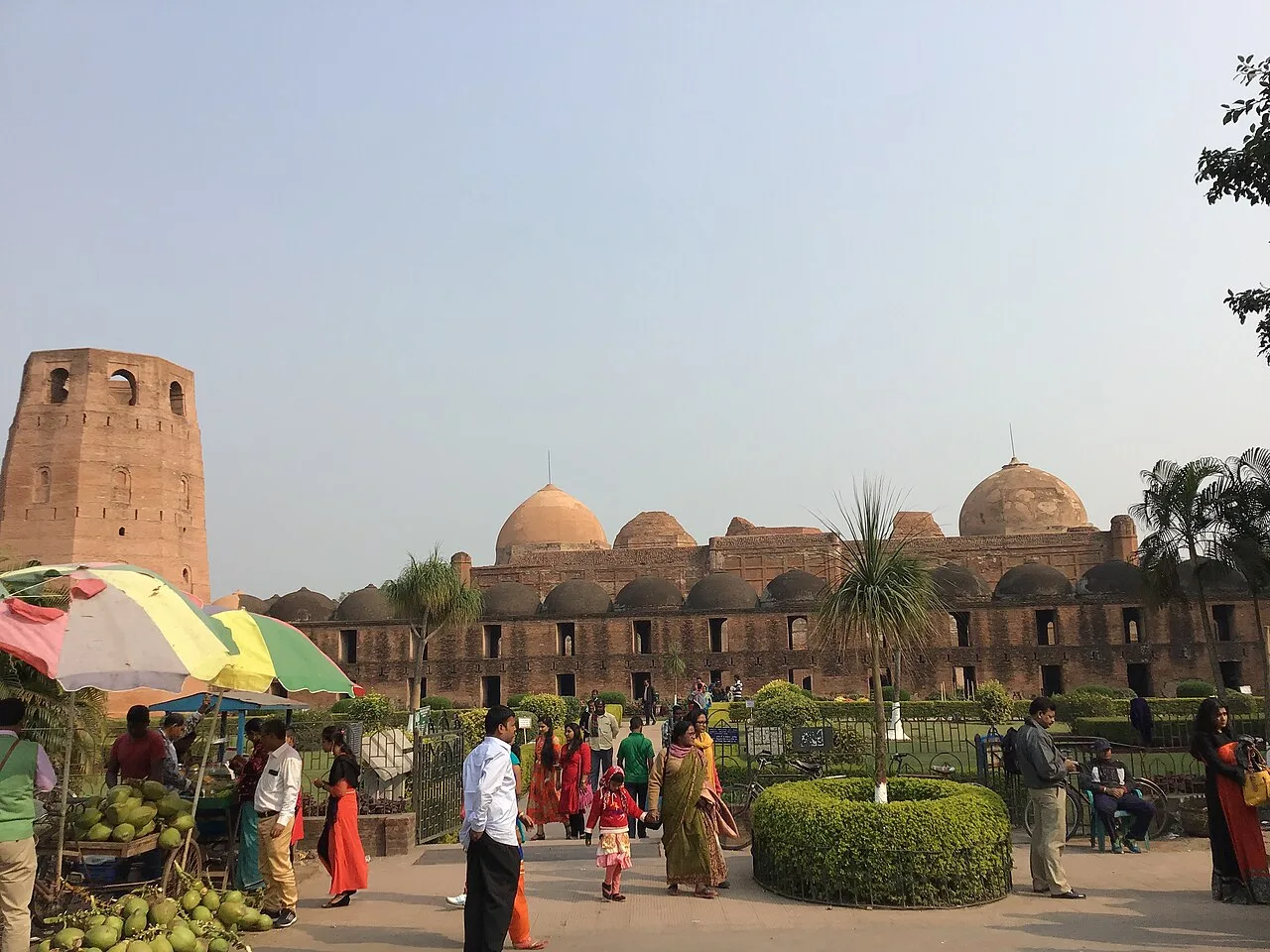
Katra Masjid
Katra Masjid is a partly ruined complex in Murshidabad, West Bengal, combining a former Shia caravanserai, mosque and tomb. Visitors come to see its historic architecture and the burial place of its founder.
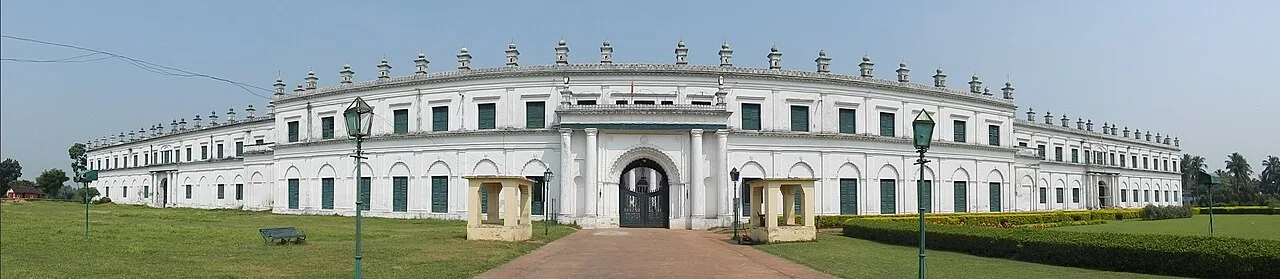
Nizamat Imambara
Nizamat Imambara is a Shi’ite congregation hall in Murshidabad, noted for its history and scale; visitors come to see a historic site recognised for national importance.
Food in Murshidabad draws on the wider Bengali tradition of rice, fish, vegetables and lentils, alongside meat dishes associated with Muslim households and festive cooking. Macher jhol, mustard-based fish preparations, luchi with alur dom, and kosha mangsho are regional options rather than dishes exclusive to the district. Berhampore is particularly associated with chanabora, a fried chhana sweet soaked in syrup. Other familiar Bengali sweets include mishti doi, sandesh and rosogolla. Small eateries may prepare only a limited daily menu, so ask what is freshly cooked and confirm vegetarian choices. Plan meals in town when visiting outlying monuments.
Murshidabad has a longstanding association with sericulture and silk weaving, and silk saris and fabrics remain important purchases to explore. The district also belongs to the early history of Baluchari weaving, named after Baluchar; the tradition is now more strongly associated with Bishnupur in Bankura district. Khagra, in Berhampore, is known for brass and bell-metal utensils. Sholapith work, using the pale, lightweight pith of a wetland plant for decorative and ceremonial objects, is another craft found in the district and wider Bengal. Ask sellers about materials, production methods and where an item was made.
Durga Puja, usually in autumn, is widely celebrated across the district, with decorated neighbourhoods and busy markets. Eid celebrations follow the Islamic lunar calendar and bring families and worshippers together; Muharram observances are particularly relevant to Murshidabad’s Shi'a heritage. Local fairs and religious gatherings also take place at different times of year, though their scale varies by town. Crowds can build near places of worship and event areas during major observances, and accommodation may be busier around festival periods. Check locally before travelling if a particular procession or fair is central to your plans.
Elsewhere in West Bengal
Murshidabad is largely a flat, fertile alluvial plain, with cultivated fields, villages and towns threaded by the Bhagirathi and other river channels. The Bhagirathi is central to the district’s geography and to the setting of its historic riverfronts. Riverbanks and channels can shift, and low-lying areas may be affected by seasonal flooding or erosion. There are no major hills or extensive forests on the usual heritage route. Roads connect the main towns, but rivers and bridges shape routes, so a short-looking journey on a map may require a longer road crossing. The open countryside gives way to denser streets around Berhampore and Murshidabad.
The district has hot summers, a humid monsoon season and generally milder, drier winters. Summer can make outdoor sightseeing tiring, particularly around exposed monuments and riverfronts. Monsoon rains, usually from June into the early autumn, can affect road conditions and river crossings; allow flexibility in travel plans. The cooler months from roughly October to February are usually the most comfortable for heritage visits. Light, breathable clothing and sun protection are useful in warm weather; carry an umbrella or rain layer during the monsoon and a light wrap for cooler evenings in winter. Comfortable walking shoes are advisable on uneven historic grounds.
Rail and road are the main ways to reach Murshidabad. Murshidabad station, Berhampore Court station and Azimganj Junction serve different parts of the district; choose according to your accommodation and sightseeing route. Kazi Nazrul Islam Airport at Durgapur is the nearest airport identified for the main monuments in the destination guides, while Kolkata airport is another gateway to consider. Both require onward surface travel. Roads connect the district with Kolkata and other parts of Bengal, with buses serving major towns. Hired cars, auto-rickshaws and local rickshaws can help with sightseeing; river crossings may affect routes. Check current services locally.
Berhampore, Murshidabad, Jiaganj and Azimganj are connected by roads, with local buses and other shared transport serving the main towns and surrounding areas. Autos and cycle-rickshaws are useful for shorter trips within towns, while hired cars or taxis offer more flexibility for a heritage circuit. Services may be less frequent outside urban centres, so arrange return transport before visiting outlying places. Boats operate on some river routes, but availability and crossings can vary with conditions; do not assume a boat is the quickest or most dependable option. Ask locally about bridge routes and road conditions, especially during the monsoon.
Murshidabad and Lalbagh are convenient bases for the Kila Nizamat complex and Katra Masjid, while Berhampore offers a wider choice of town facilities and can suit travellers using rail or road connections. Azimganj may work for visitors seeking a quieter base, though check transport and accommodation options in advance. Stays in the district generally include hotels and guesthouses, with homestays and religious lodging such as dharamshalas available in some places. Government accommodation, where offered, may have limited availability; confirm arrangements before travelling.
Take care on riverbanks, steps and uneven grounds at historic sites, and keep clear of unstable edges or restricted areas. Heat, heavy monsoon rain, waterlogging and changing river conditions can disrupt outdoor plans and road journeys. Use bottled or properly treated drinking water, and carry essential medicines; larger towns are better placed for routine services than rural areas. Roads and local transport can be less predictable outside town centres, and mobile connectivity may vary. Crowds are possible during festivals, so keep valuables secure. No special visitor permit is generally required for the listed sights, but confirm any current access rules with official local sources.
- Birbhumabout 69 km
- Nadiaabout 86 km
- Dumka · Jharkhandabout 91 km
- Maldaabout 92 km
- Purba Bardhamanabout 108 km
- Sahibganj · Jharkhandabout 116 km
- Hooghlyabout 141 km
- Bhagalpur · Biharabout 150 km
Straight-line distance between the centres of each district's destinations; road distance is longer.
Q: How many days should I spend in Murshidabad? A: Two days can cover the three main heritage sights at a measured pace; three days allow more time for the towns and river setting. Q: When is the best time to visit? A: October to February is generally the most comfortable period for sightseeing; expect heat in summer and rain-related disruption during the monsoon. Q: What is the best base for the heritage sights? A: Murshidabad or Lalbagh is convenient for the main monuments, while Berhampore offers broader town facilities and transport connections. Q: How do I get to Murshidabad? A: Rail and road are the main options. Choose a station according to your base and route, or travel onward from an airport by road; check current services before setting out. Q: Is Murshidabad suitable for families or elderly travellers? A: Yes, with planning. Choose a central base, allow extra time between sights, and consider that historic grounds may have uneven surfaces and limited shade.
This page draws on our 3 destination guides for Murshidabad and is updated as our team checks it.
Be the first to share photos, stories, advice or a helpful contact for Murshidabad.
Loading…