
District · West Bengal
Birbhum
Birbhum offers a varied introduction to western West Bengal and the Rarh region, combining rural landscapes, religious centres and Bengali cultural history.
Birbhum lies in western West Bengal, in the region often called Rarh. Its landscape shifts from the fertile plains of the east to undulating laterite country, red earth and scattered woodland in the west, with rivers including the Ajay and Mayurakshi. The district’s character is shaped by rural life, Bengali literary and artistic traditions, and a strong presence of Adivasi communities. Santiniketan, now part of Bolpur, grew around Rabindranath Tagore’s educational vision and is home to Visva-Bharati; its cultural landscape is recognised as a UNESCO World Heritage Site. Birbhum is also known for the pilgrimage town of Tarapith, the hot springs and temple at Bakreshwar, and Baul music.
Birbhum offers a varied introduction to western West Bengal and the Rarh region, combining rural landscapes, religious centres and Bengali cultural history. Santiniketan, now part of Bolpur, is associated with Rabindranath Tagore, Visva-Bharati and an educational and artistic tradition recognised through UNESCO World Heritage status. Pilgrims visit Tarapith, while Bakreshwar is known for its temple and hot springs. The district is also associated with Baul music and has a significant Adivasi presence. Travellers can combine cultural visits and pilgrimage with time in the red-earth countryside, though distances between sights make local planning useful.
Birbhum forms part of Rarh, a historical region of western Bengal. Its local history reflects the rise and change of powers across Bengal rather than a single long-lived kingdom centred on the district. The area came under successive regional rulers and, later, Mughal administration; local chiefs and landed families also shaped rural society. British rule brought new administrative boundaries and revenue systems. Birbhum became a district under the East India Company’s administration in the late eighteenth century, though its boundaries changed over time. The Santhal rebellion of 1855–56 affected the wider region, and the creation of the Santhal Parganas altered neighbouring administrative geography. In the early twentieth century, Rabindranath Tagore developed his school at Santiniketan, founded in 1901, into a wider educational project; Visva-Bharati was established in 1921. The institution and surrounding cultural landscape became central to the district’s modern identity. Birbhum’s history is also visible in its long-standing pilgrimage sites, including Tarapith and Bakreshwar, and in living traditions such as Baul music.
3 destination guides
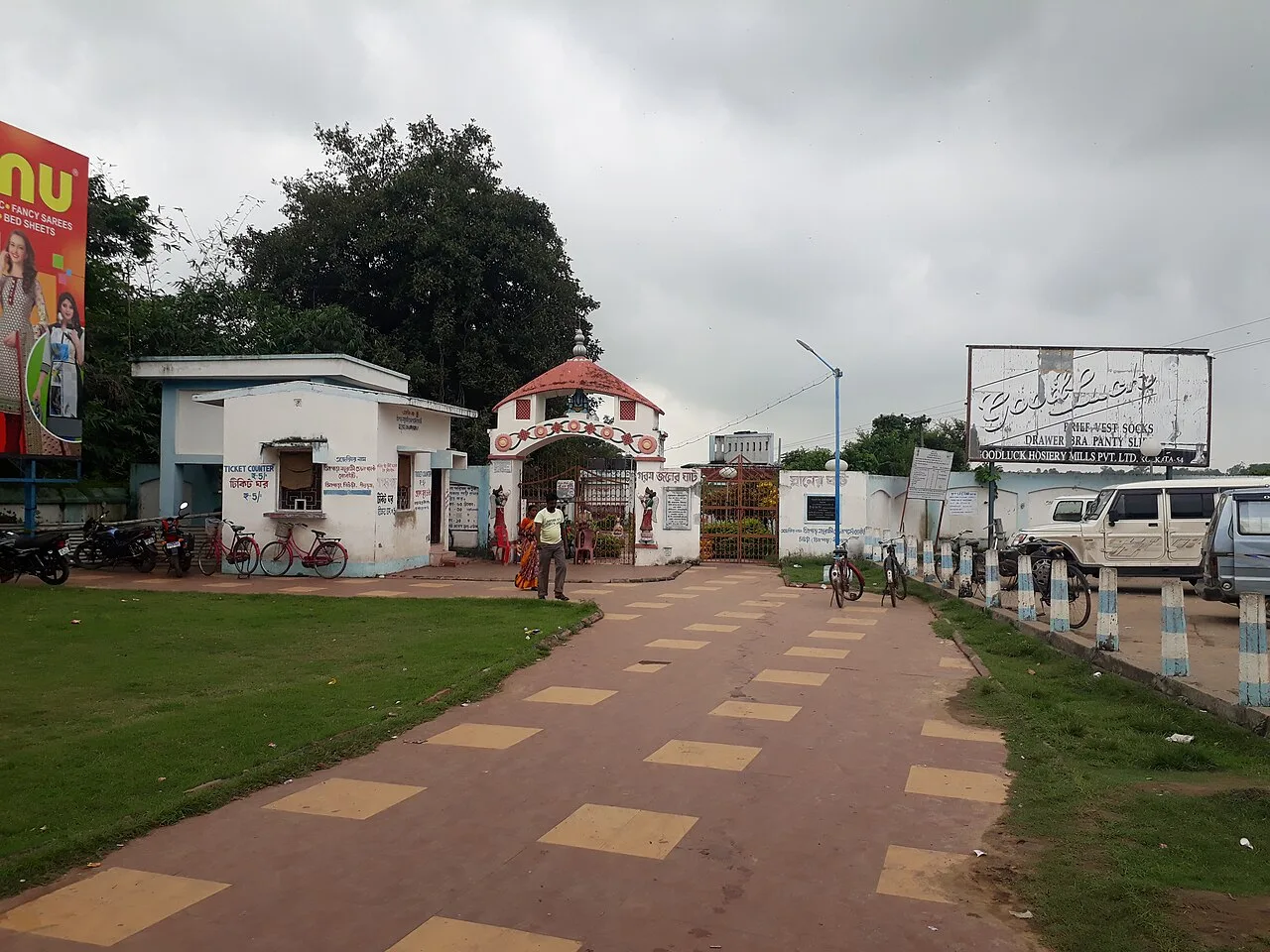
Bakreshwar
Bakreshwar is a village in Birbhum district, West Bengal. Visitors may be interested in the nearby Bakreshwar thermal power facilities, and Dubrajpur is the closest rail connection.
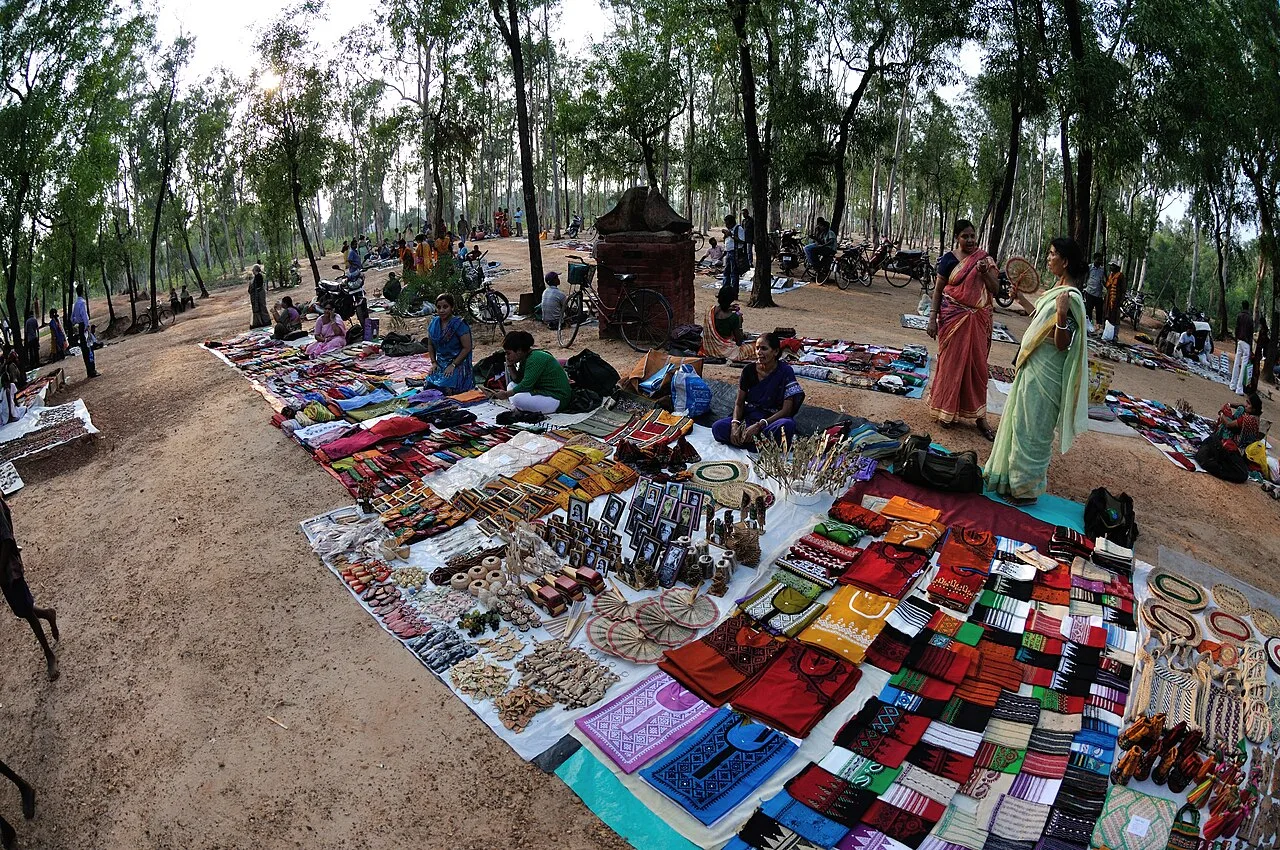
Santiniketan
Santiniketan is a neighbourhood of Bolpur in West Bengal, associated with the Tagore family and Visva-Bharati. Visitors come to explore its heritage and its status as a UNESCO World Heritage site.
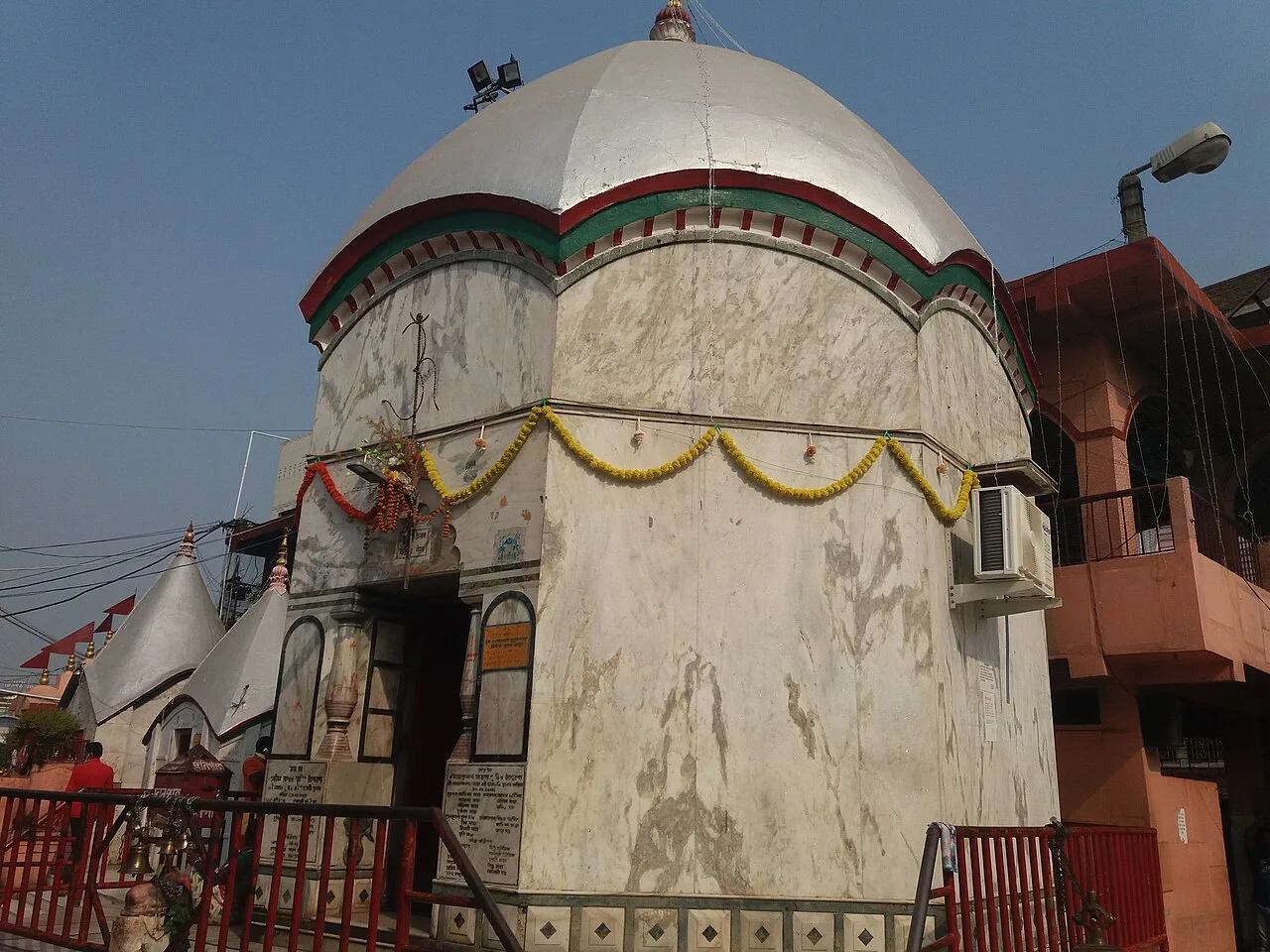
Tarapith
Tarapith is a town in West Bengal’s Birbhum district and a Hindu pilgrimage destination. Visitors come to worship the goddess Tara at its Tantric temple and visit nearby religious sites.
Birbhum’s food belongs to the wider Bengali culinary tradition. Everyday meals commonly pair rice with dal, seasonal vegetables and fish; macher jhol is a familiar fish curry, while shorshe ilish is a regional favourite when hilsa is available. Luchi with alur dom makes a popular breakfast or snack, and sweets such as mishti doi, rosogolla and sandesh are enjoyed across West Bengal. Around pilgrimage sites and town markets, simple vegetarian meals and quick snacks are easy to find. Menus at small eateries may depend on what is fresh that day, so it is worth asking what is being prepared.
Santiniketan is associated with leather goods and batik, alongside the wider art tradition developed at Visva-Bharati’s Kala Bhavana. The district’s cultural identity is also closely linked to Baul music and performance, though these are artistic traditions rather than crafts. Rural markets may offer handwork and locally made household goods, but craft availability varies by place and season. Visitors looking for a particular item can explore shops and craft sales around Santiniketan and Bolpur, while checking how and where a product was made rather than assuming every item is locally produced.
Santiniketan’s Poush Mela, usually held in winter, and Basanta Utsav in spring draw visitors for performances, crafts and cultural events; the busiest periods can make nearby rooms harder to find. The Kenduli fair, held in winter in the wider Birbhum region, is associated with Baul singers and attracts pilgrims and music enthusiasts. Tarapith sees heavier visitor numbers around Kali Puja and other religious occasions, while Shivratri brings devotees to Bakreshwar. Festival dates and programmes can vary, so check locally and reserve accommodation early during major events.
Elsewhere in West Bengal
Birbhum changes from the more fertile plains in the east to gently undulating laterite country in the west. Red soils, scattered woodland and open rural fields give the western part a distinct Rarh character. The Ajay and Mayurakshi are among the district’s important rivers, with smaller streams and seasonal watercourses also shaping local routes. Most journeys are overland between towns and villages; rural roads can be slower than the map suggests, particularly in the rainy season. The landscape is generally low-lying rather than mountainous, but exposed roads and limited services outside town centres can affect travel plans.
Birbhum has hot summers, a monsoon season and cooler, generally more comfortable winters. Summer days can make outdoor sightseeing tiring, so plan activities for the cooler parts of the day and carry water and sun protection. Monsoon rain can make rural roads slower or temporarily difficult, while the countryside becomes greener. The cooler months, broadly from late autumn through winter and into early spring, are usually the most pleasant time to visit; festival periods can also be busier. Pack light clothing for warm weather, a light layer for winter evenings, comfortable walking shoes and rain protection if travelling during the monsoon.
Birbhum is served by rail and road, with Bolpur Shantiniketan station convenient for Santiniketan and Rampurhat Junction for Tarapith. Durgapur’s Kazi Nazrul Islam Airport is a regional option; Kolkata’s Netaji Subhas Chandra Bose International Airport has broader connections. Roads link district towns with Kolkata, Durgapur and neighbouring parts of West Bengal, and buses provide intercity connections. Within the district, local buses, shared autos, cycle rickshaws and hired cars can help reach towns and attractions; availability varies, especially outside town centres. Check current services locally before setting out.
Roads connect Bolpur, Suri, Dubrajpur and Rampurhat with other district towns and neighbouring areas. Local buses and shared autos or jeeps can be useful on commonly travelled routes, but services may be limited in rural areas and later in the day. Taxis and hired cars offer more flexibility for combining Santiniketan, Bakreshwar and Tarapith, especially when travelling with family or luggage. Cycle rickshaws are useful for short trips in some town centres. Check current local services before setting out; boats are not a usual way to reach the district’s main sights.
2 days: Santiniketan; sleep both nights in Bolpur. 3 days: Santiniketan, Bakreshwar, Tarapith; sleep in Bolpur on night one and near Tarapith on night two. 4 days: Santiniketan, Bakreshwar, Tarapith; sleep two nights in Bolpur and one near Tarapith, allowing an extra day for a slower visit.
Bolpur is the most convenient base for Santiniketan, with hotels, guesthouses and homestays, and it works well for a short cultural visit. Tarapith has pilgrimage-oriented accommodation, including hotels and dharamshalas, and is practical for an early or unhurried temple visit. Suri and other larger towns may suit travellers breaking up road journeys, while accommodation near Bakreshwar is more limited. Government lodges may be available in some locations, but facilities and booking arrangements vary; confirm directly before relying on a particular stay.
Carry drinking water and use sealed or otherwise safely treated water, especially on rural outings. Summer heat, monsoon showers and slippery surfaces around hot springs call for suitable clothing and caution. Roads outside towns can be uneven, poorly lit or slower after rain; avoid assuming that local transport will be available late in the day. Keep belongings secure in crowded pilgrimage areas and follow site instructions near temple queues and spring pools. Mobile connectivity can be less reliable in some rural stretches. The listed town attractions do not generally involve remote wilderness travel; check official guidance for any restricted site or access requirement before visiting.
- Dumka · Jharkhandabout 54 km
- Murshidabadabout 69 km
- Nadiaabout 89 km
- Dhanbad · Jharkhandabout 94 km
- Purba Bardhamanabout 101 km
- Puruliaabout 104 km
- Bankuraabout 108 km
- Deoghar · Jharkhandabout 115 km
Straight-line distance between the centres of each district's destinations; road distance is longer.
Q: How many days should I spend in Birbhum? A: Two days can cover Santiniketan at a relaxed pace; allow three or four days to include Bakreshwar and Tarapith. Q: When is the best time to visit? A: The cooler months from late autumn to early spring are generally most comfortable. Festival periods are lively but can be crowded. Q: What is the best base for visiting the district? A: Bolpur is a convenient base for Santiniketan. For Tarapith, staying in or near the pilgrimage town reduces backtracking. Q: How do I get to Birbhum? A: Rail services reach towns including Bolpur and Rampurhat. Road and bus connections link the district with Kolkata, Durgapur and neighbouring areas; check current services before travelling. Q: Is Birbhum suitable for families or elderly travellers? A: Yes, with a flexible itinerary. Choose accommodation close to the sights you plan to visit, allow extra time for road journeys and consider hired transport where walking or transfers may be difficult.
This page draws on our 3 destination guides for Birbhum and is updated as our team checks it.
Be the first to share photos, stories, advice or a helpful contact for Birbhum.
Loading…